
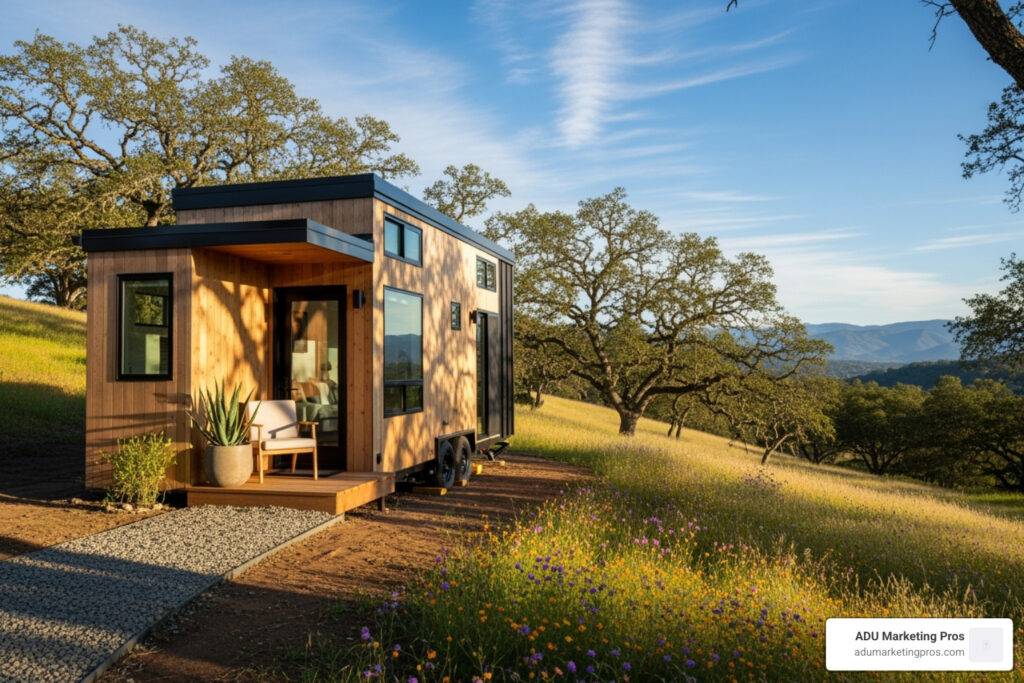
Why California Leads the Tiny Home Revolution
Tiny homes california are more than a trend; they’re a movement toward affordable, sustainable living in the nation’s most expensive housing market. California’s progressive stance has made it the most popular state for tiny home living.
Quick Answer for Tiny Homes California:
- Legal Status: Not illegal, but zoning laws vary by jurisdiction.
- Friendly Cities: Fresno, Los Angeles, San Jose, San Diego, and California City have specific provisions.
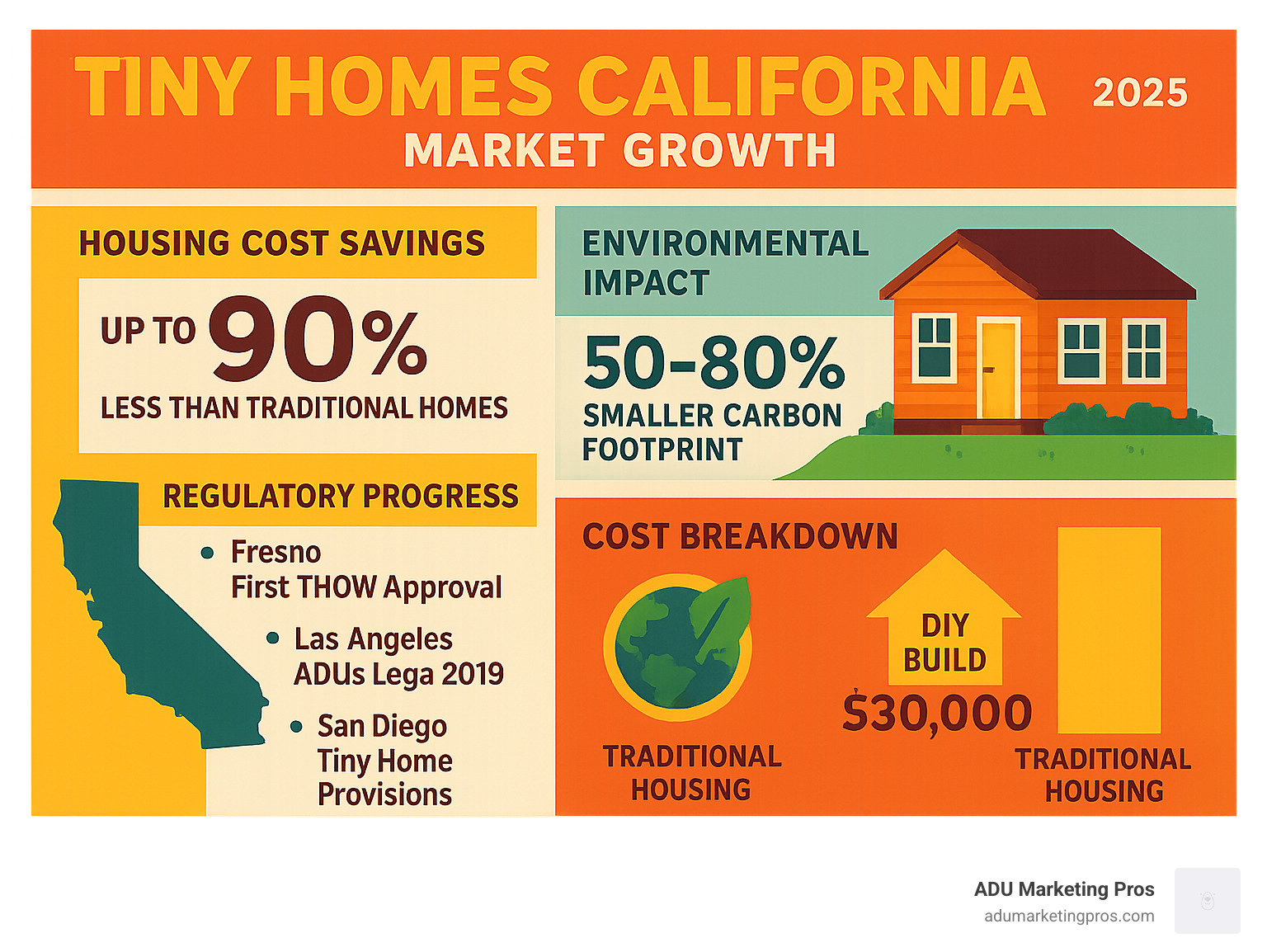
- Cost Range: $30,000 to $200,000+ depending on size, materials, and build type.
- Types Available: Tiny homes on wheels (THOWs), foundation-based tiny homes, and ADU conversions.
- Key Benefit: Built for about 1/10th the cost of traditional affordable housing units.
As California housing costs soar, tiny homes offer a practical alternative. Fresno was the first U.S. city to approve tiny homes on wheels as legal dwellings, and Los Angeles legalized them as backyard ADUs in 2019. The appeal is clear: financial freedom, environmental sustainability, and lifestyle simplicity.
Whether you’re a first-time buyer or looking to downsize, California’s tiny home scene offers incredible opportunities. However, finding the right builder requires research into local regulations and project needs. This guide covers everything from vetting builders to navigating zoning and financing your California tiny home dream.
Why Go Tiny? The Unmistakable Benefits of California Tiny Home Living
Living tiny in California isn’t just about a smaller space—it’s about opening up possibilities that traditional homeownership can’t offer. For tiny homes california residents, it’s a smart, sustainable path to the good life, providing a powerful antidote to the state’s affordability and environmental challenges.
Financial Freedom
With California’s median home prices often exceeding $800,000, tiny homes are a game-changer. They offer a powerful solution to the affordability crisis. Professionally built tiny homes typically range from $50,000 to $150,000, a fraction of traditional housing costs. This affordability translates into tangible, life-altering financial benefits:
- Lower utility costs: Heating and cooling a 400-square-foot space is significantly cheaper than a conventional home. Many owners report monthly utility bills under $100, especially when incorporating off-grid solutions like solar panels. This can represent savings of several hundred dollars per month compared to a standard single-family home.
- Reduced mortgage pressure: The ability to pay cash or take on a much smaller loan frees up income for travel, savings, or early retirement. A mortgage on an $800,000 home can easily top $4,500 per month, while a loan for an $80,000 tiny home might be under $1,000. This difference can be invested, saved, or used to pursue passions instead of being locked into a 30-year debt cycle.
- Minimal Property Taxes: For foundation-based tiny homes, property taxes are assessed on a much lower value. For THOWs, which are registered as RVs, you pay a vehicle registration fee instead of property tax, resulting in thousands of dollars in annual savings.
Sustainable Living
Tiny homes align perfectly with California’s green values. A smaller carbon footprint is a key benefit, with construction using fewer materials and generating less waste. A typical new home construction produces several tons of waste, while a tiny home build can generate less than a single ton. Daily energy consumption is drastically lower, and many builders prioritize eco-friendly materials like reclaimed wood, bamboo flooring, sheep’s wool insulation, and recycled metal roofing. Your environmental impact can drop by 50-80% compared to traditional housing. Many tiny dwellers go further by incorporating systems like rainwater harvesting and composting toilets, reducing their reliance on public utilities. To learn more, explore these eco-friendly homes and material options.
Lifestyle Benefits
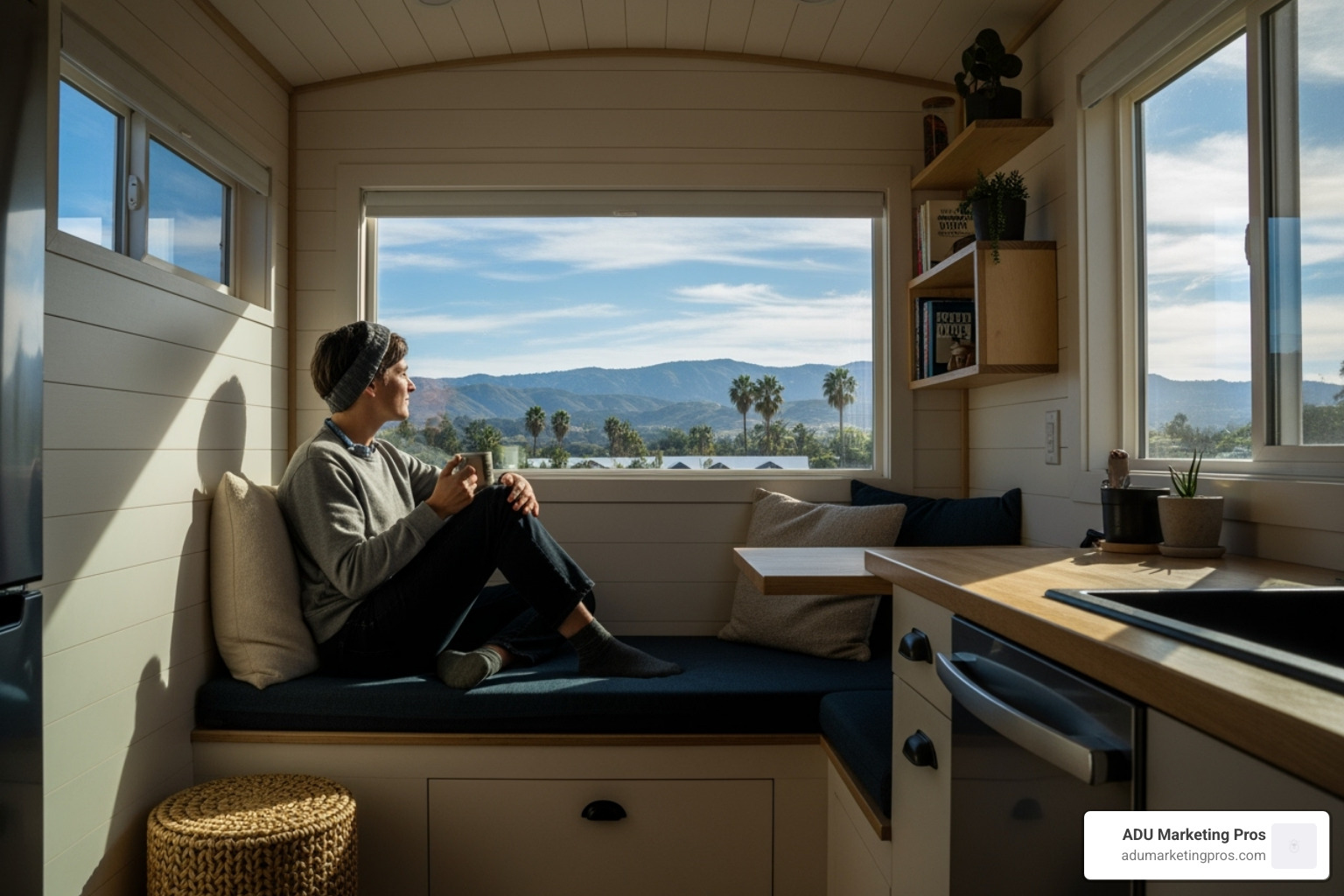
The magic of tiny living is how it transforms your daily experience. Simplicity and intentionality become your new normal. The process of downsizing forces you to evaluate what you truly need, leading to a life with less clutter and more purpose. Owning fewer possessions means less time cleaning and organizing, and more time living.
- More outdoor time: A compact interior naturally encourages you to use California’s incredible natural beauty as your extended living room. Your backyard, a local park, or a nearby beach becomes an integral part of your daily life.
- Mobility: Tiny homes on wheels (THOWs) offer the freedom to explore California’s diverse regions without leaving the comfort of home. You can spend the summer by the coast in San Diego and the winter near the ski slopes of Lake Tahoe, all while keeping your personalized living space.
- Community: Tiny home communities are emerging across the state, fostering shared resources, social connections, and a sense of belonging that is often missing in traditional suburbs. These communities often feature shared gardens, workshops, and communal spaces, creating a supportive and collaborative environment.
Navigating the Rules: Legality and Zoning for Tiny Homes California
Understanding the legal landscape for tiny homes california is crucial. The good news: tiny homes aren’t illegal in California. The challenge is navigating a patchwork of state laws, local classifications, and placement rules that can vary significantly from one county to the next.
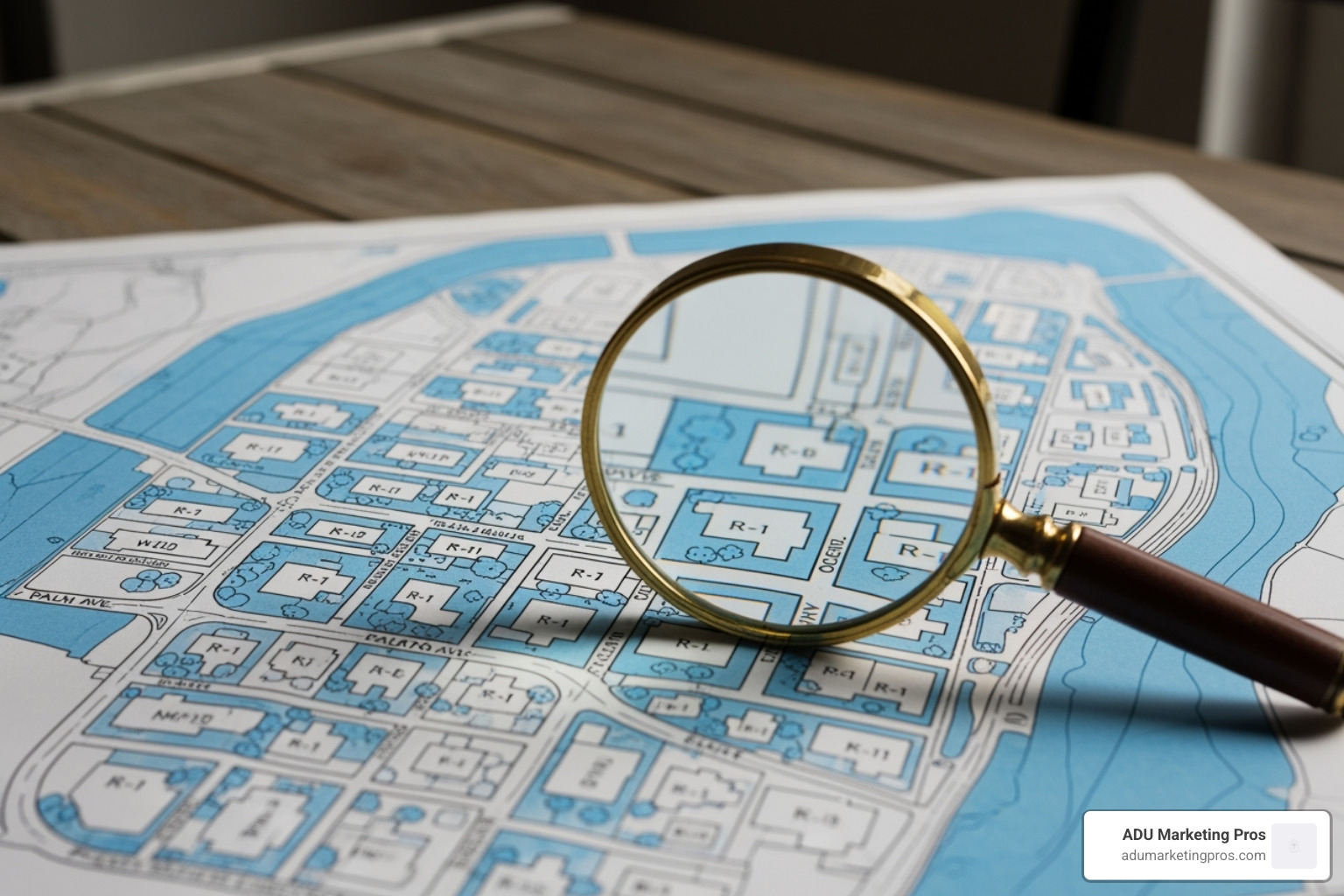
Regulations operate on two levels: state-wide frameworks and local ordinances. California has been progressive, creating foundational laws that support smaller living spaces, largely in response to the ongoing housing crisis.
State-Level Regulations
- Appendix Q: Adopted into the California Residential Code, this addition to the International Residential Code provides building standards for homes under 400 square feet. It legitimizes tiny homes on foundations by setting clear safety standards for things like ceiling height (minimum 6’8″), loft access (stairs or ladders), and emergency egress windows. This gives local building departments a clear framework for approving these structures.
- ADU Laws: California’s Accessory Dwelling Unit laws have been a game-changer. These state-level mandates make it much easier to permit and build smaller, secondary homes on existing residential lots. The state has consistently updated these laws to remove barriers, such as eliminating minimum lot size requirements and waiving impact fees for ADUs under 750 square feet. Many foundation-based tiny homes qualify as ADUs. For a detailed comparison, see our guide on ADU vs. Tiny House.
THOWs vs. Foundation Homes
The legal framework treats these two types of tiny homes very differently.
-
Tiny Homes on Wheels (THOWs) are generally classified as Recreational Vehicles (RVs). This means they require DMV Registration and are not subject to traditional building codes, but must instead be certified by the RVIA (Recreational Vehicle Industry Association) for safety. While this offers mobility, it also restricts where you can park one permanently. California’s forward-thinking stance on THOWs is a key reason for its popularity, as noted in a Business Insider report.
-
Tiny Homes on a Foundation are treated like small single-family homes or ADUs. They must comply with Local Building Codes, including requirements for foundations, utility connections, and property line setbacks. This path offers more stability for financing and insurance but less mobility.
Tiny-Home-Friendly Cities and Counties in California
While state laws provide the framework, local rules are what matter most. Several California cities have embraced the tiny home movement:
- Fresno: A true pioneer, Fresno was the first U.S. city to amend its zoning code to explicitly approve THOWs as legal, long-term dwelling units in residential backyards.
- Los Angeles: In 2019, LA legalized parking THOWs as backyard ADUs, provided they are RVIA-certified and connected to utilities. See the city’s LA zoning laws for THOWs for details.
- San Jose & San Diego: Both cities have explored tiny home villages as a solution for homelessness and have streamlined processes for backyard ADUs. San Diego’s code allows for “companion units,” and San Jose has a pre-approved ADU plan program to expedite permitting.
- Placer County: Known for its accommodating approach, often permitting tiny homes as ADUs in more rural settings, providing more flexibility on lot placement.
- California City: Uniquely allows tiny houses on their own single lots, not just as backyard additions, making it one of the few places where you can create a standalone tiny home property.
- Humboldt County: This Northern California county has also been progressive, allowing THOWs as caregiver dwellings and exploring broader legalization.
Zoning variations are significant. Some cities only allow tiny homes as backyard ADUs, while others permit them on single lots. Always research local ordinances for your target area. The planning department website for your specific city or county is your best resource. For a regional overview, check our guide on Places in Southern California That Allow Tiny Houses.
The Blueprint for Your Build: Finding and Vetting a Tiny Home Builder
Finding the right builder for your tiny homes california project is the step that turns your dream into a reality. The California tiny home scene offers a variety of builders, and your job is to find the one whose expertise aligns with your vision.
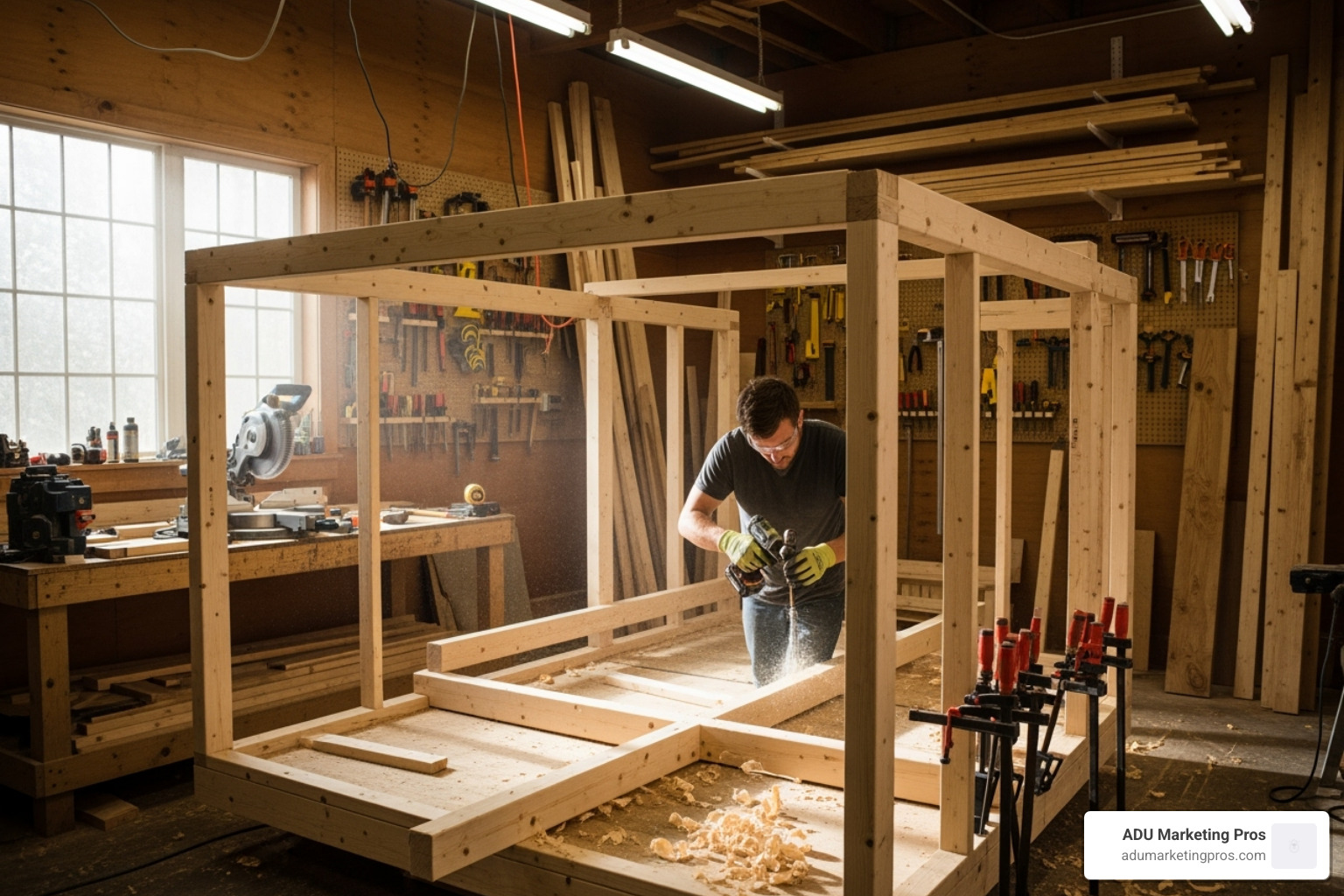
Types of Tiny Home Builders in California
- Custom builders: Artisans who design a home from scratch based on your unique vision. This offers maximum personalization but typically comes at a higher cost and longer timeline.
- Pre-designed model builders: Offer a balance of efficiency and customization, with proven floor plans and a selection of finishes and upgrades.
- DIY kits and shells: Ideal for the hands-on homeowner. Building it yourself can cut costs in half but requires significant time, skill, and professional help for plumbing and electrical.
- Specialists in THOWs: Focus exclusively on tiny homes on wheels, ensuring they meet RVIA standards and are road-ready.
- Foundation-based home builders: Specialize in permanent tiny homes, often as ADUs, that must comply with local building codes.
Explore a list of builders in our guide to Tiny House Builders California.
Key Questions to Ask Your Potential Builder
Vetting a builder is crucial. Arm yourself with these questions:
- Licensing and Certifications: Are you a licensed dealer? For THOWs, is the home RVIA certified and registered with the NHTSA? These ensure safety and quality standards.
- Experience and Portfolio: How long have you been building tiny homes? Can I see your portfolio and speak with past clients?
- Construction Process and Materials: What materials and framing methods do you use? What are your quality control measures?
- Customization Options: How much input can I have in the design? Can you accommodate specific needs like ADA compliance?
- Timeline and Cost Transparency: Can I get a detailed estimate breaking down all costs? What is your process for change orders?
- Warranty and Support: What kind of warranty do you offer? What happens if an issue arises after delivery?
For region-specific information, see our guide to Tiny House Builders in Southern California.
Red Flags to Watch Out For
Trust your gut. Be wary of these warning signs:
- Lack of a comprehensive contract
- Vague pricing or surprise costs
- No references or portfolio to share
- High-pressure sales tactics
- Poor or unresponsive communication
- Unwillingness to discuss zoning and compliance
Counting the Costs and Securing Funds
The financial aspect is a key driver for the tiny homes california movement. While more affordable than traditional housing, understand the full cost and financing options.
Breaking Down the Cost of a Tiny Home in California
The price for a tiny home can range from $30,000 to $200,000+. Key factors influencing the cost include:
- DIY vs. Professional Build: Building it yourself can cut the cost by about half, but requires significant time and skill. A professional build ensures quality and saves you the labor.
- Materials: High-quality choices like fiber cement siding, metal roofs, and durable flooring increase the initial cost but improve longevity.
- Size and Complexity: Larger homes or complex designs with lofts and custom features will be more expensive.
- Finishes: High-end features like custom cabinetry, quartz countertops, and smart home tech will push the budget higher.
- Hidden Costs: Don’t forget to budget for permits, land (purchase or lease), utility hookups (water, sewer, electricity), and transportation.
For more on ADU-related costs, see our guide on Prefab ADU California Cost.
Financing Your California Tiny Dream
Financing a tiny home differs from a traditional mortgage, especially for THOWs which aren’t considered real property.
- RV Loans: The most common option for RVIA-certified THOWs. These loans have shorter terms and often higher rates than mortgages. Lenders like 21st Mortgage specialize in this area.
- Personal Loans: A flexible option for homes that don’t qualify for RV loans, though interest rates are typically higher.
- Builder Financing: Many builders offer in-house financing or partner with lenders. Always compare their terms with outside options.
- Paying Cash: The ultimate goal for many, this path eliminates debt and provides true financial freedom. Given the lower overall cost, it’s a more achievable goal than with traditional housing.
Your Step-by-Step Guide to Tiny Living in CA
Embarking on your tiny homes california journey is exciting. Breaking it down into manageable steps makes the process smooth and successful, turning a big dream into an achievable project.
Step 1: Define Your Vision & Budget
First, get clear on your non-negotiables. How do you live now, and how do you want to live? Ask yourself: Do you work from home and need a dedicated office nook? Are you an avid cook who needs a functional kitchen with ample counter space? Do you need a ground-floor sleeping area, or are you comfortable with a loft? Be honest about your daily routines. Then, establish a realistic, all-in budget. This must include not just the home itself, but also land (purchase or lease), permits, utility hookups (which can cost $10,000-$30,000+), transportation, and a contingency fund of 10-15% for unexpected costs.
Step 2: Master the Legal Landscape
This step is critical in California and should happen in parallel with Step 1. Before you fall in love with a design or a location, research the specific zoning laws in your target cities or counties. Contact the local planning department directly. Ask them: “What are the rules for placing a tiny home on a foundation as an ADU?” and “What are the regulations for parking a THOW (certified as an RV) long-term on a residential property?” Their answers will determine whether you need a foundation-based ADU or if a THOW is a viable option for your chosen location. Local rules vary dramatically and are the ultimate authority.
Step 3: Choose Your Path (Build, Buy, or Customize)
Decide how you’ll acquire your home. Each path has distinct trade-offs:
- DIY Build: Offers the most savings (potentially cutting costs in half) and ultimate control. However, it requires immense time, specialized skills (carpentry, electrical, plumbing), and a suitable place to build. It’s a massive undertaking.
- Buy a Pre-Built Model: This is the fastest and often simplest route. You get professional quality, code compliance, and a warranty. The downside is less personalization and a higher upfront cost.
- Custom Build: Work with a builder to create a home tailored exactly to your vision. This provides the best of both worlds—professional craftsmanship and total personalization—but is typically the most expensive option with the longest timeline.
Step 4: The Design & Build Phase
This is where your vision takes shape. Whether you’re designing it yourself or with a builder, focus on smart design. Maximize storage with creative solutions like toe-kick drawers and built-in furniture. Incorporate multi-functional pieces, like a dining table that doubles as a desk. Ensure good natural light and ventilation to make the space feel larger and more comfortable. If working with a builder, stay involved with regular check-ins to ensure the project aligns with your contract and expectations. Document everything.
Step 5: Finding Your Spot
Securing land can be one of the biggest challenges. Options include:
- Buying a lot: Offers the most freedom but is expensive and requires navigating zoning for a primary dwelling.
- Leasing space: Renting a spot in a tiny home community or a long-term RV park is a common solution for THOWs.
- Backyard ADU: Placing your tiny home on a property you or a family member owns is often the most legally straightforward and cost-effective option in California due to friendly ADU laws.
Ensure your chosen spot is properly zoned and has practical access to utilities. For land ideas, check out resources like Land for Sale in Southern California for Tiny Houses.
Step 6: The Move-In and Adjustment
Moving into your tiny home is the start of a new adventure. The physical move is preceded by a mental one: downsizing. This process of decluttering can be liberating, forcing you to prioritize what’s truly important. Once you’re in, there will be an adjustment period. You’ll quickly adapt to the smaller space and appreciate the freedom that comes with lower housing costs and fewer possessions, allowing you to focus on experiences over things.
Frequently Asked Questions about Tiny Homes in California
Navigating tiny homes california can bring up many questions. Here are answers to some of the most common ones.
What is the maximum size for a tiny home in California?
The maximum size depends on the home’s classification:
- Tiny Homes on Wheels (THOWs) are typically classified as RVs and must stay under 400 square feet to comply with road regulations and standards like Appendix Q.
- Foundation-based tiny homes, when permitted as Accessory Dwelling Units (ADUs), can be much larger. California state law allows ADUs up to 1,200 square feet, though local ordinances may impose their own size limits.
The size limit is determined by whether your home has wheels or a permanent foundation.
Can I put a tiny house in my backyard in California?
Yes, in most cases! California’s progressive state ADU law has made it significantly easier to add a secondary home, like a tiny house, to most residential properties. These laws often override more restrictive local ordinances.
However, you must check local regulations for specific requirements regarding setbacks, utility connections, and design. Cities like Los Angeles, San Diego, and San Jose have clear pathways for these backyard homes, often called “granny flats.” You can learn more about this popular option in our guide to Prefab Granny Flats California.
Is it cheaper to build or buy a tiny home in California?
This depends on your priorities: time, skill, and money.
- Building (DIY) is generally cheaper, potentially cutting costs in half by eliminating labor expenses. A DIY project might cost $30,000-$50,000. However, it requires hundreds of hours and expertise in construction, plumbing, and electrical systems.
- Buying from a professional builder costs more upfront (typically $60,000-$100,000+) but ensures quality, code compliance, and a much faster timeline. You’re paying for expertise, warranties, and peace of mind.
DIY saves money, while buying saves time and guarantees professional craftsmanship.
Conclusion
Your journey into tiny homes california is about more than just a smaller house—it’s about a bigger life. These compact homes offer a powerful solution to the state’s housing crisis, making homeownership achievable through financial freedom, sustainable living, and lifestyle simplicity.
Success requires careful planning. Navigating California’s evolving legal landscape, from Fresno’s THOW approvals to LA’s ADU provisions, is essential. Vetting your builder and understanding financing options will set the foundation for a smooth project, whether you choose a custom build, a pre-designed model, or a DIY path.
For builders and architects, the tiny home market in California is booming. To capture this growth, you need to stand out. Generic marketing won’t work; you need a strategy that highlights your expertise and connects you with serious clients.
ADU Marketing Pros specializes in helping top-tier construction and architecture firms dominate the tiny home and ADU market. We connect you with high-quality leads who are ready to invest in quality craftsmanship. Our targeted approach ensures your firm becomes a recognized leader in this competitive space.
If you’re exploring the Bay Area market, start with our guide to a Tiny House San Francisco.
The tiny home movement is a fundamental shift toward more intentional and affordable living. Whether you’re a future homeowner or a builder ready to serve this market, the opportunities in California are immense.