
Why Tiny Homes for Sale Are Reshaping How We Think About Housing
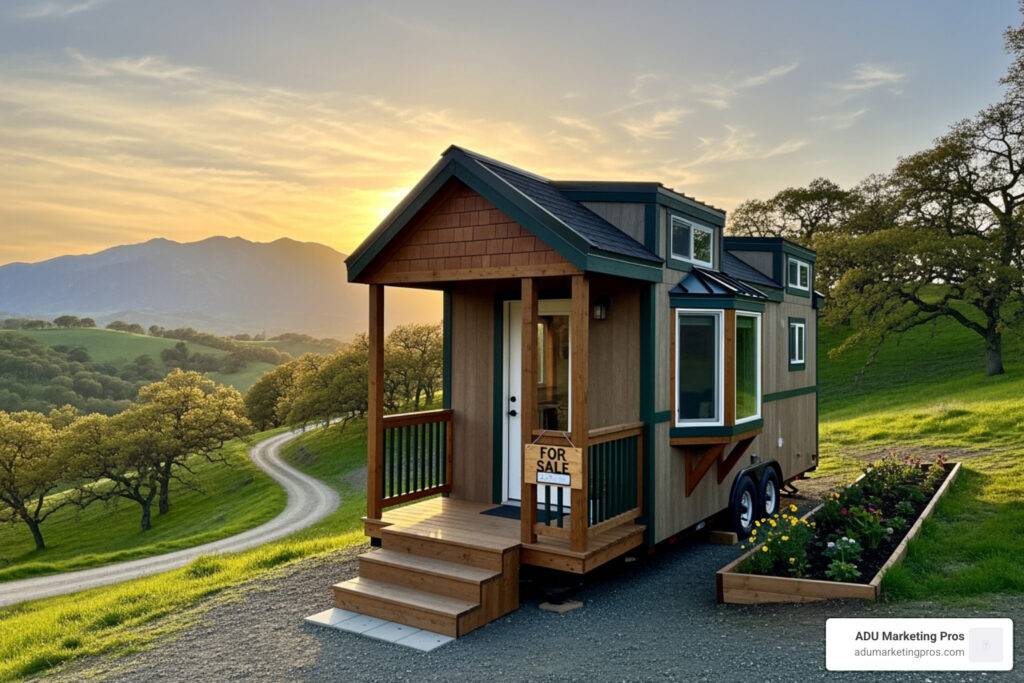
Tiny homes for sale are at the forefront of a revolutionary shift in the American housing landscape, offering an affordable, sustainable, and flexible path to homeownership. This movement is more than just a trend; it’s a direct response to soaring property prices and a collective desire for a more intentional way of life. For first-time buyers priced out of traditional markets, retirees looking to downsize, and digital nomads seeking freedom, tiny homes embody the “Less House, More Home” philosophy—a powerful concept that prioritizes quality of life, financial well-being, and personal freedom over the sheer quantity of space.
This growing interest is reflected in the market, which is projected to expand significantly in the coming years. The appeal is broad, attracting a diverse demographic united by the goal of escaping the burdens of a 30-year mortgage and endless home maintenance.
Quick Answer: Where to Find Tiny Homes for Sale
- Online Marketplaces: Platforms like Tiny House Listings, Tiny Home Builders Marketplace, and even Facebook Marketplace connect buyers with a vast inventory of new, used, and DIY options across the country.
- Direct from Builders: Reputable companies like Tumbleweed, Tiny Heirloom, and Timbercraft offer customizable, professionally built models. Prices typically start around $60,000 for a basic model and can exceed $150,000 for high-end, custom designs.
- Real Estate Sites: Zillow, Redfin, and Realtor.com are increasingly listing tiny homes that include land. Using specific filters for square footage (e.g., under 800 sq. ft.) can reveal properties ranging from $54,500 to over $199,000, depending heavily on location and acreage.
- Tiny Home Communities: Purpose-built developments are emerging in states like New York, Idaho, Texas, and Massachusetts, offering turnkey packages that include the home, a plot of land, and shared amenities, simplifying the legal and logistical challenges.
These compact dwellings, typically under 500 square feet, cost a fraction of traditional single-family homes. For instance, a 336-square-foot tiny home in Idaho recently listed for just $54,500, while a 304-square-foot eco-conscious model in Massachusetts was priced at $199,000 with nearly an acre of land. The benefits extend beyond the initial price tag, leading to exceptional energy efficiency, dramatically lower utility bills, a reduced environmental footprint, and the profound freedom of minimal debt. Many models now achieve NOAH (National Organization of Alternative Housing) certification, ensuring they meet stringent safety, structural, and quality standards.
However, the path to tiny homeownership is not without its obstacles. Navigating complex zoning regulations, securing financing, and finding reputable builders are common challenges. This comprehensive guide will walk you through every critical step, from choosing the right type of tiny home to successfully closing on your dream property.
The Ultimate Buyer’s Guide to Tiny Homes

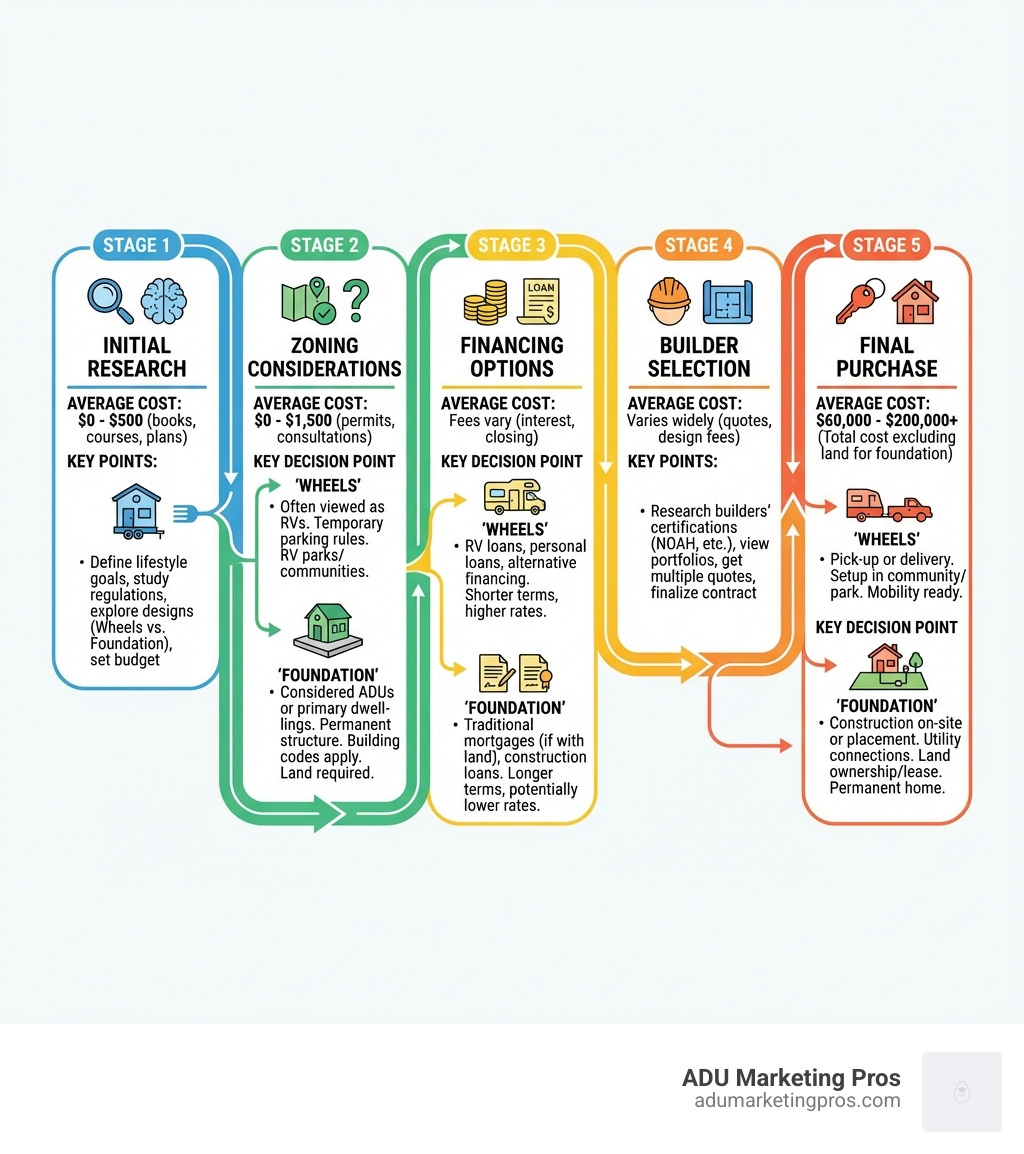
Embarking on a tiny home journey is a significant life decision that requires careful planning and research. This guide will help you navigate the entire process, from introspective lifestyle considerations to securing your new home, with a special focus on the dynamic California market.
Step 1: Understanding the Benefits, Challenges, and Personal Fit
Choosing to live in a tiny home is a deliberate move toward a more intentional life, a trend seen in vibrant communities across California. Before diving in, it’s crucial to weigh the pros and cons honestly.
Benefits of Buying a Tiny Home:
- Financial Freedom: This is the number one motivator for most. A significantly smaller purchase price and reduced overhead can slash housing costs by more than half. A smaller or nonexistent mortgage means lower monthly payments and a faster path to financial independence. Less space to heat, cool, and power also results in substantially lower utility bills.
- Environmental Sustainability: Tiny homes have a much smaller carbon footprint. They require fewer materials for construction and consume less energy for daily living. Many owners incorporate eco-friendly features like reclaimed wood, solar panels, rainwater collection systems, and composting toilets. For more on sustainable design, explore Eco-Friendly Small Homes.
- Lifestyle Advantages: The minimalist lifestyle brings a unique sense of freedom. With less financial burden and fewer possessions, you have more time and resources to travel, pursue hobbies, or invest in experiences. A smaller home also means drastically less time spent on cleaning and maintenance, freeing up your weekends.
- Mental Well-being: Many tiny dwellers report reduced stress and anxiety. Living with less clutter in a space designed around your needs can create a calming, simplified environment that promotes mental clarity.
Potential Challenges of Living in a Tiny Home:
- Space Limitations and Downsizing: This is the most obvious challenge. Living in under 500 square feet requires significant downsizing and impeccable organization. You must be ruthless about what you keep. Consider if the small footprint aligns with your long-term needs, especially if you have or plan to have a family, pets, or work from home.
- Zoning and Legal Hurdles: This is a major obstacle. Regulations vary dramatically by city and county, particularly in California (e.g., Los Angeles, San Diego, Fresno). Many areas were not designed with tiny homes in mind, creating a confusing patchwork of rules about where you can legally place one. Thorough research into local zoning laws is non-negotiable.
- Social and Relationship Dynamics: Living in close quarters can test relationships. Privacy is limited, and resolving conflicts requires excellent communication. It’s also a lifestyle that can be misunderstood by friends and family, so be prepared to explain your choice.
- Financing and Insurance: Obtaining a traditional mortgage is difficult for mobile tiny homes, and insurance can be tricky to secure. We’ll cover this in more detail in Step 3.
Step 2: Choosing Your Type – Wheels vs. Foundation
Tiny homes generally fall into two categories: those on wheels (THOWs), which are legally considered personal property, and those on a permanent foundation, which are considered real property.
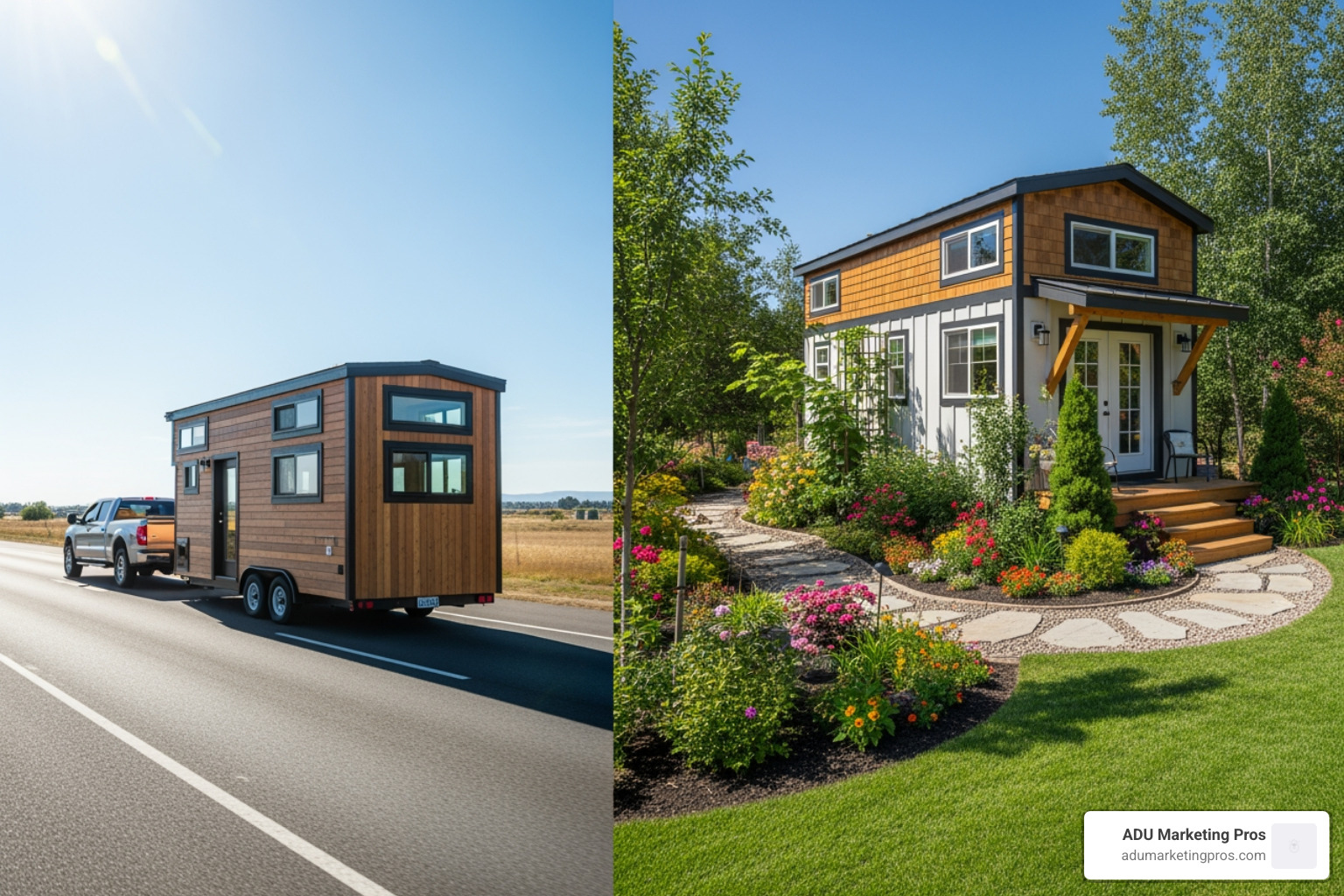
- Tiny Homes on Wheels (THOWs): Built on a trailer chassis, these offer mobility and are often classified as recreational vehicles (RVs). This classification impacts regulations, financing, and insurance options but provides flexibility in location.
- Tiny Homes on Foundations: Built directly onto a permanent foundation (like a slab, crawl space, or basement) just like a traditional house. These are considered real property and are subject to local building codes. In California, they can often be classified as an Accessory Dwelling Unit (ADU). Learn more about the ADU vs. Tiny House distinction.
| Feature | Tiny Homes on Wheels (THOWs) | Tiny Homes on Foundations |
|---|---|---|
| Cost | Generally lower initial cost (no land purchase required upfront) | Higher initial cost (includes land, foundation, and utility hookups) |
| Legality | Often classified as RVs; zoning can be complex; subject to parking restrictions and length-of-stay limits. | Subject to local building codes and zoning (often as ADUs); simpler legal status once permitted. |
| Mobility | High mobility; can be moved to different locations, RV parks, or tiny home communities. | Permanent; cannot be moved once built. |
| Value Appreciation | Tends to depreciate in value over time, similar to an RV or vehicle. | Can appreciate in value like traditional real estate, adding equity. |
| Financing | Often requires RV loans, personal loans, or builder financing with higher interest rates. | May qualify for traditional mortgages, construction loans, or home equity loans. |
| Land Aspect | Requires a legal parking spot (leased land, RV park, friend’s property where permitted). | Requires owned land or placement as a legal ADU on an existing property. |
Step 3: Budgeting and Financing Your Dream
Understanding the full financial picture is essential. Costs in California can be higher than the national average due to labor, materials, and land expenses.
Average Costs Breakdown:
- DIY vs. Pro-build: A DIY build can start around $15,000-$30,000 for basic materials, but this requires immense time, skill, and access to tools. A professionally built tiny home typically ranges from $60,000 to $150,000+. Luxury models with high-end finishes and off-grid systems can easily exceed $200,000.
- Price Influencers: The final price is affected by square footage, complexity of design, quality of materials (e.g., custom cabinetry, stone countertops), high-end appliances, and off-grid systems (solar panels, water tanks, composting toilets).
- Hidden Costs to Budget For: Don’t forget to factor in delivery fees ($1-$4 per mile), sales tax, land purchase or rent, utility hookup fees (can be $10,000+), permits, and landscaping.
Financing Options:
- RV Loans: For certified THOWs, RV loans are a common option. These are chattel loans secured by the home itself, often with shorter terms (10-15 years) and higher interest rates than traditional mortgages.
- Personal Loans: Unsecured personal loans from banks or online lenders are another option for THOWs. They are harder to qualify for and usually have higher interest rates and shorter repayment periods (5-7 years).
- Builder Financing: Some tiny home builders offer in-house financing or partner with specific lenders who understand their product. This can streamline the process.
- Traditional Mortgages: Tiny homes on a permanent foundation that are classified as real property (like a permitted ADU) may qualify for traditional mortgages. Lenders like Rocket Mortgage, an affiliated business of Redfin, offer various products, but you’ll need to ensure the home meets all their criteria. You can find their information on mortgage products online. Always check with lenders for specific requirements regarding minimum square footage and foundation type.
Long-Term Costs & Resale Value:
Ongoing expenses include maintenance, insurance, utilities (which are typically low), and land rent or property taxes. A THOW tends to depreciate like an RV, though high-quality, well-maintained models can hold their value better than expected. A foundation home, especially a legal ADU in a desirable California location, can appreciate in value and build equity just like traditional real estate.
Step 4: Navigating Zoning, Codes, and Certifications
This is often the most challenging and critical step, especially in California’s diverse regulatory landscape.
- Zoning and Building Codes: Zoning laws dictate how land can be used. While historically restrictive, many California cities (Los Angeles, San Diego, San Jose, Oakland) have updated ordinances to be more ADU-friendly, creating a legal pathway for tiny homes on foundations. You must research the specific laws in your target city or county. For more, see our guide on Places in Southern California That Allow Tiny Houses. Permanent structures must meet local building codes for safety, structural integrity, and energy efficiency.
- Appendix Q: Some municipalities have adopted Appendix Q of the International Residential Code (IRC). This appendix provides specific building standards for tiny houses (defined as 400 sq. ft. or less), which simplifies the permitting process for foundation homes by providing a clear, accepted standard for things like stairs, lofts, and ceiling height.
- NOAH and RVIA Certifications: For THOWs, these third-party certifications are crucial for financing, insurance, and legal placement.
- NOAH Certification: This signifies that the home meets high standards for safety, quality, and code compliance, based on national building standards. It’s a comprehensive inspection process that provides peace of mind and credibility.
- RVIA Certification: This indicates a THOW meets the safety standards for an RV, which is often required for financing, insurance, and parking in RV parks.
- Ensuring Quality: Always ask builders for proof of certifications (NOAH, RVIA) or evidence of compliance with local building codes. For general homebuyer education, resources from the U.S. Department of Housing and Urban Development (HUD) can be helpful, such as their information on housing standards.
Where to Find Tiny Homes for Sale: A Curated List
Once you have a clear idea of your ideal tiny home—including type, budget, and legal requirements—the exciting search begins. Here are the best places to find tiny homes for sale, with a focus on the California market.
Online Marketplaces for New and Used Tiny Homes
Online platforms offer the widest selection, featuring everything from brand-new custom builds to pre-owned DIY projects.
- What to Look For: When browsing, pay close attention to the details. Check the square footage, year built, certifications (NOAH, RVIA), included appliances, insulation type (R-value), and whether it’s a THOW or foundation home. For used models, always inquire about the home’s history, previous locations, and any past repairs or issues.
- Popular Marketplaces:
- Tiny House Listings: A massive, dedicated platform where you can filter by location, price, and features. You can search by California city, like this example listing from Tiny House Listings.
- Tiny Home Builders Marketplace: Another excellent resource focused on homes from professional and DIY builders.
- Facebook Marketplace & Groups: Search for “tiny homes for sale” and join dedicated groups for your region. You can find unique, locally built homes sold directly by owners.
- Craigslist: Check local classifieds in areas like Menlo Park or San Diego for unique finds, but exercise caution and vet sellers thoroughly.
- Red Flags for Used Homes: Be wary of listings with blurry photos, vague descriptions, prices that seem too good to be true, and sellers who are unwilling to provide documentation (title, certifications) or allow an in-person inspection.
Reputable Tiny Home Builders
Buying directly from a builder offers customization, quality assurance, and professional guidance.
- Benefits of Buying Direct: You can customize the layout, materials, finishes, and features to perfectly suit your needs. A reputable builder ensures the home is built to code, provides a warranty, and often assists with delivery and setup.
- How to Vet a Builder: This is a critical step. Don’t just choose the one with the prettiest Instagram feed.
- Check Their Portfolio and Reviews: Look for a strong portfolio of completed projects and read reviews on multiple platforms.
- Verify Certifications: Ask if they build to NOAH or RVIA standards (for THOWs) or local building codes (for foundation homes). Ask for proof.
- Request a Detailed Quote and Contract: Pricing should be transparent and itemized. The contract should clearly outline the scope of work, payment schedule, timeline, and warranty.
- Ask About Their Process: Inquire about the materials they use, their insulation standards, and their knowledge of California’s specific regulations and climate considerations.
- Speak to Past Clients: Ask for references and talk to previous customers about their experience.
- California Builder Examples:
- Pacifica Tiny Homes: This Northern California builder focuses on high-quality, sustainable tiny homes.
- California Tiny House: Known for their custom designs and expertise in navigating local regulations.
- For more local experts, see our guides on Tiny House Builders California and San Francisco Tiny House Builders.
Real Estate Listings for Tiny Homes for Sale with Land
For a tiny home on a permanent foundation with land, traditional real estate websites are your best bet.
- Searching on Zillow/Redfin: Use keywords like “tiny home,” “small house,” “ADU,” “guest house,” or “cabin.” More effectively, use the square footage filter and set a maximum (e.g., “300-800 sq ft”) to uncover hidden gems. Set up alerts for your target areas.
- Analyzing a Listing: Look beyond the photos. Examine the property details: lot size, year built, utility access (public sewer/water vs. septic/well), and zoning designation. Crucially, verify that the land has proper utility access (or is suitable for off-grid systems) and that the zoning allows for a tiny home or ADU. Listings often provide environmental data like flood and fire risk, which is vital in California. For example, a listing might show a property’s wildfire risk over the next 30 years, as seen in this example of a tiny home with land. This level of detail is what you should look for in local listings.
- Land Due Diligence: If buying raw land, work with a real estate agent who specializes in land purchases. You will need to conduct due diligence, which may include a feasibility study, a percolation (“perc”) test for septic suitability, a survey to verify property lines, and confirming water rights and utility access.
- For help finding land, our guide on Land for Sale in Southern California for Tiny Houses offers targeted advice.
Frequently Asked Questions About Tiny Homes for Sale
Here are answers to some of the most common inquiries about the process of buying and owning a tiny home.
What’s the biggest mistake to avoid when looking at tiny homes for sale?
The single biggest and most costly mistake is not researching local zoning laws and placement options before you buy. It’s incredibly easy to fall in love with a beautifully crafted home online, purchase it, and then discover you have nowhere to legally put it. Municipalities have strict rules on minimum dwelling size, foundation requirements, and long-term occupancy, especially for tiny homes on wheels (THOWs). Before you even start shopping, you must become an expert on the zoning ordinances in your desired California city (e.g., Los Angeles, San Diego, San Jose) to see if tiny homes are permitted as primary residences, Accessory Dwelling Units (ADUs), or only in designated communities like RV parks.
How much should I expect to pay for a tiny home?
Costs vary dramatically based on build type, size, and location. A DIY tiny home can cost as little as $15,000 for bare-bones materials, but a more realistic DIY budget is $25,000-$40,000. A professionally built home typically ranges from $60,000 to $150,000+, with luxury, custom models from top-tier builders easily exceeding $200,000. Prices seen on the market can range from $54,500 for a basic model to $199,000 for a high-end eco-home on land, though California prices are often at the higher end of the spectrum. The final price depends on size, design complexity, material quality (e.g., quartz vs. laminate), off-grid capabilities, and certifications (like NOAH).
Can I get a traditional mortgage for a tiny home?
It depends entirely on the type of tiny home. It’s generally not possible for tiny homes on wheels (THOWs) because lenders classify them as personal property (like an RV or a car), not real estate. For THOWs, RV loans, personal loans, or builder financing are the common routes. However, a traditional mortgage is often possible for tiny homes on a permanent foundation, especially if they are legally permitted and classified as an Accessory Dwelling Unit (ADU) in California. The key is that the home must be considered “real property”—permanently attached to a foundation, connected to utilities, and compliant with local building codes. In these cases, it can be financed with a conventional mortgage, FHA loan, or construction loan.
How do I get insurance for a tiny home?
This can be complex. For a THOW certified as an RV (RVIA), you can typically get RV insurance, which covers liability and property damage. For THOWs certified by NOAH or self-built homes, you may need to find a specialty insurer who offers a “mobile home” or custom policy. For a tiny home on a permanent foundation, you can get a standard homeowners insurance policy, just like any traditional house. It’s crucial to talk to insurance agents early in the process.
Can I park my tiny home on wheels in a friend’s backyard?
In most cities, this is illegal for long-term living. Many municipalities have ordinances against living in an RV or temporary structure on a residential lot for more than a short period (e.g., 30 days). However, some progressive cities in California have started to change these rules, allowing THOWs as caregiver dwellings or even as ADUs under specific conditions. You must check your local city and county ordinances; do not rely on assumptions.
Conclusion: Your Journey to Tiny Living Starts Now
The path to owning a tiny home is an exciting adventure, one that promises financial freedom, a sustainable footprint, and a more intentional lifestyle. Throughout this guide, we’ve explored the profound benefits of the movement, navigated the crucial distinctions between tiny homes on wheels and foundations, demystified the complexities of budgeting and financing, and provided a roadmap for tackling the often-intimidating world of zoning and certifications.
The dream of tiny living is absolutely achievable with diligent planning and thorough research. The key to success lies in a few critical steps: honestly assessing if the lifestyle fits your needs, understanding the specific regulations of your desired location, meticulously vetting your builder or seller, and securing your financing and legal placement before you buy. Whether you’re eyeing a sleek modern design in San Jose, a cozy off-grid retreat in the hills of Palo Alto, or a legal ADU to generate rental income in Los Angeles, the resources and information you need are out there.
At ADU Marketing Pros, we specialize in helping businesses connect with forward-thinking individuals like you who are eager to embrace innovative housing solutions. We believe in the transformative power of smaller, smarter living, and we’re committed to guiding you to the resources that will make your vision a reality.
Your adventure into a bigger life through a smaller home starts now. With the right knowledge, a clear vision, and a bit of perseverance, you can unlock a world where “less house” truly means “more home.”