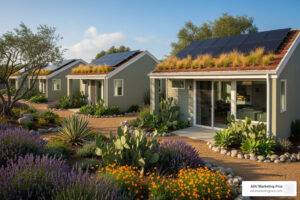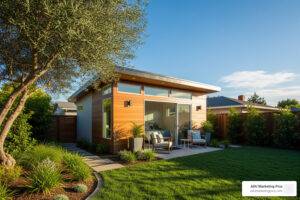
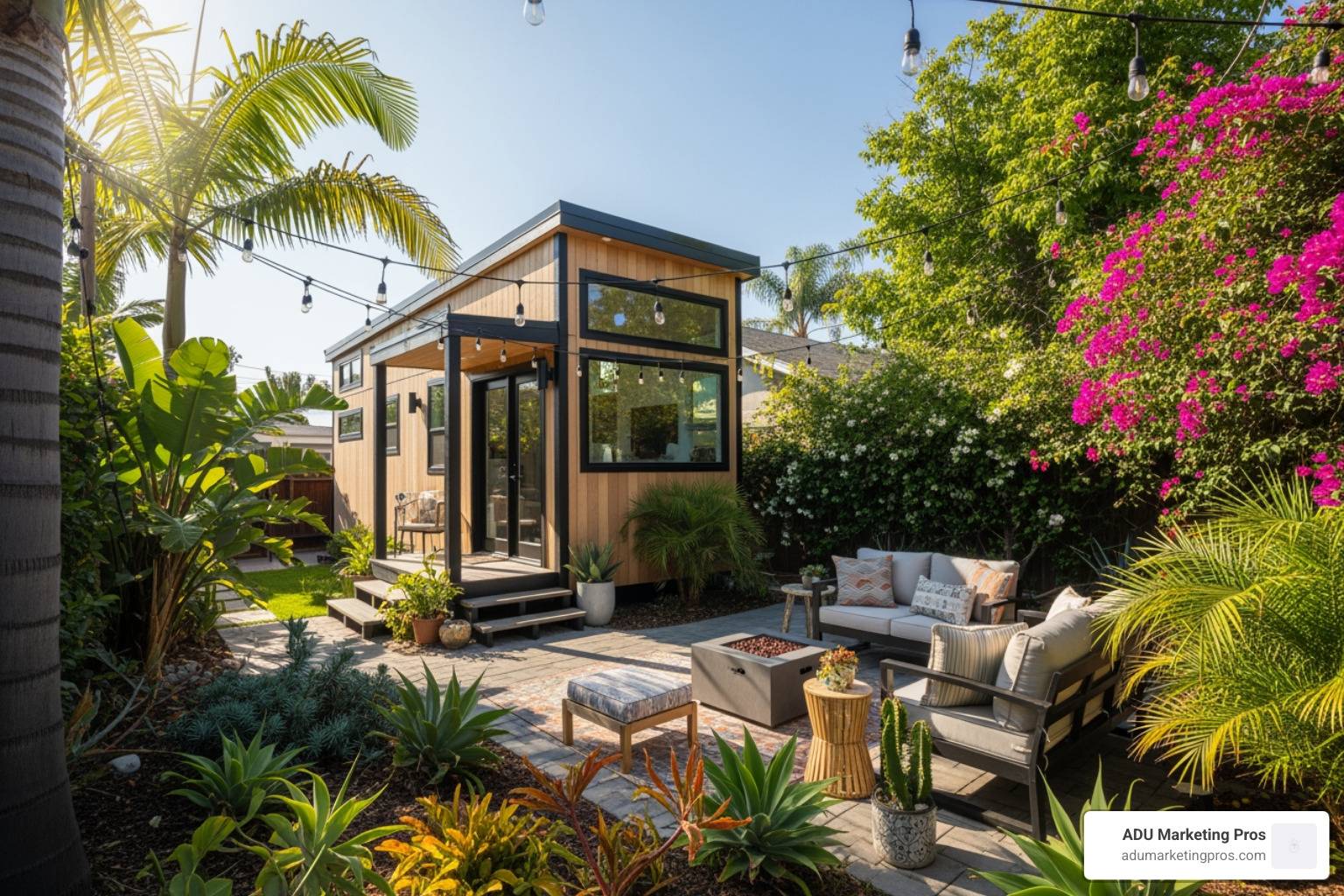
Why Tiny Homes Are Reshaping Los Angeles’s Housing Landscape
In Los Angeles, the term tiny homes refers to two very different worlds. For homeowners and builders, it’s about lifestyle and investment—adding a backyard Accessory Dwelling Unit (ADU) for rental income or affordable living. For the city, it’s an emergency response to a staggering crisis where over 75,000 people in LA County are homeless and renters spend an average of 47% of their income on housing.
These two worlds—the private ADU market and the city-funded villages for the unhoused—rarely overlap. The private market offers prefab models starting around $44,500 and custom builds that can exceed $72,000, promising a path to sustainable, affordable homeownership. In contrast, the village model uses rapidly deployable 64-square-foot shelters as a temporary bridge to permanent housing.
This article explores both sides of the tiny homes Los Angeles story. We’ll cover the costs, legal problems, and opportunities in the private market, while also examining the city’s village program—its successes, its profound challenges, and the lived experiences of its residents. For builders, homeowners, and anyone trying to understand LA’s housing landscape, this is a look at the gap between the tiny home promise and its complex reality.
The Tiny Home Market in Los Angeles: What’s For Sale?
The tiny homes Los Angeles market is diverse, ranging from mobile mini-houses to fully permitted backyard dwellings. Understanding the options and their true costs is key.
Shoppers will find several categories:
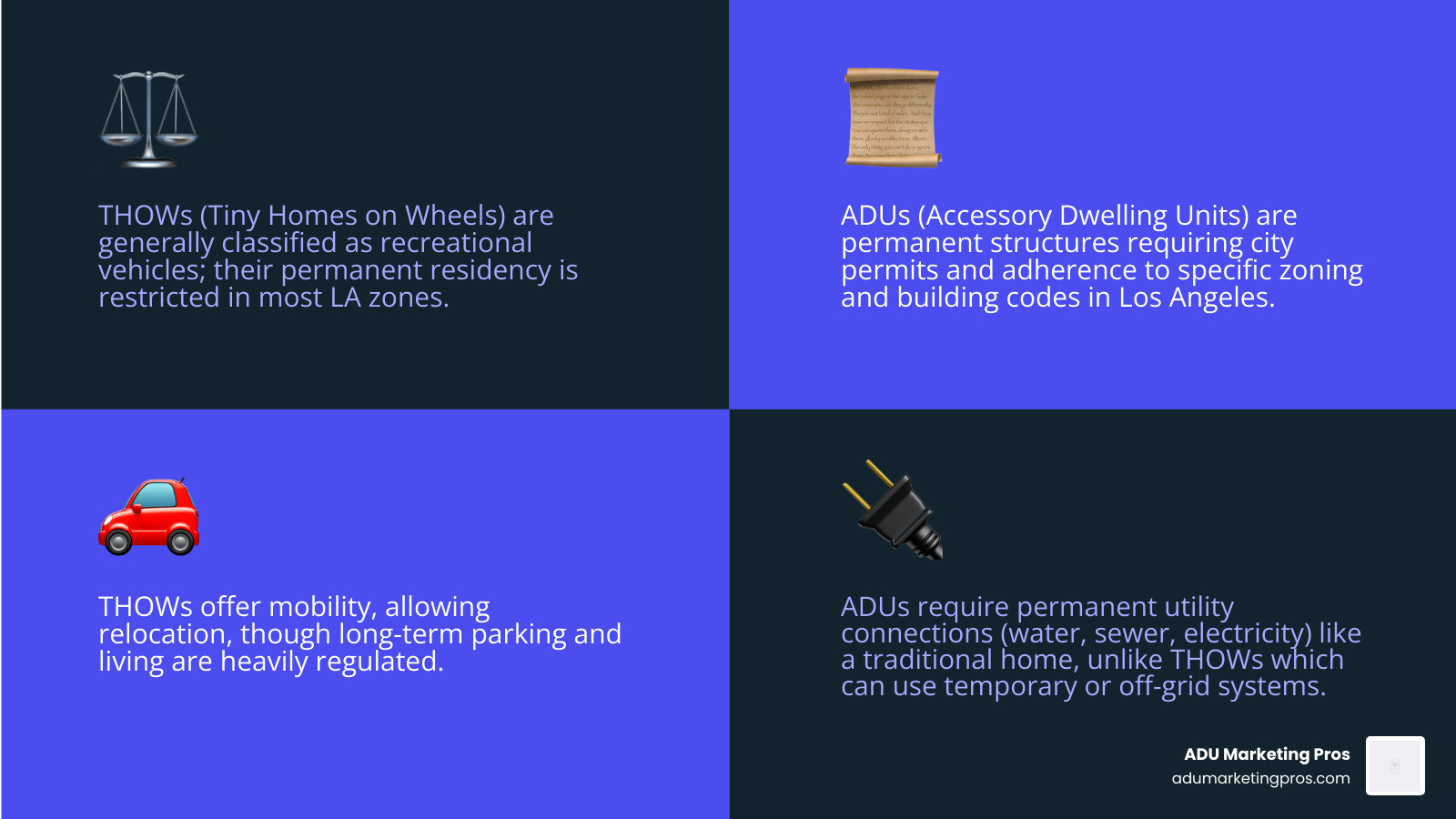
- Tiny Houses on Wheels (THOWs): These popular, mobile structures are generally classified as RVs, making their long-term placement on residential lots legally complicated.
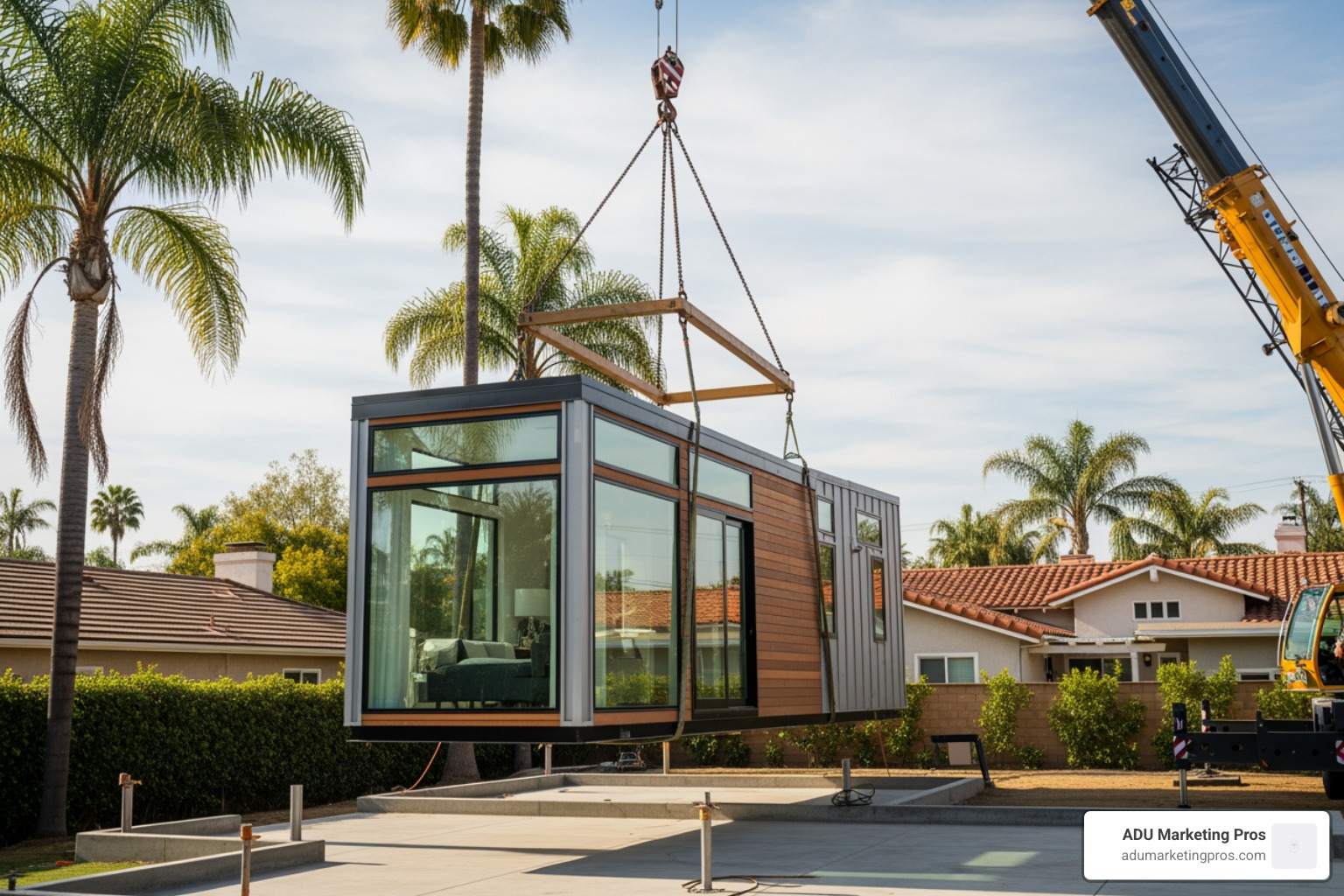
- Modular and Prefab Homes: Factory-built units that are assembled on-site. They offer faster construction and, once placed on a permanent foundation, can qualify as legal ADUs.
- Site-Built ADUs: These are constructed from the ground up on a permanent foundation, ensuring full compliance with local building codes. This is the most straightforward legal path for adding a backyard home.
Prices vary widely. A small THOW might start around $44,500, while a modular home could be $108,000 or more. Basic shells can be found for under $7,000, but these lack plumbing, electrical, and finishes. Most tiny homes for sale are 150 to 420 square feet, though legal ADUs can be up to 1,200 square feet. They typically feature compact kitchens, efficient bathrooms, and clever storage, often with lofted bedrooms to save space. For a deeper dive, learn more about the ADU vs. Tiny House distinction.
Understanding the Cost to Build or Buy a Tiny Home in Los Angeles
The advertised price is rarely the final cost. One LA builder’s project, initially estimated at $40,000, ultimately cost $72,000—even with the owner doing much of the work. Hidden costs are significant and include:
- Permits and Fees: The complex permitting process in Los Angeles can take 7 months or more and involves substantial, non-negotiable fees.
- Land and Site Preparation: Land value in LA is immense. Even on an existing lot, preparing the site with grading and a foundation can be expensive.
- Utility Hookups: Connecting to sewer, water, and electrical lines is often a project’s most expensive surprise, potentially requiring extensive trenching and service upgrades.
- Delivery, Installation, and Taxes: These costs add thousands to the final bill for any prefab or modular unit.
For a complete financial picture, research the full Los Angeles ADU Cost.
Navigating Legal and Zoning for Tiny Homes Los Angeles
The legal landscape hinges on one key factor: foundation. To be a legal, permanent dwelling in a backyard, a tiny home must be built on a permanent foundation and comply with all Accessory Dwelling Unit (ADU) regulations.
Movable tiny homes (THOWs) are typically classified as recreational vehicles (RVs) and are not permitted for permanent occupancy on most residential lots. While some pilot programs exist, the ADU route is the only established legal path for homeowners. The permitting process, though lengthy at around 7 months, is non-negotiable for safety, legality, and property value.
Fortunately, California is working to simplify this. A recent bill streamlining zoning aims to speed up the construction of interim housing. However, navigating local rules remains complex. For detailed guidance, our Guide to Los Angeles ADU Regulations: What You Need to Know provides a step-by-step overview.
A Tale of Two Cities: Tiny Home Villages for LA’s Unhoused Population
While some Angelenos build ADUs, the city is using a different kind of tiny home to address a humanitarian crisis: 75,312 people experiencing homelessness in LA County. The city itself contains 28% of California’s entire unsheltered population, demanding an urgent, large-scale response.
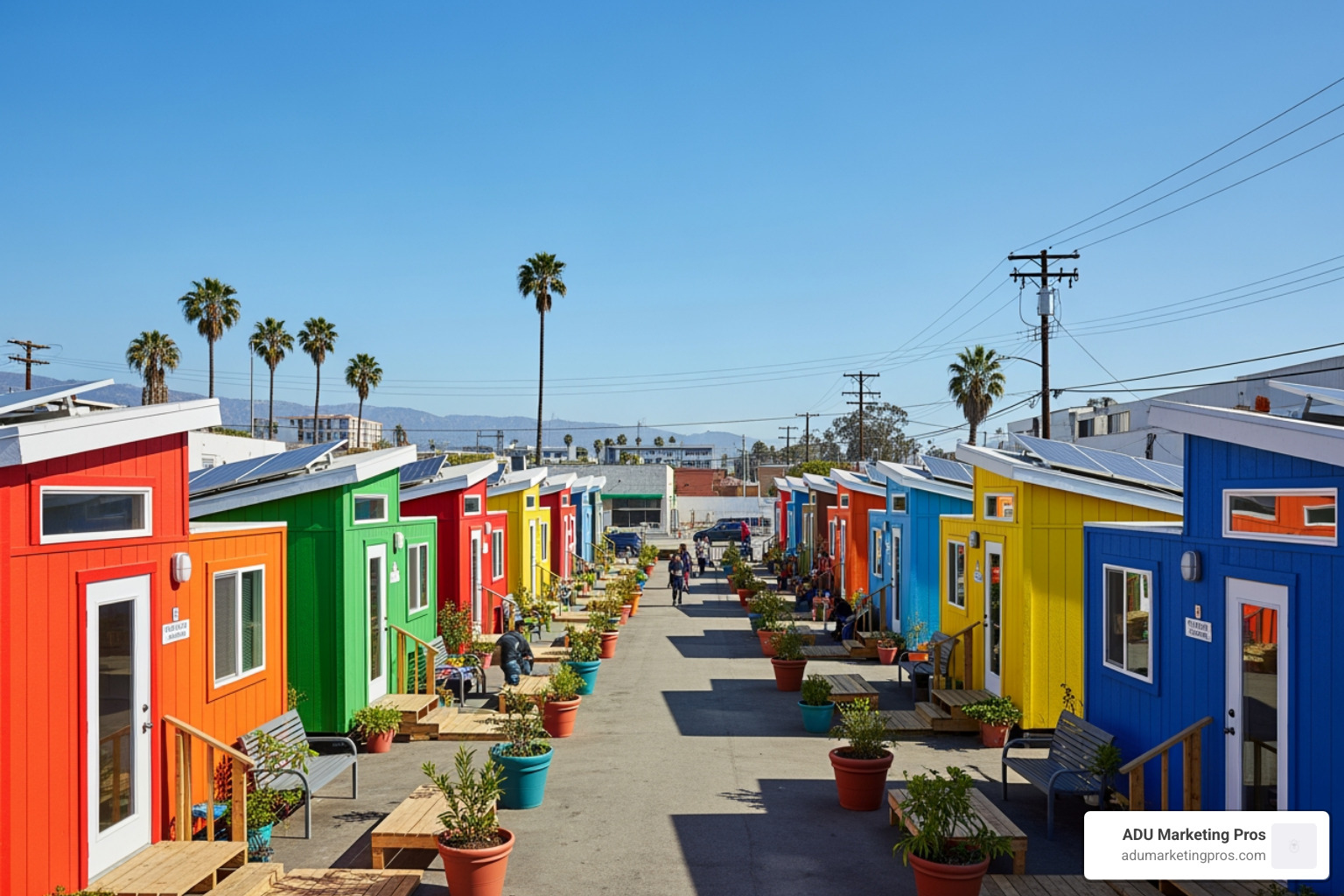
Enter the village model—LA’s ambitious strategy to create interim housing. These are not private homes but clusters of factory-built shelters on city land, operated by nonprofits like Hope the Mission. By 2023, twelve villages were operational, providing over 1,300 units as a bridge from the streets to permanent housing.
These villages offer more than just a roof. Residents receive comprehensive support, including case management, mental health services, job training, and three meals a day. The facilities are pet-friendly and include showers, laundry, and security. The financial commitment is substantial, with the city funding construction and the county funding up to $300 million over five years for supportive services. While each Pallet shelter costs a relatively low $7,500, the total cost for a village, including infrastructure, can run into the millions.
The Chandler Boulevard Village: A Case Study in Design and Implementation
The Chandler Boulevard Tiny Homes Village, LA’s first, became the blueprint for the program. Opened in February 2021, it earned an American Institute of Architects’ 2022 Housing Award for its thoughtful, non-institutional design. Lehrer Architects LA used bright colors and creative layouts to foster a sense of community and dignity.
The 39 Pallet shelters, each 64 sq. ft., were assembled in about an hour each on no-dig foundations, demonstrating the potential for rapid deployment. Though site prep, like extending a sewer line 600 feet, proved costly. Each unit includes two beds, heat, AC, and a locking door for privacy and security. Communal trailers house restrooms, showers, and laundry, while a dog park and outdoor dining area complete the site. Chandler proved that transitional housing could be built quickly and designed with care, setting a high standard for projects that followed. For more on efficient building, see our insights on Prefab ADU Los Angeles.
The Reality of Village Life: Successes, Failures, and Resident Experiences
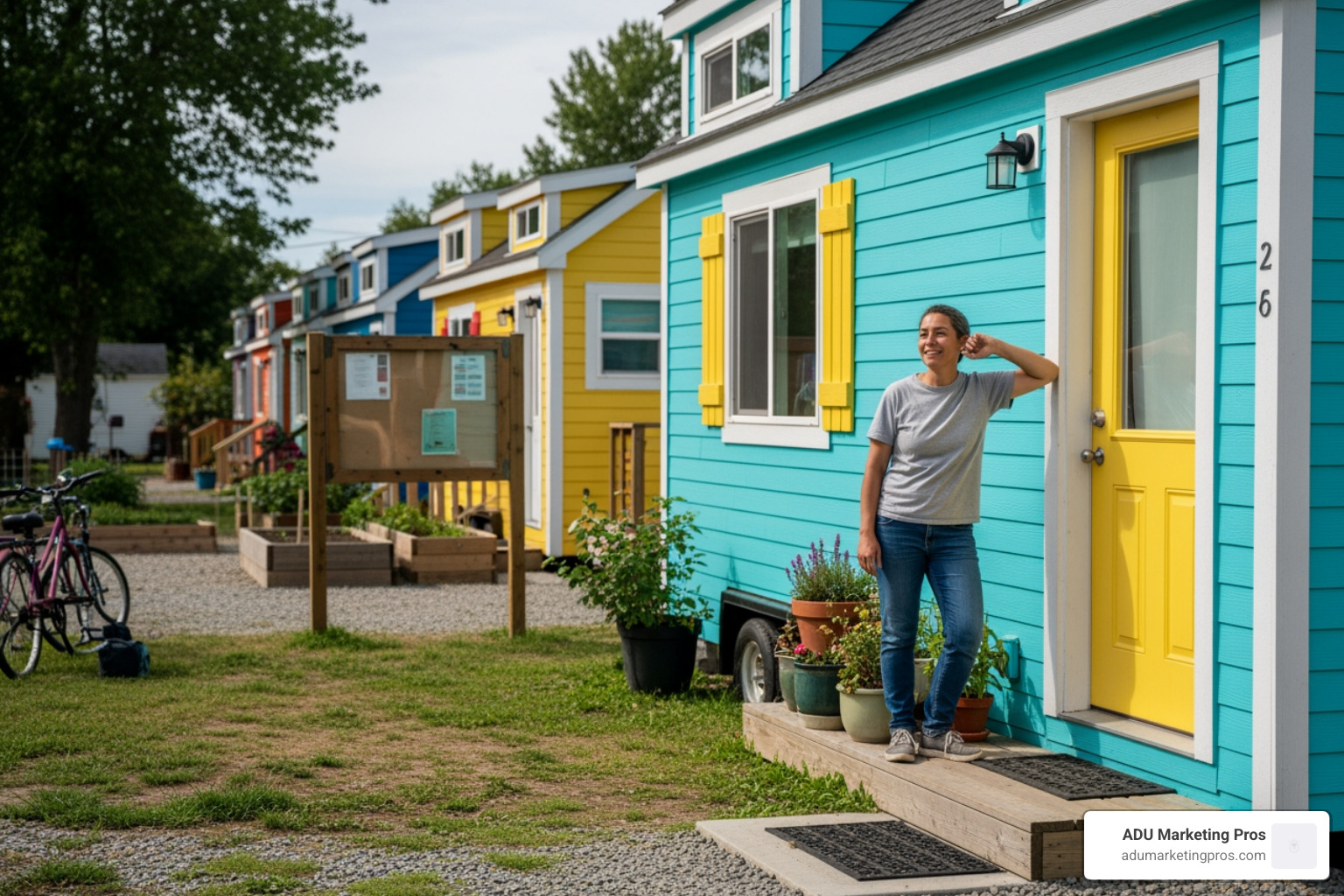
The tiny homes Los Angeles has built for its unhoused population were intended to be a short-term bridge to stability. However, the gap between this promise and the reality for residents is stark.
The data reveals significant challenges. The average stay is 153 days, far exceeding the 90-day goal. More troubling, 53% of residents returned to homelessness after leaving, while only 23% successfully moved to permanent housing. The human cost is also devastating: thirty-three people died across 10 villages in a 13-month period, raising serious questions about the level of care and safety provided.
Residents report a daily struggle with basic living conditions. Dozens have cited maintenance failures like water leaks and broken heaters, leading to moldy belongings and frigid nights. Safety is another major concern, with reports of drugs, alcohol, and weapons inside facilities, along with theft and harassment.
The support systems designed to help residents are often strained. Many residents described staff as unresponsive or slow to address complaints, a problem exacerbated by high staff turnover that prevents the building of trust with case managers. Operational issues like long waits for inadequate restrooms and poor-quality food further compound the difficulties. While the villages provide crucial, immediate shelter, they struggle to function as an effective pathway to long-term stability.
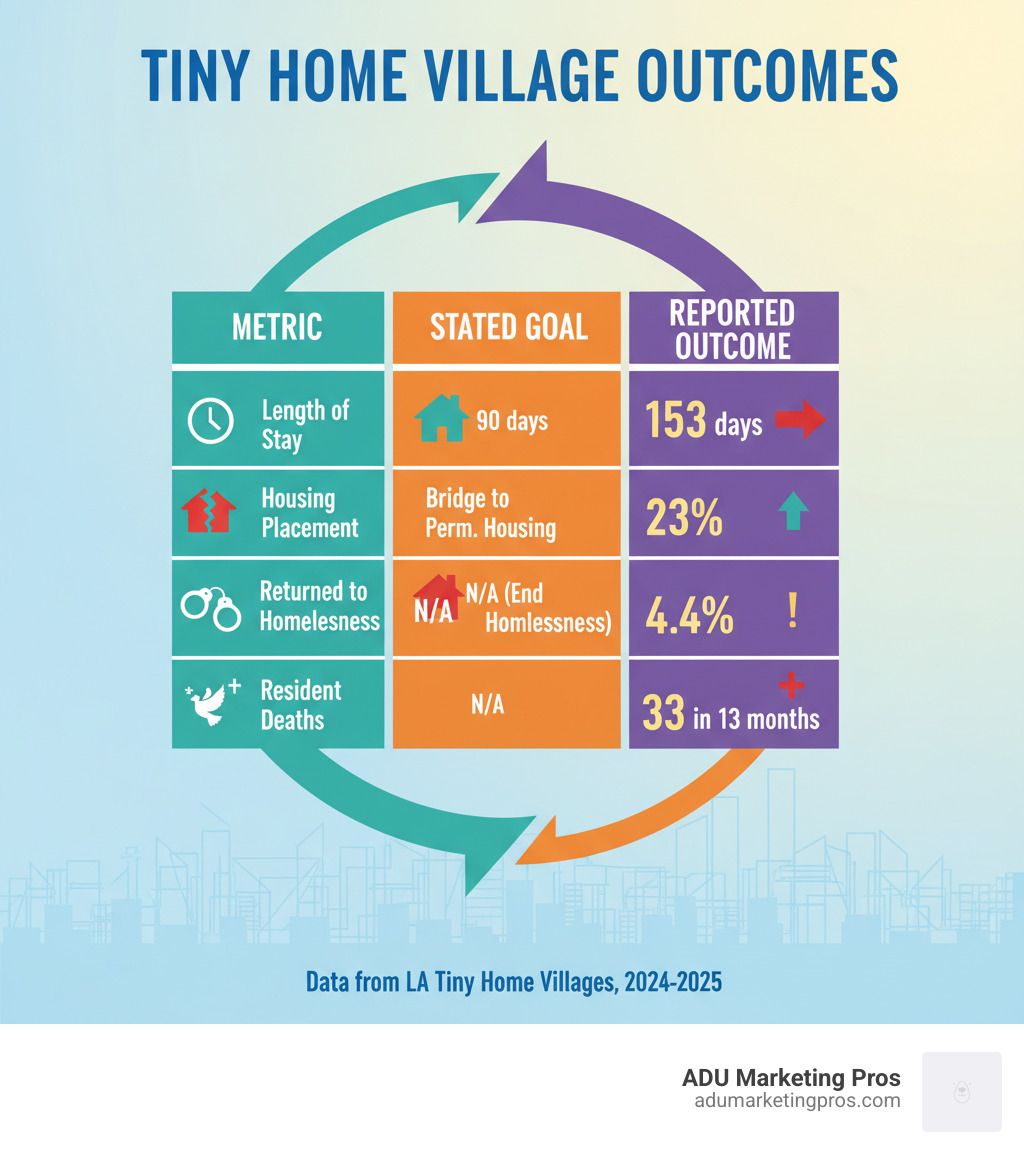
| Metric | Stated Goal | Reported Outcome (Avg. / % of residents) |
|---|---|---|
| Length of Stay | 90 days | 153 days |
| Moved to Permanent Housing | Bridge to permanent housing | 23% |
| Returned to Homelessness | N/A (goal is to end homelessness) | 53% |
| Ended in Jail/Prison | N/A | 4.4% |
| Resident Deaths | 0 | 33 in 13 months |
Innovative Approaches and the Future of Tiny Homes Los Angeles
Beyond the city’s emergency shelters, tiny homes Los Angeles are at the center of innovative solutions for other housing challenges, from student housing to ultra-affordable communities.
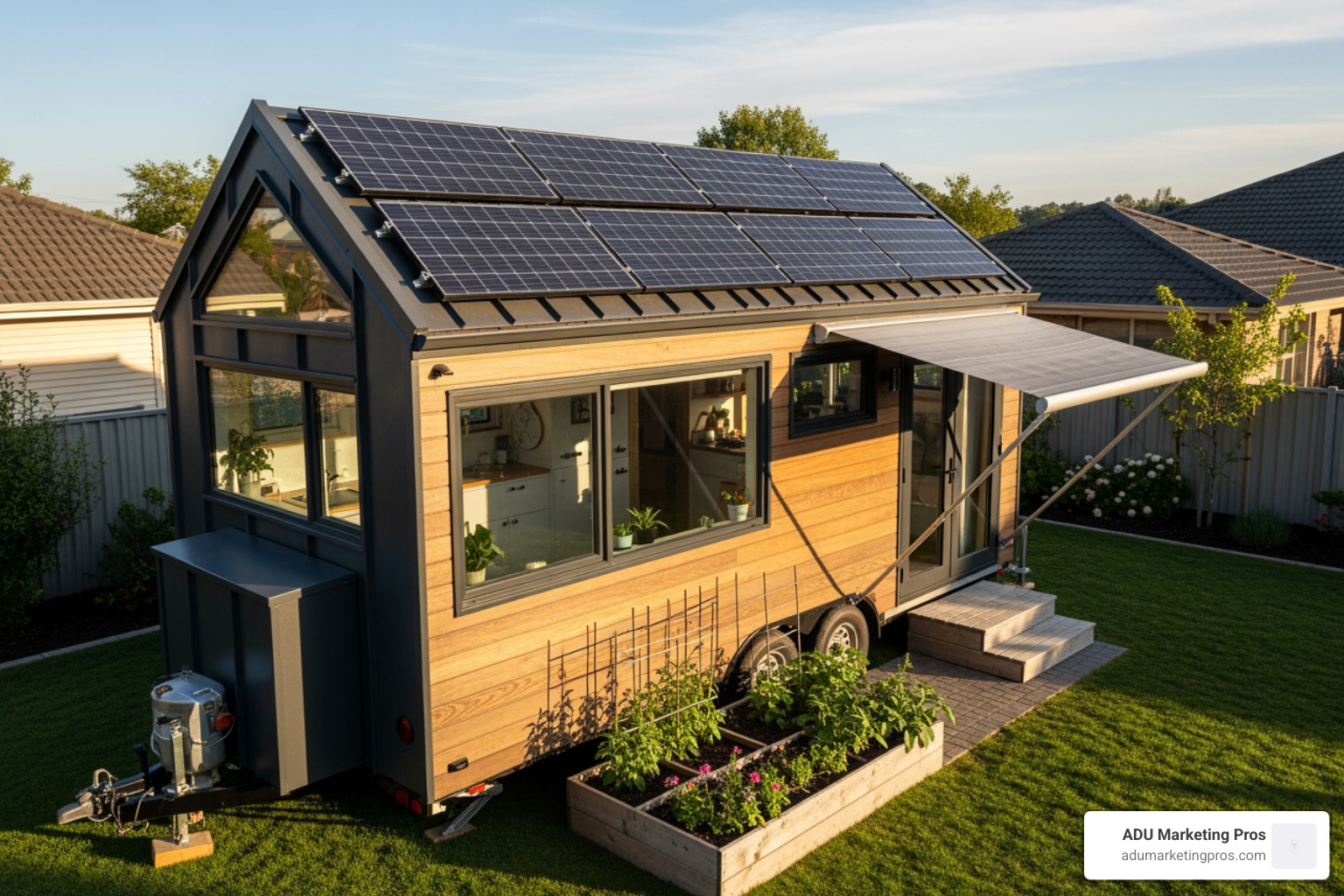
Our Backyard Homes (OBH), a non-profit, provides housing-insecure college students with self-sustaining tiny houses on wheels. These off-grid homes generate their own power and water, bypassing costly utility hookups and complex permits. OBH partners with homeowners to place these units in backyards, creating a simple, profitable arrangement for the host and safe housing for the student.
Another initiative, ThriveLA, aims to build ultra-affordable communities with rents as low as $240 per month. They achieve this by using lower-cost land in areas like the Antelope Valley and employing efficient, factory-built construction methods.
These examples highlight a move toward smarter, more sustainable small-scale living. However, for long-term stability and wealth creation, the role of ADUs remains paramount. As permanent structures, ADUs offer a durable solution for homeowners to generate rental income or house family. Builders who master this market are well-positioned for success. For expert guidance, see our resources for the ADU Builder Los Angeles.
Policy is slowly catching up, with new laws like a bill streamlining zoning intended to reduce red tape. Still, a debate continues over focusing on interim shelters versus permanent housing. Some research on housing policy suggests that broader strategies, like expanding low-income housing and vouchers, are essential for a comprehensive solution.
Frequently Asked Questions about Tiny Homes in Los Angeles
How much does a tiny home cost in Los Angeles?
Costs vary widely. A basic tiny house on wheels (THOW) may start around $44,500, while a modular micro-house can exceed $100,000. Building a custom ADU often costs $72,000 or more once you factor in permits, site prep, and utility connections, which can add tens of thousands to the base price.
Can I legally put a tiny home in my backyard in LA?
Yes, if it is built on a permanent foundation and qualifies as an Accessory Dwelling Unit (ADU). This is the clearest legal path. Movable tiny homes on wheels (THOWs) are typically considered RVs and cannot be used for permanent residence on most private lots. Always check the latest ADU Guidelines Los Angeles.
Are tiny home villages a successful solution for homelessness in LA?
They are a mixed success. The villages provide crucial, immediate shelter in a more private and dignified setting than traditional shelters. However, they face significant operational challenges and have a low success rate in transitioning residents to permanent housing, with only 23% moving to stable homes and 53% returning to homelessness. They are an important interim step but not a complete long-term solution.
Conclusion: Is a Tiny Home in Los Angeles Right for You?
The world of tiny homes Los Angeles exists in two distinct but parallel universes. One world is that of the homeowner and builder, creating backyard ADUs for investment, family, or a minimalist lifestyle. The other is the city’s emergency response, using shelter villages as a lifeline for its unhoused population.
For those in the purchase and build market, tiny homes offer real opportunity, but they are not a cheap shortcut. A starting price of $44,500 can easily double after accounting for a 7-month permit process, site work, and utility hookups. Legality is also key: a permanent foundation and ADU compliance are the only sure path for a backyard home.
Meanwhile, the village program, while well-intentioned, struggles with its core mission. With 53% of residents returning to homelessness and significant operational failures, it serves more as a temporary stopgap than a bridge to stability. Yet, innovative models for student housing and ultra-affordable communities show a promising future for small-scale living.
For builders and architects, navigating this complex market is the key to success. Clients need guidance on realistic costs, legal pathways, and long-term value. Your role is not just to build, but to be an expert guide through a significant financial and logistical process. By focusing on the durable, value-adding solution of ADUs, you can contribute meaningfully to LA’s housing needs.
The tiny home story in LA is still being written. For those ready to engage with the reality over the fantasy, the opportunities are substantial. If you’re a builder looking to connect with clients in this growing market, explore our resources for Tiny House Builders California to learn how to market your expertise effectively.