

Why Tiny House Blueprints and Plans Are Your Gateway to Intentional Living
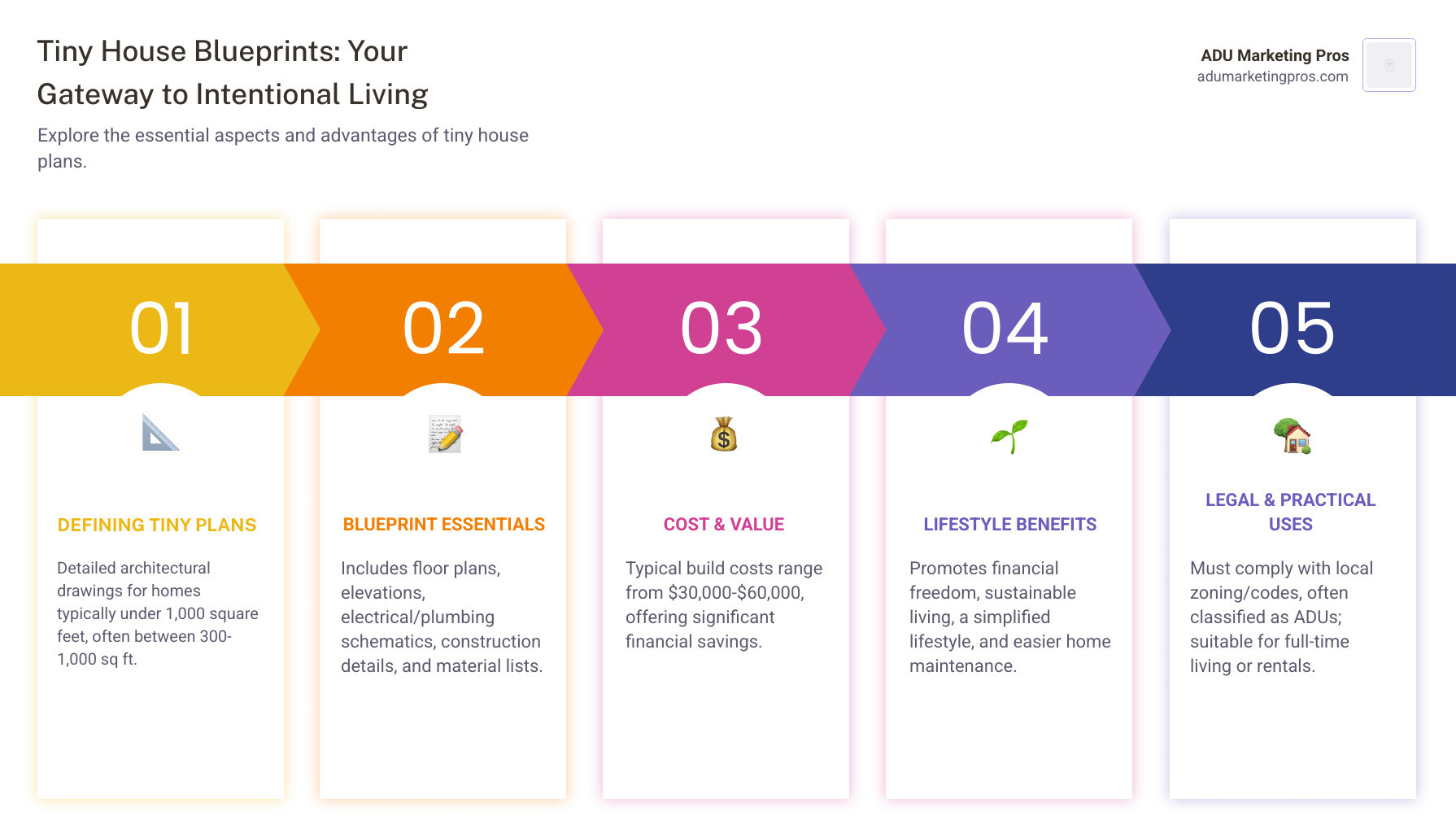
Tiny house blueprints and plans are detailed architectural drawings that guide the construction of homes typically under 1,000 square feet, offering a roadmap to a more affordable, sustainable, and intentional lifestyle.
Quick Answer: What Are Tiny House Blueprints and Plans?
- Size Range: Typically 500-1,000 square feet (some as small as 300 sq ft)
- Typical Cost: $30,000-$60,000 to build ($150-$400 per square foot)
- What’s Included: Floor plans, elevations, construction details, electrical/plumbing schematics, and material lists
- Common Uses: Full-time living, vacation homes, guest cottages, or rental properties (ADUs)
- Key Benefits: Lower cost of living, reduced environmental impact, simplified lifestyle, easier maintenance
- Legal Considerations: Must comply with local zoning laws and building codes; often classified as Accessory Dwelling Units (ADUs)
The tiny house movement is more than a trend; it’s a fundamental shift in how we think about home, proving that living small can lead to living large in ways that truly matter: financial freedom, environmental responsibility, and a life focused on experiences over possessions. It represents a conscious rejection of the decades-old “bigger is better” mantra, embraced by a diverse group of people—from millennials seeking to avoid crushing mortgage debt to retirees looking to downsize and simplify.
As traditional home prices soar, tiny houses offer a tangible and achievable alternative. They provide all the essentials—kitchen, bathroom, and living spaces—in a thoughtfully designed footprint that costs a fraction of a conventional home. This isn’t about deprivation; it’s about efficiency and purpose. Whether you’re a DIY builder ready for a challenge, a construction professional tapping into a growing market, or a homeowner dreaming of a backyard retreat, understanding these plans is the first step to turning your vision into a structurally sound and beautiful reality.
What Are Tiny House Plans and Why Are They So Popular?
Across the country, people are questioning whether bigger is better, finding their answer in the tiny house movement. This is a genuine response to a collective desire for a more intentional, manageable life. Tiny house blueprints and plans are the practical tools that make this lifestyle shift possible, offering a roadmap to a home that aligns with values of simplicity, affordability, and sustainability.
Defining Tiny House Blueprints and Plans
A tiny house plan is a detailed set of architectural drawings for constructing a small home, typically under 1,000 square feet, with most falling between 500 and 1,000 square feet. These professional blueprints are comprehensive technical documents that include everything a builder needs to construct a safe, durable, and code-compliant home:
- Floor plans show the layout from a top-down perspective, detailing room dimensions, the flow of space, and the precise placement of walls, doors, and windows.
- Elevations present all four exterior sides of the home, illustrating finishes, rooflines, and window and door styles.
- Sections and details are cross-section views that reveal the home’s anatomy. They show how the structure is assembled, from the foundation connection to the wall framing, insulation layers, weather barriers, and roof construction. These are critical for ensuring the home is strong and energy-efficient.
- Electrical and plumbing plans map out the entire system, showing the location of every outlet, switch, light fixture, drain, and water line.
- A material list (or “materials take-off”) specifies the quantity and type of materials needed, from the number of 2x4s and sheets of plywood to the specific models of windows and doors to purchase.
These plans are your foundation, ensuring your structure is sound, functional, and compliant, whether you’re building it yourself or hiring a contractor. For permanent structures, these plans share many similarities with ADU building plans, and many jurisdictions classify foundation-based tiny homes as accessory dwelling units.
The Appeal of Living Small: Key Benefits
Building a tiny house is about upsizing your life in the ways that matter. The benefits extend far beyond the compact dwelling itself.
Financial freedom is a primary motivator. With build costs typically between $30,000 and $60,000, tiny homes are a fraction of the cost of traditional houses. This often means a small loan paid off in under a decade, or no mortgage at all, compared to a 30-year commitment. The savings continue with dramatically lower utility bills, property taxes, and maintenance costs. This financial breathing room allows you to work less, save more, travel, or pursue passions that a large mortgage would make impossible.
Sustainable living is another key advantage. A smaller home requires far less energy to heat and cool and fewer construction materials, significantly reducing waste and environmental impact. This makes tiny homes an inherently eco-friendly small homes option that naturally lowers your carbon footprint.
A simplified lifestyle is a liberating side effect. With less space for “stuff,” you become more intentional about your possessions, curating items you truly love and need. This leads to less clutter, less stress, and more time for experiences. Easier maintenance is another gift, as less space means less to clean, repair, and worry about—freeing up your weekends.
Finally, tiny homes offer remarkable design flexibility. They can be built in any architectural style, from modern to rustic, and placed in diverse locations, from a San Jose backyard to a remote mountain retreat.
The Financial and Legal Landscape of Tiny Homes
Before breaking ground, you must understand two critical pieces of the puzzle: the cost and the legal requirements. The financial and legal framework for tiny house blueprints and plans varies dramatically by location, especially between urban areas like the San Francisco Bay Area and more rural regions.
Breaking Down the Costs of Building a Tiny House
Tiny houses are significantly cheaper than conventional homes, but they aren’t free. On average, expect to spend between $150 and $400 per square foot, which translates to roughly $30,000 to $60,000 for a 500-square-foot home. Your final price tag depends on several key factors.
The biggest variable is DIY vs. professional build. About 73% of tiny house owners build their own homes, which can slash costs by 20-60%. However, this requires months of hard work and skills in framing, electrical, and plumbing. Hiring a professional ensures quality and a faster timeline, but at a higher cost.
Materials and finishes also move the needle. Custom cabinetry and high-end appliances will push you toward the $400/sq ft mark, while standard finishes and reclaimed materials keep costs down. Your foundation type also plays a role; a tiny house on wheels (THOW) requires a specialized trailer, while a permanent foundation involves excavation and concrete work.
One major hurdle is financing. Traditional mortgages are rarely available for tiny homes due to their lower value and classification issues. Common financing routes include: RV loans for certified THOWs, unsecured personal loans (which have higher interest rates), or financing offered directly by a tiny home builder. If you’re building a tiny house as a permanent ADU on your property, you may be able to use a home equity loan or HELOC.
For more context on construction costs, the National Association of Home Builders offers valuable data, and the principles for estimating the cost to build an ADU are also highly relevant.
| Aspect | DIY Builder | Professional Builder |
|---|---|---|
| Initial Cost | Potentially 20-60% lower | Higher, but includes labor and project management |
| Time Commitment | Very high, requires personal dedication | Lower for homeowner, faster completion possible |
| Skill Level | Moderate to expert in various trades required | No specific building skills required from homeowner |
| Customization | High, direct control over every detail | High, but requires clear communication with builder |
| Quality Control | Dependent on personal skill and effort | Guaranteed by builder’s expertise and reputation |
| Warranty/Support | Limited or none | Typically includes warranties and post-build support |
Navigating Zoning Laws and Building Codes
The legal side of tiny living can be a maze. Regulations are inconsistent and vary from city to city, so doing your homework is critical.
Zoning regulations dictate where you can place a tiny home. The good news for Californians is that many cities—including Los Angeles, San Jose, and San Francisco—have embraced Accessory Dwelling Units (ADUs), so a tiny house on a permanent foundation often fits into existing ADU-friendly regulations. However, always check your local zoning map for minimum square footage requirements or other restrictions.
Building codes ensure your home is safe. A tiny house on a foundation must typically meet the International Residential Code (IRC). Some jurisdictions, including parts of California, have adopted Appendix Q of the IRC, which provides specific standards for homes under 400 square feet. This is a huge win for the tiny home movement, as it provides clear guidelines for features unique to tiny homes. For example, it allows for sleeping lofts with ceiling heights as low as 5 feet, access to lofts via ladders or alternating tread devices, and specific requirements for emergency egress windows in lofts.
The ADU classification can be your best friend. In California, a tiny house on a permanent foundation is often classified as an ADU. This is great news, as the state has streamlined the permitting process for ADUs to address housing shortages. Understanding the difference between an ADU vs. a tiny house in your area is crucial.
Permitting is almost always required for foundation-based homes. Before purchasing tiny house blueprints and plans, schedule a meeting with your local building department. Whether you’re in Sunnyvale, Palo Alto, or elsewhere, understanding your area’s ADU requirements is the first step to a legal and successful build.
Designing for Life: Maximizing Space in Your Tiny House Blueprints and Plans
The genius of a tiny house lies in its design, where every square inch is purposeful. The right tiny house blueprints and plans transform a small space into a highly livable home, proving that “big living” can happen in a small footprint.
Smart Storage and Multi-Functional Design
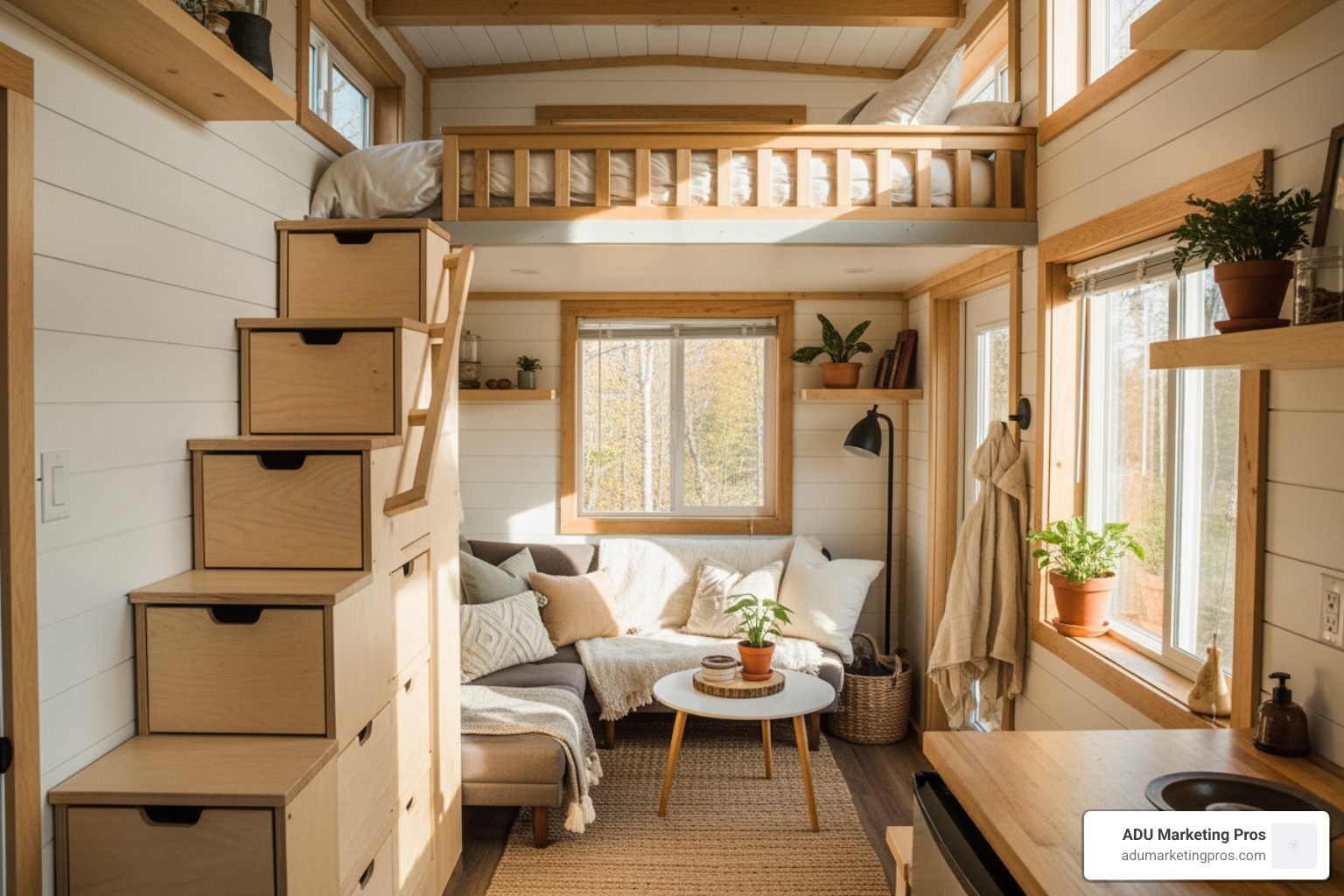
When square footage is limited, clever storage is everything. The core principle of tiny house design is making a small space feel spacious and uncluttered by embedding functionality into every surface.
- Build Vertically: Use tall, narrow shelving, lofted beds, and storage that reaches the ceiling to draw the eye upward and maximize cubic feet without consuming precious floor space.
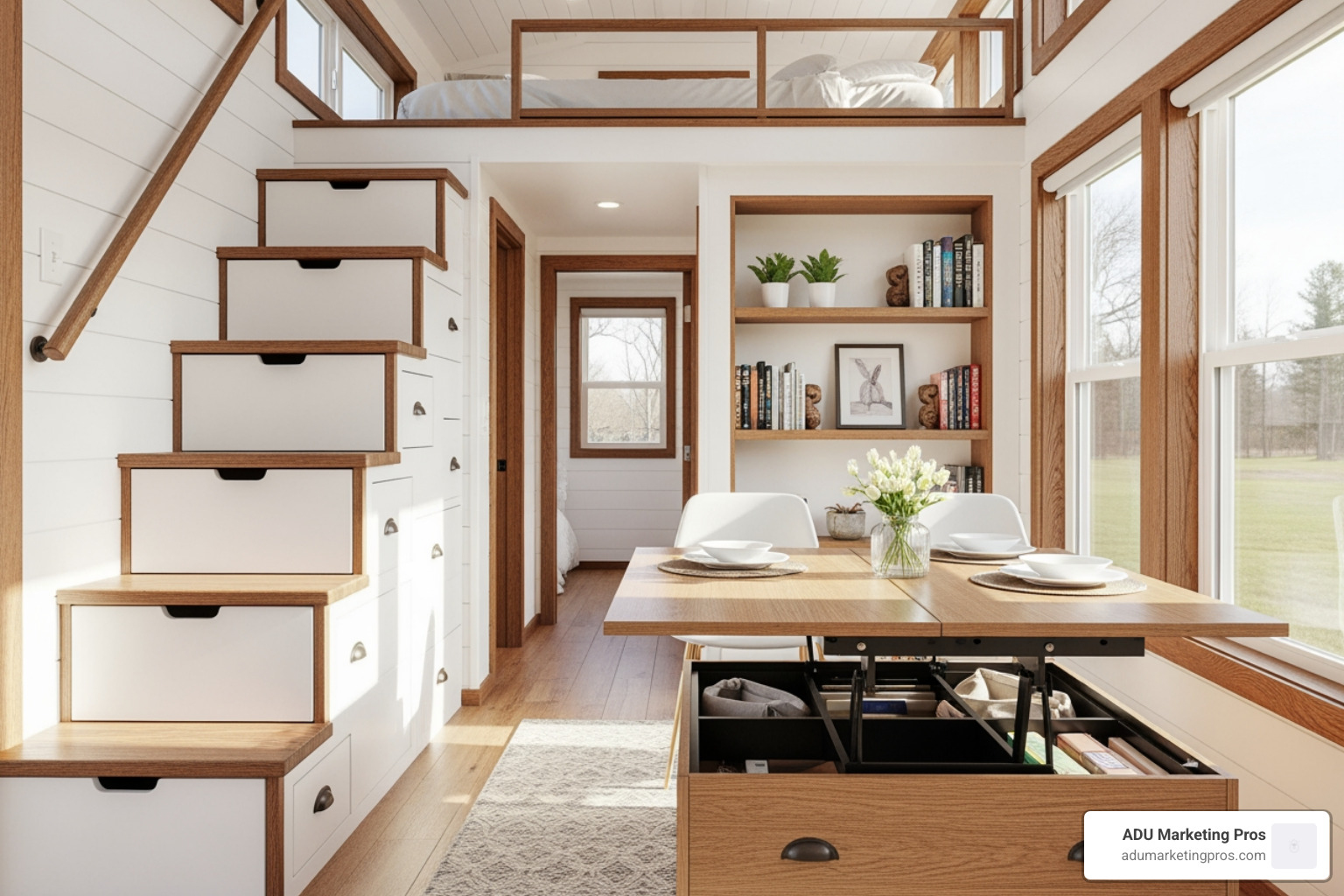
- Embrace Multi-Purpose Furniture: A sofa that converts to a guest bed, a dining table that folds down from the wall, an ottoman with hidden storage, or a coffee table that rises to dining height are essential for flexibility.
- Use Every Nook: The space under stairs is a classic spot for drawers or cabinets. Likewise, the toe-kick area under kitchen cabinets can house flat drawers, and the space beneath beds can be transformed into functional storage with pull-out drawers or custom shelving.
- Consider Custom Cabinetry: While a larger investment, custom cabinets are designed to fit perfectly into tight or unusually shaped spaces, maximizing efficiency in kitchens and bathrooms. For inspiration, explore ADU interior design ideas that apply beautifully to tiny homes.
Exploring Architectural Styles and Types
Tiny houses come in a wide variety of styles to suit any taste, from the urban backyards of San Francisco to the mountains near San Diego.
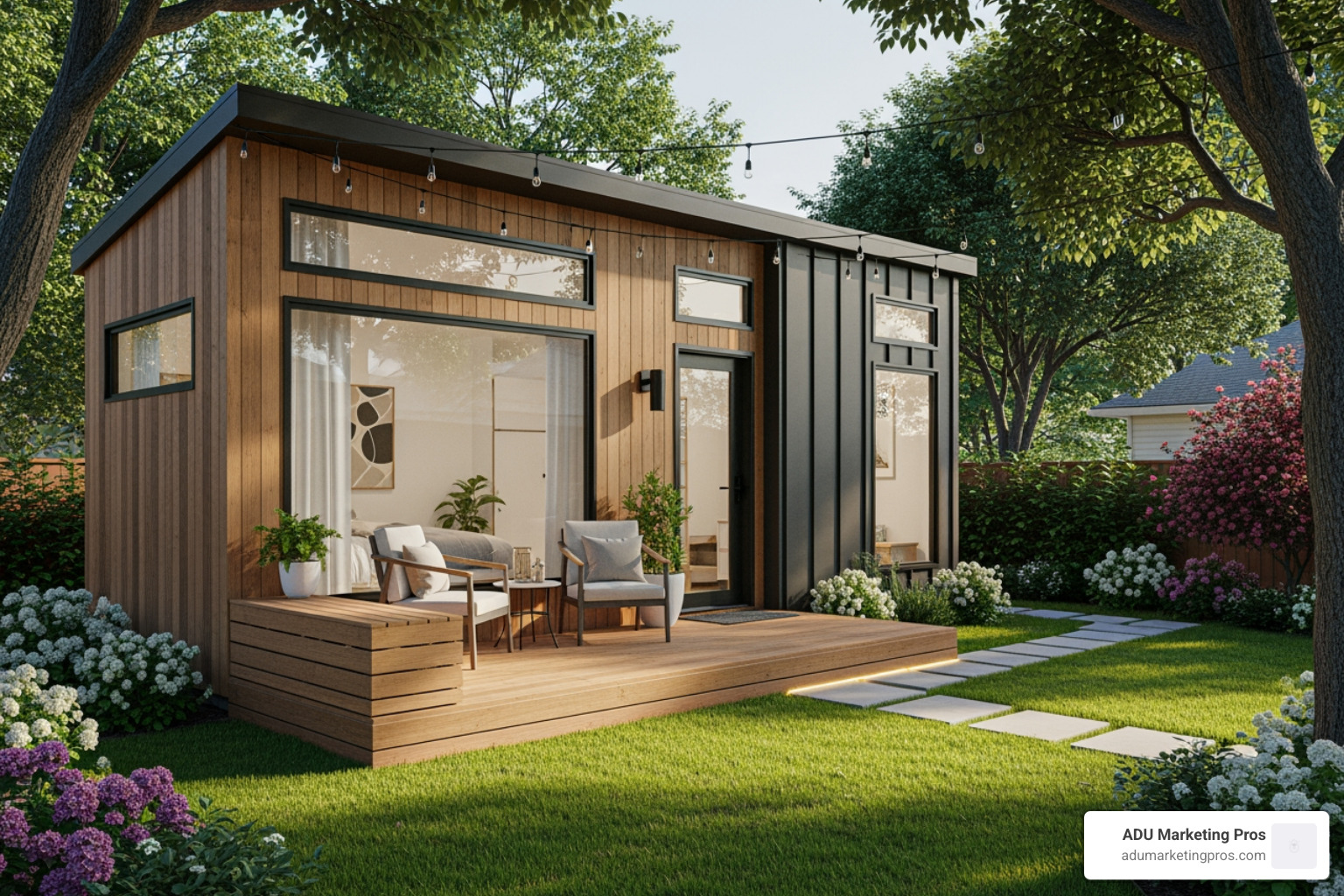
- Modern: Characterized by clean lines, simple forms, and large windows, modern designs often feature flat or shed roofs, a mix of materials like metal and wood, and a minimalist aesthetic that feels spacious and uncluttered.
- Rustic Cabin: This style uses natural wood siding, exposed beams, and a warm, woodsy interior to create a cozy, retreat-like feel. It often includes a covered porch and traditional rooflines.
- A-Frame: The iconic steeply pitched roof creates a dramatic, soaring interior space and is highly practical for shedding snow in colder climates. The unique shape offers opportunities for large triangular windows that flood the interior with light.
- Cottage: Gabled roofs, front porches, decorative trim, and features like window boxes evoke a sense of quaint, traditional charm. This style feels welcoming and timeless.
Beyond aesthetics, tiny homes are categorized by their foundation. Tiny houses on wheels (THOWs) are built on trailers for mobility, while foundation-based homes are permanent structures. In California, these are often classified as ADUs and follow detached ADU plans, offering stability and a more traditional home experience.
Essential Features for Comfortable Tiny Living
To ensure your tiny house is a comfortable long-term home, look for plans that incorporate these key features:
- Open-Concept Layouts: Combining the kitchen, living, and dining areas into one fluid space creates a sense of spaciousness and prevents the home from feeling choppy or cramped.
- Sleeping Lofts: This classic tiny house feature frees up main-floor space for living areas. Look for plans that offer access via storage-integrated staircases rather than just ladders for added safety and functionality.
- Abundant Natural Light: Large windows, skylights, and glass doors are critical. They make a space feel larger, more open, and connected to the outdoors, which is vital for psychological well-being in a small space.
- Indoor-Outdoor Flow: A covered porch, deck, or large patio doors effectively expand your living area. This is especially desirable in California’s mild climate, creating an outdoor room for dining or relaxing.
- Efficient Kitchen and Bath: These essential spaces must be compact yet highly functional. Look for smart ADU kitchen designs with features like apartment-sized refrigerators, 2-burner induction cooktops, and drawer dishwashers. In the bathroom, consider wet baths, wall-mounted toilets, and corner sinks to maximize every inch.
Choosing the Right Tiny House Blueprints and Plans for Your Lifestyle
The best tiny house blueprints and plans are not the most popular or the prettiest—they are the ones that align perfectly with your specific needs, goals, and lifestyle. This step is about practical, honest self-assessment to ensure your chosen design serves your long-term vision.
Matching a Plan to Its Purpose
How you intend to use your tiny house will dramatically influence which plan is best.
- Full-Time Living: You’ll need a durable, four-season design with ample, cleverly integrated storage, a fully functional kitchen, and comfortable living areas. Prioritize high-quality insulation, a robust HVAC system, and permanent utility connections. A ground-floor bedroom might be a non-negotiable for long-term accessibility.
- Vacation Home: You can simplify the design and focus on relaxation and connection to the surroundings. The kitchen can be smaller, and storage less of a priority. Instead, focus on features like large windows for views, a spacious deck for outdoor living, or a dedicated spot for storing recreational gear.
- Rental Property: As an ADU in cities like Los Angeles or San Jose, a tiny house can be a fantastic source of ADU rental income. Choose a durable, low-maintenance design with broad appeal. A studio or one-bedroom layout with standard, easy-to-clean finishes will maximize rental income and minimize vacancy.
The Eco-Friendly Advantage of Tiny Homes
A desire for a more sustainable lifestyle is a compelling driver of the tiny house movement. A well-designed tiny home is one of the most environmentally friendly housing options available.
A smaller space requires far less energy to heat and cool—potentially 45% less than a traditional home—which lowers utility bills and your carbon footprint. Construction also uses fewer materials, and the smaller scale makes it easier to incorporate reclaimed or salvaged items. Perhaps most excitingly, the lower energy needs make off-grid living with solar panels and rainwater collection systems genuinely feasible and affordable, allowing for true self-sufficiency.
For more insights on the building process, learn everything you need to know before building a tiny home on NewHomeSource.
A Step-by-Step Guide to Selecting Your Perfect Tiny House Blueprints and Plans
Ready to find your ideal plan? Follow this practical roadmap.
- Define Your Needs: Be brutally honest. How many people (and pets) will live there? Do you work from home? What are your non-negotiables (e.g., a bathtub, a ground-floor bedroom, a full-size oven)? Plan for hobby storage from the start—where will the guitar, snowboard, or craft supplies go?
- Establish Your Budget: Create an all-in budget that includes the cost of plans, materials, labor (even if it’s your own, value your time), permits, utility hookups, and site work. Crucially, add a 10-20% contingency fund for unexpected costs.
- Assess Your Land: Before choosing a plan, understand your site. Check local regulations like setbacks and height restrictions. Also, consider utility access (water, sewer, electricity), soil conditions (which affect foundation choice), and solar orientation to maximize natural light and passive heating/cooling.
- DIY or Hire a Pro?: Be realistic about your skills, tools, and available time. While 73% of builders are DIY, a project can take months or even years. Hiring a professional costs more but can save you from costly mistakes and ensure a safe, high-quality build.
- Stock vs. Custom Plans: Stock plans ($500-$1,500) are affordable, proven, and offer a quick start. Custom ADU blueprints ($2,000+) offer complete personalization to your exact needs and site but cost more and take longer to develop.
- Consider Modifications: Don’t be afraid to tweak a stock plan. About 36% of customers modify purchased plans. Most providers offer this service for a fee. It’s a great way to get a semi-custom home for less than a fully custom design.
- Vet Your Source: Purchase plans only from reputable designers or architects. Look for customer reviews and photos of completed homes. Check if they offer engineering stamps (often required for permits) and see if their plans have been successfully permitted and built before. A good plan provider will be responsive to questions before and after your purchase.
Frequently Asked Questions about Tiny House Plans
Here are answers to some of the most common questions about tiny house blueprints and plans to help you move forward with confidence.
How much does it cost to build a tiny house from a plan?
Most people spend between $30,000 and $60,000 to build a complete tiny house. Your actual cost will depend on several key factors:
- Location: Construction costs in the San Francisco Bay Area are significantly higher than in more rural parts of California due to labor rates and material costs.
- DIY vs. Pro: A DIY build can cut costs by 20-60% but requires a massive time commitment and diverse skills. Hiring a professional costs more but ensures quality, speed, and code compliance.
- Materials: High-end appliances, custom cabinetry, and premium finishes like quartz countertops will increase the price, while basic fixtures and reclaimed materials will lower it.
Can I customize a stock tiny house plan?
Absolutely. About 36% of people who purchase stock plans modify them to better fit their needs. It’s common to move a window, reconfigure a kitchen layout, add a dormer for more headroom in a loft, or even stretch the home’s dimensions slightly. Most reputable plan providers offer modification services for a fee, allowing you to personalize a proven design. This approach offers the best of both worlds: the affordability of a stock plan with the personalization of a custom build. Just ensure any structural, electrical, or plumbing changes are reviewed by a qualified professional to maintain the design’s integrity and safety.
Are tiny houses legal to live in full-time?
This is the most complex question in tiny living, as the answer depends entirely on your local jurisdiction.
A tiny house on a permanent foundation is often legal for full-time occupancy, especially in California, where it can be permitted as an Accessory Dwelling Unit (ADU). Cities like San Jose, Los Angeles, and San Francisco have streamlined ADU approval, making this a viable path. If your tiny house meets all local building codes and ADU zoning laws, you are typically in the clear for full-time living.
Tiny houses on wheels (THOWs) are trickier. They often exist in a legal gray area, classified as RVs with restrictions on long-term parking and full-time occupancy in most residential zones. However, some cities and designated tiny home communities are creating legal parking spots for THOWs.
Regulations are evolving, so your first step should always be to contact your local planning department in cities like Mountain View or Palo Alto before you buy plans or break ground. Ask about minimum square footage, foundation requirements, and zoning rules to avoid costly mistakes.
How do you get financing or insurance for a tiny house?
This is a significant hurdle but not an insurmountable one. Since tiny homes don’t fit neatly into traditional housing categories, financing and insurance require a different approach.
- Financing: Traditional mortgages are generally not an option. For a THOW, an RV loan is the most common path, provided the home is certified by the RV Industry Association (RVIA). For foundation-based homes, options include unsecured personal loans (which have higher interest rates), financing from a specialized tiny home builder, or, if you own the land, a home equity loan or HELOC to fund the construction.
- Insurance: This can also be challenging. A certified THOW can often be insured with an RV policy. For DIY or uncertified THOWs, finding coverage is harder but not impossible; some specialized insurance agents can help. A tiny house on a permanent foundation permitted as an ADU is the easiest to insure, as it can typically be added to an existing homeowner’s policy or covered by a standard dwelling policy.
Conclusion: Your Blueprint for a Simpler Life
Tiny house blueprints and plans are more than just lines on paper; they are the first, tangible step toward a fundamentally different way of life. Choosing to build a tiny home means choosing financial freedom over decades of debt, intentionality over mindless accumulation, and a deeper connection to your community and environment. This isn’t just about building a smaller house; it’s about designing a bigger life—one with less debt, less clutter, and more freedom to focus on what brings you joy.
The journey begins with the right plans. By carefully considering your needs, budget, and local laws, you can build a small wonder perfectly suited to your life—whether it’s a cozy cabin on wheels, a beautifully appointed 800-square-foot ADU in your San Jose backyard, or an off-grid retreat that allows for true self-sufficiency.
For builders, architects, and contractors, the challenge is connecting with homeowners who are ready to turn this powerful vision into reality. At ADU Marketing Pros, we specialize in helping construction and architecture firms in the ADU and tiny home space attract qualified clients who are ready to build. We understand the unique challenges of this niche market, from navigating California’s evolving ADU regulations to educating homeowners on their options. Our focus is on helping you stand out based on your expertise and quality, not just price, connecting you with projects that align with your skills.
Whether you’re a homeowner seeking your perfect tiny dwelling or a professional looking to grow your business, a world of thoughtfully designed ADU architectural plans awaits. The tiny house movement is a lasting shift in how we think about home, and the best time to be part of it is now.