
The Growing Movement Toward Tiny House Communities
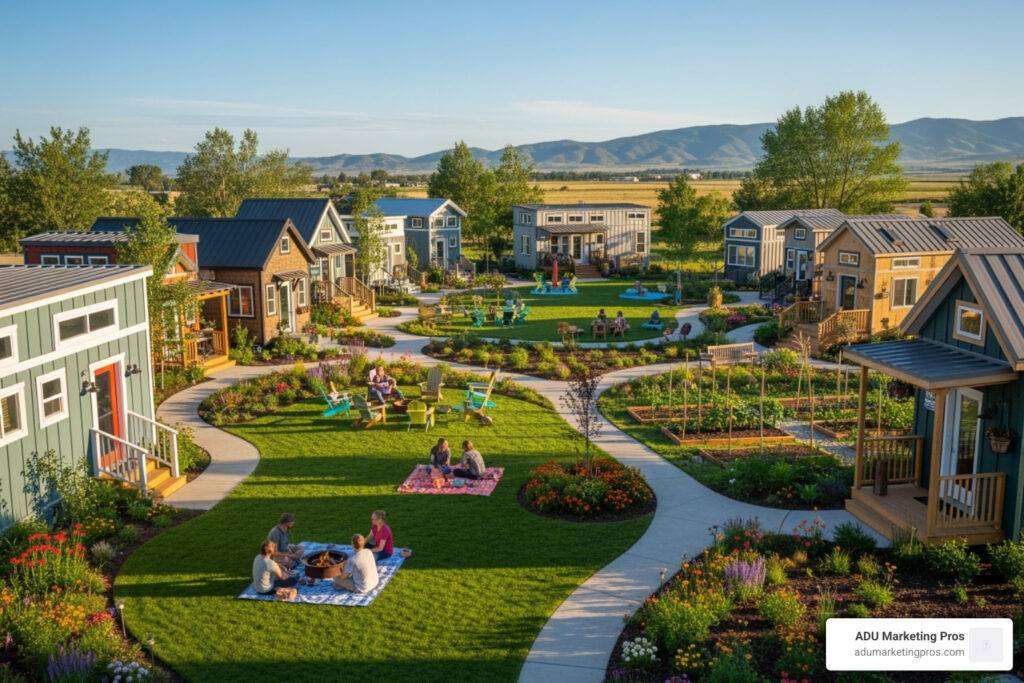
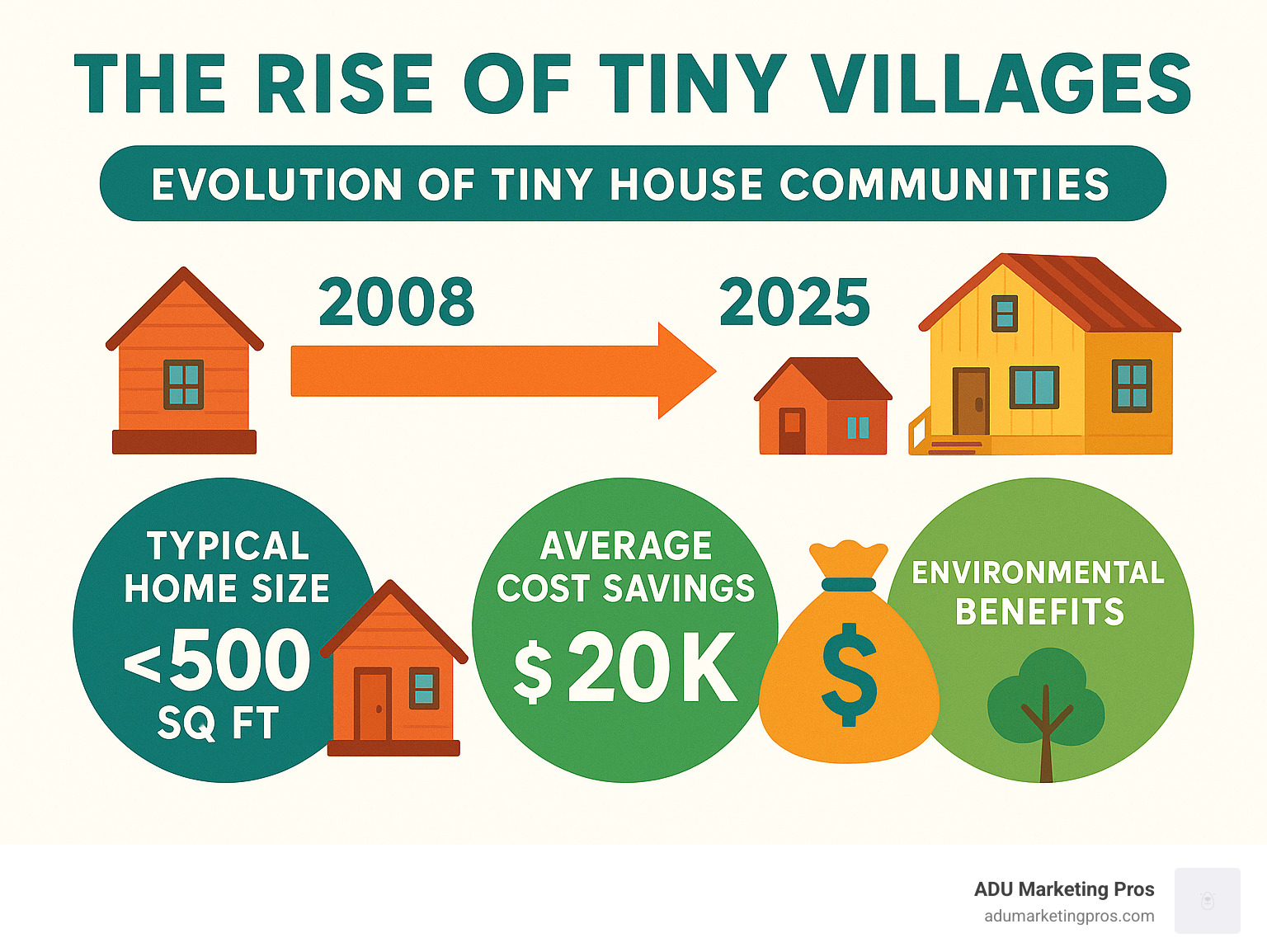
Tiny house communities are reshaping American perspectives on homeownership and community. More than just a housing trend, this movement represents a significant cultural shift toward intentional living. These planned neighborhoods bring together people choosing to live in homes under 500 square feet, prioritizing simplicity, financial freedom, sustainability, and, most importantly, strong social bonds.
While the 2007–08 financial crisis acted as a catalyst, pushing many to seek affordable alternatives to traditional housing, the roots of the movement run deeper. It draws from a long history of minimalist philosophy, environmentalism, and a desire to escape the “work-to-spend” cycle. Pioneers like Jay Shafer, who founded the Tumbleweed Tiny House Company in 1999, helped popularize the idea that living small did not mean living with less, but rather living with more intention and freedom. What began as a niche interest for off-grid homesteaders has blossomed into a mainstream lifestyle choice for a diverse range of people.
What are tiny house communities?
- Planned Neighborhoods: These are not random collections of small structures but thoughtfully designed developments with a shared ethos. Homes are typically under 500 square feet.
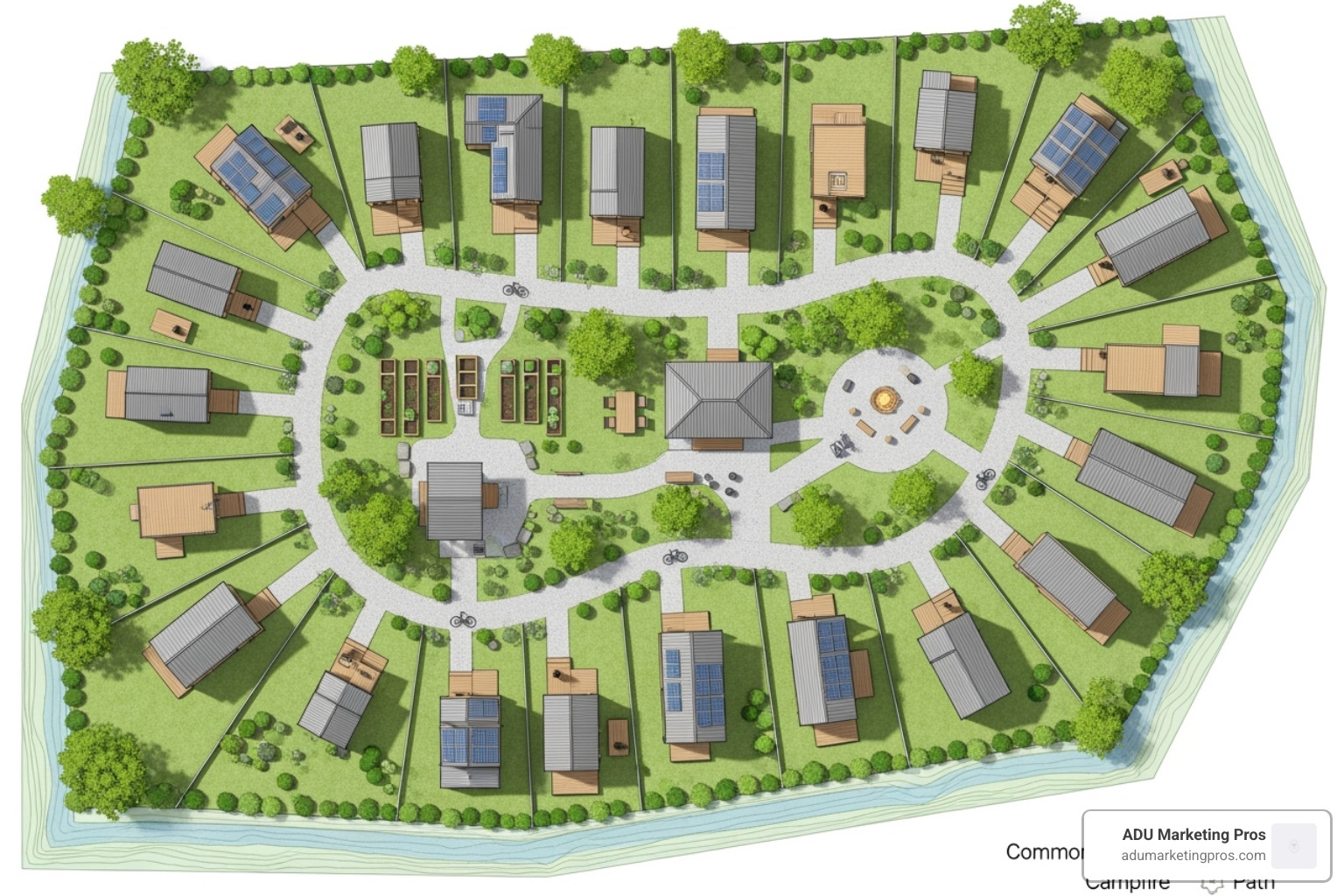
- Shared Amenities: The small private footprint is balanced by generous common spaces. These often include community gardens, clubhouses, workshops, fire pits, and recreational areas.
- Affordable Structure: Most communities operate on a lot rental model, with monthly fees ranging from $400-$625 plus utilities, a fraction of the cost of a traditional mortgage and property taxes.
- Diverse Housing: They feature a mix of tiny homes on wheels (THOWs), which offer mobility, and foundation-built small homes, which provide more permanence.
- Intentional Culture: The core emphasis is on fostering interaction, shared values, and mutual support among residents.
Key benefits:
- Lower Housing Costs: With median tiny home prices ranging from $44,700 to $249,900, the barrier to homeownership is drastically reduced.
- Reduced Environmental Impact: A smaller home requires fewer resources to build and maintain, leading to significantly lower energy consumption and waste production.
- Built-in Community: In an age of increasing social isolation, these villages offer an antidote: a built-in network of neighbors who share similar lifestyle values and actively participate in community life.
- Shared Resources: Access to tools, recreational facilities, and social spaces without the cost and burden of individual ownership.
Today, these villages exist in over 30 states, offering diverse approaches to small-scale living. However, the reality is more nuanced than idyllic photos suggest. Residents may face challenges with zoning, financing, and the dynamics of close-quarter living. This guide explains what these communities offer, who they suit best, and how to decide if this transformative lifestyle aligns with your personal and financial goals.
What Exactly Are Tiny House Communities?
Tiny house communities are more than just clusters of small houses; they are thoughtfully planned developments built to foster human connection and a shared sense of place. Residents live in private homes, typically under 500 square feet, but the community’s heart lies in the shared spaces and values that bring neighbors together. The intentional design is what sets them apart. Developers aren’t just laying out lots; they’re creating a framework for interaction. Shared amenities like community gardens, outdoor kitchens, workshops, and common houses become the backdrop for everything from spontaneous potlucks and collaborative projects to skill-sharing workshops, turning a group of neighbors into a genuinely supportive network.
Defining the Different Types of Tiny House Communities
Understanding the underlying community model is crucial, as it dictates everything from cost and ownership rights to governance and daily life. Each type offers a different balance of autonomy and collaboration.
- Lot Rental Communities: This is the most common and accessible model. You own your tiny home (often a THOW) but rent the land it sits on through a long-term lease. This lowers the upfront investment significantly. Leases typically run for a year and may include water, sewer, and trash services in the monthly fee. It’s a straightforward entry point, exemplified by communities like Cedar Springs Tiny Village in Ohio.
- Ownership Communities (Pocket Neighborhoods): In this model, you purchase both the tiny home and the land it occupies, usually as part of a homeowners association (HOA). This offers the long-term stability and equity-building potential of traditional homeownership. The HOA manages the shared amenities and common areas, with residents paying monthly or annual dues.
- Co-housing Models: This is the most collaborative model, where residents are deeply involved in the co-creation and co-management of the neighborhood. While homes are privately owned, major amenities like large commercial-grade kitchens, dining halls, workshops, and guest rooms are communally owned and managed. Decisions are often made through consensus, fostering a tight-knit, interdependent community.
- Agrihoods: A growing trend, these communities integrate agriculture into the fabric of daily life. Village Farm in Austin, for example, is built around Green Gate Farms, a certified organic farm. Residents can volunteer on the farm, participate in CSAs (Community Supported Agriculture), and enjoy fresh, on-site produce. It’s a lifestyle centered on health, sustainability, and a connection to the land.
- Transitional Villages: These communities serve a vital social function by providing safe, stable, and supportive interim housing for individuals experiencing homelessness. Organizations like Hope the Mission in Los Angeles operate multiple villages, which include on-site social services, counseling, and job training. They demonstrate how the tiny home model can be a powerful and dignified tool for social change.
How Tiny House Communities Differ from RV Parks
While a community of tiny homes on wheels might look like a modern RV park, their purpose, design, and culture are fundamentally different.
- Permanence vs. Transience: RV parks are designed for travelers and seasonal visitors, with a high turnover rate. Tiny house communities are built for long-term residents seeking to put down roots, often requiring year-long leases or land ownership.
- Home Standards vs. Vehicle Standards: RVs are vehicles built for recreational travel. Tiny homes, including THOWs, are constructed like traditional houses, with superior insulation, residential-grade windows and appliances, and durable materials designed for full-time living. Many are certified by organizations like NOAH (National Organization of Alternative Housing) or RVIA (RV Industry Association) to ensure they meet specific safety and quality standards. For more on the distinctions between small dwellings, see ADU vs. Tiny House.
- Community Depth vs. Social Acquaintance: The transient nature of RV parks makes deep connections difficult. Tiny living communities are intentionally designed with shared spaces and programmed events to foster lasting relationships and a strong sense of belonging.
Here’s a quick comparison:
| Feature | Tiny House Communities | Traditional Neighborhoods | RV Parks |
|---|---|---|---|
| Cost | Moderate (lower home cost, lot rent/HOA) | High (home purchase, property taxes, utilities) | Low (daily/weekly/monthly rates) |
| Home Size | Small (under 500 sq ft) | Large (1,000+ sq ft) | Varies (typically cramped living space) |
| Community Feel | High (intentional, shared values, active participation) | Moderate (varies by area, less structured) | Low (transient, surface-level connections) |
| Rules & Regulations | Community-specific plus local tiny home laws | Standard municipal zoning and building codes | RV park rules plus state/federal RV regulations |
| How Long You Stay | Long-term or permanent | Permanent | Temporary or seasonal |
| Utilities | Included in rent or separately metered | Standard monthly bills | Hookups provided, often included in rates |
| Types of Homes | THOWs, foundation tiny homes, park models | Traditional stick-built homes | Recreational vehicles only |
| Customization | Moderate to High (depends on community rules) | High (subject to zoning/HOA) | Low (limited to vehicle modifications) |
The Appeal and the Reality: Pros and Cons of Community Living
While social media often showcases the idyllic, sun-drenched side of tiny house communities, the day-to-day reality is a blend of substantial benefits and real challenges. This lifestyle can be profoundly rewarding for some but may feel restrictive to others. A clear-eyed look at both sides is essential before taking the plunge.

The Benefits: Why People Choose Village Life
-
Financial Freedom: This is a primary and powerful motivator. The initial investment is a fraction of a traditional home, with median prices for new tiny homes falling between $44,700 and $180,000 in many areas. This drastically reduces or eliminates mortgage debt. The savings continue monthly: property taxes are lower or non-existent (in lot-lease models), utility bills for a sub-500 sq ft space are minimal, and insurance is cheaper. Many residents pay off their homes in just a few years, freeing up significant income to travel, pursue passions, start businesses, or build robust savings.
-
Strong Social Fabric: In an era where many people don’t know their neighbors, these communities are engineered for connection. Shared amenities like fire pits, clubhouses, and gardens aren’t just perks; they are natural gathering spots that foster spontaneous conversations and planned events. This built-in network combats loneliness and creates a reliable support system. Need someone to watch your pet, lend you a tool, or help with a repair? Your neighbors are often just a few steps away and happy to help.
-
A Sustainable Lifestyle: Living tiny inherently shrinks one’s environmental footprint. It means lower energy consumption for heating and cooling, less water usage, and far less waste. Many communities take this a step further by integrating sustainable practices like community-wide composting, rainwater harvesting systems, solar panel arrays, and communal organic gardens that provide fresh produce for residents. This allows people to live in closer alignment with their environmental values. Explore more in our guide to Eco-Friendly Small Homes.
The Drawbacks: Potential Challenges to Consider
-
Recurring Costs and Fees: While you may own your home outright, you don’t live for free. The most significant ongoing expense is the monthly lot rent, which typically runs from $400–$625 but can be higher in desirable locations. This fee may not include all utilities, so you might have separate bills for electricity, propane, and internet. In ownership communities, you’ll pay monthly or annual HOA fees for the maintenance of shared spaces. These costs are a permanent part of your budget and can increase over time.
-
Close Quarters and Lack of Privacy: The adjustment isn’t just to a smaller interior but to constant proximity to your neighbors. Life unfolds in shared areas, and your front porch may be just a few feet from someone else’s. This can feel wonderfully communal or socially overwhelming, depending on your personality. For those who cherish solitude and privacy, the high degree of daily, unplanned social interaction can be draining. It requires a high level of social tolerance and clear communication skills.
-
Community Rules and Governance: To maintain harmony and protect property values, every community has rules. These can govern everything from pet size and breed, to the color you can paint your door, to noise levels, to the number of guests you can have. While necessary for communal living, these regulations can feel restrictive to individuals accustomed to the autonomy of traditional homeownership. It’s crucial to read and agree with the community’s bylaws before committing.
-
Financing and Resale Hurdles: Securing a traditional mortgage for a tiny home—especially one on wheels (THOWs)—is notoriously difficult, as banks struggle to classify them. Buyers often need to pay with cash, secure a high-interest personal loan, or find specialized RV loans or chattel mortgages. Reselling a tiny home can also be complex. The market is niche, and your pool of potential buyers may be limited to those willing to live in that specific community or able to move the home, which is a costly and complicated process.
Navigating the Maze: Zoning, Regulations, and Social Impact
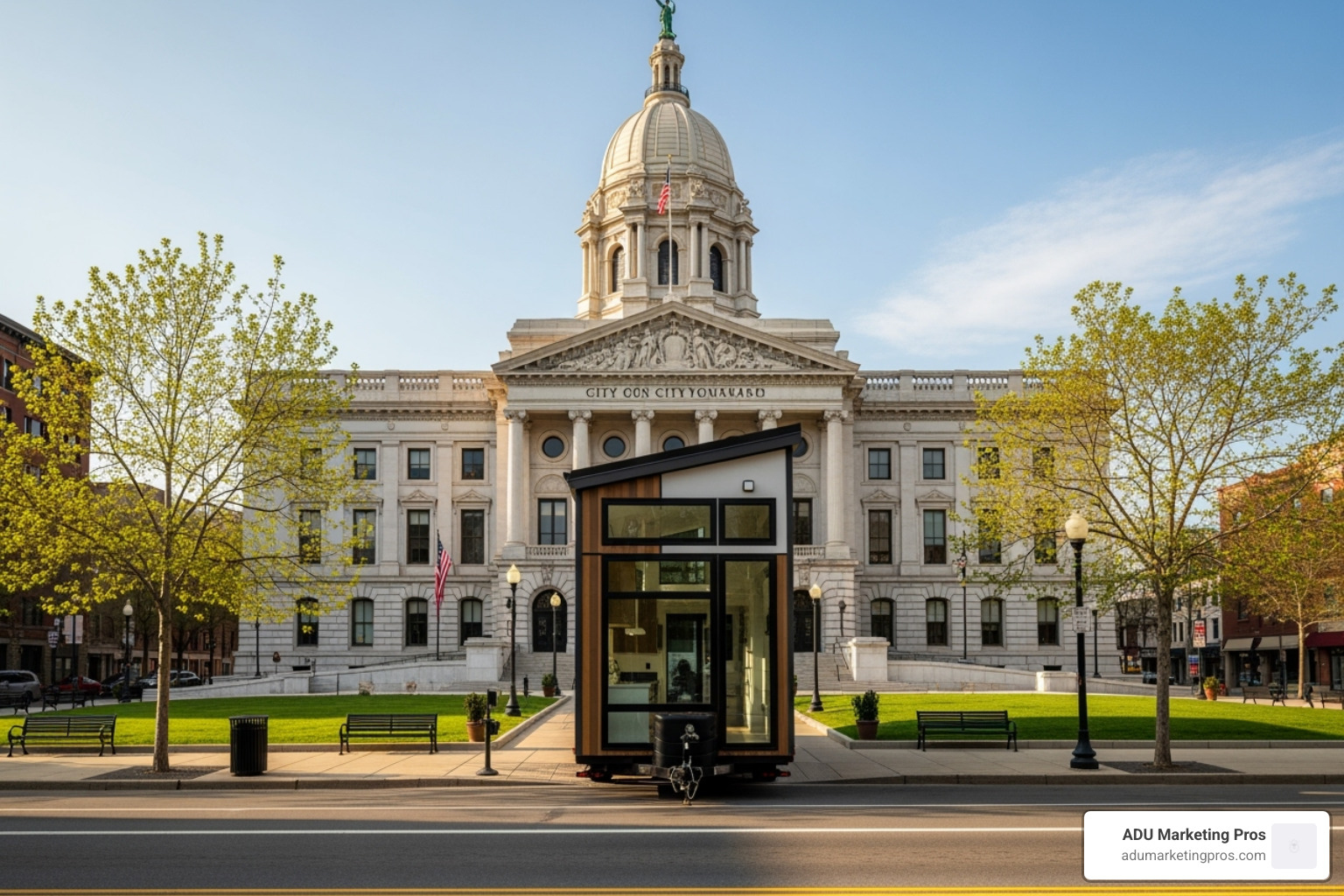
One of the most significant hurdles for the tiny house movement has been navigating a labyrinth of zoning laws and building codes that were written for a different era of housing. Many municipal codes across the country impose minimum square footage requirements for new dwellings, effectively outlawing tiny homes. Furthermore, they often classify tiny homes on wheels (THOWs) as recreational vehicles (RVs), which restricts them to RV parks and prohibits full-time, permanent occupancy in residential areas.
However, the legal landscape is slowly but surely shifting. As the housing affordability crisis deepens, cities and counties are beginning to view tiny home villages as a viable, innovative solution. A key turning point has been the adoption of Appendix Q (Tiny Houses) into the International Residential Code (IRC). First introduced in the 2018 IRC, this appendix provides a clear building and safety standard for tiny homes (under 400 sq. ft.) on foundations, legitimizing them as permanent dwellings. As more local governments adopt this appendix, the legal pathway to building and inhabiting tiny homes becomes clearer. You can review the code text here: https://codes.iccsafe.org/content/IRC2018/appendix-q-tiny-houses.
States like California, Oregon, and Colorado have been at the forefront of this change. California, in particular, has passed legislation that encourages alternative housing solutions. Many cities have updated their zoning to permit accessory dwelling units (ADUs) and junior ADUs—which often align with tiny home dimensions—creating more opportunities for small-scale living. You can find a number of Places in Southern California That Allow Tiny Houses as a result of these progressive policies.
The social impact of these communities is profound. Scientific research on housing choice confirms that housing diversity is essential for the economic and social health of a city. Tiny home neighborhoods provide a more affordable entry point into homeownership, create supportive social networks that can reduce isolation among seniors and young people, and promote a more sustainable, lower-consumption lifestyle. In places like Landers, CA, where a tiny home can cost a third of a traditional house, ownership becomes accessible to a much wider population, including teachers, artists, and young families.
Is This Lifestyle for You? Key Considerations Before Making the Move
Before you start shopping for a tiny home and packing your bags, it’s crucial to conduct a thorough self-assessment to see if the tiny house community lifestyle truly fits your personality and needs. This is a significant shift that goes far beyond aesthetics and a smaller mortgage; it fundamentally alters your daily routines, your relationship with possessions, your use of space, and your social interactions.
Assessing Your Personal Fit
-
Lifestyle Compatibility: Are you a natural minimalist, or a collector at heart? Successful tiny dwellers find joy in decluttering and can comfortably live without extensive wardrobes, large book collections, or bulky hobby equipment. Ask yourself honestly: can you let go of possessions without feeling a sense of loss? How would you adapt your hobbies to a smaller space?
-
Social and Privacy Needs: These neighborhoods thrive on social interaction. If you enjoy impromptu gatherings, collaborative projects, and frequent chats with neighbors, you’ll likely love the communal atmosphere. However, if you are an introvert who requires significant privacy and quiet solitude to recharge, you may find the environment socially draining. Consider your tolerance for noise and your comfort level with resolving potential interpersonal conflicts that can arise in close quarters.
-
Demographics and Culture: Communities are incredibly diverse. Some attract retirees seeking a low-maintenance lifestyle, while others are filled with young professionals escaping debt, digital nomads seeking flexibility, or families prioritizing experiences over things. Research the specific demographic and culture of any community you’re considering to see if it aligns with your life stage, values, and interests.
-
“Try Before You Buy”: The single best way to test the waters is with a short-term rental. Spending a weekend or even a full week in a tiny home community gives you an invaluable, real-world taste of the lifestyle. Places like A Tiny House Resort in New York offer a chance to experience everything firsthand—from cooking in a compact kitchen and sleeping in a loft to interacting with other residents—without the long-term commitment.
Finding or Founding Your Own Tiny House Community
-
Research and Due Diligence: Online directories like Tiny House Community, social media groups, and forums are excellent resources for finding and vetting existing communities. Facebook groups, in particular, can offer refreshingly honest reviews, photos, and advice from current residents.
-
Ask the Right Questions: When you contact a community, have a list of questions ready. Inquire about the total monthly costs (lot fees, HOA dues, average utilities), tiny home certification requirements (e.g., NOAH, RVIA), rules on pets, guests, and home modifications, and the process for selling your home in the future.
-
Starting Your Own: For the truly ambitious, founding a community offers ultimate control over its location, design, and ethos. This is a major undertaking that requires significant capital, patience, and expertise. The process involves acquiring suitable land, navigating complex zoning and permitting processes with local officials, developing infrastructure (water, sewer, electricity), and marketing your vision to attract residents. Those in California can start by researching Land for Sale in Southern California for Tiny Houses.
Spotlight: Inspiring Tiny House Communities Across the U.S.
The tiny house communities movement is incredibly diverse, with unique models catering to different lifestyles, climates, and demographics. From lakeside retreats and farming villages to desert artist colonies, these examples showcase the creativity and possibility of small-scale living.
-
Cedar Springs Tiny Village (New Paris, OH): As Ohio’s first exclusive tiny living community, Cedar Springs offers a serene, nature-focused lifestyle. It features leased lakefront and wooded sites on the shores of a 4-acre lake for around $490/month. The fee includes water, sewer, trash, and access to the amenities of the adjacent Natural Springs Resort, such as pools, a sandy beach, and fishing spots.
-
Village Farm (Austin, TX): A prime example of the “agrihood” model, this community is set within Green Gate Farms, a historic working organic farm. Residents can actively participate in sustainable agriculture and enjoy true farm-to-table living. The community blends this rustic charm with resort-style amenities, including two pools, a fitness center, and a dog park.
-
Acony Bell (Mills River, NC): Nestled on over 50 acres in the Blue Ridge Mountains, this community welcomes both full-time residents and vacationers. It emphasizes a deep connection to nature and creativity, with extensive walking trails, a community garden, a trout pond, and regular gatherings that feature local art and music.
-
Tiny Tranquility (Waldport, OR): Proving that tiny living doesn’t mean sacrificing amenities, this coastal Oregon community is a paradise for pet lovers and hobbyists. It features 43 rental sites alongside impressive shared facilities, including a 2,400 sq. ft. lodge with a TV lounge and kitchen, a fitness center, a large greenhouse, and a 5,500 sq. ft. enclosed dog park.
-
The Waters (Nevada, TX): This gated 55+ senior community near Dallas offers retirees a secure, active, and low-maintenance lifestyle. With a private fishing lake, manicured grounds, and a strong social calendar, it demonstrates how the tiny community model can be perfectly tailored to the needs and desires of a specific life stage.
-
Escalante Village (Durango, CO): Located right on the Animas River, this community offers a unique blend of urban convenience and outdoor recreation. Residents can walk or bike to downtown Durango while also enjoying direct river access for kayaking and fishing. The community has a strong focus on sustainable design and is a great example of a well-integrated, infill tiny home project.
-
Tiny House Block (Mount Laguna, CA): Located in the Cleveland National Forest an hour from San Diego, this community was founded with the explicit goal of fostering genuine human connection in a simplified, natural setting. It offers a more rustic, off-grid-capable experience for its residents. For those inspired by this model, working with experienced Tiny House Builders in Southern California can help navigate the unique local building and environmental requirements.
Frequently Asked Questions about Tiny House Communities
Transitioning to a tiny house community is a big decision, and it’s natural to have a lot of practical questions. Here are detailed answers to some of the most common inquiries we receive from prospective tiny dwellers.
How much does it cost to live in a tiny house community?
Costs can be broken down into two main categories: the one-time initial home investment and the ongoing monthly expenses. The cost of the tiny house itself varies widely, from a DIY build for under $30,000 to a high-end custom model for over $150,000. A typical price range for a professionally built, certified home is $60,000 to $90,000. The largest ongoing expense is the lot rent, which typically ranges from $400 to $800 per month, though it can exceed $1,000 in prime locations. This fee often covers water, sewer, and trash removal. You will also need to budget for utilities like electricity and internet, which may be billed separately. Some communities also have modest HOA fees for amenity maintenance. While not free, the total monthly cost of living is almost always significantly lower than renting an apartment or owning a traditional home in the same area.
Can you live in a tiny house community full-time?
Yes, the vast majority of tiny house communities are specifically designed for full-time, year-round residency. They are intended to be primary homes, not vacation spots. However, this is entirely dependent on the community’s own rules and, more importantly, local zoning laws. Some jurisdictions may still classify tiny homes on wheels (THOWs) as recreational vehicles, which can come with restrictions on length of stay. It is absolutely essential to verify a community’s legal status for permanent residence before making any commitment.
Are tiny house communities pet-friendly?
This is a very common question, and the answer is generally yes, but with rules. Most communities understand that pets are family and welcome them. However, there are almost always restrictions. These can include limits on the number of pets (e.g., two per household), size or weight limits (e.g., no dogs over 40 lbs), and breed restrictions for dogs. You will also be expected to follow strict rules about leashing, noise, and cleaning up after your pet. Some communities, like Tiny Tranquility in Oregon, go above and beyond with amenities like large, fenced-in dog parks.
What about storage for belongings that don’t fit?
Downsizing is a core part of the tiny living ethos, but most people have a few items they can’t part with, like seasonal sports equipment, holiday decorations, or sentimental heirlooms. Many communities address this by offering on-site storage solutions. This might take the form of small, individual storage sheds available for rent on the property. If the community doesn’t offer this, residents often rent a small unit at a nearby self-storage facility. Creative, multi-functional furniture inside the tiny home is also key to maximizing every square inch of storage space.
What are the first steps to moving into a tiny house community?
Moving into a tiny village requires careful research and planning. Here’s a simple roadmap:
- Define Your Vision & Budget: First, clarify your goals. What are you looking for in a community? What’s your total budget for the home purchase and your comfortable monthly budget for ongoing costs?
- Research Communities: Use online directories, social media, and blogs to create a shortlist of communities that fit your vision and budget. Dive deep into their websites and social media presence.
- Secure Financing: If you’re not paying cash, explore your financing options early. This could be a personal loan, an RV loan, or a loan from a specialized tiny home lender. Getting pre-approved will make you a more serious candidate.
- Understand Certification: Before buying or building a home, ensure it will meet the community’s specific certification requirements (e.g., NOAH, RVIA). This is a non-negotiable step that guarantees safety and construction standards.
- Visit and Connect: Nothing beats an in-person visit. If possible, book a short-term stay. Talk to current residents. Ask them what they love and what they find challenging. This is the best way to know if the community’s culture is the right fit for you.
The Future of Tiny Living is Communal
The tiny house movement has matured far beyond its origins as a post-recession necessity. It has evolved into a durable and desirable lifestyle choice. Throughout this guide, we’ve explored the core tenets of tiny house communities—the promise of financial freedom, a smaller environmental footprint, and a built-in sense of connection—while also examining the real-world challenges of recurring costs, close-quarters living, and a complex regulatory landscape.
The future of this movement is bright, and it is undeniably communal. As demand for affordable, sustainable, and connected living continues to surge, several key trends are paving the way for wider adoption:
- Greater Zoning Acceptance: The tide is turning. More municipalities are recognizing tiny homes as a legitimate solution to their housing crises. The adoption of tiny-home-friendly regulations like IRC Appendix Q is accelerating, making it easier to develop legal, permanent neighborhoods.
- Diverse and Specialized Communities: The one-size-fits-all model is fading. We will see more niche communities designed for specific demographics and interests: 55+ active senior developments, agrihoods focused on food production, eco-villages built on sustainable principles, and even communities for artists or digital nomads.
- Integration of Technology: The next generation of tiny homes will be smarter and more efficient. Expect to see more integration of smart home technology for managing energy and security, as well as advanced sustainable tech like atmospheric water generators and closed-loop greywater systems.
- A Legitimate Housing Solution: Transitional villages are proving that tiny homes can be powerful, cost-effective tools in addressing homelessness and housing shortages. This success is integrating the tiny home concept into broader urban planning strategies, including infill development and mixed-income neighborhoods.
At ADU Marketing Pros, based in the San Francisco Bay Area, we see a clear and powerful parallel between the tiny house movement and the rise of accessory dwelling units (ADUs). Both are about creating more flexible, gentle-density, and sustainable housing solutions that help our communities adapt and thrive. Just as Prefab Granny Flats in California are becoming a mainstream part of the housing landscape, tiny homes are earning their place in the critical conversation about our collective housing future.
Tiny house communities represent a fundamental shift in values—a move toward prioritizing experiences over possessions and connection over isolation. If you’re ready to downsize your footprint while upsizing your quality of life, this communal approach to living may be the perfect fit. Start exploring your options and Find Places in Southern California That Allow Tiny Houses to join a more intentional and connected way of living.