
Why Tiny House Communities Are Thriving in Southern California
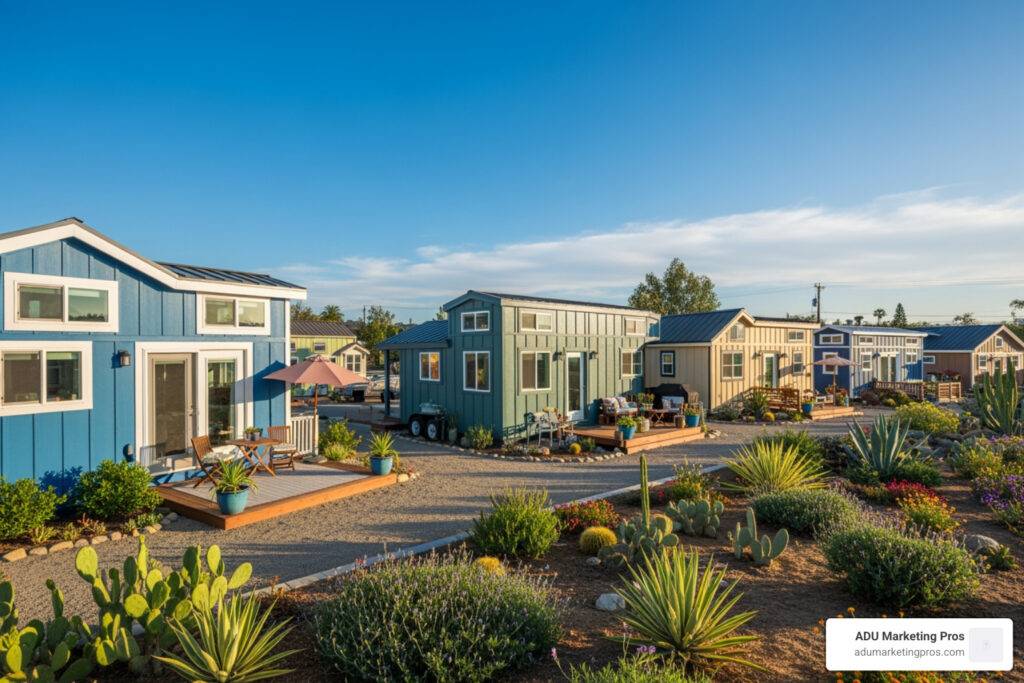
Exploring a tiny house community southern california means looking at a housing solution that merges affordability, sustainability, and community in one of the nation’s priciest real estate markets. For decades, the “California Dream” was synonymous with a sprawling suburban home. Today, a growing movement is redefining that dream, prioritizing financial freedom and rich experiences over square footage. Southern California has become an unexpected epicenter for this shift, hosting a diverse array of established tiny house communities that cater to every lifestyle, from the mountain retreat of Tiny House Block in Mount Laguna to the sun-drenched resort living at Paradise Tiny Homes near Palm Springs.
Top Tiny House Communities in SoCal:
- Tiny House Block – Mount Laguna | Nature-focused, legally recognized, short & long-term rentals
- Paradise Tiny Homes – Desert Hot Springs | Resort amenities, new homes from low $100,000s
- Palm Canyon Mobile Club – Palm Springs | Luxury mid-century modern design
- Lemon Cove Village – Near Sequoia National Park | Family-friendly, lot rent from $450/month
- Oak Creek & Royal Palms – Coarsegold & Cathedral City | 55+ active retirement communities
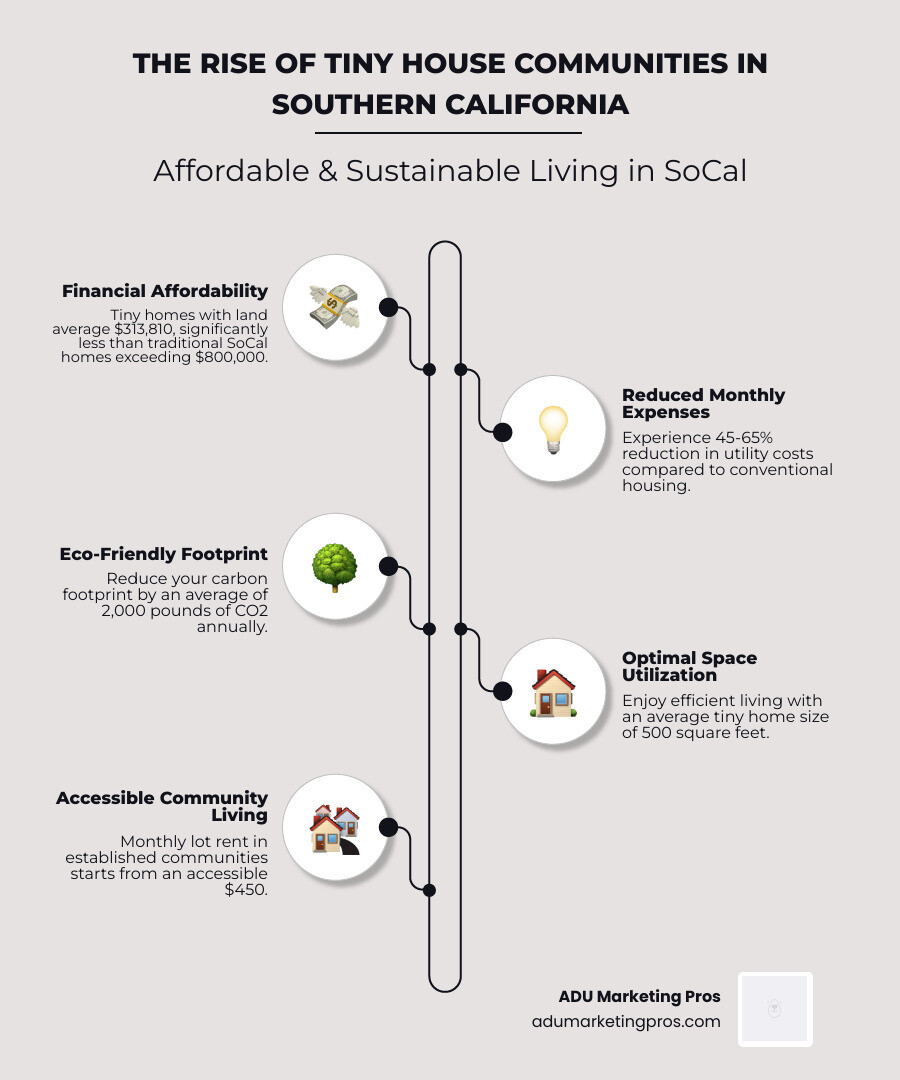
With the average Southern California home price soaring past $800,000 and often exceeding $1 million in desirable coastal areas, traditional homeownership is out of reach for many. Tiny homes present a compelling and realistic alternative. While the average listing for a tiny home with land is $313,810, the more accessible entry point is joining a community. Here, you can purchase a home for a fraction of a traditional house and pay monthly lot rent, which can start as low as $450. This model makes the lifestyle accessible to first-time buyers, families, retirees, digital nomads, and minimalists alike.
The region’s famously mild climate is a perfect match for tiny living, allowing residents to seamlessly extend their living space outdoors for most of the year. Patios become living rooms, and community gardens become pantries. These communities amplify this benefit by emphasizing shared amenities like pools, clubhouses, fitness centers, and hiking trails, which build powerful social connections while reducing individual costs and environmental impact. This comprehensive guide covers the financial perks, lifestyle benefits, legal requirements, and detailed profiles of the best communities, offering a practical and inspiring roadmap for anyone looking to join this growing movement.
Why Choose a Tiny House Community in Southern California?
Choosing to live in a tiny house community southern california is about more than just finding cheaper housing; it’s a conscious decision to embrace a lifestyle centered on freedom, connection, and intentionality. It’s a chance to live well, and often better, without the crushing financial burden that accompanies traditional homeownership in the region, all while surrounded by neighbors who share your values.
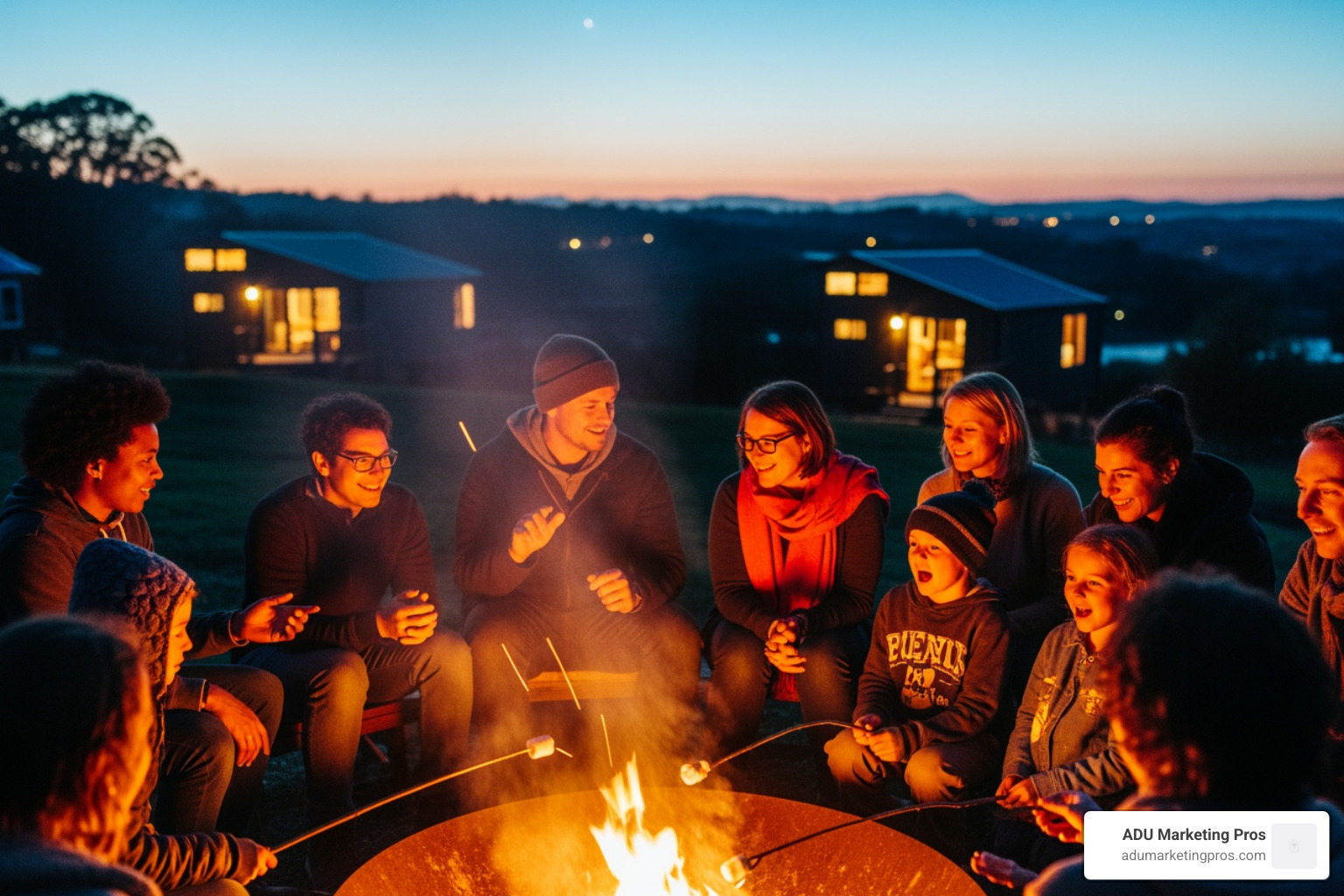
Southern California’s climate is a key advantage that elevates tiny living from a novelty to a practical paradise. With nearly 300 days of sunshine annually, a small indoor space feels expansive when your patio, shared garden, and communal fire pit become extensions of your daily living area. This outdoor-centric lifestyle connects directly to the core benefits of these communities: affordability, social connection, and sustainability. People here prioritize experiences over square footage, and for those interested in eco-friendly small homes, these communities often lead in sustainable practices like solar power, water conservation, and shared resources.
The Financial Advantage
The numbers are undeniably compelling. While the median home price in Southern California can approach $900,000, tiny homes offer a completely different financial reality. A key benefit is that you don’t need to buy expensive land to join a community. Instead, you pay a monthly lot rent, which can be as low as $450 per month at places like Lemon Cove Village. Even in upscale, resort-style communities, rent is often under $1,200—a fraction of the $2,500+ you’d pay for a cramped one-bedroom apartment in Los Angeles or San Diego.
The savings compound dramatically. Property taxes, a major burden for traditional homeowners, are either negligible or non-existent when you’re renting a lot. Utility bills shrink by 45-65% when you’re heating and cooling 400 square feet instead of 2,000. Home maintenance is simpler and cheaper—no sprawling lawn to mow, no massive roof to replace. Furthermore, with shared amenities like pools, gyms, and clubhouses often included in the lot rent, you eliminate separate membership costs. This financial liberation frees up significant disposable income for travel, hobbies, savings, or simply reducing the stress that comes with living paycheck to paycheck.
The Lifestyle and Community Perks
Contrary to the myth of isolation, tiny house community living is profoundly social. Traditional suburbs can be isolating, with residents retreating behind high fences. These communities are intentionally designed to foster connection. Shared spaces—fire pits, gardens, dog parks, clubhouses—are the heart of daily life, serving as natural gathering spots where neighbors organically build strong relationships.
Organized social events like potlucks, movie nights, yoga classes, and group hikes are common. For retirees, this translates to an active and engaged social life, combating loneliness. For families, it provides a built-in support network and a safe, village-like atmosphere for children to play and grow. There’s also a powerful sense of shared security, as neighbors genuinely look out for one another and their homes.
These communities attract a diverse and fascinating mix of residents, from young professionals and artists to families and retirees, all united by a conscious choice to live differently. This shared value of intentionality—the deliberate act of prioritizing simplicity, sustainability, and human connection over material accumulation—creates a strong foundation for genuine friendships and a uniquely supportive environment. It’s a lifestyle that offers not just a smaller home, but a bigger life.
Navigating the Legal Landscape: Tiny Home Regulations in SoCal
Understanding the legal side of joining a tiny house community southern california is crucial for a smooth transition. While the region has become progressively more welcoming to tiny homes, regulations are a complex patchwork that varies significantly between cities and counties. Getting this right from the start will save you immense time and potential heartache.
The law primarily distinguishes between movable tiny homes (commonly known as Tiny Homes on Wheels, or THOWs) and foundation-based tiny homes. This distinction is the single most important factor in determining which rules and codes apply.
Movable tiny homes are most often regulated as recreational vehicles (RVs) or, more specifically, park model RVs. To be placed in a community, they must typically be certified under RV standards such as NFPA 1192 (for travel trailers) or ANSI A119.5 (for park model RVs). This certification, often from a third-party agency like the Recreational Vehicle Industry Association (RVIA), is non-negotiable for most communities as it ensures the home meets safety standards for electrical, plumbing, and fire protection. Park model RVs are legally capped at 400 square feet of living space under ANSI A119.5. Additionally, any road-going THOW must comply with state transportation limits—California generally limits vehicle height to 14 feet under the California Vehicle Code (see California Vehicle Code §35250: https://leginfo.legislature.ca.gov/faces/codes_displaySection.xhtml?sectionNum=35250.&lawCode=VEH). Communities may also impose their own stricter size or appearance standards, so always confirm their specific requirements before purchasing or moving a home.
Foundation-based tiny homes, on the other hand, typically fall under Accessory Dwelling Unit (ADU) regulations. They are treated as permanent secondary homes on a property with an existing primary residence. As such, they must meet all local building codes, zoning ordinances, setback requirements, and utility connection standards, just like a traditional house. California provides strong statewide guidance for ADUs (see California Department of Housing and Community Development ADU resources: https://www.hcd.ca.gov/policy-research/accessory-dwelling-units and the state ADU Handbook: https://www.hcd.ca.gov/sites/default/files/docs/adu/adu-december-2022-handbook.pdf), but local interpretations vary. A detailed comparison of ADU vs Tiny House can help clarify which path is right for your goals.
The Future of Tiny Home Laws in California
The legal landscape is constantly evolving, largely in a positive direction. Cities like Los Angeles, San Diego, and Fresno have made headlines by creating ordinances that explicitly permit tiny homes as solutions to the housing crisis. Advocacy groups such as the American Tiny House Association are actively working with state and local governments to create more uniform zoning, streamline permitting processes, and establish clear legal classifications for tiny homes beyond the RV category. This ongoing work is making it easier and more secure to choose the tiny life in California.
Because zoning laws differ everywhere, the golden rule is to always verify the rules with the local city or county planning department before buying a tiny home or committing to a location. Working with established communities and knowledgeable builders simplifies this process considerably, as they have already done the legal legwork.
A Tour of the Top Tiny House Communities in Southern California
Southern California offers a remarkable variety of tiny house communities, each with its own unique character and appeal. Whether you seek a tranquil mountain retreat, a sun-soaked desert resort, a family-friendly neighborhood, or a vibrant coastal getaway, there’s a tiny house community southern california to match your lifestyle and budget.
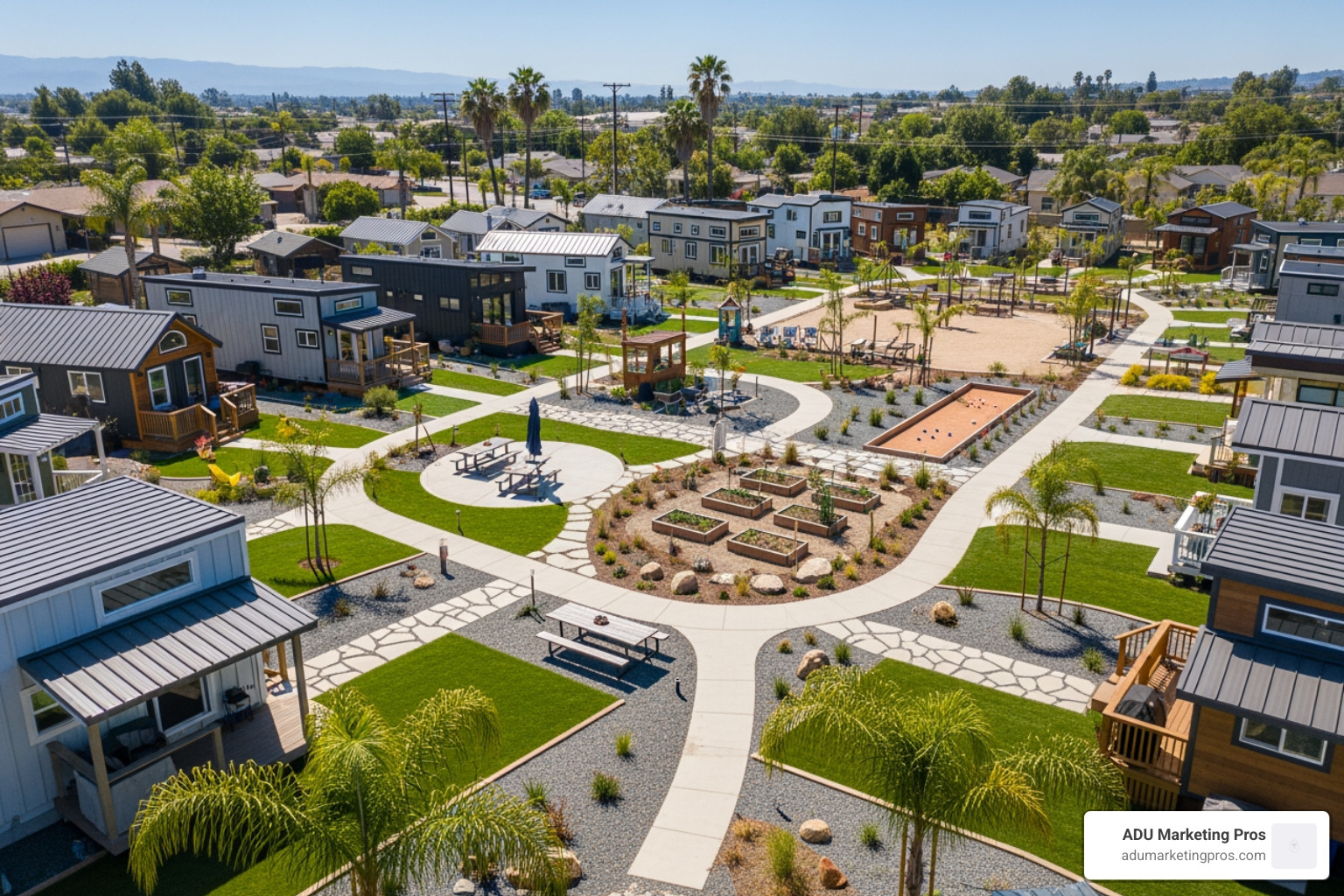
Some communities focus on luxury amenities and a bustling social calendar, while others offer a more rustic, back-to-nature experience. There are also dynamic 55+ communities designed specifically for active retirees. Let’s explore some of the region’s standout options.
Tiny House Block: Mountain Living in San Diego County
Perched in the Cuyamaca Mountains of Mount Laguna, Tiny House Block is a legally recognized community designed for those who want to immerse themselves in nature. At an elevation of over 5,000 feet, it offers crisp mountain air, four distinct seasons, and direct access to world-class hiking, including the famous Pacific Crest Trail. The community features a collection of unique tiny homes with rustic and modern designs, available for both short-term stays and long-term, month-to-month rentals. An on-site cafe and tavern acts as a cozy social hub for residents and visitors. To get a taste of the lifestyle, you can Book Your Stay! Live the Tiny Life on Mount Laguna and experience it firsthand.
Palm Canyon Mobile Club & Paradise Tiny Homes: Desert Resort Living
The Palm Springs area has become a hotspot for stylish tiny living, blending its iconic desert charm with modern resort amenities.
Palm Canyon Mobile Club in Palm Springs has been brilliantly revitalized with a mid-century modern aesthetic that perfectly captures the city’s architectural soul. It’s a chic destination for year-round residents and snowbirds who appreciate design and want to be close to downtown’s renowned dining, shopping, and cultural events.
Nearby in Desert Hot Springs, Paradise Tiny Homes is a purpose-built village that serves as a national model for the movement. It offers brand new homes starting in the low $100,000s and a lifestyle centered around a beautifully remodeled clubhouse, a large pool and hot tub, a modern fitness center, and pickleball courts. It’s a vibrant, active community. To get a feel for the area, you can browse vacation rentals on sites like Hotala.
Lemon Cove Village: Family-Friendly Gateway to the Sequoias
For families seeking affordability, community, and adventure, Lemon Cove Village is an exceptional choice. Located near the entrance to Sequoia National Park, this welcoming, all-ages RV park embraces tiny homes on wheels (THOWs) with some of the most affordable monthly lot rents in the state, starting at just $450. The community is a natural hub for outdoor activities like fishing, rafting, and hiking, with Lake Kaweah and the national park’s giant trees just a short drive away. It provides a safe, supportive, and fun environment for families with children and pets.
Ocean Mesa at El Capitan: Coastal Tiny Living
For those who dream of coastal living, Ocean Mesa at El Capitan offers a luxury option near Santa Barbara. While technically a high-end RV resort, it warmly welcomes tiny homes and provides a completely different atmosphere from the desert or mountain communities. Nestled on the Gaviota Coast, residents enjoy ocean breezes, canyon views, and access to El Capitan State Beach. Amenities include a heated pool and spa, a convenience store with local wines, and a full calendar of events. It’s an ideal spot for those who want to blend the tiny lifestyle with the beauty of California’s coastline and nearby wine country.
Retirement in the Sun: 55+ Communities
Southern California is a premier retirement destination, and tiny house communities offer an affordable way to enjoy it. Oak Creek in Coarsegold is situated in the Sierra Nevada foothills, offering easy access to Yosemite National Park and a peaceful, four-season mountain town atmosphere. For desert lovers, Royal Palms in Cathedral City provides year-round sunshine and a vibrant social scene near Palm Springs. Both communities offer the financial freedom of tiny living combined with amenities and social connections that enrich retirement. For more ideas, you can research the top Southern California retirement cities.
The Practicalities of Joining a Tiny House Community Southern California
Ready to make the move? Before you start packing, it’s essential to understand the practical side of joining a tiny house community southern california. This includes a realistic look at the costs, a strategy for finding the right fit, an awareness of the challenges, and a plan for the move-in process.
Understanding the Costs of a tiny house community southern california
The cost of tiny living involves more than just the house itself. A clear budget should account for the home purchase (new, certified homes in communities often start in the low $100,000s, while DIY or used options can be less), transportation to the community, monthly lot rent ($450 to $1,200+), utilities ($50 to $150), and potential HOA/community fees ($0 to $300). When compared to traditional housing, the savings are profound.
| Expense Type | Tiny Home Community (SoCal Est.) | Traditional Apartment (Los Angeles/San Diego Est.) |
|---|---|---|
| Mortgage/Rent | $450 – $1,200 (Lot Rent) | $2,000 – $3,500+ (Rent) |
| Utilities (Est.) | $50 – $150 | $150 – $300 |
| HOA/Community Fees | $0 – $300 | $0 – $500 (if condo/townhouse) |
| Total Monthly Est. | $500 – $1,650 | $2,150 – $4,300+ |
How to Find and Choose Your Perfect tiny house community southern california
Finding the right community is a matchmaking process that takes time and research. Follow these steps for success:
- Define Your Priorities: Get specific. Do you need to be near a city for work? Is a family-friendly or 55+ environment a must? Do you crave resort amenities like a pool and gym, or is a rustic, nature-focused setting more your style? Location (mountain vs. desert vs. coast) is a primary driver.
- Budget Realistically: Factor in all one-time and recurring costs: the home purchase, moving expenses, setup fees, monthly rent, utilities, and a buffer for unexpected expenses. Get pre-approved for financing if needed so you know what you can afford.
- Research and Visit: Use online resources like TinyHouseCommunity.com, SearchTinyHouseVillages.com, and dedicated Facebook groups to create a shortlist. But nothing replaces an in-person visit. Spend a weekend if possible. Talk to current residents about their experiences—the good and the bad. Get a feel for the community’s true vibe.
- Ask Key Questions: Before signing any lease, get clarity. What are the rules on guests, pets, and parking? Are there restrictions on home aesthetics, deck sizes, or landscaping? How are utilities billed? Understanding the community’s rules and regulations upfront prevents future surprises and ensures a good fit.
Challenges and Drawbacks to Consider
Tiny living is rewarding, but it isn’t without its challenges. Be prepared for:
- Significant Downsizing: Moving from a large house to under 500 square feet is an emotional and physical process. It requires a deep commitment to minimalism and letting go of possessions.
- Financing Hurdles: Traditional mortgages are rare for tiny homes, especially THOWs. You’ll likely need to explore RV loans, personal loans, or builder financing, which can have different terms and interest rates. Many purchases are made with cash.
- Less Privacy: Neighbors are close by. While this fosters community, it means less personal space and privacy than a standalone home on a large lot. Sound can travel easily.
- Community Rules & Dynamics: To maintain harmony, communities have rules regarding home appearance, quiet hours, pets, and guests. You are also entering a close-knit social environment, which requires good communication and conflict-resolution skills.
- Resale Market: The resale market for tiny homes is still maturing. A certified home in a desirable, legal community will be much easier to sell than a DIY home with no legal parking spot.
Moving Your Tiny House into a Community
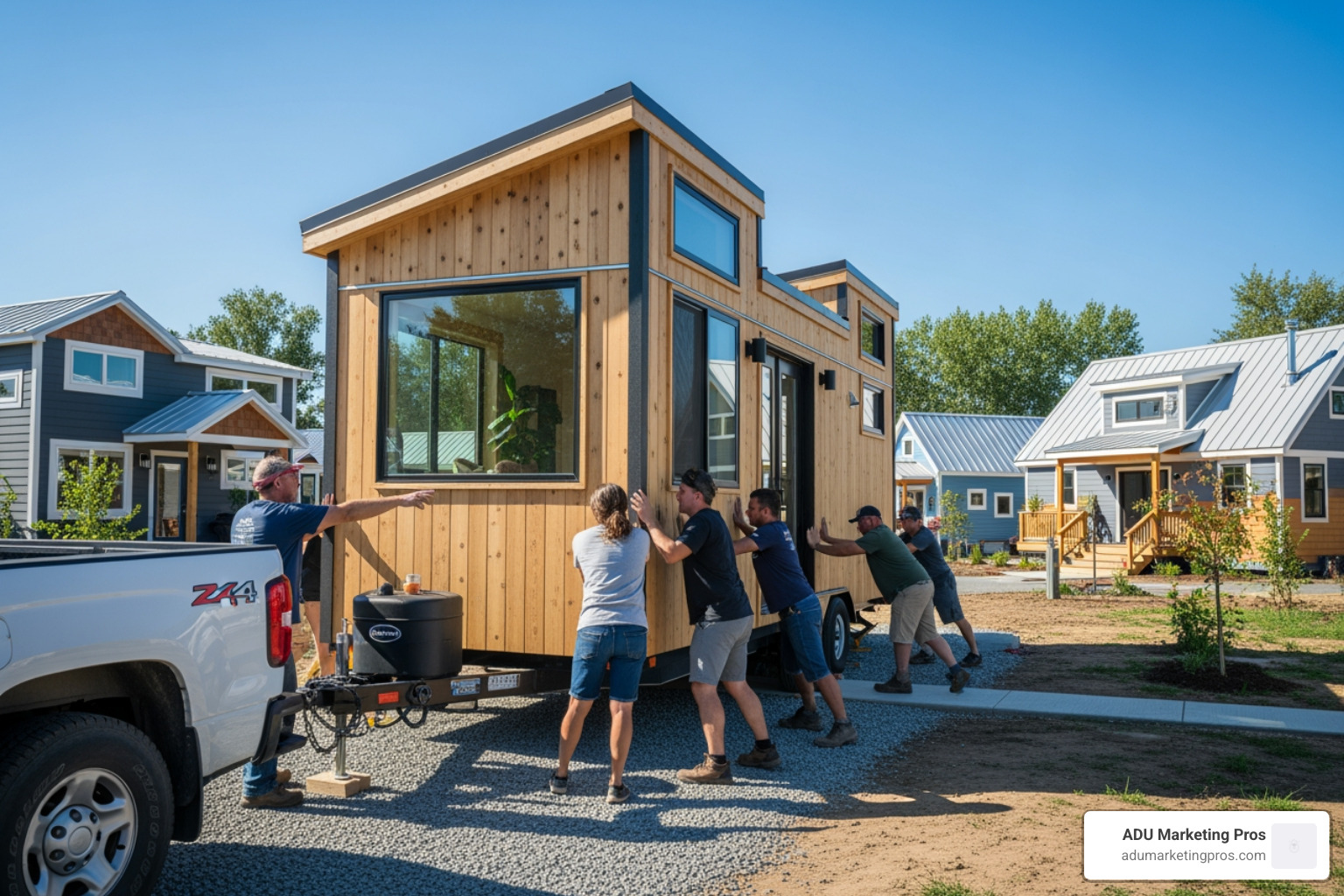
If you’re bringing your own tiny home, coordination is key. First, get written confirmation that your home meets the community’s requirements for size, aesthetics, and certification (usually RVIA for THOWs). Transporting a tiny house is a specialized job; hire professional tiny house movers who are insured and experienced in handling permits, routing, and safe delivery. Once on-site, you’ll coordinate the final placement, leveling, and utility hookups for water, sewer, and electricity (typically to a 30 or 50-amp pedestal). To avoid issues, work with builders who understand these requirements from the start. You can find tiny house builders in Southern California who specialize in community-compliant designs.
Frequently Asked Questions about Tiny House Living in SoCal
Making the leap to a tiny house community southern california comes with many questions. Here are answers to some of the most common ones to help clarify the process.
How much does it cost to live in a tiny house community in Southern California?
Costs vary by location and amenity level, but it’s consistently more affordable than traditional housing. A new tiny home purchased within a community can start in the low $100,000s. The primary monthly expenses consist of lot rent (typically $450 to $1,200+), utilities (which are low due to the small space), and sometimes community fees for amenities. Total monthly living costs often range from $500 to $1,650, a significant saving compared to the $2,500-$3,500+ rent for a typical apartment in a major SoCal city.
Are tiny homes on wheels (THOWs) legal in Southern California?
Yes, but with specific conditions. THOWs are typically classified as Recreational Vehicles (RVs) and, to be placed legally in a community, must have RVIA certification (or an equivalent like NOAH). This certification ensures the home meets nationally recognized safety and construction standards. This allows them to be legally placed in designated RV parks or tiny home communities that accept them. You generally cannot park and live in a THOW on any random piece of land. To comply with regulations, movable tiny homes must usually be under 500 square feet and 14 feet in height for road transport. Understanding the difference between ADU vs Tiny House regulations is key, as they govern different types of structures.
Can I build a tiny house on my own land in Southern California?
Yes, this is possible, but it is typically done by classifying the structure as an Accessory Dwelling Unit (ADU). California has progressive ADU laws that have made this process easier, but it remains complex. You must navigate local city and county zoning codes, obtain building permits, and ensure the home meets all residential building standards for a permanent foundation, utility connections, and property setbacks. Some jurisdictions are beginning to allow a THOW to be placed on a property as an ADU if it’s permanently anchored and connected to utilities, but this is not yet universal. It is essential to consult with local planning departments and experienced builders. To get started, you can research land for sale in Southern California for tiny houses and identify jurisdictions known to be friendly to small-scale development.
What are my financing options for a tiny home?
Financing a tiny home is different from a traditional mortgage. Since most THOWs are legally considered personal property (like an RV) rather than real estate, you’ll likely explore these options:
- RV Loans: If your THOW is RVIA certified, you can often get an RV loan from a credit union or bank that specializes in them.
- Personal Loans: Unsecured personal loans are another common option, though they may have higher interest rates and shorter terms.
- Builder Financing: Many tiny home builders offer in-house financing or have partnerships with lenders who understand their products.
- Cash: A significant number of tiny home buyers pay with cash, using savings or proceeds from selling a larger home.
Can I get insurance for my tiny home?
Absolutely. Insuring your tiny home is crucial for protecting your investment. Specialized insurance policies are available that are designed specifically for tiny homes. These policies can cover your home while it’s parked in a community, during transit if it’s a THOW, and can include coverage for your personal belongings. It’s important to work with an insurance agent who has experience with tiny homes to ensure you get the right type of coverage, whether it’s classified as an RV policy, a manufactured home policy, or a custom dwelling policy.
Conclusion
Living in a tiny house community southern california is more than an affordable housing choice—it’s a powerful lifestyle decision that reclaims time, freedom, and connection. These communities offer a unique and compelling blend of financial liberation and genuine human interaction, providing a refreshing and achievable alternative to the high costs and isolation that can accompany traditional Southern California living.
With lot rents as low as $450 and total monthly costs often less than half of a standard apartment, the financial benefits are clear and immediate. But the true, lasting value lies in the quality of life you gain: the mountain serenity of Tiny House Block, the resort-style amenities at Paradise Tiny Homes, the family-friendly adventures near the Sequoias, or the coastal breezes at Ocean Mesa. By choosing this path, you gain a smaller environmental footprint, more time and money for what you love, meaningful relationships with your neighbors, and the profound freedom that comes from living more intentionally.
While there are challenges to navigate, from downsizing your possessions to understanding local regulations, the rewards are immense. At ADU Marketing Pros, we believe that innovative, smaller living solutions are a vital part of the future of California housing. The tiny house movement is living proof that the best things in life don’t require a lot of space—they just require the right space.
Ready to take the next step? Explore all the places in Southern California that allow tiny houses and begin your journey toward a simpler, richer, and more connected life today. Your tiny house community southern california is waiting.