
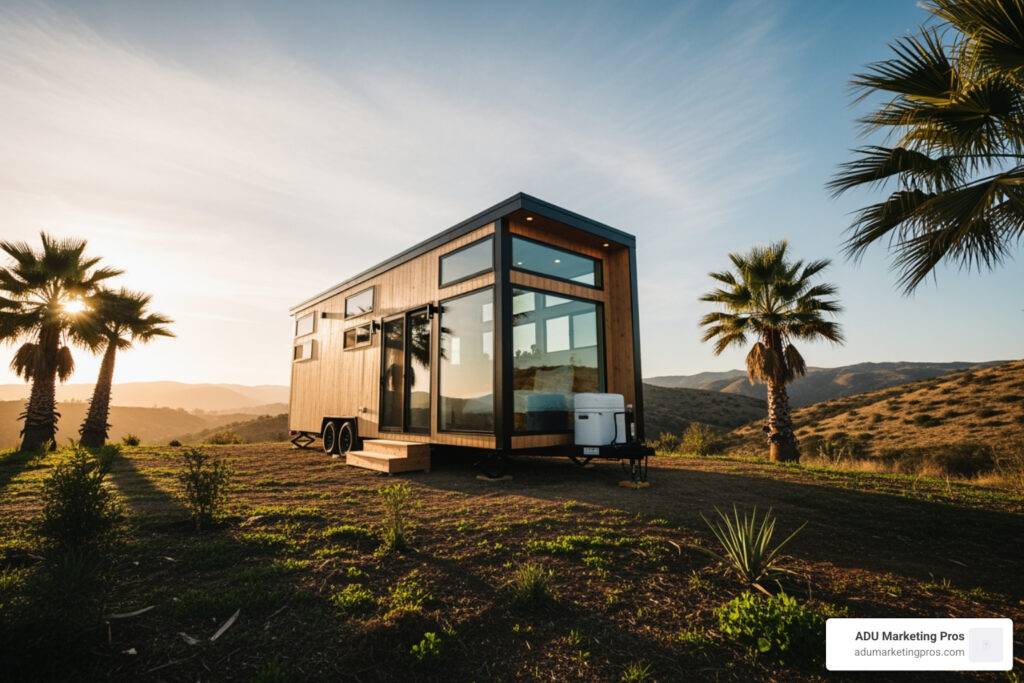
Why Tiny House Hunters Southern California Episodes Capture the Golden State Dream
Tiny house hunters southern california episodes offer a fascinating window into one of the nation’s most challenging real estate markets, where the dream of affordable homeownership meets the reality of million-dollar median home prices. If you’re looking for the best episodes featuring Southern California searches, here are the must-watch picks:
Top Southern California Episodes:
- Season 1, Episode 2: “Sound Healer Seeks Tiny House in Southern California” – A quirky Los Angeles buyer searches for a circular tiny home with good acoustics
- The Burned-Down Shack Episode: Aubree Bernier-Clarke and Jordan Strang purchase a fire-damaged property in LA for $155,000, ultimately spending over $325,000 on renovations
- Season 2, Episode 6: “Joy and LaToya Leave Hawaii for Tiny Living” – An Air Force veteran and her wife relocate to Escondido seeking debt-free living
The median price of a home in Los Angeles or San Francisco exceeds half a million dollars, making traditional homeownership out of reach for many residents. This economic reality has transformed the tiny house movement from a lifestyle choice into a practical necessity for countless Southern Californians.
What makes these episodes particularly compelling is the stark contrast between aspirational living and financial constraints. As one critic noted, the show “transparently shows people with tiny house budgets having McMansion dreams,” highlighting the tension between what buyers want and what they can afford.
The Southern California episodes showcase unique challenges that set them apart from other regions. In Los Angeles, an empty lot alone can cost $155,000 or more. The value of existing utilities and building permits can add another $100,000 to a property’s worth. This means that even a severely damaged property—like the infamous burned-down shack—can be a strategic investment in the right location.
Beyond economics, these episodes reveal the creative solutions and compromises required to make tiny living work in a region known for its outdoor lifestyle, progressive values, and diverse communities. From sound healers seeking circular spaces to veterans pursuing financial freedom, each story reflects the unique character of Southern California’s tiny house movement.
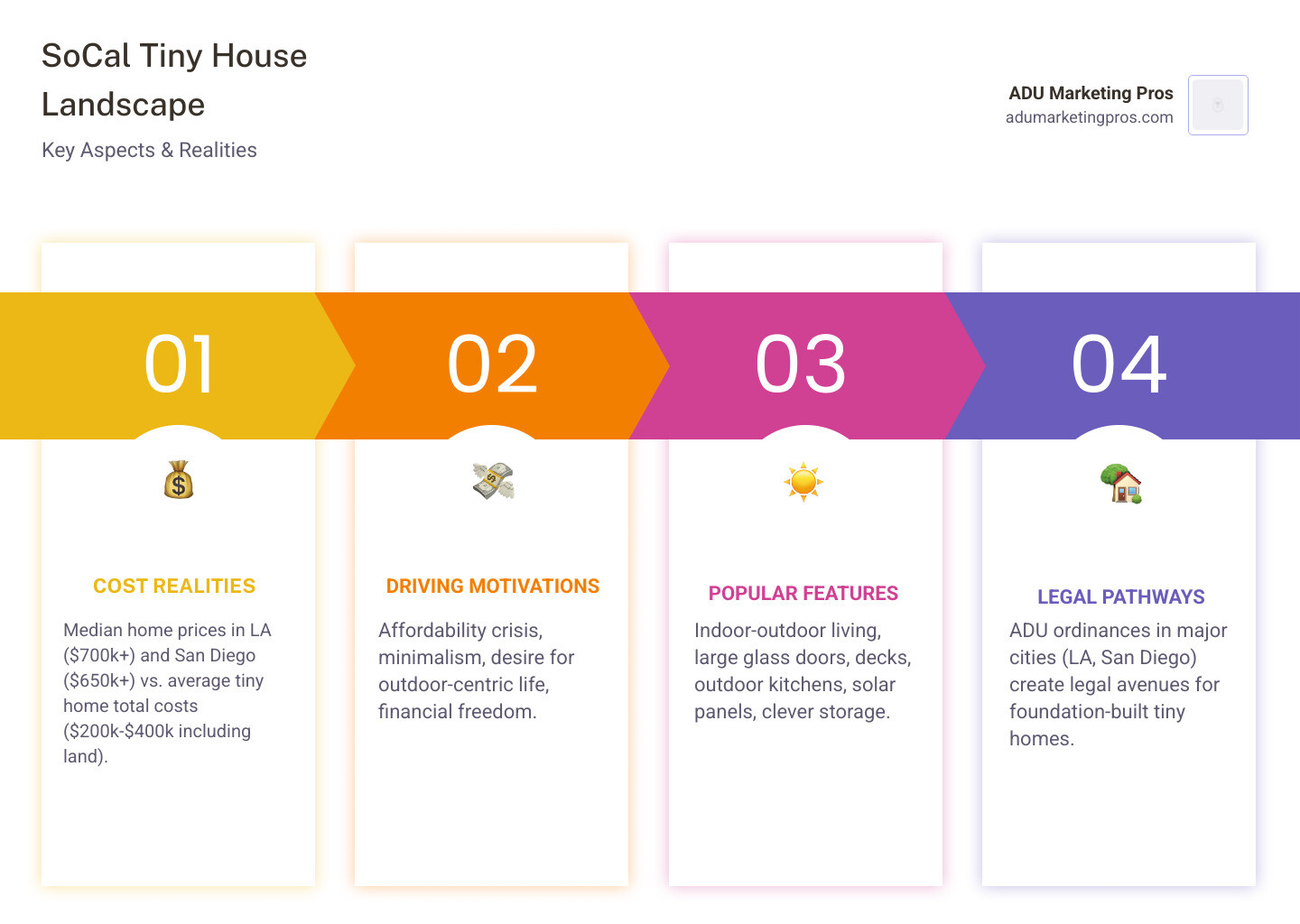
Tiny house hunters southern california terms explained:
The SoCal Dream, Downsized: Why Tiny Living Captivates California
The dream of living in sunny Southern California often collides with the reality of one of the nation’s most expensive housing markets. This section explores the cultural and economic forces driving the tiny house trend in the region. For many, the allure of a smaller footprint isn’t just about personal preference; it’s a strategic response to an evolving landscape.
The Affordability Crisis Meets Minimalism
Southern California’s real estate market is legendary for its high prices. The median price of a home in Los Angeles or San Francisco is well over half a million dollars, placing traditional homeownership out of reach for a significant portion of the population. According to the California Association of Realtors’ Housing Affordability Index, in many urban counties, fewer than 20% of households can afford to purchase a median-priced, single-family home. This financial pressure has led many—from recent graduates burdened with student debt to retirees on fixed incomes—to consider downsizing not just as a choice, but as a necessity. The tiny house hunters southern california phenomenon is a direct reflection of this affordability crisis.
Amidst this economic reality, the philosophy of minimalism has gained traction. People are increasingly seeking a lifestyle that prioritizes experiences over excessive possessions, and an outdoor-centric life that Southern California so readily offers. The idea of trading a mortgage for more freedom, travel, or simply a less complicated existence, resonates deeply. It’s about leveraging a smaller home to open up a bigger life, especially when faced with the financial anxiety of a competitive housing market.
Aspirational Living on a Smaller Scale
Interestingly, even when embracing the tiny house movement, many tiny house hunters southern california still harbor what some might call “McMansion dreams.” As an article critiquing the show points out, it is painfully transparent that people with tiny house budgets often yearn for an open floorplan, ample storage, privacy, sleek kitchen amenities, and even room to entertain. This includes demands for quartz countertops, high-efficiency stainless steel appliances, spa-like bathrooms with rainfall showerheads, and integrated smart home technology—all within 400 square feet. Buyers want the gourmet kitchen island, the walk-in closet, and the luxurious master bath, just miniaturized. This desire for high-end features within a compact space highlights a fascinating tension: the aspiration for comfort and luxury doesn’t disappear just because the square footage shrinks; it simply becomes a design challenge to solve.
This trend reflects a broader societal shift in how we perceive the American Dream. For generations, it was synonymous with a large house, a white picket fence, and abundant space. Today, for many in Southern California’s busy metros like Los Angeles and San Diego, that dream is shrinking, or at least being redefined. The tiny house offers a path to homeownership—a core tenet of the American Dream—without the crushing debt of a traditional home. However, it also raises class implications. The show, and the movement itself, can be seen as a way for some to soothe class anxiety by framing a compromise as a trendy, aspirational choice. It’s a carefully curated performance of downward mobility. By packaging a small living space with high-end finishes and marketing it as a minimalist lifestyle choice, the movement aesthetically distances itself from the stigma historically associated with mobile homes or trailer parks, which are often of a similar size but lack the same cultural cachet. You can read more about this perspective in “‘Tiny House Hunters’ and the shrinking American dream” which digs into these societal reflections.
Sustainability and the SoCal Environment
Beyond economics and aspiration, the environmental or sustainability aspects of tiny house living hold significant appeal in Southern California. The region, known for its progressive values and commitment to environmental stewardship, finds a natural ally in the tiny house movement.
A smaller home inherently means a smaller carbon footprint. Less space translates to less material used in construction (reducing waste), less energy consumed for heating and cooling, and often, less overall consumption. Many tiny house hunters southern california are actively looking for features like solar panels, rainwater harvesting systems, and eco-friendly building materials. This aligns perfectly with California’s stringent building codes, such as the Title 24 energy standards, which mandate high levels of energy efficiency in new construction. A well-designed tiny home can easily meet or exceed these requirements, making it a model for sustainable development. It’s a way to minimize environmental impact while maximizing connection to the natural beauty that defines much of Southern California. We’ve explored this further in our article on eco-friendly small homes.
Must-Watch Episodes: Our Top Picks for Tiny House Hunters Southern California
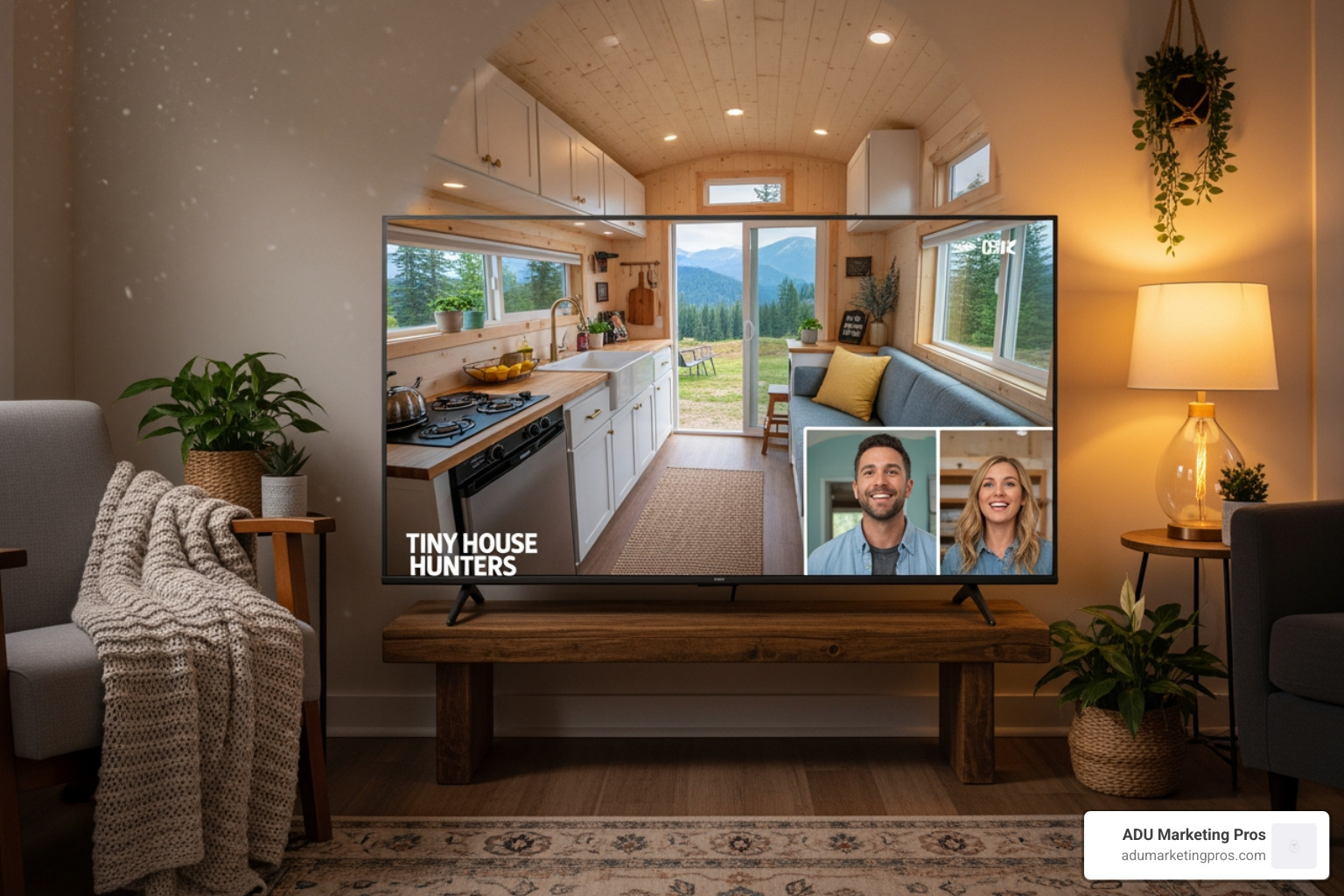
While the show travels nationwide, its Southern California episodes are particularly compelling, showcasing a unique blend of creativity, desperation, and the relentless pursuit of the California dream. These episodes don’t just entertain; they provide a case study into the unique challenges and rewards of searching for a tiny home in our vibrant region.
S1, E2: The Quirky Quest of the “Sound Healer Seeks Tiny House in Southern California”
This episode, set in Los Angeles, introduces us to a quirky sound healer with a very specific vision for her tiny home. She prefers a circular space for its good acoustics, though she’s open to other unconventional homes. This perfectly captures the search for a home that reflects a unique personality and profession, a common theme in creative hubs like LA.
What makes this search particularly interesting is how the client’s profession dictates specific design elements. While many tiny house hunters prioritize maximum storage or open-concept living, a sound healer’s need for optimal acoustics in a circular space demonstrates the highly specialized features and design elements that Southern California tiny house hunters can look for. It highlights how tiny homes aren’t just about downsizing, but about crafting a highly personalized living environment. This episode reminds us that even in a small footprint, individual needs and passions can drive truly unique architectural desires.
The Unforgettable Story of the “Burned-Down Shack” in Los Angeles

One of the most talked-about episodes of Tiny House Hunters features Aubree Bernier-Clarke and Jordan Strang, a couple living in Los Angeles, who started on a search for an itty-bitty fixer-upper. This infamous episode is a masterclass in the realities of the LA market. The couple bought a burned-down shack for $155,000, a decision that shocked viewers nationwide, who saw it as “literal trash.”
However, as an interview with the couple reveals, their choice was a strategic one born from the unique economics of Los Angeles real estate. They explained that in LA, paying $155,000 for an empty lot is common. Their burned-down property, despite its horrific condition (it had been abandoned since 1998 and housed generations of feral cats!), came with existing electricity, water, and permits for a house. This made it a “good investment,” worth at least another $100,000 in value, according to Aubree.
The renovation budget for their tiny house in Los Angeles was projected to be around $325,000, plus an additional $25,000 for landscaping. This meant their total estimated cost for the property and renovations would be nearly $100,000 over their initial budget. Despite the significant budget overrun and the sheer amount of debris (60,000 pounds hauled away!), they prioritized the superior location and the tranquil, nature-filled vibe of the property over a more move-in ready, but less ideally situated, home. This success story, though unconventional, perfectly illustrates the rewards (a personalized home in a prime location) and challenges (massive renovation, budget creep) of tiny house hunting in Southern California. You can read more about their journey and the Twitter reactions to their unique purchase here: An interview with the Tiny House Hunters couple who bought a literal burned-down shack.
S2, E6: From Aloha to Escondido for Debt-Free Living
This episode features Joy and LaToya, who are leaving Hawaii behind for tiny living in Escondido, California, located in the San Diego area. This case showcases a different, yet equally powerful, motivation for joining the tiny house movement: financial freedom. After completing her service with the US Air Force, Joy and her wife sought to remain debt-free while still enjoying the Southern California lifestyle.
Their story highlights how tiny house hunters southern california are often looking for practical solutions to achieve specific financial goals without sacrificing amenities or comfort. They aimed to purchase a tiny house that would allow them to maintain a debt-free status, proving that tiny living can be a strategic financial move, especially in a region where housing costs can quickly spiral. This episode resonates with anyone looking to minimize their financial burden and maximize their quality of life in expensive markets like San Diego.
The Reality of the Hunt: Navigating Challenges in the Golden State
The show makes for great television, but what does it really take to find a tiny home in SoCal? This section dives into the practical problems that hunters face off-camera, offering a dose of reality for those inspired by the on-screen quests.
The Million-Dollar Question: Budgets and Costs
One of the primary challenges for tiny house hunters southern california is the budget. While the tiny house structure itself can be relatively inexpensive, the total project cost in Southern California is substantial. The case of Aubree and Jordan’s burned-down shack perfectly illustrates this: they paid $155,000 just for the fire-damaged property. A realistic budget must account for multiple components:
- Land Acquisition: This is the largest and most variable expense. An empty, buildable lot in a desirable area of Los Angeles or San Diego can easily cost $200,000 to $500,000 or more.
- Site Preparation & Foundation: Costs include grading the land, soil testing, and pouring a foundation (e.g., slab, crawl space, or piers), which can range from $10,000 to $30,000+.
- Utility Hookups & Impact Fees: Connecting to water, sewer, and electricity is not a simple matter. Cities charge significant impact fees for new connections, which can run from $15,000 to over $50,000 in some municipalities.
- Permits and Fees: This includes architectural plans, structural engineering reports, and a variety of city and county permit fees that can total $10,000 to $25,000.
- The Tiny Home Itself: A professionally built tiny home on a foundation typically costs between $150 to $400 per square foot, meaning a 400-square-foot unit could cost $60,000 to $160,000.
When combined, a total project cost of $250,000 to $500,000+ is realistic. This is still significantly less than the median price of a traditional home, but it’s crucial to understand that the total cost often exceeds initial budgets, as seen with Aubree and Jordan’s $100,000 overrun. We often advise our clients to factor in a 15-20% contingency fund for these unforeseen expenses. For those exploring options, you can find more information on small houses for sale in the region.
The Legal Labyrinth: Zoning, Permits, and Where to Park It
Perhaps the biggest hurdle for tiny house hunters southern california is navigating the legal and zoning considerations. The landscape has changed dramatically with California’s progressive Accessory Dwelling Unit (ADU) legislation, which has created a legal pathway for tiny homes on permanent foundations. The California Department of Housing and Community Development (HCD) provides comprehensive guidelines, but the key is that state law now compels most cities to allow ADUs in single-family and multi-family residential zones.
This is a game-changer. Cities in our service areas, including Los Angeles, San Diego, San Jose, and others, have adopted ADU ordinances that allow for the construction of these small, secondary homes. This means you can legally build a tiny house (on a foundation) in the backyard of an existing property. However, it’s critical to distinguish between two types of tiny homes:
- Tiny Homes on Foundations (ADUs): These are treated as real property. They must be built to local building codes (the same as a traditional house) and are permanently affixed to the land.
- Tiny Homes on Wheels (THOWs): These are legally considered recreational vehicles (RVs). They are titled and registered with the DMV and are generally restricted to RV parks or designated tiny home communities. Placing a THOW in a backyard for permanent residence is still illegal in most California cities, though some municipalities like Fresno and San Luis Obispo have created specific programs or zones allowing them under certain conditions. This patchwork of regulations makes professional consultation essential.
Understanding places in Southern California that allow tiny houses is crucial, and knowing the difference between an ADU vs Tiny House is paramount for legal compliance.
Expert Advice for Aspiring Tiny House Hunters in Southern California
For those looking to buy or build a tiny house in Southern California, we offer a few key pieces of advice, drawn from both our expertise and the experiences seen on Tiny House Hunters:
- Prioritize Location: As Aubree and Jordan found, location is king. A less-than-perfect property in a prime area with good schools and amenities is often a better long-term investment than a pristine tiny home in an undesirable or remote location.
- Value Existing Utilities and Permits: A property with existing utility connections (water, sewer, power) and vested permits is worth its weight in gold. This can save you over $100,000 in costs and a year or more in time, as the infamous “burned-down shack” episode demonstrated.
- Budget for Overruns: Be realistic. Almost every construction project goes over budget. Factor in a contingency fund of at least 15-20% for unexpected costs, such as discovering poor soil conditions, material price increases, or required structural upgrades.
- Work with Experienced Professionals: Navigating Southern California’s complex regulations requires expertise. We strongly recommend engaging experienced tiny house builders in Southern California and architects in Southern California who design tiny houses. They understand the specific challenges of the region, including seismic design requirements, fire-safety building codes for Wildland-Urban Interface (WUI) zones, and California’s Title 24 energy efficiency standards. Their knowledge can save you from costly mistakes and ensure your home is safe, legal, and durable.
- Think Long-Term and Consider Resale Value: While you’re building a home for your current needs, it’s wise to consider its future appeal. Features that are highly personalized (like the sound healer’s circular room) might limit your pool of future buyers. Opting for flexible spaces, high-quality standard finishes, and a design that complements the main property (if it’s an ADU) can significantly improve your property’s long-term value and marketability.
Frequently Asked Questions about Tiny House Living in Southern California
Is it actually cheaper to live in a tiny house in Southern California?
While the structure itself is cheaper, the primary cost driver remains the land. In high-demand areas like Los Angeles or San Diego, a small, buildable plot can cost hundreds of thousands of dollars. Therefore, while the total project cost is typically less than a traditional house, it is not “cheap” by national standards. The real long-term savings come from significantly reduced utility bills, lower property taxes, and minimal maintenance costs. It’s a trade-off: a high upfront investment for lower ongoing expenses and a more accessible entry into the property market.
Where can I legally place a tiny house in Southern California?
This is a complex question with an answer that varies by city and county. Generally, the most viable legal pathway is to build a tiny home on a permanent foundation as an Accessory Dwelling Unit (ADU) in the backyard of a property with an existing single-family or multi-family home. State laws have streamlined this process, and most cities, including Los Angeles and San Diego, have ordinances to accommodate them. Tiny Homes on Wheels (THOWs) are legally classified as RVs and face far more restrictions, typically limited to designated RV parks or specific tiny home communities. It is absolutely critical to consult with the local planning department before purchasing land or a home.
What are the most popular features for tiny homes in Southern California?
Given the idyllic climate, features that promote indoor-outdoor living are paramount for tiny house hunters southern california. This includes large glass accordion or pocket doors, expansive decks or patios, and even outdoor kitchens or showers. Inside, the focus is on maximizing every square inch. Buyers demand clever, built-in storage solutions, multi-functional furniture (like Murphy beds that convert into desks), and high-end, space-efficient appliances to maintain a sense of luxury. Sustainability is also key, with solar panels, high-efficiency insulation, and reclaimed materials being highly sought-after features that align with the region’s eco-conscious values.
Conclusion: Is the Tiny Life in SoCal Your Next Big Move?
Watching Tiny House Hunters episodes in Southern California reveals a fascinating story of creativity, compromise, and the pursuit of a unique lifestyle against the backdrop of a challenging real estate market. From a sound healer’s quirky quest in LA to a couple rebuilding from ashes, the dream of tiny living is alive and well. However, the reality requires more than just a wish list; it demands serious research, a realistic budget, and a deep understanding of local zoning laws.
As the line between tiny homes and ADUs blurs, navigating the market becomes more complex. For builders and architects looking to capitalize on this trend, partnering with marketing experts like ADU Marketing Pros can provide the clarity and strategy needed to connect with serious buyers in this niche but growing market. For aspiring homeowners, the journey is tough, but as the show proves, the reward can be a perfectly personalized slice of the California dream.
Ready to build your own eco-friendly small home? Explore your options.
Ready to build your own eco-friendly small home? Explore your options.