Why Tiny House Kits Are Revolutionizing Affordable Homeownership
In a world where the dream of homeownership feels increasingly distant for many, tiny house kits are emerging as a powerful and practical solution. They offer a streamlined, accessible path to owning a home by delivering pre-cut, pre-engineered building materials and detailed instructions directly to your property. This innovative approach demystifies construction and puts the power back into the hands of the homeowner.
Quick Answer: What You Need to Know About Tiny House Kits
- Price Range: $25,600 to $97,400+ for the base kit (does not include foundation, utilities, labor, or interior finishing)
- Size Options: Typically range from 192 to over 1,279 square feet, with flexible 1- to 3-bedroom layouts.
- Build Time: The structural shell can be assembled and made weathertight (“under roof”) in just a few days, with the entire home completed in nearly half the time of a traditional build.
- Energy Savings: Modern kits, especially those using SIPs, can use 2-3 times less energy for heating and cooling compared to conventional homes.
- DIY-Friendly: Designed with the amateur builder in mind, featuring numbered panels and clear instructions that allow assembly with basic hand tools.
- What’s Included: The core structural shell, including pre-cut panels, framing lumber, blueprints, fasteners, and assembly guides.
- What’s Not Included: The foundation, plumbing, electrical systems, interior finishes (like drywall and flooring), and appliances.
Imagine waking up to birds singing, brewing coffee in the quiet of your own handcrafted space, and feeling a deep sense of pride in the home you helped build. This is the tangible promise that tiny house kits deliver—a promise free from the notorious stress, unpredictable delays, and spiraling cost overruns of conventional construction.
For residents across California, from the Bay Area to San Diego, where skyrocketing housing costs have created an affordability crisis, these kits represent a viable middle ground. They are not just for individuals; construction firms are also embracing them as a way to navigate a competitive market, offering clients faster, more predictable, and cost-effective building solutions for primary residences and Accessory Dwelling Units (ADUs).
The concept is brilliantly simple: manufacturers leverage controlled factory environments to pre-cut and sometimes pre-assemble building components with high precision. This minimizes waste and ensures quality. Everything is then flat-packed and shipped to your site with numbered panels and step-by-step instructions. Companies like Shelter Kit provide a wide spectrum of options, with their compact Barbara model starting at just $25,600, while larger, family-sized three-bedroom models like their Melissa Kit are priced around $97,400 for the shell.
Structural Insulated Panels (SIPs) are the technological heart of many modern kits. These panels form the walls and roof, creating a structure that is not only stronger but also vastly more energy-efficient than traditional stick-frame construction. According to industry leaders like Mighty Small Homes, their SIP-based homes use 2-3 times less energy for heating and cooling—a massive advantage in California’s diverse climates and a significant source of long-term savings.
Whether you’re a first-time homeowner seeking an affordable primary residence, a property owner exploring lucrative ADU opportunities, or a construction professional aiming to deliver faster, better value to clients, understanding the world of tiny house kits opens up a new realm of possibilities in today’s challenging housing market.
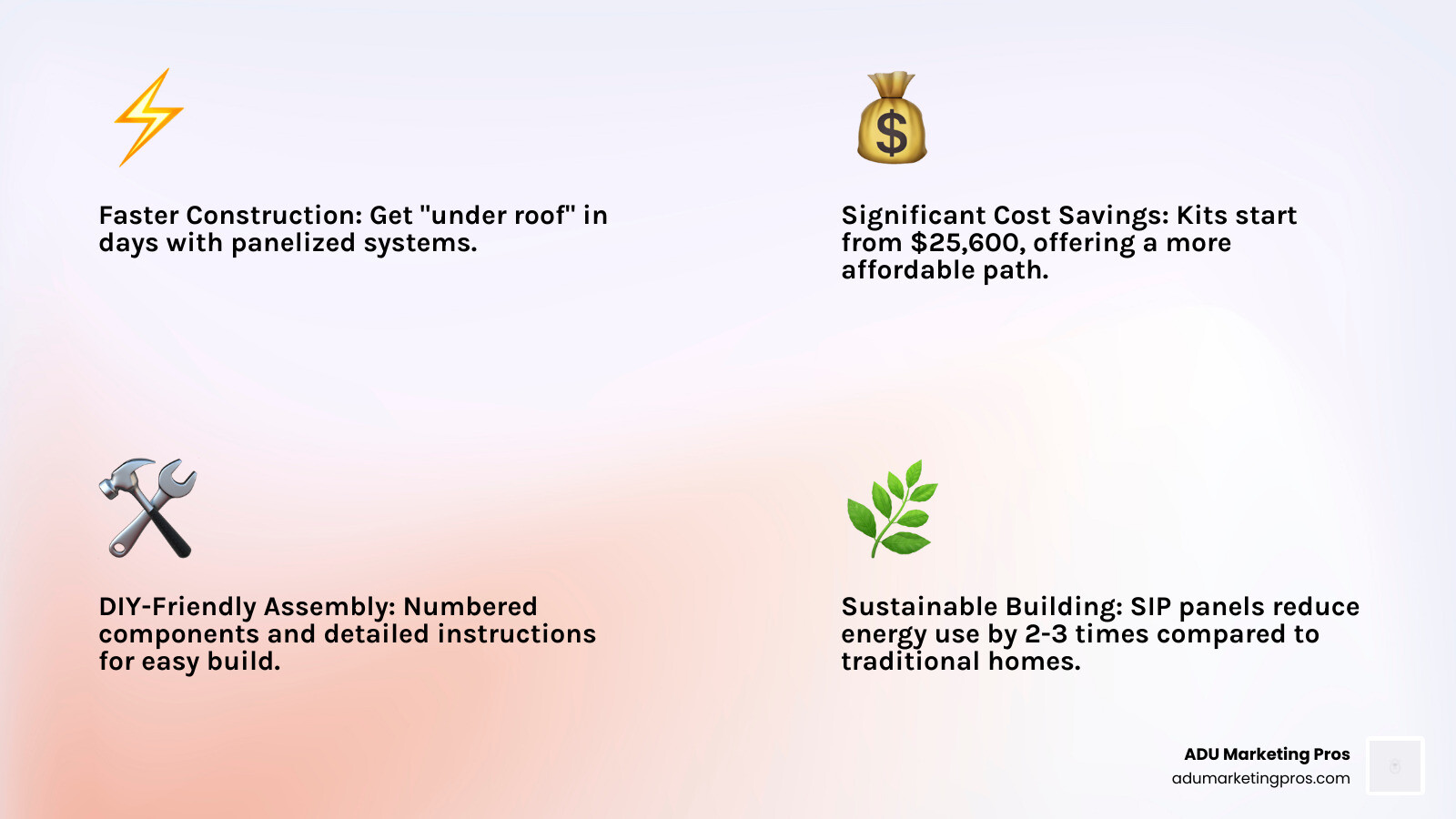
Tiny house kits terms at a glance:
Why Choose a Kit? The Big Advantages Over a Traditional Build
Traditional home building is a complex ballet of architects, contractors, suppliers, and inspectors—a process often plagued by unforeseen delays and budget overruns. Tiny house kits offer a compelling and streamlined alternative, delivering exceptional efficiency, predictability, and value, making them an ideal choice for savvy Californians.
The primary and most celebrated benefit is cost-effectiveness. By prefabricating components in a factory, kit manufacturers can purchase materials in bulk, optimize cutting to drastically reduce waste, and minimize the need for expensive on-site labor. This translates into direct savings for the buyer. For example, Shelter Kit’s popular Barbara Kit is priced at an accessible $25,600 for the shell, a figure that makes the prospect of homeownership tangible for many who were previously priced out of the market.
Monumental time savings are another cornerstone of the kit home advantage. As Mighty Small Homes highlights, their panelized building system empowers DIYers to get their structure “under roof” in a matter of days, not weeks or months. This protects the interior from the elements early in the process and allows interior work to begin much sooner. Completing the entire home in nearly half the time of conventional construction means significantly reduced holding costs, such as rent on a temporary home or interest payments on a construction loan.
Reduced complexity and DIY empowerment are also key drivers. The process is transformed from a logistical puzzle into a manageable, step-by-step project. With pre-cut, numbered components and meticulously detailed instructions, the build becomes predictable and far less intimidating. This allows homeowners with basic tool skills to take on the assembly themselves, saving tens of thousands of dollars in labor costs and building substantial sweat equity with their own hands. The sense of accomplishment that comes from building your own home is an invaluable bonus.
Finally, kits champion sustainability through less waste. Factory prefabrication is a highly efficient process that optimizes every piece of lumber and paneling. This starkly contrasts with on-site construction, where material over-ordering and cutting errors can lead to overflowing dumpsters. This alignment with California’s growing emphasis on green and sustainable building practices makes kits an environmentally conscious choice.
To understand how these smaller living spaces fit into the broader housing landscape, we can explore more info about small houses. When considering a tiny house kit as an Accessory Dwelling Unit (ADU) in places like San Jose or Los Angeles, it’s helpful to understand the distinctions between different types of small dwellings. You can learn more about this by checking out our guide on ADU vs. Tiny House.
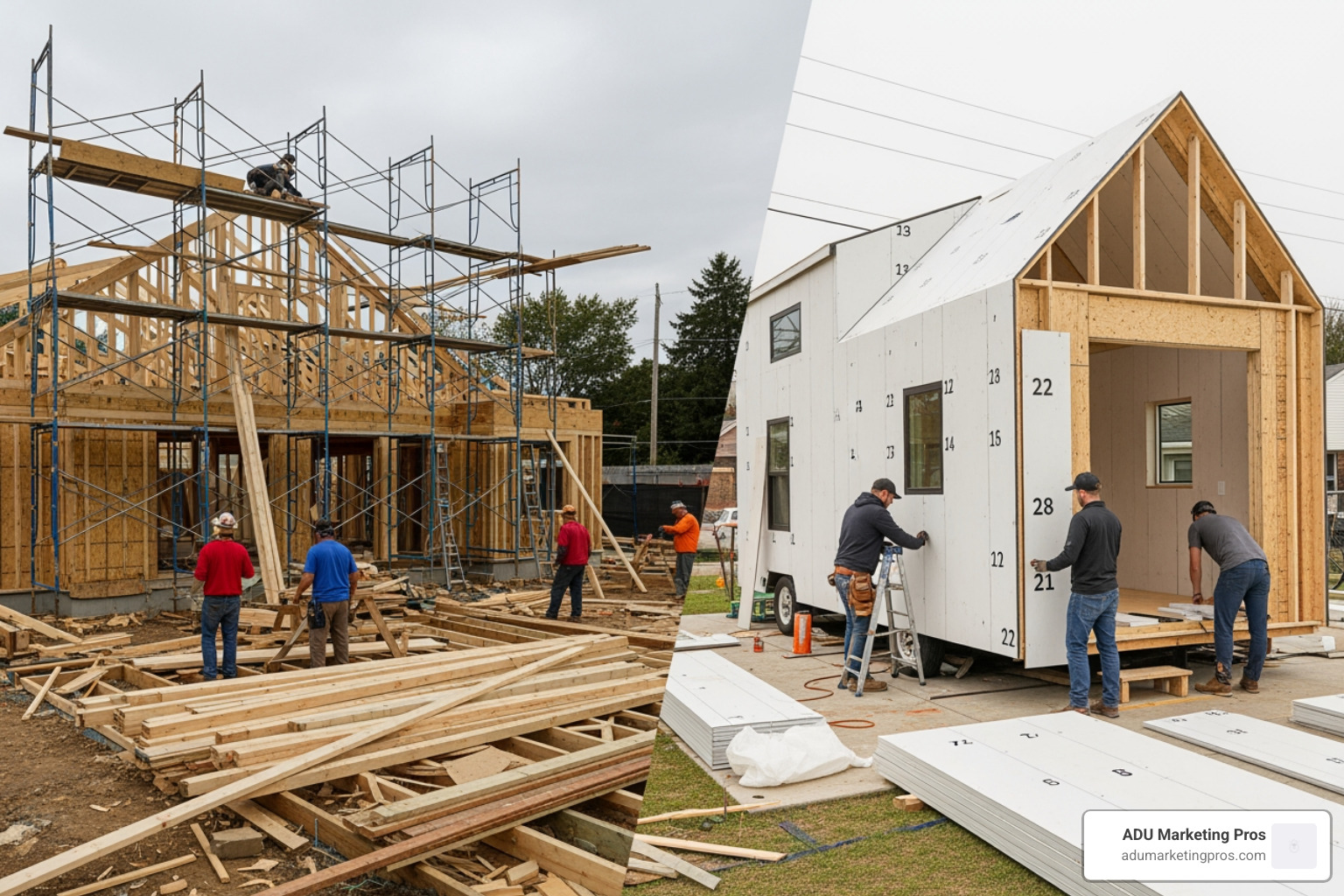
What’s Typically Included in the Box?
When your tiny house kit arrives, it’s a meticulously organized package designed to provide the complete structural shell of your new home. While the exact contents vary by manufacturer and model, here’s a more detailed look at what you can generally expect:
- Pre-cut Structural Materials: All wall panels, roof trusses or panels, and floor systems are cut to precise specifications in the factory, eliminating on-site cutting errors.
- Structural Insulated Panels (SIPs): Many modern kits feature these high-performance panels for exterior walls and roofs. They consist of an insulating foam core sandwiched between two structural facings, providing structure, insulation, and an air barrier in one component.
- Framing Lumber: Pre-cut and labeled lumber for interior partition walls and other structural elements.
- Blueprints and Engineering Documents: A full set of architectural plans, including engineer-stamped documents that are crucial for the building permit application process.
- Fasteners and Connectors: All the necessary screws, nails, bolts, and metal connectors required to assemble the structure as designed.
- Assembly Instructions: A detailed, step-by-step manual, often with illustrations, guiding you through the entire shell construction process.
- Shell Components: This includes exterior wall and roof sheathing, creating a weathertight shell that gets your home “under roof” quickly.
- Weather Barrier: House wrap (like Tyvek), flashing tapes, and sealants to properly seal the exterior envelope against moisture and air intrusion.
- Specialized Tools: Some SIP kit providers include special tools, such as a hot knife for cutting foam or a panel lifter, to facilitate easier assembly.
- Wiring Chases: Pre-cut channels within the SIPs that allow electricians to run wires easily, saving significant time and effort during the electrical rough-in phase.
For a detailed look at what one manufacturer includes, you can review an example of what’s included in a home kit.
What Isn’t Included?
A tiny house kit is a fantastic starting point, but it’s critical to understand it’s not a complete house-in-a-box. You must budget for these essential elements, which are sourced and installed separately to allow for personal choice and site-specific requirements:
- Foundation: This is the most significant exclusion, as the type of foundation (slab, crawl space, basement, or piers) depends entirely on your site’s soil conditions, climate, and local codes. This is always your or your contractor’s responsibility.
- Interior Finishing: This category covers everything that makes the house livable and beautiful: drywall, paint, flooring, tile, trim, and cabinetry.
- Plumbing Systems: All pipes for water supply and drainage, fixtures (sinks, toilets, showers), and the water heater must be purchased and installed by a qualified plumber.
- Electrical Systems: This includes all wiring, outlets, switches, light fixtures, and the main electrical panel. This work must be done by a licensed electrician to meet safety codes.
- Appliances: Your stove, refrigerator, washer, dryer, and any other major appliances are not part of the kit.
- Exterior Finishes (Often): While the kit provides the structural sheathing, the final exterior cladding (siding) and roofing material (shingles, metal) are often chosen and purchased separately to match your aesthetic preference.
- Labor Costs: If you’re not undertaking a full DIY build, you’ll need to budget for hiring a general contractor or specialized tradespeople (plumbers, electricians, etc.).
- Permitting and Utility Hook-Up Fees: These administrative costs vary widely by city and county in California (e.g., San Jose vs. Los Angeles) and can be substantial.
Exploring the World of Tiny House Kits
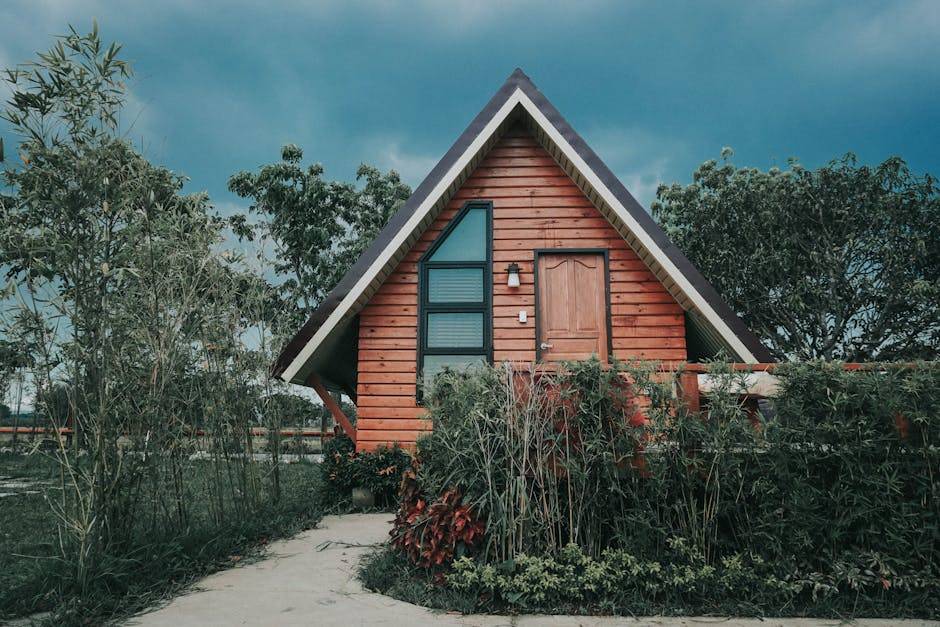
Tiny house kits offer an incredible spectrum of designs, catering to nearly any aesthetic, from rustic A-frame cabins to sleek, modern marvels. This architectural diversity is perfectly suited for California, where flexible housing solutions are needed to complement diverse landscapes—from coastal bluffs and mountain retreats to dense urban backyards.
Whether you envision a cozy writer’s cabin near Mountain View or a contemporary, income-generating ADU in your San Jose backyard, manufacturers provide a vast catalog of choices. Companies like Shelter Kit proudly display their range in resources like their DIY Tiny Home Kits page, showcasing the adaptability of their systems. This variety ensures you aren’t just buying a structure; you’re selecting a design that deeply resonates with your personal vision and lifestyle needs.
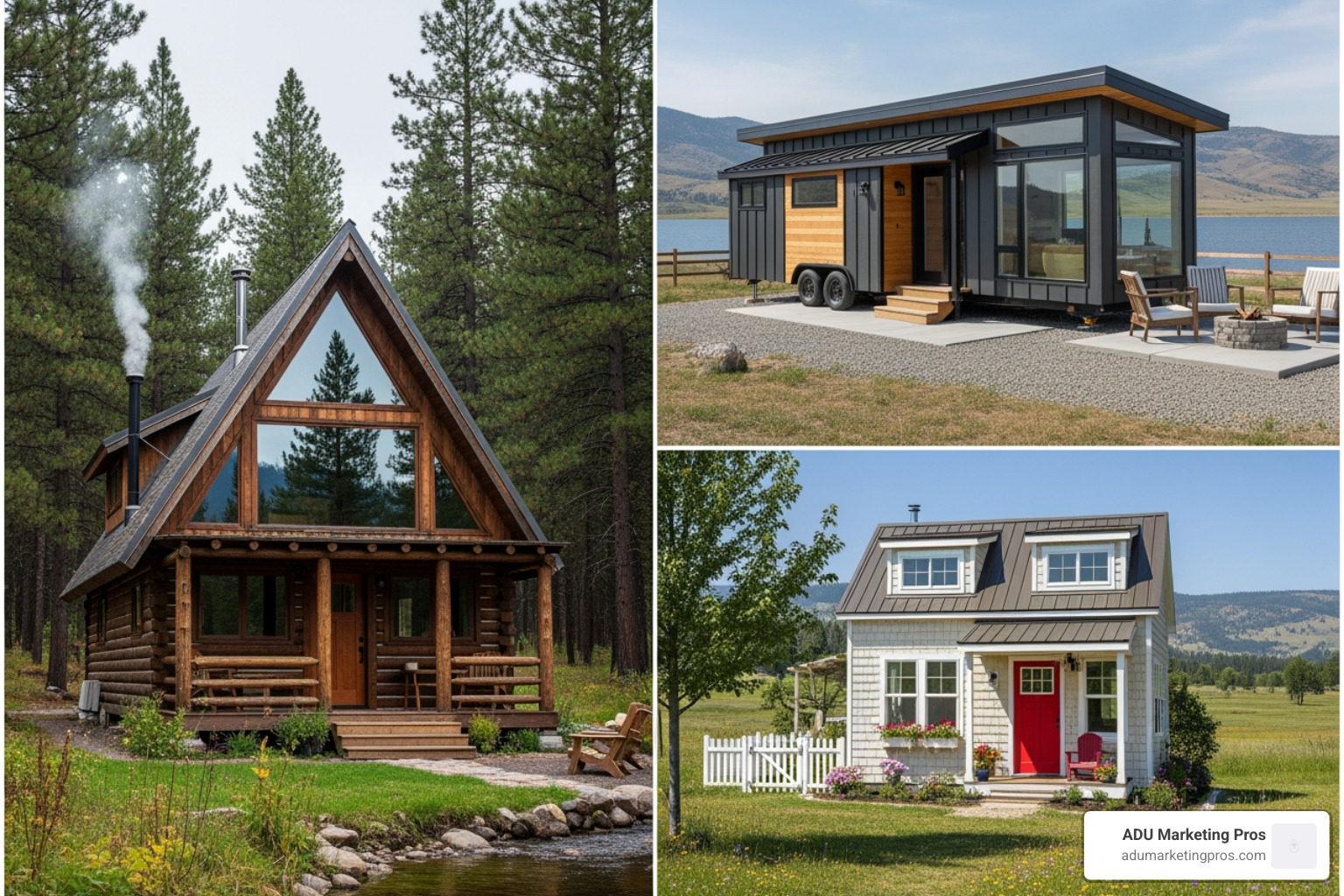
Types of Kits Available
When you begin exploring tiny house kits, you’ll find they generally fall into two main categories: the basic shell kit and the more inclusive turnkey or complete kit. Understanding the difference is crucial to selecting the right path for your budget, timeline, and skill level.
| Kit Type | Description | DIY Involvement | Initial Cost | Timeline to Finish | What it’s Best For |
|---|---|---|---|---|---|
| Shell Kit | Provides the essential exterior structure: walls, roof, and sometimes the floor system. It leaves all interior framing, finishes, and utilities to the builder. | High | Lower | Longer | Experienced DIYers, those on a strict budget who can trade labor for cost, or individuals wanting maximum control over interior design and material choices. |
| Turnkey/Complete Kit | Includes most materials needed to complete the home, often covering interior framing, windows, doors, and sometimes even siding and roofing. Some may include rough-in packages for plumbing/electrical. | Moderate | Higher | Shorter | DIYers with less experience, those prioritizing a faster completion, or homeowners who prefer the convenience of a more comprehensive, single-source package. |
A shell kit offers the ultimate flexibility and the lowest upfront cost, making it ideal for seasoned builders or those ready to manage the complexities of sourcing and interior construction. In contrast, a turnkey kit streamlines the process significantly, reducing the number of decisions and suppliers you have to manage, which can be well worth the higher initial investment for many.
Common Designs, Sizes, and Layouts
Tiny house kits are designed to meet a wide array of needs and comply with varying California ADU requirements. They come in many shapes and sizes, from compact studios perfect for a single person to multi-bedroom homes suitable for a small family.
- Square Footage Ranges: Kits can be truly tiny, starting around 192 sq. ft. (like Shelter Kit’s Barbara Kit), or surprisingly spacious, with some plans like TIMBER MART’s TBM1279 reaching 1279 sq. ft.
- Bedroom Configurations: Layouts are highly adaptable. While many feature a single bedroom or loft, 1, 2, and even 3-bedroom options are readily available, such as Shelter Kit’s three-bedroom Melissa Kit.
- Bathroom Options: Virtually all kits are designed to accommodate at least one full bathroom, with larger models often including plans for a second bathroom or a powder room.
- Popular Architectural Styles: The aesthetic possibilities are vast. Popular styles include Modern (with flat roofs and large windows), traditional Cottage (with charming details), rustic A-Frame, and classic Ranch designs.
- Loft vs. Single-Floor Designs: To maximize usable space within a small footprint, many kits incorporate sleeping lofts. However, recognizing the need for accessibility, manufacturers also offer a wide variety of single-floor plans that are ideal for older adults or those with mobility challenges.
For those interested in exploring more options for smaller homes, you can dig into more info on small houses for sale.
Customization and Design Features
One of the most appealing aspects of tiny house kits is the surprising degree of customization available. Manufacturers understand that personalization is what transforms a house into a home, and many are flexible in helping you achieve your unique vision.
- Floor Plan Modifications: While load-bearing walls are typically fixed, many companies allow you to adjust interior, non-load-bearing walls. This lets you create a more open-concept living space, enlarge a bathroom, or reconfigure a bedroom to better suit your needs.
- Window and Door Placement: You often have significant flexibility in the placement and size of windows and doors. This is a critical feature for optimizing natural light, framing specific views on your property, and ensuring good cross-ventilation.
- Material Choices: The interior and exterior finishes are where your personal style truly shines. Since these are not typically included in the kit, you have complete freedom to choose your own siding, roofing, flooring, paint colors, and fixtures.
- Exterior Finishes: You can customize the exterior to match your primary residence or create a standout design. Choose from various siding materials (wood, fiber cement, metal, stucco), trim colors, and roofing types to achieve the perfect aesthetic.
- Personalizing Your Space: Beyond the basics, you can incorporate custom features like built-in shelving, a window seat, or specific porch and deck railings. These small details contribute to a space that perfectly suits your lifestyle, whether it’s for a mountain retreat or an urban ADU in Menlo Park.
For highly specific or complex modifications, consulting with a design professional is invaluable. Architects who design tiny houses can help you adapt a kit plan or create a fully custom design that is both beautiful and compliant with California’s complex regulatory landscape.
From Crate to Home: The Building Process Explained
Embarking on a tiny house kit build is an adventure in planning, precision, and hands-on creation. The core appeal lies in its promise of a clearer, more manageable, and less stressful path to homeownership compared to the uncertainties of traditional construction. Understanding the journey from start to finish is key to a successful project.
The process officially begins the moment you place your order, but the real work starts even before that. Once you’ve selected and customized your kit, you must arrange delivery logistics. Manufacturers like Shelter Kit can ship their products across the Lower 48 States, often with a lead time of under five weeks. It is your responsibility to ensure the building site in California is accessible for a large delivery truck and that you have a plan for unloading and staging the materials.
Site preparation is the most critical pre-delivery phase and must be completed before the kit arrives. This is a multi-step process that includes clearing and grading the land, ensuring proper drainage to protect your foundation, and trenching for utilities (water, sewer/septic, and electricity). The foundation itself must be constructed and perfectly level, whether it’s a concrete slab, a crawl space with block walls, or a pier system. Any inaccuracies here will cause major problems during assembly.
Tiny house kits are specifically engineered for DIY suitability. The required skill level is significantly lower than that of traditional stick framing because the complex cuts and engineering have been done for you. With pre-cut, numbered components and clear guides, the project becomes an exercise in careful assembly rather than expert carpentry, making it easier to Stop Waiting – Build It Yourself.
How does the assembly for a tiny house kit work?
The assembly process for a tiny house kit is designed for methodical efficiency, often compared to assembling a life-sized puzzle where every piece is perfectly designed to fit.
- Step-by-Step Instructions: Your kit will arrive with a comprehensive, illustrated manual that breaks down each phase of construction, from laying the first sill plate on the foundation to placing the final roof panel.
- Panelized Systems: Many modern kits use large, pre-assembled wall and roof panels (like SIPs). Instead of building a wall stud by stud, you and a few helpers will lift and secure entire wall sections at a time, dramatically speeding up the process.
- Numbered Components: Every major component is labeled with a number or code that corresponds directly to the blueprints and instructions. This system eliminates guesswork and ensures that each piece is installed in the correct location and orientation.
- Getting “Under Roof” Quickly: One of the most satisfying milestones is erecting the shell. With a panelized kit, this can often be accomplished in just a few days. This is a crucial step as it protects your investment and all subsequent work from weather damage.
- Manufacturer Support: Reputable companies don’t just ship you a box and disappear. They offer robust customer support via phone, email, or video consultation to help you troubleshoot any issues that may arise during your build.
- Estimated Build Time: While the shell goes up incredibly fast, finishing the home (plumbing, electrical, drywall, flooring, painting) still takes considerable time—weeks or even months, depending on your pace and whether you hire professionals. However, the total timeline is still typically half that of a conventional build.
Potential Challenges and How to Prepare
While tiny house kits simplify the building process, they are not without challenges. Proactive preparation is the key to saving time, money, and frustration.
- Navigating Building Codes and Permitting: This is often the biggest hurdle in California. Regulations vary dramatically by city and county (e.g., the San Francisco Bay Area has different requirements than San Diego County). Start by visiting your local building department’s website or office before you buy a kit. While engineer-stamped blueprints are a great start, local authorities may require additional engineering reviews or specific modifications to comply with seismic, fire, or energy codes. Check out California’s official site for Accessory Dwelling Unit information for statewide guidance.
- Securing Financing and Insurance: Financing a kit home can be tricky. Many traditional mortgage lenders are unfamiliar with them. You may need to seek out a construction loan from a local bank or credit union that is open to this type of project. Similarly, getting homeowner’s insurance can require extra effort to find a carrier who understands and will cover a kit-built home.
- Sourcing and Budgeting for Finishes: The kit is just the shell. You are responsible for sourcing, purchasing, and managing the delivery of all interior finishes, appliances, and some exterior elements. This requires careful budgeting, as material prices can fluctuate, and supply chain issues can cause delays.
- Unexpected Costs: Always build a contingency fund of 15-20% of your total estimated project cost. This will cover unforeseen expenses like needing extra excavation work, price increases on materials, or hiring a professional for a task that proved too difficult to DIY.
- Finding Skilled Help if Needed: Be realistic about your own skills. For complex and safety-critical tasks like electrical and plumbing, hiring licensed professionals is non-negotiable. In a busy market, good contractors can be booked months in advance. It’s wise to pre-identify and vet reliable local tradespeople in your area, such as Sunnyvale or Palo Alto, early in your planning process.
If you find yourself needing more hands-on assistance, we can help you connect with tiny house builders in California who are experienced with these unique projects.
Budgeting, Efficiency, and Final Considerations
A tiny house kit project is an exciting venture into efficient and affordable homeownership. However, success hinges on a clear understanding of the full financial picture, the long-term value of energy efficiency, and the complex regulatory landscape. This section covers the critical economic, environmental, and practical considerations for building your kit home, particularly in California.
Cost considerations for tiny house kits
While the low sticker price of a tiny house kit is what initially attracts most buyers, it’s crucial to approach your budget with a holistic view of the total investment required.
- Base Kit Prices: The kit itself, which typically covers the structural shell, can range from an accessible $25,600 for a compact 192 sq. ft. model like Shelter Kit’s Barbara, to $97,400 or more for a spacious 1,232 sq. ft. three-bedroom model like their Melissa.
- The “Multiplier” Rule for Total Cost: A reliable rule of thumb is to estimate the final, move-in ready cost will be 2 to 3 times the base price of the kit. This accounts for all the necessary additions the kit doesn’t cover.
- Detailed Breakdown of Additional Expenses: To create a realistic budget, you must itemize these costs:
- Foundation: ($5,000 – $20,000+) depending on type and site conditions.
- Utility Hookups: ($10,000 – $30,000+) for connecting to water, sewer/septic, and the electrical grid.
- Labor: ($20,000 – $80,000+) if you hire a general contractor or subcontractors. This is the biggest variable and the largest potential for savings if you DIY.
- Permits & Fees: ($3,000 – $15,000+) including building permits, school fees, and impact fees, which vary wildly by locality.
- Interior & Exterior Finishes: ($20,000 – $60,000+) for siding, roofing, drywall, flooring, paint, cabinets, and countertops.
- Appliances & Fixtures: ($5,000 – $15,000+).
- The Unbeatable Value Proposition: Even after accounting for all these costs, the total investment for a finished tiny house kit is often significantly lower than a traditionally built home or a pre-existing home in most California markets. This makes kits an exceptional value for first-time buyers, those seeking to downsize, or property owners building an ADU.
Energy Efficiency and Sustainability
A powerful and increasingly important reason to choose a modern tiny house kit is its inherent focus on energy efficiency and sustainability, a major benefit for environmentally conscious and budget-savvy Californians.
- The Power of SIPs: As mentioned, many high-quality kits use Structural Insulated Panels (SIPs). These panels create an exceptionally airtight building envelope, drastically reducing air leakage—a major source of energy loss in traditional homes. This tight seal, combined with continuous insulation, is the key to their efficiency.
- Dramatically Reduced Energy Consumption: The superior insulation and airtightness of SIP homes mean your heating and cooling systems work far less. Mighty Small Homes reports that their homes use 2-3 times less energy than conventionally built houses, leading to immediate and substantial savings on monthly utility bills.
- Smaller Carbon Footprint: The benefits extend beyond your wallet. Lower energy use directly translates to a smaller carbon footprint over the life of the home. Furthermore, the factory prefabrication process minimizes construction waste by up to 50% compared to site-built homes, reducing landfill impact.
- Sustainable Materials and Practices: Many kit manufacturers are committed to sustainability, prioritizing the use of sustainably harvested lumber and materials with recycled content. Some designs also facilitate the easy integration of other green technologies, such as rainwater harvesting systems and solar panels.
- Climate Adaptability: The robust insulation and airtight construction make these kits highly adaptable to California’s diverse climates. They stay cooler in the hot inland valleys like San Jose and warmer in the cooler, damp coastal areas, ensuring year-round comfort with minimal energy input.
Navigating Permits, Zoning, and Certifications
Successfully building a tiny house kit in California, especially as an ADU, requires diligent navigation of local government regulations. This is a non-negotiable part of the process.
- Local Building Codes are Law: Every city and county in California adopts and enforces building codes based on the International Residential Code (IRC), but with local amendments for things like seismic activity and wildfire risk. Your local building department (e.g., in Los Angeles or Mountain View) must review and approve your kit’s blueprints to issue a building permit. Their job is to ensure the final structure is safe and habitable.
- Zoning Regulations Dictate Use: Zoning laws determine what can be built on a property and how it can be used (e.g., primary residence, ADU, guesthouse). While California has passed statewide laws to streamline ADU approval, local ordinances regarding setbacks, height, and parking still apply. Verify your project’s compliance with your local planning department.
- Understanding Certifications: For tiny homes on a permanent foundation, the key is compliance with the IRC and local codes. Certifications like the CSA (a Canadian standard) or RVIA (for tiny homes on wheels) are generally not applicable or sufficient for permanent structures.
- The Critical Role of Engineer-Stamped Blueprints: These are non-negotiable for obtaining a permit. The stamp from a licensed structural engineer validates that the design is sound and can withstand local conditions (like wind, snow, and earthquakes). Confirm your kit includes plans stamped for your state, and be prepared that your local jurisdiction may require an additional review by a local engineer.
Understanding these requirements is the first step to a legal, safe, and successful build. For those interested in the specifics of adding smaller living units to their property, we have resources like learn about prefab granny flats in California.
Conclusion: Your Dream Home, Delivered in a Box
The journey to homeownership, or to enhancing your property with a valuable Accessory Dwelling Unit, has been fundamentally reimagined by tiny house kits. Throughout this guide, we’ve explored how these innovative building systems offer a powerful and compelling alternative to traditional construction. They forge a path that is demonstrably more affordable, significantly faster, and more accessible, particularly for the growing number of DIY enthusiasts across California.
We’ve seen how the core benefits stack up to create an unmatched value proposition. From the dramatic cost savings realized through factory efficiency and reduced labor, to the rapid assembly that gets your home “under roof” in days, these kits remove many of the biggest barriers to building. The inherent energy efficiency of modern designs, often leveraging advanced materials like SIPs, translates into lower utility bills for life and a smaller environmental footprint—a true win-win for your wallet and the planet. Perhaps most importantly, they offer the empowering and deeply rewarding satisfaction of building your own space.
Of course, a successful project requires more than just the kit itself. We’ve learned the critical importance of comprehensive planning—from creating a detailed, all-inclusive budget to diligently navigating California’s complex and varied permitting and zoning regulations. The mantra is clear: prepare thoroughly. With the right research, a realistic budget, and a willingness to ask for help from skilled professionals when needed, your dream of a tiny home can move swiftly from a concept in a catalog to a concrete reality on your land.
For construction firms looking to capitalize on this burgeoning market, ADU Marketing Pros offers specialized digital marketing strategies designed to connect you with a steady stream of ready-to-build clients. We possess a deep understanding of the nuances of the ADU sector in key California markets like San Jose and the greater San Francisco Bay Area, and we can equip your business with the tools to attract high-quality leads and thrive.
Ultimately, tiny house kits represent more than just a convenient package of building materials; they embody a broader movement towards more intentional, sustainable, and attainable living. If you’re ready to embrace a simplified lifestyle, generate rental income, or expand your property’s potential, a tiny house kit could be the perfect starting point for the next chapter of your story. To explore where these charming dwellings are welcomed, discover places in Southern California that allow tiny houses.