
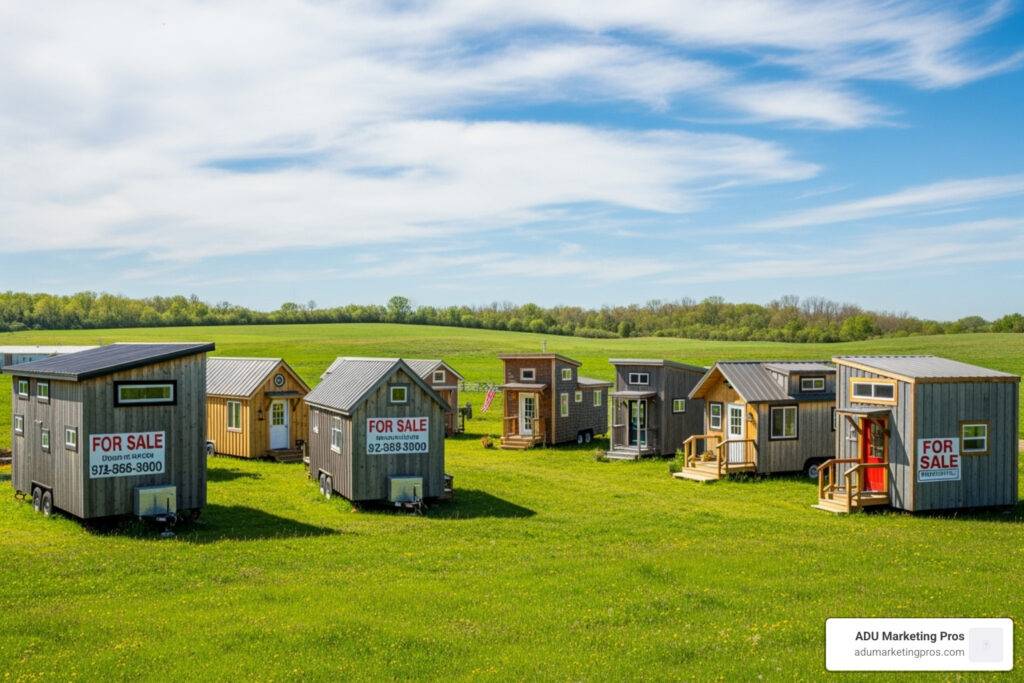
Why Finding Tiny Houses for Sale Near You Is Easier Than Ever
Searches for “tiny houses for sale near me” have exploded as more people discover the profound freedom of minimalist living. This isn’t just a fleeting trend; it’s a robust movement driven by a desire for financial independence, a commitment to sustainability, and the tangible appeal of outright homeownership. For many, the dream of owning a home without a 30-year mortgage anchor has become a powerful motivator. The tiny house movement offers a compelling, practical alternative to the ever-escalating costs of traditional housing, making homeownership accessible again.
The market has matured significantly, responding to this demand with a diverse array of options. Whether you’re a hands-on DIY enthusiast ready to build a tiny home on wheels (THOW) from a shell (starting around $35,000) or you’re looking for a professionally built, turnkey foundation model ready for move-in ($60,000 to $150,000+), the choices are abundant. This surge in availability is fueled by two major societal shifts: the persistent rise in housing costs and the newfound flexibility of remote work, which has untethered millions from expensive city centers. For a growing number of people, tiny living isn’t just about downsizing square footage—it’s about upsizing life experiences. It’s about redirecting funds from a mortgage to travel, hobbies, or savings, all while significantly reducing one’s environmental footprint and monthly expenses. The key to a successful transition is a thorough understanding of your options, a deep dive into local regulations, and a realistic grasp of the true costs involved.
Quick Answer: Where to Find Tiny Houses for Sale:
- Online Marketplaces: Websites like Tiny House Listings and Tiny Home Builders Marketplace are dedicated hubs. Don’t forget to check Zillow and Trulia with specific filters for square footage (under 600 sq ft).
- Local Builders: Searching for builders in your state or region can yield custom and turnkey options, often with prices ranging from $35,000 for a basic shell to over $150,000 for a high-end, fully-equipped model.
- Tiny Home Communities: These planned neighborhoods offer a solution to the zoning puzzle, providing legal parking spots with utility hookups and a built-in community.
- Real Estate Agents: A growing number of real estate agents now specialize in alternative housing, including tiny homes, and can help navigate the complexities of land purchase and zoning.
Understanding the Allure of Tiny Living

When people search for “tiny houses for sale near me”, they’re often looking for something much deeper than a smaller home—they’re pursuing a fundamental shift in their way of life. The movement represents a conscious rejection of the “bigger is better” consumerist mentality, pivoting instead toward a more intentional and meaningful existence. The process of downsizing possessions is frequently cited as a source of surprising mental clarity and reduced stress. Furthermore, the financial benefits are undeniable; drastically lower utility bills, reduced or eliminated property taxes, and minimal maintenance costs free up significant financial resources. This allows people to prioritize experiences, travel, and savings over mortgage payments. Many tiny dwellers also report a deeper connection to nature and take pride in the reduced environmental footprint that comes with consuming fewer resources. For those particularly interested in this aspect, exploring eco-friendly small homes can provide valuable insights into sustainable building practices and materials.
The Rise of the Tiny House Trend
The tiny house trend is not an accident; it’s a direct and logical response to several modern challenges. The affordability crisis in housing, which began escalating after the 2008 financial crisis, has priced millions of people out of the traditional homeownership market, particularly in high-cost states like California and New York. Simultaneously, a significant cultural shift has been underway, with younger generations, in particular, favoring experiences over possessions. This makes the prospect of being mortgage-free and having disposable income for travel and personal growth incredibly appealing. The widespread adoption of remote work flexibility has acted as a powerful catalyst, untethering professionals from expensive urban centers and making life in a scenic, rural tiny home community a viable and attractive option. This is coupled with a growing interest in sustainable building materials and off-grid technologies. Builders are increasingly using reclaimed wood, sheep wool insulation, bamboo flooring, solar panels, and rainwater collection systems to reduce both the environmental impact and the long-term operating costs of the homes.
Weighing the Pros and Cons
While the benefits are compelling, tiny house living is not a one-size-fits-all solution. It involves a significant trade-off between exciting new freedoms and very real, practical drawbacks that demand honest self-assessment and careful consideration before you take the plunge.
Key Benefits:
- Financial Freedom: This is the number one driver for most. Lower utility bills (often under $100/month), minimal or no property taxes (for THOWs), and lower insurance costs can save thousands of dollars annually, accelerating debt payoff and savings goals.
- Mobility and Flexibility: Tiny homes on wheels (THOWs) offer the ultimate freedom to relocate for a new job, a change of scenery, or to be closer to family without the hassle of selling a traditional home.
- Simplified Lifestyle: With fewer possessions to clean, organize, and maintain, you gain a surprising amount of time and mental energy. This newfound freedom can be dedicated to hobbies, relationships, travel, and personal growth.
- Reduced Environmental Impact: A smaller home inherently uses less energy for heating and cooling and is built with fewer materials, leading to a significantly smaller carbon footprint.
Key Drawbacks:
- Extreme Space Constraints: Living in 300-600 square feet is a major adjustment. It requires ruthless decluttering, highly creative storage solutions, and can be especially challenging for couples, families with children, or those with pets.
- Zoning and Legal Hurdles: This is often the biggest obstacle. Many municipalities have minimum square footage requirements for dwellings, and restrictive zoning laws can make finding a legal, long-term parking spot for a THOW a significant challenge.
- Financing and Insurance Difficulties: Securing a loan for a tiny home can be difficult as they don’t fit neatly into traditional mortgage or RV categories. Insurance can also be complex to obtain.
- Resale Value Uncertainty: The market for tiny homes is growing but remains a niche. Unlike traditional real estate, which typically appreciates, a custom-built tiny home may appeal to a smaller pool of buyers, and THOWs can depreciate in value similarly to RVs.
- Hosting and Social Life: Having friends or family over for dinner, let alone for an overnight stay, can be nearly impossible in a very small space.
The decision to go tiny requires a brutally honest assessment of your lifestyle, personality, priorities, and long-term goals. It’s about understanding exactly what you’re willing to give up in order to gain a new and powerful kind of freedom.
A Guide to Tiny Home Types and Costs
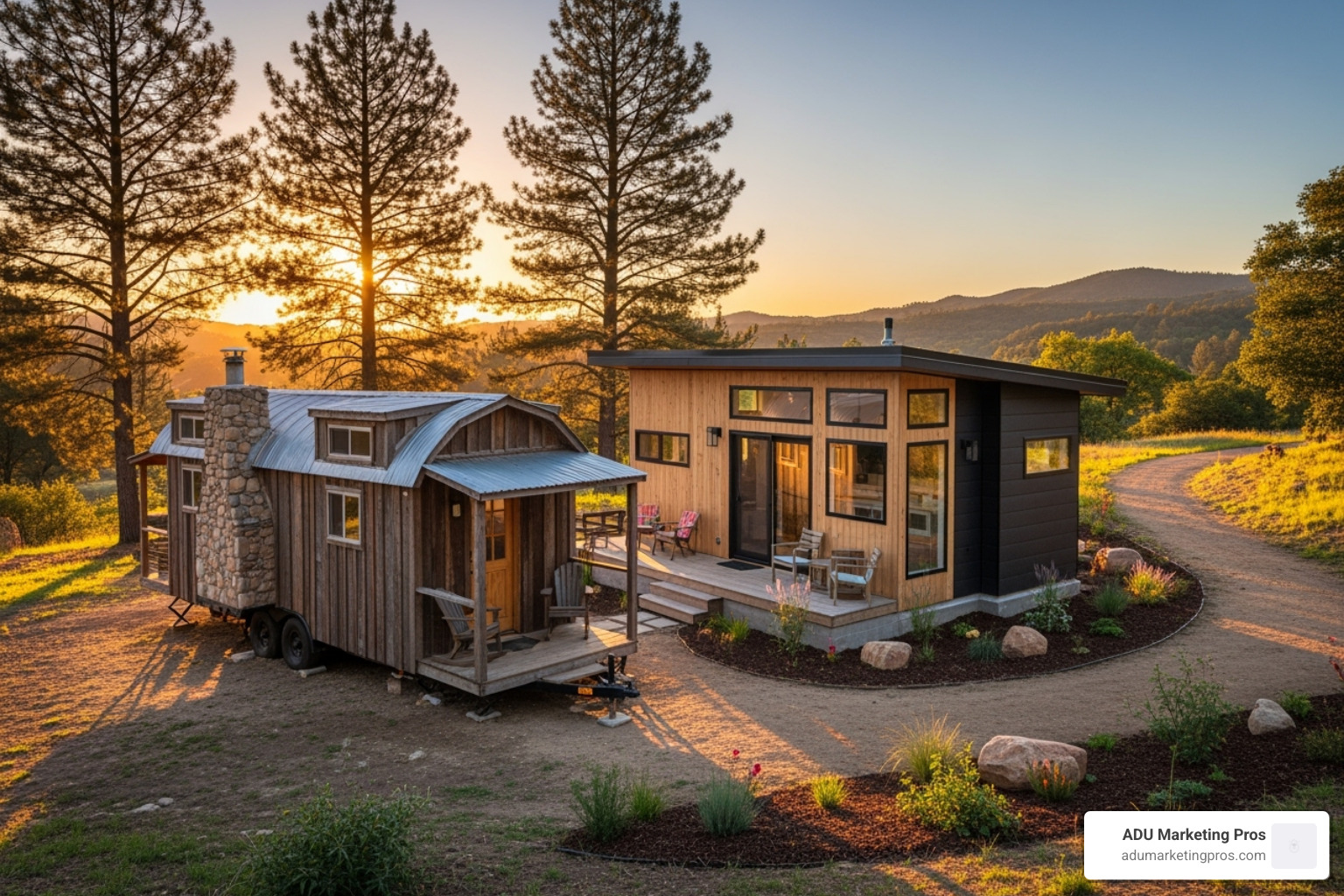
When you begin your search for tiny houses for sale near me, you’ll quickly discover a diverse and innovative market. From rustic, cabin-style homes on wheels to sleek, modern prefabricated units, understanding the fundamental types and their associated costs is a critical first step. It’s also essential to distinguish them from other small dwellings; for example, this ADU vs. Tiny House comparison can help clarify which structure best fits your needs, property, and local laws.
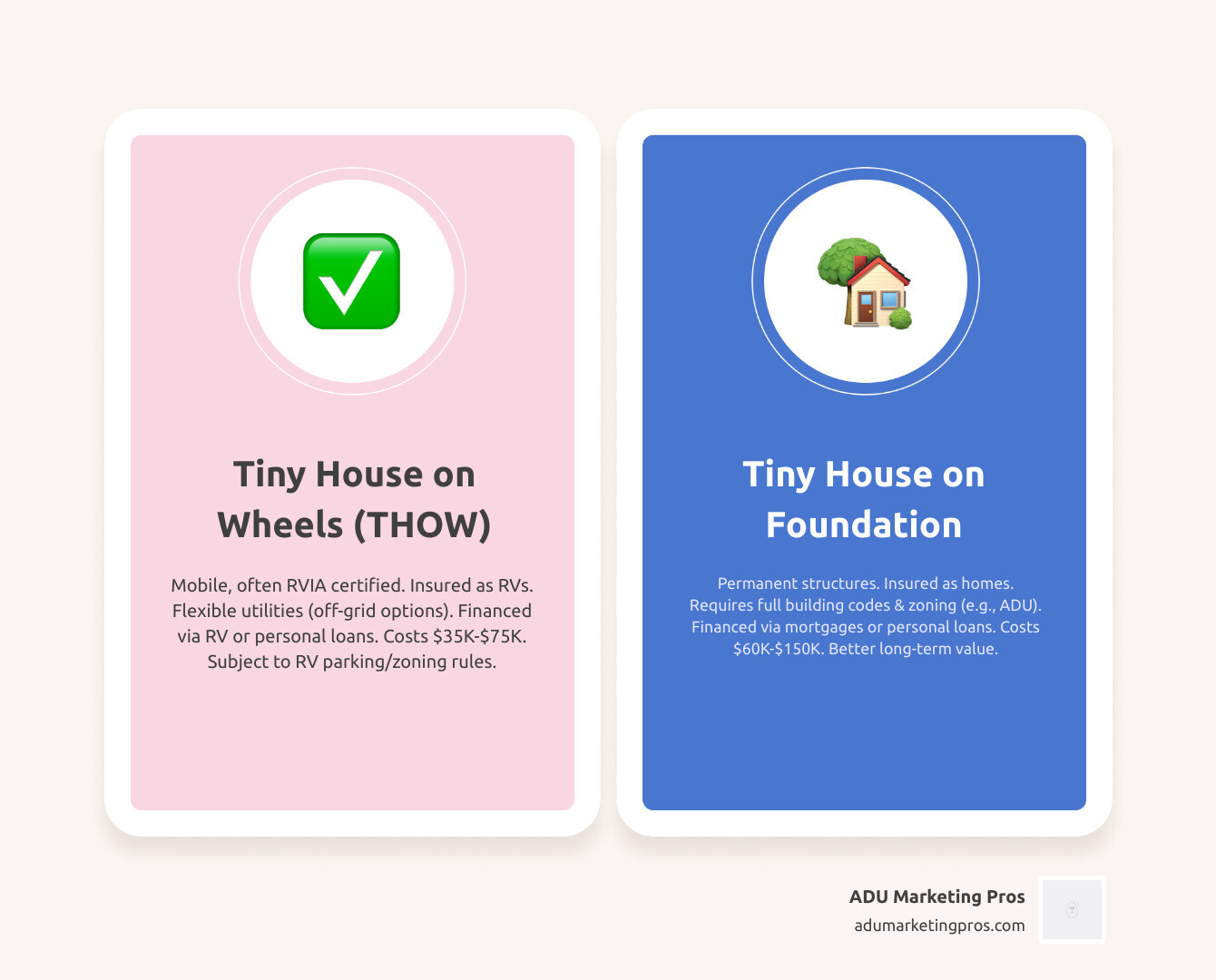
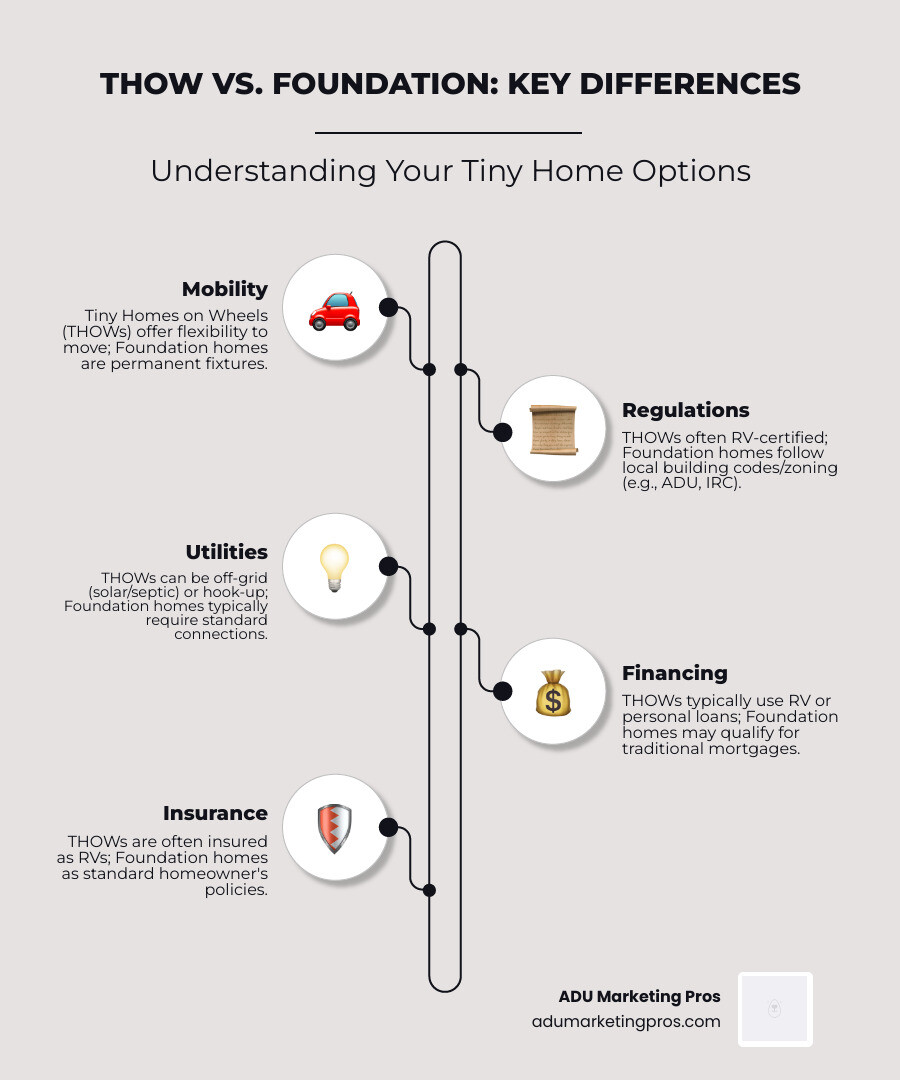
Tiny Homes on Wheels (THOWs) vs. Foundation Homes
Your first and most significant decision is choosing between mobility and permanence. This single choice will fundamentally impact your budget, legal standing, financing options, and overall lifestyle.
-
Tiny Homes on Wheels (THOWs) are, as the name implies, built on trailer frames designed for mobility. To make them easier to insure and place legally in RV parks, many builders get them RVIA (Recreational Vehicle Industry Association) certified. This classification as a recreational vehicle offers incredible freedom but also imposes strict size limitations (typically 8.5 feet wide and 13.5 feet high) to comply with Department of Transportation road regulations. This mobility is a huge plus, but moving a tiny home is a significant undertaking that requires a powerful truck and careful planning.
-
Foundation Homes offer the stability, permanence, and legal recognition of traditional housing. They can be prefabricated in a factory and delivered to your site or built on-site from the ground up. Crucially, they must comply with local and state building codes (often the International Residential Code, or IRC), which means they often qualify for conventional financing and standard homeowner’s insurance. They provide a permanent housing solution with easier access to traditional utility hookups and tend to appreciate in value along with the land they sit on.
Both types can be designed for sustainability, with options for off-grid capabilities like solar panel arrays, battery storage, and rainwater collection systems. As several types are available, it’s wise to research which styles are most popular and legally permissible in your target area before making a final decision.
Estimating Your Budget: From Shell to Turnkey
While tiny homes are celebrated for their affordability relative to traditional houses, the total cost can often be more than newcomers expect. The price varies dramatically based on size, materials, and whether you build it yourself, buy a shell, or purchase a move-in-ready unit.
- Prefabricated Foundation Homes: A fully finished, turnkey unit from a reputable builder typically runs $60,000 to $150,000, and sometimes more for high-end custom designs. This price reflects professional labor, high-quality materials, and the convenience of a move-in-ready product.
- Builder-Built THOWs: These generally cost $35,000 to $75,000. A basic, no-frills model will be at the lower end, while a fully custom build with premium finishes and off-grid systems will be at the higher end.
- DIY Builds: For those with the necessary skills, tools, and time, building your own tiny home can be the most affordable route, with costs for materials starting around $35,000. However, this requires significant expertise and thousands of hours of labor.
It is critical to remember to budget for additional costs, which can easily add tens of thousands of dollars to your total project costs. These often-overlooked expenses include:
- Land: The cost to purchase or rent land can be one of your biggest expenses, varying wildly by location.
- Permits and Utility Hookups: Connecting to city water, sewer, and electricity can add thousands to your budget. Even off-grid systems require a large upfront investment (e.g., a solar package can be $10,000+, and a well and septic system can be $20,000+).
- Site Preparation: This includes costs for land surveys, soil tests, clearing trees, grading the land, and pouring a foundation or gravel pad, which can vary greatly.
- Transportation: If you buy a completed tiny home from a builder, having it delivered to your site can cost several thousand dollars, depending on distance and size.
- Furnishings and Appliances: Outfitting your tiny home with specialized, compact, and often multi-functional furniture and appliances can be surprisingly expensive.
How to Find Tiny Houses for Sale Near Me
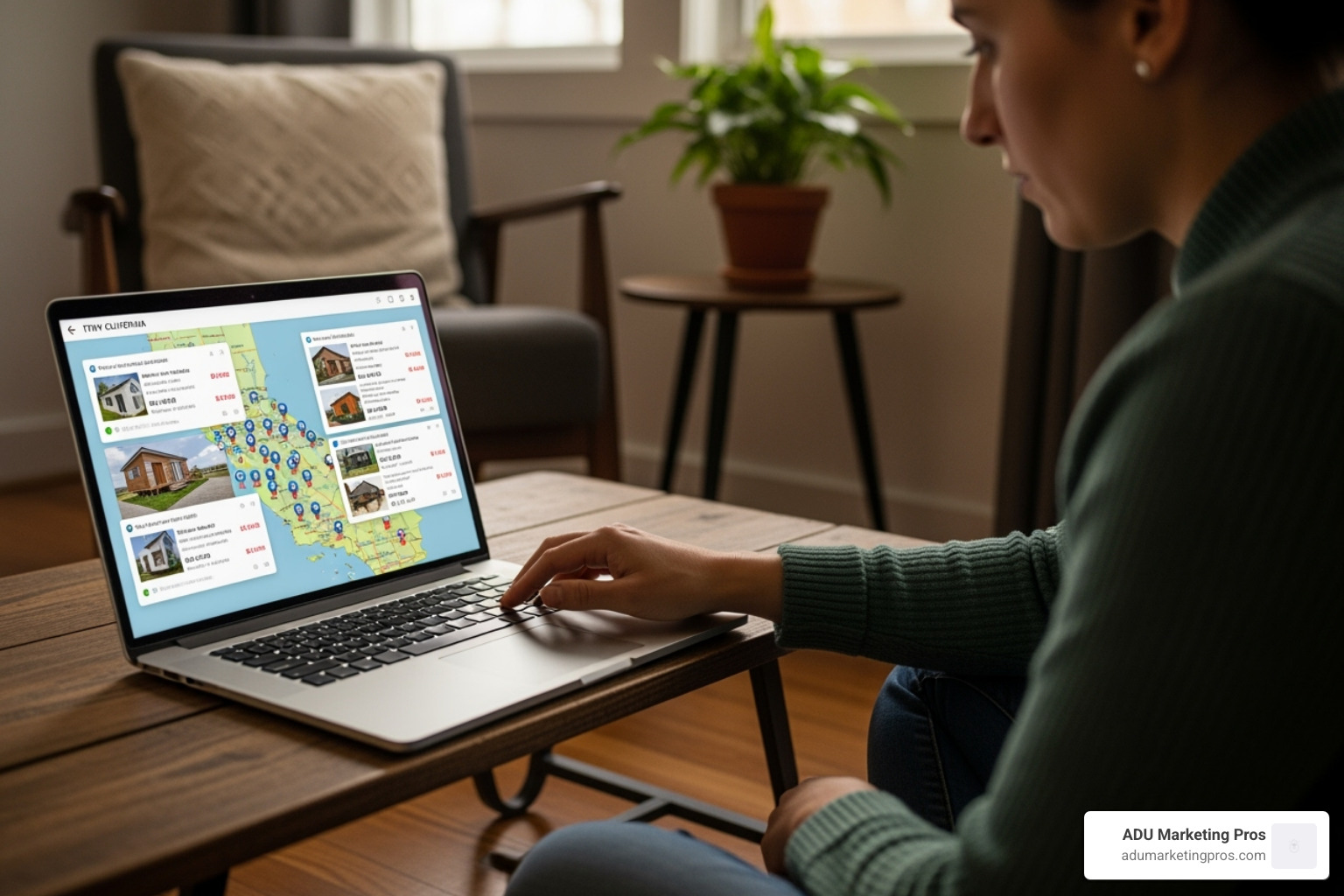
Finding tiny houses for sale near me has become a far more streamlined process thanks to a maturing market and a wealth of dedicated online resources. The key to success is knowing where to look, what to search for, and which questions to ask. Today’s market offers sophisticated search tools, a growing roster of specialized builders, and established communities that can make your search efficient and fruitful.
Using Online Listing Platforms
Your search for a tiny home should almost always begin online. Tiny House Listings is the largest and most comprehensive platform dedicated specifically to this market, featuring new builds, used homes, and shells. Similarly, the Tiny Home Builders Marketplace is an excellent resource for viewing available models directly from various manufacturers. Don’t overlook traditional real estate sites like Zillow and Trulia; the trick is to use specific keywords like “tiny house,” “mini home,” “park model,” or “ADU.” To maximize your success, use location-based filtering and be prepared to expand your search radius, as the perfect home might be a few hours away. Get proficient with advanced search filters, especially for square footage (e.g., setting a maximum of 600 sq ft) and property type (“manufactured home,” “lot/land”), as this can help you uncover hidden gems that aren’t explicitly tagged as “tiny.”
Finding Local and Regional Builders
Working directly with a builder offers the significant advantages of customization, quality control, and professional guidance. California, in particular, is home to some of the nation’s most innovative and experienced tiny home builders, a trend driven by the state’s housing crisis and progressive environmental consciousness.
- Statewide Resources: A great starting point is a comprehensive list of Tiny House Builders California.
- Northern California Focus: For those in the Bay Area, check out these exceptional San Francisco Tiny House Builders.
- Southern California Focus: If you’re in the southern part of the state, don’t miss our curated list of Tiny House Builders in Southern California.
When you contact builders, be prepared with a list of critical questions: What is your typical build timeline from deposit to delivery? To what extent can I customize the design and materials? Are your homes certified (e.g., RVIA, NOAH), and what does that certification include? What warranties do you offer on the structure and appliances? It’s also vital to understand the difference between their turnkey models (100% complete and move-in ready) and shell models (which require you to finish the interior). Always ask for references from past clients and, if possible, tour a completed home to assess the build quality and craftsmanship firsthand.
Exploring Tiny Home-Friendly Communities
For many, the biggest puzzle is not the house itself, but where to put it. Dedicated tiny home communities are a game-changing solution, offering vibrant, legal, and supportive neighborhoods built on shared values of simplicity and community. They often solve complex regulatory challenges by being zoned as RV parks, manufactured home communities, or special planned unit developments (PUDs).
These communities frequently offer attractive amenities like shared gardens, workshops, common rooms for gatherings, and laundry facilities. The most common financial model is lot rental, where you own your home but rent the land it sits on, though some newer developments offer deeded lots for purchase. For those in Southern California, investigating Places in Southern California That Allow Tiny Houses reveals some fantastic and established options. Be prepared for HOA fees and community rules, which are in place to maintain the neighborhood’s aesthetic and functional standards. Beyond the practicalities, the social aspect is a huge draw, creating strong bonds among residents who have all intentionally chosen to live a different kind of life.
Navigating Regulations, Land, and Financing
Once you’ve found a potential home or builder, your search for tiny houses for sale near me enters its most critical and often most challenging phase: making it legal, livable, and financially feasible. This triad of regulations, land, and financing can be daunting, but tackling it with diligent research and a clear strategy is the key to turning your tiny dream into a reality.
Decoding Zoning Laws and Building Codes
Zoning laws and building codes are frequently the biggest hurdles for aspiring tiny homeowners. It’s crucial to understand the difference: zoning laws dictate what type of structure can be built in a given area (land use), while building codes specify how that structure must be built (safety and construction standards). Most municipal codes were written with much larger homes in mind, creating barriers like minimum square footage requirements (e.g., a rule stating a primary dwelling must be at least 1,000 sq ft) that tiny homes cannot meet.
However, the legal landscape is slowly but surely evolving:
- Accessory Dwelling Units (ADUs): Increasingly favorable ADU laws, especially in states like California, Oregon, and Washington, have created legal pathways for smaller dwellings in residential backyards.
- IRC Appendix Q: The adoption of the International Residential Code (IRC) Appendix Q by a city or county is a game-changer. It provides specific building standards for homes 400 sq ft or less, making it much easier to get permits for a foundation-based tiny home. You can find authoritative info on building codes directly from the International Code Council.
- Progressive Municipalities: A growing number of cities and counties (like Fresno, CA, and Spur, TX) are creating special zoning ordinances, pilot programs, or variances to welcome tiny homes. Check out how some regions are updating various laws and regulations to accommodate this housing type.
Your home’s classification—as an RV, a manufactured home, or a site-built dwelling—determines which set of rules applies. Before you buy a home or land, your first call should be to the local planning and zoning department. Get answers in writing whenever possible.
The Crucial Step: Securing Land and Utilities
Your tiny house needs a home of its own. Securing a legal and practical spot can be a major challenge, especially in competitive markets like those with Land for Sale in Southern California for Tiny Houses.
- Land Purchase: This option offers the most freedom and equity but also comes with the most responsibility. You’ll be in charge of site preparation (surveys, grading, access roads) and arranging for all utilities. A pre-purchase feasibility study is highly recommended to ensure the land is suitable for your plans.
- Leasing Land: Renting a spot in a tiny home community or an RV park is often a less stressful and more affordable entry point. It provides existing utility hookups and a supportive community but involves monthly lot rent fees and adherence to community rules.
Utility connections can be a major, unexpected expense. For water, you might have a municipal connection, or you may need to drill a new well ($3,000-$15,000+). For sewage, a city sewer connection is ideal, but a rural septic system can cost $10,000-$25,000 or more. For electricity, you can connect to the grid or invest in an off-grid solar system, which can range from $5,000 for a basic setup to over $20,000 for a system that can power a whole home. Many tiny dwellers also use propane for heating, hot water, and cooking.
How to Finance Your Tiny Home Purchase
Because tiny homes don’t fit into traditional lending boxes, financing can be tricky, but options are expanding.
- Traditional Mortgages: These are generally only available for tiny homes on permanent foundations that are classified as real estate and meet all local building codes. The land must typically be owned by the borrower as well.
- RV Loans: This is the most common financing route for certified THOWs. Lenders like LightStream and SoFi offer them. Terms are shorter than mortgages (typically 10-20 years), and interest rates are slightly higher.
- Personal Loans: Unsecured personal loans from banks, credit unions, or online lenders offer flexibility but usually come with higher interest rates and shorter repayment periods (3-7 years).
- Builder Financing: Many tiny home builders have established relationships with lenders or offer their own in-house financing, which can streamline the purchase process significantly.
- Home Equity Loan/HELOC: If you already own a traditional home, you may be able to use a home equity loan or line of credit to finance your tiny house purchase.
- Personal Savings: The most straightforward and financially advantageous path. Since tiny homes often cost less than a down payment on a traditional house in many markets, paying with cash is an achievable goal for many determined buyers.
Frequently Asked Questions about Buying a Tiny House
When it comes to the practicalities of searching for tiny houses for sale near me, we get a lot of great questions. Here are the straight answers to some of the most common and critical concerns from prospective buyers.
How small is a “tiny house” legally?
This is a tricky but essential question because the legal definition varies significantly by jurisdiction. While the popular conception of a tiny house is a dwelling generally have from 300 to 600 square feet, the official definitions are what matter for permits and placement.
The International Residential Code (IRC) Appendix Q, a key document for the movement, defines a tiny house as a dwelling of 400 square feet or less in floor area, excluding lofts. However, your local city or county has the final say. Many municipalities still have minimum square footage requirements for single-family homes that are much larger (e.g., 800 sq ft or more). This is precisely why tiny homes are often legally classified as Accessory Dwelling Units (ADUs), RVs (for THOWs), or are placed in specially zoned tiny home communities or RV parks. Your first step should always be to check with your local planning and zoning department.
Where can I legally park a tiny house on wheels?
This is arguably the number one question for anyone considering a THOW. Finding a legal, stable, and long-term parking spot is the biggest challenge. Your options generally fall into these categories:
- Tiny House Communities: The easiest and most secure option. These communities are specifically zoned for tiny homes and offer lot rentals with utility hookups.
- RV Parks: Many RV parks welcome THOWs, especially if they are RVIA certified. However, some have restrictions on the age or appearance of the unit, and some limit stays to 30 days.
- Private Land (Owned or Rented): Parking in the backyard of a friend or family member’s home is a popular option. However, you must check with the local municipality to see if this is legal. Some areas allow a tiny house as an ADU, while others strictly forbid living in an RV on a residential lot long-term.
- National Parks/Campgrounds: These are great for short-term travel but are not a solution for permanent residence.
Can I get insurance for a tiny home?
Yes, absolutely. The insurance market for tiny homes has improved significantly in recent years. The type of policy you get will depend on whether your home is on wheels or a foundation.
- Tiny Homes on Wheels (THOWs): These are typically insured like high-end RVs, especially if they are RVIA certified. This type of policy can provide coverage for the home itself, your personal property, liability, and even coverage while it’s in transit.
- Tiny Homes on Foundations: These can usually be covered by a standard homeowner’s insurance policy or, more commonly, a manufactured home policy. This protects your dwelling, personal belongings, and provides liability coverage against accidents.
Our best advice is to work with an insurance agent or broker who has specific experience with tiny homes. They will know which carriers (like Foremost, State Farm, or specialized insurers) offer the right products in your state.
Are tiny homes a good long-term investment?
This is a nuanced question. The investment potential of a tiny home should be viewed differently from that of traditional real estate. While you gain incredible financial benefits through massive savings on mortgage payments, utilities, and taxes, the appreciation of the asset itself behaves differently.
- Tiny homes on permanent foundations that are sold with the land they sit on tend to hold their value best and can appreciate over time, much like traditional real estate.
- THOWs are often considered personal property, not real property, and can depreciate in value like an RV or a vehicle. However, a high-quality, well-built, and well-maintained unit from a reputable builder can retain its value surprisingly well, especially in a strong market.
The true return on investment (ROI) for most tiny homeowners comes from the lifestyle benefits and long-term savings. If you save $1,500 a month on housing costs, that’s $18,000 a year and $90,000 over five years that can be invested elsewhere, used to pay off debt, or spent on life experiences. The key factors for retaining maximum value are build quality, legal compliance, desirable location, and the strength of the local market demand.
Your Tiny House Dream is Within Reach
Your search for tiny houses for sale near me doesn’t have to be an overwhelming or confusing journey. While it’s true that there are regulations to navigate, land to secure, and financing to arrange, the path to tiny home ownership is more clearly defined and accessible than ever before. The market has matured to a point where it offers a full spectrum of options, from budget-friendly DIY shells starting around $35,000 for the hands-on builder to luxurious, fully-equipped turnkey models for those who want a move-in-ready solution.
By systematically working through the process—understanding the different tiny home types, diligently researching your local laws, securing a legal spot for your home, and exploring all financing avenues—you create a clear and achievable roadmap to success. Each step you take brings you closer to the profound financial freedom and simplified, intentional lifestyle that define the tiny living movement. The benefits are not abstract concepts; they are tangible realities. The dramatic cost savings, a significantly smaller environmental footprint, and the mental clarity that comes from minimalism are real and within your grasp.
With a growing number of dedicated online marketplaces, highly skilled specialized builders, and entire communities designed for compact, sustainable living, your options are more plentiful than you might imagine. Whether you are drawn to the mobility and freedom of a THOW or the stability and permanence of a foundation model, your perfect tiny home is out there waiting to be discovered.
For builders operating in this exciting and expanding space, the growing demand for high-quality, well-designed tiny homes presents a significant business opportunity. If you’re a builder looking to connect with a stream of qualified, educated buyers, our team can help you stand out in a crowded market. We specialize in digital marketing strategies that highlight superior craftsmanship and expertise. Learn more about our targeted services for Tiny House Builders in California and discover how we can connect you with clients who are ready to embrace this transformative lifestyle.