
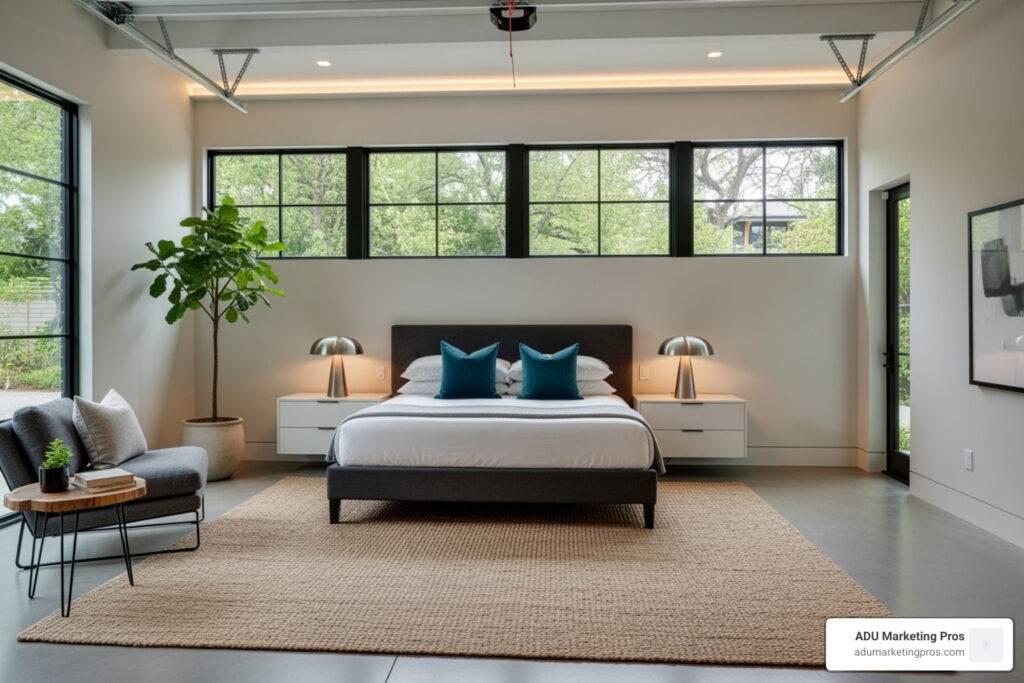
Why Garage-to-Bedroom Conversions Are Taking Off
Turning a garage into a bedroom has rapidly evolved from a niche renovation into one of the most strategic and popular home improvement projects in the country. As housing costs continue to climb and the dynamics of family life shift, homeowners are discovering the immense, untapped potential locked within their own property lines. Garages, once relegated to storing cars and clutter, are now being reimagined as guest suites, income-generating rental units, private home offices, or essential extra bedrooms for growing families.
This trend is fueled by a perfect storm of economic and social factors. The rise of remote work has created an unprecedented demand for dedicated home office space, while the increasing prevalence of multi-generational living arrangements calls for private, accessible quarters for aging parents or adult children returning home. Economically, a garage conversion offers a financially savvy alternative to a full-scale home addition, providing much-needed space without the astronomical price tag.
Here’s a quick overview of a typical garage bedroom conversion:
- Cost: $6,000-$28,000 for a basic conversion, but can reach $50,000+ with a bathroom and high-end finishes. This is often 40-60% less than a comparable ground-up addition.
- Timeline: A professional crew can complete the project in 4-8 weeks, while a dedicated DIYer might spend several months.
- Return on Investment (ROI): Homeowners can typically expect to recoup around 80% of the conversion cost upon resale, making it one of the highest-value renovations available.
- Key Requirements: Building permits are non-negotiable and can cost $300-$1,000+. The space must meet strict building codes for habitability, including proper insulation, egress windows for safety, and adequate ventilation.
- Key Steps: The process follows a clear path from initial planning and permitting through structural work, utility installation, and final finishing.
The numbers are undeniably compelling. While the average cost of a traditional home addition hovers around $46,480, a well-planned garage conversion can deliver the same square footage for a fraction of the cost, often landing in the $10,000-$15,000 range for simpler projects. However, it’s crucial to understand that a successful conversion is far more complex than simply laying down a rug and moving in a bed. It requires meticulous planning, adherence to legal requirements, and careful attention to structural, electrical, and plumbing details to create a space that is not only comfortable but also safe, legal, and a true asset to your home.
Planning and Feasibility: Is a Garage Conversion Right for You?

Before a single hammer swings, a thorough and honest evaluation of the project’s feasibility is essential. Turning a garage into a bedroom is a significant undertaking that involves permanent trade-offs. You must carefully weigh the advantages against the disadvantages to ensure the final result aligns with your family’s long-term needs, lifestyle, and financial goals.
The Pros: Adding Space, Value, and Flexibility
The benefits of a successful garage conversion are substantial and multi-faceted, extending far beyond just adding a room.
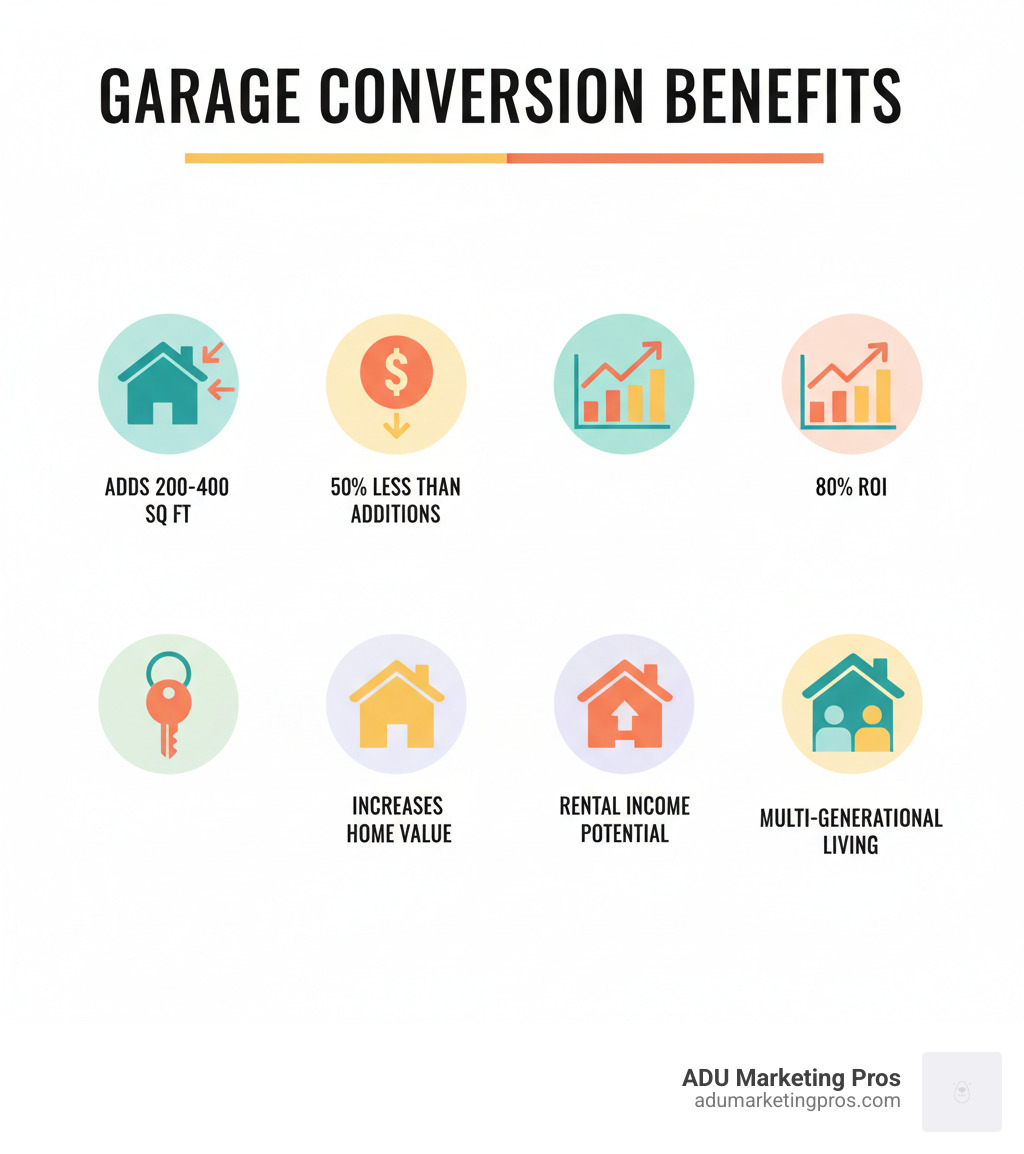
- Significant Increase in Living Area: This is the most immediate reward. A standard two-car garage adds approximately 400-600 square feet of conditioned living space. This can be transformative, providing room for a spacious master suite, a one-bedroom apartment, or two smaller bedrooms for children.
- Multi-Generational Living Solutions: Conversions are an ideal solution for families seeking to accommodate aging parents or adult children. They can be designed as self-contained suites with their own entrance and bathroom, offering both proximity and privacy—a perfect balance for harmonious multi-generational households.
- Rental Income Potential: A legally permitted conversion can often be classified as an Accessory Dwelling Unit (ADU). This opens up a powerful opportunity for generating passive income through long-term tenants or short-term vacation rentals, which can help offset your mortgage. Our in-depth guide on ADU Garage Conversions explores this topic further.
- Exceptional Cost-Effectiveness: Because the foundation, primary structure, and roof are already in place, conversions typically cost $6,000 to $28,000. This is roughly half the price of building a new addition from the ground up, making it one of the most accessible ways to expand your home’s footprint.
- Strong Return on Investment (ROI): Unlike purely cosmetic upgrades, a garage conversion adds tangible, habitable square footage, which is highly valued in real estate. Homeowners often recoup around 80% of the project cost at resale, and in high-demand housing markets, the value added can sometimes exceed the initial investment.
The Cons: What You’ll Give Up and What You’ll Face
It’s equally important to confront the downsides and potential challenges before committing.
- Loss of Covered Parking and Security: The most obvious trade-off is sacrificing a protected space for your vehicles. This exposes them to weather, sun damage, and a higher risk of theft or vandalism. You’ll need a viable alternative, such as a driveway, a new carport, or reliable street parking.
- Zoning and HOA Restrictions: Your project may be dead on arrival if you ignore local rules. Many municipalities have ordinances requiring a specific number of off-street or covered parking spaces per residence. Homeowner’s Associations (HOAs) often have even stricter covenants regarding exterior modifications and the use of garages. Investigate these rules first.
- The Great Storage Migration: Garages are the default dumping ground for tools, holiday decorations, sports equipment, and lawn care items. Converting this space means everything must find a new home. This often requires a secondary project, such as building a high-quality backyard shed, installing professional attic or basement shelving systems, or renting an off-site storage unit.
- Potential Impact on Resale Value: While a legal, well-executed conversion usually adds significant value, it can be a detriment to certain buyers. In neighborhoods where garage space is at a premium, a future buyer who is a car enthusiast or needs a workshop may pass on your home in favor of one with an intact garage. The value proposition depends heavily on your local market and target buyer demographic.
Costs, Permits, and Legal Problems
Navigating the financial and bureaucratic aspects of turning a garage into a bedroom is arguably the most critical phase of the project. A solid budget and a clear understanding of the legal requirements will protect you from devastating cost overruns and legal entanglements that could jeopardize the entire renovation.
Breaking Down the Cost of a Garage Conversion
While a garage conversion is cost-effective compared to an addition, it is still a major investment. The average cost ranges from $6,000 to $28,000, but a project with a bathroom and premium finishes can easily exceed $50,000. Key cost drivers include:
- Size and Scope: A simple, single-car garage conversion will be far cheaper than a two-car garage transformed into a full apartment.
- Plumbing and Bathroom Addition: This is the single largest cost variable. Adding a bathroom requires extensive plumbing work for water supply and drainage, which can add $5,000 to $15,000 or more to the total cost, especially if the concrete slab needs to be trenched.
- Architectural and Engineering Fees: For complex designs or structural changes, expect to pay an architect or designer $1,500 to $5,000. A structural engineer may be needed to approve plans for removing support posts, costing an additional $500 to $1,500.
- Finishes and Fixtures: Your choices here have a huge impact. Basic laminate flooring and stock lighting are budget-friendly, while custom built-in cabinetry, hardwood floors, and designer fixtures will significantly increase the price.
- Labor vs. DIY: Professional labor accounts for 40-50% of the total budget. While DIY can save money, be realistic. Electrical and plumbing work should almost always be left to licensed professionals to ensure safety and code compliance. Professional window installation can run $500-$2,000 per window, and hiring an electrician to wire the room might cost $1,500-$4,000.
To get a personalized budget, our Garage Conversion Cost Calculator can help you itemize expenses.
Navigating Permits and Building Codes
Attempting a garage conversion without a permit is a catastrophic mistake. Permits, which typically cost between $300 and $1,000, are not just red tape; they are a system of checks and balances that ensure your new living space is safe for occupancy. Unpermitted work can result in hefty fines, a demolition order from the city, denial of insurance claims, and an inability to legally sell your home in the future.
Key building code requirements for a habitable bedroom include:
- Egress: For fire safety, you must have at least one exterior door and at least one window large enough for escape. The window must have a minimum opening of 5.7 square feet, be no more than 44 inches from the floor, and have a minimum clear opening height of 24 inches and width of 20 inches.
- Ceiling Height: Habitable spaces require a minimum ceiling height of 7 feet over at least 50% of the floor area.
- Ventilation and Climate Control: The room must have adequate natural ventilation (operable windows) and a permanent heat source to maintain a minimum temperature.
- Electrical Code: All wiring must be installed by a licensed electrician. You’ll need a certain number of outlets per wall, AFCI protection for circuits, and proper lighting fixtures.
- Insulation: Walls, ceilings, and sometimes floors must be insulated to meet local energy efficiency standards.
- Fire Separation: If the garage is attached, the wall and door connecting it to the main house must be fire-rated to prevent the spread of fire and carbon monoxide.
For a deeper dive into regulations, our ADU Building Requirements page is an essential resource.
The Step-by-Step Guide to Turning a Garage into a Bedroom
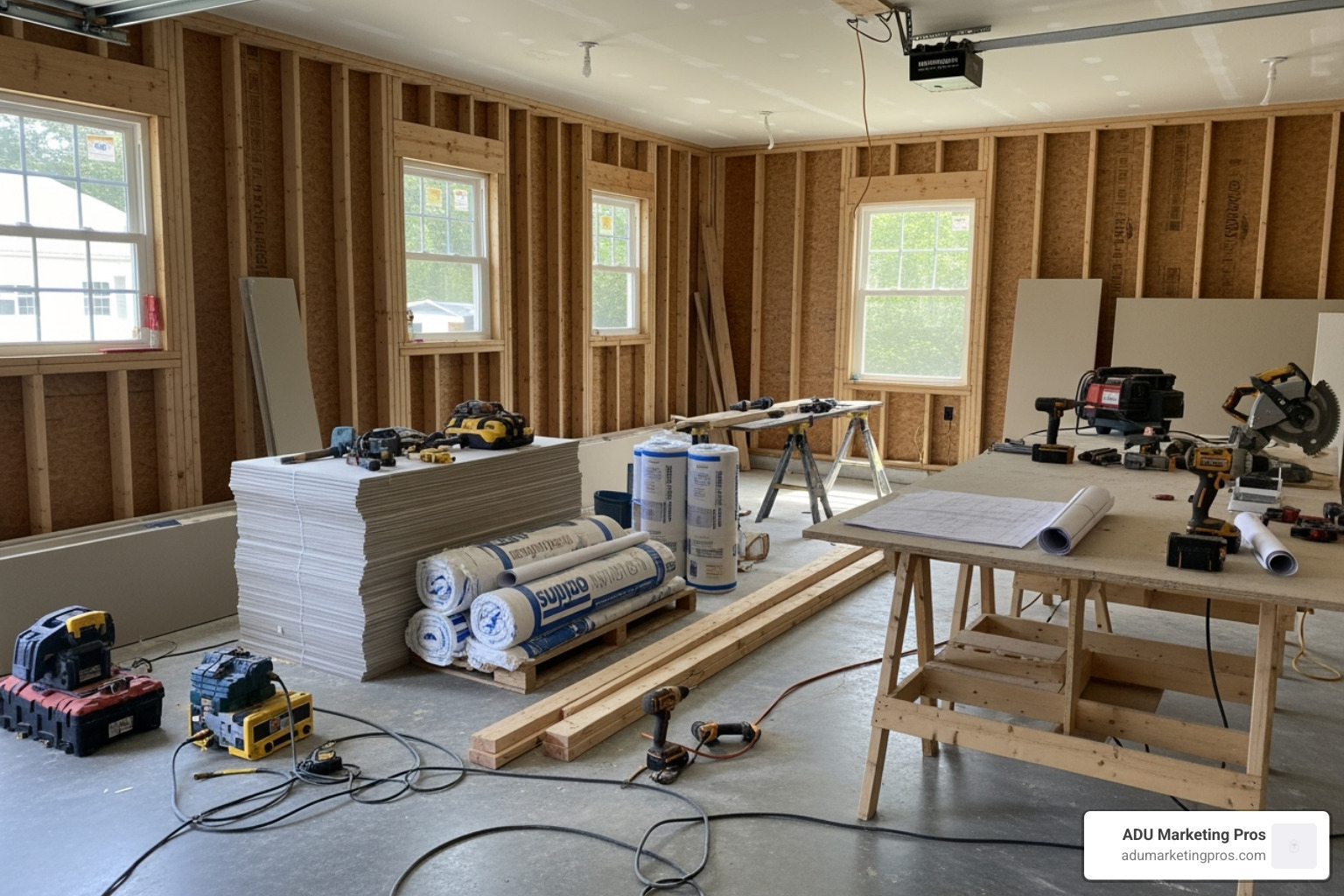
Once your plans are approved and permits are in hand, the construction phase begins. Turning a garage into a bedroom is a systematic process that, when managed by professionals, typically takes 4-8 weeks. A DIY approach can stretch over several months. Following this roadmap will help ensure a smooth transformation from a concrete box to a comfortable living space.
Step 1: Design, Layout, and Blueprints
This foundational step dictates the entire project. A well-conceived floor plan is paramount. Use graph paper or design software to map out the room’s flow, including the optimal placement for the bed, closets, and any seating areas. If you’re adding a bathroom, its location is critical due to plumbing constraints. Consider how to maximize natural light with strategic window placement and determine the best locations for interior and exterior doors to ensure both convenient access and privacy. For anything beyond a simple rectangular room, hiring an architect or a certified designer is a wise investment. They can produce professional blueprints that satisfy your local building department and provide a clear guide for contractors. Our gallery of ADU Floor Plans California can offer excellent design inspiration.
Step 2: Preparation and Structural Work
This is the heavy-lifting phase. It starts with completely clearing the garage and may involve some demolition, such as removing old shelving or non-structural walls. Before proceeding, a building inspector or structural engineer should conduct a foundation assessment. They will check the concrete slab for significant cracks, signs of settling, or moisture problems that must be remedied. The most dramatic change is the garage door removal and wall framing. The large opening is infilled with a new wall, typically framed with 2×4 or 2×6 lumber. This is the perfect time to frame openings for new windows and an entry door. Finally, comprehensive weatherproofing is essential. This involves more than just flashing around new openings; it includes sealing the sill plate where the walls meet the foundation and wrapping the new exterior walls with a house wrap (like Tyvek) to create a barrier against air and water intrusion. For technical guidance on foundations, self-build.co.uk offers valuable insights.
Step 3: Making the Space Habitable with Insulation and Utilities
This is where the shell begins to feel like a real room. Proper insulation is non-negotiable for comfort and energy efficiency. You must insulate all exterior walls and the ceiling. Common choices include fiberglass batts (cost-effective), rigid foam board (good for moisture resistance), and spray foam (excellent for air sealing but more expensive). For HVAC, you have two main options: extend your home’s existing ductwork (only feasible if your current system has enough capacity) or install a separate, highly efficient ductless mini-split system, which provides both heating and cooling. All electrical wiring must be performed by a licensed electrician to meet safety codes, including running circuits for outlets, switches, and lighting. If a bathroom is part of the plan, a licensed plumber will handle the plumbing installation, which involves running supply and drain lines. This rough-in phase can cost $1,500 to $4,000 and is one of the most complex parts of the job. The Spruce provides detailed guides on insulation methods.
Step 4: Finishing the Interior for Your New Bedroom
With the guts of the room in place, it’s time for the cosmetic transformation. Drywall installation covers the insulation and framing, creating the smooth, paintable surfaces of a finished room. Next, address the floor. The cold, often sloped concrete slab must be covered. This usually involves building a raised wood subfloor using sleepers or installing a pre-fabricated subfloor system like DRIcore. This insulates the floor, provides a moisture barrier, and can help level the surface. Popular flooring options include durable and water-resistant luxury vinyl plank (LVP), cozy carpet for a bedroom feel, or engineered hardwood. Finally, the finishing touches—installing interior doors, baseboards, window casings, and crown molding—complete the construction. Once painted, these elements erase any hint that the space was ever a garage, seamlessly integrating it with the rest of your home.
Design and Comfort: Creating a True Bedroom Oasis
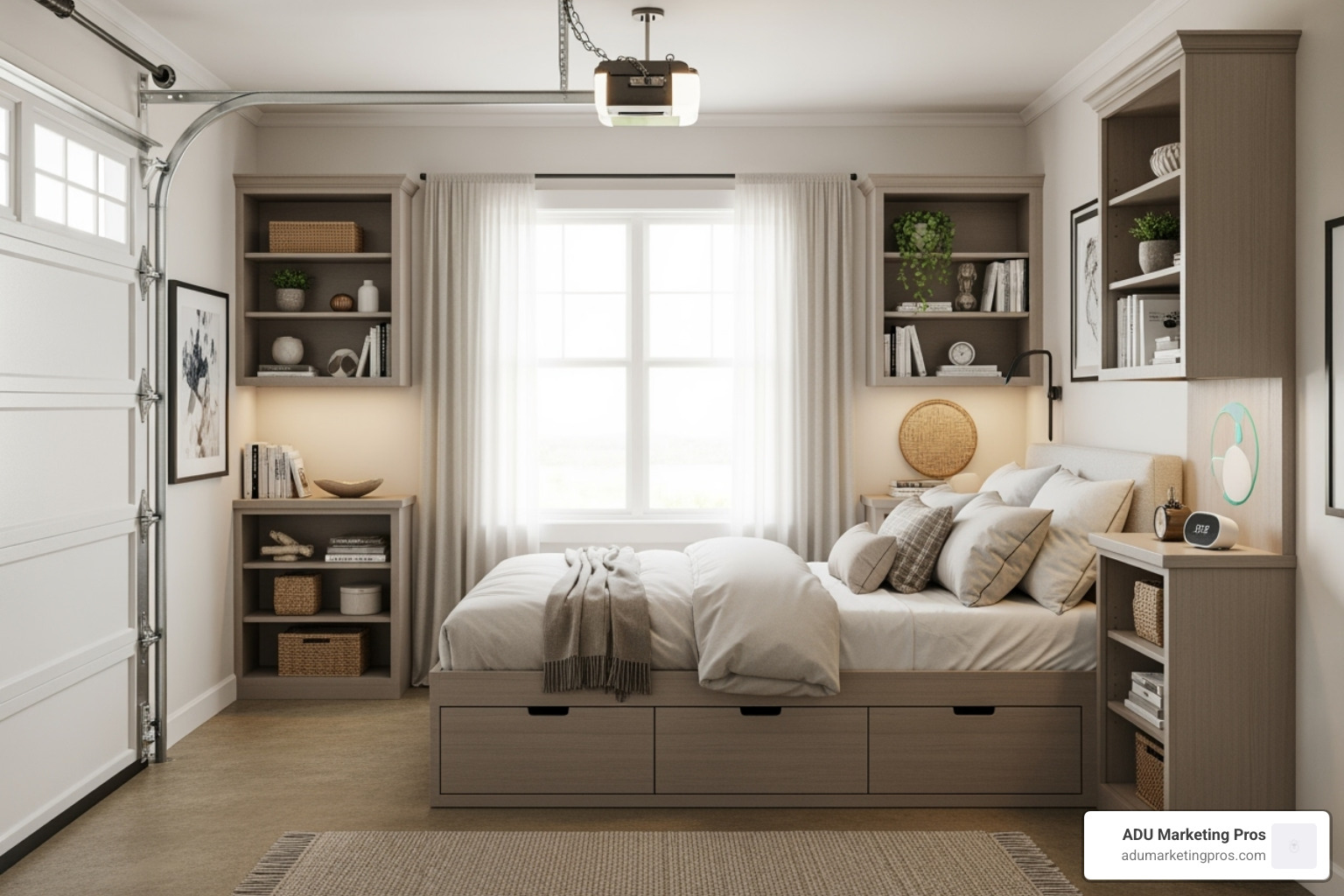
With the heavy construction complete, your focus can shift to the details that transform a functional room into a comfortable, inviting, and truly livable bedroom oasis. This stage is about addressing the unique challenges of a converted space—sound, storage, and light—to ensure maximum comfort.
How to Soundproof Your Garage Bedroom
Garages are inherently noisy, with thin walls and a large door that offer little acoustic protection. To create a serene and restful environment, you must actively manage sound.
- Acoustic Insulation: During framing, use specialized sound-dampening insulation, such as Rockwool Safe’n’Sound, in wall cavities and ceiling joists. This dense material is far more effective at absorbing sound than standard thermal insulation.
- Double Drywall with Green Glue: A highly effective technique is to install two layers of drywall, with a layer of a viscoelastic compound like Green Glue sandwiched between them. This decouples the drywall and dissipates sound vibrations.
- Seal All Gaps: Sound travels through air like water through a sieve. Use acoustic sealant to fill every gap around electrical boxes, light fixtures, window frames, and along the floor and ceiling. This is a small step with a huge impact.
- Solid-Core Doors: A standard hollow-core interior door is a major weak point for sound. Invest in a solid-core door for both the room’s entrance and any closet doors to significantly block noise transmission.
- Flooring and Underlayment: When installing your floor, use a high-quality acoustic underlayment. This rubber or foam layer helps absorb impact noise from footsteps and dampens ambient sound.
Smart Storage Solutions for a Clutter-Free Space
To compensate for the loss of an entire garage’s worth of storage, you must integrate clever and efficient solutions into the bedroom’s design.
- Go Vertical with Built-Ins: Custom or semi-custom built-in wardrobes and shelving that extend to the ceiling maximize every inch of vertical space, providing far more storage than standalone furniture.
- Utilize the Bed: A platform bed with built-in storage drawers underneath is perfect for stowing extra linens, shoes, or off-season clothing. Alternatively, a Murphy bed can allow the room to double as an office or living area during the day.
- Multi-Functional Furniture: Think like a designer for a small space. A storage ottoman can hold blankets while providing seating. A window seat can be built with a hinged lid to create a deep storage chest.
- Floating Shelves and Ledges: Keep the floor feeling open and uncluttered by using floating shelves for books and decor instead of bulky bookcases.
Maximizing Light and Creating Ambiance
Garages are often dark and cave-like. Overcoming this requires a strategic approach to both natural and artificial lighting.
- Paint and Color Palette: Use light, reflective paint colors like soft whites, pale grays, or light blues on the walls and ceiling. This will instantly make the room feel brighter, larger, and more airy.
- Layered Lighting Scheme: A single overhead light is insufficient. Implement a layered approach: 1) Ambient: Recessed can lights or a central fixture for overall illumination. 2) Task: Bedside sconces or reading lamps. 3) Accent: Dimmable track lighting to highlight art or architectural features. Use LED bulbs with a warm color temperature (2700K-3000K) for a cozy feel.
- Window Treatments: Choose window coverings that offer both privacy and light control. Top-down/bottom-up shades are an excellent choice, allowing you to let in light from above while maintaining privacy below. For more design inspiration, browse our ADU Interior Design Ideas page.
Frequently Asked Questions about Garage Conversions
Homeowners embarking on this project often share the same concerns and questions. Here are detailed answers to the most common inquiries about turning a garage into a bedroom.
How long does turning a garage into a bedroom take?
The timeline is highly variable. With a professional contractor managing the project and no major delays, a basic conversion can be completed in 4-8 weeks. This includes framing, utilities, drywall, and finishing. However, the single biggest variable is the permit approval process. Depending on your municipality’s workload and efficiency, securing the necessary permits can take anywhere from a few weeks to several months. A DIY project will almost certainly take longer, realistically spanning 3-6 months or more, depending on your skill set and the time you can dedicate to it.
Can I convert only part of my garage into a room?
Absolutely. A partial conversion is a popular and practical compromise. This typically involves building a permanent, insulated partition wall inside a two-car garage. You can convert one half into a bedroom, office, or gym while retaining the other half for its original purpose—parking a car and storing tools. This approach gives you the extra living space you need without completely sacrificing the utility and storage of a garage. It’s often a more palatable option for future buyers as well.
Do I need an architect for a garage conversion?
It depends on the project’s complexity and your local laws. For a straightforward conversion of a rectangular space with no structural changes, you might be able to use pre-approved plans or work directly with a contractor. However, an architect is highly recommended—and often required by the building department—if your project involves:
- Complex design, such as creating a multi-room apartment or altering the roofline.
- Structural changes, like removing a central support post in a two-car garage or creating large new window or door openings.
- Adding a bathroom or kitchen, which requires detailed plans for plumbing, venting, and electrical layouts that must be approved.
An experienced local architect, like those featured on our ADU Architects Los Angeles page, is invaluable for creating code-compliant plans and navigating the permit process efficiently.
Will a garage conversion increase my property taxes?
Yes, you should expect your property taxes to increase. When you legally convert a non-habitable space like a garage into habitable living area, you are increasing the assessed value of your home. The county tax assessor will re-evaluate your property upon completion of the permitted project. The increase will be based on the value added by the new square footage, not the entire value of your home. The increase is usually modest and is far outweighed by the added utility and resale value of the space.
How do I find a qualified contractor for a garage conversion?
Finding the right contractor is crucial. Look for general contractors who specifically list garage conversions or ADUs as a specialty. Always verify their license and insurance. Ask for a portfolio of similar completed projects and request at least three references from recent clients. Obtain detailed, itemized bids from at least three different contractors to compare costs and scope of work. Avoid any contractor who suggests skipping permits—this is a massive red flag.
Conclusion: Your Dream Bedroom is Closer Than You Think
Turning a garage into a bedroom stands out as one of the most intelligent and value-driven home improvements a modern homeowner can undertake. It’s a practical and financially sound strategy to unlock your home’s hidden potential, adding 200-600 square feet of valuable living space at approximately half the cost of a conventional addition. With a proven return on investment that often reaches 80%, it’s a project that enhances your lifestyle today and pays dividends tomorrow.
The transformation from a cold, cluttered storage area into a warm, inviting bedroom is an entirely achievable goal, but its success hinges on a commitment to doing it the right way. The path to a beautiful and functional new room is paved with careful planning, diligent budgeting, and an unwavering adherence to legal and safety standards. Obtaining the proper permits and hiring licensed professionals for critical tasks like electrical, plumbing, and structural work is not an optional expense—it’s a fundamental investment in your family’s safety and your home’s long-term value. This diligence is what prevents costly code violations, insurance nightmares, and legal headaches down the road.
Whether your goal is to create a private guest suite for visitors, generate rental income with a legal ADU, or simply give your family more room to grow, a well-executed garage conversion is a powerful tool. It reclaims underutilized space and adapts your home to meet the evolving demands of your life.
For builders and architects looking to lead in this expanding market, ADU Marketing Pros offers specialized digital marketing services to connect you with homeowners ready to begin their conversion journey. If you’re a homeowner ready to take the first step, use our Garage Conversion Cost Calculator for a personalized estimate and start turning your vision into a reality.