
Why Understanding Fannie Mae ADU Guidelines is Critical for Your Business
Fannie mae adu guidelines determine how homeowners can finance accessory dwelling units and use rental income for loan qualification—making them essential knowledge for anyone in the ADU construction or architecture business.
Quick Answer: Key Fannie Mae ADU Requirements
- Property Classification: One-unit property with an ADU is still considered a one-unit property
- Essential Features: Must have independent kitchen, bathroom, sleeping area, and separate entrance
- Rental Income: Can be used for qualification on HomeReady® loans (limited to 30% of total income)
- Multiple ADUs: Single-unit properties can now have up to three ADUs (as of March 2026)
- Multi-Unit Properties: Two- to three-unit properties can include ADUs if total units don’t exceed four
- Manufactured Housing: Single-unit manufactured homes can now have one ADU as real property
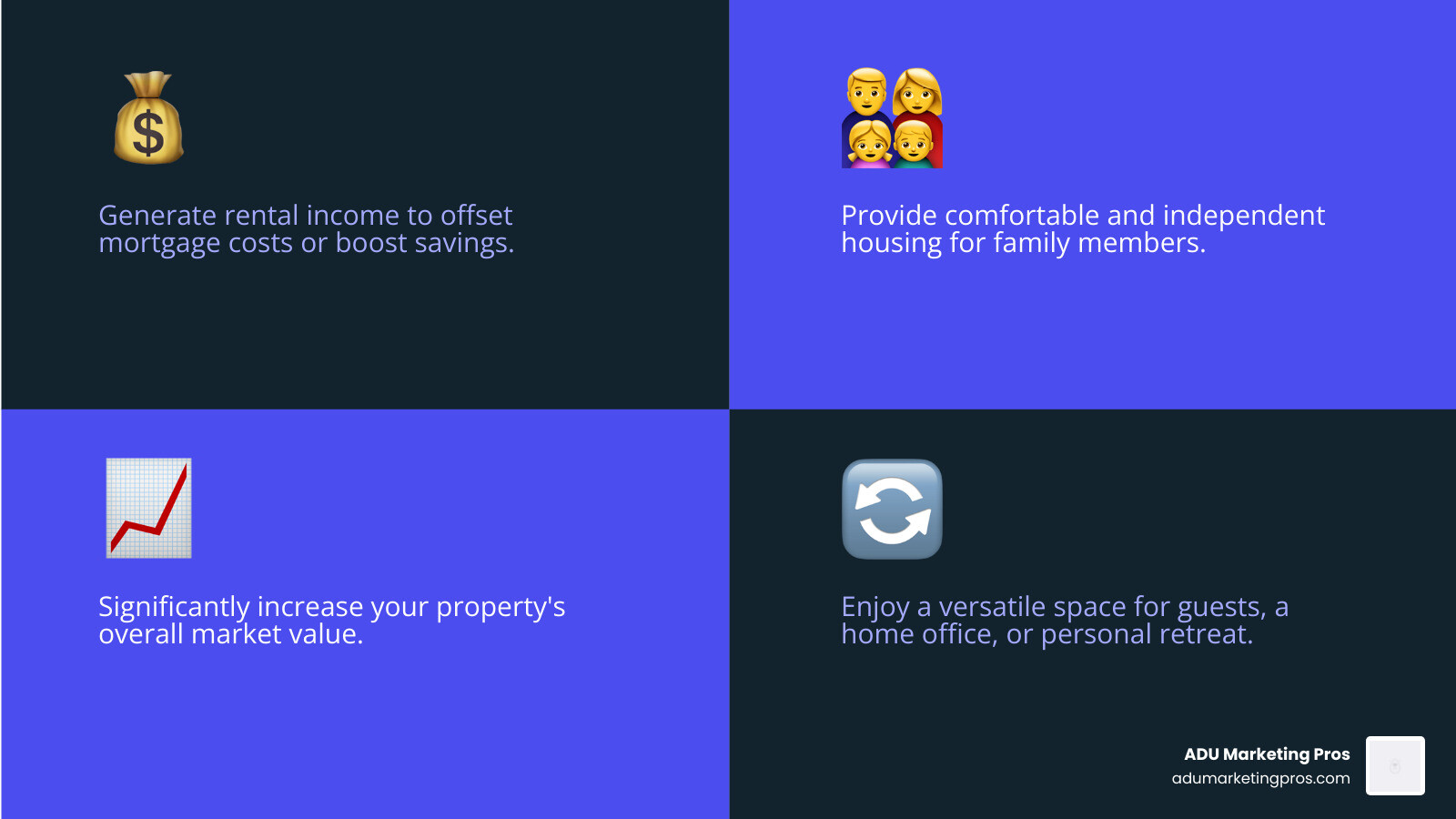
The ADU market is exploding. According to industry research, 61% of homeowners cite multigenerational housing as their primary motivation for building an ADU. These smaller units offer homeowners a path to rental income, housing for aging parents, and increased property value—all with a smaller environmental footprint than traditional construction.
But here’s the challenge: financing an ADU can be complicated. Fannie Mae, as one of the largest mortgage investors in the United States, sets the rules that determine whether a lender can approve a mortgage on a property with an ADU—and whether that ADU’s rental income can help a borrower qualify.
For ADU construction firms and architects, understanding these guidelines isn’t just helpful—it’s critical. When your clients know they can secure financing and potentially use ADU rental income for loan qualification, your sales process becomes dramatically easier. When they don’t understand these rules, deals fall apart.
The good news? Fannie Mae has recently expanded ADU eligibility significantly. New rules effective in 2025 and 2026 now allow multiple ADUs on single-family properties, extend eligibility to manufactured homes, and clarify how rental income can be used for borrower qualification.
This guide breaks down everything you need to know about Fannie Mae’s ADU policies—from basic definitions to recent updates—so you can confidently educate your clients and close more deals.
Fannie mae adu guidelines terms you need:
What is an ADU According to Fannie Mae?
When we talk about fannie mae adu guidelines, the first step is to understand what Fannie Mae actually considers an Accessory Dwelling Unit. It’s more than just an extra room; it’s a fully functional, independent living space designed for one or more persons.
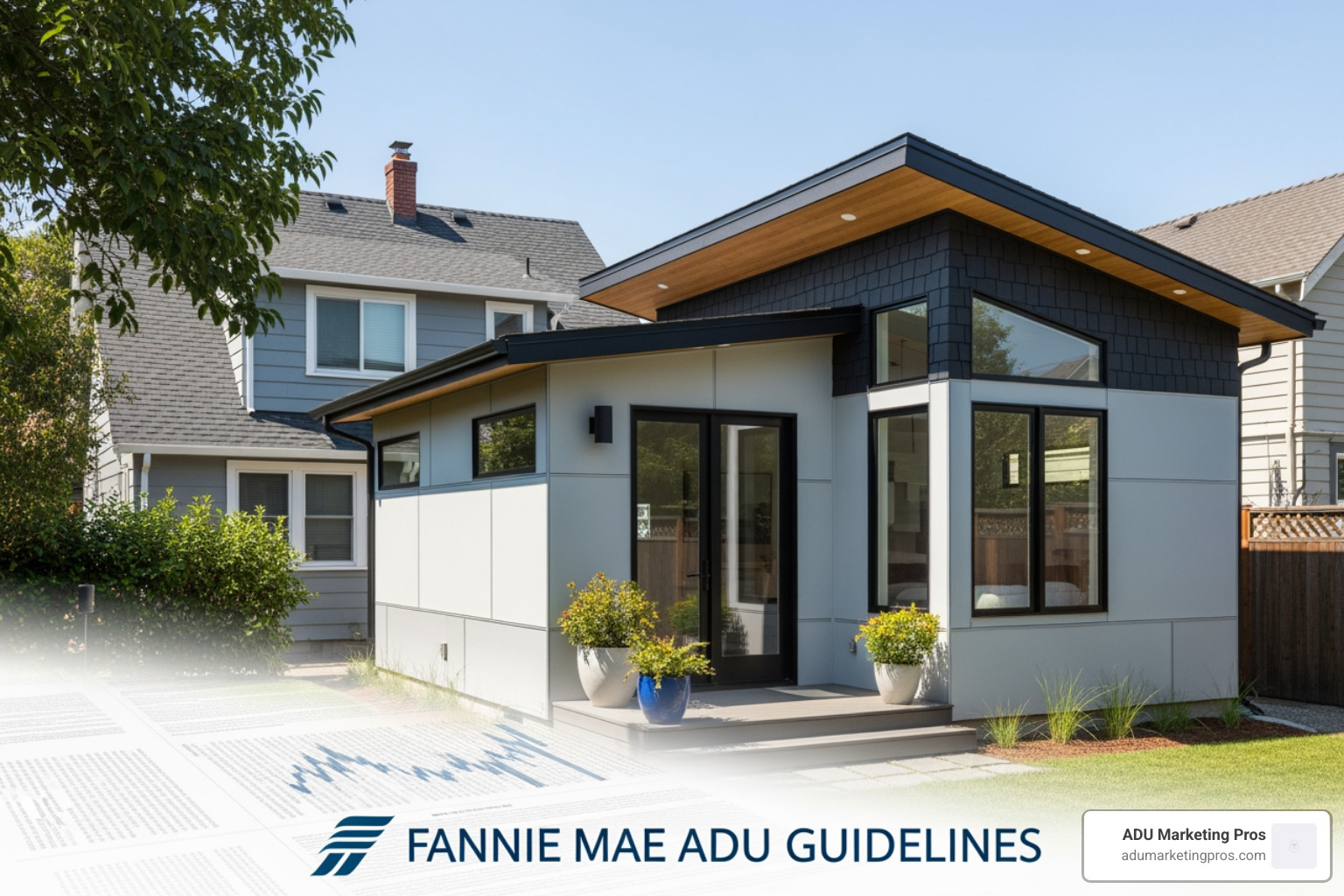
Fannie Mae defines an ADU as a smaller, additional living space located on the same lot as a single-family home. These units, sometimes called accessory apartments, in-law suites, or granny flats, must be independent of the primary residence and include all the essential facilities for daily living. This comprehensive definition ensures that any unit financed under these guidelines meets specific standards for habitability, functionality, and privacy.
Essential Criteria in the Fannie Mae ADU Guidelines
To be considered an eligible ADU under Fannie Mae’s criteria, a unit must possess several key characteristics:
- Independent Living Facilities: This is the paramount criterion. An ADU must be self-contained, meaning it has its own dedicated spaces for living, sleeping, cooking, and bathing. This is what distinguishes a true ADU from a guest bedroom with an en-suite bathroom; it’s a complete, albeit smaller, home.
- Kitchen Requirements: While Fannie Mae doesn’t specify appliance types, the ADU must have a dedicated area for food storage, preparation, and cooking. This implies, at a minimum, a sink, counter space, a cooking appliance (which could be a stove, cooktop, or even a built-in microwave), and space for a refrigerator. The setup can range from a compact kitchenette to a full-size kitchen.
- Bathroom Facilities: A complete, private bathroom is non-negotiable. This must include a toilet, a sink, and a bathing facility (a shower, a tub, or a combination of the two).
- Sleeping Area: The unit must include a designated space for sleeping. This can be a separate bedroom, as in a one-bedroom ADU, or a combined living/sleeping area in a studio-style layout.
- Separate Entrance: Crucially, the ADU must have its own independent entrance that allows occupants to enter and exit without passing through the primary dwelling. This ensures privacy and autonomy. An entrance through a shared mudroom or hallway may not qualify if it compromises the functional independence of the unit.
- Privacy from Primary Residence: Beyond the separate entrance, there must be a reasonable expectation of privacy from the main home. This often involves sound separation for attached units and visual barriers for detached ones, depending on the unit’s configuration and proximity.
- Subordinate in Size: While not an explicit Fannie Mae rule for all cases, ADUs are characteristically smaller than the primary dwelling. This is a common feature that helps differentiate them from multi-unit properties and is often a strict requirement in local zoning codes, which must be followed.
Recognized ADU Types
Fannie Mae recognizes various types of ADUs, offering flexibility for homeowners and builders in areas like San Jose, Los Angeles, and the San Francisco Bay Area where ADU construction is booming:
- Detached ADU: A standalone structure on the same property as the primary home. Think of a classic backyard cottage, a converted garage, or a newly built granny flat.
- Attached ADU: This unit is physically connected to the primary residence but maintains its own separate entrance and facilities. A common example is a living area built over an attached garage or an addition to the side of the main house.
- Interior Conversion: An ADU can be created by converting existing space within the primary residence, such as a basement apartment or an attic conversion. Again, the key is independent access and all essential living facilities being contained within the unit.
- Manufactured Home as ADU: In certain circumstances, a manufactured home can serve as an ADU, provided it meets specific guidelines, including being permanently affixed to a foundation and classified as real property.
For a deeper dive into these requirements, we always recommend consulting the official Fannie Mae Selling Guide.
How ADUs Affect Property Classification and Appraisal
Understanding how an ADU impacts a property’s classification and its appraisal value is crucial for both homeowners and the professionals helping them. This is where fannie mae adu guidelines truly shape the financial viability of these units, influencing everything from loan eligibility to the final valuation.
Is it Still a Single-Family Home?
One of the most common questions we hear is whether adding an ADU changes a property’s fundamental classification. According to Fannie Mae, a one-unit property with an accessory dwelling unit (ADU) is still defined as a one-unit property and is subject to all one-unit requirements, unless otherwise stated. This is a significant distinction, as multi-unit properties (like duplexes or triplexes) have different, often stricter, lending criteria.
The differentiation comes down to characteristics and zoning. ADUs are typically created through conversions of existing spaces (like a garage or basement) or are new constructions that are subordinate in size to the primary unit. To confirm the classification, an appraiser must analyze the property’s “highest and best use.” This analysis determines the most probable use of the property that is legally permissible, physically possible, financially feasible, and results in the highest value. If the market perceives and values the property as a single-family home with an accessory unit, rather than a two-unit dwelling, the appraiser will classify it as such.
The Appraisal Process for Properties with ADUs
The appraisal process for properties with ADUs is particularly nuanced. Fannie Mae has specific requirements to ensure accurate and consistent valuation:
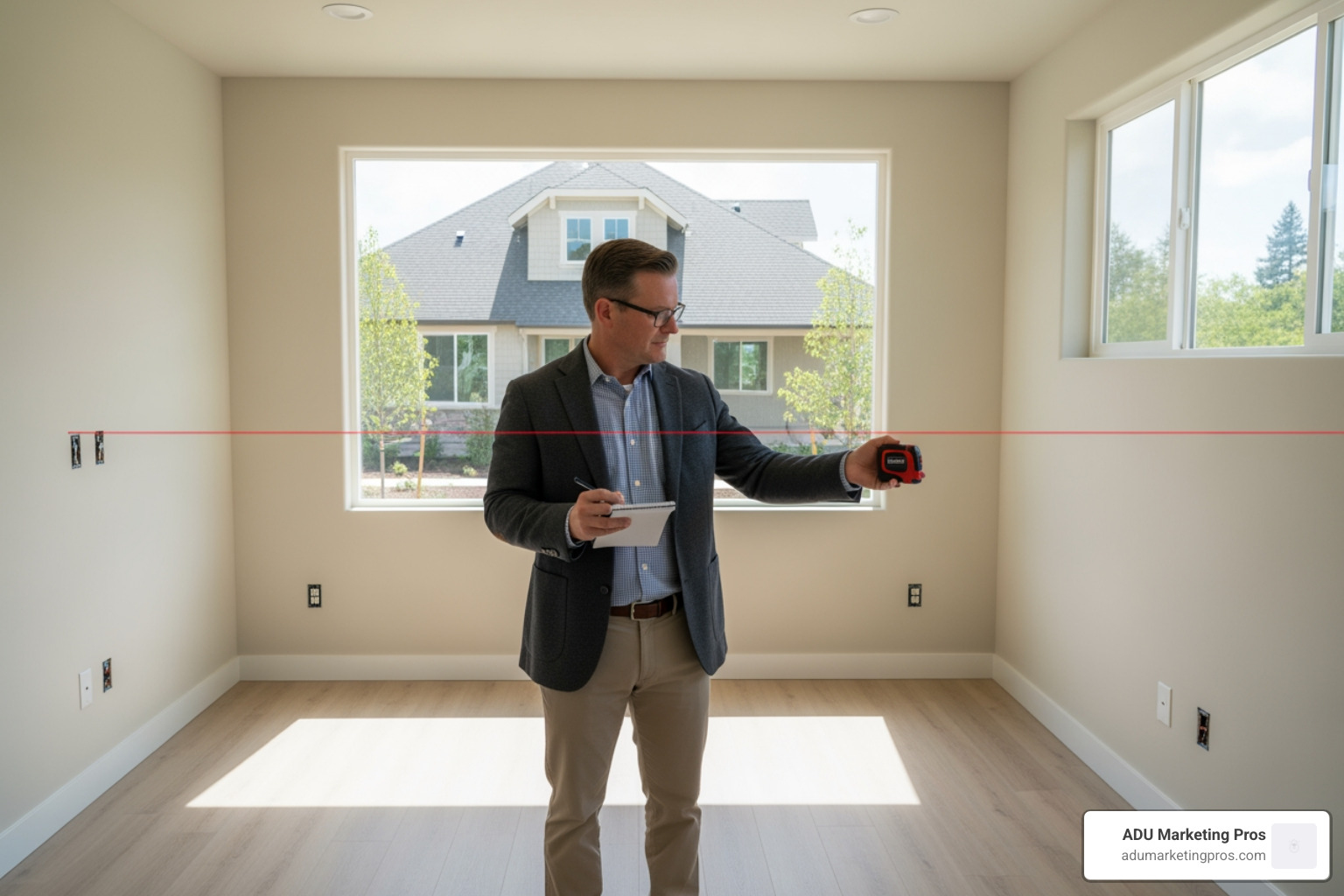
- ANSI Z765-2021 Standard: Appraisers must strictly follow the American National Standard Institute (ANSI) Z765-2021 standard when measuring, calculating, and reporting above- and below-grade square footage for single-family dwellings, including those with ADUs. This ensures that the ADU’s square footage is measured consistently and not improperly combined with the main house, which could inflate the Gross Living Area (GLA).
- Square Footage Calculation: The living area of the ADU should not be included with the Gross Living Area (GLA) of the primary dwelling. Instead, it must be reported and adjusted for separately in the sales comparison grid of the appraisal report. This allows for a clear distinction in value contribution and prevents misleading comparisons to homes without ADUs.
- Value Adjustments: Appraisers must analyze comparable sales data with similar ADU characteristics to determine appropriate value adjustments. It’s not acceptable to simply ignore an ADU due to a lack of direct comparable sales. The appraiser must justify their analysis and conclusions, making adjustments for differences in the ADU’s size, quality, condition, and features. If direct comps are unavailable, they must use other recognized appraisal methods to support their valuation.
- Market Acceptability: The appraisal must demonstrate the market acceptability of the ADU, proving that it adds value in the local real estate market. This is particularly important for properties in areas like San Diego and Palo Alto where ADU demand is high, and the contributory value can be substantial.
- No Value Acceptance (ACE): For properties with ADUs, Fannie Mae generally does not allow Value Acceptance (ACE) or similar appraisal waivers. A full appraisal is typically required to accurately assess the property’s unique features and value.
The good news is that the benefit of an ADU is potentially larger than the cost of building them, making them a worthwhile investment that appraisers are trained to recognize and value.
Financing and Qualifying with ADU Rental Income
One of the most attractive aspects of ADUs for homeowners is the potential for rental income. For many, this income can be a game-changer, helping them qualify for a mortgage or simply making homeownership more affordable in high-cost areas like the Bay Area. We’ve seen how crucial this can be for our clients in Sunnyvale and Mountain View.
Using ADU Rental Income Under Fannie Mae ADU Guidelines
Fannie Mae has specific, and somewhat restrictive, guidelines for using ADU rental income for borrower qualification. It’s important to understand these rules precisely:
- HomeReady® Mortgage Only: Currently, Fannie Mae generally allows ADU rental income to be considered for borrower qualification only on its HomeReady® loan program. This is a key distinction from Freddie Mac, which permits ADU rental income across all its mortgage programs.
- Eligible Transactions: This applies to purchase transactions and limited cash-out refinance loans.
- Income from One ADU Only: Even if a property has multiple ADUs, Fannie Mae will only consider rental income generated from one ADU for qualifying purposes.
- 30% of Total Qualifying Income Limit: The amount of rental income used for qualifying purposes from an ADU is limited to 30% of the borrower’s total qualifying income. This is a hard cap to remember.
- Documentation Requirements: To use ADU rental income, borrowers must provide robust documentation. This typically includes:
- 75% of the signed lease agreement.
- If the property is not currently rented, Form 1007 (Single Family Comparable Rent Schedule) may be used to estimate market rent.
- Documentation of the ADU’s “placed-in-service” date.
- If the property was owned in a prior calendar year, Schedule E (Supplemental Income and Loss) from the most recent tax year may be required.
- No Landlord Experience Required: Unlike some other programs, Fannie Mae’s HomeReady program does not require specific landlord education or prior experience for borrowers to use ADU rental income.
Special Considerations for Different Loan Types
While the HomeReady program is the primary avenue for using ADU rental income, ADUs can impact other loan types as well:
- Purchase Loans: Properties with ADUs are eligible for purchase mortgages, provided they meet all other fannie mae adu guidelines.
- Refinance Transactions: ADUs can be included in rate-term or no cash-out refinance transactions. Fannie Mae also allows HomeStyle® Renovation limited cash-out refinance transactions to be used to buy out a co-owner’s interest, which can be useful in complex family situations.
- Construction Financing: HomeStyle® Renovation and the newly rebranded HomeStyle® Refresh programs can be used to finance the construction or renovation of ADUs. HomeStyle® Renovation, for example, now allows up to 50% of total renovation costs to be disbursed at closing, making financing new ADU construction more accessible.
Comparison: Fannie Mae vs. Freddie Mac ADU Rental Income Guidelines
| Feature | Fannie Mae | Freddie Mac |
|---|---|---|
| Eligible Loan Programs | HomeReady® only | All mortgage loan programs |
| Rental Income Limit | Limited to 30% of borrower’s total qualifying income | Cannot exceed 30% of total monthly income |
| Income Calculation | 75% of signed lease + Form 1007 (if not rented) or Schedule E | Up to 75% of lease amount, not exceeding 30% of total income |
| Number of ADUs | Income from one ADU only | Income from one ADU only |
| Documentation | Signed lease, Form 1007, placed-in-service date, Schedule E | ADU Rental Analysis, placed-in-service date |
| Landlord Experience | Not required | Minimum 1 year investment experience or landlord education required |
| Appraisal Requirements | Market acceptability, zoning compliance, no Value Acceptance (ACE) | 1 comp sale with rented ADU, 1 comp rental ADU, no ACE |
Major Recent Updates to Fannie Mae ADU Policies (2025-2026)
The ADU landscape is constantly evolving, and Fannie Mae is adapting to meet the growing demand for these flexible housing solutions. Recent announcements signal significant expansions in fannie mae adu guidelines that will benefit homeowners and developers in our California markets.
Expanded Eligibility for Multiple ADUs and Multi-Unit Properties
Fannie Mae’s Announcement SEL-2025-10, effective March 31, 2026, brings exciting changes, especially for properties with multiple ADUs:
- Single-Unit Properties with Multiple ADUs: Eligibility has been extended to one-unit properties that now include up to three ADUs. This is a substantial shift, recognizing the potential for increased housing density and rental income on a single lot.
- Multi-Unit Properties with ADUs: Fannie Mae now allows two- to three-unit properties to also include ADUs, provided that the total number of dwelling units (primary structures plus the ADUs) does not exceed four. This opens up new possibilities for properties in urban areas where such configurations are common.
These changes are only available to lenders utilizing Fannie Mae’s UAD 3.6 policy, emphasizing the importance of staying current with technical and policy updates.
New Rules for Manufactured Housing and ADUs
Another significant update from SEL-2025-10 expands ADU eligibility to manufactured homes, a crucial step towards affordable housing initiatives:
- Single-Unit Manufactured Homes with One ADU: Fannie Mae now extends eligibility to single-unit manufactured homes (both single- and multi-section) as the primary dwelling, which can now include a single ADU. Crucially, this ADU must be classified as real property, meaning it’s permanently affixed to the land.
- MH Advantage® Properties: Eligibility is also expanded for MH Advantage® homes (single- or multi-section) as the primary dwelling. These properties can now include ADUs, provided the total number of dwelling units (primary + ADUs) does not exceed four, and all ADUs are classified as real property. MH Advantage® homes are built to resemble site-built homes more closely and offer greater financing flexibility.
These updates reflect a growing recognition of ADUs and manufactured housing as viable, affordable housing options, and we’re thrilled to see these opportunities expand for our clients in California.
To explore all the nuances of these changes, we highly recommend visiting the official Learn more about ADUs on Fannie Mae’s website.
Frequently Asked Questions about Fannie Mae ADU Guidelines
We know that navigating the intricacies of fannie mae adu guidelines can sometimes feel like solving a puzzle. Here, we address some of the most common questions our clients in the ADU construction and architecture space ask us, providing the detailed answers you need to guide your projects forward.
Can a manufactured home be an ADU under Fannie Mae rules?
Yes, a manufactured home can absolutely be an Accessory Dwelling Unit under Fannie Mae’s rules. Historically, the primary dwelling unit typically needed to be a site-built home. However, with recent updates (effective March 31, 2026, for UAD 3.6 users), Fannie Mae now allows single-unit manufactured homes to serve as the primary dwelling with a single ADU.
Regardless of whether it’s the primary dwelling or the ADU, the manufactured home must meet several key conditions to be eligible for financing:
- It must be built in compliance with the Federal Manufactured Home Construction and Safety Standards (the “HUD code”), which went into effect in 1976.
- It must be permanently affixed to a foundation system that meets local building codes.
- It must be titled as real property, not personal property or “chattel.” This involves a legal process of surrendering the vehicle title to the local property authority and legally merging the home and land into a single parcel of real estate.
This opens up significant opportunities for affordable ADU solutions, particularly in areas like Los Angeles and San Diego where land is at a premium and construction costs are high.
What happens if my ADU doesn’t meet local zoning requirements?
This is a critical question, as local zoning laws can vary significantly even within California’s regions like the Bay Area. Fannie Mae does have provisions for ADUs that don’t fully comply with local zoning, often referred to as “legal non-conforming” or “illegal” ADUs, but the rules are strict.
- For One-Unit Properties: Fannie Mae will purchase a mortgage secured by a one-unit subject property with an ADU that does not comply with zoning and land use requirements (i.e., an illegal ADU). However, this is only possible if the appraiser can demonstrate market acceptance. The appraisal report must include at least two comparable sales, each with a similar illegal ADU, to prove that such properties are commonly bought and sold in the area. The appraiser must provide extensive justification for this analysis.
- For Multi-Unit Properties (2-3 Units): The flexibility does not extend here. If the mortgage is secured by a two- or three-unit property with an ADU that does not comply with zoning and land use requirements, the mortgage would not be eligible for sale to Fannie Mae. The risk is too high, as the illegal unit fundamentally alters the legal classification of the property (e.g., a legal 3-unit becomes an illegal 4-unit).
Therefore, while some flexibility exists for single-unit properties, it’s always best practice to ensure your ADU projects adhere to local zoning to avoid potential financing problems and title insurance complications.
How is the value of an ADU determined in an appraisal?
Determining the value of an ADU is a specialized task for appraisers, guided by Fannie Mae’s requirements. The primary method is the Sales Comparison Approach, but other methods can be used to support the valuation.
- Sales Comparison Approach: The appraiser must actively seek out and analyze comparable sales of properties with ADUs in the subject’s market area. This is the most reliable method for establishing the contributory value of the ADU. The ADU’s living area is not lumped into the primary dwelling’s Gross Living Area (GLA); instead, it’s reported separately and adjusted for on a different line in the sales comparison grid.
When comparable sales with ADUs are scarce, appraisers must use other methods to support their conclusions:
- Cost Approach: The appraiser can estimate the contributory value by calculating the cost to build a similar ADU from scratch, subtracting any depreciation due to age or condition, and adding the value of the land it sits on. This helps establish a baseline value and is particularly useful for new or unique ADUs.
- Income Approach: If the ADU is rented or located in a strong rental market, the appraiser can analyze its income-producing potential. By determining the market rent for the ADU and applying a Gross Rent Multiplier (GRM) derived from comparable rental properties in the area, the appraiser can estimate the value the market would assign to the ADU based on its income stream.
Ultimately, the appraiser’s job is to synthesize this information to determine the “contributory value” of the ADU—how much value it adds to the overall property. They must provide thorough justification for their conclusion, ensuring the added value is accurately reflected for lenders and homeowners.
Conclusion: Partnering for Success in the ADU Market
As we’ve explored, Accessory Dwelling Units are more than just a trend; they are a vital component of modern housing, offering flexible living solutions, opportunities for rental income, and improved property value. For homeowners across California, from the busy streets of Los Angeles to the tech-centric communities of Palo Alto, ADUs represent a smart investment.
Understanding the intricate fannie mae adu guidelines is not just an academic exercise—it’s a critical business imperative. These guidelines directly impact your clients’ ability to secure financing, use rental income to qualify for loans, and ultimately, move forward with their ADU projects. The recent expansions in eligibility for multiple ADUs, multi-unit properties, and manufactured housing underscore Fannie Mae’s commitment to supporting this growing sector.
At ADU Marketing Pros, we understand these complexities because we live and breathe the ADU market. Our expertise helps ADU construction and architecture firms like yours stand out in competitive markets, attracting high-quality leads who are ready to build. By staying ahead of policy changes and translating complex financial guidelines into clear, actionable insights, we empower your clients to make informed decisions, ensuring a smoother sales process for you.
Don’t let the nuances of financing hold your business back. Partner with us to leverage these guidelines and open up the full potential of the ADU market.
Learn how to leverage these guidelines in your marketing strategy