
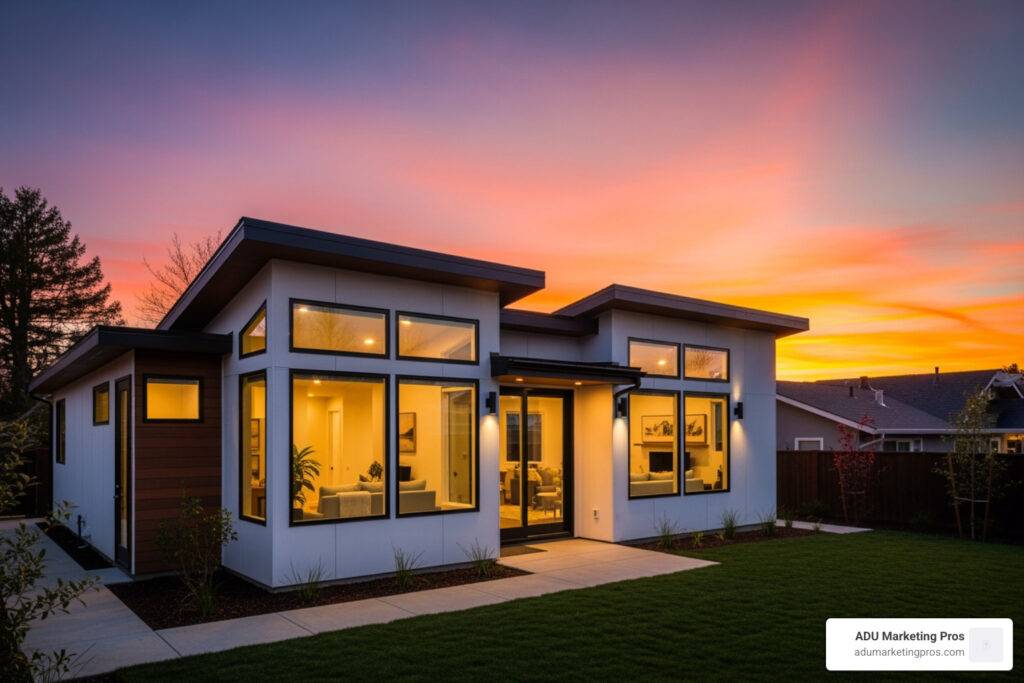
Why ADU Website Design Matters for Your Backyard Home Project
ADU website design is the digital foundation that connects homeowners with the right plans, builders, and resources to bring their accessory dwelling unit vision to life. Whether you’re exploring pre-approved standard plans, browsing 3D renderings, or comparing pre-designed options, a well-crafted ADU website makes the complex process of planning your backyard home surprisingly simple.
Key Elements of Effective ADU Website Design:
- Interactive floor plan galleries with filtering by size, bedrooms, and style
- 3D visualization tools that let you explore designs before committing
- Pre-approved plan libraries that streamline permitting (like LA’s Standard Plan Program)
- Transparent cost calculators showing realistic budget ranges
- Project case studies with photos, timelines, and actual build costs
- Direct connections to designers, builders, or prefab companies
ADUs—also called granny flats, casitas, in-law units, or backyard homes—have exploded in popularity across California and beyond. Between 2016 and 2019, California saw an 11-fold increase in ADU permits, jumping from 1,269 to 14,702. This surge created a massive need for accessible information and design resources.
The right website doesn’t just showcase pretty pictures. It educates homeowners about zoning requirements, simplifies the design selection process, and accelerates the path from dream to reality. For builders and designers, it’s how you demonstrate expertise and capture qualified leads. For homeowners, it’s where confusion transforms into confidence.
The beauty of modern ADU website design is that it brings professional architectural resources directly to your laptop or phone. You can browse 20 different floor plans over breakfast, visualize a 2-story ADU on your property by lunch, and connect with a designer by dinner—all without leaving home.

How an ADU Website Guides Your Vision from Idea to Plan
Before diving into floor plans and finishes, the journey to your ideal ADU begins with key questions. What is its primary purpose? A rental unit for extra income, a home office, a space for aging parents? Effective ADU website design anticipates these questions and guides you toward answers. Instead of leaving you to wonder, a great website functions as an interactive consultant, often starting with a guided questionnaire to help you define your needs.
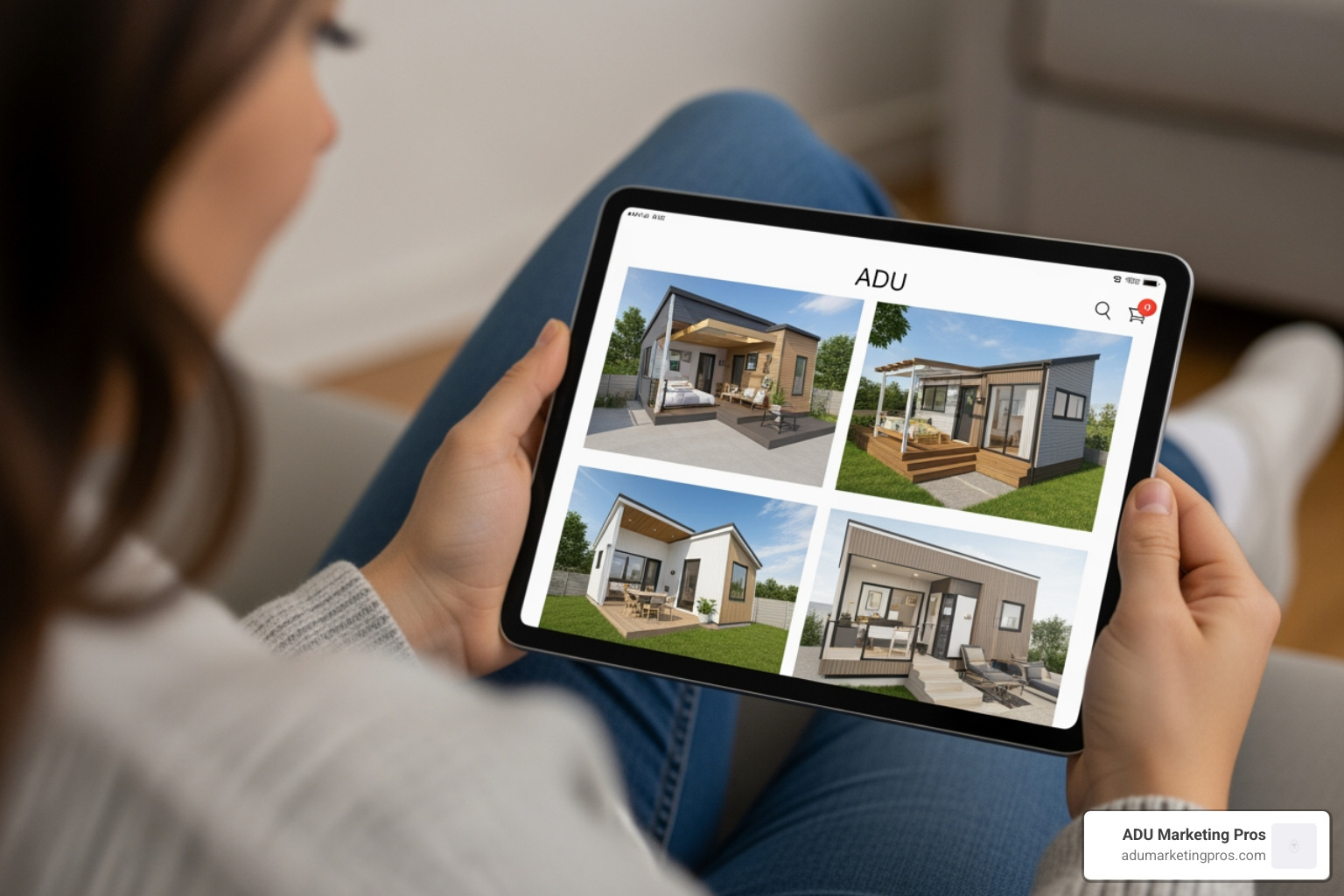
When we work with clients in Los Angeles, San Diego, and the San Francisco Bay Area, we see how crucial this initial digital exploration is. A website should allow you to easily explore the primary ADU forms, not as a confusing list, but as filterable categories with distinct galleries and case studies for each:
- Detached ADU: A standalone structure. A website should showcase galleries of these with 360-degree views.
- Attached ADU: An addition to the main home. The website should feature before-and-after photos to illustrate the integration.
- JADU (Junior Accessory Dwelling Unit): A unit under 500 sq ft within an existing home. A website can use interactive floor plans to show how this space can be carved out.
- Garage Conversion: A popular, cost-effective option. A website’s gallery for this category is essential for showing homeowners the transformative possibilities.
A well-designed website also educates. For instance, it should feature clear articles or infographics explaining new legislation like SB9 in Los Angeles, which allows homeowners to potentially build up to 5 units on a single-family lot. This transforms a website from a simple portfolio into an indispensable resource for property development.
Using a Website to Understand Your Property’s Potential
The journey to your perfect ADU is grounded in the reality of your property. The best ADU website design provides practical tools to help you understand your lot’s potential and limitations. Look for features that digitize the feasibility study process for your specific address in San Jose, Sunnyvale, or Palo Alto. Key information a website should help you find includes:
- Setbacks: An interactive map or automated tool that shows required distances from property lines.
- Lot Coverage: A simple calculator where you input your lot size and existing structure footprint to see your remaining allowance.
- Height Restrictions: Clear, location-specific guides on how tall your ADU can be.
- Local Ordinances: A searchable knowledge base or links to municipal resources, like the Los Angeles Department of Building and Safety (LADBS) Standard Plan Program.
A thorough feasibility check is crucial, and a website should facilitate this with checklists and direct links to schedule site assessments. It should also address budgeting early. A smart website will feature ROI calculators that demonstrate how an ADU can pay for itself in under 10 years through rental income. It should prominently feature statistics, such as how a well-built ADU can increase property value by 20-30% or more, turning the expense into a clear investment.
Exploring Styles and Layouts in a Digital Plan Library
A core component of modern ADU website design is a comprehensive and searchable plan library. This isn’t just a static page of images; it’s an interactive tool designed to help you find the perfect layout. The gallery should be filterable by key attributes:
- Studio plans: For single occupants or home offices.
- 1-bedroom layouts: For couples or rental income.
- 2-bedroom designs: For families or maximizing rental potential.
- ADUs over garages: Showcasing smart use of space.
- Single-story vs. two-story: To match lot size and needs.
- Accessibility features: Highlighting designs for aging-in-place.
Each plan within the website’s library should be a detailed profile, not just a picture. It should include high-resolution renderings, video walkthroughs, detailed specifications, and testimonials from homeowners who have built that specific design. Companies like Bunch Design in the Bay Area use their online presence to explain their design philosophy—how they make small spaces feel larger with light and smart layouts. A website is the perfect medium to communicate this value.
Furthermore, the website should detail the popular features within these plans, explaining their benefits:
- Open-concept living
- Indoor-outdoor flow
- High ceilings
- Smart storage solutions
- Energy-efficient windows and appliances
- Dedicated outdoor spaces (patios, decks)
- Flexible-use rooms (e.g., a bedroom that can double as an office)
The Ultimate Guide to Online ADU Website Design Tools
The digital age has revolutionized how we approach home design, and ADUs are no exception. The best ADU website design provides a suite of tools that empower homeowners to visualize, customize, and plan their projects from the comfort of their couch.
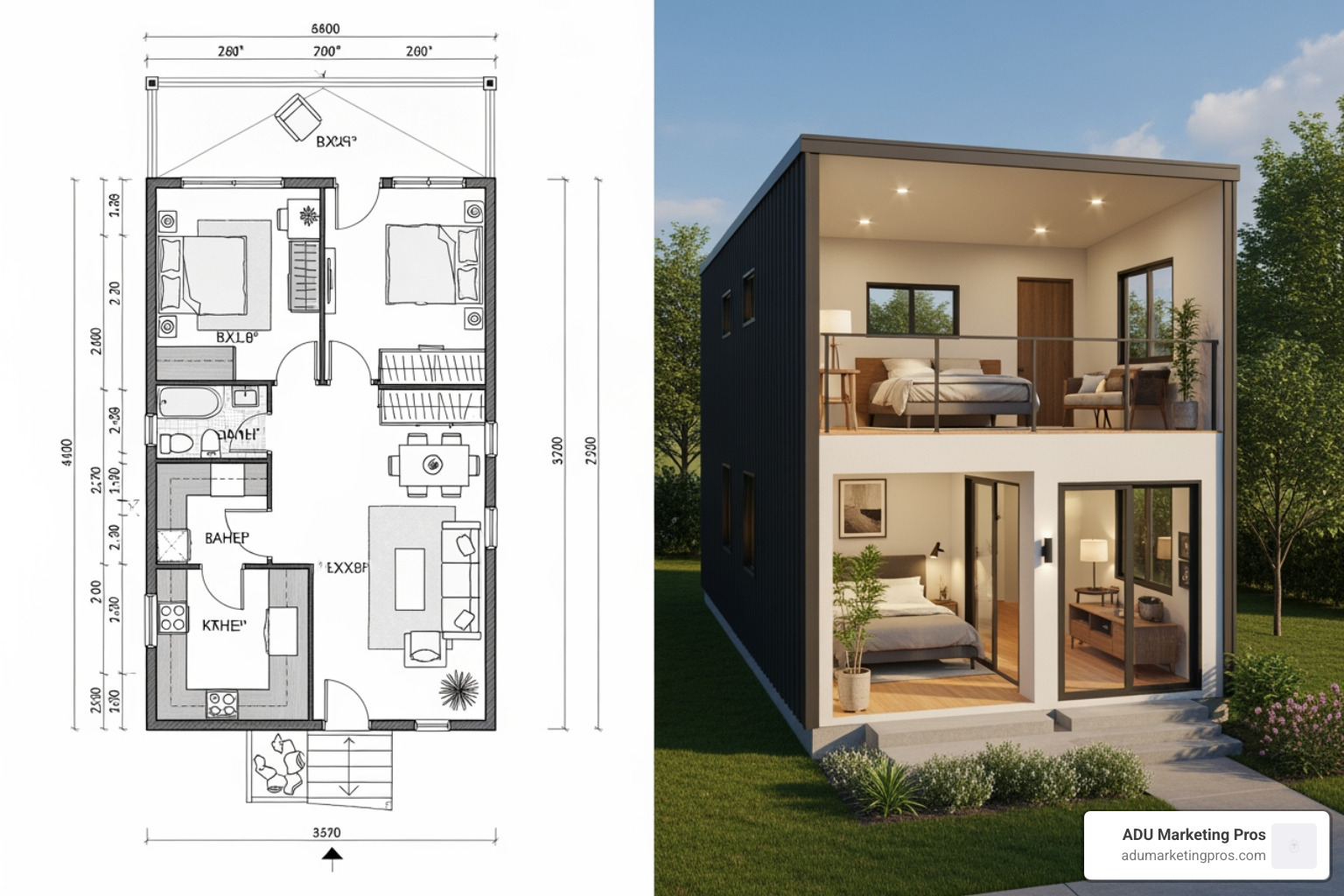
Imagine being able to:
- Browse through a Plans Gallery that allows you to filter and explore ADU designs, then connect directly with the designer or company.
- Use interactive floor plan software to tweak layouts, move walls, or experiment with different room configurations.
- Step into your future ADU with immersive 3D modeling tools and even virtual reality (VR) tours, getting a true feel for the space before a single shovel breaks ground.
- Use transparent cost estimation calculators that provide realistic budget ranges based on size, materials, and finishes.
- Experiment with various material selectors and finish options, from flooring to cabinetry, seeing how they impact the overall aesthetic and cost.
These tools transform the abstract idea of an ADU into a tangible, exciting project.
Essential Features of a Great ADU Design Website
For any company involved in the ADU space, an outstanding ADU website design is non-negotiable. It’s your digital storefront, your portfolio, and your primary lead-generation engine. Here are the essential features we recommend for a truly effective ADU design website:
- High-Resolution Photo Galleries: Showcase stunning exterior and interior shots of completed projects. Quality visuals build trust and inspire potential clients.
- Video Tours: Bring designs to life with walkthroughs, highlighting key features and spatial flow.
- Interactive 3D Configurators: Allow users to customize floor plans, choose finishes, and even place furniture to visualize their future ADU.
- Detailed Floor Plans: Provide clear, dimensioned schematic floor plans for studio, 1-bedroom, 2-bedroom, and other configurations, including ADUs with lofts or over garages.
- Transparent Cost Calculators: Offer realistic estimates based on various factors, helping homeowners budget effectively and avoid sticker shock.
- Client Testimonials and Reviews: Authentic feedback from satisfied clients builds credibility and trust. Websites like LADU and ADU Agency prominently feature these.
- Project Case Studies: Go beyond just photos. Share the story of each project, including challenges, solutions, timelines, and client outcomes.
- Direct Contact and Inquiry Forms: Make it easy for homeowners to connect with designers or builders. The Plans Gallery, for example, facilitates direct connections.
- Educational Content: Provide resources on local regulations, financing options, and the ADU building process, positioning your company as an expert.
- A Comprehensive Gallery of Plans: Websites like A gallery of ADU plans serve as central hubs for designers to list their works and for homeowners to browse. This is where designers can add their ADU designs, including images, descriptions, and pre-approval status, gaining visibility for their work across our service areas.
Leveraging Pre-Designed Plans for Your ADU Website Design
The concept of pre-designed ADU plans has gained significant traction, offering a compelling middle ground between custom architecture and prefabricated units. For a company’s ADU website design, effectively showcasing these plans is key.
Benefits of pre-designed plans include:
- Cost-Effectiveness: Pre-designed plans mean using design excellence without the hefty costs of custom projects. This makes quality ADU design more accessible.
- Time Savings: The design process can be significantly shortened, sometimes to as little as two months, compared to custom designs.
- Permit-Ready Plans: Many pre-designed options, especially those listed in programs like the LADBS Standard Plan Program, are pre-approved by local jurisdictions, which can drastically reduce permit review times. California law AB1332, effective January 1, 2025, even requires pre-approved ADU plans programs.
- Customization Options: While “pre-designed,” these plans are often adaptable. They can be stretched, made larger, have bedrooms altered, or be flipped/mirrored, as long as basic design elements remain.
- Architectural Styles: From modern and minimalist to more traditional aesthetics, pre-designed plans offer a wide range of styles to fit various homeowner preferences and property types in our diverse California communities.
Many companies, like Bunch Design, offer “pre-designed” ADU options, emphasizing that these are typical stud-framed buildings that allow for more customization than pre-fab units, which they believe have limitations due to foundation, hookups, and permitting timelines, and often result in boxy designs. Modern ADU Plans, for instance, features 20 expertly curated floor plans, combining beauty with functionality without compromising affordability.
Here’s a quick comparison of the different approaches:
| Feature | Pre-Fab ADUs | Pre-Designed ADUs | Custom-Built ADUs |
|---|---|---|---|
| Timeline | Often faster build time once on site | Faster design & permitting than custom | Longest design & permitting timeline |
| Cost | Can be cost-effective for base unit | More affordable than custom design fees | Highest design fees, variable construction costs |
| Customization | Limited to manufacturer’s options | Adaptable, allows some modifications | Unlimited, custom to exact specifications |
| Permitting | Varies, sometimes streamlined for certified | Often pre-approved, expedites process | Requires full review by local authorities |
| On-Site Work | Significant site prep & utility hookups | Full on-site construction | Full on-site construction |
How a Website Bridges the Gap from Design to Construction
After using online tools to finalize your vision, a high-quality ADU website should seamlessly guide you through the critical next steps: permitting and construction. It acts as a project management hub, connecting your digital blueprint to physical reality. The permitting process, often seen as a major hurdle, can be significantly demystified through a website’s resources.
A great website will clearly explain how it helps with permitting. For example, it should detail how it leverages programs like the LADBS Standard Plan Program, which uses pre-approved designs to fast-track plan checks in Los Angeles. The site should outline the entire process, so you know exactly what to expect:
- Submitting Plans: The website should clarify who prepares the plans. It should state that structural plans require a California State Licensed Architect or Engineer, and may offer this service directly through a client portal where documents are managed.
- City Review: An effective website will have a resource library with specific guides for jurisdictions like San Jose, San Diego, or Mountain View, explaining their review processes and timelines.
- Construction Documents: The website should define what these are and show examples, so you understand the level of detail required for construction and inspection.
Finding a qualified builder is another area where a website is invaluable. The best ADU company websites feature a transparent and detailed section on their build team or partner network. When browsing a site, look for:
- Experience and Expertise: The website should have a dedicated page on the company’s history with ADU construction, highlighting their knowledge of local codes.
- Portfolios and Testimonials: These should be integrated throughout the site, linked to specific projects and plans. Video testimonials are particularly powerful.
- Licenses and Insurance: A trustworthy website will display license numbers and proof of insurance prominently, often in the footer or on an ‘About Us’ page.
- Transparent Communication: The website should explain the communication process. Companies like ADU Agency in Los Angeles use their website to make bold guarantees—like completing your ADU in 120 days or paying you for delays—showcasing their confidence and process.
Website Resources for Navigating Financing and Regulations
The best ADU website design addresses the financial and legal hurdles head-on with a robust resource center. Acknowledging that financing is often the biggest barrier, the website should provide tools and information, not just a phone number.
An effective ‘Financing’ section on a website should include:
- Home Equity Line of Credit (HELOC): An article or video explaining how it works.
- Construction Loans: A guide on how to qualify and what the disbursement process looks like.
- Cash-out Refinance: A calculator to estimate how much you could borrow.
- Bridge Loans: A clear explanation of when this short-term option is useful.
Top-tier websites go further, offering specialized resources like interactive ROI calculators to show lenders the project’s viability, downloadable action checklists for loan applications, and even professional “pitch packages” to help homeowners secure ADU loans. Some sites even advertise unique financing options with low upfront costs to broaden their customer base.
Similarly, a website must be a definitive source for understanding regulations. It should have a searchable knowledge base covering the California Residential Code’s requirements for light-frame construction, state energy efficiency standards, and local legal considerations like homeowner association (HOA) rules. By providing this information clearly and comprehensively, the website positions the company as an expert and a trusted partner, capable of steering homeowners through every complexity, including the legalization of unpermitted ADUs.
Answering Your Top Questions: The Role of a Website’s FAQ
A well-structured FAQ page is a cornerstone of effective ADU website design. It builds trust by answering the most pressing questions homeowners have, demonstrating transparency and expertise. It’s one of the most visited pages on any service-oriented website, and for ADUs, it’s a chance to turn confusion into confidence. Let’s explore the common questions an ADU website should address and how it should answer them.
How Should a Website Explain ADU Costs?
This is often the first question on a homeowner’s mind. A vague answer is a red flag. A great ADU website tackles this head-on with transparency. It should feature an interactive cost calculator that allows users to select a plan, choose finish levels (e.g., standard, premium, luxury), and add site-specific factors to get a realistic, itemized estimate. The website must clearly explain all the variables:
- Size: Showing a clear cost-per-square-foot range for different models.
- Location: Explaining how labor and material costs vary across California.
- Finishes: Using a visual selector to show how different materials impact the budget.
- Site Conditions: Providing a checklist of potential extra costs like grading or utility trenching.
Crucially, the website shouldn’t just present the cost; it should frame the investment. It should use data and infographics to showcase the property value increase (often 20-30% or more) and the passive income potential ($1,500 to $3,500+ per month), reinforcing the strong ROI. Companies like ADU Agency use their site to anchor their value, offering design and permit services from a set price like $4,955 and framing the entire build as a self-funding investment.
How Should a Website Illustrate the Project Timeline?
“How long will it take?” is the second major question. An ADU website can set realistic expectations and reduce anxiety with clear, visual tools. Instead of a simple text answer, the site should feature an interactive timeline graphic that breaks down each phase:
- Design Phase (2-3 months): The website should explain how using its pre-designed plans can shorten this stage.
- Permitting Timeline (2-6 months): The site should explain this variability and show how using pre-approved plans (like those in the LADBS Standard Plan Program) can place a project on the faster end of the spectrum.
- Construction Duration (4-6 months): The website can build confidence by showcasing its efficiency. A guarantee, like ADU Agency’s 120-day completion promise, is a powerful marketing tool to feature on the site.
By using case studies to attach real timelines to specific projects, the website makes the data relatable. It should also have a section explaining common causes for delays, which further builds trust through transparency.
Can I Use a Website’s Design Tool to Get a Building Permit?
This is a critical question that any reputable ADU website design must answer with a clear “No, but it’s the essential first step.” The website’s role is to be a powerful tool for visualization and conceptual planning. It should celebrate this, encouraging users to explore, customize, and dream. However, it must also manage expectations by clearly explaining the next steps.
- Conceptual vs. Construction Documents: The website should have a dedicated page or pop-up explaining that its 3D renderings and schematic floor plans are for ideation. It must then show what a full set of construction documents looks like, detailing the need for structural, electrical, plumbing, and energy calculations.
- The Role of Licensed Professionals: The website should build value for its professional services by explaining why they are necessary. It should state clearly that in California, structural plans must be stamped by a State Licensed Architect or Engineer to ensure safety and code compliance.
- The Path to a Permit: A great website lays out a clear path, showing how the user’s saved design from the online tool becomes the starting point for collaboration with the company’s professionals, who will then create the permit-ready reality. This positions the website not as a final product, but as the gateway to a full-service solution.
Conclusion: Building Your ADU Dream
The journey to building an Accessory Dwelling Unit is an exciting one, offering immense potential to improve your property, generate income, and provide flexible living solutions. Modern ADU website design has transformed this journey, making it more accessible, transparent, and engaging than ever before. From browsing innovative floor plans in a digital gallery to visualizing your future ADU in 3D, the online tools available empower you to take control of your project.
We’ve seen how a robust online presence can streamline the process, from helping you define your needs and understand your property’s potential to navigating the complexities of financing and regulations. Whether you’re considering a detached unit for rental income in San Diego, a garage conversion for aging parents in San Jose, or a multi-unit development under SB9 in Los Angeles, the right digital resources are your first step.
While online tools provide invaluable guidance, remember the importance of professional expertise. Partnering with experienced ADU designers and builders in our service areas ensures your project moves smoothly from digital blueprint to physical reality, complying with all local codes and maximizing your investment.
For ADU builders and designers seeking to connect with informed homeowners, a powerful website is essential. Find how our specialized ADU marketing solutions can help you stand out and grow your business.