
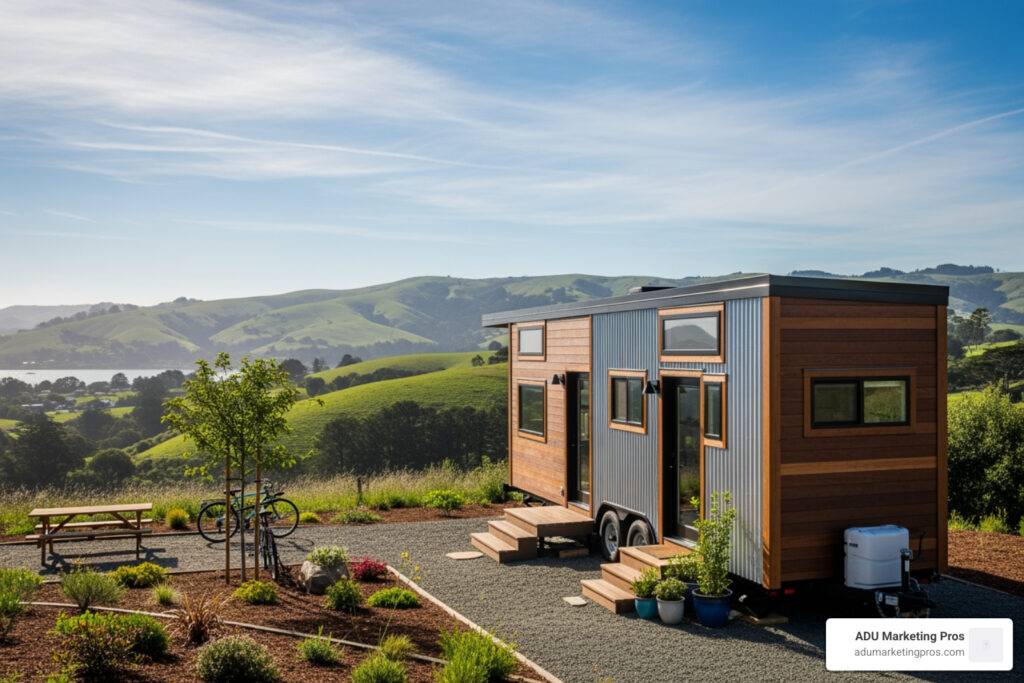
Why Finding Where to Park a Tiny Home in the Bay Area Feels Like Solving a Rubik’s Cube
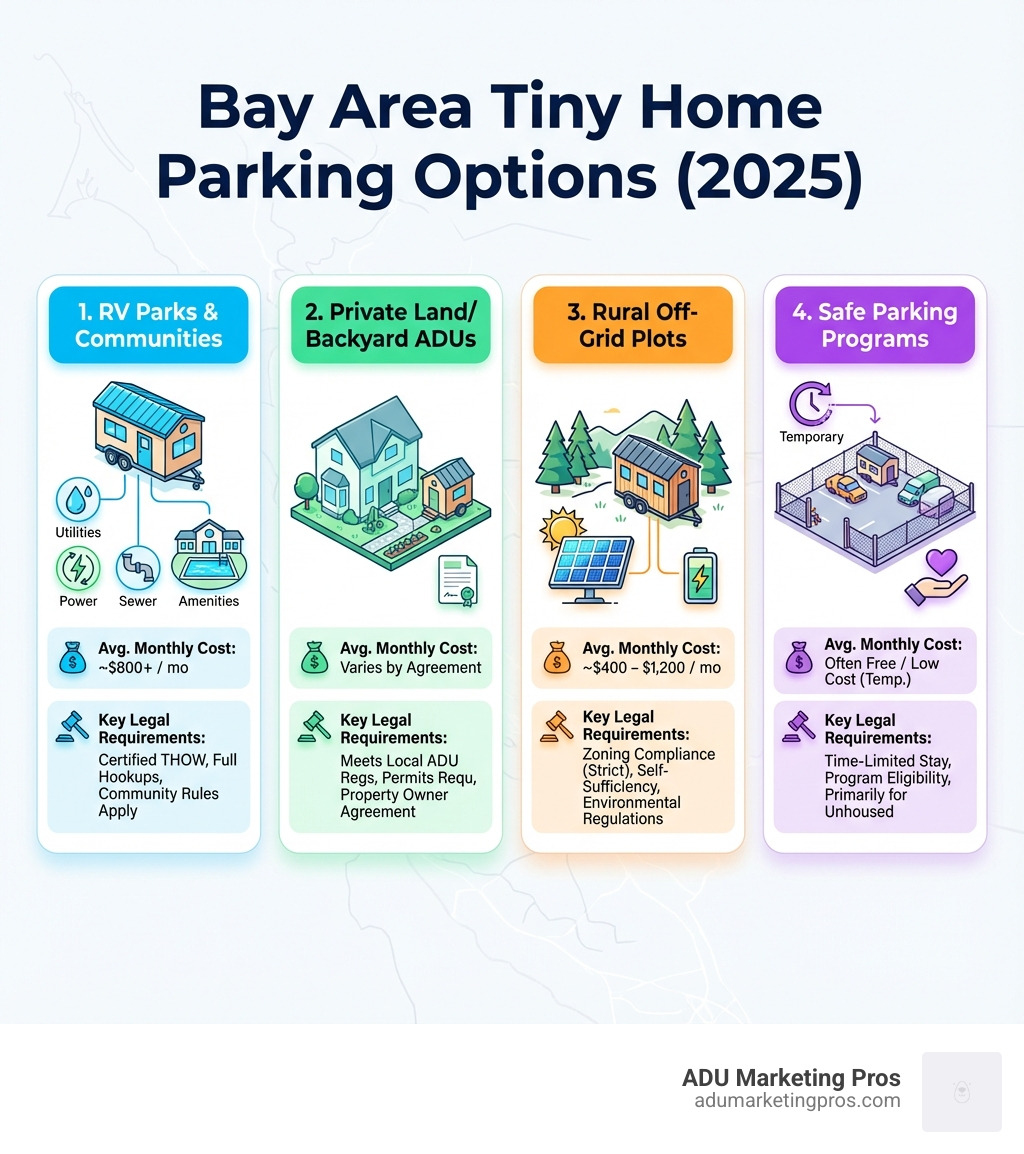
Where to park a tiny home in the Bay Area depends on your home’s classification and your tolerance for navigating local zoning laws. Here are your main options:
- RV Parks & Tiny Home Communities – Park Delta Bay in Isleton allows certified tiny homes on wheels with full utility hookups (starting around $800+/month)
- Private Land as an ADU – Rent space in someone’s backyard if your tiny home meets local Accessory Dwelling Unit regulations
- Rural Off-Grid Plots – Lease land in areas like Santa Cruz Mountains, Sonoma, or Marin County (typically $400-$1,200/month)
- Designated Safe Parking Programs – San José and Mountain View offer temporary programs primarily for unhoused individuals
- Progressive Cities – Oakland and Santa Cruz County have created specific “Vehicular Residential Facilities” ordinances to legally accommodate tiny homes
The tiny home dream promises lower costs, less stuff, and more freedom. But for many in the Bay Area, finding a legal, long-term spot to park a tiny home on wheels (THOW) or place one on a foundation is the biggest hurdle.
The challenge is a perfect storm of high land values, patchwork zoning codes, and a legal gray area where tiny homes don’t neatly fit into existing categories like “RV” or “house.” However, some cities are adapting. Oakland, Santa Cruz County, and communities like Park Delta Bay are creating viable pathways.
This guide will walk you through every option for parking your tiny home in the Bay Area, from established communities to private land. We’ll decode the laws, break down the costs, and share the resources you need to find your spot.
Basic where to park a tiny home in the bay area glossary:
- tiny home or adu bay area
- tiny homes bay area for sale
- tiny homes bay area
The Bay Area Tiny Home Parking Puzzle: Why Is It So Hard?
Finding a legal spot for your tiny home in the Bay Area is tough. The region’s progressive mindset paradoxically presents some of the biggest challenges for tiny living.
The primary challenge boils down to a combination of factors unique to this densely populated region:
- Sky-High Land Value: The Bay Area has some of the most expensive real estate in the nation, making affordable plots for tiny homes incredibly scarce.
- Strict Zoning Codes: Many local zoning regulations were not designed for tiny homes, specifying minimum dwelling sizes and setback requirements that are difficult for tiny homes to meet.
- Housing Density: Local governments often prioritize traditional, high-density housing developments, leaving little room for smaller-scale solutions like tiny home communities.
- Legal Gray Area: Tiny homes on wheels (THOWs) have long existed in a legal limbo, not quite fitting the definition of an RV or a traditional house. While this is changing, the legacy of this ambiguity persists.
- NIMBYism (Not In My Backyard): Community resistance, often based on concerns about property values or aesthetics, can make it difficult for cities to adopt tiny home-friendly ordinances.
- Diverse County Regulations: The Bay Area is not a monolith. What’s allowed in Santa Cruz County might be forbidden in Orinda. This patchwork of rules requires a deep dive into local laws for every potential location.
- Lack of Precedent: Until recently, many planning departments lacked established procedures for tiny homes, slowing down the process of creating new, accommodating rules.
- THOW vs. Foundation Confusion: The legal treatment of THOWs (often classified as RVs) versus tiny homes on foundations (often considered ADUs) varies significantly, adding another layer of complexity to the parking puzzle.
Understanding these problems is the first step toward navigating them successfully.
Your Parking Options: Where to Park a Tiny Home in the Bay Area
Despite the challenges, viable options are emerging for tiny home parking in the Bay Area. We’ve identified the primary types of locations where you might find a spot for your minimalist abode.
Tiny Home Communities and RV Parks
For many, dedicated communities and RV parks offer the most straightforward path to legal parking, as they often have the necessary infrastructure and legal framework.
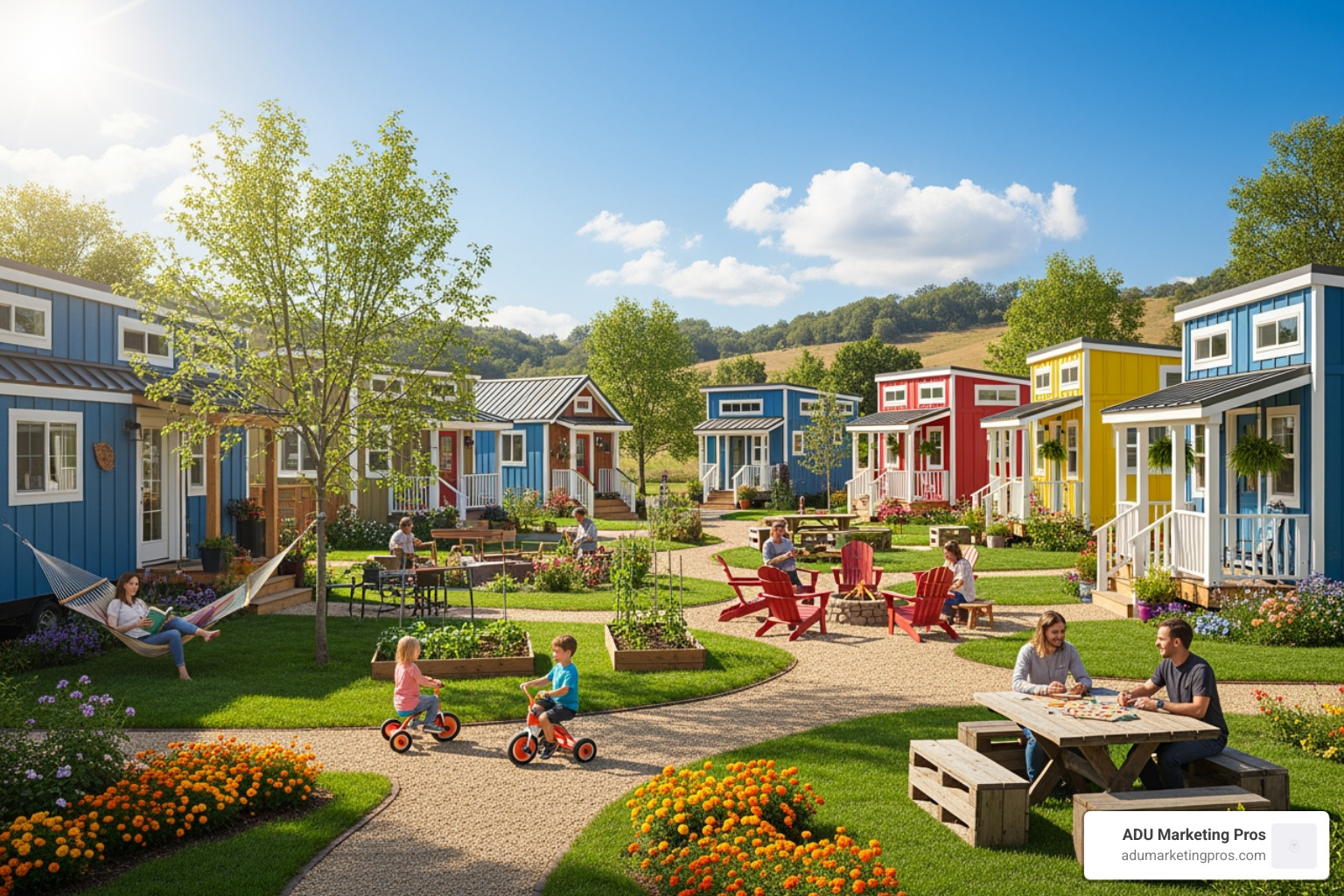
A standout example, though technically in the Sacramento Delta, is Park Delta Bay in Isleton, which is close enough to the Bay Area to be a viable option.
- RVIA Certification: Many parks, including Park Delta Bay, require your THOW to be RVIA (Recreation Vehicle Industry Association) certified to ensure it meets safety and construction standards.
- Community Amenities: These locations often provide amenities like a community room, pool, and fishing docks. Lupin Lodge in Los Gatos offers a unique nature-oriented setting.
- Utility Hookups: Parks typically provide full utility hookups, including water, sewer, and electricity, which is a major convenience.
- Monthly Lot Fees: Expect to pay between $800 to $1,500+ per month for a spot with hookups.
- Rules and Regulations: Be prepared for specific rules regarding occupancy, pets, and the types of homes allowed.
- Long-Term Stays: A growing number of parks, like Park Delta Bay, welcome tiny housers for year-round residency and are actively forming tiny home communities.
- Waitlists: Popular, legally established communities often have waitlists, so it’s wise to inquire well in advance.
Private Land and Backyard Parking (ADUs)
This is a popular method that requires navigating local laws for Accessory Dwelling Units (ADUs).
With California’s progressive ADU laws, parking a tiny home in a backyard has become more viable, especially in cities like San José, Sunnyvale, and Palo Alto.
- Accessory Dwelling Unit (ADU) Laws: If your tiny home is on a foundation and meets local ADU requirements, it can be permitted as a secondary dwelling on a residential property. Learn more about California’s ADU regulations.
- Renting from Homeowners: This involves finding private landowners willing to rent a portion of their property. Formal lease agreements are crucial for protecting both parties.
- Finding Spots via Networking: Personal connections and local tiny home groups are excellent ways to find homeowners with available space.
- Utility Connections: An ADU-style tiny home must be connected to the main home’s utilities, requiring proper permits and professional installation.
- Lease Agreements: A well-drafted lease is essential, outlining rent, utility sharing, and duration of stay.
Rural and Off-Grid Opportunities
For those seeking more space and autonomy, rural parts of the Bay Area offer unique possibilities in places like the Santa Cruz Mountains, Sonoma County, and Marin County.
- Off-Grid Systems: These locations often require a commitment to off-grid solutions like solar panels, battery storage, and composting toilets (though some counties still require a compliant wastewater system).
- Water Access: Access to a reliable water source, whether a well or municipal connection, is paramount.
- Privacy and Nature: The main draw of rural parking is the privacy and immersion in nature, which can positively impact your well-being.
- Commute Times: Be mindful of potentially long commute times to urban centers for work or amenities.
- Zoning: Investigate local zoning for agricultural or rural land, which can sometimes be more flexible for accessory structures.
Navigating the Red Tape: Bay Area Zoning, Laws, and Permits
Understanding the legal landscape is the most important step to successfully parking your tiny home. The Bay Area’s regulations are complex, but deciphering them is crucial.
Tiny Homes on Wheels (THOWs) vs. Tiny Homes on Foundations
The legal classification of your home determines where to park a tiny home in the Bay Area. This is the most significant distinction in tiny home legality.
| Feature | Tiny Home on Wheels (THOW) | Tiny Home on Foundation (Tiny House/ADU) |
|---|---|---|
| Legal Class. | Often classified as a Recreational Vehicle (RV), spec. Park Model RV | Often classified as an Accessory Dwelling Unit (ADU) or a primary dwelling |
| Mobility | Designed for mobility; registered with DMV | Stationary; requires building permits and foundation |
| Permitting | DMV registration; local permits for placement (e.g., VRF, THOW permit) | Building permits (foundation, utilities, construction) |
| Utility Hookups | Plug-and-play (RV-style); can be off-grid | Permanent connections to municipal utilities or permitted septic/well |
| Typical Loc. | RV parks, tiny home communities, private land with specific ordinances | Residential backyards (as ADU), dedicated tiny home subdivisions |
- THOW as Recreational Vehicle (RV): THOWs are often treated as RVs, meaning they can park where RVs are allowed. However, traditional RV rules often prohibit long-term residency on residential property.
- Foundation as Accessory Dwelling Unit (ADU): Tiny homes on foundations typically fall under residential building codes and are often classified as ADUs, allowing them to be legally placed in backyards with proper permits.
- DMV Registration: THOWs require annual registration with the DMV.
- Building Codes: Tiny homes on foundations must adhere to building codes like the International Code Council (ICC) standards. For THOWs, the ANSI-A119.5 standard for park model RVs is often the accepted benchmark.
Tiny Home-Friendly Cities and Counties
Some municipalities are leading the way in creating legal pathways for tiny homes.
- Oakland’s Vehicular Residential Facilities (VRF) Ordinance: In 2021, Oakland created a legal framework for placing THOWs (under 320 sq ft) in specific zones, requiring proper permits.
- Santa Cruz County’s THOW Permit Process: The county has a specific permitting process for THOWs, classifying them as park trailers. They require a permit renewable every five years, must meet ANSI-A119.5 standards, and connect to approved utilities.
- San José’s ADU-Friendly Policies: San José has streamlined its ADU policies, making it much easier to build small, foundation-based accessory dwellings in backyards.
- Orinda’s Restrictive RV Storage Rules: In contrast, some cities like Orinda have restrictive rules that allow for RV storage but generally do not permit full-time residency.
Bay Area Cities with Progressive Tiny Home or ADU Policies:
- Oakland: VRF ordinance for THOWs.
- Santa Cruz County: Dedicated THOW permit process.
- San José: Very ADU-friendly, encouraging backyard housing.
- Berkeley, Palo Alto, Marin County: Offer opportunities, often through ADU provisions.
- Sunnyvale, Mountain View, Menlo Park: Also ADU-friendly due to state mandates.
Understanding ‘Safe Parking’ Programs
While “safe parking” programs exist in the Bay Area, they serve a specific purpose distinct from general tiny home parking.
- Purpose: Programs in cities like San José and Mountain View provide temporary, safe overnight parking for individuals and families experiencing homelessness and living in vehicles.
- Goal: The primary goal is to connect participants with supportive services and a pathway to permanent housing.
- Not a Long-Term Lifestyle Solution: These programs are a compassionate response to the housing crisis. They are not intended for individuals who have chosen the tiny home lifestyle for financial freedom and are time-limited, with a focus on transitioning participants out of vehicle dwelling.
Your Toolkit for Finding a Tiny Home Parking Spot
Finding where to park a tiny home in the Bay Area requires a proactive approach and leveraging the right resources. This journey combines online research, community engagement, and careful financial planning.
Essential Online Resources and Communities
The internet is your best friend for connecting with landowners and other tiny home enthusiasts.
- Try It Tiny: A platform specializing in short-term and long-term rental lots for tiny houses, often on private property.
- Search Tiny House Villages: Lists RV parks and communities across the U.S. that allow tiny houses.
- Facebook Groups: Groups like “SF Bay Area Tiny House Enthusiasts” are incredibly effective for networking and finding posts from landowners offering spots.
- Tiny House Hosting: This Facebook group connects tiny house owners with land for rent or sale.
- Craigslist: Can be a source for private listings, but always exercise caution and verify the legality of any arrangement.
- Tiny Home Industry Association’s Resource Map: The Tiny Home Industry Association’s resource map is a great starting point for finding state-specific resources and legislation.
The Power of Networking and Local Advocacy
Sometimes the best opportunities are found through word-of-mouth and community involvement.
- Tiny House Festivals: Attending festivals is invaluable for networking with landowners, builders, and other enthusiasts.
- Local Meetup Groups: Search for tiny house Meetup groups in San José, Oakland, or Santa Cruz to share information and learn about local opportunities.
- Engaging with City Planning Departments: Contact your local planning department to ask about tiny home ordinances. Your inquiry could be the catalyst for change.
- Building a Network: Organizations like the American Tiny House Association offer resources and a network of advocates working to legalize tiny house living.
Estimating the Costs of Parking Your Tiny Home in the Bay Area
Budgeting for your parking spot is as important as budgeting for your home. The Bay Area’s high cost of living extends to tiny home parking.
- RV Park Fees: Expect to pay $800 to $1,500+ per month for a spot in an RV park or tiny home community.
- Private Land Rent: Renting a spot on private land can range from $500 to $1,200+ per month, depending on location and amenities.
- Permit Fees: Formal permitting processes, like in Santa Cruz County, can cost around $2,000.
- Utility Hookup Costs: If you’re renting raw land, you may need to cover the costs of installing utility hookups.
- Off-Grid System Investment: For rural options, factor in the upfront cost of solar panels, batteries, and water tanks.
- Insurance Costs: Ensure your tiny home and parking arrangement are adequately insured.
Frequently Asked Questions about Bay Area Tiny Home Parking
Can I legally live in a tiny home on wheels full-time in the Bay Area?
Yes, but only in specific, legally designated places. This includes permitted spots in cities like Oakland and Santa Cruz County, dedicated tiny home communities like Park Delta Bay, or some RV parks that allow long-term residency for certified THOWs. Parking illegally in a backyard or on the street carries the risk of fines and eviction. It’s crucial to verify local ordinances for any long-term placement.
What is the difference between an RV and a THOW in the eyes of the law?
Legally, a THOW is often classified as a type of RV (specifically a “park model RV”) if it is certified. However, new city ordinances, like Oakland’s, are creating a distinct legal category for THOWs, recognizing their residential design. This allows them to be used as long-term housing in certain zones, unlike traditional RVs which are typically restricted from being used as permanent dwellings on residential lots.
How can I find private land to rent for my tiny home?
Finding private land involves online searching and personal networking. Use platforms like Try It Tiny and join local Facebook groups such as “SF Bay Area Tiny House Enthusiasts” to find listings. Attend tiny house festivals and local meetups to network. Often, the best spots are unlisted and found through word-of-mouth, so tell people you are looking. Always ensure any rental adheres to local zoning laws and is formalized with a lease.
Conclusion: Your Bay Area Tiny Home Dream is Within Reach
Navigating where to park a tiny home in the Bay Area is complex, with challenges from high costs and intricate regulations. However, the landscape is shifting for the better.
Solutions are emerging, from the established comfort of communities like Park Delta Bay to the opportunities presented by California’s ADU-friendly policies and the appeal of rural plots. Pioneering cities like Oakland and Santa Cruz County are carving out legal pathways for tiny homes on wheels, recognizing their role in our housing ecosystem.
The journey requires persistence and a proactive approach. Success depends on understanding the legal distinctions, researching local ordinances, and engaging with communities and planning departments. Your dream of a simpler, more financially free life in a tiny home here is not just a fantasy—it’s an achievable reality.
For those considering a foundation-based tiny home as an Accessory Dwelling Unit, we at ADU Marketing Pros specialize in helping firms steer this space. Let us help you learn how to navigate the ADU building process in the Bay Area and connect with the right professionals to make your tiny home dream a reality.