
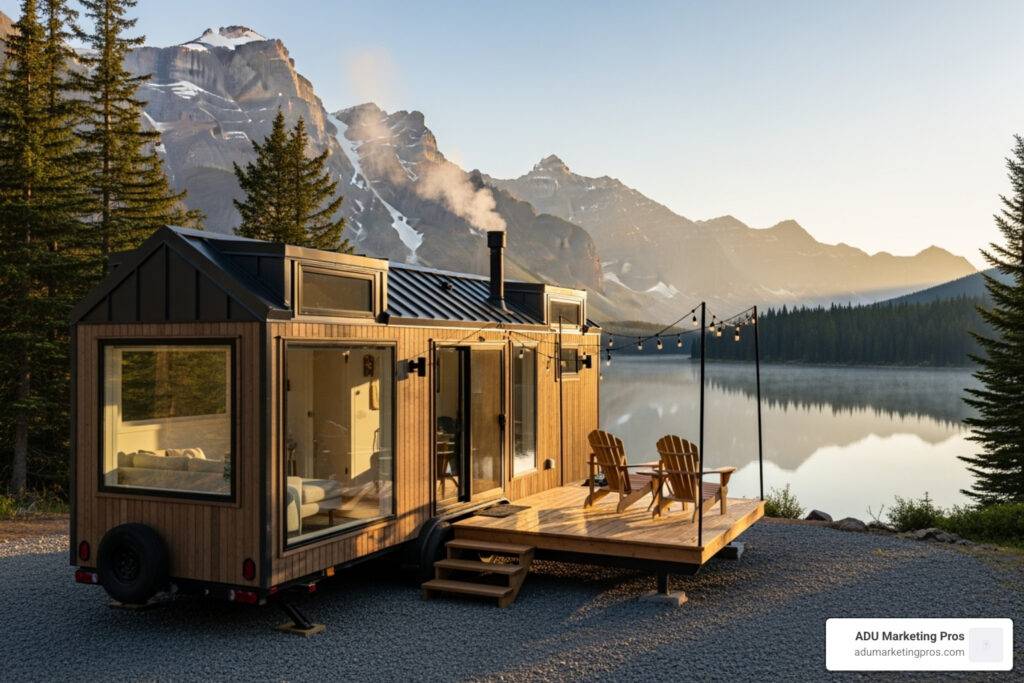
Why Tiny Home Sales Are Reshaping the American Dream
Tiny home sales have exploded as housing prices soar and more people seek financial freedom. Whether you’re a buyer searching for an affordable entry into homeownership or a seller looking to capitalize on this booming market, understanding the landscape is essential.
Quick Answer for Buyers:
- Average Cost: $80,000–$200,000 for turnkey units
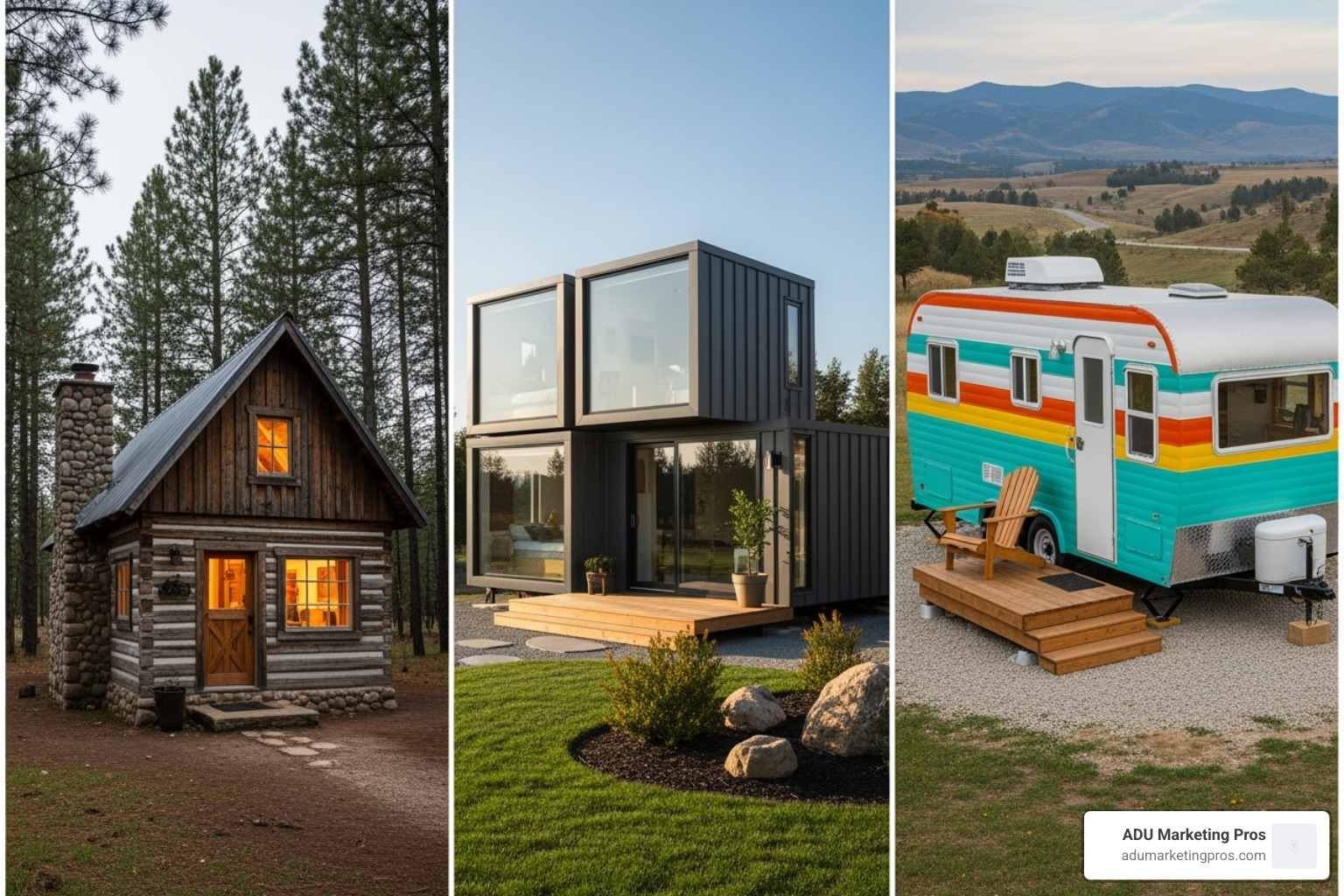
- Types Available: Tiny homes on wheels (THOWs), foundation-built units, modular homes, and ADUs
- Where to Buy: Online marketplaces, specialized builders, private sellers
- Key Consideration: Check local zoning laws before purchasing
Quick Answer for Sellers:
- Market Demand: High, especially in California and urban areas facing housing shortages
- Average Sale Time: Varies by location and type (THOWs often sell faster)
- Best Platforms: Dedicated tiny home marketplaces, social media, tiny home communities
- Pricing Strategy: Competitive analysis essential; $104,900–$269,800 typical range
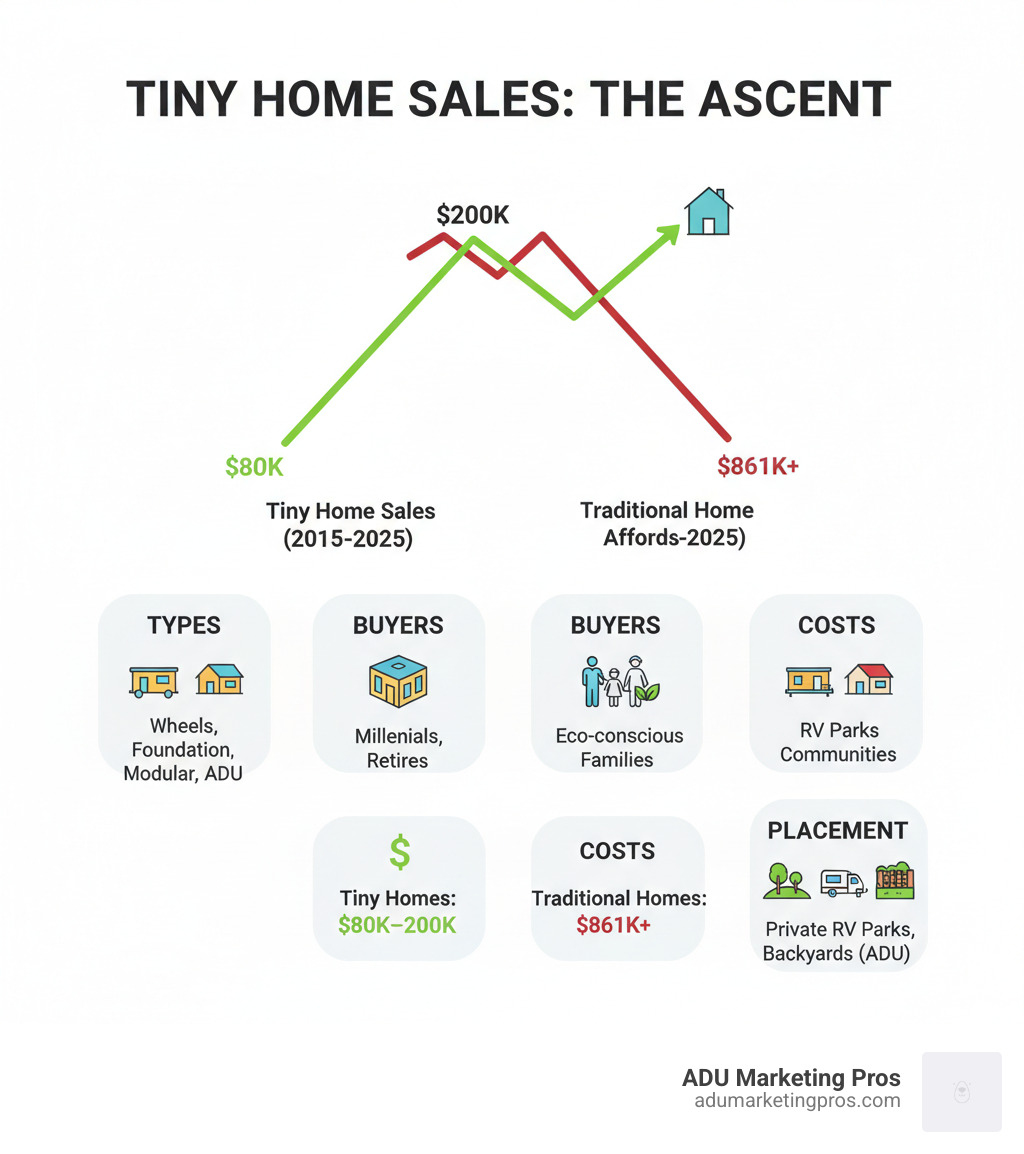
With the average home price in Ontario hitting $861,719 and similar affordability crises gripping markets from California to Colorado, the dream of traditional homeownership is slipping away for millions. In response, thousands are turning to homes ranging from 60 to 600 square feet. The upfront cost of a tiny house, typically between $80,000 and $200,000, is dramatically less than the down payment on a conventional home in many urban centers.
This shift isn’t just about money; it’s a profound cultural movement about reimagining what ‘home’ means. The housing shortage, aggravated by the pandemic, has forced people to think creatively and prioritize their values. For a growing number, this means choosing intentionality over excess, financial freedom over a 30-year mortgage, and community over isolation. Tiny homes offer a direct path to ownership without crushing debt, along with the tangible benefits of lower utility bills and a smaller environmental footprint. However, the market has unique challenges that demand careful navigation. Financing can be a significant hurdle, as traditional mortgages often don’t apply. Zoning regulations vary wildly from one town to the next, creating a complex legal patchwork. Furthermore, selling a non-traditional home requires different strategies than listing a typical single-family house.
This guide walks you through both sides of the transaction, covering market trends, legal requirements, and practical steps to make your tiny home dream a reality.
The Exploding Market for Tiny Home Sales
While traditional home prices climb, a growing number of people are choosing to think smaller. The result? Tiny home sales have surged, creating a vibrant market that’s reshaping homeownership.
This shift is driven by real economic pressures and changing values. When the average home price in many markets reaches staggering heights, people look for alternatives. They’re finding them in homes from 60 to 600 square feet, with an upfront cost typically between $80,000 and $200,000. For many, this is the difference between owning a home and renting forever.
But affordability isn’t the only driver. People are actively choosing to downsize, embracing minimalism as a path to freedom from debt, high utility bills, and large mortgages. The environmental angle also matters, as tiny homes require fewer resources to build and less energy to heat and cool. It’s a tangible way to reduce your carbon footprint. The construction industry has responded with sophisticated, beautifully designed prefab and modular homes that rival traditional houses in quality.
Why Tiny Homes Are Gaining Popularity
- Financial Benefits: With prices between $80,000 and $200,000, tiny homes make ownership possible for those locked out of traditional markets. Lower purchase prices mean less debt, and smaller spaces lead to dramatically lower monthly utility bills.
- Environmental Impact: Living tiny naturally reduces your carbon footprint. Many tiny homes take this further with solar panels, composting toilets, and rainwater collection systems. For more ideas, explore these eco-friendly small homes.
- Lifestyle Flexibility: Tiny homes on wheels offer the freedom to relocate. Even foundation-based units encourage a simpler, more intentional life. Many owners report feeling liberated by their smaller space.
How Tiny Homes Compare to Traditional Houses
The contrast is striking. A tiny home offers a radically different value proposition, trading sprawling space for financial freedom and a smaller footprint.
| Feature | Tiny Homes (60-600 sq ft) | Traditional Homes (e.g., 1,700 sq ft) |
|---|---|---|
| Average Cost | $80,000 – $200,000 (upfront for home only) | $500,000 – $1,000,000+ (dependent on location) |
| Square Footage | 60 – 600 sq ft | 1,700 sq ft (average Canadian single-family home) |
| Monthly Utilities | Significantly lower (e.g., $50-$150) | Higher (e.g., $200-$500+) |
| Maintenance | Lower due to smaller size and simpler systems | Higher due to larger footprint and more systems |
| Environmental Impact | Generally lower carbon footprint, less waste | Higher resource consumption, larger carbon footprint |
According to Natural Resources Canada data, the average single-family home is about 1,700 square feet, dwarfing the 60 to 600 square feet of a tiny home. While you must still factor in land costs, the total investment typically remains far below traditional housing. Maintenance is also simpler and cheaper. The resale market for tiny home sales is growing, and well-built, certified homes hold their value well. For those interested in slightly larger options, our guide to small houses for sale covers a broader range of compact dwellings.
The Ultimate Buyer’s Guide to Finding Your Perfect Tiny Home
Buying your first tiny home is exciting but can be complex. This guide will walk you through the buyer’s journey, from defining your needs to navigating the sale, ensuring you make a smart, informed decision.
Step 1: Defining Your Needs and Must-Have Features
First, get clear on what you need for your daily life. The most important decision is whether you want a home on wheels or on a foundation. A Tiny Home on Wheels (THOW) offers mobility, while a foundation-based home or Accessory Dwelling Unit (ADU) provides stability. In California, understanding the difference between an ADU vs Tiny House is essential, as ADUs have clear regulations that can simplify placement.
Next, consider size and layout. How many people (and pets) will live there? Do you need a dedicated workspace or a multi-functional living area? Will a sleeping loft work for you, or is a ground-floor bedroom a must-have? Think about your daily routines. Do you love to cook and need a larger kitchen, or is a simple kitchenette sufficient? Tiny homes range from 60 to 600 square feet, and every inch matters. Also, decide if you want off-grid capabilities like solar panels, composting toilets, or rainwater collection systems. These offer incredible self-sufficiency and lower utility costs but require a hands-on approach to maintenance and a willingness to learn new systems.
Finally, list your non-negotiable amenities. Modern tiny homes can include full-size appliances, bathtubs, and brilliant storage solutions. Knowing your priorities will help you filter through tiny home sales listings efficiently.
Step 2: Finding Reputable Builders and Listings
Now that you know what you want, it’s time to find it. First, decide between a DIY build to save on labor costs (a 500-1,000 hour project) or a professional build for expertise and speed. You can also choose between a custom build, designed to your exact specifications, or a more affordable and immediately available pre-owned tiny home.
For listings, specialized online marketplaces like Tiny House Listings and dedicated Facebook groups are your best bet. When choosing a professional builder, vetting is critical:
- Look for certifications like NOAH Certified or RVIA Certified, which ensure the home meets safety and quality standards.
- Review their portfolio and ask for customer testimonials.
- Visit their workshop if possible to see a build in progress.
For those in California, we can connect you with reputable Tiny House Builders California and talented Architects in Southern California Who Design Tiny Houses.
Step 3: Navigating the finances of tiny home sales
Financing is often the trickiest part of buying a tiny home. First, budget for the total cost, not just the sticker price. A $60,000 Boxabl Casita is just the start. You must also account for a wide range of additional expenses:
- Land (if you don’t own it)
- Utility hookups (water, sewer, electric), which can cost $5,000 – $15,000+
- Transportation of the home to your site ($1,000 – $5,000+)
- Permits and site preparation (foundation, grading)
- Sales Tax, which can be a significant percentage of the home’s price.
- Property Taxes, which will vary depending on whether the home is classified as real estate or personal property.
- Insurance, which can be more specialized and potentially more expensive than standard homeowner’s policies.
Traditional mortgages rarely apply to tiny homes, especially THOWs, because they aren’t considered ‘real property’ unless permanently affixed to land. Common financing options include personal loans, RV loans (for RVIA-certified homes), manufacturer financing, and loans from credit unions, which are often more flexible than large banks. It is critical to explore all your options with multiple lenders before you fall in love with a home to avoid disappointment.
The Savvy Seller’s Guide to Maximizing Your Tiny Home’s Value
Ready to sell your tiny home? You’re entering a vibrant market. With the right approach, you can maximize your return and find a buyer quickly. Here’s how to make your tiny home sales experience smooth and profitable.
Preparing Your Home for a Successful Sale
First impressions are everything, and in a compact space, every detail matters.
- Declutter ruthlessly. In a tiny home, less is more. Pack away personal items, excess decor, and anything that isn’t essential. You want buyers to see the space, not your stuff.
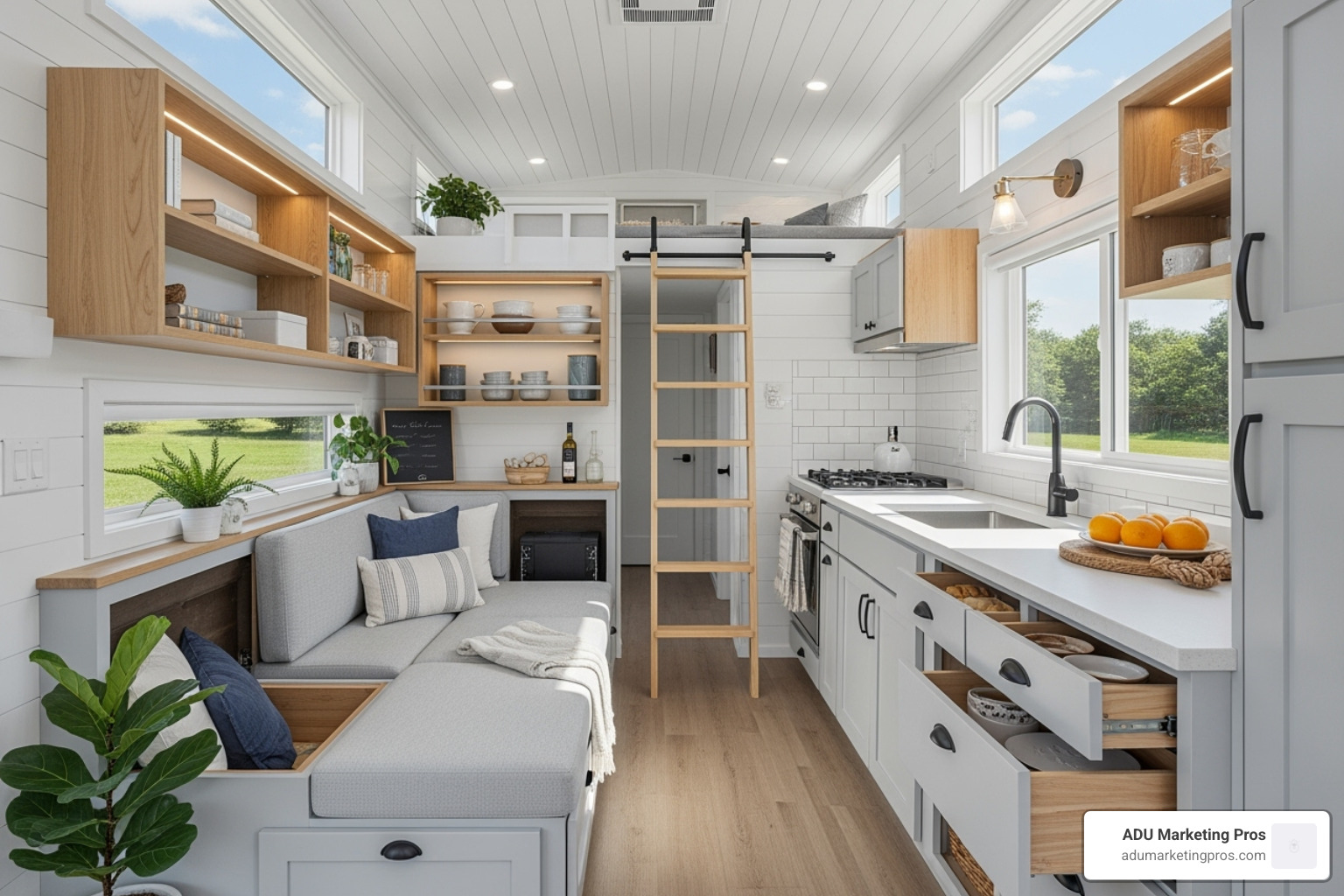
- Stage for spaciousness. Use neutral colors, mirrors to reflect light, and minimal furniture to make rooms feel larger. Show off clever storage solutions and multifunctional furniture to highlight the home’s efficiency. Ensure every lightbulb is working and consider adding lamps to brighten dark corners.
- Complete minor repairs. Fix that dripping faucet, touch up the paint, and tighten any loose cabinet handles. These small details signal that the home is well-maintained and ready for its new owner.
- Boost curb appeal. For a THOW, ensure the exterior, tires, and hitch are spotless. For a foundation-built home, tidy up the landscaping, add a pot of flowers, and ensure the entryway is clean and welcoming.
- Invest in professional photos and video. Most buyers start their search online. High-quality, wide-angle visuals are non-negotiable to make your home look spacious, bright, and inviting. A video walkthrough can be especially effective.
Pricing, Listing, and Marketing Your Tiny Home
Getting the price right is critical. Start with a competitive market analysis by researching recently sold tiny homes with similar square footage, age, and features in your region. New tiny homes often range from $104,900 to $269,800; price your used home accordingly, factoring in depreciation and any value-adding upgrades.
Highlight unique features and certifications in your listing. Did you invest in high-end appliances, a custom-built staircase, or a robust solar power system? Is your home NOAH or RVIA certified? These are major selling points that justify a higher price and build buyer confidence. In your listing, write compelling ad copy that paints a picture of the lifestyle. Instead of just listing specs (‘200 sq ft, 1 loft’), describe the experience (‘Enjoy morning coffee from your sun-drenched sleeping loft, with clever built-in storage for a clutter-free life.’).
Finally, choose the right sales platforms. Dedicated tiny home marketplaces and focused Facebook groups are excellent for finding serious buyers. Use visual platforms like Instagram and Pinterest to generate interest with stunning photos of your home.
Managing the tiny home sales process
Once your listing is live, be ready to move. Be flexible with showings, as buyers often have limited availability. A virtual tour can help pre-qualify leads, saving everyone time.
When offers come in, be prepared for negotiations. Know your bottom line in advance, including whether you’re willing to include furniture or appliances. For the legal paperwork, a THOW sale is similar to selling a vehicle (bill of sale, title transfer), while a foundation-built home requires standard real estate contracts. We always recommend consulting a professional to review the paperwork to protect both you and the buyer.
Finally, ensure a smooth handover. Gather all manuals, maintenance records, and walk the new owner through any unique features of the home. A positive final impression can lead to great reviews and referrals.
The Legal Lowdown: Zoning, Placement, and Regulations
Navigating the legal side of tiny homes can be the biggest roadblock in the tiny home sales process. Zoning laws, building codes, and placement regulations vary dramatically between municipalities. Understanding this landscape before you buy is crucial to avoid costly mistakes.
Differentiating THOWs, ADUs, and Foundation Homes
Not all tiny homes are treated equally by law. The legal classification determines where you can place it and what permits you need.
- Tiny Homes on Wheels (THOWs): Often classified as RVs, which gives them mobility but may come with restrictions on full-time residency. Local codes can be a gray area.
- Accessory Dwelling Units (ADUs): These are secondary homes on the same lot as a primary residence. California has progressive ADU legislation, making them one of the most legally straightforward paths to tiny living. Learn more about ADU vs Tiny House distinctions.
- Foundation-Built Tiny Homes: These are small houses on permanent foundations that must adhere to all local building codes, which can be a challenge in areas with minimum square footage requirements.
California’s Movable Tiny House (MTH) law helps bridge the gap by allowing certified THOWs to be permitted as ADUs in some cases, combining mobility with legal residency.
Navigating Local Zoning and Building Codes
Ignoring local regulations can lead to fines, legal battles, or even forced removal of your home. Building code compliance ensures your home is safe and structurally sound. Foundation homes typically must follow the International Residential Code (IRC). A key development is IRC Appendix Q, which provides building standards specifically for tiny houses on foundations (under 400 sq. ft.), making it easier for local authorities to approve them. THOWs, on the other hand, should meet standards like ANSI A119.5 (for park models) or NFPA 1192 (for RVs).
The most important step is to check with your local planning and building departments before you buy or build. Every city and county has its own rules. What’s legal in one California city might be prohibited in the next.
Certifications matter. Look for homes with NOAH or RVIA certifications. These third-party verifications demonstrate quality and compliance with safety standards, which can make permitting, financing, and insuring your home much smoother. For specific regional rules, our guide to Tiny House San Francisco covers the Bay Area’s unique regulations.
Where to Legally Place Your Tiny Home in California
Finding a legal spot for your tiny home is possible with some research. Options are expanding as the movement grows.
- Tiny home communities: These planned neighborhoods offer designated lots with pre-installed utilities and a built-in support network. The pros are legality and community, but the cons can include monthly lot rent or HOA fees and specific rules you must follow.
- RV parks with long-term stays: A viable option for certified THOWs. However, you must always clarify residency limitations, as some parks have restrictions on how long you can stay (e.g., ’28-day rule’) and may not permit full-time living.
- Private land in unincorporated areas: Rural county regulations may be less stringent, offering more freedom. The challenge is that you are responsible for all site prep, including potentially expensive well and septic system installation. You must verify zoning with the county planning department first.
- Backyard placement as an ADU: This is a fast-growing opportunity in California’s urban and suburban areas, allowing a foundation-built or certified Movable Tiny House (MTH) in your backyard. This is often the most legally secure option, but it requires you to own the primary property or have an agreement with the owner.
For more detailed information, see our guides on Places in Southern California That Allow Tiny Houses and Land for Sale in Southern California for Tiny Houses.
Frequently Asked Questions About Tiny Home Living
Choosing a tiny home is a big decision. Here are answers to the most common questions we hear.
How much does a tiny house actually cost in California?
The cost for the home itself typically ranges from $80,000 to $200,000. The final price depends on several factors:
- Build Type: A DIY build can cost $20,000 to $50,000 in materials, while a professional, turnkey home will be at the higher end of the range.
- Finishes: A basic “shell” is cheaper than a fully finished, move-in-ready home.
- Size and Features: A 200-square-foot THOW costs less than a 600-square-foot foundation model. High-end materials, full-size appliances, and off-grid systems also increase the price.
Crucially, these figures do not include land, which can be the most significant expense in California, varying from tens of thousands in rural areas to hundreds of thousands or more in desirable urban locations.
Is it hard to get insurance for a tiny home?
It can be trickier than for a traditional house, but it’s definitely possible. The key is your home’s classification:
- Certified THOWs: If your tiny home on wheels is certified by RVIA or NOAH, you can typically get RV insurance to cover damage, liability, and personal belongings.
- Foundation-Built Tiny Homes: If legally permitted as a dwelling, these homes usually qualify for standard homeowner’s insurance.
For homes that don’t fit neatly into either category, some companies now offer specialized policies. As tiny home sales grow, more options are becoming available. It’s wise to shop around and get quotes from multiple insurers.
What are the biggest challenges of living in a tiny home?
Tiny homes offer incredible benefits, but they come with real challenges. Be prepared for:
- Space Constraints: Living in 60 to 600 square feet requires a serious commitment to minimalism and organization. The initial downsizing process can be emotionally difficult, and ongoing discipline is needed to prevent clutter from taking over.
- Legal Problems: Zoning laws and building codes are the number one frustration for tiny dwellers. Finding a legal place to park or build can be a complex, time-consuming, and location-specific process that requires extensive research.
- Financing Difficulties: Traditional mortgages are rare. Buyers often rely on personal loans, RV loans, or manufacturer financing, which may have higher interest rates and shorter terms than a conventional mortgage.
- Off-Grid Maintenance: Systems like solar panels, battery banks, and composting toilets require regular upkeep and a new set of skills. You become your own utility manager, which can be empowering but also demanding.
- Social Adjustments: You may feel isolated if you’re not in a dedicated tiny home community, as some neighbors or local officials may not understand or be welcoming of the lifestyle. Explaining your living situation repeatedly can become tiresome.
- Resale Market Uncertainty: While the market for tiny home sales is growing, it’s not as mature or predictable as traditional real estate. Selling a tiny home, especially a THOW, can sometimes take longer, and its value may depreciate like a vehicle rather than appreciate like a house on land.
Conclusion: Start on Your Big Dream in a Small Home
The explosive growth of tiny home sales is more than a trend—it’s a movement redefining the meaning of home. It represents a powerful opportunity for both buyers and sellers.
For buyers, tiny homes open doors that traditional housing has closed. In markets like California, where conventional homes are increasingly out of reach, owning a beautiful, functional home for a fraction of the cost is a game-changer. It’s about the freedom that comes with less debt, lower expenses, and a smaller environmental footprint.
For sellers, demand has never been stronger. Your tiny home represents a lifestyle solution that thousands are actively seeking.
Yes, there are challenges—financing can be tricky and zoning laws complex. But as we’ve seen helping countless clients, the rewards of financial freedom and lifestyle flexibility far outweigh the problems. The future of housing is evolving, and tiny homes are leading the charge toward making homeownership accessible again.
At ADU Marketing Pros, we are passionate about empowering people through alternative housing solutions. If you’re ready to take the next step, we encourage you to find Places in Southern California That Allow Tiny Houses. Your big dream in a small home is closer than you think.