
California’s Tiny Home Communities: A Quick Guide to Your Options
Tiny home communities California are spread across the state, from the redwood forests of the north to the desert valleys of the south. California has long been at the forefront of the housing revolution, driven by a combination of high real estate prices, a desire for environmental sustainability, and a cultural penchant for innovation. The rise of tiny home living in the Golden State is not merely a trend; it is a response to a complex housing market that has left many seeking alternative ways to live comfortably without the burden of a traditional mortgage.
The Evolution of the California Tiny House Movement
In the early days of the movement, tiny homes existed in a legal gray area, often relegated to backyards or rural plots where they could fly under the radar of code enforcement. However, in recent years, the state has made significant strides in legitimizing these dwellings. From the passage of state-wide ADU (Accessory Dwelling Unit) laws to the creation of dedicated tiny home villages, California is setting a precedent for how high-density, low-impact living can work in a modern economy. This shift is largely due to the “Missing Middle” housing crisis, where middle-income earners find themselves priced out of traditional homes but over-qualified for subsidized housing.
Why California is the Epicenter of Small Living
California’s diverse geography and climate make it an ideal testing ground for various tiny home styles. In the north, you’ll find homes designed for moisture resistance and insulation against the damp forest air. In the south, the focus shifts to solar efficiency and indoor-outdoor living spaces that take advantage of the year-round sun. Furthermore, the state’s progressive political climate has encouraged local municipalities to experiment with zoning ordinances that allow for “Moveable Tiny Houses” (MTHs) as permanent residences, a move that was once unthinkable in traditional urban planning.
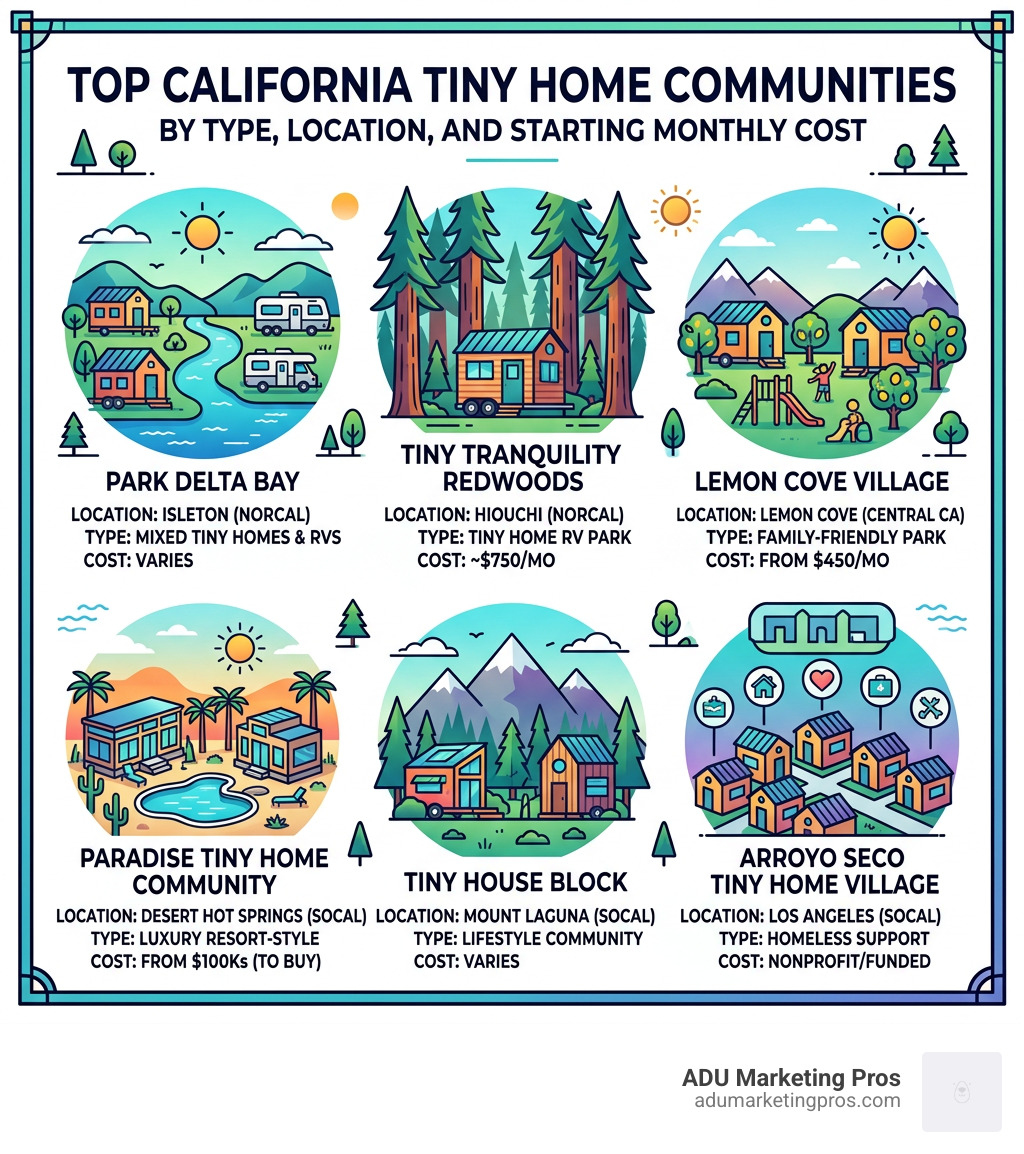
Here’s a quick look at some of the top options currently available for those looking to join a community:
| Community | Location | Type | Starting Cost |
|---|---|---|---|
| Park Delta Bay | Isleton (NorCal) | Mixed tiny homes + RVs | Varies |
| Tiny Tranquility Redwoods | Hiouchi (NorCal) | Tiny home RV park | ~$750/mo |
| Lemon Cove Village | Lemon Cove (Central CA) | Family-friendly park | From $450/mo |
| Paradise Tiny Home Community | Desert Hot Springs (SoCal) | Luxury resort-style | From $100Ks to buy |
| Tiny House Block | Mount Laguna (SoCal) | Lifestyle community | Varies |
| Arroyo Seco Tiny Home Village | Los Angeles (SoCal) | Homeless support | Nonprofit/funded |
California is one of the most active states in the country for tiny home living. Whether you’re looking to downsize, live more sustainably, or find an affordable housing solution, there’s likely a community that fits your needs. The diversity of these communities is staggering. Some are designed as high-end resorts with amenities that rival five-star hotels, while others are focused on providing a safety net for the state’s most vulnerable populations.
The challenge for many prospective residents is navigating the patchwork of local regulations. While the state has passed overarching laws, individual counties and cities still maintain control over zoning and land use. This means that a tiny home on wheels (THOW) might be perfectly legal in one county but restricted to temporary stays in another. Knowing which communities are legal, what they cost, and what rules apply to your specific tiny home is the first step in your journey.
That’s exactly what this guide breaks down. We will explore the geographic highlights, the legal hurdles, and the financial realities of living small in California.
Know your Tiny home communities California terms:
Top-Rated Tiny Home Communities California: Southern and Northern Highlights
When we look at the landscape of Tiny home communities California, we see a fascinating split between the rugged mountains of the south and the serene waterfronts of the north. At ADU Marketing Pros, we’ve seen how these developments have shifted from experimental niche projects into fully realized neighborhoods that offer a legitimate alternative to the traditional California real estate grind. The geographic diversity of California allows for a wide range of lifestyles, from high-altitude mountain living to coastal retreats.
Tiny House Block: Mount Laguna’s Mountain Escape
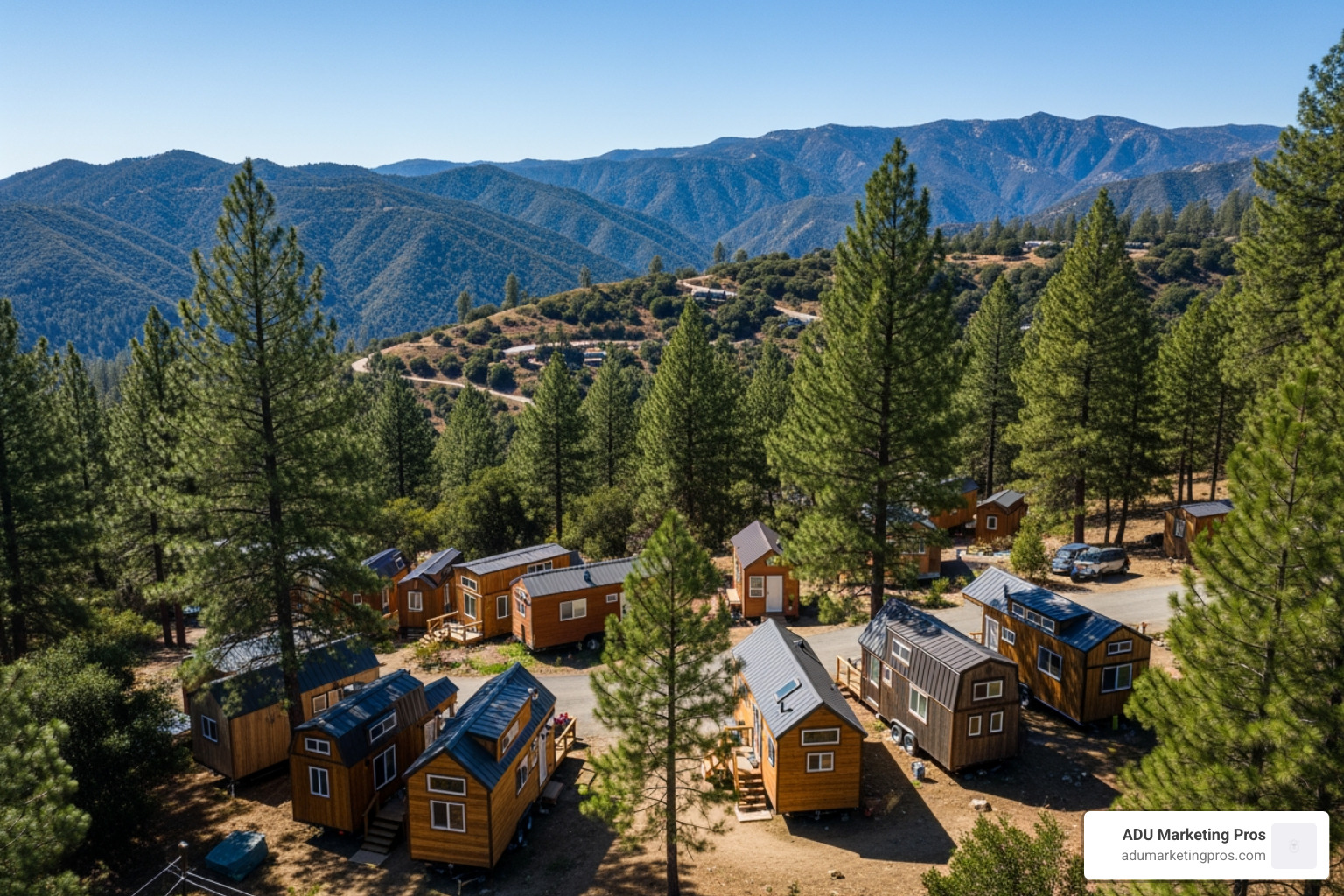
Located about an hour east of San Diego, Tiny House Block is a 3.5-acre haven for those who want to swap traffic jams for hiking trails. Founded by Melissa and Jon Block, this community sits on Mount Laguna at an elevation of approximately 6,000 feet. It offers a mix of short-term rentals and long-term stays, making it an ideal testing ground for those curious about the lifestyle.
It’s not just a place to park; it’s a lifestyle built around the Pine House Cafe and Tavern, where residents gather for meals and stories. The community is surrounded by the Cleveland National Forest, providing immediate access to the Pacific Crest Trail. For residents, the appeal lies in the “unplugged” nature of the location. While high-speed internet is available, the focus is on outdoor recreation and community bonding. If you enjoy the smell of pine and the crisp mountain air, this is one of the most unique spots in Southern California. The community often hosts workshops on sustainable living and mountain safety, fostering a deep sense of shared responsibility among its residents.
Paradise Tiny Home Community: Desert Luxury
Moving toward the Coachella Valley, the Paradise Tiny Home Community in Desert Hot Springs is redefining desert living. This isn’t just a “park”—it’s a revitalized 1960s community that is adding approximately 90 new tiny homes. We love this spot because it offers a “Palm Springs lifestyle” without the Palm Springs price tag. The desert environment provides a stark, beautiful backdrop for modern minimalist architecture.
They’ve partnered with builders like Decathlon Tiny Homes to offer models like the Athena, Zeus, and Poseidon, with prices starting in the high $70,000s and going up to $112,000+. Residents here get access to a resort-style pool, hot tub, and even pickleball courts. The community is designed for those who want a low-maintenance lifestyle with high-end perks. It’s a perfect example of how the places in Southern California that allow tiny houses are becoming more sophisticated and inclusive for all ages, catering to both young professionals and active retirees.
Park Delta Bay: The Northern Standard
Up in the San Francisco Bay Area’s backyard, Park Delta Bay in Isleton stands as a pioneer. It is often cited as the only legal tiny house community in Northern California that allows for permanent residency in a tiny home on wheels. Situated along the San Joaquin River, it’s a dream for those who love fishing, boating, and the unique culture of the California Delta.
With about 80 full-time residents, it’s a tight-knit “grassroots” community where tiny homes sit alongside custom RVs. The park offers a clubhouse, a community garden, and even a tennis court. The management at Park Delta Bay has been instrumental in working with local officials to ensure the community remains a stable and legal place for tiny home owners. The community vibe is distinctly “Delta,” with a slower pace of life and a focus on river activities. You can find more details on the Official Park Delta Bay Website.
Tiny Tranquility Redwoods: Spacious Living in Hiouchi
Further north, near the Oregon border, Tiny Tranquility Redwoods offers something rarely seen in the tiny world: space. Their sites range from 2,000 to 3,500 square feet, which is massive by tiny home standards! Located near Jedediah Smith State Park, this 27-acre park provides full hookups and a safe, secure environment surrounded by some of the largest redwood groves in the world.
The community is designed for those who want to be immersed in nature. The sound of the Smith River and the towering presence of ancient trees create a tranquil atmosphere that is hard to find in more urbanized areas. Residents often spend their days hiking, kayaking, or simply enjoying the silence of the forest. It is a premier destination for those who believe that living tiny should not mean living in a crowded space. The park also features a large common building with a kitchen, library, and fitness area, ensuring that even in the remote north, residents have access to modern conveniences.
Diverse Living Options: From Luxury Resorts to 55+ Villages
The beauty of Tiny home communities California is that they aren’t “one size fits all.” Depending on your stage of life, you might be looking for a high-energy social club or a quiet, age-restricted retreat. The market has matured to the point where developers are creating niche communities that cater to specific demographics, ensuring that everyone from digital nomads to retirees can find a place that feels like home.
The Rise of the Luxury Tiny Resort
Luxury resorts often focus on the “experience” of living, providing amenities that encourage an active, social lifestyle. These communities are designed for those who view their home as a basecamp for adventure. They often feature high-end finishes like quartz countertops, smart home technology, and expansive outdoor decks. The goal is to provide a five-star experience within a small footprint, proving that luxury is not about square footage but about quality and location.
Age-Restricted Communities: A New Chapter for Seniors
In contrast, 55+ villages prioritize comfort, accessibility, and a sense of security for those looking to enjoy their retirement years. These communities often feature single-level floor plans, wider doorways, and walk-in showers to accommodate aging in place. The social focus shifts toward community gardens, craft groups, and social mixers, providing a supportive environment where neighbors look out for one another.
| Feature | Luxury Tiny Home Resorts | 55+ Tiny Home Villages |
|---|---|---|
| Primary Vibe | Vacation/Active Lifestyle | Quiet/Social Retirement |
| Common Amenities | Pools, Spas, Pickleball | Clubhouses, Libraries, Gardens |
| Living Space | High-end finishes, modern tech | Accessible layouts, community gardens |
| Social Focus | Fitness, outdoor adventure | Social mixers, bingo, craft groups |
| Design Style | Mid-century modern, sleek | Traditional, cozy, functional |
Palm Canyon Mobile Club
If you want to live in a magazine spread, Palm Canyon Mobile Club is the place. It features mid-century modern tiny homes with luxury interiors and modern finishes. It’s located near downtown Palm Springs, giving residents easy access to high-end dining and shopping while maintaining a minimalist footprint. The homes here are often custom-designed to maximize natural light and provide a seamless indoor-outdoor living experience. With private decks and clerestory windows, these homes prove that small-scale living can be incredibly sophisticated. The community also features a dog park and a clubhouse that serves as a hub for social events.
Active Retirement in Modesto and Beyond
For those looking to spend their golden years in a smaller space, communities like Friendly Village of Modesto and Royal Palms offer a different kind of value. These are often categorized as 55+ communities where the focus is on social engagement and active retirement. You’ll find community gardens, fitness centers, and busy clubhouse event calendars.
These communities provide a sense of belonging that is often lost in traditional suburban neighborhoods. Residents look out for one another, and the shared spaces are designed to facilitate interaction. When planning these types of homes, many residents work with Architects in Southern California Who Design Tiny Houses to ensure their space is both stylish and accessible for long-term living, incorporating features like walk-in showers and single-level floor plans. This proactive approach to design ensures that the home remains functional for decades to come.
Legal Requirements and Costs for Tiny Home Living
We often tell our clients at ADU Marketing Pros that the “dream” of tiny living must be balanced with the “reality” of California regulations. Before you buy a trailer and a hammer, you need to understand the legal framework. California’s laws regarding tiny homes are among the most progressive in the nation, but they are also among the most complex.
Navigating the Zoning Maze: THOWs vs. ADUs
Most legal Tiny home communities California require your home to be RVIA (Recreational Vehicle Industry Association) certified. This means the home was built to ANSI A119.5 standards, ensuring it is safe for road travel and human habitation. This certification covers everything from electrical wiring to plumbing and structural integrity. If you built the home yourself, you may need a third-party certification from an organization like NOAH (National Organization of Alternative Housing) to park it in a professional village like Park Delta Bay.
Additionally, your home must be registered with the DMV. In California, tiny home RVs are generally capped at 400 square feet of gross interior space. If you’re looking for something larger or on a permanent foundation, you might be entering the realm of ADUs (Accessory Dwelling Units). ADUs are governed by different building codes (Title 24) and are typically treated as permanent structures. For more information on state-level housing policies, you can visit the California Department of Housing and Community Development. We’ve also written an extensive guide on the ADU vs Tiny House debate to help you navigate these differences.
Hidden Costs: From Impact Fees to Utility Hookups
While tiny homes are more affordable than traditional mansions, they aren’t “free.” The cost of living in a tiny home community involves more than just the purchase price of the unit. Here is a breakdown of what you can expect to pay in 2024 and 2025:
- Lot Rental Fees: In California, these typically range from $450 to $850 per month. For example, Lemon Cove Village starts at $450, while the newer Tiny Tranquility Redwoods starts around $750. These fees cover the use of the land and access to community amenities.
- Utility Costs: Most communities include water, sewer, and trash in the lot fee, but electricity is almost always billed separately. Because tiny homes are small, they are efficient to heat and cool, but California’s high electricity rates mean you should still budget between $60 and $120 per month for power.
- Initial Setup: Don’t forget the “move-in” costs. You’ll need 30/50 amp electrical cords, specialized septic pipes, and heated water hoses for colder climates. Professional leveling and blocking can cost up to $500, and some parks require skirting to be installed around the base of the home for aesthetic reasons.
Financing Your Tiny Dream
Because tiny homes on wheels are technically personal property (like an RV), you can’t get a traditional 30-year mortgage. However, the financial industry is catching up. Lenders like 21st Mortgage, Triad Financial Services, and Lightstream offer specialized loans for manufactured and tiny homes. These loans typically have shorter terms (10-20 years) and slightly higher interest rates than traditional mortgages. If you’re looking to build, check out our list of Tiny House Builders California to find professionals who understand these financing hurdles and can help you secure a loan. It is also worth noting that some credit unions in California are beginning to offer “green loans” for sustainable tiny home projects.
Social Impact: Homeless Support Villages and Affordable Initiatives
One of the most inspiring uses of Tiny home communities California is the rapid-response solution to the state’s homelessness crisis. These aren’t just “shelters”—they are transitional villages designed to provide dignity, safety, and a path to permanent housing. By providing a private, lockable space, these communities offer a level of stability that traditional congregate shelters cannot match.
The Humanitarian Side of Tiny Living
In Los Angeles, organizations like Hope the Mission have pioneered the use of “Pallet Shelters.” These are 64-square-foot units that can be assembled in minutes but provide a locking door, heat, air conditioning, and electricity. The speed at which these communities can be deployed is a game-changer for cities struggling with encampments. These villages are often built on city-owned land that was previously underutilized, such as parking lots or vacant industrial sites.
- Arroyo Seco Tiny Home Village: This is the largest in the country, featuring 117 units and 224 beds. It includes on-site laundry, restrooms, and communal dining areas. The village is staffed 24/7 with security and case managers.
- Alexandria Park: Located in North Hollywood, this village provides 103 homes and wrap-around services like case management, mental health support, and job training. The goal is to move residents into permanent housing within 90 to 180 days.
These communities are built on existing asphalt lots or underutilized city land to minimize environmental impact and provide 24-hour security. You can find more about these life-changing projects at the Tiny Homes Villages Information page.
Success Stories: From the Streets to a Front Door
In Northern California, the Woodland Opportunity Village is taking a slightly different approach by building 12 duplexed tiny homes (380 square feet each) on slab foundations. These homes meet the full California building code and are powered by solar energy. This project uses HUD Project-Based Vouchers to ensure that families and individuals can live stably for 20 to 40 years. It represents a more permanent version of the tiny home solution, blending the benefits of small-scale living with the security of traditional construction. Residents of these villages often report a significant improvement in their mental health and a renewed sense of hope for the future, proving that a front door with a lock is a fundamental human need.
Frequently Asked Questions about Tiny Living
Are pets allowed in most tiny home communities California?
Yes! Most tiny home communities are very pet-friendly—after all, a tiny home with a dog is just a cozy pack! However, there are usually limits (typically two pets per site) and breed restrictions for insurance purposes. Places like Tiny Tranquility Redwoods even feature 15,000-square-foot dog parks. Just remember that leashes are usually required in common areas, and “poop duty” is mandatory to keep the community clean. Some parks even offer pet-washing stations and community-led dog walking groups.
What is the average monthly cost for a tiny home lot?
As of 2024 and 2025, you should expect to pay between $450 and $850 per month. This fee usually covers your “land,” water, sewer, and trash. Electricity is almost always metered separately. Some parks also have an annual rent increase of 3% to 5% to keep up with landscaping and maintenance costs. Compared to the average apartment rent in California, which often exceeds $2,500, this remains a highly affordable option, allowing residents to save for travel, retirement, or other life goals.
What legal standards apply to tiny home communities California?
To live in a professional park, your home generally needs to be built by an RVIA-certified manufacturer. This ensures the plumbing, electrical, and structural components meet national safety standards. You also need a DMV registration and, in some cases, a specific “park model” designation if your home is wider than 8.5 feet. Local zoning laws will also dictate whether you can live in your home full-time or if it is restricted to seasonal use. It is crucial to check the specific “Certificate of Occupancy” requirements for the county you plan to live in.
Can I build my own tiny home and park it in a community?
While many communities prefer professionally built homes for insurance reasons, some do allow DIY builds if they have been certified by a third party like NOAH. You will need to provide documentation that the home meets safety standards for electrical and gas systems. It is always best to check with the specific community manager before starting your build, as some parks have strict aesthetic guidelines regarding siding materials and roof pitches.
Do tiny homes hold their resale value?
Tiny homes on wheels are treated more like vehicles or RVs, meaning they can depreciate over time. However, well-maintained homes from reputable builders often hold their value better than traditional RVs due to their high-quality construction and the high demand for affordable housing in California. Tiny homes on permanent foundations (ADUs) typically increase the value of the property they are built on, often providing a 100% or greater return on investment in high-demand markets like San Francisco or Los Angeles.
How do I handle mail and a permanent address?
Most tiny home communities provide residents with a dedicated mailbox or a central mail room. For those who are more mobile, services like Escapees RV Club or UPS Store mailboxes provide a permanent street address for banking and DMV purposes. In established villages like Park Delta Bay, your lot number serves as your apartment number, making it easy to receive packages and official correspondence.
Conclusion
The future of housing in California is getting smaller, smarter, and more sustainable. Whether you are drawn to the mountain air of Mount Laguna, the luxury of Desert Hot Springs, or the social mission of Los Angeles’ transitional villages, Tiny home communities California offer a path forward that values experiences over square footage. The movement is a testament to the resilience and creativity of Californians who are unwilling to be priced out of their own state.
The Long-Term Outlook for California’s Housing Market
As we look toward the end of the decade, we expect to see even more integration of tiny homes into the urban fabric. With the continued success of ADU legislation and the growing acceptance of moveable tiny houses, the “tiny” lifestyle is moving from the fringes into the mainstream. This shift is not just about housing; it’s about a fundamental change in how we define success and community. By choosing to live with less, residents are finding they have more time, more money, and more freedom to pursue what truly matters.
At ADU Marketing Pros, we are proud to support the firms and architects who are building this minimalist future. Based in San Jose, we specialize in helping ADU construction and architecture firms stand out in this competitive market. We use targeted SEO strategies and data-driven insights to help builders connect with the people who are ready to downsize their lives and upsize their freedom. We believe that by highlighting these communities, we can help more people find the housing security they deserve.
If you’re ready to explore more about where you can settle down, check out our guide on Places in Southern California that Allow Tiny Houses to start your journey. Living tiny isn’t just a trend—it’s a movement toward environmental stewardship, financial independence, and a more intentional way of life. We’ll see you out there on the small side of life!