
Why Tiny Home Financing is Different from Traditional Mortgages
Tiny home financing presents a unique puzzle that diverges sharply from the well-trodden path of buying a traditional house. While a conventional home purchase is synonymous with a 15- or 30-year mortgage, the world of tiny homes—typically defined as dwellings between 100 and 400 square feet—operates under a different set of financial rules. These compact, efficient homes often fall into a gray area that leaves them outside standard lending criteria, requiring prospective owners to become savvy navigators of alternative funding.
The tiny home movement itself is a response to the desire for a simpler, more financially free, and environmentally conscious lifestyle. However, the very affordability that makes them attractive is a primary reason they are difficult to finance conventionally. With prices for professionally built homes ranging from an accessible $28,000 to a more feature-rich $87,000 or more, they often fall below the minimum loan amounts that major banks are willing to service. Lenders have internal costs for originating any loan, and a small loan on a tiny home may not be profitable enough to justify the paperwork and risk.
Furthermore, the classification of the home is paramount. A tiny home built on a permanent foundation may be considered real estate, but the vast majority of tiny homes are built on wheels (THOWs). Lenders view these as personal property, akin to an RV or a vehicle, not real property. This distinction is the single most significant barrier to securing a traditional mortgage. This guide is designed to illuminate the alternative financing landscape, helping you understand which loan type is the right fit for your unique situation—whether you’re buying a pre-built tiny home, embarking on a DIY project, or adding a backyard cottage to your existing property.
Quick Answer: Your Main Financing Options
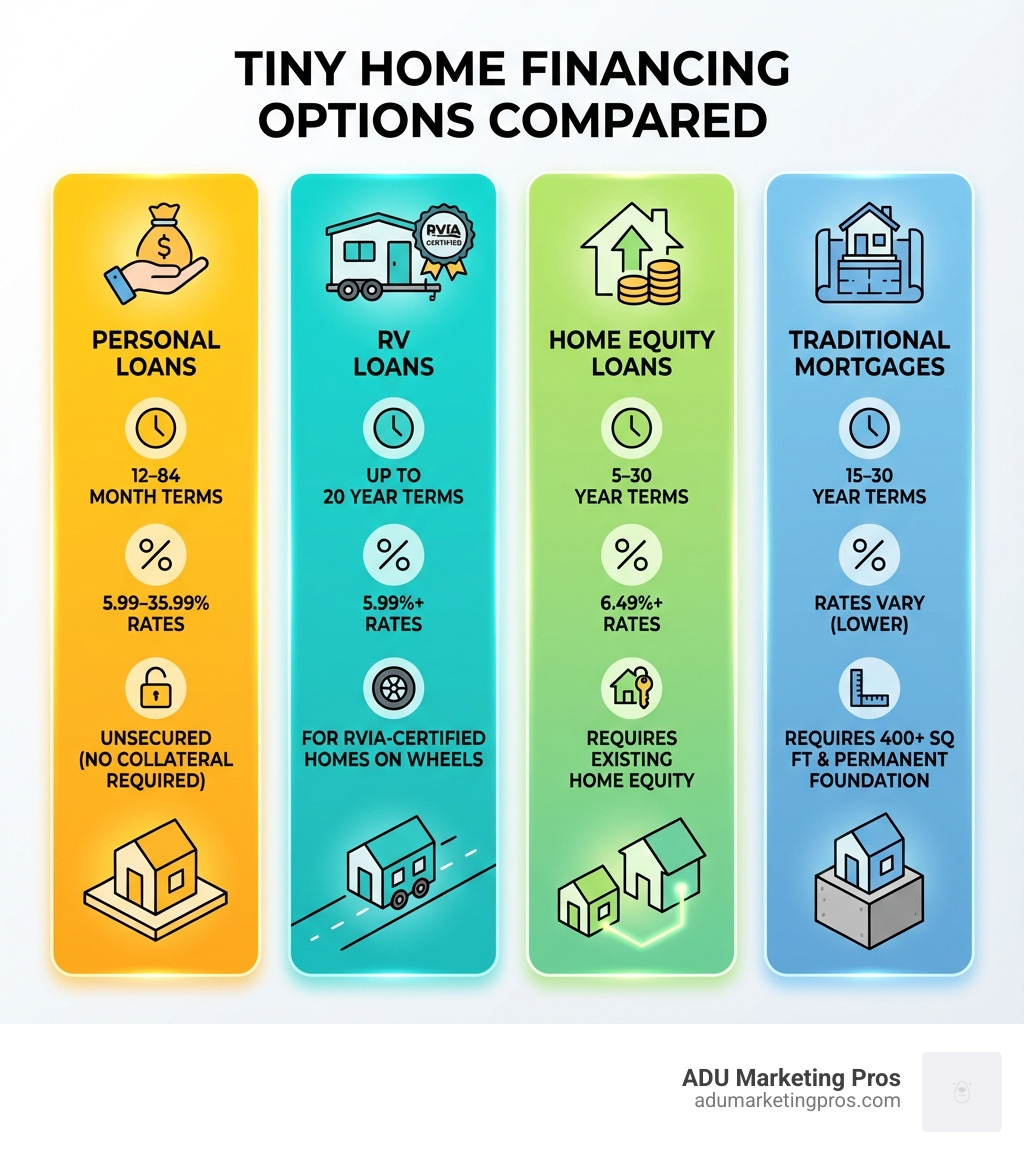
- Personal Loans: These are unsecured loans, meaning no collateral is required. You can borrow from $1,000 to $50,000+ with repayment terms of 12-84 months. Interest rates vary widely based on credit, from 5.99% to 35.99%+, making them a flexible but potentially costly option.
- RV Loans: Ideal for tiny homes on wheels that are certified by the RV Industry Association (RVIA). These are secured loans using the home as collateral, offering amounts of $5,000+ with longer terms up to 20 years and more favorable rates starting around 5.99%.
- Home Equity Loans/HELOCs: For existing homeowners, this option allows you to borrow against your home’s equity. Rates can be as low as 6.49% with long repayment terms of 5-30 years, making it a powerful tool for financing an ADU or backyard tiny home.
- Builder Financing: Many tiny home manufacturers offer direct financing through partnerships with specialized lenders. This streamlines the process, but rates and terms can vary significantly between builders.
- Cash: The simplest route, avoiding interest and debt. An estimated 68% of tiny home owners have no mortgage, a testament to the affordability of the lifestyle and the challenges of financing.
Tiny home financing glossary:
Why Traditional Mortgages Usually Don’t Work for Tiny Homes
Traditional mortgages are the bedrock of the American housing market, but they are built on a rigid framework designed for standard single-family homes. Tiny homes, with their unique characteristics, fail to meet the strict criteria of these conventional loans for several fundamental reasons.
-
Property Classification: A mortgage is a loan secured by real property—land and any permanent structures on it. A tiny home on wheels (THOW) is legally classified as personal property or a chattel, much like an RV, boat, or car. Since it’s not permanently affixed to land, it cannot be financed with a real estate mortgage. Even tiny homes on foundations can face hurdles if they don’t meet local building codes for permanent residences.
-
Minimum Loan Amounts: Lenders incur significant administrative and underwriting costs to originate a mortgage—according to Freddie Mac, the average cost is a staggering $11,600. To make a profit, they need to issue loans of a certain size, often setting minimums at $50,000 or even $100,000. With many tiny homes costing less than this threshold, the loan simply isn’t economically viable for the lender.
-
Minimum Size Requirements: Government-backed loan programs, which make up a huge portion of the mortgage market, have explicit size standards. For example, Federal Housing Administration (FHA) loans generally require a property to be at least 400 square feet to be considered a habitable dwelling. Since most tiny homes fall well below this, they are automatically disqualified.
-
Foundation Requirements: A cornerstone of mortgage lending is the requirement for a permanent foundation. This ensures the home is a stable, immovable part of the real estate. Acceptable foundations include concrete slabs, crawl spaces, and basements. The trailer chassis that serves as the foundation for a THOW does not meet this critical requirement, immediately excluding the majority of tiny homes from mortgage consideration.
-
Appraisal Challenges: Lenders require a professional appraisal to determine a property’s market value and ensure they aren’t lending more than the asset is worth. Appraisers rely on “comps”—recent sales of comparable properties in the area. The tiny home market is still a niche, with highly customized and varied units, making it incredibly difficult to find suitable comps. This lack of standardized valuation data presents a major risk for lenders.
-
Securitization and the Secondary Market: Large lenders don’t typically hold onto the mortgages they originate. They bundle them together and sell them to investors on the secondary market as mortgage-backed securities (MBS). This process requires a high degree of uniformity in loan size, property type, and borrower qualifications. Non-standard, small-dollar tiny home loans are like square pegs in the round holes of the securitization machine, making them unattractive and illiquid assets for major financial institutions.
Because of their innovative design, smaller price tag, and ambiguous legal status, tiny homes consistently fall through the cracks of the traditional mortgage system. This reality forces aspiring owners to look toward more creative and flexible financing solutions.
Your Guide to Alternative Tiny Home Financing Options

Since traditional mortgages are rarely an option, a diverse ecosystem of alternative financing has emerged to serve the tiny home community. These pathways can make your dream a reality, whether you’re building a small dwelling in your California backyard or buying a mobile unit to explore the country. Let’s break down the most viable loan options.
Personal Loans: The Flexible Funding Solution
Personal loans are one of the most common methods for financing a tiny home due to their flexibility. As they are typically unsecured loans, they don’t require you to put up any collateral. Lenders approve you based on your creditworthiness, providing a lump sum of cash that you can use for any purpose—buying a completed home, purchasing raw materials for a DIY build, or covering site preparation costs.
Pros:
- Fast Funding: Online lenders can often approve and disburse funds within a few business days, much faster than the weeks-long mortgage process.
- Flexible Use: The money is yours to use as you see fit, which is ideal for the varied expenses of a tiny home project.
- No Collateral Required (Usually): Your other assets, like a car or primary home, are not at risk if you default on an unsecured loan.
- Wide Accessibility: Many online lenders, traditional banks, and credit unions offer personal loans, creating a competitive market.
Cons:
- Higher Interest Rates: To compensate for the lack of collateral, lenders charge higher interest rates. Rates can range from 5.99% for excellent credit to over 35.99% for those with weaker credit profiles.
- Shorter Repayment Terms: Terms typically range from 1 to 7 years (12 to 84 months). This results in higher monthly payments compared to a long-term RV or home equity loan.
- Lower Loan Amounts: Most personal loans top out around $50,000, though some lenders go up to $100,000. This may not be enough to cover a high-end, custom-built tiny home.
Your credit score is the single most important factor in securing a personal loan with a favorable rate. For more insights, check our guide on ADU financing options.
RV Loans: The Go-To for Homes on Wheels
If your tiny home is mobile and built to specific standards, an RV loan is an excellent financing route. These are secured loans, with the tiny home itself serving as collateral. The critical requirement is that your tiny home must have RV Industry Association (RVIA) certification. This certification ensures the home complies with over 500 safety standards for fire, electrical, plumbing, and structural integrity, giving the lender confidence in the asset’s quality and value.
Pros:
- Longer Terms: RV loans offer much longer repayment periods than personal loans, often up to 15 or 20 years. This significantly lowers the monthly payment.
- Lower Interest Rates: Because the loan is secured by the home, rates are more competitive, often starting at 5.99% for borrowers with excellent credit.
- Higher Loan Amounts: Lenders are comfortable financing the full cost of most RVIA-certified tiny homes.
Cons:
- Strict Certification Requirement: Only for mobile homes with RVIA certification. Homes without this seal, including most DIY builds and homes on foundations, are ineligible.
- Home is Collateral: If you fail to make payments, the lender has the right to repossess your tiny home.
- Primary Residence Restrictions: Some lenders are hesitant to finance a tiny home intended for full-time, year-round living, as their loan products are designed for recreational vehicles.
Understanding the distinction between an ADU and a tiny home on wheels is crucial for financing. Learn more here: ADU vs Tiny House.
Home Equity Loans & HELOCs: Leveraging Your Existing Property
For current California homeowners, home equity loans and Home Equity Lines of Credit (HELOCs) are among the most powerful and cost-effective financing tools, especially for building a tiny home as an Accessory Dwelling Unit (ADU) in your backyard.
- Home Equity Loan: This functions as a second mortgage. You borrow a lump sum against your home’s equity and repay it over a set term with a fixed interest rate. This is ideal if you know the exact cost of your tiny home project.
- HELOC: This is a revolving line of credit secured by your home. You can draw funds as needed up to your credit limit, paying interest only on the amount you’ve borrowed. The interest rate is typically variable. This is perfect for DIY builds where costs are incurred over time.
Pros:
- Excellent Interest Rates: Because your primary residence is the collateral, these loans offer some of the lowest rates available, significantly cheaper than personal loans.
- Long Repayment Terms: Terms can extend from 5 to 30 years, allowing for very manageable monthly payments.
- Substantial Loan Amounts: You can often borrow up to 85% of your home’s appraised value, minus your outstanding mortgage balance, providing significant funding.
Cons:
- Requires Homeownership with Equity: This option is only available to property owners who have built up sufficient equity in their homes.
- Highest Risk: You are putting your primary home on the line. If you default on the loan, the lender can foreclose on your house.
- Variable Rate Risk (for HELOCs): With a HELOC, your monthly payments can increase if interest rates rise, which can complicate budgeting.
For more on financing your ADU project, visit our page on Construction Loans for ADU.
Builder & Manufacturer Financing
Recognizing the financing gap, many tiny home builders have started offering their own financing solutions. They typically do this by partnering with a network of specialized lenders, credit unions, or fintech companies that understand the tiny home market. This creates a convenient, one-stop-shop experience for the buyer.
Pros:
- Streamlined and Convenient: The builder often guides you through the application process, handling much of the paperwork.
- Specialized Knowledge: You’re working with lenders who are familiar with tiny homes and won’t be scared off by the non-traditional nature of the asset.
- High Approval Rates: Because the financing is tied to a sale, these programs are designed to get buyers approved.
Cons:
- Limited Shopping Power: You may not be getting the most competitive rate on the market, as you’re limited to the builder’s partners. It’s always wise to compare their offer with one from your own bank or credit union.
- Tied to a Specific Builder: This financing is only available if you purchase a home from that particular manufacturer.
- Variable Terms and Quality: The rates, down payment requirements, and terms can vary dramatically. Some programs, like those offered by Tumbleweed Houses, are well-established, while others may be less favorable. Always read the fine print.
Key Factors to Consider Before You Borrow
A successful tiny home financing strategy goes far beyond securing a loan; it requires a holistic understanding of the total cost of ownership, your financial readiness, and the long-term value of your investment.
Understanding the Full Cost of Your Tiny Home
The sticker price of a tiny home is just the starting point. A comprehensive budget is essential to determine how much you truly need to borrow. Here’s a checklist of potential costs:
- The Home Itself: This could be the purchase price of a finished home ($60,000 – $100,000+), the cost of a shell ($20,000 – $40,000), or the total for materials in a DIY build (starting around $20,000).
- Land: This is a major variable. Will you buy land, lease a spot in a tiny home community, or park on a friend’s property? Land mortgages are difficult to obtain and often require a 20% minimum down payment. Explore options like Land for Sale in Southern California for Tiny Houses.
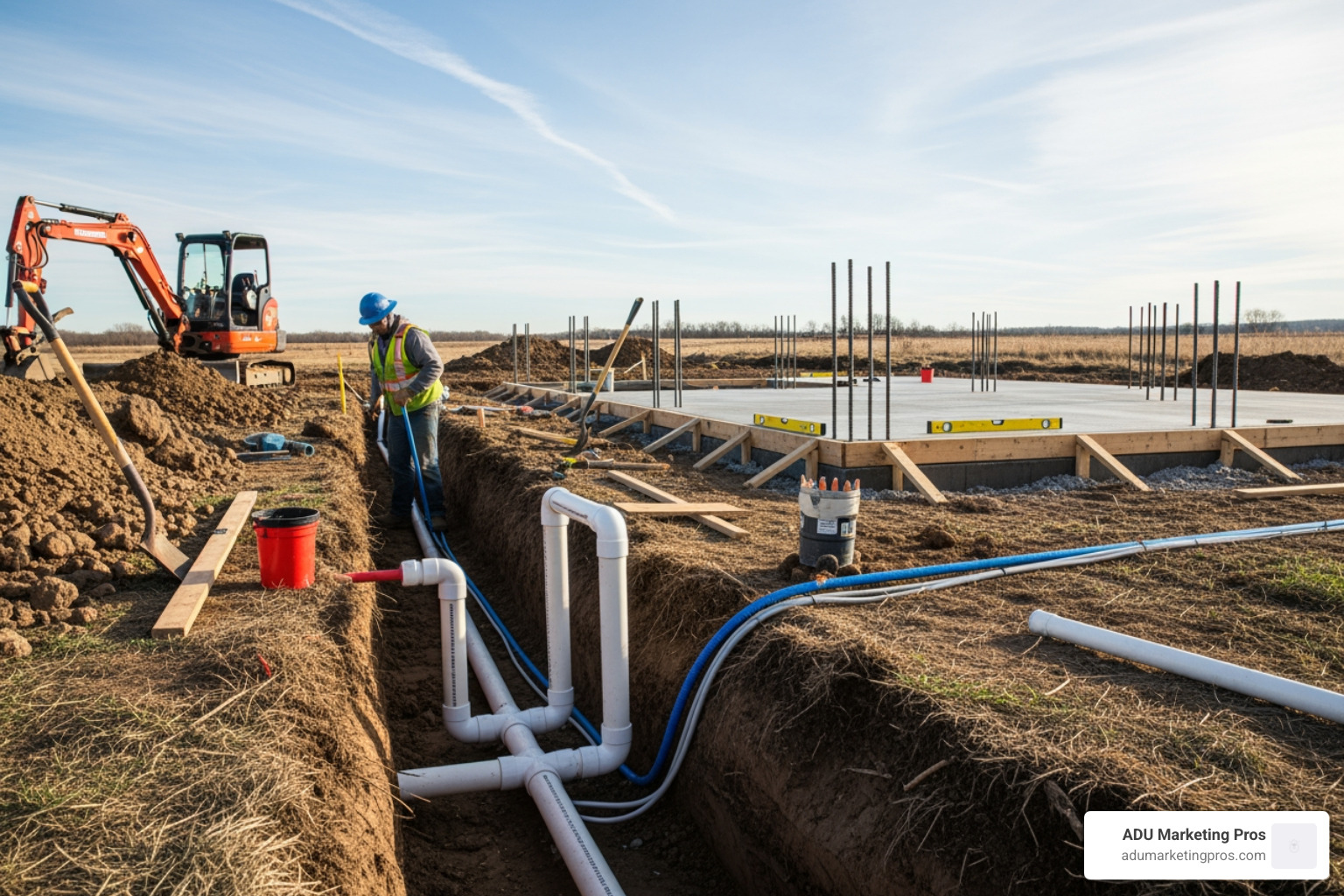
- Site Preparation & Foundation: This includes clearing and leveling the land, and pouring a concrete slab or installing another type of permanent foundation if applicable.
- Utility Hookups: Connecting to the grid is a significant expense. This can include costs for water lines, sewer or septic system installation, and electrical service, potentially running into tens of thousands of dollars.
- Permits, Zoning, and Fees: Navigating local regulations is critical. California cities like Los Angeles and San Jose have specific rules for tiny homes, especially those classified as ADUs. Researching your local planning department and budgeting for permit fees is essential to avoid costly delays and legal issues.
- Delivery/Transportation: If you’re buying a pre-built home, factor in the cost of having it transported to your site.
- Taxes and Insurance: You will need to pay sales tax on the home and secure insurance, which can be complex (more on this in the FAQ).
The Role of Your Credit Score and Financial Health
Your financial profile is the key that unlocks financing. Lenders will scrutinize your credit score, income, and debt-to-income (DTI) ratio. A higher credit score (ideally 700+) will secure the best interest rates and terms. Lenders need to see proof of stable income to be confident you can handle the monthly payments. Your DTI ratio, which is your total monthly debt payments divided by your gross monthly income, should ideally be below 43%. Before applying, take steps to improve your financial health: pay down credit card balances, check your credit report for errors, and avoid taking on new debt. While some loans don’t require a down payment, saving a 10-20% down payment can significantly lower your loan amount, reduce your monthly payments, and improve your chances of approval.
Long-Term Value: Depreciation vs. Appreciation
Unlike traditional real estate, which has a long history of appreciation, the long-term value of a tiny home is more nuanced.
- Depreciation of Mobile Tiny Homes: A tiny home on wheels is personal property and, like an RV or a car, tends to depreciate over time. The wear and tear from potential travel and exposure to the elements contribute to this loss in value.
- Potential Appreciation for Homes on Foundations: A tiny home built on a permanent foundation, especially when legally permitted as an Accessory Dwelling Unit (ADU) in a hot real estate market like California, has a much stronger chance of appreciating. In this case, the value is tied to the land and the added utility it brings to the property. It becomes part of the real estate, which historically appreciates.
- Investment Perspective: For most, a tiny home should be viewed primarily as a lifestyle choice that offers significant savings on housing costs, rather than a traditional appreciating real estate investment. The return on investment comes from reduced expenses and increased financial freedom.
Choosing the Right Tiny Home Financing for Your Situation
To help you decide, consider these scenarios:
- Scenario 1: The DIY Builder with Home Equity. You own a home in San Jose and want to build a tiny home ADU in your backyard for $75,000. A HELOC is your best option. It gives you the flexibility to draw funds as you need them for materials and labor, and it offers a low interest rate.
- Scenario 2: The First-Time Buyer. You have a good credit score (720) and $10,000 in savings. You want to buy a $60,000 RVIA-certified tiny home to live in full-time. An RV loan is the ideal choice, offering a long term and a reasonable interest rate. A personal loan could also work, but the monthly payments would be much higher.
- Scenario 3: The Quick Purchase. You found a used tiny home for $35,000 and need funding quickly before it’s sold. A personal loan from an online lender is the fastest option, allowing you to secure the cash in a matter of days.
| Feature | Personal Loan | RV Loan | Home Equity Loan/HELOC |
|---|---|---|---|
| Loan Amount | $1,000 – $50,000+ | $5,000 – Millions | Up to $500,000+ |
| Interest Rate | 5.99% – 35.99%+ | Starts 5.99% | Starts 6.49%+ |
| Term Length | 1 – 7 years | Up to 20 years | 5 – 30 years |
| Collateral | Unsecured (usually) | Tiny home on wheels | Primary residence |
| Best For | Flexible use, fast funding | RVIA-certified mobile homes | Homeowners with equity, ADU builds |
Frequently Asked Questions About Tiny Home Financing
Navigating the world of tiny home loans can bring up many questions. Here are answers to some of the most common inquiries.
What credit score do I need for a tiny home loan?
The required credit score varies significantly depending on the loan type and lender. A higher score will always result in more options and lower interest rates.
- Personal loans: While some lenders work with scores as low as 600, you’ll generally need a score of 660+ for a decent chance of approval. To qualify for the best rates (under 10%), aim for a score of 720 or higher.
- RV loans: Lenders are stricter here because the loan is larger and longer. They typically require a minimum credit score between 680 and 700.
- Home Equity Loans/HELOCs: Because your home is on the line, lenders look for borrowers with a proven track record of responsible credit use. A score of 680 is often the minimum, with the best terms reserved for those with scores of 740+.
Are there any special lenders for tiny homes?
Yes. While most large national banks will turn you away, a niche market of lenders has stepped up to serve the tiny home community. Your best bets are:
- Online Lenders: Companies like LightStream (a division of Truist Bank) and SoFi have become popular choices. They offer streamlined online applications for personal loans and often have specific marketing for tiny house financing.
- Local Credit Unions: Credit unions are member-owned and often have more flexible lending criteria than big banks. If you have a good relationship with a local credit union, they may be willing to work with you on a unique loan.
- Builder-Partnered Lenders: Many tiny home builders in California and across the country offer in-house financing through partners who specialize in this market. This can be a convenient option, but always compare their offer to what you can get on your own.
How do I finance a tiny home I build myself (DIY)?
Financing a DIY build is one of the biggest challenges because there is no finished product for a lender to appraise or use as collateral. The most common methods are:
- Personal Loans: You can take out a personal loan for the estimated total cost of materials and get the funds in a lump sum. This is straightforward but may have a high interest rate.
- HELOCs: If you are a homeowner, a Home Equity Line of Credit is the ideal tool for a DIY project. You can draw funds as you need them for each stage of construction, from buying the trailer to installing the windows, and you only pay interest on what you use.
- Savings: The most common method for DIY builds is paying with cash. Many people build their homes in stages, buying materials as they save up the money. This is the slowest approach but avoids debt entirely.
- Construction Loans: These are extremely rare for DIY tiny homes. They are complex, require a licensed builder, and are typically reserved for larger, permanently-sited homes.
How do I get insurance for my tiny home?
Financing and insurance are closely linked; any lender providing a secured loan (like an RV or home equity loan) will require you to have insurance. The type of insurance depends on your home’s classification:
- RVIA-Certified THOW: These homes are the easiest to insure. You can get a standard RV insurance policy, which covers liability and physical damage.
- Non-Certified THOW: This is more difficult. You may need to find a specialty insurer who can write a custom policy for a \”mobile home\” or a \”custom-built travel trailer.\”
- Tiny Home on a Foundation: If your home is legally permitted and built on a permanent foundation, you can typically get a standard homeowner’s insurance policy or add it to your existing policy as an ADU.
Conclusion: Paving Your Path to Tiny Living
The journey to owning a tiny home is a departure from the conventional path to homeownership, and its financing is no exception. While traditional mortgages are largely incompatible with the size, mobility, and classification of most tiny homes, this obstacle has spurred the growth of a vibrant and flexible alternative financing market. Your dream of a simpler, more affordable lifestyle is not out of reach.
A robust toolkit of solutions is available to aspiring tiny home owners. Flexible personal loans offer speed and versatility, specialized RV loans provide long-term affordability for certified mobile homes, powerful home equity options allow current homeowners to invest in their property, and convenient builder financing streamlines the purchasing process. The best choice hinges on a careful assessment of your home’s type (wheels vs. foundation), your personal financial health, and your tolerance for risk.
At ADU Marketing Pros, we specialize in the nuances of non-traditional housing. We know that for residents of California, success depends not just on financing, but on diligent research into local zoning and building codes in places like San Jose, Los Angeles, and San Diego. Understanding these regulations is the crucial first step to legally placing a tiny home or ADU.
By arming yourself with knowledge and choosing the right financial strategy, you can overcome the unique hurdles of this market. Ready to take the next step? Explore places in southern california that allow tiny houses to begin your journey. With careful planning, your tiny home dream can become a beautiful and financially sound reality.