
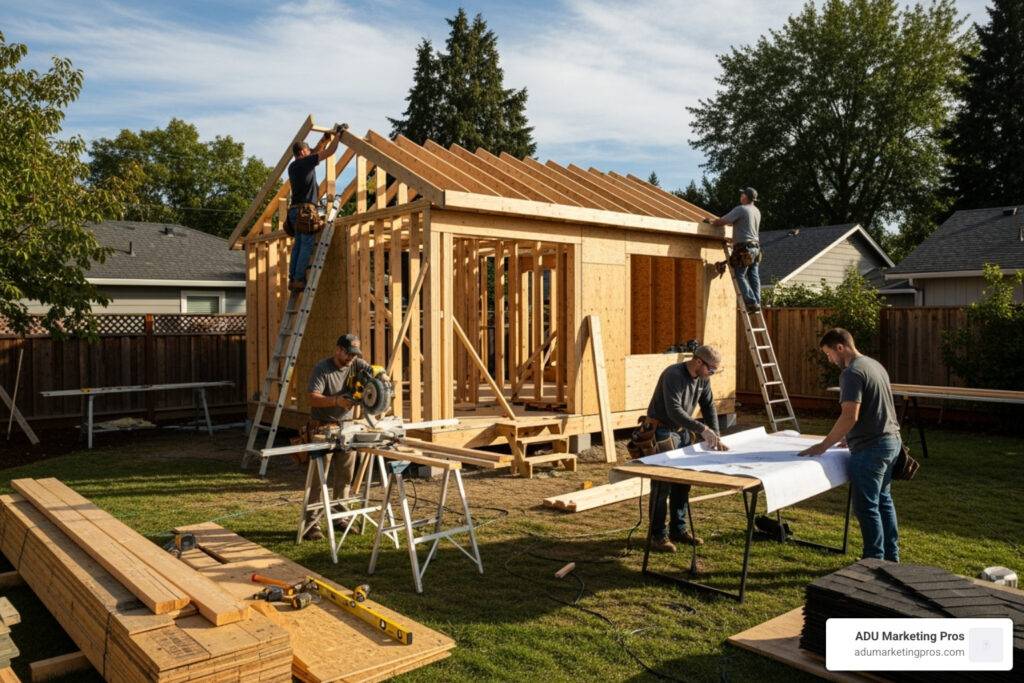
Why Finding the Right ADU Contractor Makes All the Difference
Finding qualified adu construction near me begins with a simple truth: not all contractors are equipped for the unique challenges of accessory dwelling units. An ADU is not just a small house; it’s a complex project built under specific constraints. The right professional is your key to navigating complex local regulations, ensuring quality craftsmanship, and maximizing your property’s potential. Hiring a generalist can lead to significant setbacks, including budget overruns, failed inspections, and even orders to tear down non-compliant work.
An experienced ADU builder understands the specific hurdles involved, such as connecting new utilities to existing systems, working within tight site access, and managing the intricate permitting process that often involves multiple municipal departments. They bring a level of foresight that a general remodeler may lack, anticipating potential issues before they become costly problems.
Quick Guide to Finding ADU Contractors:
- Use online directories and local resources: Platforms like Houzz are excellent for finding local professionals with dedicated ADU portfolios. Also, check with local chapters of builder associations.
- Verify credentials rigorously: Don’t just ask if they are licensed and insured; verify their contractor’s license on your state’s official board website. Ensure they carry both general liability and workers’ compensation insurance to protect you from liability.
- Review portfolios and speak with references: Look for a portfolio rich with completed ADU projects similar to what you envision. Ask for contact information for the last 3-4 ADU clients they worked with and inquire about their experience with communication, budget management, and final quality.
- Get multiple detailed, itemized bids: A one-page estimate is a red flag. A professional bid will break down costs for labor, materials, permits, and other line items, allowing for a true apples-to-apples comparison.
- Confirm they handle the entire permit process: An experienced ADU contractor doesn’t just submit plans; they manage the entire process, including responding to plan check comments, coordinating with city planners, and scheduling all necessary inspections.
The ADU market is booming as a solution to housing shortages and a smart investment. Success, however, hinges on your choice of contractor. ADU construction involves unique zoning laws, building codes, and permit processes that differ from standard home improvements. A general remodeler may lack the specialized knowledge required, leading to costly delays and compliance issues. Your contractor’s expertise in these specific areas will determine your project’s long-term success and return on investment.
The Ultimate ADU Primer: What You Need to Know Before You Build
Before starting your adu construction near me search, it’s essential to understand what an ADU is, the powerful benefits it can unlock, and the different forms it can take. This foundational knowledge will empower you to make informed decisions throughout your project.
What Exactly is an Accessory Dwelling Unit (ADU)?
An Accessory Dwelling Unit (ADU) is a complete, independent living space located on the same lot as a primary single-family home. To legally qualify as an ADU, a unit must contain its own kitchen, bathroom, sleeping area, and a separate entrance. It is functionally a self-contained home, not just an extra room or a pool house without full living facilities. The legal definition has been shaped by state-level legislation in places like California, Oregon, and Washington, which aim to standardize rules and encourage development to ease housing crises.
You’ll hear ADUs called by many names, including granny flats, in-law suites, backyard cottages, and laneway houses. While an ADU functions as an independent home and often has its own address for mail and emergency services, it cannot be sold separately from the primary residence. It remains part of a single piece of real estate.
Unlocking Your Property’s Potential: The Benefits of an ADU
Building an ADU offers a versatile solution to many modern housing and lifestyle challenges, providing significant returns.
- Rental income generation: This is a primary motivator for many homeowners. A well-designed ADU can create a substantial monthly revenue stream that can offset mortgage costs or provide financial freedom. For example, in a high-demand area, a one-bedroom ADU renting for $2,500 per month can generate $30,000 in annual gross income, turning an underutilized backyard into a powerful financial asset.
- Multi-generational living: ADUs provide an elegant solution for families seeking to live closer together. They allow for aging in place for elderly parents, giving them independence while keeping them near for support. They also offer an independent space for young adults saving for their own home, fostering family connection without sacrificing privacy.
- Flexibility and lifestyle enhancement: The use of an ADU can evolve with your needs. It can serve as a dedicated home office, providing crucial separation between work and life. It can also be a private guest house for visitors, a creative studio space, or a home base for a caregiver.
- Significant property value increase: An ADU adds valuable, permitted square footage and a flexible living option to your property, making it more attractive to a wider range of future buyers. While appraisals can sometimes be tricky, the market increasingly recognizes the value of a second unit, often leading to a substantial boost in your property’s overall worth.
Exploring the Different Types of ADUs
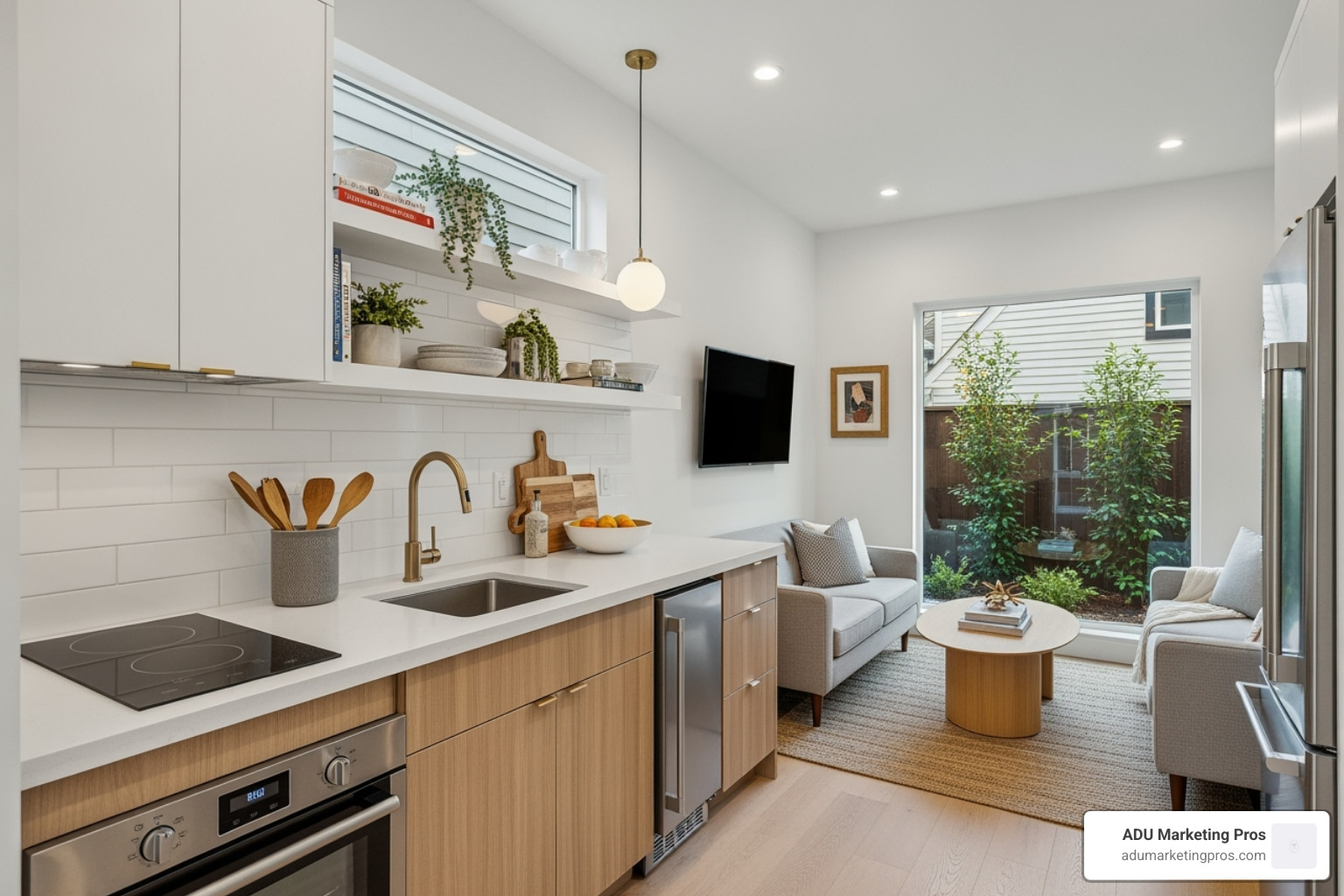
Your property’s layout, your budget, and local regulations will influence which type of ADU is the best fit for you.
- Detached New Construction: A standalone backyard cottage or small house. This type offers the most privacy and design freedom, often yielding the highest rental income and property value increase. However, it is typically the most expensive option due to the need for a new foundation, structure, and extensive utility trenching.
- Garage Conversions: A cost-effective and popular way to create an ADU by transforming an existing, often underused, garage. This is faster because the basic structure already exists. The main challenges include ensuring the existing foundation and framing meet code, upgrading to residential standards, and replacing the garage door with a proper entryway and facade.
- Above-Garage or Attached ADUs: Ideal for properties with limited yard space. An above-garage unit adds a second story to your garage, while an attached ADU is built as an extension of the main house. These are great for space efficiency but require careful engineering, fire-rated separation from the main structure, and consideration for noise transfer.
- Basement Conversions (or Cellar Conversions): A great option if you have suitable below-grade space. Key requirements include adequate ceiling height (typically at least 7 feet), proper moisture-proofing, and installing egress windows or doors for safety and code compliance. This can be a very discreet way to add a unit.
- Junior Accessory Dwelling Units (JADUs): Smaller units, typically under 500 sq. ft., created within the existing footprint of the primary home. A JADU may share a bathroom with the main house and must have an efficiency kitchen and an exterior entrance. They are the most affordable option but often come with an owner-occupancy requirement for either the main house or the JADU.
- Prefabricated ADUs: These units are built off-site in a factory and then transported and installed on your property. This method offers predictable costs and a faster on-site construction timeline. However, the advertised price often excludes significant costs like design, permits, foundation, utility hookups, and crane rental for installation. Design customization is also limited compared to a custom build.
Planning Your Budget: ADU Costs and Financing Options
Understanding the financial side of your adu construction near me project is crucial for confident planning. A realistic budget requires a deep dive into all potential expenses—both obvious and hidden—and a clear strategy for funding your investment.
What is the Typical Cost of Building an ADU?
The final cost of an ADU is a complex equation influenced by its size, type, level of finishes, site conditions, and geographic location. A project in a high-cost urban area will naturally cost more than one in a rural setting.
- Hard Costs vs. Soft Costs: It’s critical to budget for both. Hard costs are the tangible expenses of construction, including materials and labor for foundation, framing, roofing, plumbing, electrical, and finishes. Soft costs are the less visible but equally important expenses, which can account for 15-25% of your total budget. These include:
- Architectural and engineering plans
- Soil and survey reports
- City permit fees (planning, building, etc.)
- School and park impact fees (can be thousands of dollars)
- Utility connection fees
- Key Cost Factors:
- Size & Type: A larger, detached ADU requires more materials and labor than a smaller garage conversion.
- Finishes: The choice between standard vinyl flooring and high-end hardwood, or laminate countertops versus quartz, will significantly impact the budget.
- Site Conditions: A flat, easily accessible lot is far cheaper to build on than a sloped lot that requires extensive grading, retaining walls, or a complex foundation. The distance and difficulty of trenching for utility lines (sewer, water, gas, electric) is also a major variable.
| ADU Type | Estimated Cost Range (USD) | Key Cost Variables |
|---|---|---|
| Garage Conversion | $80,000 – $150,000 | Condition of existing structure, foundation upgrades, new utility runs, level of finishes |
| Detached New ADU | $150,000 – $350,000+ | Site prep, foundation type, utility trenching distance, site access, size, finishes |
| Prefabricated ADU | $100,000 – $250,000 | Base unit cost plus transport, crane rental, foundation, utility hookups, site work |
These are broad estimates; your actual costs will depend on your specific project and market. Always get detailed bids for an accurate picture.
How to Finance Your ADU Project
Several financing options are available to fund your ADU investment. The best choice depends on your financial situation, home equity, and risk tolerance.
- Home Equity Line of Credit (HELOC): A flexible credit line based on your home’s equity. Pros: You only draw (and pay interest on) what you need, making it perfect for paying contractors in stages. Cons: Interest rates are typically variable and can rise over time.
- Cash-Out Refinancing: You replace your current mortgage with a new, larger one and take the difference in cash to fund the project. Pros: You get a single loan, often at a fixed interest rate that is lower than other loan types. Cons: You are refinancing your entire home, which resets the clock on your mortgage and involves closing costs.
- Construction Loans: These are short-term loans specifically for building projects. Funds are released in stages (draws) as construction milestones are met and verified by an inspector. Pros: Tailored for construction, interest is only paid on funds drawn. Cons: Can have higher interest rates and more complex application and management processes. They typically need to be converted to a permanent mortgage upon completion.
- Renovation Loans (e.g., FHA 203k): Government-backed loans that finance both the purchase or refinance of a home and the cost of its renovation. Pros: Based on the home’s future value after the ADU is built, which can allow you to borrow more. Cons: Involve significant paperwork and government oversight.
Leveraging Government Incentives and Programs
To encourage ADU construction, some governments offer financial assistance. These programs are often competitive and have specific eligibility requirements, so it’s vital to act quickly and check official sources.
In California, the California ADU Grant Program has provided up to $40,000 in grants to help eligible low- to moderate-income homeowners cover pre-development and non-recurring closing costs. These funds are aimed at making ADU creation more accessible.
Canada has launched an innovative approach through the Canada Mortgage and Housing Corporation (CMHC). This program lets eligible homeowners add the projected value of the new ADU to their property’s current value and borrow against the combined total, increasing their borrowing power significantly.
Always check your local city and county websites for additional incentives. Many municipalities offer waivers for impact fees or have streamlined permitting processes for pre-approved plans, which can save you thousands of dollars and months of time. An experienced ADU contractor will be knowledgeable about current programs in your area.
From Blueprint to Build: Navigating the ADU Construction Process
Building an ADU is a marathon, not a sprint. Understanding the key phases, from initial design concepts to final inspections, will help you set realistic expectations and navigate the journey with confidence. This section outlines the typical ADU path.
Step 1: Feasibility, Design, and Key Considerations
Before you hire an architect, the first step is a feasibility study. An experienced ADU consultant or contractor can perform an initial analysis of your property against local zoning codes to determine what you can build—including size, height, and placement. This prevents you from spending money on designs that will never be approved.
Once feasibility is confirmed, the design phase begins. Hiring an architect or designer with specific ADU experience is crucial for maximizing functionality in a compact space. You’ll generally choose between two paths:
- Pre-approved Plans: Many cities, like San José offer to speed up approvals, provide a gallery of pre-approved ADU plans. Pros: This can significantly shorten the permit review time. Cons: Your design choices are limited, and the plan may not be perfectly suited to your lot or needs.
- Custom Design: A design tailored specifically to your property, needs, and aesthetic. Pros: Complete creative control and optimization of your specific lot. Cons: Higher upfront design costs and a longer permit approval process.
Key design principles for high-performing ADUs include:
- Space Optimization: Incorporate multi-functional furniture, high ceilings, and clever storage solutions (like built-in cabinets and lofted beds) to make the space feel open and uncluttered.
- Indoor-Outdoor Connection: Using large glass doors, a patio, or a deck can dramatically expand the perceived living space and make a small unit feel much larger.
- Energy Efficiency: Prioritize high-quality insulation, energy-efficient windows, and modern HVAC systems (like mini-splits) to reduce long-term utility costs for you or your tenant.
- Universal Design: Incorporate features like no-step entries, wider doorways, and walk-in showers. This makes the unit accessible to people of all ages and abilities, increasing its long-term flexibility and value.
Step 2: Navigating Zoning Laws, Building Codes, and Permits
This is often the most complex and time-consuming phase, and where an experienced adu construction near me contractor is invaluable. Regulations vary dramatically between cities.
- Zoning Requirements: These rules dictate what you can build. Key factors include setbacks (the required distance from your structure to property lines, other buildings, and public right-of-ways), maximum lot coverage (the percentage of your lot that can be covered by structures), height limits, and parking requirements (though many states and cities are now waiving parking requirements for ADUs).
- Building Codes: These are strict, non-negotiable safety standards for all aspects of construction, from the depth of your foundation to electrical wiring, plumbing, fire safety (e.g., sprinklers, fire-rated walls), and energy efficiency. Your ADU must meet the same health and safety standards as any new home.
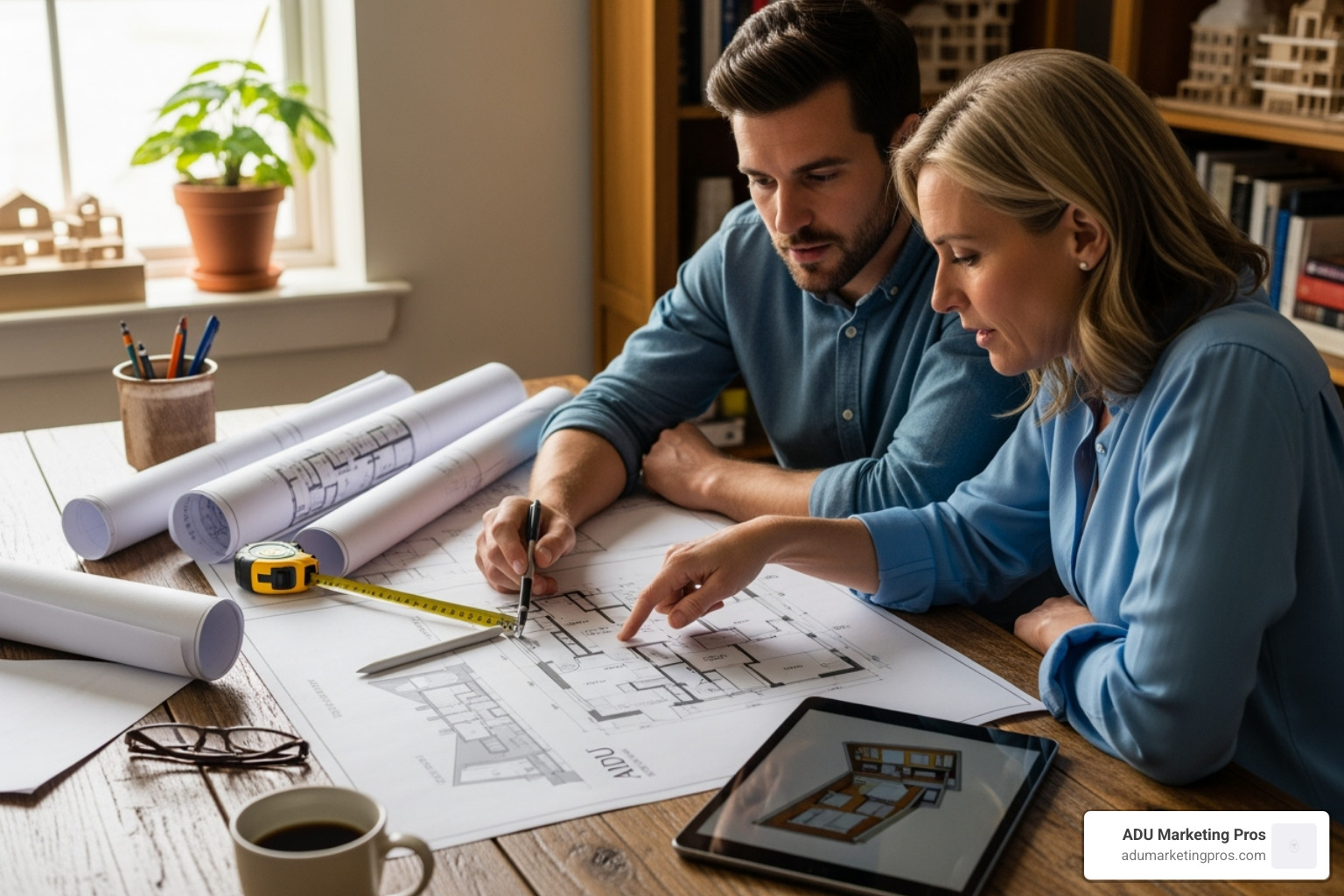
- Permit Acquisition: This is a formal process of submitting detailed architectural and engineering plans to your local building department for review. The plans are checked by multiple departments (e.g., Planning, Building & Safety, Public Works, Fire) for compliance. It is common to receive a list of corrections or comments that your designer must address before the permit is issued. An experienced contractor manages this entire back-and-forth, saving you time and headaches.
Step 3: The Construction Timeline
A realistic timeline helps manage expectations. The entire process, from the first design sketch to receiving the keys, can take from 9 to 18 months, and sometimes longer.
- Phase 1: Pre-Construction (3-6 months): This phase includes feasibility, design, engineering, and the often-unpredictable permit approval process. The time it takes for the city to review and approve your plans is the biggest variable.
- Phase 2: Construction (6-12 months): This is when the physical work happens. A typical sequence includes:
- Site Prep & Foundation (2-4 weeks): Clearing the site, grading, trenching for utilities, and pouring the concrete foundation.
- Framing & Rough-in (4-8 weeks): Building the skeleton of the ADU (walls, roof) and installing the rough plumbing, electrical wiring, and HVAC ducts within the walls.
- Exterior & Dry-in (3-6 weeks): Installing roofing, windows, doors, and siding to make the structure watertight.
- Interior Work (6-12 weeks): Hanging insulation and drywall, followed by painting, flooring, cabinet installation, and tiling.
- Finishes & Fixtures (2-4 weeks): Installing light fixtures, plumbing fixtures, appliances, and final details.
- Phase 3: Final Inspections & Occupancy (1-4 weeks): Throughout construction, a city inspector must approve each major stage (foundation, framing, etc.). The final inspection confirms all work is complete and up to code, after which you receive a Certificate of Occupancy, legally allowing the unit to be lived in.
Delays can be caused by weather, supply chain issues for materials like windows or appliances, or city inspection backlogs. A good contractor anticipates these risks, builds buffer time into the schedule, and communicates proactively.
How to Find Qualified ADU Construction Near Me
This section is your action plan for finding, vetting, and hiring the best local contractor for your project. This decision is the single most important factor in ensuring a smooth, on-budget, and successful build.
Where to Start Your Search for “ADU Construction Near Me”
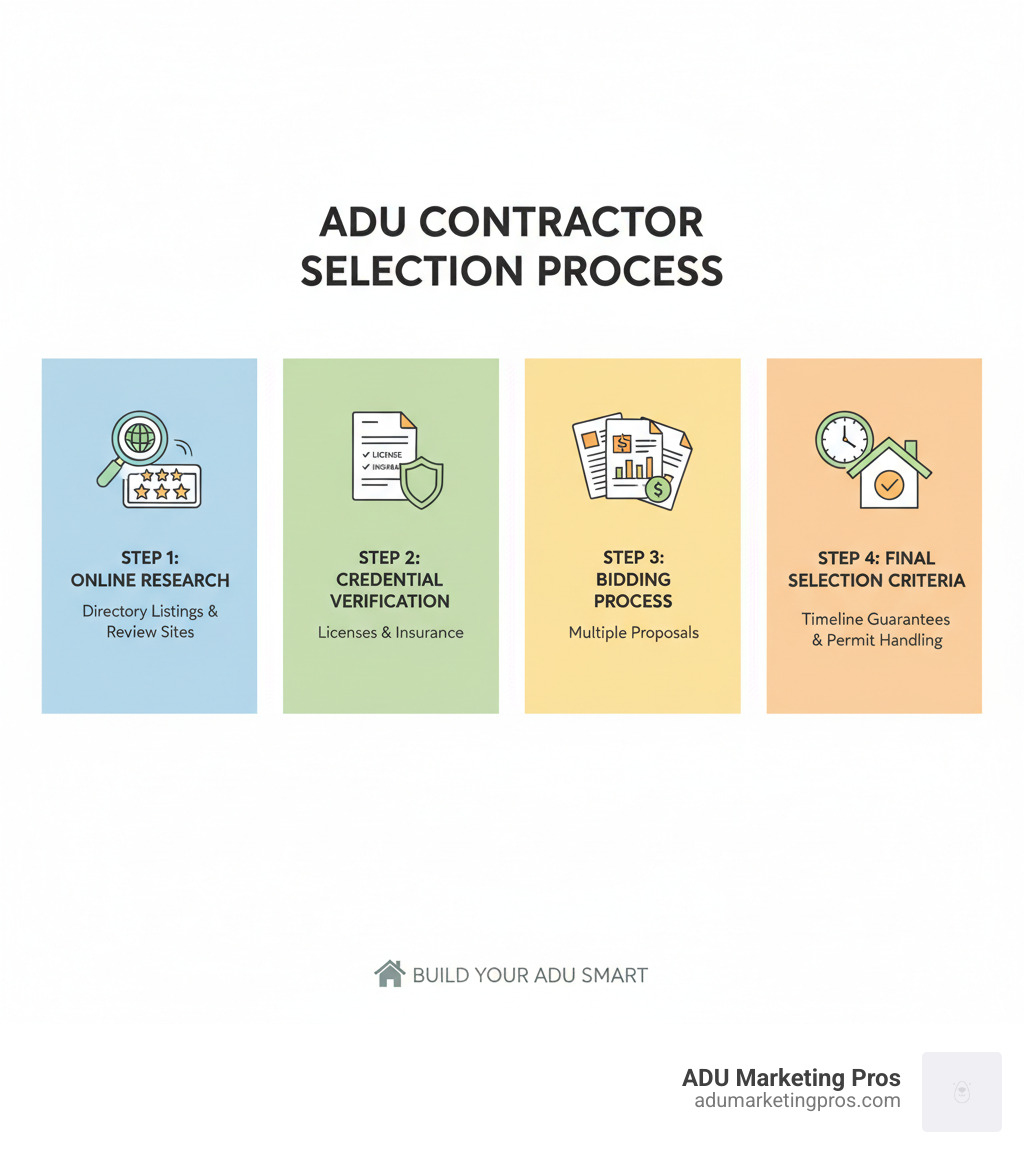
Cast a wide net to begin your search for a contractor with proven, specialized ADU experience. Don’t just search for a general contractor; look for a specialist.
- Online Directories: Sites like Houzz and BuildZoom allow you to filter by location and project type (“Accessory Dwelling Units”), view portfolios of completed work, and read detailed client reviews.
- Local Builder Associations: Organizations like the National Association of the Remodeling Industry (NARI) or local chapters of the Associated General Contractors (AGC) often have member directories of vetted, reputable contractors.
- Referrals: Ask friends, neighbors, or real estate agents who have recently completed ADU projects for recommendations. An architect specializing in residential design is also an excellent source for contractor referrals.
- City Permit Databases: This is a savvy research method. Search your city’s public permit portal for recently approved or completed ADU permits. This will show you which contractors are actively and successfully building in your specific municipality and are familiar with your local inspectors and regulations.
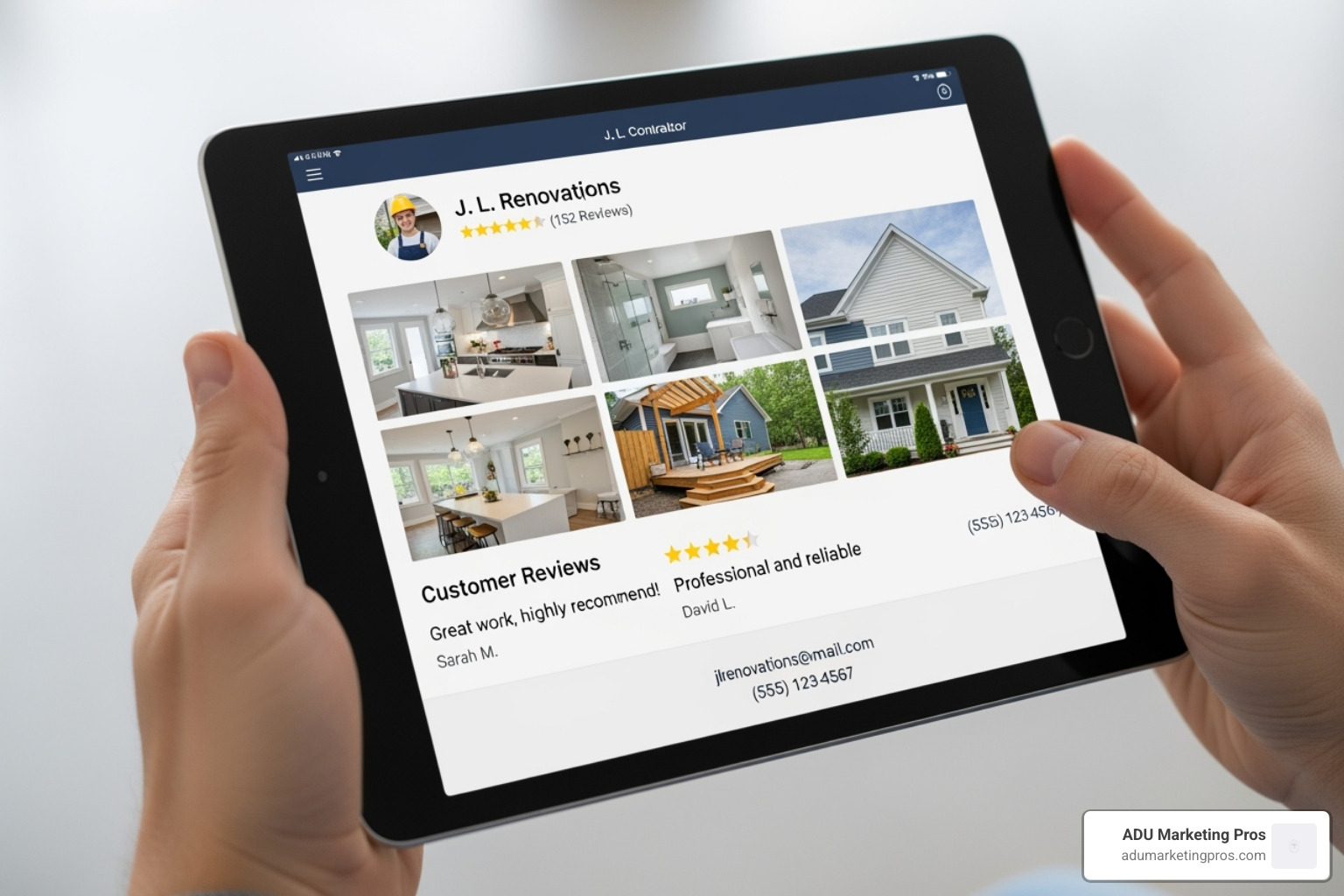
Vetting Your Candidates: What to Look For in a Contractor
Once you have a shortlist of 3-5 potential builders, it’s time for rigorous due diligence.
- License and Insurance: This is non-negotiable. First, verify they have a valid state contractor’s license using your state’s official online portal. Confirm that it’s active and free of disciplinary actions. Then, ask for current certificates of both general liability insurance (at least $1 million coverage) and workers’ compensation insurance. The latter is crucial as it protects you from being sued if a worker is injured on your property.
- ADU-Specific Experience: An ADU is not a standard remodel. Ask direct questions: “How many ADUs have you completed in the last two years?” “Can you show me examples of a detached new build, a garage conversion, etc.?” “What was the most complex ADU project you managed, and how did you handle the challenges?”
- Portfolio and References: A picture is worth a thousand words. Review photos and videos of their completed ADUs to assess their quality, style, and attention to detail. Don’t just rely on online reviews; ask for the phone numbers of their three most recent ADU clients and call them. Ask about their experience with the contractor’s communication, budget adherence, timeline management, and overall professionalism.
- Communication and Professionalism: Pay close attention to their responsiveness and clarity during the vetting process. Do they answer your questions thoroughly? Do they return calls and emails promptly? Good communication from the start is a strong indicator of how they’ll manage your project when challenges arise.
The Interview and Bidding Process for “ADU Construction Near Me”
Treat this stage like a formal job interview where you are the hiring manager.
- Ask Key Questions: Inquire about their project management process. “Who will be my main point of contact?” “Will there be a dedicated project manager on-site daily?” “How do you handle change orders?” “What is your warranty on workmanship and materials?”
- Request Itemized Bids: Do not accept a vague, lump-sum estimate. A professional bid should be a detailed document that breaks down costs for each phase of the project: demolition, foundation, framing, labor, materials, subcontractor fees, permits, and a contingency allowance. This is the only way to accurately compare offers.
- Compare Bids Carefully: Look beyond the bottom-line price. The lowest bid is often a red flag, as it may omit crucial items, rely on low-quality materials, or use unrealistic “allowances” for items like cabinets or flooring that you will inevitably exceed. Ensure you are comparing bids for the exact same scope of work and materials.
- Review the Contract Thoroughly: A clear, detailed contract is your best protection. Look for a detailed scope of work, a payment schedule tied to verifiable construction milestones (not arbitrary dates), a clear change order process, a project timeline, lien release procedures, and warranty information. Vague language or demands for large upfront payments (beyond a 10% deposit, depending on state law) are major red flags. Consider having a lawyer review the contract before signing.
Frequently Asked Questions about ADU Construction
Here are quick, clear answers to the most common questions homeowners have when they start researching adu construction near me.
How long does it take to build an ADU?
On average, you should expect the entire process to take 9 to 18 months from the initial design concept to final completion. The physical construction phase itself typically lasts 6 to 12 months. However, the pre-construction phase, particularly the permitting process, is often the longest and most unpredictable variable. Depending on your local jurisdiction’s backlog and complexity, it can take six months or more just to get your plans approved. An experienced ADU contractor who knows the local system can help navigate this phase more efficiently but cannot eliminate the wait entirely.
Can I build an ADU on my property?
In most cases, if you own a single-family home, you can likely build at least one ADU. States like California, Oregon, and Washington have passed laws making it significantly easier to build ADUs to address housing shortages. However, every property is still subject to local zoning rules regarding setbacks (distance from property lines), maximum height, lot coverage, and other factors. Your first step should always be to check with your local city or county planning department or hire an ADU consultant to conduct a feasibility study for your specific address.
Are prefab ADUs a good option?
Prefab ADUs can be a great choice, especially for homeowners focused on cost predictability and a faster on-site build time. Many models are advertised for under $100,000 for the unit itself.
- Pros: They offer predictable costs for the structure and faster on-site construction (weeks instead of months) since the unit is built in a factory, avoiding weather delays.
- Cons: You have much less design flexibility than a custom build. More importantly, the advertised price is often misleading. It typically does not include crucial soft costs (design, engineering, permits) or significant hard costs like site prep, foundation, utility connections (which can be very expensive), transportation, and crane rental for installation. You will also go through the same local permitting process as a custom-built ADU.
Will my property taxes go up after building an ADU?
Yes, your property taxes will increase. However, it’s typically not as dramatic as many fear. Your property will undergo a blended reassessment. This means the county assessor will not reassess the value of your entire property (original home + land). Instead, they will add the value of the new construction (the ADU) to your existing assessed value. The increase is based only on the value of the ADU itself.
What are the biggest hidden costs in ADU construction?
While a good contractor will provide a detailed budget, unforeseen costs can still arise. The most common “hidden” costs include:
- Utility Upgrades: If your main home’s electrical panel is at capacity, you’ll need a costly upgrade. Similarly, connecting to a sewer line far from the ADU site can require extensive, expensive trenching.
- Unforeseen Site Conditions: Discovering very rocky soil that requires extra excavation, a high water table, or contaminated soil can add significant costs and delays.
- Impact Fees: Depending on your location and ADU size, you may be required to pay substantial impact fees to local school districts or parks departments, which are often not included in initial construction estimates.
Conclusion: Your Next Steps to a Successful ADU Project
Building an Accessory Dwelling Unit is a smart, strategic investment that can provide a steady stream of rental income, create a private home for family members, and significantly increase your property’s long-term value. The journey from an idea to a finished unit is complex, but success is achievable through diligent planning, from choosing the right ADU type for your lot to securing the best financing for your budget.
While government incentives, like California’s $40,000 grant program, can make projects more accessible, the single most critical factor in your project’s success is your choice of contractor. Hiring a builder who specializes in adu construction near me is not a luxury—it is essential for navigating complex local zoning laws, managing the intricate permit process, and delivering a high-quality home on time and on budget.
To put your project on the path to success, follow these key steps:
- Define Your Goal: Clearly determine the primary purpose of your ADU (rental income, family housing, home office) as this will guide your design and budget decisions.
- Conduct a Feasibility Check: Before investing in design, consult with your local planning department or an ADU specialist to verify what you can build on your property.
- Develop a Comprehensive Budget: Account for all hard costs, soft costs, and a contingency fund of at least 10-15% for unforeseen issues.
- Vet Professionals Meticulously: Thoroughly research and interview multiple architects and contractors. Check licenses, insurance, and references for every candidate.
This investment is about more than just square footage; it’s about creating a flexible, valuable, and lasting asset for your future.
For ADU construction firms ready to connect with these informed homeowners, standing out requires showcasing expertise, not just competing on price. ADU Marketing Pros specializes in targeted marketing strategies that attract ideal clients for top-tier builders and architects. We help you build a brand that highlights your unique value in a crowded market.
Ready to grow your ADU business? Learn more about how expert ADU architects in Los Angeles market their services and find how specialized marketing makes a difference.