
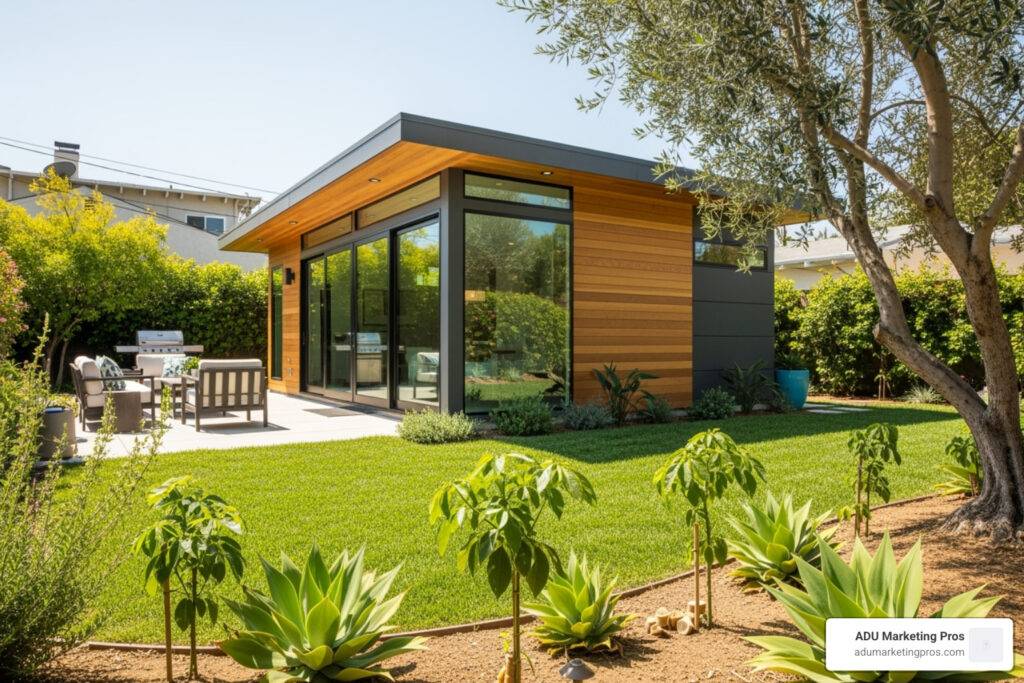
Why ADU Financing in Los Angeles Is Easier Than You Think
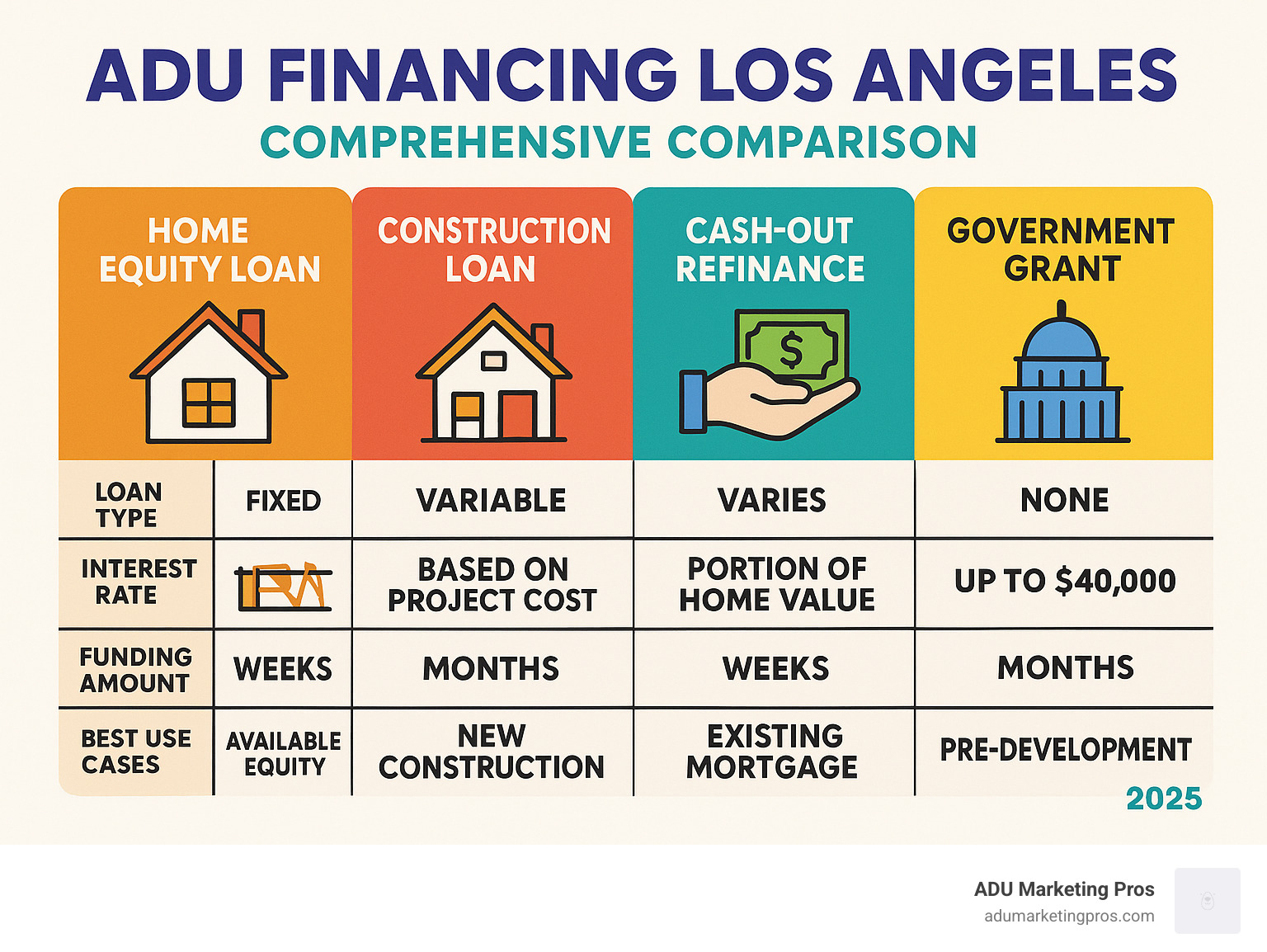
ADU financing Los Angeles options are more accessible than ever, with home equity loans, construction loans, and government grants available to help homeowners build accessory dwelling units without breaking the bank.
Quick Answer: Top ADU Financing Options in LA:
- Home Equity Loans/HELOCs – Borrow 80-90% of home equity (most popular: 56% of homeowners use this)
- Cash-Out Refinance – Replace mortgage with larger loan, get cash difference
- Construction Loans – Short-term loans based on completed ADU value
- CalHFA Grant Program – Up to $40,000 for pre-development costs
- Personal Loans – Unsecured funding for smaller projects or budget gaps
If you’ve looked at ADU construction costs in Los Angeles—with garage conversions running $75,000-$125,000 and new units costing $100,000-$400,000—you might wonder how anyone affords it. The answer lies in smart financing, which is fueling record rates of ADU construction.
The return on investment is compelling. A studio ADU can rent for $1,200-$1,500 monthly, while larger units command $1,900-$2,300. The key isn’t having a pile of cash; it’s understanding your financing options to open up your property’s potential.
Adu financing los angeles terms to know:
The ADU Boom in Los Angeles: Why, How Much, and What’s the ROI?
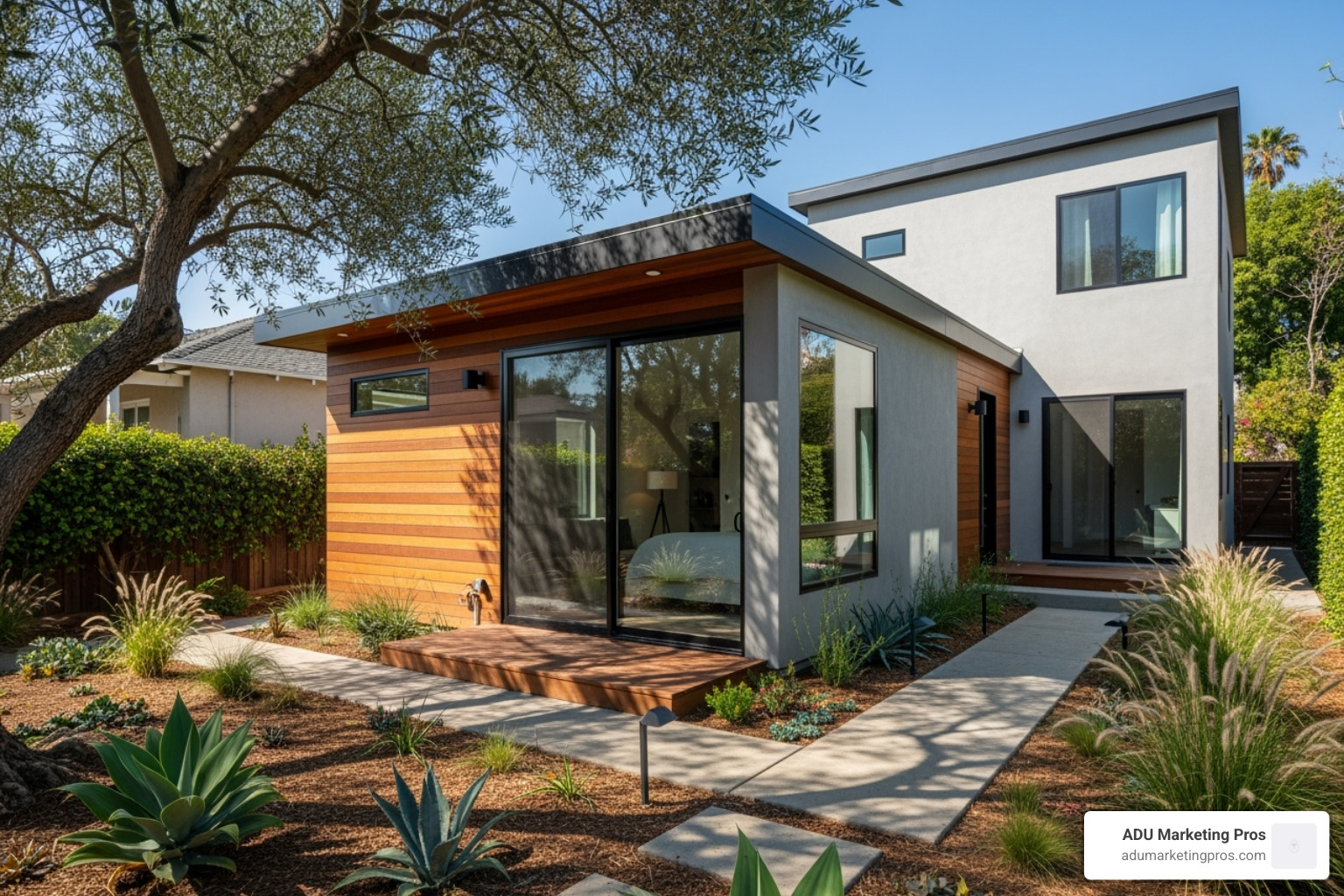
ADU permits in Los Angeles have skyrocketed as homeowners accept these versatile units. Evolving adu financing los angeles options and relaxed Los Angeles ADU Regulations have fueled this housing revolution, making it easier than ever to add a second home to your property.
What is an ADU and Why Are They Everywhere in LA?
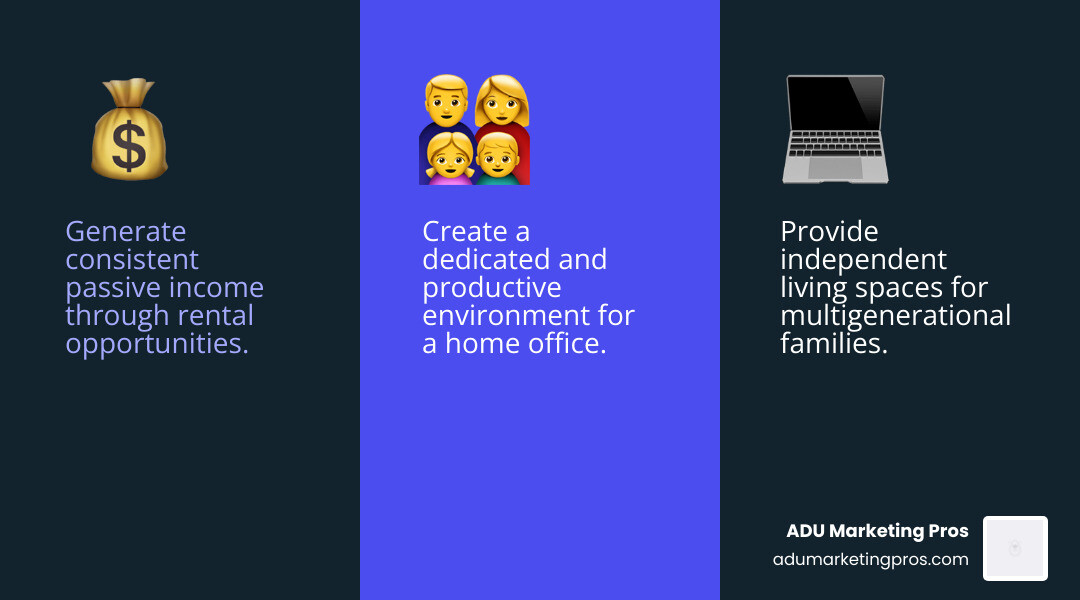
An Accessory Dwelling Unit (ADU), or “granny flat,” is a self-contained home on the same lot as a primary residence, complete with its own kitchen, bathroom, and entrance. A Junior ADU (JADU) is a smaller version (up to 500 sq. ft.) created within the existing home. Homeowners are building ADUs to combat the housing shortage, generate rental income, house family members, increase property value, and gain flexible living space, all made simpler by recent state law changes.
The Real Cost of Building an ADU in Los Angeles
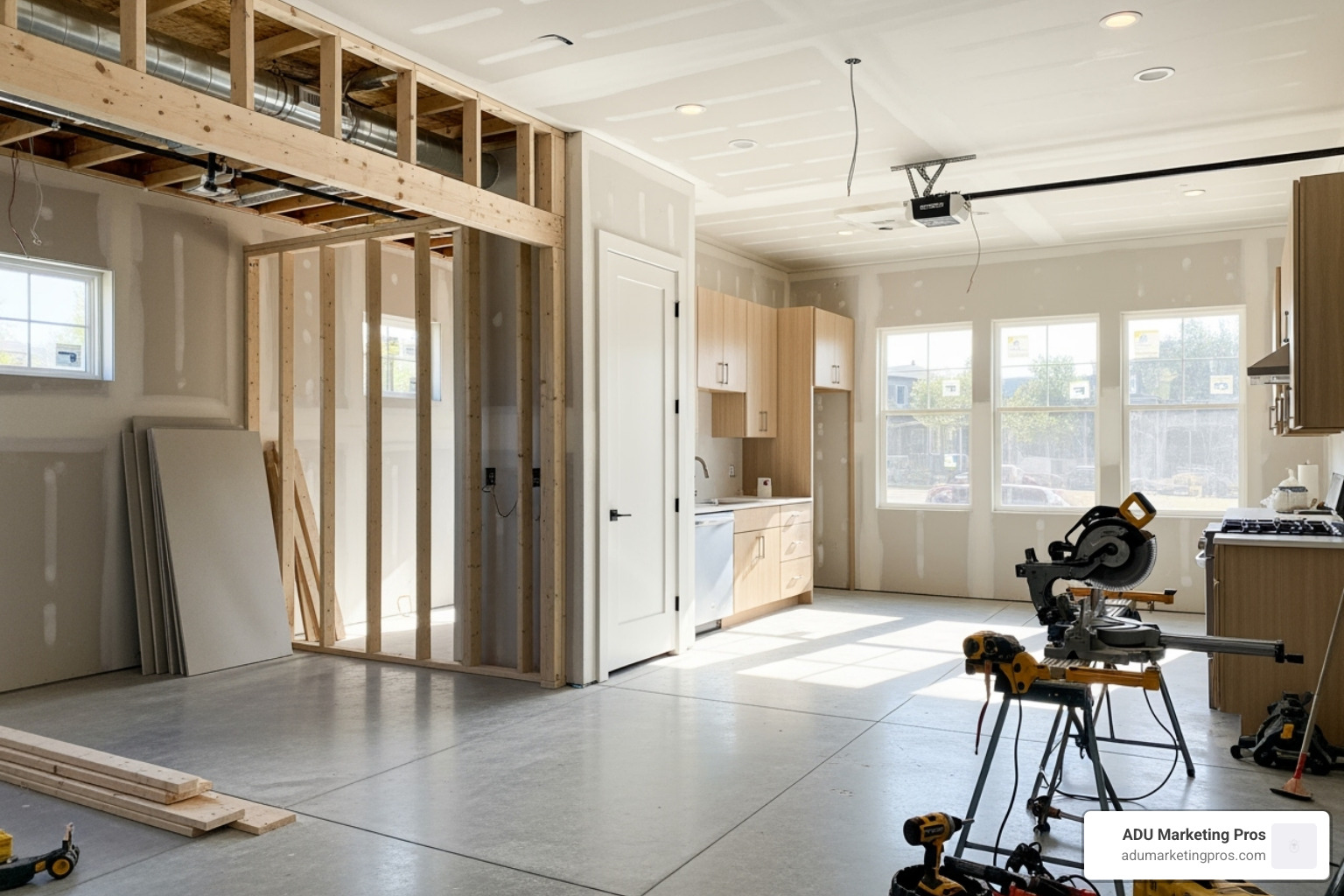
Understanding the investment is key to planning your project. Here’s a breakdown of typical costs:
- Garage Conversions: $75,000 to $125,000. This is often the most budget-friendly option, as the basic structure already exists.
- New Standalone ADUs: $100,000 to $400,000. Costs vary widely based on size and finishes, typically falling between $250 to $400 per square foot. A recent report places the median statewide cost around $150,000.
Final costs are influenced by size, materials, labor rates, and site preparation needs like grading or utility trenching. Always get multiple detailed estimates from licensed contractors. For a deeper dive, learn more about Los Angeles ADU Cost.
Calculating Your Potential Return on Investment (ROI)
The ROI for an ADU in Los Angeles is compelling. A studio ADU can rent for $1,200-$1,500, while larger units fetch $1,900-$2,300 monthly. This income can cover your loan payments, making the ADU pay for itself. Once the loan is paid off, you have a steady stream of positive cash flow.
Beyond monthly income, an ADU significantly increases your property’s market value, often by more than the construction cost. Compared to a traditional single-family home rental, an ADU can deliver a much higher return on investment, making it one of the smartest financial moves for LA homeowners. For a full analysis, see our guide on ADU Return on Investment.
Tapping Into Your Home’s Value: Equity-Based Financing Options
For most Los Angeles homeowners, home equity is the most powerful tool for adu financing los angeles. Equity is your home’s current market value minus your mortgage balance. Lenders typically allow you to borrow against 80-90% of this value.
According to a Terner Center report, 56% of homeowners use their home’s equity to finance an ADU, making it the most popular method. To see how these options fit into the broader landscape, check out our overview of ADU Financing Options.
Home Equity Loans vs. HELOCs for adu financing los angeles
You have two primary ways to access your equity: a Home Equity Loan or a Home Equity Line of Credit (HELOC). They both use your home as collateral but function differently.
| Feature | Home Equity Loan (Second Mortgage) | HELOC (Home Equity Line of Credit) |
|---|---|---|
| Loan Type | Lump Sum | Revolving Credit |
| Interest Rate | Fixed | Variable |
| Best For | Predictable Budgets | Phased Projects |
| Repayment | Fixed Payments | Interest-Only Draw Period |
A Home Equity Loan gives you a single lump-sum payment with a fixed interest rate, resulting in predictable monthly payments. It’s ideal if you have a firm budget for your ADU project.
A HELOC works like a credit card. You’re approved for a maximum amount and can draw funds as needed during a set “draw period,” paying interest only on what you use. This flexibility is great for projects with uncertain timelines, but most HELOCs have variable interest rates, meaning payments can change.
Cash-Out Refinance: A Smart Move?
A cash-out refinance replaces your current mortgage with a new, larger one, and you receive the difference in cash. For example, if you owe $300,000 on an $800,000 home, you could refinance for $500,000, pay off the old loan, and get $200,000 for your ADU.
This can be a great move if you can secure a lower interest rate than your current one. It also simplifies your finances by combining your mortgage and ADU loan into a single monthly payment. With a relatively low denial rate of 18.4%, it’s a strong option for homeowners with significant equity who need a large sum for their project.
Your Complete Guide to ADU Financing in Los Angeles: Construction & Renovation Loans
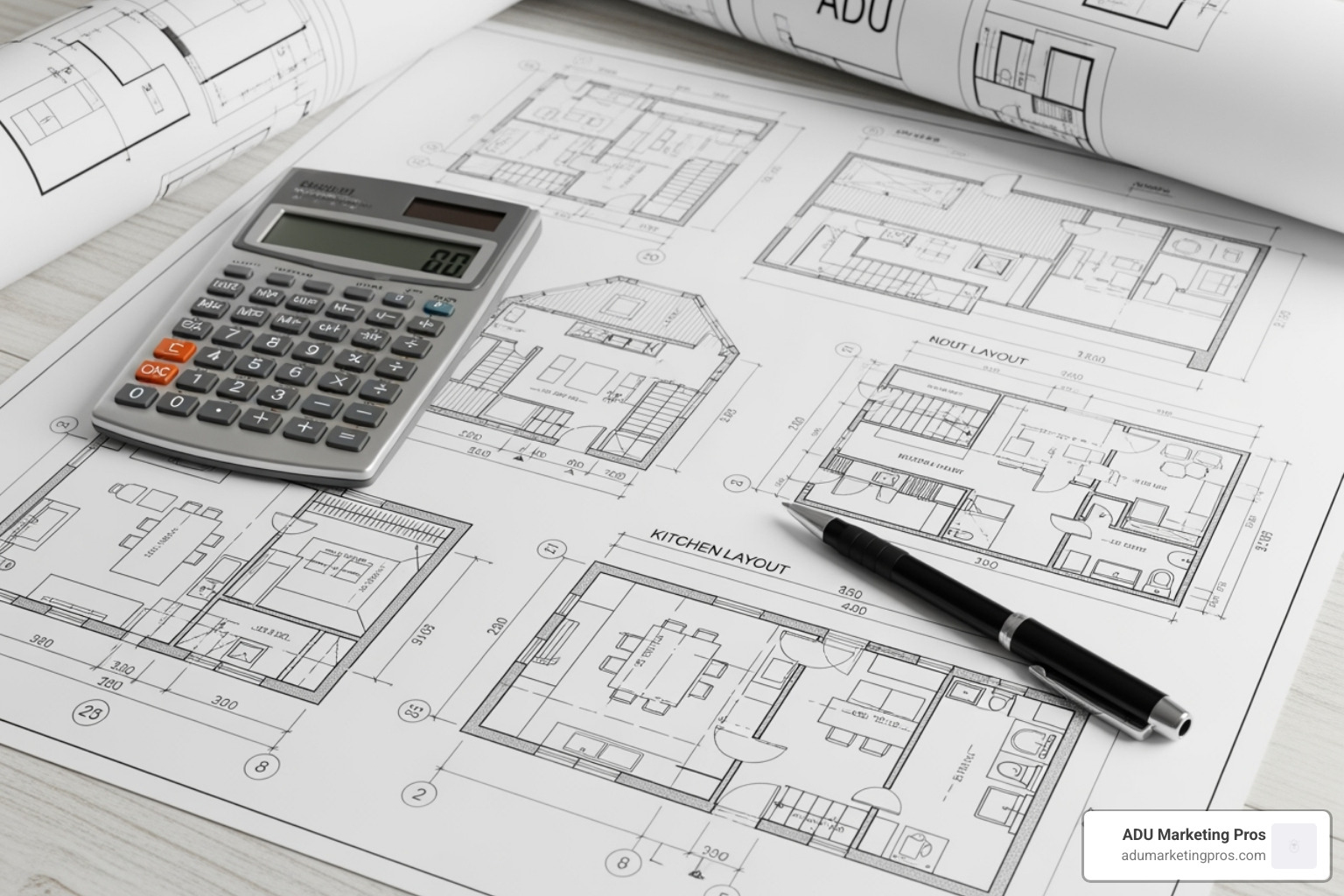
If you don’t have enough home equity, specialized construction and renovation loans are an excellent alternative. These loans are based on the property’s future value after the ADU is built, allowing you to borrow more than your current equity might permit. While they have a higher denial rate (around 45%), this reflects the lender’s careful vetting of the project’s feasibility. For more details, explore Construction Loans for ADU.
Navigating Construction and Renovation Loans for adu financing los angeles
A construction loan is a short-term loan where funds are released in stages based on a pre-agreed “draw schedule.” You might get funds when the foundation is poured, then more when framing is complete. This way, you only pay interest on the funds you’ve used. Once construction is finished, the loan typically converts to a standard mortgage.
Renovation loans, like the Fannie Mae HomeStyle and Freddie Mac CHOICErenovation® programs, also let you borrow based on the home’s after-renovation value. This is ideal if you’re equity-poor but know an ADU will significantly boost your property’s worth.
Pros of Construction Loans:
- Funds are released as needed, saving on interest.
- Loan amount can be based on future appraised value.
- Specifically designed for building projects.
Cons of Construction Loans:
- More complex application process.
- Requires careful project management to meet draw milestones.
- Often have higher interest rates during the construction phase.
Alternative Funding: Personal Loans and Equity Share Investments
For smaller costs like permits or to cover budget gaps, an unsecured personal loan can be a quick solution. They fund faster and don’t require collateral, but come with higher interest rates.
An innovative alternative is a home equity share investment. Instead of taking on debt, you sell a portion of your home’s future appreciation to an investor for cash now. There are no monthly payments and no new debt. You repay the investor when you sell your home or at the end of a set term. This is a great option for homeowners with high equity but limited monthly income.
Government Programs and Grants for LA Homeowners

California and the City of Los Angeles offer programs to make adu financing los angeles more manageable. These initiatives provide direct financial assistance and support to encourage ADU construction and help address the housing shortage.
The CalHFA ADU Grant Program Explained
The California Housing Finance Agency (CalHFA) offers a grant of up to $40,000 to help qualifying low-to-moderate-income homeowners cover pre-development costs. This is not a loan. The grant can be used for expenses like site prep, architectural designs, permits, and soil tests.
Due to high demand, the program was operating on a waitlist as of late 2023. However, funding for such programs is often renewed. Homeowners should monitor The official CalHFA ADU Grant Program page for the latest updates and availability.
Local Initiatives: The LA ADU Accelerator Program
Los Angeles created the innovative LA ADU Accelerator Program to provide a complete support system for homeowners. The program acted as a one-stop shop, pairing homeowners with pre-screened older adults in need of affordable housing.
This created a win-win: homeowners received reliable rental income with support for tenant screening and management, while older adults found secure housing. The program provided qualified tenant referrals and ongoing landlord support, ensuring timely rent payments and assistance with any issues. While program availability can change, it serves as a model for how local initiatives can make ADU ownership more manageable and socially beneficial. You can Learn More about the LA ADU Accelerator Program and similar initiatives.
Securing Your Loan: A Step-by-Step Guide
Getting your adu financing los angeles approved is a manageable process if you’re prepared. Lenders focus on four pillars: your credit score, debt-to-income (DTI) ratio, income, and home equity. Getting these in order is the first step toward success. For a full overview, see our guide on Navigating ADU Financing.
Step 1: Assess Your Financials and Project Scope
Before approaching lenders, do your homework. First, determine a realistic budget by getting at least three detailed estimates from licensed contractors. Next, check your credit score; a score of 670 or higher generally secures the best rates. Finally, calculate your home equity. An ADU Cost Calculator can help align your project costs with your available equity.
Step 2: Research Lenders and Gather Documentation
Compare different types of lenders, including your current bank, credit unions, and specialized online lenders who are ADU-friendly. As you shop around, gather your documents to show you’re an organized and serious applicant. You’ll typically need:
- Pay stubs, W-2s, and tax returns (last two years)
- Bank and asset statements
- Existing mortgage statements
- Detailed ADU plans and itemized contractor bids
Step 3: The Application and Underwriting Process
After submitting your application, the lender will order an appraisal. For construction loans, this appraisal is based on the property’s “future value” with the completed ADU. During underwriting, the lender verifies all your financial information.
A game-changing FHA policy now allows lenders to consider 75% of your ADU’s projected rental income when calculating your DTI ratio. If your ADU is projected to rent for $2,000 a month, a lender can add $1,500 to your qualifying monthly income. This makes it significantly easier for many homeowners to qualify. The entire process from application to funding typically takes 30-90 days.
The Future of ADUs: New Laws and Long-Term Value
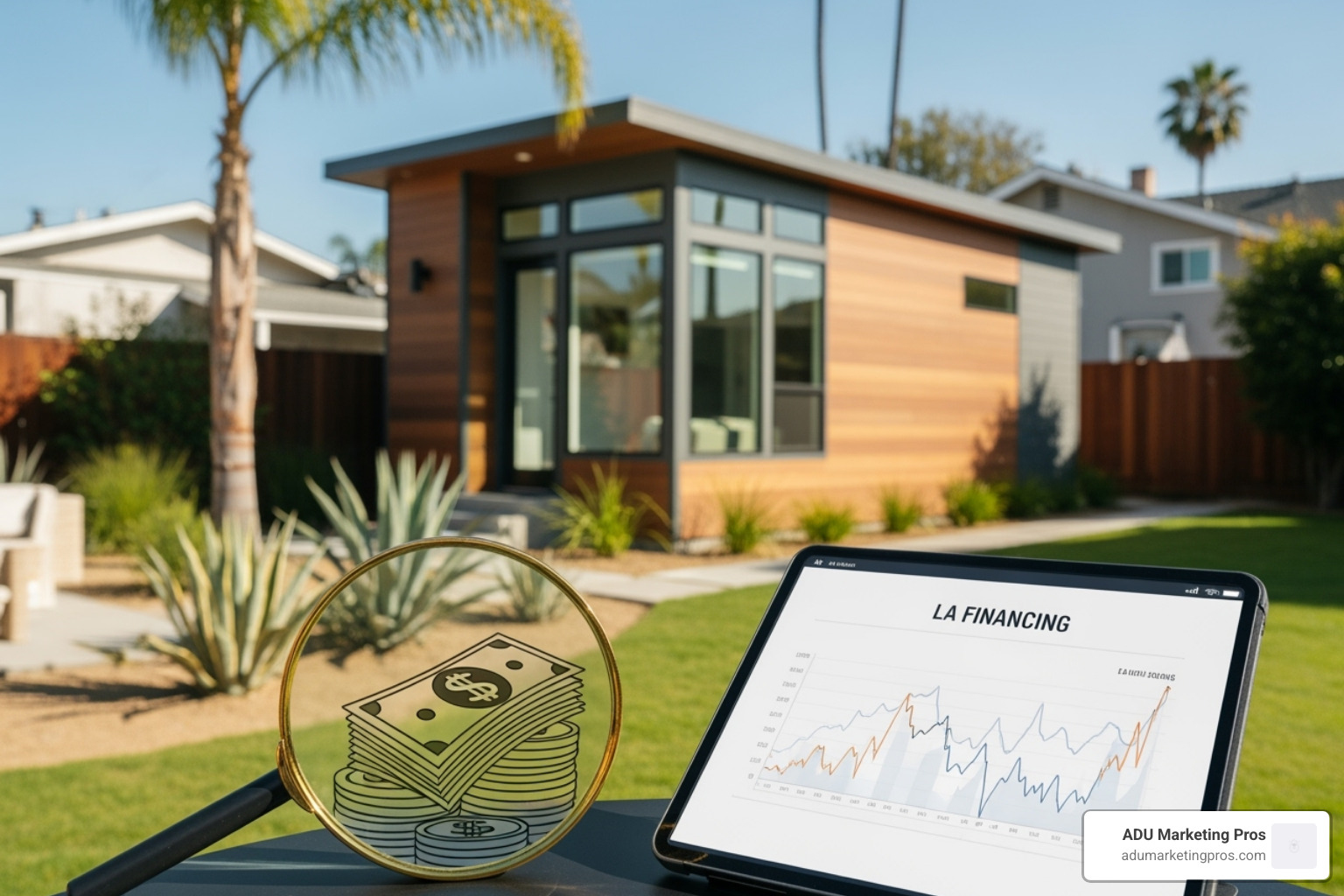
The ADU landscape is constantly evolving, with new laws making them an even smarter investment. When considering adu financing los angeles, understanding these changes reveals that you’re not just building a unit—you’re creating a flexible, high-value asset.
How the New AB 1033 Law Changes ADU Ownership
California Assembly Bill 1033 has revolutionized ADU ownership. It allows cities to permit homeowners to sell their ADU separately from the main home, similar to a condominium. Before this law, an ADU could only be rented, not sold independently.
This creates a new path to affordable homeownership for buyers and gives ADU owners a new way to cash in on their investment without selling their entire property. The process requires local city participation and typically involves creating a homeowners association (HOA) for the two units and a separate property tax assessment for the ADU. This law adds a powerful exit strategy beyond rental income, potentially turning your ADU into a sellable asset.
The Lasting Impact on Your Property Value
An ADU’s value extends far beyond monthly rent checks. Properties with ADUs see greater long-term appreciation and are more attractive to a wider range of buyers, including investors, multigenerational families, and remote workers.
The flexibility of an ADU is one of its greatest assets. It can serve as a rental unit, a home for adult children or aging parents, a home office, or a private retreat. This adaptability for multigenerational living and aging in place adds immense value, providing options that can save on expenses like assisted living. An ADU is a long-term investment in your family’s financial security and future flexibility.
Frequently Asked Questions about ADU Financing in Los Angeles
Navigating adu financing los angeles can bring up a lot of questions. Here are concise answers to some of the most common ones we hear.
How long does it take to finance and build an ADU in Los Angeles?
The financing timeline is typically 30-90 days. Home equity loans and HELOCs are often faster (30-45 days), while construction loans and refinances can take up to 90 days due to more complex appraisals.
The construction timeline depends on the project. A garage conversion usually takes 3-6 months from design to completion. A new standalone ADU is a larger project, typically requiring 6-9 months from start to finish.
Can I use the future rental income from my ADU to qualify for a loan?
Yes, and this is a major advantage for homeowners. Thanks to new FHA policies effective October 2023, lenders can count 75% of your ADU’s projected rental income toward your qualifying income. For example, if your ADU is expected to rent for $2,000 per month, a lender can add $1,500 to your monthly income when assessing your application. This significantly improves your debt-to-income ratio and makes qualifying much easier.
Are there special ADU financing programs for first-time homebuyers?
Yes, there are excellent options for first-time buyers. Freddie Mac’s CHOICErenovation® Mortgage allows you to purchase a home and finance the construction of an ADU at the same time, with as little as a 3% down payment. This program rolls the home purchase and renovation costs into a single loan, simplifying the process. It’s a powerful strategy for entering the LA housing market, as the future rental income can help offset your mortgage payments from the start.
Conclusion: Your Path to a Financed ADU
You’ve made it through the maze of adu financing los angeles options, and here’s the exciting truth: building an ADU in Los Angeles isn’t just possible—it’s probably one of the smartest investments you can make right now.
Think about it. You’ve got a housing market where studio apartments rent for $1,200-$1,500 monthly, construction costs that range from reasonable garage conversions at $75,000 to custom builds up to $400,000, and financing options that let you tap into your home’s equity or even count future rental income toward loan qualification. The math works.
Home equity loans and HELOCs remain the most popular choice for good reason—56% of ADU builders use them because they offer competitive rates and straightforward terms. Cash-out refinancing can consolidate everything into one payment while potentially lowering your overall interest rate. Construction loans let you borrow based on your ADU’s future value, and government grants like CalHFA’s program can cover up to $40,000 in upfront costs.
The new landscape makes things even more compelling. FHA’s policy change means lenders can now consider 75% of your estimated ADU rental income when you apply for financing. That’s huge! It can make the difference between qualifying and not qualifying, or between getting a smaller loan and getting the full amount you need.
And with AB 1033 opening the door to selling ADUs as condos, you’re not just building a rental unit—you’re creating a potential separate real estate asset that could be sold independently down the road.
The key to success really comes down to thorough planning. Get accurate contractor estimates, understand your credit score and home equity position, and shop around with different lenders. Don’t rush the process, but don’t overthink it either. Los Angeles homeowners are building ADUs at record rates because the numbers work and the financing is available.
At ADU Marketing Pros, we see the incredible potential in this market every day. While we focus on helping ADU builders and architects connect with homeowners through our specialized marketing services, we believe strongly in empowering homeowners with the knowledge they need to make informed decisions. The ADU boom in Los Angeles is just getting started, and there’s never been a better time to explore how these versatile structures can transform both your property value and your financial future.
For professionals in the ADU industry looking to grow their business and reach more qualified homeowners, explore our ADU architect marketing services to see how we can help you stand out in this competitive but rewarding market.