
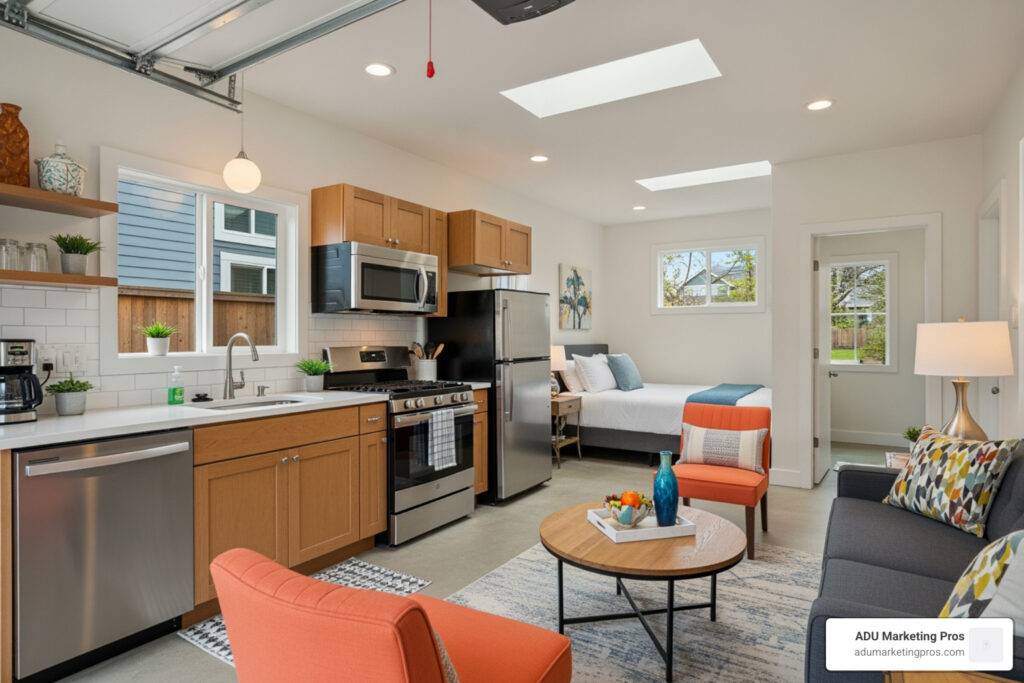
Why Homeowners Are Turning to ADU Garage Conversion Services
Your garage is likely one of the most underused spaces on your property, but in today’s world, it holds immense potential. As housing costs soar and lifestyles evolve, that dusty, 400-square-foot box is no longer just for cars and clutter; it’s an opportunity. This is where ADU garage conversion services come in, transforming this overlooked area into a fully functional, beautiful living space—a high-yield rental unit, a private guest suite, a dedicated home office, or a modern studio apartment. These end-to-end services are designed to handle the entire complex process, turning underused storage into valuable, livable square footage with minimal stress for the homeowner.
So, why the sudden surge in popularity? Several factors are converging. The California housing crisis has made traditional homeownership a distant dream for many, increasing the demand for alternative housing solutions. At the same time, the rise of remote work has homeowners desperate for a quiet, separate workspace away from the main house. Furthermore, societal shifts toward multigenerational living mean families are seeking ways to keep loved ones close, whether it’s housing aging parents gracefully or giving adult children a stepping stone to independence. A garage conversion addresses all these needs efficiently and affordably.
What Comprehensive ADU Garage Conversion Services Include:
- Feasibility & Design: Creating custom layouts that maximize your garage’s potential while adhering to your budget and vision.
- Structural Assessment: A thorough evaluation of the existing foundation, walls, and roof to ensure structural integrity for a habitable dwelling.
- Permit & Regulation Management: Expertly navigating the labyrinth of local zoning codes, building departments, and state laws to secure all necessary approvals.
- Full-Scale Construction & Finishing: Handling the complete build-out, from foundation repairs and framing to installing utilities, insulation, drywall, and appliances.
- Inspection Coordination: Managing all required city inspections at every critical stage of construction to ensure the project is code-compliant and receives its final Certificate of Occupancy.
Garage conversions have become the most popular type of ADU in California, and for good reason. They are significantly faster and more affordable than building from the ground up and often bypass strict setback requirements that can complicate or halt new construction. The typical garage conversion costs $80,000–$150,000 and takes just 8–12 weeks to complete, making it one of the most efficient and impactful home improvement projects available today.
Why Convert Your Garage? The Key Benefits and Considerations
Have you ever looked at your garage and thought, “There’s got to be a better use for this space?” You’re not alone. Homeowners across California are unlocking the immense potential hidden within their underused garages by converting them into Accessory Dwelling Units (ADUs).
One of the most compelling advantages of using professional ADU garage conversion services is their cost-effectiveness. Because you’re leveraging an existing structure, you can significantly cut down on construction costs—potentially by as much as half compared to a new build. The project timeline is also much faster, with many conversions completed in a swift 8 to 12 weeks.
The benefits extend far beyond just cost and time:
- Increased Property Value: A permitted garage conversion adds legal, conditioned living space to your property. Appraisers value this square footage similarly to the main home, leading to a substantial and immediate boost in your property’s market value.
- Rental Income Potential: In high-demand rental markets like Los Angeles, San Francisco, and San Diego, a studio or one-bedroom ADU can generate thousands of dollars in monthly passive income. This can offset your mortgage, cover the project’s cost in a few years, and build long-term wealth. Explore the potential for a strong ADU Return on Investment and learn how to maximize your ADU Rental Income.
- Flexible Living Space: The possibilities are endless. A garage ADU can serve as a private, accessible home for aging parents (an “in-law suite”), a semi-independent space for returning college students, or a comfortable guest suite for visiting family and friends, eliminating the need for hotel stays.
- Dedicated Home Office or Creative Studio: With remote work becoming a permanent fixture for many, a separate, quiet workspace is invaluable. A converted garage provides the perfect solution for a home office, art studio, music room, or fitness center, creating a clear boundary between work and home life.

Key Considerations Before You Start
Before diving in, a realistic assessment of these critical factors is essential for a smooth project.
- Condition of Your Existing Structure: This is the most important initial step. A professional structural assessment is non-negotiable. An engineer will inspect the concrete slab for significant cracks or heaving, check the wood framing for dry rot or termite damage, and evaluate the roof’s integrity. The findings will determine if the structure is sound enough for conversion or if significant, costly repairs are needed first.
- Loss of Parking and Storage: Converting your garage means losing a dedicated parking spot and significant storage. First, check local laws; many California properties are exempt from replacing the parking. For storage, get creative. This is an opportunity to declutter and implement smarter solutions like installing overhead storage racks in the attic, building a small backyard shed (often permit-exempt if under 120 sq. ft.), or incorporating clever, high-density storage like custom cabinetry and built-ins into the ADU design itself.
- Budgeting and Financing: While more affordable than other ADU types, costs can vary widely based on the garage’s condition, your location, and the level of finishes you choose. The average cost is $80,000 to $150,000. It’s wise to budget an additional 10-15% for a contingency fund to cover unforeseen issues. Our Garage Conversion Cost Calculator can provide a helpful starting point. Many homeowners finance their projects through a home equity line of credit (HELOC), a cash-out refinance, or a construction loan.
Cost Comparison: Garage Conversion vs. Other ADUs
Garage conversions are often the most budget-friendly ADU choice because they leverage an existing foundation and frame, saving tens of thousands of dollars right from the start.
| ADU Type | Average Cost | Timeline | Key Advantage |
|---|---|---|---|
| Garage Conversion | $80,000–$150,000 | 8-12 weeks | Uses existing structure, most cost-effective |
| Prefab ADU | $125,000–$250,000+ | 12-20 weeks | Faster on-site assembly, predictable costs |
| Ground-Up ADU | $150,000–$400,000+ | 6-12 months | Fully customized design and layout |
For more details on overall expenses, refer to our comprehensive guide on ADU Construction Cost.
Why Homeowners Are Turning to ADU Garage Conversion Services
ADU garage conversion services transform your existing garage into a fully functional living space—whether that’s a rental unit, guest suite, home office, or studio apartment. These services handle everything from initial design and structural assessment to permitting, construction, and final inspections, turning underused storage into valuable square footage.
What ADU Garage Conversion Services Include:
- Design & Planning – Custom layouts that maximize your garage’s potential
- Structural Assessment – Evaluation of foundation, walls, and roof integrity
- Permit Management – Navigating local zoning codes and building departments
- Construction & Finishing – Complete build-out with utilities, insulation, and appliances
- Inspection Coordination – Ensuring compliance and final approval
The typical garage conversion costs $80,000–$150,000 and takes 8–12 weeks to complete, making it one of the most affordable and fastest ADU options available.
Your garage is likely one of the most underused spaces on your property. Maybe it’s filled with boxes you haven’t opened in years, or perhaps it houses a car that could just as easily park in the driveway. Either way, that 400-square-foot structure sitting at the back of your lot represents something much more valuable: untapped potential.
Garage conversions have become the most popular type of ADU built in California, and for good reason. They’re faster than building from the ground up, more affordable than many prefab options, and they often bypass the strict setback requirements that make new construction difficult or impossible on smaller lots. Because most garages were built right up against property lines—something that often wouldn’t be allowed today—they can remain exactly where they are while adding significant living space and property value.
Whether you’re looking to generate rental income, house aging parents, create a dedicated workspace, or simply add flexibility to your home, a garage conversion offers a practical path forward. But the process involves more than just throwing up some drywall and calling it done. You’ll need to understand local regulations, assess your existing structure, plan for utilities, and work with qualified professionals who know how to turn a concrete box into a comfortable, code-compliant living space.
Adu garage conversion services vocab explained:
Why Convert Your Garage? The Key Benefits and Considerations
Have you ever looked at your garage and thought, “There’s got to be a better use for this space?” You’re not alone. Homeowners across California are finding the potential hidden in their garages by converting them into Accessory Dwelling Units (ADUs).
One of the most compelling advantages of ADU garage conversion services is their cost-effectiveness. Because you’re leveraging an existing structure, you can significantly cut down on construction costs—potentially by as much as half compared to a new build. The project timeline is also much faster, with many conversions completed in 8 to 12 weeks.
The benefits extend beyond just cost and time:
- Increased Property Value: A garage conversion adds valuable living space, directly translating to higher property value
- Rental Income Potential: Many homeowners turn converted garages into rental units for steady passive income. Explore the potential for strong ADU Return on Investment and maximize your ADU Rental Income
- Flexible Living Space: Perfect for aging parents, returning college students, or guest suites
- Dedicated Home Office: With remote work on the rise, a separate workspace is invaluable
Key Considerations Before You Start
Before diving in, consider these critical factors. The condition of your existing structure is paramount. A professional assessment will determine if repairs are needed. Also, consider the loss of parking and storage—this is a great opportunity to declutter.
Budgeting is another critical step. The average cost for a garage conversion is $80,000 to $150,000. Our Garage Conversion Cost Calculator can provide a helpful starting point.
Cost Comparison: Garage Conversion vs. Other ADUs
Garage conversions are often the most budget-friendly ADU choice:
| ADU Type | Average Cost | Timeline | Key Advantage |
|---|---|---|---|
| Garage Conversion | $80,000–$150,000 | 8-12 weeks | Uses existing structure |
| Prefab ADU | $125,000–$250,000+ | 12-20 weeks | Faster on-site assembly |
| Ground-Up ADU | $150,000–$400,000+ | 6-12 months | Fully customized |
For more details, refer to our guide on ADU Construction Cost.
Navigating the Rules: Zoning, Permits, and Types of Garage ADUs
Understanding the regulatory landscape is a critical step in any ADU project. While California state laws have dramatically streamlined the process, local city and county zoning codes still play a major role. A key advantage of hiring professional ADU garage conversion services is their expertise in navigating this complex web of rules.
One of the greatest benefits of converting a garage is that its existing location is typically “grandfathered in.” This means it often doesn’t have to comply with your city’s current setback requirements (the minimum distance a structure must be from property lines). Because most older garages were built right on or very near property lines, this exemption makes a conversion feasible where a new building would be prohibited. However, other important regulations still apply:
- Setback Requirements: While the existing footprint is often exempt, any new additions (like expanding the footprint or adding a second story) must meet modern setback rules. For fire safety, state code prohibits new windows or doors on any wall less than 3 feet from a property line. If a wall is between 3 to 5 feet, special fire-rated windows may be required.
- Parking Regulations: California law is very favorable to ADUs. If your property is located within a half-mile walking distance of public transit (like a bus stop or rail station), you are exempt from adding a parking space for the ADU. Crucially, state law also specifies that you are not required to replace the garage parking spaces you are converting into an ADU.
- Owner-Occupancy Rules: Recent state laws have suspended local owner-occupancy requirements for all new ADUs permitted until 2025. This means you can rent out both your primary home and your new ADU, making it a powerful investment vehicle.
- Historic Districts: Properties in designated historic districts may require special design review to ensure the conversion’s exterior is compatible with the neighborhood’s character. You can check your property’s status on your local city planning website, such as LA’s ZIMAS portal. An ADU project cannot be denied solely based on historic impact, but modifications may be required.
For a comprehensive overview, see our guides on ADU Zoning Laws and ADU Parking Requirements. We ensure all projects comply with the latest California ADU Regulations.
Understanding Permits and Inspections
The permit and inspection process ensures your ADU is safe, legal, and built to last. It starts with verifying the original garage was permitted, which can be checked through city records (e.g., the LA County service locator). Your contractor then submits a full set of architectural and structural plans for city review. Once permits are issued, city inspectors will visit the site at key milestones to verify the work meets code. These inspections typically include: foundation/slab, framing, rough electrical and plumbing, insulation, and a final inspection. Passing the final inspection results in a Certificate of Occupancy, officially making your converted garage a legal dwelling. Our ADU Permit Process guide details what to expect.
Different Types of Garage Conversion ADUs
Not all garages are the same, and neither are their conversion possibilities. Here are the main types:
- Detached Garage Conversion: The most common type, where a standalone garage is transformed into a separate living unit. This offers maximum privacy for both the main house residents and the ADU occupants, making it ideal for rental units or independent family members. See our Detached ADU Plans for ideas.
- Attached Garage Conversion: The garage shares at least one wall with the main house. The conversion integrates the new living space into the home’s footprint. This can simplify utility connections but requires careful planning for a separate entrance, soundproofing between the units, and a robust fire-rated wall separating the two dwellings.
- Junior ADU (JADU) in a Garage: A JADU is a small ADU (up to 500 sq. ft.) created within the existing footprint of a single-family home, which can include an attached garage. JADUs have unique requirements: they must have an exterior entrance, an efficiency kitchen (with small appliances and limited counter space), and can share a bathroom with the main house, making them a very cost-effective option.
- Above-the-Garage ADU: For those who want to retain their garage for parking or storage, building a new ADU on top is an excellent option. This is the most complex and expensive type of garage-related ADU, as it requires significant structural reinforcement of the existing garage and foundation to support a second story. However, it maximizes living space on a small lot and can offer better views and privacy.
The Conversion Blueprint: Design, Construction, and Essential Utilities
The journey from a dusty garage to a vibrant living space is an exciting one, guided by a clear blueprint that encompasses thoughtful design, meticulous construction, and the integration of essential utilities. This is where your vision truly comes to life, transforming a concrete shell into a comfortable home.
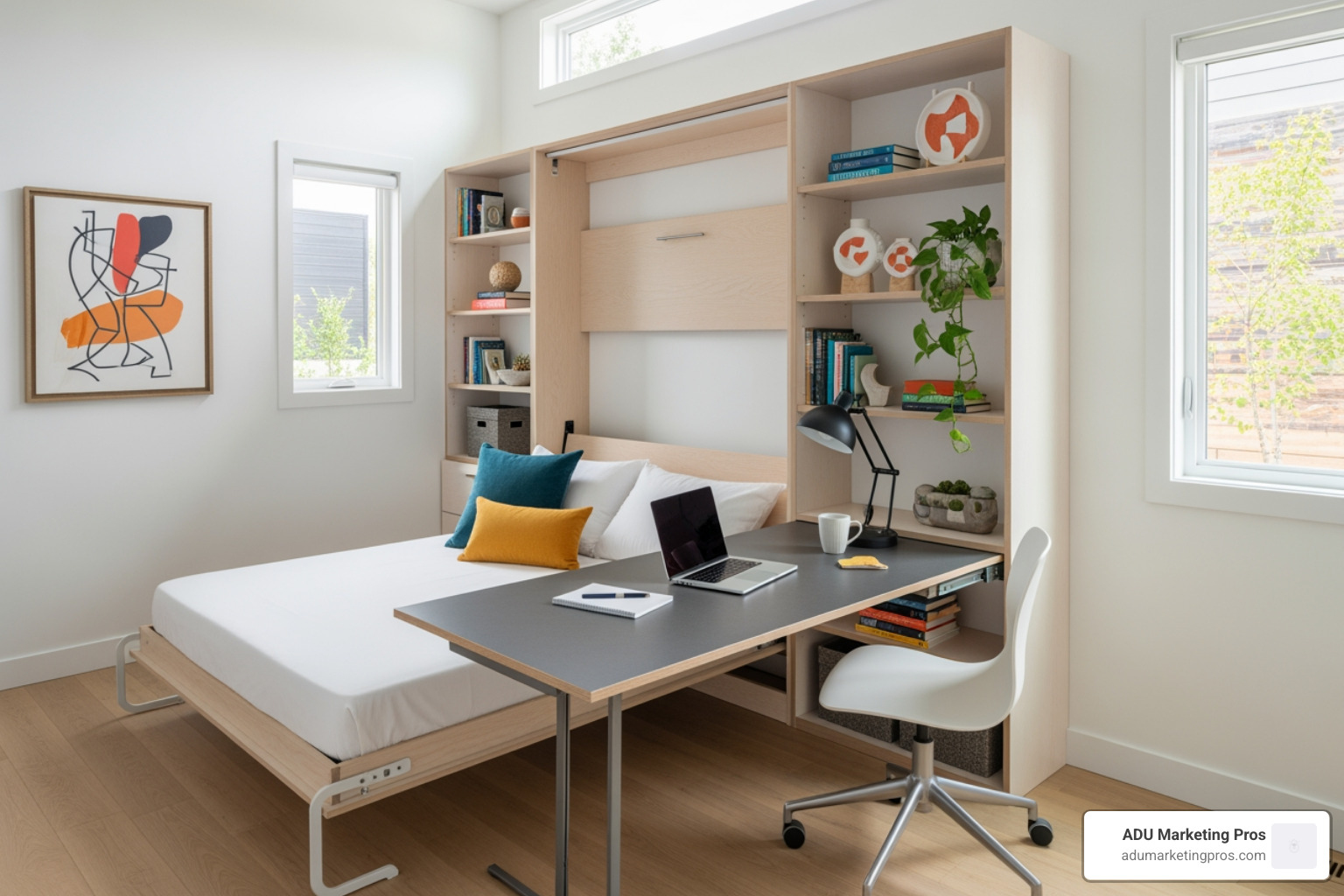
Our ADU garage conversion services streamline this entire journey. For a general overview, our ADU Building Process is a great resource. We also draw inspiration from a wealth of creative options, such as those found in our ADU Design Ideas California collection.
The 4-Step Garage Conversion Process
Most professional garage conversions follow a predictable four-stage process to ensure efficiency and quality:
- Planning & Feasibility (Weeks 1-2): This initial stage defines your goals and what’s possible. It involves a site visit to assess your garage’s condition, a discussion of your intended use (rental, family, office), a review of local zoning rules to confirm feasibility, and the development of an initial budget and timeline.
- Design & Engineering (Weeks 2-5): Once you decide to proceed, our team creates detailed architectural plans, including floor plans, elevations, and material specifications. Concurrently, a structural engineer analyzes the existing structure and designs any necessary reinforcements (e.g., foundation footings, shear walls, roof ties) to meet modern seismic and safety codes. Energy calculations (Title 24) are also completed at this stage.
- Permitting & Approval (Weeks 4-12+): We compile and submit all required documents—plans, engineering calculations, and application forms—to the city’s building department. We manage the entire review process, responding to any questions or correction requests from plan checkers until all permits are secured. The timeline for this stage can vary significantly depending on the city.
- Construction & Finishing (Weeks 8-12): This is the hands-on phase where your garage is transformed. The typical sequence includes: demolition and site prep; foundation repair/upgrades; framing new walls and window/door openings; rough-in of plumbing, electrical, and HVAC; insulation; drywall and painting; installation of flooring, cabinets, and fixtures; and final connections. This phase is punctuated by regular city inspections to ensure all work is done to code.
Design Tips and Creative Ideas for Your Space
Converting a garage often means working with a compact, rectangular footprint, but thoughtful design can make a small ADU feel spacious, functional, and luxurious.
- Maximize Natural Light: Garages are notoriously dark. Incorporate large windows, glass doors (like a sliding or French door), skylights, or high clerestory windows to flood the space with light and make it feel open and airy. Vaulting the ceiling by removing existing ceiling joists (if structurally feasible) can also dramatically increase the sense of volume.
- Use Smart Color Palettes: Lighter paint colors like soft whites, light grays, and pale blues reflect light and make a space feel larger. Use bold, dark colors as accents for a feature wall, cabinetry, or decor to add depth and personality without overwhelming the room.
- Incorporate Space-Saving Solutions: Multi-functional furniture is key. Murphy beds that fold into a wall, often with an integrated sofa or desk, are a game-changer for studio layouts. Use pocket doors instead of swing doors to save floor space. Explore our Studio ADU Floor Plans for more efficient layout examples.
- Design an Efficient Kitchen: Use compact, apartment-sized appliances (e.g., 24-inch refrigerator, 18-inch dishwasher, two-burner cooktop) and clever storage like pull-out pantries and corner carousels. An open-concept kitchen that flows into the living area also enhances the sense of space. Our ADU Kitchen Ideas can spark inspiration.
- Create an Outdoor Connection: Add a small deck, patio, or paved area just outside the ADU’s entrance. This extends the living space to the outdoors and provides a private area for relaxing or dining, making the unit feel much larger than its interior footprint.
Essential Utilities and Appliances
Turning a garage into a habitable space requires careful planning for utilities and appliances.
- Utility Connections: The ADU will need water, sewer, and electrical connections. Typically, these are tied into the main house’s systems to save costs. However, this may require upgrading your main electrical panel to handle the additional load. For rental units, you might consider installing separate sub-meters for electricity and water to simplify billing, or even getting a completely separate utility meter from the provider, though this is a more expensive and complex process.
- Plumbing: New plumbing lines are required for the kitchen and bathroom. This is often the most invasive part of the project, as it may involve saw-cutting trenches in the existing concrete slab to run drain lines to the main sewer line.
- HVAC: Ductless mini-split systems are the most popular choice for heating and cooling ADUs. They are highly energy-efficient, provide both heating and air conditioning, and allow for independent temperature control without requiring bulky ductwork.
- Hot Water: On-demand, tankless water heaters are an excellent choice for ADUs. They are compact, saving valuable closet space, and highly energy-efficient as they only heat water when it’s needed.
- Appliances: Prioritizing Energy Efficient ADU options and space-saving models is crucial. Look for apartment-sized refrigerators, 2-burner cooktops, convection microwaves that double as a second oven, and all-in-one combo washer/dryer units to maximize functionality in a small footprint.
Your Project Team: Finding Qualified ADU Garage Conversion Services
A garage conversion is a complex construction project that requires a team of qualified, licensed, and insured professionals. While a DIY approach may seem tempting for small parts of the project, the intricate requirements for structural engineering, utility installations, and navigating city permits make professional ADU garage conversion services indispensable for a safe, legal, and high-quality result.
There are two primary approaches to assembling your team:
- Design-Build Firm: This is an integrated, all-in-one service where a single company handles everything from architectural design and engineering to permitting and construction. The main advantage is having a single point of contact and accountability, which streamlines communication, simplifies budgeting, and can often shorten the overall project timeline.
- Architect + General Contractor: In this traditional model, you first hire an architect or designer to create the plans and then bid the project out to several general contractors. This can give you more control over the design and potentially more competitive construction pricing, but it requires you to manage two separate contracts and act as the liaison between the design and construction teams.
Regardless of the model you choose, finding qualified professionals is crucial. We encourage homeowners in Los Angeles, San Diego, San Jose, and other California cities to seek out builders specializing in ADUs. Our directory of ADU Builders Near Me is a great starting point.
What to Look for in ADU Garage Conversion Services
When vetting potential contractors and design-build firms, be diligent and look for these key indicators of a quality partner:
- Specialized ADU Experience: Don’t just hire a general remodeler. Look for a company with a deep portfolio of completed garage conversions. They will be intimately familiar with the unique challenges and regulations associated with these projects.
- Deep Knowledge of Local Codes: Your team must have a proven track record of successfully permitting and building ADUs in your specific city (e.g., San Francisco, Sunnyvale, Palo Alto). Every municipality has its own nuances.
- License and Insurance: This is non-negotiable. Verify their contractor’s license on the CSLB website and ask for proof of general liability and workers’ compensation insurance. This protects you from liability for accidents or property damage.
- Client Testimonials and References: Speak directly with 2-3 recent clients who completed a similar garage conversion. Ask about their experience with communication, budget and timeline adherence, quality of work, and how problems were resolved.
- Clear and Detailed Contracts: A reputable contractor provides a comprehensive contract that clearly outlines the full scope of work, a detailed payment schedule, a projected timeline, a warranty on their work, and a clear process for handling change orders.
Common Challenges Handled by Professionals
An experienced ADU team is equipped to anticipate and manage the unique challenges of garage conversions, saving you time, money, and headaches:
- Structural Deficiencies: Many older garages have cracked slabs, undersized foundations, or framing that doesn’t meet modern seismic codes. A professional will perform a thorough assessment and integrate the necessary structural upgrades (new footings, shear walls, etc.) seamlessly into the project plan.
- Unpermitted Structures: If your garage was built or modified without permits, it can’t be legally converted until it’s brought up to code. An experienced contractor can navigate the complex “as-built” permitting process to legalize the existing structure before the conversion begins.
- Utility Connection Logistics: Connecting to the main house’s sewer line can be challenging, especially if the garage is far away or on a sloped lot. Professionals can determine the most efficient path, whether it involves trenching across a yard or installing a sewage ejector pump.
- Low Ceilings and Headroom: Many garages have low ceilings that can make the space feel cramped. A professional can assess the possibility of vaulting the ceiling by re-engineering the roof structure or, in some cases, lowering the floor by digging out and pouring a new, lower slab to gain precious inches of headroom.
Conclusion
Converting your garage into an Accessory Dwelling Unit is a smart, strategic investment for homeowners across California. In an era of housing shortages and evolving family needs, it stands out as a uniquely cost-effective and efficient solution. By leveraging an existing structure, you can add significant financial value, generate rental income, create flexible living space for family, or build the perfect home office—all while adding to your community’s housing stock.
The process, from assessing the original foundation to navigating complex local zoning codes and installing modern utilities, is intricate and demands expertise. However, by understanding the benefits, key considerations, and the step-by-step process outlined above, you are well-prepared to embark on this transformative project.
The ultimate success of your garage conversion hinges on partnering with qualified, experienced professionals who specialize in this unique type of construction. For builders and architects, connecting with these informed homeowners is the key to turning underused spaces into valuable, functional, and beautiful homes. At ADU Marketing Pros, we bridge that gap, helping construction firms market their expertise and ensuring homeowners can find the best ADU garage conversion services for their needs.
Ready to unlock the full potential of your property? Explore our comprehensive ADU Garage Conversions resources to take the next step toward making your dream ADU a reality.