
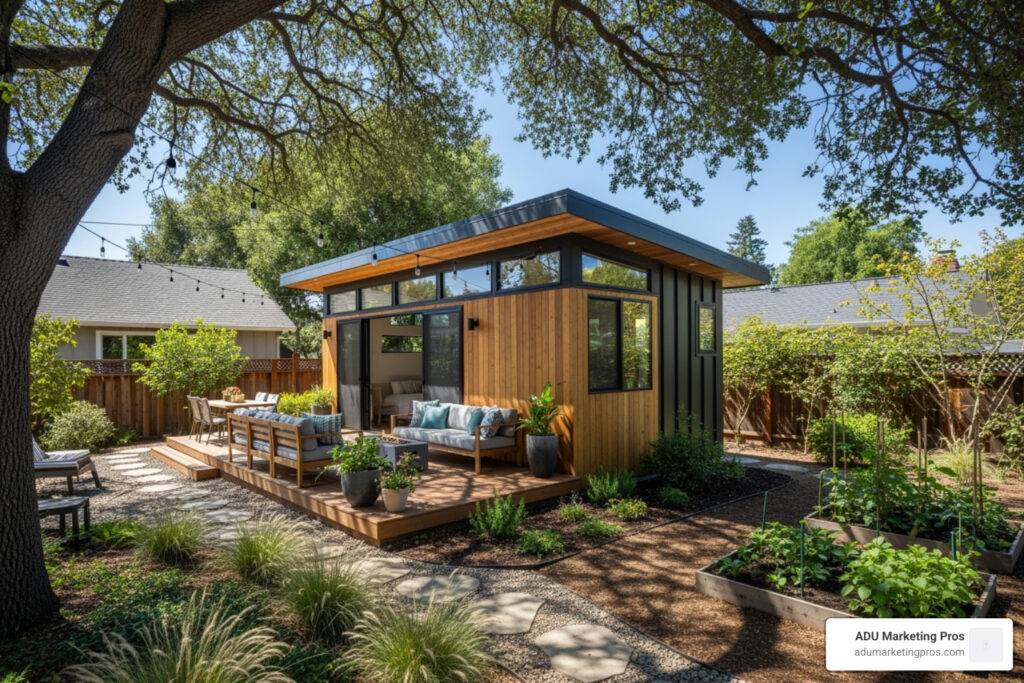
Why Understanding ADU Rental Income Potential in San Gabriel Matters Now
ADU rental income potential in san gabriel is one of the smartest financial moves a property owner can make in 2025. As California’s housing crisis continues to intensify, the demand for diverse and affordable living spaces has never been higher. Accessory dwelling units (ADUs) have emerged as a powerful solution, offering a prime opportunity to generate significant passive income, boost your property’s value, and contribute to the local housing supply. The San Gabriel Valley, with its unique blend of suburban tranquility and urban accessibility, is at the epicenter of this trend.
Quick Answer: What Can You Earn from a San Gabriel ADU?
Based on 2025 market data, here’s what property owners can expect:
- Studio/Junior ADU (up to 500 sq. ft.): $1,500–$2,200/month
- 1-Bedroom ADU (600–850 sq. ft.): $1,800–$2,800/month
- 2-Bedroom ADU (850–1,200 sq. ft.): $2,200–$3,500/month
Your actual income depends on a variety of factors, including precise location, ADU quality, size, and amenities. For example, a high-end unit in Pasadena near the Rose Bowl will command premium rents, while a functional ADU in a family-friendly El Monte neighborhood will attract a different but equally reliable tenant base. With 42% of the San Gabriel Valley’s 1.29 million residents renting, a vast and diverse tenant pool is actively seeking the privacy and modern features that quality ADUs provide.
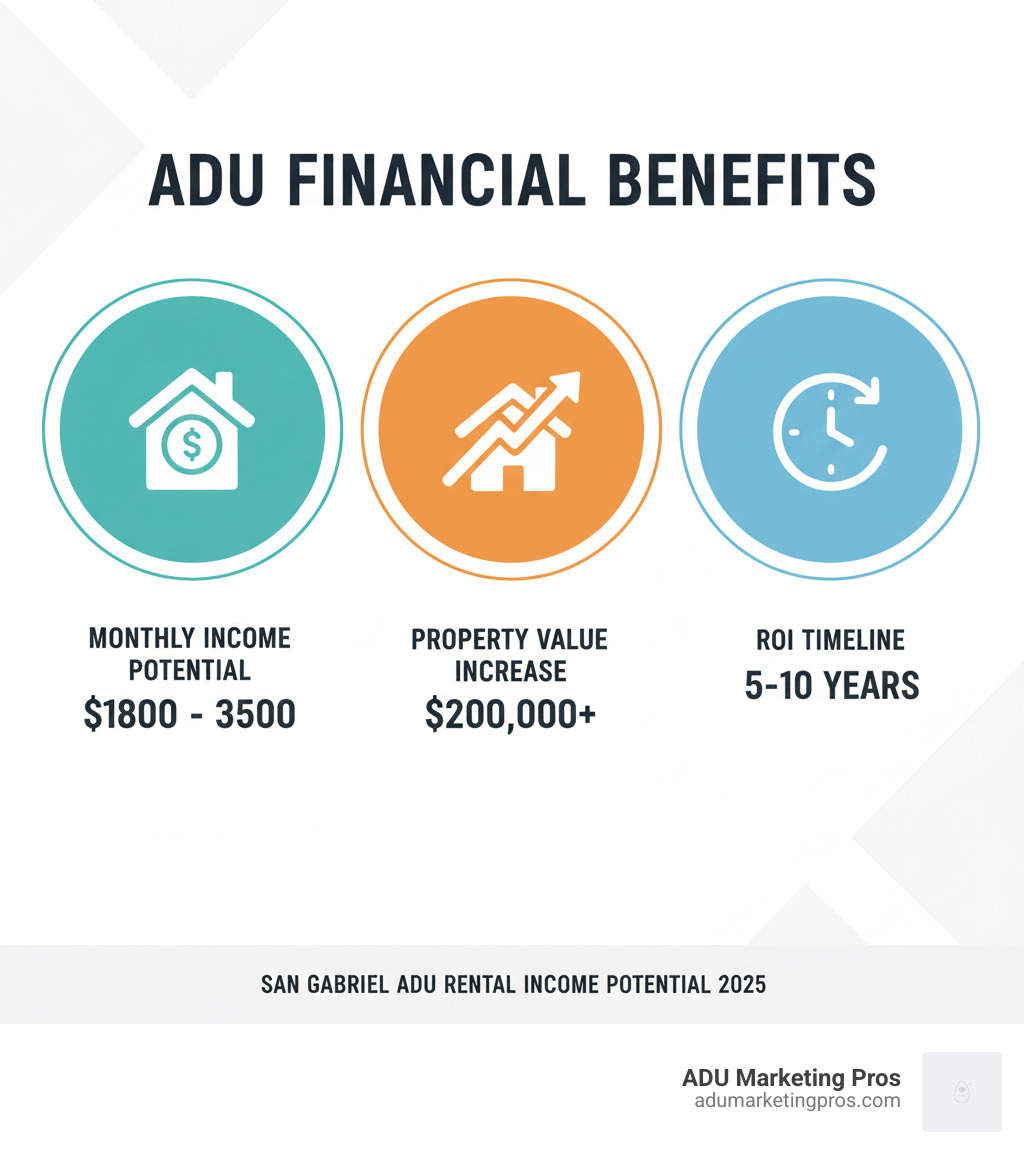
Beyond rent, an ADU can increase your property value by roughly 100 times its monthly rental income. A unit generating $2,000 per month could add about $200,000 to your property’s worth.
However, unlocking this potential isn’t as simple as just building a unit. Maximizing your investment requires a strategic approach, from navigating LA County’s ban on short-term rentals and understanding complex rent control laws to designing a unit that meets market demand. This comprehensive guide covers everything you need to know, from detailed income projections and city-specific data to regulatory requirements and proven strategies for maximizing your return on investment.
Understanding the ADU Rental Income Potential in San Gabriel for 2025
The San Gabriel Valley is a promising market for ADU investments, thanks to a growing population, housing shortages, and a large renter base. With 42% of the region’s 1.29 million residents renting, there’s a built-in tenant pool for the private, modern living spaces ADUs offer. This demand directly drives the adu rental income potential in san gabriel for 2025.
| ADU Type | Typical Size (Sq. Ft.) | Estimated Monthly Rent Range (2025) | Ideal Tenant Profile |
|---|---|---|---|
| Studio/JADU | Up to 500 | $1,500–$2,200 | Students, Young Professionals, Singles |
| 1-Bedroom | 600–850 | $1,800–$2,800 | Couples, Working Professionals |
| 2-Bedroom | 850–1,200 | $2,200–$3,500 | Small Families, Roommates |
Projected ADU Rental Income Potential in San Gabriel by Unit Size
The size and layout of your ADU are major income drivers. Here’s what you can realistically expect:
-
Studio and Junior ADUs (up to 500 sq. ft.) are perfect for single occupants. They command $1,500–$2,200 per month, filling a key market need for affordable, independent living. In San Gabriel, JADUs average around $1,703 monthly. Their ideal tenant profile includes students from nearby institutions like Caltech, Pasadena City College (PCC), or the Claremont Colleges; single young professionals working in downtown LA or local business hubs; and even empty nesters looking to downsize while staying in their community. If you’re curious about how income from additional household members might factor into financing, you can explore more info about boarder income.
-
1-Bedroom ADUs (600-850 sq. ft.) hit the sweet spot for many investors, attracting a wide range of tenants. The projected rental range of $1,800–$2,800 per month reflects strong demand for the extra space and privacy these units provide. Ideal tenants include professional couples, remote workers who need a clear separation between living and work areas, and individuals who value more privacy and outdoor space than a traditional apartment can offer.
-
2-Bedroom ADUs (850-1200 sq. ft.) function like small homes, making them ideal for a broader demographic. With projected rents of $2,200–$3,500 per month, they deliver the highest income. These units are perfect for small families seeking entry into desirable school districts like those in Arcadia or San Marino, professional roommates splitting costs on a high-quality living space, or multi-generational families wanting to keep loved ones close while maintaining independence.
How San Gabriel ADU Rents Compare to Traditional Apartments
ADUs often outperform comparable apartments in rental income. While the average 1-bedroom apartment in San Gabriel rents for about $1,696 and a 2-bedroom for $2,134, a well-designed ADU can command significantly more.
Why can ADUs charge a premium?
- New Construction: Most ADUs are built in the last few years, meaning tenants get pristine kitchens, modern bathrooms, and energy-efficient appliances. This is a major draw compared to the many older apartment buildings in the region, which may have dated fixtures and less reliable infrastructure. The promise of lower utility bills due to better insulation and new systems is also a significant financial incentive for tenants.
- Privacy: An ADU offers a “single-family home feel” that is impossible to replicate in a multi-family building. With a dedicated private entrance, no shared walls, and no noise from neighbors above or below, it provides a level of peace and autonomy that many renters will pay a significant premium to secure.
- Modern Amenities: In-unit laundry is often the number one requested amenity by renters. Central air conditioning is a must-have in the SGV’s hot summers. Including utilities like high-speed Wi-Fi and even landscaping services can create a hassle-free living experience that justifies top-of-market rent.
- Parking: A guaranteed off-street parking spot is a massive advantage in car-dependent Southern California. It eliminates the daily stress of searching for street parking and provides added security for the tenant’s vehicle.
- Outdoor Space: Many ADUs come with access to a private patio or a small yard, a luxury rarely found in apartment living. This personal outdoor space is highly coveted for relaxation, gardening, or entertaining.
A modern, well-equipped ADU with these features will consistently command premium rates over older, less private apartment stock, making the adu rental income potential in san gabriel especially attractive for savvy investors.
Key Factors That Drive Your Rental Income
Understanding base rental figures is just the start. Several key factors determine whether your ADU earns average or premium rent. The difference between an $1,800/month unit and a $3,000/month unit often comes down to the following elements.
Location, Location, Location: SGV City-by-City Breakdown
The San Gabriel Valley is a collection of distinct communities, each with its own rental price points.
- Premium Markets (Pasadena, Arcadia): These cities command top-tier rents, with 1-bedroom ADUs fetching $2,200–$3,000. They attract high-income tenants with their walkable downtowns, cultural amenities (like the Norton Simon Museum or Huntington Library), and excellent schools.
- Mid-Range Markets (San Gabriel, Alhambra, Monterey Park): Offering a sweet spot of strong demand and good value, 1-bedroom ADUs here typically rent for $1,800–$2,500. These areas appeal to a diverse tenant pool seeking excellent food scenes, strong community ties, and convenient freeway access to both downtown LA and Orange County.
- Affordable Markets (El Monte): While rents are lower ($1,500–$2,200 for a 1-bedroom), these areas offer consistent, high demand for quality affordable housing, leading to lower vacancy rates and a reliable income stream.
Within each city, factors like proximity to public transit (e.g., a Metro Gold Line station), school district quality, and walkability to shops and restaurants can significantly boost your rental income. A property located a short walk from a vibrant main street or a popular park will always be more desirable.
The Impact of ADU Size, Condition, and Amenities
The physical characteristics of your ADU are what you control most. A thoughtful layout is more important than raw square footage. A newly constructed ADU with modern finishes will always command a premium over a dated unit.
Amenities are what transform a basic rental into a desirable home. They not only increase monthly rent but also attract higher-quality tenants and reduce vacancy. To stay informed on market preferences, you can learn more info about ADU rental market trends.
To truly maximize your income, think of amenities in tiers:
-
Tier 1: The Must-Haves (Non-Negotiable for Premium Rent):
- In-unit washer and dryer
- Central air conditioning and heating
- Private entrance and separate mailing address
- Dedicated off-street parking spot
-
Tier 2: The Value-Adders (Justify Higher Rent & Attract Better Tenants):
- Some or all utilities included (Wi-Fi is a huge draw)
- Private outdoor space (a small patio, deck, or dedicated yard area)
- Modern kitchen with dishwasher, garbage disposal, and quality fixtures
- Ample storage solutions (built-in closets, clever cabinetry)
-
Tier 3: The Luxury Touches (For Top-of-Market Rents in Premium Areas):
- High-speed internet/Wi-Fi included in rent
- Smart home features (thermostat, locks, lighting)
- High-end finishes (quartz countertops, stainless steel appliances)
- Balcony or Juliet balcony for upper-floor units
A well-designed, amenity-rich ADU in a mid-range location can easily outperform a basic unit in a premium city, giving you the power to maximize your adu rental income potential in san gabriel.
Navigating San Gabriel’s Rules and Regulations
Before counting your rental income, it’s crucial to understand the local rules. Navigating the regulatory landscape is essential for protecting your investment and maximizing your adu rental income potential in san gabriel.

The Long-Term Lease Mandate: LA County’s STR Prohibition
A key rule in Los Angeles County is that ADUs generally cannot be used for short-term rentals (STRs). This means no Airbnb or VRBO for rental periods of less than 30 days. This regulation was put in place to preserve the housing stock for long-term residents rather than tourists, directly addressing the housing crisis. The upside for landlords is the stability of consistent, predictable monthly income without the high turnover, intense management, and seasonal volatility of STRs. This ensures your strategy is focused on attracting stable, long-term tenants. For detailed local requirements, you can check San Gabriel ADU Information.
Rent Control and Your ADU: What You Need to Know
Rent control rules are complex and depend on when your primary home was built and the type of ADU.
- Newly constructed, detached ADUs are generally exempt from local rent control caps for 15 years from their certificate of occupancy, regardless of the main house’s age. This gives you significant flexibility in setting initial rent and making market-rate adjustments.
- ADUs created by converting existing space (like a garage) within a home built before October 1, 1978, may fall under LA’s Rent Stabilization Ordinance (RSO).
- Attached ADUs built onto a pre-1978 home may be subject to RSO tenant protections, but not necessarily the rent caps.
- For properties not covered by a local RSO, California’s statewide AB 1482 limits annual rent increases to 5% plus the local rate of inflation (not to exceed 10% total).
- The Just Cause Ordinance (JCO) applies to most rental units in LA County and requires a valid legal reason for eviction, even if your unit is exempt from rent caps. This protects tenants from arbitrary lease terminations.
For example, if you convert a garage into an ADU on a property with a main house built in 1970, it may be subject to the RSO. However, if you build a brand-new, detached ADU in the backyard of that same property, it is exempt from local rent caps for 15 years under state law. We strongly recommend using the ZIMAS property information tool or consulting a landlord-tenant attorney to confirm which rules apply to your specific property.
Affordable Housing Programs and Financial Incentives
Look into programs that can reduce your upfront costs. The CalHFA ADU Grant Program is a game-changer, offering up to $40,000 to reimburse homeowners for pre-development costs. These are the critical upfront expenses incurred before construction even begins, such as site prep, architectural designs, soil tests, surveys, and city permit fees. This grant can dramatically lower the barrier to entry and improve your overall ROI. Eligibility is typically tied to homeowner income limits, so it’s essential to check the latest requirements on the CalHFA website. Some local programs offer incentives like reduced fees if you rent to income-qualified tenants. While this may mean below-market rent, it can offset construction costs. Understanding how lenders view ADU income is also key; you can explore more info about FHA ADU rental income and more info about Fannie Mae ADU rental income to learn more.
Maximizing Your ADU Investment and ROI
Building an ADU is a major investment, but the right strategy can make it a highly rewarding one. Here’s how to maximize your adu rental income potential in san gabriel through smart planning and management.

Strategies to Maximize Your Monthly Rental Income
Maximizing your ADU’s earning potential requires ongoing effort and a professional approach.
- Conduct a Competitive Rent Analysis: Before listing, research what similar ADUs and apartments are renting for in your immediate neighborhood. Use sites like Zillow, RentCafe, or Apartments.com to analyze comparable listings. Look at price per square foot, amenities offered, and days on market to price your unit competitively but aggressively.
- Invest in Quality Listings: Professional photography is non-negotiable. A well-lit, attractively staged photo can make your listing stand out and generate more inquiries. Write a compelling description that highlights key features like privacy, modern amenities, walkability, and dedicated parking.
- Screen Tenants Thoroughly: A rigorous screening process is your best defense against future headaches like late rent or property damage. This multi-step process should be applied consistently to all applicants to comply with Fair Housing laws. It includes: 1. A detailed application form. 2. A credit check to assess financial responsibility. 3. A background check for criminal history. 4. Verification of employment and income (ask for pay stubs or offer letters) to ensure they can afford the rent (a common standard is income of 3x the rent). 5. Contacting previous landlords to ask about payment history and their conduct as a tenant. Using a professional lease agreement that complies with all local and state laws is essential.
- Consider Including Utilities: Bundling water, trash, or high-speed Wi-Fi into the rent can be a powerful marketing tool. It simplifies the tenant’s budget and can make your unit more attractive than others, justifying a higher overall price.
- Prioritize Maintenance: Budget for ongoing upkeep and respond to repair requests promptly. Happy, respected tenants are more likely to renew their leases, which ensures consistent income and eliminates the costs and hassle of finding new renters. Understanding the tax implications is also crucial; you can learn more info about ADU rental income taxes to plan effectively.
How Property Value and ADU Rental Income Potential in San Gabriel are Linked
Your ADU doesn’t just generate monthly income—it significantly increases your property’s overall value. A common rule of thumb is that an ADU can boost property value by 100 times its monthly rental income. A unit renting for $2,500/month could add approximately $250,000 to your property’s value.
Construction costs in San Gabriel typically range from $314–$370 per square foot for site-built ADUs. When you sell or refinance, an appraiser will assess the value of your ADU. They may use several methods:
- Sales Comparison Approach: The appraiser looks for recent sales of similar properties with ADUs in your area to determine a comparable value.
- Cost Approach: The appraiser estimates the cost to build the ADU from scratch and adds that to the property value.
- Income Approach: For investors, this is key. The appraiser analyzes the rental income the ADU generates and uses a formula (like a Gross Rent Multiplier) to assign a value based on its earning potential.
A legally permitted ADU is a recognized asset that adds quantifiable value, creating a powerful financial foundation through both monthly income and long-term equity growth. For a complete overview, check out more info about ADU return on investment.
Frequently Asked Questions about San Gabriel ADU Rentals
What is the single biggest factor affecting my ADU’s rent in San Gabriel?
Location within the San Gabriel Valley is the most powerful factor. An identical ADU will rent for hundreds more per month in a premium market like Pasadena than in a more affordable one like El Monte. Key drivers of location value include:
- Proximity to Amenities: Walkability to shops, restaurants, parks, and transit hubs like Metro stations commands a premium. Tenants value convenience and lifestyle.
- School Districts: Top-rated school districts in cities like Arcadia or South Pasadena attract families willing to pay more for access to quality education, even for a rental.
- Neighborhood Character: Safe, well-maintained neighborhoods with a strong sense of community, tree-lined streets, and low crime rates are always in high demand.
While your ADU’s features and amenities justify the price, the neighborhood is what gets prospective tenants interested in the first place.
Can I use my ADU as an Airbnb or for other short-term rentals?
The short answer is no. Los Angeles County and most cities within it prohibit using ADUs for rentals of less than 30 days. This means no Airbnb, VRBO, or other vacation rentals. You must focus on long-term leases. The benefit of this restriction is stability—you get consistent, predictable monthly income without the constant management headaches, higher vacancy rates, and increased wear and tear associated with short-term hosting. This ensures your adu rental income potential in san gabriel comes from tenants seeking a home, not a temporary stay.
How much will building an ADU increase my property taxes?
Your property taxes will increase, but your entire property will not be reassessed at its new, higher market value. Instead, you’ll receive a supplemental tax bill based only on the assessed value of the new ADU construction. Your primary home’s tax basis, protected by Proposition 13, remains unchanged.
For example, if your ADU construction is assessed to have added $150,000 in value, your annual property tax bill would increase by roughly $1,650 (based on a ~1.1% tax rate in the area). This amounts to about $138 per month—a manageable and predictable operating cost compared to the thousands in rental income your ADU can generate.
How do I finance the construction of an ADU?
Financing is one of the biggest hurdles for homeowners, but several excellent options exist. The best path depends on your financial situation, home equity, and credit score.
- Cash-Out Refinance: This involves replacing your current mortgage with a new, larger one, allowing you to “cash out” the difference to fund your ADU construction. It’s often a great option if interest rates are favorable, as you’ll have one simple monthly payment.
- Home Equity Line of Credit (HELOC): A HELOC works like a credit card secured by your home’s equity. You can draw funds as needed during the construction process and only pay interest on the amount you use. This flexibility is ideal for managing project costs.
- Construction Loan: This is a short-term loan specifically for building projects. The lender releases funds in stages (draws) as construction milestones are met. Once the ADU is complete, this loan is typically refinanced into a traditional mortgage.
- Renovation Loans (FHA 203(k) or Fannie Mae HomeStyle): These loans allow you to bundle the cost of the ADU construction into your primary mortgage, whether you’re buying a new home or refinancing your current one.
What are the biggest ‘hidden’ costs when building an ADU?
While your contractor’s bid will cover the main structure, several other costs can surprise homeowners. Budgeting for these from the start is crucial for a smooth project.
- Utility Connection Fees: Connecting the ADU to water, sewer, and electricity can be expensive, sometimes costing $10,000 to $25,000 or more, especially if it requires trenching across your property or upgrading your main electrical panel.
- Soils and Structural Engineering Reports: Most cities require a soils report to determine foundation requirements and a structural engineering plan, which can add several thousand dollars to your pre-development costs.
- Permit and Impact Fees: City and county fees for plan checks, permits, and school/park impact can be substantial, often running into the tens of thousands of dollars depending on your location and ADU size.
- Landscaping: After construction tears up your backyard, you’ll need to budget for new landscaping, hardscaping (patios, walkways), and fencing to create a private and appealing space for your tenant.
- Contingency Fund: Always set aside a contingency fund of 10-15% of your total construction budget to cover unexpected issues that inevitably arise during any building project.
Conclusion: Is an ADU in San Gabriel a Profitable Investment?
So, is an ADU in San Gabriel a profitable investment? The data points to a resounding yes. With the potential to generate $1,500 to $3,500 in monthly rental income and simultaneously boost your property value by $200,000 or more, the financial case is exceptionally compelling. The dual return of passive cash flow and long-term equity growth makes it one of the most powerful wealth-building tools available to homeowners today.
Maximizing your adu rental income potential in san gabriel requires strategic planning and a clear understanding of the local landscape. Success hinges on embracing the long-term rental model mandated by LA County, which provides stability and predictable income. Navigating rent control, choosing a high-demand location, and investing in the amenities modern tenants crave—like in-unit laundry, private entrances, and dedicated parking—are the keys to unlocking top-tier rents.
Beyond the impressive financial returns, building an ADU is a meaningful way to address California’s housing shortage, providing a high-quality, private home for a fellow community member.
For ADU builders, designers, and architects, this burgeoning market represents a massive opportunity. Effectively educating homeowners on this powerful income potential is the most critical step in attracting clients. ADU Marketing Pros specializes in creating targeted digital marketing strategies that help construction and design firms stand out, build authority, and connect with homeowners who are ready to invest in their properties.
The upfront investment is substantial, but the rewards—consistent income, a dramatic increase in property equity, and a positive community contribution—are even greater. Ready to take the next step? Unlock your full ADU rental income potential and discover what’s possible for your San Gabriel property.