
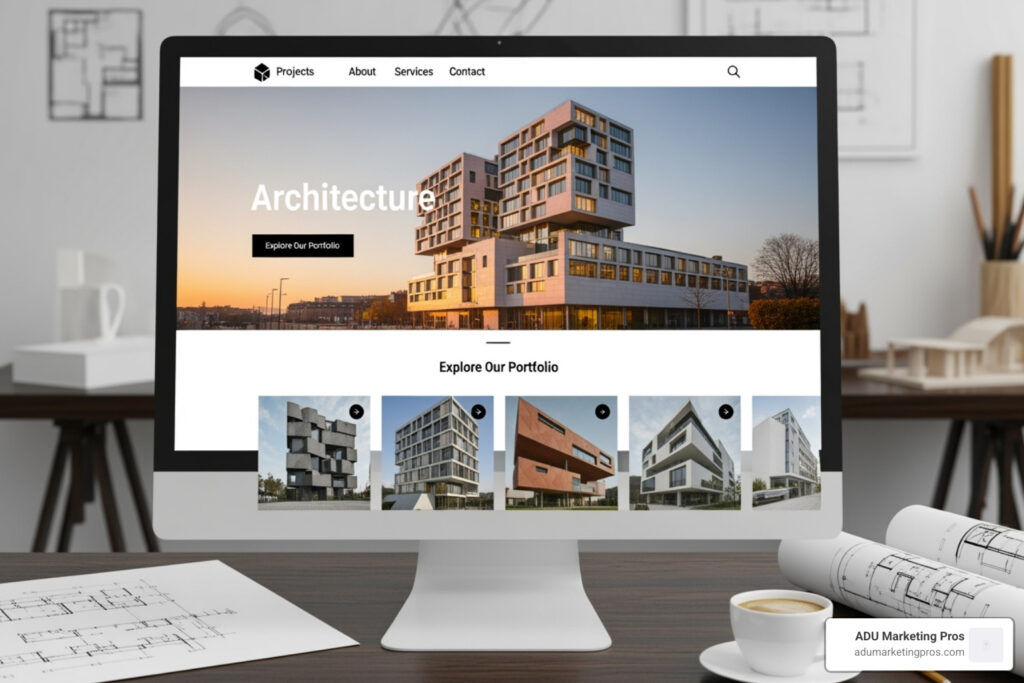
Why Architecture Website Design Makes or Breaks Your First Impression
Your architecture website design is your firm’s digital storefront and the first impression for most potential clients. In a visual industry, your site must immediately convey your design philosophy, portfolio quality, and expertise.
Key elements for success include high-quality imagery, clean layouts, interactive portfolios, mobile responsiveness, and fast loading times. A great website isn’t just a brochure; it’s a 24/7 lead generation tool that attracts your ideal clients.
As one industry expert noted: “An excellent architecture website will give visitors a sense of who the architecture firm serves, what they represent, and why its services are worth considering.”
With competition intensifying, especially in California’s booming ADU market, a standout website is essential for growth.
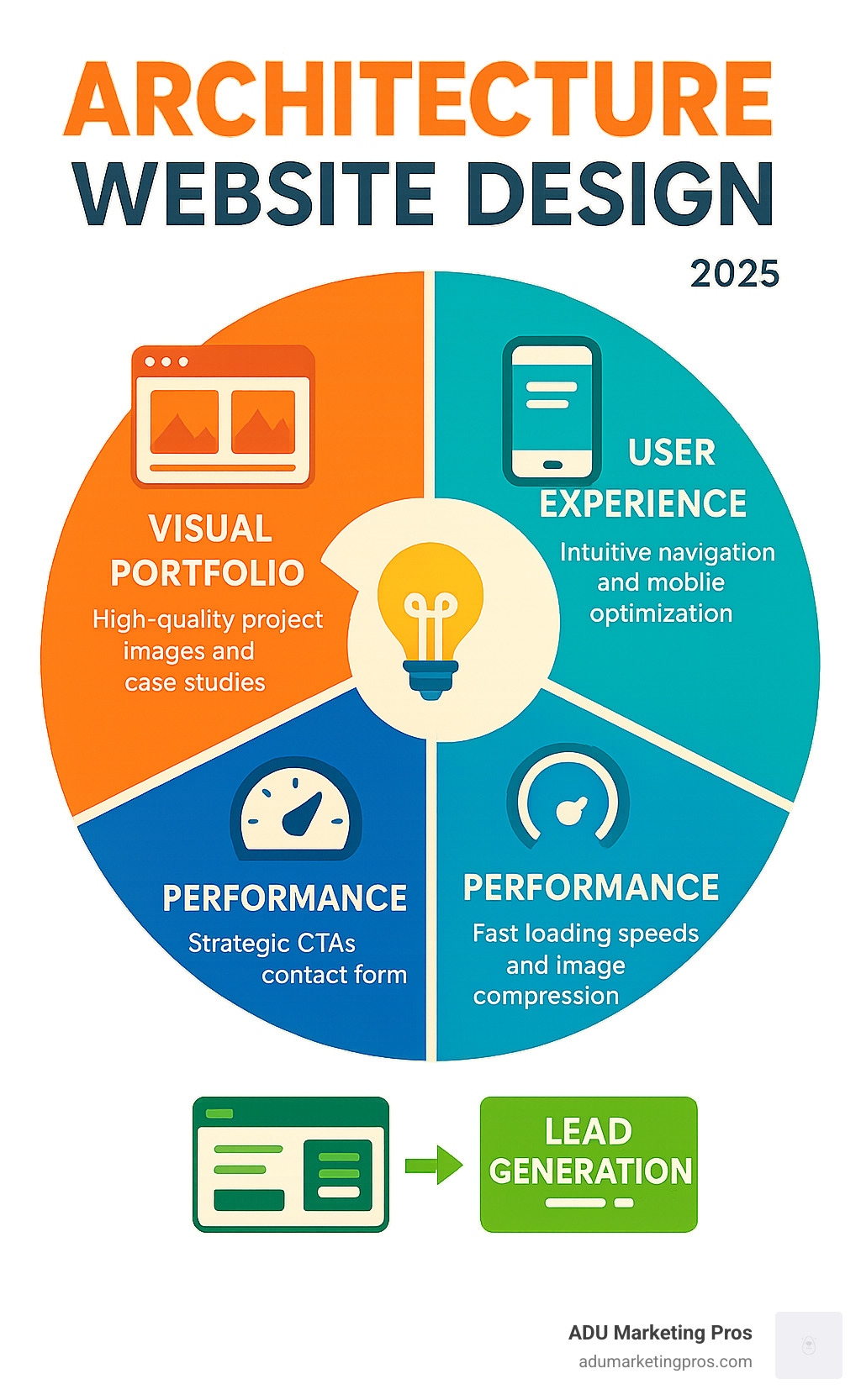
Key terms for architecture website design:
The Blueprint for Success: Essential Elements of an Architecture Website
Your architecture website design must tell a compelling story that convinces potential clients you’re the right firm for them. This begins with high-quality visual content. Professional photography and curated project portfolios should work like a museum exhibition, telling the story of your expertise in space, light, and living.
Many firms make the mistake of treating their portfolio like a photo dump. Instead, showcase not just what you’ve built, but how you think. A clean grid layout with thumbnails gives visitors a quick yet comprehensive overview of your firm’s range and style. The human element is also crucial. Your About Us page should share your passion, and team bios should reveal the personalities behind the designs. Client testimonials provide powerful social proof, carrying more weight than any marketing copy.
For inspiration on presenting your firm’s unique identity, check out this Portfolio Project Architectural Firm Branding example.
Essential Principles of Architecture Website Design
Your website’s structure should be as logical as a well-designed building. Grid layouts bring order to creativity, allowing visitors to scan projects without feeling overwhelmed. Each project deserves its own space with comprehensive descriptions and high-resolution photos.
Detailed case studies are a powerful tool to walk visitors through your problem-solving process. For renovations, before-and-after galleries provide a dramatic and satisfying look at your transformative work. To respect visitors’ time, implement project filters and categorization. Whether someone is looking for residential, commercial, or ADU designs, they should be able to find relevant work in seconds. This thoughtful organization demonstrates the same attention to detail you bring to your architectural projects.
For more insights on building a strong architectural brand, explore our guide on Branding for Architecture Firms.
Communicating Your Design Philosophy
Your architecture website design is where your firm’s personality shines. It’s about connecting with clients who share your vision. Start with a mission statement that tells people what genuinely drives your work, whether it’s creating sustainable sanctuaries or maximizing natural light.
Your unique approach is what separates you from the competition. Are you sustainability champions, ADU specialists, or material innovators? Highlighting these specializations attracts the right kind of clients—the ones who value your specific expertise. People hire architects because they believe in their vision. Your website must make that vision crystal clear, creating an emotional connection that turns browsers into clients.
Inspiring Designs: Top Architecture Website Styles to Emulate
The style you choose for your architecture website design speaks volumes about your firm. Exploring current design approaches can help you make a powerful statement online and captivate potential clients.
One popular and effective approach is minimalist design. Think of it as a sleek, modern structure: clean lines, ample white space, and a focus on what matters. This style often uses monochromatic backgrounds to make your stunning project imagery pop. Another captivating style is the full-width hero video, which instantly immerses visitors in a dynamic story about your work or creative process.
For a more engaging experience, interactive elements are gaining traction. These can include subtle animated transitions, parallax effects that add depth, or asymmetrical layouts that align your digital presence with cutting-edge architectural thought.
The Minimalist Masterpiece
Minimalism in architecture website design conveys sophistication by embracing the “less is more” philosophy. It’s defined by a clean layout, generous white space, and simple, intuitive navigation. This approach allows your architectural work to speak for itself without visual clutter. Strong typography and high-quality images are critical, as each element becomes a focal point that reinforces the precision and artistry of your projects.
The Immersive Video Experience
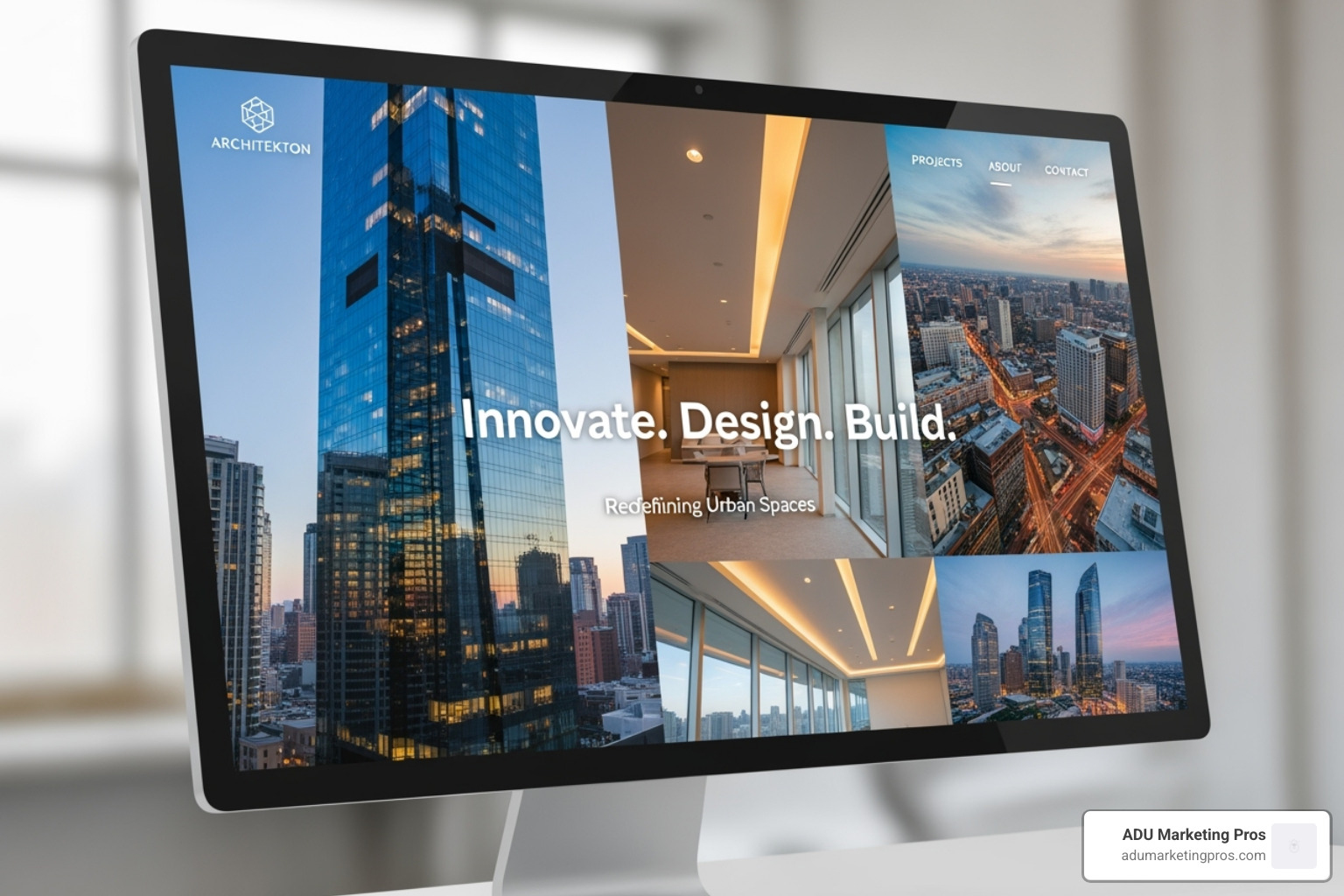
The immersive video experience uses full-width hero videos to create a dynamic introduction to your firm. These videos, often playing silently in the background, are powerful storytelling tools that showcase the scale, atmosphere, and functionality of your projects in a way static images cannot. Combined with subtle animated transitions, they create a seamless and engaging user journey that makes a lasting first impression.
The Interactive Showcase
To encourage visitors to explore your portfolio, an interactive showcase is a fantastic addition to modern architecture website design. This approach incorporates dynamic elements that invite exploration and interaction. Consider parallax scrolling to create a sense of depth, or animated thumbnails and hover effects to make your portfolio feel more alive. These features contribute to an engaging user experience that makes your work memorable and a joy to explore. For more innovative design ideas, explore resources like ArchDaily for additional inspiration.
The Functional Core: UX and Performance in Architecture Website Design
Stunning visuals might capture attention, but poor functionality will drive potential clients away. The functional foundation of your architecture website design rests on two pillars: user experience (UX) and performance. These invisible forces determine whether visitors become clients or leave in frustration.
A website that is slow, confusing, or doesn’t work on mobile reflects poorly on your firm’s professionalism. Mobile responsiveness is essential, as more than half of all web traffic comes from mobile devices. Your site must adapt seamlessly to any screen size to ensure a positive experience for every visitor. A fast, intuitive site suggests efficiency and attention to detail—exactly the qualities clients want in an architect.
Optimizing User Experience (UX) for a Seamless Journey
Great UX in architecture website design is like a well-planned building: every element guides people naturally. Start with a logical site structure and clear navigation labels that use client-friendly language (e.g., “Project Types” instead of “Typologies”).
Search functionality and project filters are game-changers, allowing clients to instantly find relevant work, such as ADU projects in a specific area. Make your contact information easy to find by placing it in the header, footer, and on major pages. Finally, ensure readability with clean fonts, good contrast, and ample white space. The goal is a user-centric design that anticipates visitor needs and makes it effortless to find information and get in touch.
The Need for Speed: Performance and Image Optimization
Website visitors expect instant loading. Even a few seconds of delay can cause them to leave. This is a challenge for architecture sites, which rely on high-quality, large-file-size images.
The solution is image compression. You can dramatically reduce image file sizes with minimal quality loss using tools like TinyJPG. This simple step is crucial for balancing visual impact with performance. Beyond images, overall website performance depends on quality hosting and optimized code.
Google’s mobile-first indexing also prioritizes fast, responsive mobile sites in search rankings. A speedy website signals professionalism and respect for your clients’ time, giving you a competitive edge.
From Clicks to Clients: Your Website as a Lead Generation Tool
Your architecture website design is more than a digital portfolio; it’s a 24/7 lead generation machine. By blending smart marketing strategies with great design, your site can turn casual visitors into interested prospects. The goal is to attract new clients by showcasing your expertise, building trust, and guiding them with clear Call-to-actions (CTAs).
A strong content strategy and Search Engine Optimization (SEO) foundation ensure your firm appears when people search for architectural services. A well-designed, functional website helps you reach more potential clients and, more importantly, attract the right clients who value your specific design philosophy.
Ready to turn your online presence into a client magnet? Dive into our insights on Lead Generation for Architects.
The Role of Content Strategy in Your Architecture Website Design
Content strategy is the secret sauce for your architecture website design, establishing your firm as a thought leader. Go beyond project lists and use your website to educate and engage.
- Blog posts can answer common client questions and discuss industry trends.
- Project case studies tell the story of a project from concept to completion, highlighting your problem-solving skills.
- Firm news and thought leadership articles show your firm is active, relevant, and an authority in its field.
This type of content provides value to your audience and gives your SEO a significant boost, making it easier for clients to find you. For help crafting a content plan, explore our guide on Content Marketing for Architects.
Highlighting Your Unique Specialization
Your architecture website design is the perfect canvas to display your firm’s specialization. In a competitive market, focusing on a niche is key to attracting high-quality leads. Whether your expertise is in sustainable architecture, bespoke residential projects, or commercial design, articulating this on your site connects you with clients searching for those specific services.
At ADU Marketing Pros, we understand the power of specialization, especially in California’s booming ADU market. If your firm excels in ADU design, your website should feature this prominently through dedicated service pages, portfolio categories, and blog posts. By clearly defining who you serve, your website becomes a magnet for your ideal clients and the projects you are passionate about. Learn more about how we help firms in this space at ADU Architecture Marketing.
Common Pitfalls: 7 Mistakes to Avoid in Your Website Design
Even the most talented architectural firms can stumble with their online presence. Small oversights in architecture website design can undermine an exceptional practice. Fortunately, most of these common mistakes are easily avoidable.
- Poor Quality Images: Your work deserves better than blurry, poorly lit, or low-resolution photos. This is the biggest missed opportunity, as it makes stunning projects look amateur.
- Confusing Navigation: If visitors can’t find your portfolio or services page within seconds, they will leave. Navigation should be as clean and intuitive as one of your well-designed spaces.
- Slow Load Times: A slow website creates a negative impression and suggests your firm operates at the same sluggish pace. Optimize your site, especially the images, for speed.
- Not Mobile-Friendly: With most users browsing on their phones, a site that isn’t optimized for mobile is a major liability. A poor mobile experience will frustrate potential clients and drive them away.
- Hidden Contact Information: Don’t make it difficult for interested clients to reach you. Your contact details should be prominent and accessible from every page.
- Outdated Portfolio: A portfolio with no recent work raises questions about whether your firm is still active or current. Regularly update it to reflect your latest and best projects.
- Vague Messaging: Generic statements like “we create beautiful spaces” don’t differentiate you. Clearly communicate your unique approach, who you serve, and why a client should choose you.
Your architecture website design is often your only chance to make a first impression. Avoiding these pitfalls ensures your digital presence accurately reflects the quality and professionalism of your architectural work.
Conclusion: Building a Digital Foundation for Your Firm’s Future
Your architecture website design is the cornerstone of your firm’s future growth. It’s the foundation upon which your marketing and client acquisition efforts are built. A successful site combines a high-quality visual portfolio, a clear design philosophy, and a seamless user experience to convert visitors into clients.
While you design stunning spaces, your website works around the clock as your 24/7 marketing tool, attracting leads and building trust in your expertise. But stunning visuals are not enough; they must be supported by a strong technical foundation of fast loading speeds, mobile responsiveness, and intuitive navigation.
For firms specializing in ADUs, particularly in competitive markets like the San Francisco Bay Area, a strong online presence is essential for survival. It allows you to emphasize your expertise over price and connect with clients who value specialized knowledge.
As marketing specialists for ADU construction and architecture firms, we understand that generic approaches don’t work. We are dedicated to creating strategic architecture website design that drives measurable results for firms like yours.
Your future clients are searching online for the expertise you provide. Ensure they find a website that truly represents your firm’s excellence and vision.
Get a professional architecture website design that transforms your online presence into your most effective marketing tool.