
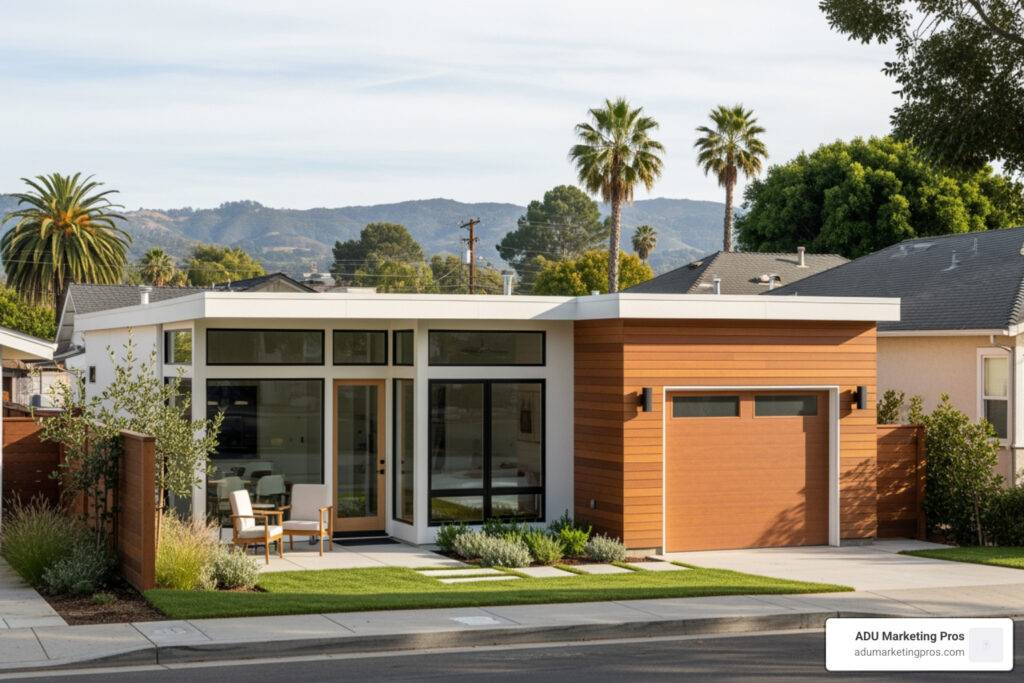
Why Bay Area Garage Apartment Expenses Are Higher Than You Think
Bay area garage apartment expenses typically range from $80,000 to $200,000 in 2025, depending on garage size, scope of work, and which city you’re building in. For many homeowners, the initial sticker shock is real, but understanding the underlying economic drivers of the Northern California construction market helps put these figures into perspective. The Bay Area is not just another housing market; it is a unique ecosystem where geography, regulation, and high-income demand converge to create some of the highest construction costs in the world.
Here’s a quick snapshot to answer the most common cost questions:
| Conversion Type | Typical Cost Range |
|---|---|
| One-car garage (250-400 sq ft) | $80,000 – $120,000 |
| Two-car garage (400-600 sq ft) | $110,000 – $200,000 |
| Full ADU with kitchen + bath | $150,000 – $300,000 |
| Permit fees (Bay Area) | $8,000 – $30,000 |
| Utility connections | $10,000 – $30,000 |
| Cost per square foot | $300 – $500 |
The Context of the Bay Area Housing Crisis
The Bay Area has a well-known housing problem. Supply is tight, rents are high, and homeowners are looking for smart ways to unlock value from land they already own. The “Missing Middle” housing gap has forced a rethink of urban density, leading to a surge in Accessory Dwelling Units (ADUs). That underused garage? It could be generating rental income instead of storing old boxes or serving as a graveyard for holiday decorations. Historically, the region has suffered from decades of restrictive zoning that prioritized single-family homes, but the tide is turning as the state mandates more density to combat the affordability crisis.
Garage conversions have become one of the most popular ways Bay Area homeowners add livable square footage without buying new land or building from scratch. California’s ADU-friendly legislation, specifically bills like SB 9 and SB 10, has made it easier than ever to get these projects approved—but the costs are still significantly higher here than in other parts of the state. This is due to a combination of high demand for skilled labor, stringent seismic requirements, and the general cost of living that affects every link in the supply chain. When you factor in the 2025 economic landscape, including stabilized but still elevated material costs and a tight labor market, the financial planning for these projects requires more precision than ever before.
Labor costs in the Bay Area run 25-50% above the California average. Permit fees alone can reach $30,000 in some cities like Palo Alto or Walnut Creek. And if your garage needs seismic retrofitting or sewer trenching through solid rock or complex root systems, costs climb fast. This guide breaks down every major expense category so you can budget realistically—and avoid the surprises that catch most homeowners off guard. We will explore the nuances of local building codes, the impact of utility upgrades, and the long-term ROI that makes these projects so attractive despite the high entry price.
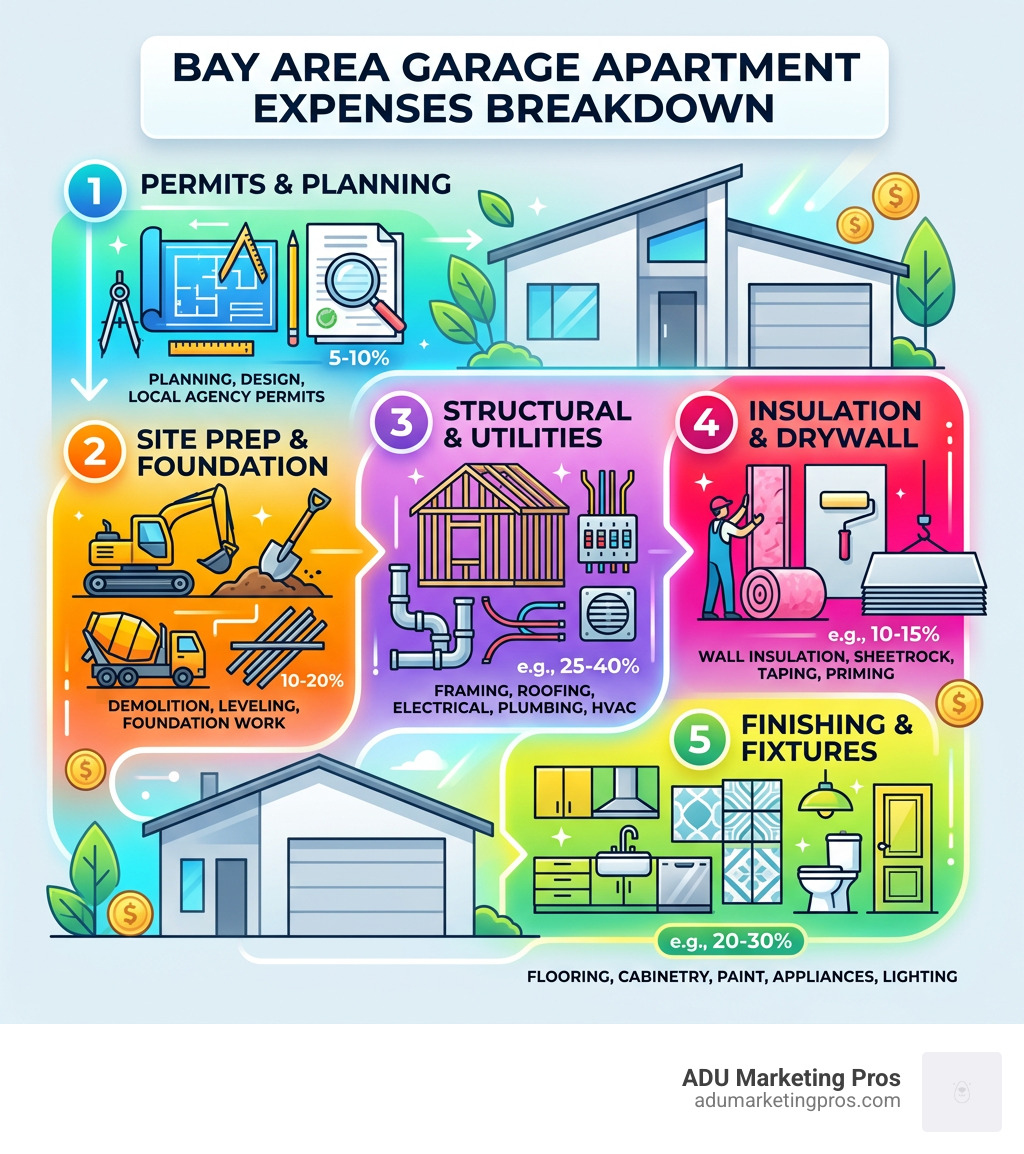
Understanding Bay Area Garage Apartment Expenses in 2025
When we look at the 2025 landscape, the bay area adu cost reflects a market that is both highly regulated and in high demand. Because we face such limited housing options across San Francisco, San Jose, and Oakland, the “garage-to-apartment” pipeline has become a primary solution for multigenerational living and rental income. The shift toward remote and hybrid work has also increased the demand for high-quality home offices that can double as guest suites, further driving the conversion trend.
Projections for 2025 suggest that while material costs have stabilized somewhat after the volatility of the early 2020s, labor remains the “X-factor” in our region. If you are trying to pin down a number, using a garage conversion cost calculator is a great starting point, but you must adjust for the “Bay Area Premium”—a reality where local expertise and specialized trades command higher rates than anywhere else in the country. This premium is driven by the high cost of living for the workers themselves; a plumber or electrician living in the East Bay or South Bay must charge enough to cover their own astronomical housing and business overhead.
Average Bay Area Garage Apartment Expenses by Square Foot
In most of California, you might hear quotes of $125 to $300 per square foot. However, for a true adu cost per square foot in the Bay Area, we tell our clients to budget between $300 and $500. This range accounts for the high-quality materials required to meet California’s strict Title 24 energy efficiency standards and the specialized labor needed for complex urban sites.
Why the massive jump? It comes down to high real estate prices driving up the cost of everything else. When the median home price in San Jose or Sunnyvale is well over $1.5 million, the contractors, architects, and permit technicians living in these areas must charge more to sustain their own businesses. High-end finishes—like quartz countertops, custom cabinetry, and energy-efficient appliances—are also more common here, as homeowners want the unit to match the primary residence’s aesthetic and appeal to high-income tech workers looking for modern rentals. Furthermore, the “soft costs”—design, engineering, and project management—often represent a larger percentage of the total budget in the Bay Area than in more rural markets.
Hidden Bay Area Garage Apartment Expenses to Watch For
The “bones” of your garage often hide the biggest budget-busters. Converting a garage is not just about putting up drywall; it is about turning a structure meant for a car into a structure meant for a human. This involves significant upgrades to the building envelope and structural integrity. Many homeowners assume that because the structure exists, the cost will be minimal, but the reality of modern building codes often requires a near-total overhaul of the existing space.
| Feature | One-Car (250-400 sq ft) | Two-Car (400-600 sq ft) |
|---|---|---|
| Structural/Foundation | $5,000 – $12,000 | $10,000 – $25,000 |
| Seismic Retrofitting | $3,000 – $7,000 | $5,000 – $10,000 |
| Moisture/Vapor Barrier | $2,000 – $4,000 | $3,500 – $6,000 |
| Insulation & Drywall | $6,000 – $10,000 | $10,000 – $15,000 |
Structural improvements are often mandatory in our earthquake-prone region. Many older garages in San Francisco or Palo Alto sit on thin concrete slabs that weren’t designed to support the weight of additional walls or a second story. Furthermore, a garage conversion to adu requires a vapor barrier to prevent ground moisture from ruining your new flooring—a step often skipped in cheaper, unpermitted “bootleg” conversions that eventually leads to mold and structural rot. In the Bay Area’s microclimates, where fog and humidity can be persistent, proper moisture mitigation is not just a code requirement; it is a necessity for the longevity of the investment.
Breaking Down the Core Cost Components
To get a handle on your total adu construction cost, we need to look under the hood. A garage conversion adu is a puzzle of design, legal, and physical pieces. Initial adu building costs usually start with design and engineering. You can expect to spend $5,000 to $15,000 just on architectural plans and structural calculations before a single hammer swings. This phase is critical because the Bay Area’s complex topography and soil conditions often require specialized engineering to ensure the new living space is safe and compliant.
Permits and City-Specific Fees
Navigating permits is perhaps the most frustrating part of the process. In the Bay Area, permit costs are not a flat fee; they are often a percentage of the project value or based on square footage. Each municipality has its own set of rules, and what works in San Jose might be strictly prohibited in Berkeley.
- San Francisco: Known for rigorous reviews, especially in historic neighborhoods where the exterior must remain virtually unchanged. The Planning Department may require specific window types or siding that can double your material costs. Additionally, San Francisco’s “soft story” requirements may apply if the garage is part of a multi-unit building.
- San Jose: Generally more streamlined due to their “ADU Ally” program, but still requires significant “impact fees” if the unit exceeds 750 square feet. These fees fund local parks, libraries, and traffic mitigation. San Jose has been a leader in ADU adoption, but the sheer volume of applications can still lead to processing delays.
- Oakland and Berkeley: These cities often have older infrastructure, meaning that a garage conversion might trigger mandatory upgrades to the main house’s electrical or plumbing systems to meet current safety standards. Berkeley, in particular, has very strict environmental and energy codes that can add to the initial design costs.
- School Fees: If your conversion is over 500 square feet, be prepared to pay a “School Impact Fee,” which can add several thousand dollars to your garage adu conversion california budget. This is a state-mandated fee that local school districts collect to offset the potential increase in student population. Even if you don’t have children, this fee is unavoidable for larger units.
Utility Integration and Infrastructure
Creating a self-sufficient living space means your garage needs its own “life support” systems. This is where the complexity of your project really shows in the bank statement. Unlike a simple bedroom addition, an ADU requires full kitchen and bathroom facilities, which means heavy-duty plumbing and electrical work.
Plumbing and Sewer
Running new plumbing lines (rough-ins) through an existing concrete slab is expensive. It requires saw-cutting the concrete, digging trenches, laying pipe, and then repouring the slab. You also have to consider the “trenching” distance from the main house to the garage for sewer and water. If the garage is far from the main sewer lateral, you might need a sewage ejector pump, adding $3,000 to $5,000 to the bill. In many Bay Area cities, you may also be required to perform a “sewer lateral inspection” and repair any cracks in the existing line before the city will sign off on your project.
Electrical Upgrades
If your main electrical panel is old (common in homes built before 1980), you’ll likely need a 200-amp upgrade and a separate sub-panel for the ADU. This ensures that running a microwave in the apartment doesn’t trip the breaker for the main house’s living room. This upgrade alone can cost between $5,000 and $10,000 depending on the distance and PG&E requirements. Speaking of PG&E, their review process for new meters or panel upgrades can be a significant bottleneck, sometimes taking months to finalize.
HVAC and Climate Control
For climate control, most Bay Area homeowners opt for ductless mini-split HVAC systems. These are highly efficient and provide both heating and cooling without the need for bulky ductwork. However, they cost $4,000 to $8,000 per unit installed. In coastal areas like Pacifica, you might get away with just heating, but in the East Bay or South Bay, cooling is now considered a necessity for high-quality rentals due to increasingly warm summers. These systems are also favored for their quiet operation, which is essential in the tight quarters of a garage conversion.
Why the Bay Area Commands a Premium
It’s no secret that our adu cost bay area is higher than the los angeles adu cost. While a garage conversion los angeles might benefit from a larger pool of low-cost labor and a more standardized flat-lot topography, the Bay Area suffers from a chronic shortage of skilled tradespeople and much more complex terrain. The geographic constraints of being surrounded by water and mountains mean that land is at a premium, and the logistics of moving materials and people are inherently more difficult.
Logistics and Site Access
Logistics also play a role. If you live in a hilly part of San Francisco, a narrow street in Berkeley, or a tight neighborhood in Oakland, getting materials delivered and parking a contractor’s truck can add 10-15% in “hassle fees” to your labor quote. Contractors have to factor in the time spent finding parking or the need for smaller delivery trucks that can navigate winding roads. In some cases, materials must be hand-carried to the site, which significantly increases man-hours. These “hidden” labor costs are often what push a project from being on-budget to over-budget.
Comparing San Francisco to Sacramento and Folsom
To illustrate the regional price gap, let’s look at real-world data. A 400-square-foot garage to adu conversion in Sacramento might cost around $92,000. In Folsom, a larger 600-square-foot detached conversion might hit $134,000. These areas benefit from more available land and a slightly lower cost of living for the workforce.
In contrast, that same 400-square-foot project in San Jose or Mountain View will likely start at $150,000. The cost to build adu units simply scales with the local cost of living. When rent for a one-bedroom apartment in Palo Alto is $3,500, the ROI justifies the higher entry price, but the upfront capital required is significantly steeper. Homeowners in the Bay Area are essentially paying for the privilege of building in one of the world’s most lucrative real estate markets, where the demand for housing far outstrips the supply.
Prefab Shells vs. Stick-Built Conversions
Some homeowners try to bypass high labor costs by looking at accessory dwelling unit costs for prefab units. A prefab garage apartment shell for a two-car footprint might cost $40,000 to $60,000. These units are built in a factory and then shipped to the site, which can reduce the amount of on-site labor required.
However, don’t let the “shell” price fool you. You still have to pay for the foundation (or slab modification), utility hookups, and interior finishing. While a adu cost calculator might show prefab as 10-20% cheaper in total, the real advantage is time. A stick-built conversion can take 6 to 8 months; a prefab unit can often be “finished” on-site in half that time, allowing you to start collecting rent sooner. In the Bay Area, where monthly rents are high, saving three months of construction time can equal $10,000 in “found” rental income. For many, the speed of prefab outweighs the potential for custom design that comes with stick-built construction.
Maximizing Your Investment: ROI and Value Add
Is it worth it? Absolutely. When you add valuable living space to a property in a market like Menlo Park, San Francisco, or Los Gatos, you aren’t just adding a room; you’re adding an income-producing asset that functions like a small business. The financial benefits are two-fold: immediate rental income and long-term equity growth.
Equity Gains and Property Valuation
Experts suggest that garage conversions can increase your property value by 20% to 30%. In a $2 million neighborhood, that’s a $400,000 to $600,000 increase in equity for a $150,000 investment. This immediate boost in Loan-to-Value (LTV) ratio can allow homeowners to eliminate PMI or open up new lines of credit for further investments. Even with the associated property tax adjustments—which in California are typically limited to the value of the new construction rather than a full reassessment of the entire property—the rental yield in the Bay Area remains among the highest in the nation. For many homeowners, the ADU becomes a cornerstone of their retirement planning, providing a steady stream of passive income.
Strategies to Reduce Your Garage Conversion Costs
We always recommend a few “pro tips” to keep your bay area garage apartment expenses from spiraling out of control. Smart planning in the early stages can save tens of thousands of dollars in the long run.
- Stay Under 750 Square Feet: This is the magic number in California. Units under this size are often exempt from thousands of dollars in city impact fees. This single decision can save you $10,000 to $20,000 in some jurisdictions. It also simplifies the permitting process in many cities.
- Standardize Your Floor Plan: Custom “architectural statements” are beautiful but expensive. Using building codes for bedrooms as a guide and sticking to a simple rectangular layout saves on framing, roofing, and specialized labor. Avoid moving structural walls if possible.
- Keep Plumbing Close: If you can place the ADU bathroom and kitchen on the wall closest to the main house’s existing sewer line, you can save $5,000+ in trenching and pipe-laying costs. Every foot of trenching through Bay Area clay or rock is a line item you want to minimize. This is often the most effective way to reduce “hard” construction costs.
- Choose Durable, Not Deluxe: Use Luxury Vinyl Plank (LVP) instead of hardwood. It looks great, is waterproof (perfect for garage slabs which can be prone to moisture), and costs a fraction of the price. For rental units, durability often trumps high-end luxury in the long run. Tenants appreciate a clean, modern look, and LVP is much easier to maintain between occupants.
- Energy Efficiency Incentives: Look for rebates from PG&E or local CCA (Community Choice Aggregators) for installing heat pump water heaters or high-efficiency HVAC. These can offset the higher upfront cost of green technology. Additionally, meeting high energy standards can make your unit more attractive to eco-conscious renters in the Bay Area.
Frequently Asked Questions about Bay Area Garage Conversions
How long does a typical Bay Area garage conversion take?
Expect the entire process to take 6 to 12 months. Permitting is the biggest bottleneck, often taking 3 to 6 months depending on the city’s backlog and the complexity of your site. Actual construction usually takes 3 to 5 months. If you are in a historic district or a Coastal Zone, add another 2 to 4 months for specialized reviews and public hearings. It is vital to have a contractor who is familiar with your specific city’s building department to help navigate these timelines.
Do I need to provide replacement parking for my converted garage?
In most cases, no. Under current California state law (specifically AB 68 and AB 881), homeowners are generally not required to replace the parking lost when converting a garage into an ADU, especially if the property is within a half-mile of public transit—which covers the vast majority of the urban and suburban Bay Area. This has been a game-changer for the feasibility of garage conversions, as finding space for a new driveway or carport was often a deal-breaker in the past.
Is a garage conversion cheaper than a new detached ADU?
Yes, usually by 30% to 50%. Because you already have a foundation, four walls, and a roof, you save significantly on “envelope” costs. A garage conversion to adu leverages existing infrastructure, whereas a detached build requires a new foundation, which can cost $20,000 to $50,000 alone in the Bay Area’s expansive soils or hillside lots. However, if the existing garage is structurally unsound, the cost gap may narrow.
Will my property taxes go up significantly?
Your property taxes will increase, but not as much as you might fear. Under California’s Proposition 13, the base value of your existing home remains the same. Only the new construction (the garage apartment) is assessed at current market value. For example, if the conversion costs $150,000, your annual property tax might increase by roughly 1.1% of that value, or about $1,650 per year. This is a small price to pay for the significant increase in property value and rental income.
Can I rent out my garage apartment on Airbnb?
This depends entirely on your local city ordinances. While state law allows you to build the ADU, many Bay Area cities (like San Francisco and Santa Cruz) have strict short-term rental (STR) laws that require you to live in the unit or the main house, or they may ban STRs in ADUs altogether to prioritize long-term housing. Always check your local zoning before planning for short-term rental income, as the fines for non-compliance can be substantial.
Do I need to install solar panels on my garage conversion?
As of 2025, California’s Title 24 energy standards require solar panels on most new construction, including detached ADUs. However, for garage conversions (which are considered “additions” or “alterations” rather than new detached structures), you may be exempt from the solar requirement unless you are significantly expanding the footprint. Always verify with your architect, as local jurisdictions may have more stringent requirements than the state minimum.
What is the difference between a JADU and an ADU?
A Junior ADU (JADU) is a unit that is no more than 500 square feet and is contained entirely within an existing single-family structure (like a garage attached to the house). JADUs have different requirements, such as the ability to share a bathroom with the main house and a requirement for owner-occupancy in either the main house or the JADU. A standard ADU can be detached and does not have the same owner-occupancy requirements under current state law.
Conclusion
Navigating bay area garage apartment expenses requires a mix of realistic budgeting, patience, and local expertise. While the upfront costs in 2025 are undeniably high compared to the rest of the country, the unique economic conditions of Northern California—characterized by extreme housing scarcity and high wages—ensure that these projects remain financially viable. The decision to convert a garage is not just a construction project; it is a strategic investment in one of the most resilient real estate markets in the world.
From massive property value increases to steady monthly rental checks that can often cover a significant portion of a primary mortgage, a garage conversion is one of the most effective wealth-building tools available to California homeowners today. By focusing on smart design, staying under the 750-square-foot threshold, and hiring contractors familiar with the specific quirks of Bay Area building departments, you can transform a dusty storage space into a high-performing asset. As the region continues to evolve, these small-scale housing solutions will play an increasingly vital role in creating a more sustainable and accessible Bay Area.
At ADU Marketing Pros, we specialize in helping construction and architecture firms showcase this incredible value to homeowners. If you’re a professional in the ADU space looking to stand out in this competitive market, we provide the specialized SEO and digital strategies you need to grow your business and reach the homeowners who need your expertise most. Our deep understanding of the local market allows us to craft messages that resonate with Bay Area property owners who are ready to take the next step in their ADU journey.