
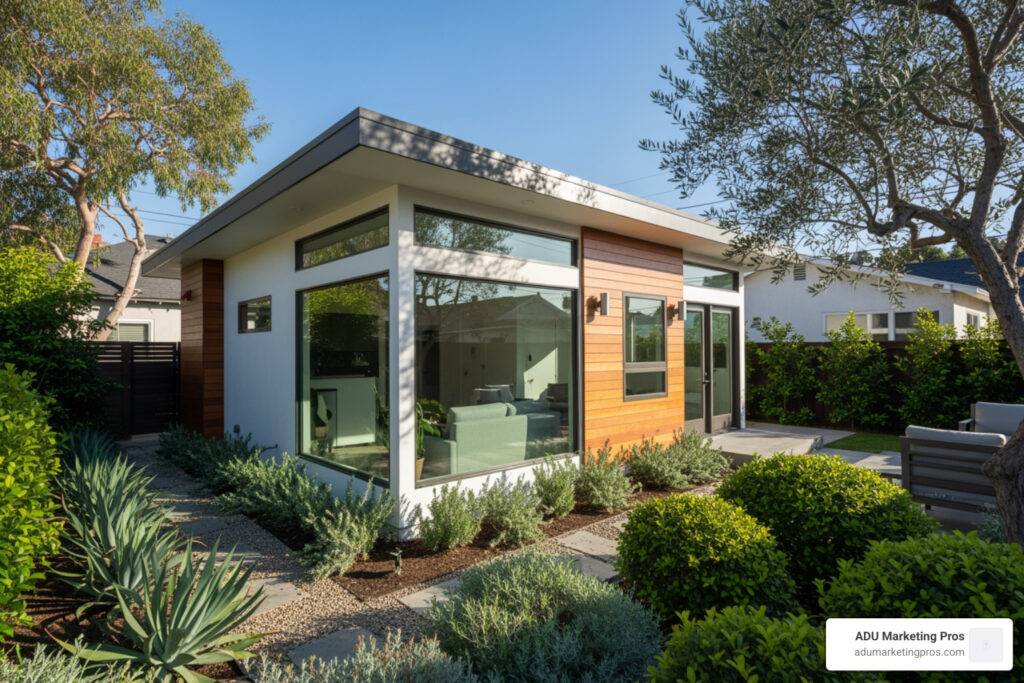
What Does It Really Cost to Build an ADU in Los Angeles?
Building an Accessory Dwelling Unit (ADU) in the City of Angels is no longer just a trend; it is a fundamental shift in how the city addresses its housing shortage. For decades, Los Angeles has struggled with a lack of affordable housing, leading to the “Missing Middle” crisis. In response, California legislators passed a series of landmark bills—including AB 68, AB 881, and SB 9—that effectively ended single-family zoning and opened the floodgates for backyard development. However, for the average homeowner, the financial landscape of these projects can be opaque. The cost of ADU Los Angeles projects typically ranges from $150,000 to $400,000+ in 2025, depending on the type, size, and complexity of your build.
To provide immediate clarity, here is a quick breakdown of the current market rates for various ADU configurations in the Southland:
| ADU Type | Typical Cost Range | Average Timeline |
|---|---|---|
| Garage Conversion | $95,000 – $225,000 | 6 – 9 Months |
| Attached ADU | $175,000 – $325,000 | 8 – 12 Months |
| Detached ADU | $200,000 – $400,000+ | 10 – 14 Months |
| Junior ADU (JADU) | $50,000 – $100,000 | 4 – 6 Months |
Cost per square foot generally runs $300 to $500 in the Los Angeles area. This is significantly higher than the national average, driven by California’s stringent Title 24 energy requirements, high local labor rates, and the specific seismic engineering needed for Southern California’s geography. Furthermore, the Los Angeles Department of Building and Safety (LADBS) has specific requirements for everything from fire sprinklers to solar panels that can add layers of cost not found in other states.
Los Angeles homeowners are building ADUs faster than ever before. Today, the movement is being led by backyards in neighborhoods from Silver Lake to the San Fernando Valley. For many, an ADU is the smartest financial move they can make, offering a hedge against inflation and a way to generate passive income or house aging family members. In a city where the median home price often exceeds $1 million, adding a 1,000-square-foot unit for $300,000 is often the only way for families to expand their footprint without moving to the high desert.
But the costs can surprise you. A contractor’s initial quote is often just the “hard cost” of construction. Design fees, structural engineering, city permits, utility connection fees, and site preparation can add tens of thousands of dollars on top of the base price. One industry estimate suggests a quoted price may represent as little as 75% of the total project cost by the time you receive your certificate of occupancy. This guide is designed to pull back the curtain on every expense category, from the first architectural sketch to the final coat of paint.
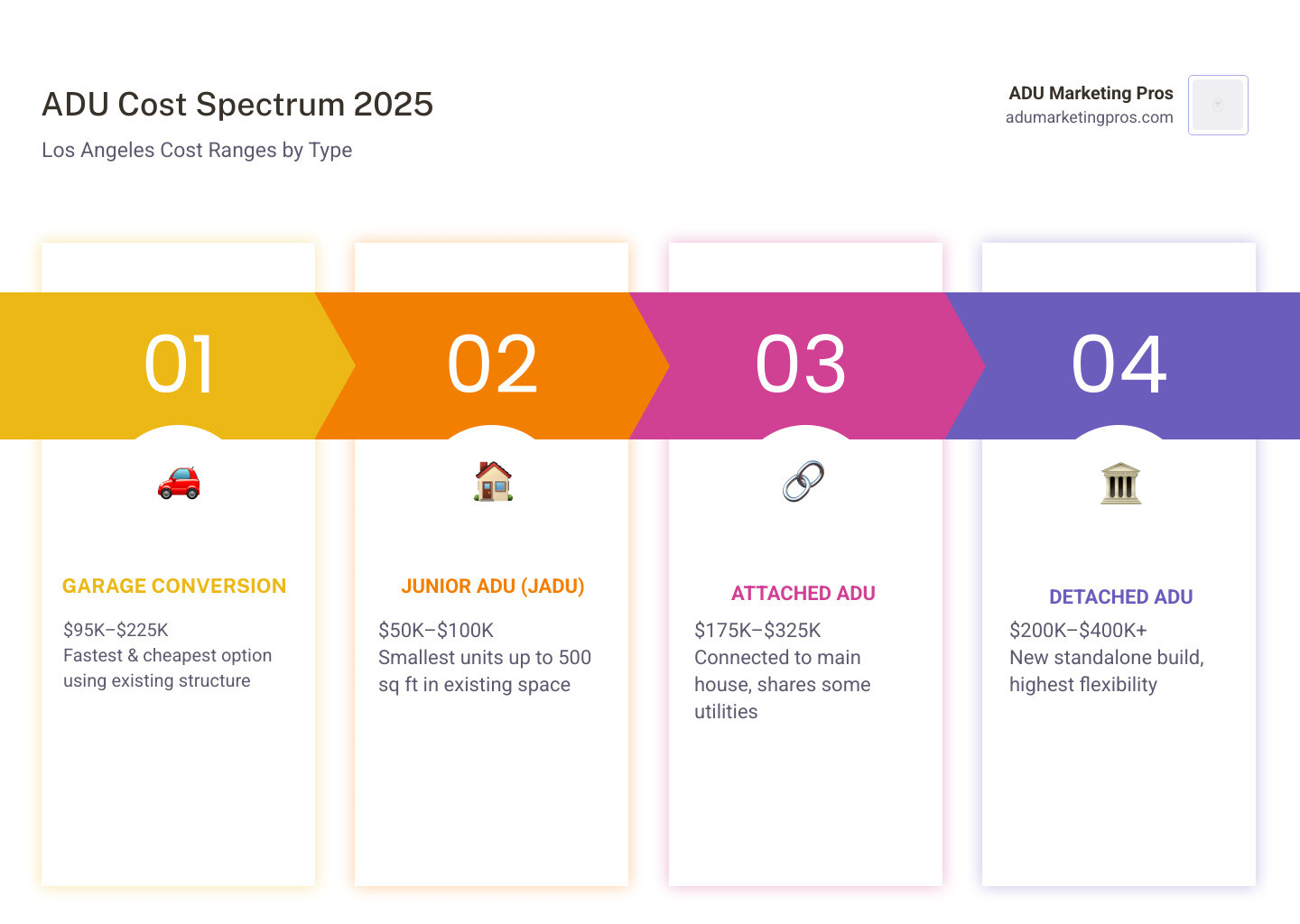
Average Cost of ADU Los Angeles in 2025
When we look at the current market, the Cost of ADU Los Angeles homeowners face is shaped significantly by post-pandemic inflation and a persistent shortage of skilled labor. While national averages might suggest lower prices, the reality in Southern California is unique. In 2025, a standard new construction detached ADU rarely comes in under $200,000 once all fees, finishes, and landscaping are tallied. The “all-in” price is what matters most for budgeting.
The market has seen a shift where “budget” builds are increasingly difficult to find. Labor shortages in the Southland mean that licensed, insured contractors are in high demand, often commanding a 30% to 50% premium compared to other states. Furthermore, material costs—while stabilized from their 2021 peaks—remain elevated due to supply chain complexities and the high cost of fuel for transport. To help you visualize the Accessory Dwelling Unit Costs, we have categorized the primary build types and their expected financial impact:
- Garage Conversions ($95,000 – $225,000): These are the most popular entry points for LA homeowners. By utilizing the existing foundation and walls, you save on major structural expenses. However, many older LA garages were built without vapor barriers or proper footings. If the garage slab is cracked or the framing isn’t up to modern code, costs can quickly climb toward the higher end of this range as you essentially rebuild the structure from the inside out. You are also required to replace the garage door with a functional wall, which involves framing and exterior finish matching.
- Attached ADUs ($175,000 – $325,000): These share at least one wall with the primary residence. While they save on some exterior siding and potentially utility trenching, they often require expensive fire-rating upgrades to the shared wall and complex roof integrations. They are ideal for homeowners with limited backyard space who want to maintain a cohesive architectural look. Be aware that tying into an existing roofline can sometimes be more expensive than building a standalone roof.
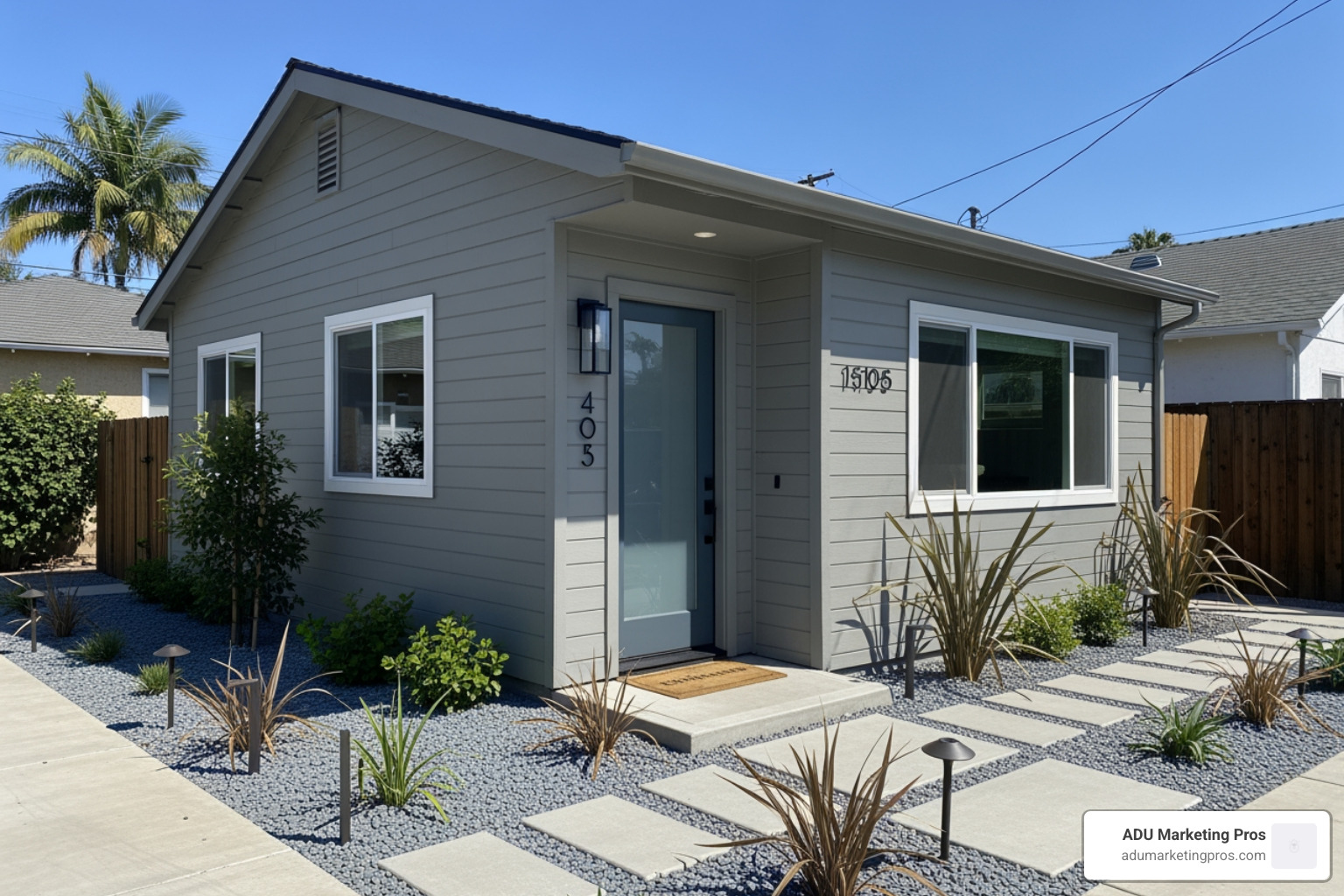
- Detached ADUs ($200,000 – $400,000+): This is a completely independent structure. It offers the most privacy and highest rental potential but requires its own foundation, full utility runs, and four exterior walls. These are essentially small custom homes and are priced accordingly. In Los Angeles, these are often the preferred choice for those looking to maximize property value.
Understanding the Cost per Square Foot for an ADU in Los Angeles
One of the most common metrics homeowners use is the ADU Cost Per Square Foot. In Los Angeles, this typically lands between $300 and $500. However, this number can be misleading if not viewed in context.
It is a common misconception that a smaller ADU will have a significantly lower cost per square foot. In fact, the opposite is often true due to “fixed costs.” Every ADU, regardless of size, requires a kitchen and at least one bathroom. These are the most expensive rooms in any house due to cabinetry, appliances, tiling, and intensive plumbing. When you build a 400-square-foot studio, those high kitchen and bath costs are spread over a very small area, driving the square-foot price up. If you expand that same unit to 1,000 square feet, you are mostly adding “dry space” (bedrooms and living areas), which costs much less to build. This creates an economy of scale where larger units often feel like a “better deal” on a per-foot basis.
How Size and Type Impact the Cost of ADU Los Angeles Construction
The total Los Angeles ADU Cost is heavily dictated by the footprint you choose. According to the California HCD Accessory Dwelling Unit Handbook, local jurisdictions must allow at least an 800-square-foot detached ADU, but many lots in LA can go up to 1,200 square feet depending on the primary home’s size and lot coverage.
- 500 Sq. Ft. Units: Often built as studios or tight one-bedroom units. Expect to pay between $150,000 and $250,000. These are perfect for guest houses or short-term rentals. They fit well on smaller R1 lots in neighborhoods like Palms or Mar Vista.
- 800 Sq. Ft. Units: The “sweet spot” for many. This size allows for a comfortable two-bedroom layout, making it ideal for small families or long-term tenants. Budget roughly $200,000 to $300,000. This size is also the threshold for many impact fee exemptions.
- 1,200 Sq. Ft. Units: These are essentially full-sized small homes. They often require two stories to fit on an LA lot, which adds structural complexity and cost. These projects frequently exceed $350,000 to $400,000. Two-story builds require more robust foundations and stairs, which consume living space.
- Junior ADUs (JADUs): These are conversions of existing space inside the primary home (like a spare bedroom). Because they are limited to 500 square feet and don’t always require a private bathroom (they can share with the main house), they are the most affordable, often costing $50,000 to $100,000. They are the fastest way to add a rental unit to your property.
Hard Costs vs. Soft Costs: A Detailed Breakdown
To truly understand your budget, we need to separate “Hard Costs” from “Soft Costs.” This distinction is vital because the timing of these payments differs significantly. Many homeowners exhaust their cash reserves on soft costs before construction even begins, leading to financing hurdles later on.
Hard Costs are the tangible things you can touch: the concrete, the 2x4s, the roof shingles, and the labor to install them. In Los Angeles, ADU Building Costs for hard construction usually account for 70% to 80% of your total budget. These costs are typically paid out in “draws” as construction milestones are met, such as foundation completion, framing, and “dry-in.”
Soft Costs are the “invisible” expenses: design, engineering, permits, and city fees. These are the costs that catch most homeowners off guard because they must be paid long before a single nail is driven. In many cases, you will spend $15,000 to $30,000 before you even have permission to start digging. These costs are non-refundable and must be factored into your initial liquidity planning.
Design, Engineering, and Architecture Fees
You cannot build an ADU in Los Angeles with a hand-drawn sketch. You need professional plans that comply with the Los Angeles Department of Building and Safety (LADBS) standards. The ADU Architect Los Angeles Cost typically ranges from $8,000 to $25,000.
- Pre-Approved Plans: To speed up the process, LADBS offers a “Standard Plan Program.” These are pre-approved designs from various architects. While they can save you weeks in the permit office and thousands in design fees, you still need a site plan to show how the unit fits on your specific lot, including setbacks and utility runs. You cannot simply “buy” the plan and start building; a professional must still map it to your property.
- Custom Design: If you have an oddly shaped lot or specific aesthetic goals, a custom architect is necessary. This ensures the unit maximizes your property’s potential but comes at a premium. Custom designs are often required in Historic Preservation Overlay Zones (HPOZs) where the ADU must match the historic character of the main house.
- Structural Engineering: LA is earthquake country. Your plans will require a structural engineer to sign off on the foundation and framing, typically costing $2,000 to $5,000. They ensure your ADU can withstand seismic activity, which often involves specific shear walls and hold-down brackets.
- Title 24 Compliance: California has the strictest energy efficiency standards in the nation. You’ll need a consultant to run Title 24 calculations to ensure your insulation, windows, and HVAC meet state law. This is a mandatory part of the permit package and ensures the unit is comfortable and cheap to cool during LA summers.
Permit and City Impact Fees
The ADU Permit Process in Los Angeles is more streamlined than it used to be, but it isn’t free. Total ADU Permit Cost California homeowners should budget for is usually between $5,000 and $15,000.
In Los Angeles, if your ADU is under 750 square feet, state law exempts you from “impact fees” (fees meant to offset the burden on schools, parks, and traffic). However, once you cross that 750-square-foot threshold, the city can charge proportional impact fees. For a 1,000-square-foot unit, these fees can add $5,000 to $10,000 to your bill instantly. Always check with your local school district, as they often have their own separate fee structures for larger units. These fees are calculated based on the square footage and are paid at the time of permit issuance.
Hidden Expenses and Site Conditions in Los Angeles
The “quoted price” from a contractor often assumes a perfectly flat lot with easy access. But this is Los Angeles—we have hills, narrow alleys, and aging infrastructure. These site conditions are the primary drivers of ADU Construction Cost overruns. If your property is in a “High Fire Severity Zone” or a “Coastal Zone,” expect additional layers of scrutiny and cost.
- Hillside Lots: If your backyard has a significant slope, you are in a “Hillside Area” according to the city. This requires grading, soil reports, and potentially massive retaining walls. This can add $20,000 to $100,000 to a project before the foundation is even poured. Hillside builds also require specialized equipment that can navigate steep terrain.
- Limited Access: Can the contractor get a Bobcat or a concrete truck into your backyard? If they have to “hand-dig” the foundation or crane materials over your house because of a narrow side yard, labor costs will skyrocket. This is common in older neighborhoods like Echo Park or Highland Park where houses are built close together.
- Methane Zones: Large portions of Los Angeles (like Mid-Wilshire or parts of the Valley) are designated as Methane Zones. Building here requires specialized vapor barriers and venting systems beneath the slab, adding $5,000 to $15,000 in costs. This is a safety requirement to prevent gas buildup under the structure.
- Sewer Line Depth: Your ADU needs to drain into the main sewer line. If the ADU is lower than the street or the main line, you may need an expensive ejector pump system to move waste uphill. Replacing an aging clay sewer pipe for the main house while you are at it is often a wise, albeit expensive, move.
Utility Connections and Infrastructure
Every ADU needs water, power, and sewage. The Cost to Build ADU must include the price of trenching these lines from the main house or the street. Trenching through concrete or long distances can cost $100 to $200 per linear foot. If your main house is at the front of a deep lot, these costs add up quickly.
- Electrical Panel Upgrades: Most older LA homes have 100-amp or 150-amp panels. Adding an ADU (especially with an electric HVAC and stove) usually requires an upgrade to a 200-amp panel, which costs $3,000 to $5,000. If the utility pole is across the street, LADWP may charge additional fees to run a new service line. This process can also take months to coordinate with the utility company.
- Solar Requirements: Per California’s 2022 Energy Code, all new detached ADUs must have solar panels. While this saves money on utilities long-term, it adds $8,000 to $15,000 to your upfront construction cost. Garage conversions are often exempt from this if they don’t add new square footage, but any new detached structure must comply.
- HVAC Systems: Most LA ADUs use ductless “mini-split” systems. They are energy-efficient and take up very little space, but they require professional installation and dedicated electrical circuits. They are ideal for the LA climate, providing both heating and cooling without the need for bulky ductwork.
Landscaping and Finish Levels
Don’t forget the “curb appeal” of your backyard. After construction, your yard will likely look like a construction site. You’ll need to budget for hardscaping, irrigation, and privacy fencing to separate the ADU from the main house. This is essential if you plan to rent the unit to a stranger. Privacy is the number one concern for both the homeowner and the tenant.
Inside the unit, your choice of finishes will dictate the final price. Using a Garage Conversion Cost Calculator can help you see how “builder-grade” laminate stacks up against “luxury” hardwood. In a rental-focused ADU, we usually recommend mid-range, durable finishes: quartz countertops (which don’t stain like marble) and luxury vinyl plank (LVP) flooring, which is waterproof and nearly indestructible. These choices ensure the unit stays looking new through multiple tenant cycles.
Financing Your Build and Calculating ROI
Building an ADU is a major financial undertaking, but in the Los Angeles market, it is also one of the highest-yielding investments available. With the median home price in LA hovering near $1 million, adding a second unit is often cheaper than buying a new property. It is essentially “buying” real estate at a 70% discount compared to market rates.
The potential rental income for a 1-bedroom ADU in Los Angeles ranges from $1,800 to $2,800, while 2-bedroom units can command $3,000 to $3,500+ in prime neighborhoods like Santa Monica, Venice, or Silver Lake. Even after paying back a construction loan, many homeowners find themselves “cash-flow positive” from day one. This passive income can be used to offset the primary mortgage or fund retirement.
For those looking for assistance, the California ADU Grant Program has historically offered up to $40,000 to help low-to-moderate-income homeowners cover pre-construction “soft costs.” While funding for these ADU Funding Grants can be intermittent, it is always worth checking current availability with the California Housing Finance Agency (CalHFA). These grants can be the difference between a project being viable or not.
Loan Options and Interest Rates
Most homeowners do not pay for an ADU in cash. We see several popular ADU Financing Options:
- HELOC (Home Equity Line of Credit): This allows you to borrow against your home’s equity. It’s flexible, but the interest rates are often variable, which can be risky in a fluctuating market. It is best for those who plan to pay off the balance quickly.
- Cash-Out Refinance: You replace your existing mortgage with a new, larger one and take the difference in cash. This was popular when interest rates were at historic lows, but may be less attractive in 2025 unless you are consolidating other high-interest debt.
- Construction Loans: These are specifically for building. The lender pays the contractor in “draws” as work is completed. Check current Construction Loans for ADU terms, as some lenders now offer “renovation” loans that consider the future value of the home with the ADU included. This is a game-changer for homeowners with limited current equity.
- Home Equity Loans: Fixed-rate loans that provide a lump sum. These are great for budgeting because your ADU Loan Rates won’t change during the build, providing peace of mind.
Long-Term Property Value Increase
Beyond rental income, an ADU provides a massive boost to your property’s resale value. In Los Angeles, a well-built ADU can add 50% to 100% of its construction cost to the total value of the property. For example, spending $200,000 on an ADU might increase your home’s market value by $300,000 in high-demand neighborhoods. This “instant equity” is one of the primary reasons homeowners choose to build.
Furthermore, the Navigating ADU Financing process should also account for the “intangible” ROI. Having a space for aging parents (multigenerational housing) or a private home office provides lifestyle value that a bank can’t always quantify. It allows families to stay together while maintaining privacy, which is becoming increasingly important in the expensive Southern California market. It also provides a “safety net” for adult children who may be priced out of the local rental market.
Frequently Asked Questions about LA ADU Costs
What is the cheapest way to build an ADU in Los Angeles?
The most cost-effective route is almost always a garage conversion. By starting with a Garage Conversion Los Angeles project, you bypass the need for a new foundation and primary framing, which can save $30,000 to $50,000. If you keep the plumbing close to the existing main house lines and use “builder-grade” finishes, you can realistically start a project around the $95,000 to $110,000 mark. However, ensure your garage is structurally sound before committing to this path, as seismic retrofitting can eat into those savings.
How long does it take to design and build an ADU?
Expect the total process to take 6 to 12 months.
- Design & Engineering: 1-2 months.
- Permitting: 2-4 months (depending on LADBS backlog).
- Construction: 4-7 months. Navigating Los Angeles ADU Regulations requires patience, as inspections must happen at every major milestone (foundation, framing, plumbing/electrical, and final). Any failed inspection can add weeks to the timeline, so hiring an experienced contractor is vital.
Are there grants available for Los Angeles homeowners?
Yes, the CalHFA ADU Grant Program provides up to $40,000 for qualified homeowners. This money is specifically designated for “pre-development” costs, such as architectural plans, soil tests, and permit fees. Because these funds are in high demand and often run out quickly, we recommend checking the ADU Guidelines Los Angeles frequently to see when new funding cycles open. Some local non-profits also offer low-interest loans for ADUs intended for low-income tenants.
Does an ADU increase my property taxes?
Yes, but only for the value of the new construction. Under California law, building an ADU triggers a “blended assessment.” Your main house retains its original tax basis (thanks to Prop 13), and only the new ADU is assessed at current market value. This prevents your entire property tax bill from skyrocketing and makes the ongoing cost of ownership much more manageable.
Can I build two ADUs on my property?
In many cases, yes. California law allows for one full ADU (detached or attached) and one Junior ADU (JADU) on a single-family lot. For multi-family properties, the rules are even more generous, often allowing for multiple units depending on the existing structure count. This allows property owners to significantly increase the density and income potential of their land.
Do I need to provide parking for my ADU?
In most parts of Los Angeles, no. If your property is within a half-mile of public transit (which includes most of the city), you are exempt from providing additional parking for the ADU. Furthermore, if you convert a garage into an ADU, you are no longer required to replace the parking spaces that were lost. This has been a major factor in the explosion of garage conversions across the city.
Conclusion
Building an ADU in Los Angeles is a marathon, not a sprint. While the Cost of ADU Los Angeles projects can feel daunting, the long-term financial security and property flexibility they provide are unmatched in today’s real estate market. By understanding the difference between hard and soft costs, and accounting for the unique site conditions of your lot, you can avoid the common pitfalls that lead to budget overruns. The key is thorough preparation and a realistic understanding of the local construction landscape.
Our best advice? Always include a 10% to 15% contingency fund. In construction, surprises are inevitable—whether it’s an old pipe that needs replacing or a city inspector requiring an extra structural bolt. Having that buffer ensures your project doesn’t stall halfway through and allows you to make quality decisions without financial panic. An ADU is an investment in your future, and doing it right the first time is always the most cost-effective strategy.
At ADU Marketing Pros, we understand that the ADU industry is complex and highly competitive. For construction firms and architects, the challenge isn’t just building the unit—it’s educating homeowners on these very costs and building trust in a crowded market. We specialize in helping ADU professionals navigate this booming sector, ensuring they reach the right homeowners who are ready to invest in their property’s future. If you are a professional in the ADU space looking to grow your business and showcase your expertise through high-quality educational content, explore our ADU Marketing Pros Services today. Let’s build something great together.