
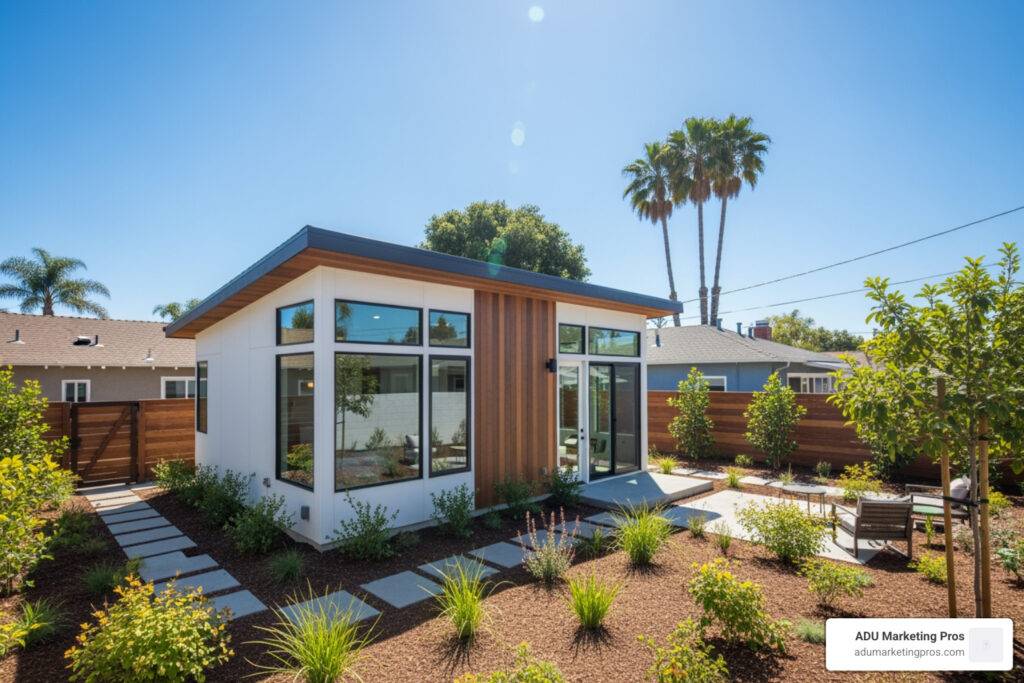
Why Building an ADU in San Diego is a Smart Investment Right Now
Looking for an adu builder san diego can feel overwhelming. Finding a true partner requires understanding the market, the process, and the qualities of a top-tier builder. San Diego has become the epicenter of the ADU movement in California, driven by a combination of high housing demand, favorable local legislation, and a climate that allows for year-round construction.
Top-Rated ADU Builders in San Diego:
- Crest Backyard Homes – With a BBB A+ rating and over 40 years of experience, they specialize in manufactured and modular ADUs, offering a faster path to completion for homeowners looking for efficiency.
- Better Place Design & Build – A full-service design-build firm with over 300 five-star reviews. They are known for high-end custom ADUs that seamlessly match the aesthetic of the primary residence.
- Ritz ADU Design Build – Serving San Diego County since 1965, Ritz brings decades of local knowledge regarding soil conditions and neighborhood-specific zoning quirks.
- CRS Builders – Their in-house team emphasizes transparent pricing and a “no surprises” approach, which is critical in a market where material costs can fluctuate.
- So Cal Design Build – A family-owned operation providing concept-to-completion services, focusing on sustainable building practices and energy-efficient designs.
- SnapADU – They offer a streamlined design-build process with a unique price lock guarantee, providing peace of mind for budget-conscious homeowners.
San Diego’s housing market is evolving rapidly. With median home prices reaching record highs, Accessory Dwelling Units (ADUs) have emerged as a savvy solution for homeowners to add value, generate income, or create flexible living space. The city has proactively removed many of the traditional barriers to building, such as high permit fees and restrictive parking requirements, making it easier than ever to maximize your property’s potential.
An ADU can increase property value by 30% to 50% and generate passive income, with monthly rents in neighborhoods like North Park, Pacific Beach, and Chula Vista often exceeding $2,000. Whether you are building for aging parents, adult children, or a dedicated home office, an ADU delivers tangible benefits that grow over time.
Building requires navigating complex regulations, understanding costs ($180,000 to $580,000+), and finding a contractor specializing in local building codes. This guide from ADU Marketing Pros demystifies the process, from design and budgeting to vetting contractors and financing.

Related content about adu builder san diego:
Why San Diego is a Prime Location for Your ADU Project
San Diego’s high demand for housing makes it an ideal place to invest in an ADU. Building here is a strategic move to open up financial benefits and improve your lifestyle in a desirable city. The “Missing Middle” housing crisis in Southern California has led the city council to adopt some of the most progressive ADU ordinances in the state, often going beyond the baseline requirements set by California law.
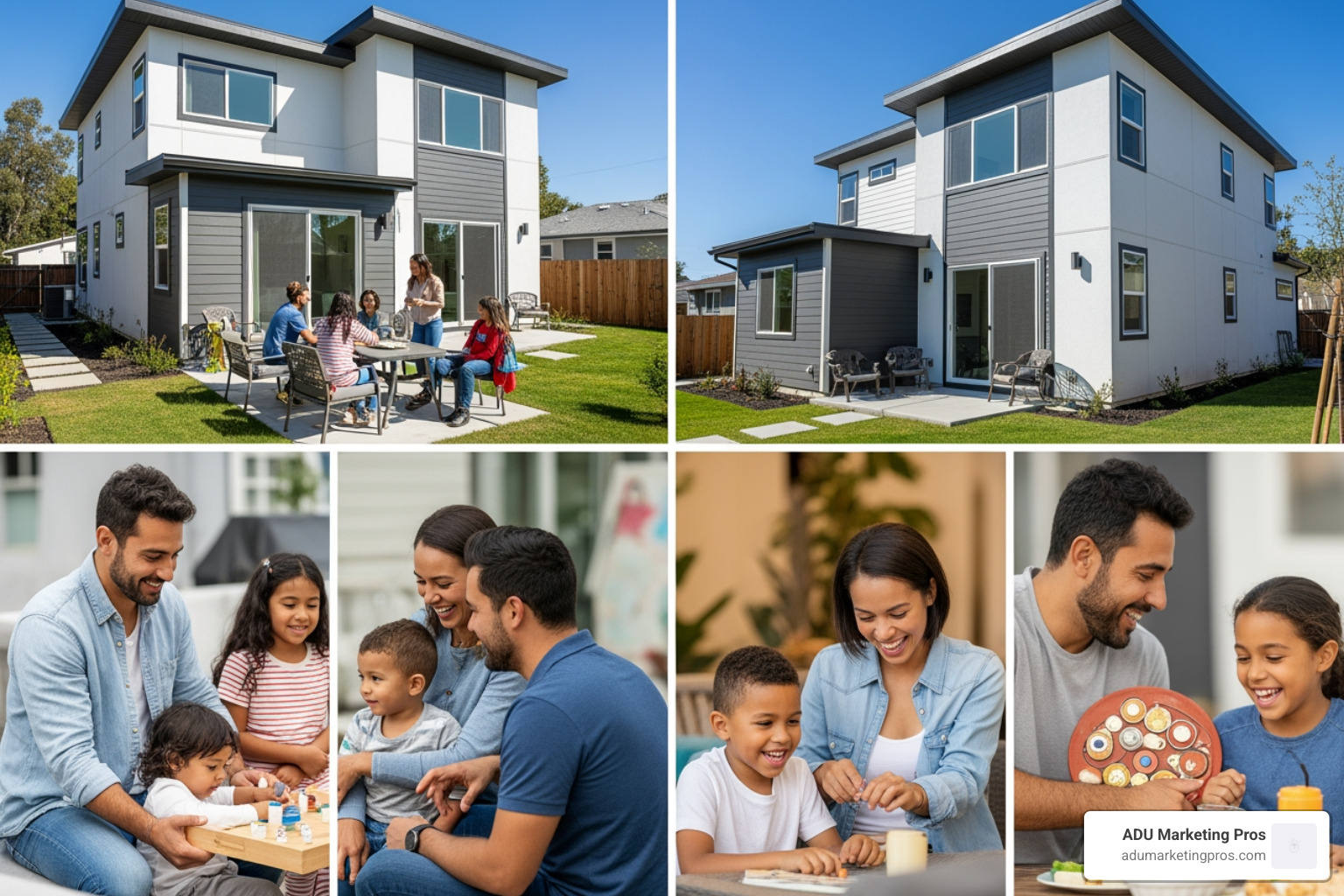
Financial incentives include increased property value and consistent rental income. Beyond numbers, an ADU offers flexibility: housing for aging parents, a “launch pad” for adult children, or a dedicated home office. San Diego has streamlined the approval process with relaxed setbacks (often as little as 4 feet), eliminated parking requirements for units near transit, and significantly reduced impact fees for units under 750 square feet.
Maximizing Your Property’s Financial Potential
In San Diego, an ADU can boost property value by 30% to 50%. With average rents among the highest in the country, a one or two-bedroom ADU can generate over $2,000 per month. This revenue provides financial stability or accelerates mortgage payments. For many homeowners, the rental income from an ADU covers the entire monthly payment of the loan used to build it, effectively creating a self-funding asset.
ADUs also offer tax advantages, such as depreciation deductions if the unit is used as a rental. However, it is important to consult with a tax professional regarding how an ADU might affect your property tax assessment. For statewide policies and a deeper look at the legal framework, visit the California Department of Housing & Community Development.
Enhancing Your Lifestyle with Flexible Space
ADUs solve modern living challenges that traditional single-family homes cannot. They allow aging parents to live close by, maintaining independence while having family support—a concept often called “multigenerational living.” This can save families thousands of dollars in assisted living costs while keeping loved ones near.
For adult children, an ADU provides an affordable home in an expensive market while they save for their own future. In the remote work era, an ADU serves as a quiet, professional home office or a creative studio, fostering productivity and work-life balance by physically separating “home” from “work.” The versatility of these spaces means they can evolve with your family’s needs over decades.
Understanding Your ADU Options: Types and Costs in San Diego
ADUs offer versatility to suit different property layouts and budgets. Understanding these options is the first step before interviewing an adu builder san diego. Each type has unique structural requirements and cost implications that will dictate the feasibility of your project.

Common ADU Types
- Detached ADU: A standalone structure offering maximum privacy. It commands the highest rents but is the most expensive due to new foundation and utility needs. These are popular in larger lots in areas like Escondido or Poway.
- Attached ADU: Built as an addition sharing at least one wall with the primary residence. It can be more cost-effective by leveraging the existing structure, though it may require seismic retrofitting of the shared wall.
- Garage Conversion: Often the fastest and most cost-effective option, changing a garage into living space. It requires floor raising to match the house level, insulation, and full kitchen/bath installation. This is a frequent choice in dense neighborhoods like Hillcrest.
- Junior Accessory Dwelling Unit (JADU): A space under 500 sq. ft. within an existing home (like a spare bedroom). It requires a separate entrance and an efficiency kitchen. JADUs are subject to owner-occupancy requirements that full ADUs are currently exempt from.
- Interior Conversion: Converting space like a basement or an attic into an independent ADU with a full kitchen and bath.
Typical ADU Cost Range in San Diego
Costs include “soft costs” (design, engineering, permits) and “hard costs” (labor, materials, site prep). In San Diego, site topography—such as building on a canyon lot—can significantly increase costs due to the need for retaining walls or specialized foundations.
| Size (Square Feet) | Typical Cost Range in San Diego | Price Per Sq. Ft. (Avg) |
|---|---|---|
| 300 (Studio) | $120,000 – $175,000 | $400 – $580 |
| 500 (1 BR) | $180,000 – $250,000 | $360 – $500 |
| 800 (2 BR) | $250,000 – $350,000 | $310 – $435 |
| 1,000 (2-3 BR) | $330,000 – $465,000 | $330 – $465 |
| 1,200 (3 BR) | $415,000 – $580,000 | $345 – $480 |
Factors Influencing Final Price
- Utility Connections: Running new sewer, water, and electrical lines from the street vs. connecting to the main house.
- Finishes: High-end cabinetry, quartz countertops, and luxury vinyl plank (LVP) flooring will drive up the price but also increase rental appeal.
- Solar Requirements: California’s Title 24 regulations require solar panels on all new detached ADUs, adding roughly $8,000 to $15,000 to the budget.
- Site Access: If a builder cannot get heavy machinery into your backyard, manual labor costs will rise.
Final prices depend on site conditions and finishes. Always get a detailed, line-item quote from your adu builder san diego to avoid “allowance” traps where the initial price looks low but increases during construction.
The A-to-Z Guide to the ADU Building Process in San Diego
The typical timeline for an ADU in San Diego is 8 to 12 months, divided into three distinct phases. Understanding this timeline helps manage expectations and financial planning.
Phase 1: Feasibility, Design, and Planning (1-2 Months)
- Consultation: Discuss goals, budget, and timeline with builders. This is where you decide between a custom build or a pre-approved plan.
- Site Assessment: A professional evaluates topography, easements, and utility lines. In San Diego, checking for “Coastal Zone” restrictions is vital as they add complexity.
- Zoning Check: Your adu builder san diego confirms compliance with local codes, including height limits and floor area ratio (FAR).
- Conceptual Design: Initial floor plans and a preliminary budget are created. You’ll decide on the layout, window placement for privacy, and entry points.
- Finalization: Refine the design and finalize construction documents, including structural engineering and Title 24 energy calculations.
Phase 2: Navigating Regulations and Permitting (3-4 Months)
- Construction Documents: Detailed architectural and engineering plans are prepared for the city’s building department.
- Submission: Plans are submitted to the City of San Diego’s Development Services Department (DSD).
- Plan Check & Corrections: The city will likely have comments. Your builder or architect will make corrections and resubmit. This “back and forth” is the most common cause of delays.
- Permit Issuance: After all departments (Building, Planning, Fire, etc.) sign off, the building permit is issued. For state guidelines, see the Accessory Dwelling Unit Information From The State of California.
Phase 3: Construction and Move-In (4-6 Months)
- Site Prep & Foundation: The site is cleared, excavated, and the foundation is poured. This includes “undergrounding” the plumbing and electrical conduits.
- Framing: The structure’s skeleton is assembled. This is the most exciting phase as the unit finally takes shape. Windows and the roof are installed to make the unit “dried-in.”
- Rough-Ins: Plumbing, electrical, and HVAC systems are installed inside the walls. The city performs a “rough-in inspection” before the walls are closed.
- Insulation & Drywall: Walls are insulated to meet energy standards, and drywall is hung, taped, and textured.
- Finishes: This includes painting, flooring, cabinetry, countertops, and installing plumbing and light fixtures.
- Inspections & Occupancy: After final city inspections, including fire safety and solar verification, a Certificate of Occupancy is issued, and you can officially move in or list the unit for rent.
How to Choose the Right ADU Builder in San Diego
Choosing an adu builder san diego is your most critical decision. The right builder acts as a project manager, advocate, and craftsman. Many homeowners prefer design-build firms because they provide a single point of contact, reducing the risk of miscommunication between an architect and a contractor.
Key Credentials to Verify
- CSLB License: Verify the license is active and classified as “B” General Contractor on the California State License Board website. Never work with an unlicensed contractor, as you will have no legal recourse for poor work.
- General Liability Insurance: Ensure they carry at least $1,000,000 in coverage to protect your property from damage during construction.
- Worker’s Compensation: This is mandatory for contractors with employees. If a worker is injured on your property and the builder doesn’t have this, you could be held liable.
- Bonding: California contractors must carry a license bond. This provides a small amount of financial protection if the contractor fails to complete the project or pay subcontractors.
Evaluating Experience and Specialization
- ADU Portfolio: Look for completed ADUs in San Diego. Building a 600-square-foot ADU is different from building a 3,000-square-foot home; it requires a mastery of small-space efficiency.
- Local Code Knowledge: Familiarity with San Diego’s specific ordinances, such as the “ADU Bonus Program,” can save you months in permitting and potentially allow you to build more units than you thought possible.
- Specific Experience: If you are doing a garage conversion, ensure they have handled the specific structural challenges of converting a non-living space into a habitable one.
Questions to Ask During the Interview
- How many ADUs have you built in San Diego in the last 24 months? (Experience with current codes is vital.)
- Can you provide 3-4 recent client references? (Call them and ask about communication and cleanliness.)
- Who will be the daily project manager on-site? (You want to know who is actually swinging the hammer.)
- How do you handle change orders? (Get their process in writing to avoid price gouging later.)
- What is the payment schedule? (Never pay more than 10% or $1,000 upfront, per California law.)
Why Reviews and References Matter
Check platforms like Google, Yelp, and the BBB for patterns. One bad review might be an outlier, but a pattern of “poor communication” or “delayed timelines” is a red flag. A reputable builder will be proud to show off their work. If possible, visit a completed project to assess the quality of the finishes—look at the tile work, the cabinet alignment, and the paint quality.
Financing Your San Diego ADU: A Look at Your Options
You don’t need full cash to build an ADU. In fact, most homeowners use some form of financing to leverage their existing home equity. Many adu builder san diego firms can connect you with ADU-friendly lenders who understand the unique value these units add to a property.
Common Loan Types
- Home Equity Loan: A second mortgage with a fixed interest rate and a lump sum payout. This is ideal if you have a clear, fixed-price contract from your builder.
- HELOC (Home Equity Line of Credit): A revolving line of credit secured by your home. You only pay interest on what you draw, making it great for managing construction draws over several months.
- Cash-out Refinance: This replaces your current mortgage with a new, larger one, providing cash for construction. This is less popular when current interest rates are higher than your original rate.
- Construction Loan: These are based on the “as-completed” value of the property. The lender disburses funds in stages (draws) as the builder hits specific milestones.
- Renovation Loan: FHA 203(k) or Fannie Mae HomeStyle loans allow you to borrow based on the after-renovation value, which is helpful if you don’t yet have enough equity in your home.
Grants and Special Programs
- CalHFA ADU Grant Program: This program has historically offered up to $40,000 to qualified homeowners to cover pre-development costs like design, engineering, and permits. While funding cycles open and close, it is worth checking the CalHFA website for current availability.
- San Diego ADU Bonus Program: If you agree to deed-restrict one ADU as affordable housing for very low, low, or moderate-income households for 15 years, the city may allow you to build additional “bonus” ADUs on the same lot. This is a powerful tool for investors looking to create a “micro-apartment” complex in their backyard.
The ROI of an ADU
When calculating your budget, consider the Return on Investment (ROI). If an ADU costs $250,000 to build and generates $2,500 in monthly rent, your gross annual return is 12%. This often outperforms the stock market while simultaneously increasing your net worth through property appreciation. Furthermore, the “income approach” to appraisal means that once the unit is rented, it can significantly boost your home’s appraised value for future refinancing.
Frequently Asked Questions about Building an ADU in San Diego
How much value does an ADU add to a San Diego property?
An ADU typically increases property value by 30% to 50% of the project cost. In high-demand areas like La Jolla or Del Mar, the value add can be even higher. Appraisers increasingly use the “income approach” for properties with ADUs, valuing the unit based on its ability to generate consistent rental income, similar to how multi-family properties are valued.
What are the biggest mistakes to avoid?
- Rushing the Design Phase: Changes made on paper cost nothing; changes made once the concrete is poured are incredibly expensive.
- Hiring Based on the Lowest Bid: The cheapest builder often has the most “hidden costs” or may cut corners on structural integrity.
- Underestimating “Soft Costs”: Don’t forget to budget for permit fees, school impact fees (for units over 500 sq. ft.), and utility connection fees.
- Ignoring Privacy: Failing to consider window placement or outdoor space separation can make both the main house and the ADU less desirable.
Can I build more than one ADU on my property?
Yes, in many cases. On a single-family lot, you are generally allowed one full ADU (up to 1,200 sq. ft.) and one Junior ADU (up to 500 sq. ft.). If you have a multi-family lot (like a duplex), you can build up to two detached ADUs and potentially convert existing non-livable spaces (like storage rooms or carports) into additional units. The San Diego ADU Bonus Program can further increase this density if affordable housing requirements are met.
Do I need to install fire sprinklers in my ADU?
In San Diego, fire sprinklers are only required in the ADU if they are required in the primary residence. However, if the ADU is located more than 150 feet from the street (where a fire truck can park), the fire marshal may require additional safety measures. Always have your adu builder san diego verify this during the feasibility phase.
Is solar power mandatory for ADUs?
Under California’s Title 24, all newly constructed detached ADUs must have solar panels. The system must be sized to offset the expected electrical consumption of the unit. Garage conversions and attached ADUs are generally exempt from this requirement unless the addition significantly increases the home’s footprint.
Conclusion
Building an ADU in San Diego is more than just a construction project; it is a strategic investment in your financial future and your family’s quality of life. Whether you are looking to generate $30,000 a year in rental income, provide a dignified home for your parents, or create a professional sanctuary for your business, the benefits of an ADU are undeniable.
The success of your project hinges entirely on choosing the right adu builder san diego. By verifying credentials, evaluating local experience, and understanding the financing landscape, you can navigate the process with confidence. Remember that the cheapest bid is rarely the best value, and a partner who understands the nuances of San Diego’s permitting system is worth their weight in gold.
For ADU firms looking to grow, standing out in this competitive market is essential. ADU Marketing Pros helps construction and architecture firms in San Diego, Los Angeles, and the Bay Area build authority through targeted SEO and content strategies. We connect you with serious homeowners who are ready to build and value your expertise.
Ready to turn your backyard into a high-performing asset? Explore pre-approved ADU plans for San Diego to get started and take the first step toward turning your vision into a reality. With the right plan and the right builder, your ADU project will be a cornerstone of your property’s value for decades to come.