
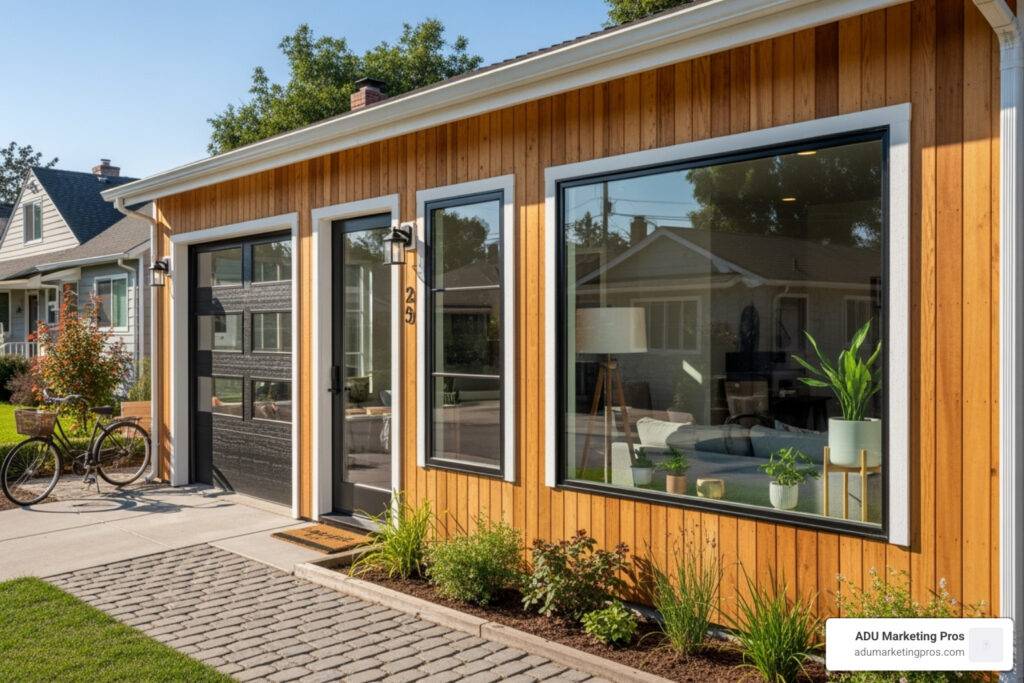
Understanding the Investment: Garage Conversion Costs
The cost of turning a garage into an apartment is a significant investment, with national averages ranging from $9,659 to $51,659. However, this wide spectrum reflects the vast possibilities these projects hold. A simple, finished room might start as low as $4,000, while a fully independent accessory dwelling unit (ADU) complete with a high-end kitchen and bathroom can easily exceed $100,000, especially in high-cost labor markets. The key is to understand that you are not just building a room; you are creating a valuable, flexible asset.
This trend is fueled by a perfect storm of factors: the need for affordable housing, the rise of remote work, and a growing desire for multigenerational living arrangements. A garage conversion offers a streamlined path to adding square footage without the complexities and higher costs of a ground-up addition. You already have the structure, foundation, and roof, which represent a massive head start.
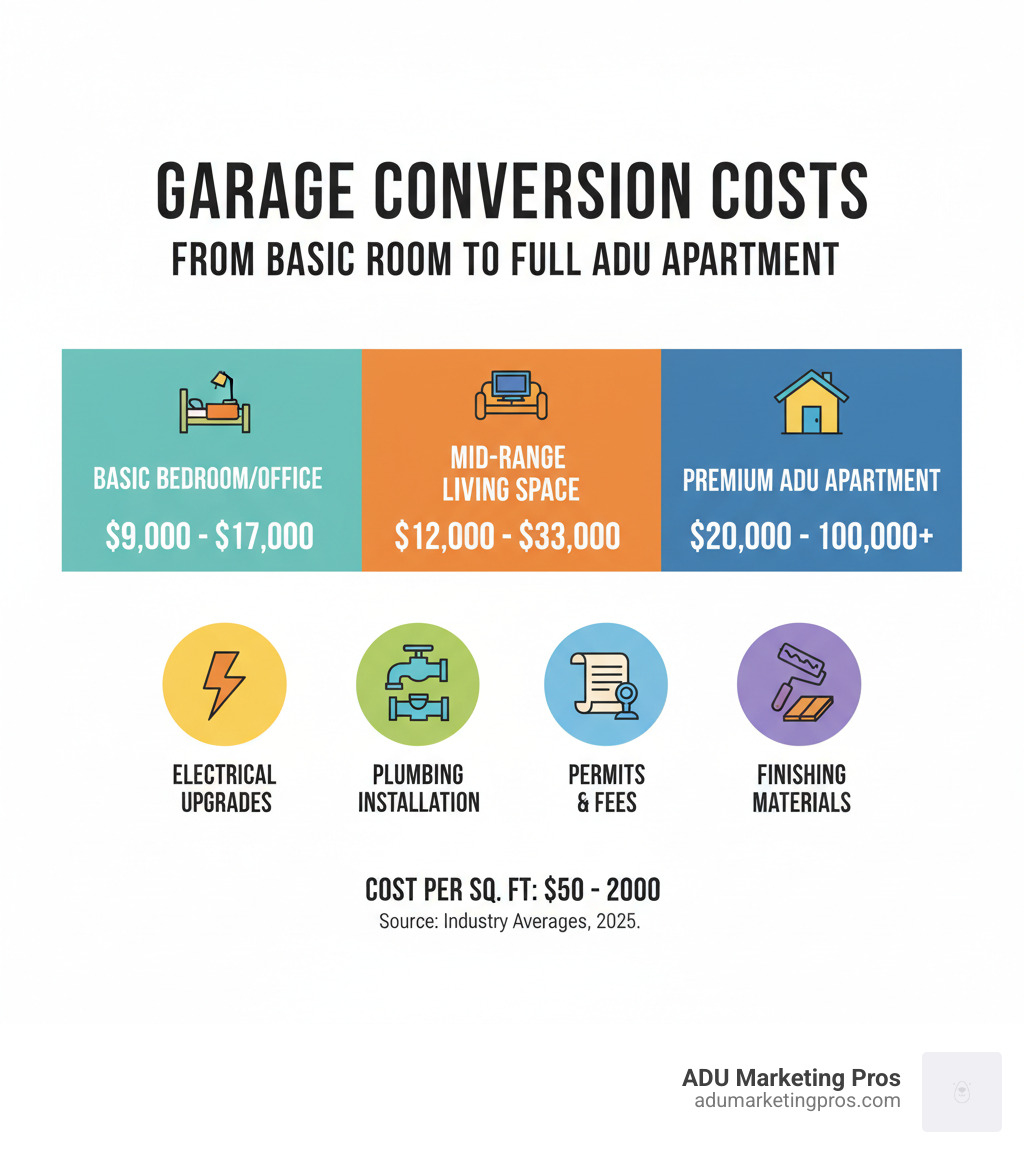
To help frame your budget, here is a quick overview of what to expect:
- Basic Conversion (Bedroom/Office): $5,000 – $17,000. This typically includes insulation, drywall, basic electrical, flooring, and paint. It creates a finished, conditioned space but without plumbing.
- Mid-Range Conversion (Living Space/Guest Suite): $12,000 – $33,000. This may add a small wet bar or a half-bath, upgraded finishes, and more robust HVAC solutions.
- Full Apartment/ADU: $20,000 – $100,000+. This is a complete, independent living unit with a full kitchen, bathroom, separate entrance, and its own utilities. The final price is heavily influenced by size, finish level, and local building codes.
- Cost per Square Foot: Generally falls between $50 – $200, a bargain compared to the $100 – $300+ per square foot for a new home addition.
Your final cost will be a unique combination of your garage’s size and condition, your design choices, local permit fees, and labor rates. As one homeowner shared, careful planning and sweat equity can make a huge difference: \”Professional estimates ranged from $60,000 to $112,000, but we completed our studio apartment conversion for about $20,000 by doing much of the work ourselves.\” This highlights the importance of understanding every line item in your budget.
What is the Average Cost of Turning a Garage into an Apartment?
Nationally, most homeowners spend between $9,659 and $51,659 to convert their garage into a livable space. The lower end, starting around $4,188, represents basic conversions into a single room like an office or gym. The higher end, from $20,000 to over $100,000, is reserved for creating a complete accessory dwelling unit (ADU) with a kitchen and bathroom. On a per-square-foot basis, you can expect to pay between $50 and $200. This is often significantly less than building a new addition because the project leverages the existing foundation, walls, and roof, saving you tens of thousands of dollars from the outset. For a deeper dive into project types, see ADU Construction Cost.
What Factors Affect the Cost of Turning a Garage into an Apartment?
Numerous variables can cause your project’s cost to swing dramatically. Understanding these key drivers is the first step to building a realistic budget.
- Garage Size: This is the most obvious factor. A larger garage requires more materials for flooring, drywall, and insulation, and more labor hours to install them. A 600 sq. ft. three-car garage conversion will naturally cost more than a 200 sq. ft. one-car garage project. However, some costs, like permits or a single bathroom installation, are relatively fixed regardless of the total square footage.
- Existing Condition: A clean, structurally sound garage is a perfect canvas. However, many garages hide expensive problems. A cracked or heavily sloped foundation may need thousands of dollars in repairs and leveling. Old or damaged framing, a leaky roof, or pest damage must be addressed before any finish work can begin. An outdated electrical panel in the main house might also need a costly upgrade to support the new living space.
- Attached vs. Detached: The location of your garage relative to your home has major cost implications. Attached garages often provide easier and cheaper access to existing electrical, water, and sewer lines. However, they require careful attention to fire safety codes, often mandating specific drywall thickness and a fire-rated door between the garage and the house. Detached garages offer more privacy but may require expensive trenching across your yard to run new utility lines, potentially adding thousands to the plumbing and electrical budget.
- Materials and Finishes: This is where your personal taste meets your budget. Choosing standard, builder-grade materials will keep costs down. For example, luxury vinyl plank (LVP) flooring, laminate countertops, and basic fixtures are cost-effective. Opting for custom cabinetry, hardwood floors, quartz countertops, and designer tile and fixtures will significantly increase the final price but also elevate the space’s value and appeal.
- Labor Rates: Labor can account for 40-60% of your total budget, and it varies dramatically by location. Expect to pay a premium for skilled labor in major metropolitan areas with a high cost of living, such as San Jose, Los Angeles, and San Francisco, compared to more rural areas.
- Location Requirements: Every city and county has its own set of rules. Permit fees can range from a few hundred to several thousand dollars. Local building codes dictate everything from insulation R-values to the number and size of windows (egress requirements). These location-specific demands can add unexpected costs and complexity.
For a more granular look at how size and scope influence price, explore ADU Cost Per Square Foot.
Navigating Permits, Regulations, and Design Fees
This is a critical phase that should not be overlooked. Cutting corners here can lead to unsafe conditions, fines, and problems when you eventually sell your home. Permits for a basic conversion might cost $1,000 to $2,000, but full ADU permits in stricter jurisdictions can be much higher. These permits ensure the project complies with local codes for structural integrity, fire separation, electrical and plumbing safety, and energy efficiency. While states like California have passed laws to encourage ADU development, specific municipal requirements still apply. Be sure to research your local rules, like Ontario’s helpful guidance on Understanding local regulations for an accessory dwelling unit.
Engaging professionals early can save you money and headaches in the long run:
- Architect/Designer: Charges can be $100–$250 per hour or 5%–20% of the total construction cost. They are invaluable for creating functional layouts in small spaces, navigating complex permit processes, and producing the detailed drawings required by your local building department. See ADU Building Plans for more.
- Structural Engineer: Typically costing $100–$220 per hour or 1%–5% of the renovation cost, an engineer is often required by law if you are making any changes to load-bearing walls or the roof structure. They ensure your conversion is safe and structurally sound.
The Impact of Garage Size on Cost
Here are some estimated cost ranges based on typical garage sizes and project scopes. These are national averages and should be adjusted for your specific location and material choices.
- 1-Car Garage (200–240 sq ft): Ideal for a studio apartment or a spacious home office.
- Basic Conversion (Bedroom/Office): $5,000–$17,000
- Mid-Range (Living Room/Guest Suite): $12,000–$25,000
- Full Apartment (ADU): $20,000–$50,000
- 2-Car Garage (400–440 sq ft): The most common size, offering enough space for a comfortable one-bedroom apartment.
- Basic: $10,000–$25,000
- Mid-Range: $20,000–$40,000
- Full ADU: $40,000–$75,000
- 3-Car Garage (600+ sq ft): Provides enough room for a larger one-bedroom or even a compact two-bedroom unit, perfect for a small family.
- Basic: $15,000–$35,000
- Mid-Range: $30,000–$55,000
- Full ADU: $60,000–$100,000+
Detailed Cost Breakdown by Project Component
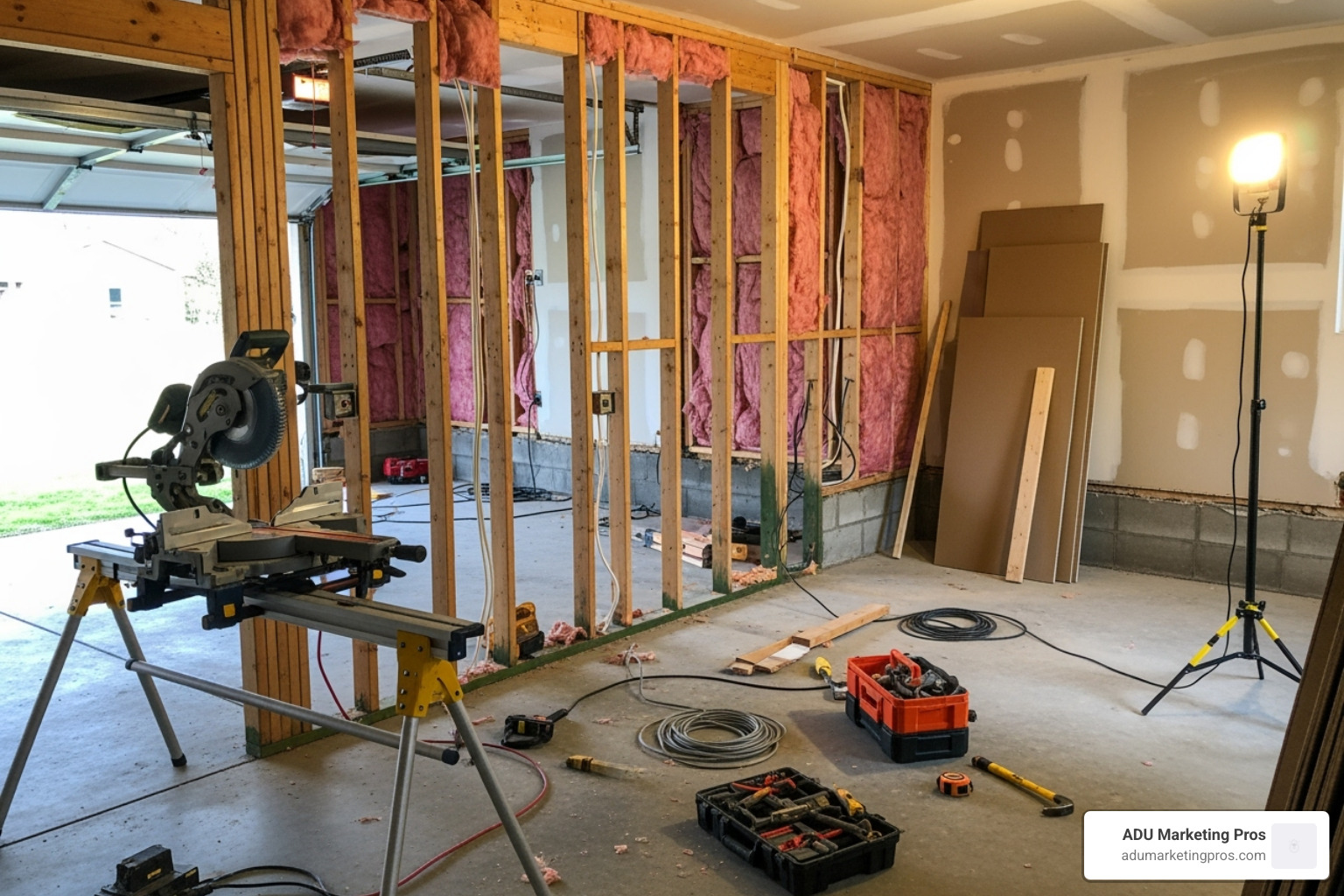
To truly understand the cost of turning a garage into an apartment, you need to break the project down into its individual components. While every project is unique, the following categories represent the major expenses you will encounter. The full journey is detailed in the ADU Building Process.
Structural and Foundational Changes
Your garage was built for cars, not people. Upgrading it to meet residential living standards is the first and most crucial step.
- Foundation: Garage floors are typically concrete slabs that slope towards the door for drainage. This slope must be corrected. Leveling the floor can cost $600–$2,000. Many conversions also involve adding a raised wood subfloor, which not only levels the space but also creates a crucial cavity for insulation and running plumbing and electrical lines, making the floor warmer and more comfortable.
- Foundation Repairs: Before covering the slab, inspect it for cracks. Hairline cracks are common, but larger ones could indicate structural issues. Sealing cracks can cost $250–$800 each and is essential to prevent moisture intrusion.
- Framing: Your garage has exterior walls, but you’ll need to frame interior walls to create separate rooms like bedrooms, bathrooms, and closets. This typically costs $1,000–$5,000, depending on the complexity of the layout.
- Garage Door Opening: The large opening for the garage door must be filled in. A common approach is to frame a new wall and install windows, which can cost $300–$2,500 per window. This is also a prime location for an entry door or French doors to create a welcoming entrance.
- Doors and Windows: Adding a separate exterior door for privacy and rental access costs $420–$1,688. You will also need to add windows to meet local building codes for natural light, ventilation, and emergency egress. Egress windows, required in bedrooms, must meet specific size requirements and can be a significant expense.
Essential Utilities: Electrical, Plumbing, and HVAC
This is what transforms a storage box into a habitable home. Utility work is complex and should be handled by licensed professionals.
- Electrical: A garage’s existing electrical service is usually minimal. A full conversion requires a major upgrade. Expect to spend $1,112–$7,228 for new wiring, outlets, switches, and lighting. Most projects will require a new electrical subpanel ($500–$1,700) to handle the increased load. Kitchens require dedicated circuits for appliances like refrigerators and microwaves, which can run $250–$900 each. Electricians typically charge $40–$100 per hour.
- Plumbing: If your conversion includes a bathroom or kitchen, you’ll need plumbing. This can be one of the biggest costs, ranging from $1,500–$4,000 for simple tie-ins to an adjacent wall, to over $8,000 for complex runs, especially in detached garages that require trenching to the main house’s sewer line. If the garage slab is below the sewer line, you may need a sewage ejector pump, adding another $1,000-$2,500. Plumbers charge $45–$150 per hour, and each fixture (sink, toilet, shower) adds $450–$1,800 to the bill.
- HVAC: Garages are unconditioned space. You’ll need a dedicated system for heating and cooling. The most popular solution is a ductless mini-split system, which is highly efficient and allows for zoned temperature control. A single-zone unit costs $1,500–$4,000 installed. Extending your home’s existing central HVAC system is sometimes an option ($3,000–$5,000), but it can be inefficient and may not have the capacity for the extra space. Cheaper options like window units or portable heaters are generally not suitable for a permanent, permitted living space.
Finishing Touches: From Insulation to Paint
This phase is where the space starts to look and feel like a home. Costs here are highly variable based on your quality and style choices.
- Insulation: Garages typically have uninsulated walls and ceilings. Adding insulation is critical for energy efficiency and comfort. Costs range from $0.50–$3.00 per square foot depending on the type (fiberglass, spray foam). A full installation for a two-car garage often averages around $3,570.
- Drywall: Once utilities and insulation are in, the walls are closed up with drywall. This typically costs $1.50–$3.50 per square foot installed and finished, or $1,000–$3,000 for an average conversion.
- Flooring: The concrete slab needs to be covered. Durable and waterproof options like Luxury Vinyl Plank (LVP) are popular and cost-effective. A 500 sq ft installation averages around $3,067. Other options include engineered hardwood, tile, or even polished concrete, each with a different price point.
- Paint: A fresh coat of paint is a relatively inexpensive way to make a big impact. Professional painting costs around $1–$3 per square foot of floor space. Choosing light, neutral colors can make a small space feel larger and brighter.
- Trim and Carpentry: Baseboards, window and door casings, and any built-in shelving or cabinetry complete the look. Expect to budget several thousand dollars for this finish work; around $5,975 is common for a 250 sq ft space.
Kitchenette and Bathroom Installation Costs
These two areas are the most complex and expensive parts of a full ADU conversion. Get inspiration for layouts with ADU Design Ideas California.
- Bathroom: A simple half-bath (toilet and sink) can cost $3,000–$12,000. Adding a shower stall can push the total to $18,000. A full bathroom with a bathtub, tile surrounds, and higher-end fixtures can easily reach $20,000–$30,000+.
- Kitchenette/Kitchen: This is the heart of an apartment. A small kitchenette with stock cabinets ($1,100–$3,700), laminate countertops, a mini-fridge, and a microwave can be done affordably. A full kitchen with custom cabinets, stone countertops, a full-size refrigerator, range, and dishwasher will significantly increase the budget. Compact appliances are key to maximizing functionality in a small footprint. Explore efficient layouts with our Studio ADU Floor Plans.
Cost by Conversion Type: From Bedroom to Full Apartment

The intended use of your converted garage is the single biggest driver of its complexity and total cost. A simple finished room without plumbing is a vastly different project—and budget—than a fully independent apartment.
Converting a Garage into a Bedroom or Living Room
This is the most straightforward and affordable type of conversion. It’s an excellent solution for adding a guest room, a home office, a gym, or a family playroom.
- Bedroom conversions typically cost $10,400–$17,800.
- Living room/flex space conversions usually run $12,300–$19,600.
The scope of work for this type of project focuses on making the space comfortable and habitable. The budget is allocated to essential upgrades like:
- Insulating the walls and ceiling.
- Installing drywall, tape, and texture.
- Adding new flooring over a leveled or raised subfloor.
- Running new electrical circuits for lighting and outlets.
- Installing an efficient heating and cooling source, like a ductless mini-split.
- Replacing the garage door with a properly sealed wall and window.
Crucially, if you are creating a legal bedroom, you must include an egress window that meets local code (commonly requiring at least 5.7 square feet of clear opening) and a smoke detector. Because there is no plumbing involved, you save thousands on a major expense and complexity.
Converting a Garage into a Home Office
With the rise of remote work, converting a garage into a dedicated home office has become incredibly popular. The cost is similar to a bedroom conversion, often ranging from $8,000 to $20,000. The focus is on creating a productive environment. Key considerations include ample electrical outlets for equipment, excellent lighting (both natural and artificial), robust insulation for soundproofing and comfort, and reliable internet connectivity. Some homeowners opt to add a half-bath for convenience, which would push the cost toward the higher end of the range.
The Cost of Turning a Garage into an Apartment: A Full ADU
A full ADU, also known as an in-law suite or granny flat, is a self-contained home. This is the most complex and expensive type of conversion, with costs typically ranging from $20,000 to $100,000+. The final price depends heavily on the garage’s size, the quality of finishes, and the extent of utility work required.
The defining features of an ADU are a kitchen and a full bathroom, which are also the biggest budget items:
- Bathrooms: A full bath can easily run $12,000–$30,000, factoring in plumbing, fixtures, tile, and ventilation.
- Kitchens: A functional kitchen often adds $15,000–$40,000 to the project, including cabinets, countertops, appliances, plumbing, and dedicated electrical circuits.
Furthermore, a legal ADU requires a separate entrance for privacy and code compliance, more extensive permits, and potentially impact fees from your local utility or municipality. While the upfront cost is higher, a full ADU offers the greatest potential for rental income and a significant boost to your property value. Learn more in our comprehensive guide to Garage Conversion to ADU.
Maximizing Your Investment: ROI and Cost-Saving Strategies
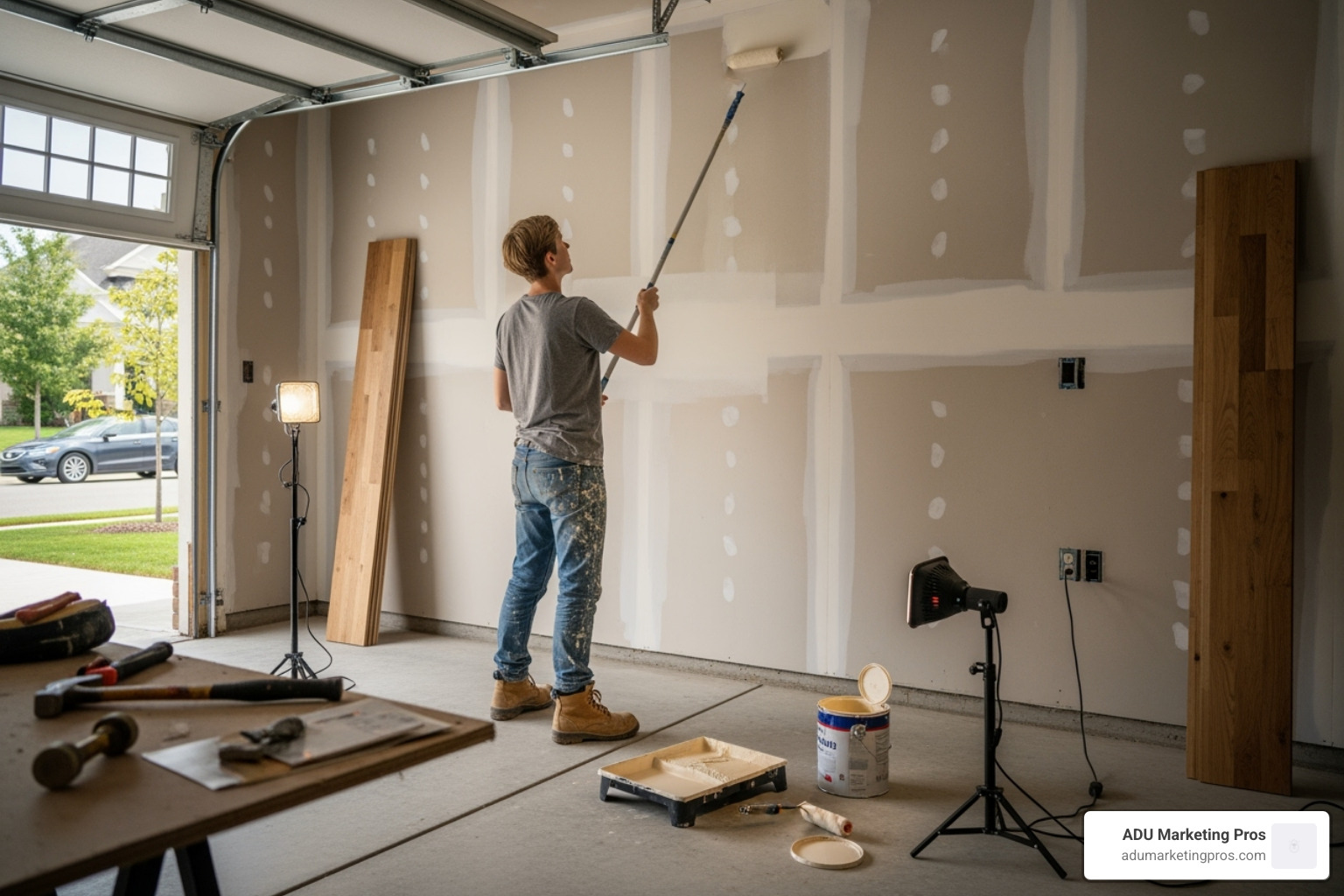
A well-planned garage conversion is more than just an expense; it’s a strategic investment in your property. It can unlock new income streams, increase your home’s market value, and provide flexible space for your family’s evolving needs—all while typically costing less than a ground-up addition.
Potential Return on Investment (ROI)
The financial returns on a garage conversion can be substantial. There are two primary ways an ADU generates ROI: property value appreciation and rental income.
- Property Value: A legally permitted, high-quality conversion adds valuable square footage to your home. In many markets, this added living space is appraised similarly to the main house. Quality conversions often deliver an 80% or higher ROI upon resale. As Realtor.com notes, well-executed projects have high returns, especially in tight housing markets like those across California, where an ADU can add six figures to a home’s value.
- Rental Income: The ability to generate monthly cash flow is a powerful incentive. In many urban and suburban areas, a garage apartment can command $1,500–$2,500+ per month in rent.
Hypothetical Example: A $70,000 investment in a two-car garage conversion in San Diego could generate $2,200/month in rent. That’s $26,400 in annual gross income, offering a clear path to recouping the initial investment in just a few years. This makes the cost of turning a garage into an apartment a cash-flowing asset. Explore the potential with our guides on ADU Rental Income and ADU Return on Investment.
Beyond pure financials, the non-monetary ROI is also significant. It provides a home for aging parents, an independent space for adult children, or a private guest suite, adding immeasurable value to your family’s quality of life.
Cost-Saving Strategies for Your Conversion
While a conversion is a major project, there are smart ways to manage the budget without sacrificing quality.
- DIY Selectively: Sweat equity can save you thousands. Tackle tasks that don’t require a license, such as demolition, painting, installing click-lock flooring, assembling IKEA cabinets, and landscaping. However, always leave electrical, plumbing, structural framing, and foundation work to licensed and insured professionals. Mistakes in these areas are costly and dangerous.
- Get Multiple Bids: Don’t accept the first estimate you receive. Obtain at least three detailed, line-item bids from qualified contractors. This allows you to compare costs apples-to-apples and ensures you’re getting a fair price.
- Choose Value-Oriented Finishes: You can achieve a high-end look without the high-end price tag. Opt for durable LVP flooring instead of hardwood. Use standard-sized, in-stock windows and doors. Choose attractive but affordable builder-grade fixtures that you can easily upgrade later.
- Act as Your Own General Contractor (With Caution): If you are highly organized, have experience with construction, and have ample free time, you can manage the project yourself, hiring subcontractors directly. This can save you the 15-25% fee a general contractor charges, but it’s a demanding job that can lead to costly delays and mistakes if you’re unprepared.
- Explore Funding Options: Don’t assume you have to pay for it all out of pocket. Look into options like a home equity line of credit (HELOC), a cash-out refinance, or a renovation loan. Review our guide to ADU Financing Options.
Hidden Costs and Budget Pitfalls to Avoid
Even the best-laid plans can encounter surprises. A healthy contingency fund of 15-20% of your total budget is essential to handle unexpected issues.
- Structural Surprises: Pulling down drywall can reveal dry rot, termite damage, or improperly constructed framing that must be fixed.
- Code Compliance Upgrades: Your entire home’s electrical panel may need to be upgraded to handle the new load, or you may need to bring old framing up to current seismic or fire codes.
- Hazardous Material Remediation: If your home was built before the 1980s, you might find asbestos in old flooring, insulation, or drywall texture. Abatement can cost $5–$15 per square foot.
- Utility Connection Fees: Some cities charge significant “impact fees” for connecting a new dwelling unit to public water and sewer systems. These can run into the thousands of dollars.
- Long Utility Runs: Trenching across a long driveway or landscaped yard to connect a detached garage to water, sewer, and power can be unexpectedly expensive.
- Site Restoration: Your budget should include funds for repairing landscaping, driveways, or walkways that were disturbed during construction.
Frequently Asked Questions about Garage Conversion Costs
Navigating a garage conversion for the first time can bring up a lot of questions. Here are answers to some of the most common ones.
Is it cheaper to convert a garage than build an addition?
Almost always, yes. A garage conversion is significantly more cost-effective than building a new addition from the ground up. You are starting with three of the most expensive components already in place: the foundation, the structural frame, and the roof. While a new addition frequently costs $100–$300+ per square foot, a garage conversion often lands in the $50–$200 per square foot range. The construction timeline is also typically much shorter, with less disruption to your property and daily life. For a broader context on construction expenses, see ADU Building Costs.
How long does a garage conversion take?
The timeline can be broken into two phases: pre-construction and construction.
- Pre-construction (2–6 months): This phase includes design, engineering, and permitting. Creating plans can take a few weeks, but the permitting process is often the biggest variable, taking anywhere from a few weeks to several months depending on your city’s backlog and the complexity of your project.
- Construction (6 weeks–4 months): Once you have approved permits, the physical work can begin. A simple room conversion can often be completed in 6-8 weeks. A full ADU with a kitchen and bath typically requires 10-16 weeks. Timelines can be extended by unforeseen issues found during demolition, inspection scheduling delays, or contractor availability.
Could converting my garage hurt my home’s value?
It’s a valid concern, but it’s unlikely if done correctly. A poorly executed, unpermitted conversion can certainly hurt your home’s value and create major legal and financial headaches when you try to sell. However, a well-designed, fully permitted conversion that adds legal living space almost always adds significant value. The main exception is in neighborhoods where off-street garage parking is extremely scarce and highly valued. In most areas, especially in markets like California where housing is in high demand, the value of the additional living space far outweighs the loss of a parking spot.
Will my property taxes go up after a garage conversion?
Yes, you should expect your property taxes to increase. When you complete a permitted conversion, the project’s value will be assessed by your local tax authority, and your home’s total assessed value will be adjusted upward. The increase is based only on the value of the new construction, not a reassessment of your entire property (in most jurisdictions). While nobody likes higher taxes, it’s a sign that you have successfully increased the value of your property.
Do I need an architect for a garage conversion?
For a simple conversion (like a home office with no plumbing), you might be able to work directly with an experienced contractor who can produce the simple drawings needed for a permit. However, for a full ADU with a kitchen and bathroom, hiring an architect or a professional designer is highly recommended. They are experts at maximizing small spaces, creating functional and beautiful layouts, and navigating the complex web of building codes and permit requirements. Their expertise can prevent costly mistakes and ensure the final product meets your needs and adds maximum value.
Conclusion
Converting your garage into an apartment or livable space is one of the smartest and most cost-effective ways to expand your home’s footprint, generate rental income, or accommodate family. While the cost can vary widely, most projects fall between $9,659 and $51,659. Simple room conversions represent the lower end of this range, while full-featured ADUs with kitchens and baths can reach $100,000 or more, depending on the project’s size, the chosen finishes, and the complexity of the utility work.
The key to a successful project lies in meticulous planning. By understanding the cost factors, creating a detailed budget with a 15-20% contingency fund, obtaining proper permits, and hiring qualified professionals, you can manage the process effectively. The investment is not just in construction materials and labor; it’s an investment in flexibility, financial freedom, and your property’s long-term value. The significant upside in both property appreciation and potential rental income makes a garage conversion a compelling financial move for many homeowners.
For ADU builders, designers, and architects, the homeowner demand for these projects is undeniable. From San Jose and the Bay Area to Los Angeles and San Diego, property owners are actively seeking experts to guide them through creating compliant, high-quality, and valuable living spaces. ADU Marketing Pros specializes in connecting these motivated clients with the professionals who can turn their vision into reality, helping you build your business on a foundation of expertise and value.
Ready to take the next step? Use our Garage Conversion Cost Calculator to get a personalized estimate for your project and begin planning your path to a more valuable and versatile home.