
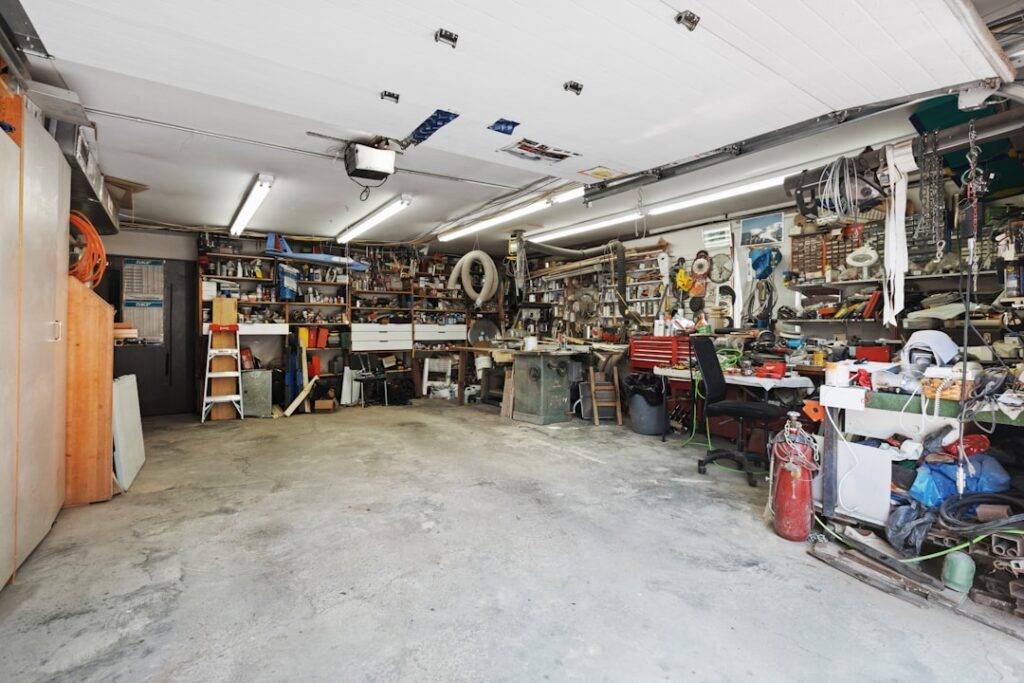
What Does a Garage Conversion Cost? (Quick Answer)
Garage conversion cost typically ranges from $6,000 to $27,000, with a national average around $16,665. Most homeowners spend about $40 per square foot for a quality conversion. However, for those looking to create a fully independent living space or an Accessory Dwelling Unit (ADU), costs can escalate significantly due to the complexity of plumbing, separate utility metering, and high-end finishes.
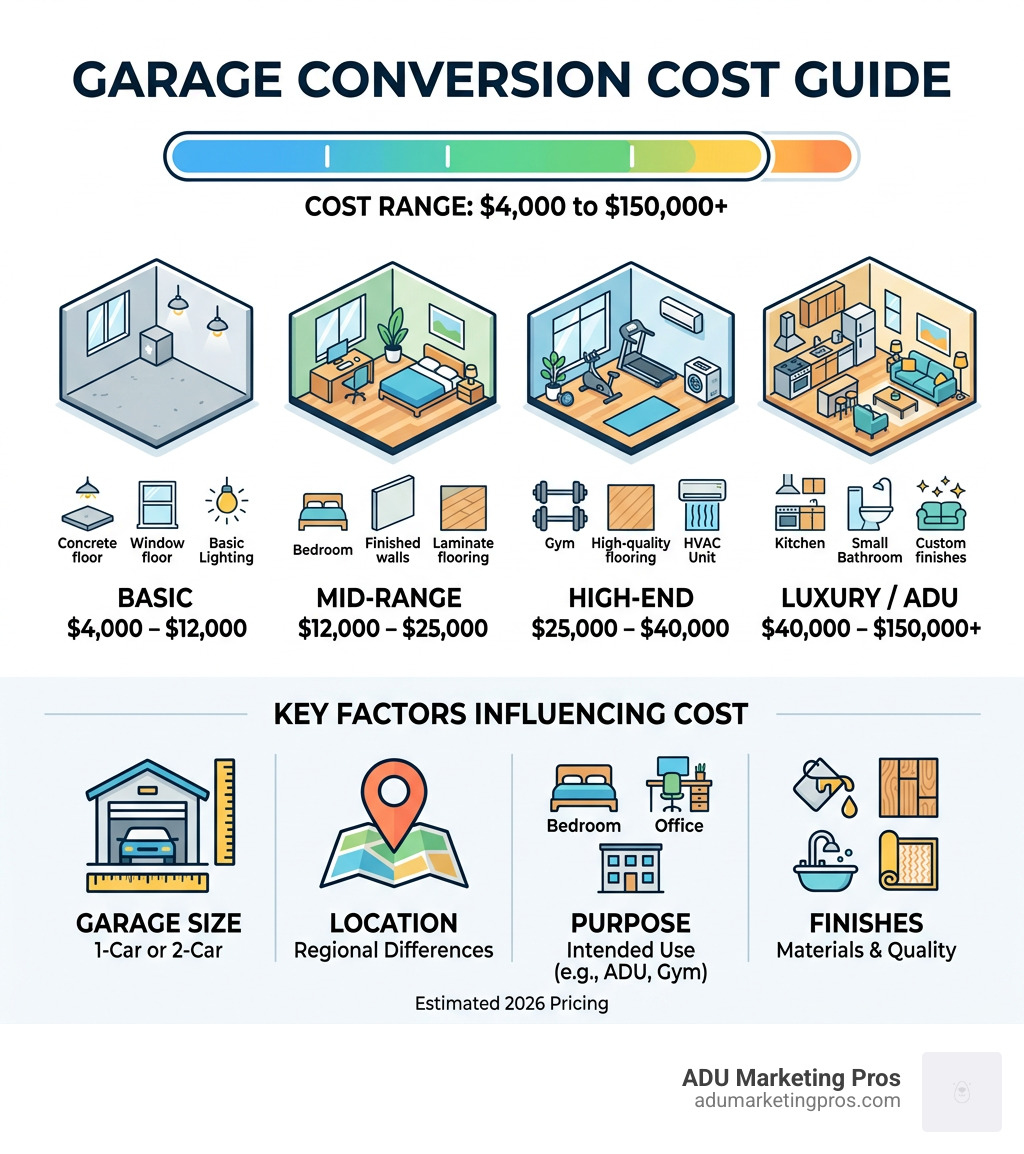
Here’s a fast breakdown by project level:
| Project Level | Typical Cost Range |
|---|---|
| Basic (simple room, minimal work) | $4,000 – $12,000 |
| Mid-Range (bedroom, office, gym) | $12,000 – $25,000 |
| High-End (full finishes, structural work) | $25,000 – $40,000 |
| Luxury / ADU / Apartment | $40,000 – $150,000+ |
Your final number depends on four primary factors: garage size, geographic location, intended use, and the quality of finishes.
In the current economic climate, converting a garage into livable space is one of the most cost-effective ways to add square footage to a home. You already have the roof, walls, and foundation — that’s a huge head start compared to building a new addition from scratch. In many urban markets, where land is scarce and construction costs are high, a garage conversion represents the most viable path to increasing property value and utility. This is particularly true in states like California, where housing shortages have led to favorable legislation for ADUs, making it easier and more profitable than ever to transform underutilized storage space into a functional asset.
Whether a homeowner is thinking about a simple home office, an extra bedroom, or a full accessory dwelling unit (ADU) with a kitchen and bathroom, the cost can vary dramatically. A basic one-car garage conversion might cost as little as $5,000. A fully equipped studio apartment? Closer to $100,000 or more. This guide provides a deep dive into the financial realities of these projects, helping you budget accurately for your specific vision. We will explore the hidden costs of structural engineering, the nuances of local building codes, and the long-term return on investment you can expect from such a project.
Basic garage conversion cost vocab:
- turning a garage into a bedroom
- cost to convert carport to garage
- convert single garage to granny flat
Average Garage Conversion Costs: A National Overview
When we look at the national landscape, the garage conversion cost sits in a broad window. While the average is roughly $16,665, we have seen projects wrap up for as little as $6,000 and others climb well north of $50,000 for high-end living spaces. If you are aiming for a quality conversion that feels like a natural extension of your home, budgeting around $40 to $60 per square foot is a safe starting point. However, for full Accessory Dwelling Units (ADUs) that require kitchens and bathrooms, that figure can jump to $150 or even $300 per square foot depending on the local regulatory environment and material choices.
The tier of your project dictates the final bill. A “Basic” project usually involves finishing the walls, adding simple flooring, and extending electricity for a few outlets. “Mid-range” projects often include better insulation, dedicated HVAC (like a mini-split system), and higher-quality windows. Once you hit the “High-end” or “Luxury” tiers, you are looking at structural changes, plumbing for bathrooms, and premium finishes that match the rest of your home’s aesthetic. It is important to note that labor costs typically account for 40% to 60% of the total budget, meaning that your choice of contractor and the complexity of the design will be the primary drivers of the final invoice.
Understanding the Garage Conversion Cost by Size
Size is the most obvious driver of your budget. More square footage means more drywall, more flooring, and more area to heat and cool. It also means more labor hours for installation and finishing. Larger garages also require more extensive electrical circuits and potentially more complex lighting designs to ensure the space doesn’t feel like a cavern.
- 1-Car Garage (approx. 240 sq. ft.): To simply remodel and finish this space, you might spend between $2,900 and $11,800. If you are converting it into a fully functional living space with climate control and high-quality flooring, expect costs between $5,000 and $20,000+. This size is ideal for a home office or a compact guest bedroom.
- 2-Car Garage (approx. 440 – 480 sq. ft.): This is the most common project we see. A full conversion into a living space typically ranges from $10,000 to $50,000+. The larger footprint allows for multi-functional spaces, such as a bedroom-office combo or a large family room. Because of the span, you may need to consider structural support if you plan on removing the center pillar.
- 3-Car Garage (approx. 600+ sq. ft.): With this much space, you are essentially building a small house. These conversions often range from $30,000 to $75,000+. At this scale, many homeowners choose to split the space, keeping one bay for parking and converting the other two into a large suite or a Junior ADU (JADU).
| Garage Size | Basic Project | Mid-Range | High-End/ADU |
|---|---|---|---|
| 1-Car (240 sq ft) | $6,000 – $9,000 | $9,000 – $18,000 | $20,000 – $50,000+ |
| 2-Car (480 sq ft) | $12,000 – $18,000 | $18,000 – $36,000 | $50,000 – $100,000+ |
| 3-Car (600+ sq ft) | $15,000 – $25,000 | $25,000 – $50,000 | $75,000 – $150,000+ |
Cost Tiers: From Basic to Luxury
We find it helpful to categorize projects by the “vibe” and functionality you’re after:
- Basic ($4,000 – $12,000): Perfect for a home gym or a simple hobby room. You’re likely keeping the existing garage door but insulating it, adding basic lighting, and using affordable flooring like interlocking rubber tiles or vinyl. This tier focuses on utility over aesthetics and often utilizes surface-mounted electrical conduits to save on wall-opening costs.
- Mid-Range ($12,000 – $25,000): This is the sweet spot for a comfortable home office or a standard bedroom. It includes proper drywall, an HVAC solution (often a mini-split), and perhaps replacing the garage door with a large window or an entry door. The space will feel like a real room, though it may share a bathroom with the main house. You’ll likely see recessed lighting and standard-grade laminate or carpet here.
- High-End ($25,000 – $40,000): Here, we start seeing “invisible” conversions—meaning from the inside, you’d never know it was a garage. This tier includes high-quality flooring (like engineered hardwood), custom lighting, and superior insulation. It often involves raising the floor to match the house level, which eliminates the step-down and makes the transition seamless.
- Luxury / ADU ($40,000 – $150,000+): When you add a kitchen and a full bathroom, the complexity skyrockets. This involves trenching for plumbing, separate utility meters in some cases, and premium cabinetry. These units are often designed for long-term rental or as a permanent residence for family members, featuring high-end appliances and architectural details that mirror the main home.
Key Factors Influencing Your Garage Conversion Cost

Every garage is a little different, and those differences can save you thousands or cost you just as much. We always tell our clients in the San Francisco Bay Area and San Diego that the “bones” of the garage matter more than the paint color. Understanding the structural and regional variables is key to avoiding budget overruns and ensuring the project remains viable.
How Location Impacts Your Budget
If you are in San Jose or Menlo Park, your garage conversion cost will naturally be higher than in the Midwest. This is primarily due to local labor rates and the cost of permits. In high-cost-of-living areas, specialized trades like electricians and plumbers charge a premium, often $100 to $200 per hour. Furthermore, California has strict building codes (like Title 24 energy requirements) that can add to your insulation and window costs. For example, a project that costs $15,000 in a rural area might easily reach $25,000 in Palo Alto due to these regional factors. Additionally, seismic requirements in earthquake-prone zones may necessitate foundation reinforcement or the installation of shear walls, adding several thousand dollars to the structural phase. Zoning laws also vary; some cities require you to replace the lost parking space elsewhere on your property, which could mean paving a new driveway or adding a carport.
Scope of Work and Desired Finishes
Are you just slapping up some drywall, or are you moving walls? Structural changes—like removing a load-bearing wall to open the space into your kitchen—can add $5,000 to $15,000 to your budget for engineering and shoring. The choice of finishes also plays a massive role. Standard laminate flooring might cost $3 per square foot installed, while high-end tile or hardwood can exceed $15 per square foot.
Foundation work is another “hidden” factor. Many garage floors are sloped toward the door to allow water to drain. To make it a living space, you may need to level the floor with self-leveling concrete or build a sleeper floor, which can cost between $600 and $3,000 depending on the size of the garage and the method used. If the existing slab is cracked or lacks a vapor barrier, you may need to seal it properly to prevent moisture issues in your new living space. Moisture can lead to mold and the failure of flooring adhesives, so this is not an area where you want to cut corners.
Attached vs. Detached Garage Conversions
We often get asked if it’s cheaper to convert an attached or detached garage.
- Attached Garages: Generally cheaper. It is much easier to extend your existing HVAC ducts, electrical circuits, and plumbing lines through a shared wall. You also benefit from the existing insulation of the shared wall, which can reduce heating and cooling loads. However, you must ensure the shared wall meets fire-rating requirements, which usually means 5/8-inch Type X drywall.
- Detached Garages: These are often more expensive because they require trenching. You have to dig a ditch through your yard to run water, sewer, and electricity to the building. This trenching alone can cost $2,000 to $5,000 depending on the distance and soil conditions. On the plus side, detached conversions make for much better rental units or “granny flats” because they offer more privacy and independent access, which can command higher rental rates.
The Hidden Costs of Older Homes
When converting a garage in an older home, you may encounter “legacy” issues. This includes outdated electrical panels that cannot handle the additional load of a new room, or plumbing stacks that are not positioned correctly for a new bathroom. Lead paint or asbestos in older drywall or insulation can also trigger remediation costs that aren’t present in newer builds. If your home was built before 1978, testing for lead is mandatory in many jurisdictions. Always include a 10-15% contingency fund in your budget to cover these unforeseen discoveries, as they are almost guaranteed to appear once you start opening up walls.
Cost Breakdown by Conversion Type and Components
The purpose of the room is the biggest “known” variable. A room where you just sit and type (office) is vastly different from a room where you cook and bathe (ADU). The complexity of the systems required for human habitation—specifically water, waste, and ventilation—drives the bulk of the cost variance. When you add water to a space, you aren’t just paying for the pipes; you’re paying for the waterproofing, the venting, and the potential for future maintenance.
Typical Costs for Different Garage Conversion Projects
Based on common project data, here is what you can expect to pay for specific room types:
- Bedroom Conversion ($10,400 – $17,800): Requires egress windows, a closet, and proper insulation to meet code. The addition of a closet is a legal requirement in many jurisdictions to classify the space as a bedroom. You’ll also need to consider soundproofing if the garage is near a busy street.
- Home Office Conversion ($8,200 – $14,700): Focuses on electrical outlets, lighting, and soundproofing for those endless Zoom calls. High-speed internet wiring (Cat6) is also a common addition here. Many homeowners also opt for built-in shelving, which can add $1,500 to $3,000 to the total.
- Home Gym Conversion ($8,700 – $15,900): Needs reinforced flooring (often rubberized) and potentially upgraded ventilation or a dedicated mini-split to keep the air fresh during workouts. Mirrors and specialized lighting can also increase the cost.
- Living Room Conversion ($12,300 – $19,600): Usually involves removing the garage door and replacing it with an attractive wall/window combo to maximize natural light and improve the home’s curb appeal. This often requires structural headers to support the new wall.
- Utility Room Conversion ($3,000 – $6,000): The most affordable option, often used for laundry or extra pantry space. This usually keeps the existing concrete floor or uses simple epoxy coatings. Plumbing for a utility sink or washer is the main cost driver here.
Detailed Garage Conversion Cost for an ADU
If your goal is to create a “Junior ADU” (JADU) or a full Accessory Dwelling Unit, you are looking at a different financial ballpark. The garage conversion cost for an ADU typically ranges from $50,000 to $150,000.
Why so much?
- Plumbing: You need a bathroom and a kitchen. This involves connecting to the main sewer line, which often requires cutting into the existing garage slab. This “slab busting” is labor-intensive and expensive.
- Kitchen: Cabinets, countertops, and appliances add up quickly. Even a kitchenette can cost $10,000 when you factor in labor, electrical circuits for the stove, and plumbing for the sink.
- Permits: ADU permits are more complex and expensive than simple room permits, often costing $1,500 to $5,000 depending on the city’s impact fees. Some cities waive these for small units, but you must check local ordinances.
- Separation: You may need fire-rated drywall (Type X) between the unit and the main house or a separate entrance for privacy and code compliance. Sound attenuation between the units is also a major consideration for comfort.
The silver lining? In markets like Los Angeles or San Jose, these units can rent for $1,500 to $3,000 a month, meaning the project can pay for itself in a few years while providing a massive boost to property value.
Essential Component Costs: A Detailed Look
To help you build a line-item budget, here are the average costs for the specific parts of the job:
- Permits and Legal Fees ($300 – $3,000): Don’t skip these! An illegal conversion can devalue your home and lead to fines. In some areas, you may also need a land survey or a parking study.
- Architectural Design ($2,000 – $20,000): For simple rooms, you might not need an architect. For ADUs or structural changes, they are essential for getting your plans approved by the city and ensuring the space is functional.
- Electrical Upgrades ($1,112 – $7,228): Most garages only have one or two outlets. A conversion usually requires a complete overhaul, and potentially a sub-panel if your main panel is full. Adding dedicated circuits for appliances or a mini-split is standard.
- Plumbing ($1,500 – $4,000): This covers the labor and materials for a basic bathroom or kitchen hookup. If you need to pump waste uphill (macerating toilet), costs will increase.
- HVAC Systems ($300 – $8,000): A portable heater is cheap ($300), but a high-quality ductless mini-split system—which we highly recommend for independent climate control—usually costs $2,000 to $5,000 installed.
- Insulation ($1,500 – $3,570): Proper insulation is critical for energy efficiency according to the U.S. Department of Energy. In California, we typically aim for R-21 in walls and R-38 to R-49 in ceilings to meet Title 24 standards. Spray foam is more expensive but offers better performance in tight spaces.
- Windows and Doors ($700 – $3,000): Replacing the garage door with an entry door and adding a window for natural light. Energy-efficient double-pane windows are standard and help with sound dampening.
- Flooring and Drywall ($2,000 – $7,000): Finishing the “envelope” of the room. This includes hanging, taping, mudding, and painting the walls, as well as installing the floor covering. Luxury vinyl plank (LVP) is a popular choice for its durability and moisture resistance.
ROI and Financial Planning for Your Conversion
Is it worth it? From a strictly financial perspective, the answer is usually a resounding “yes,” provided the project is permitted and executed with high-quality craftsmanship. A poorly done conversion can actually hurt your resale value, so it’s vital to do it right.
Does a Garage Conversion Add Value to a Home?
Well-executed projects can return 80% of your investment according to Realtor.com. If you spend $20,000 on a conversion, you might see your home’s market value increase by $16,000 immediately. This is because you are increasing the “livable square footage” of the home, which is a primary metric used by appraisers. In many markets, a 3-bedroom home with a converted garage (making it a 4-bedroom) sells for significantly more than a standard 3-bedroom home.
For ADUs, the impact is even greater. Adding a fully functional living unit can increase your property value by 20% to 30%. In a $1,000,000 San Francisco Bay Area market, that’s a massive jump. However, we must offer a word of caution: if you live in a neighborhood where street parking is a nightmare, losing your garage might make your home less attractive to some buyers. Always consider the “parking-to-bedroom” ratio of your specific street before committing to a full conversion. If you have a long driveway that can still accommodate two cars, the loss of the garage is much less of a concern.
Financing Your Garage Conversion
Most homeowners don’t pay for a $50,000 conversion in cash. Common financing routes include:
- HELOC (Home Equity Line of Credit): This allows you to borrow against the equity in your home at a variable interest rate. It’s flexible and ideal for phased projects where you might need to draw funds at different stages.
- Cash-Out Refinance: You replace your existing mortgage with a new, larger one and take the difference in cash. This is best when interest rates are lower than your current rate, though it involves closing costs.
- Personal Loans: These are unsecured and usually have higher interest rates but are much faster to obtain and don’t put your home at risk as collateral. They are great for smaller, mid-range projects.
- Renovation Loans (FHA 203k): These are specifically designed for home improvements and can be rolled into a home purchase or refinance. They require more paperwork but can cover 100% of the construction costs.
Potential Savings Strategies for Your Project
If the garage conversion cost is making your eyes water, there are ways to trim the fat without sacrificing quality:
- DIY Demolition: Grabbing a sledgehammer and clearing out old shelving or drywall yourself can save you $1,000 to $2,000 in labor. Just ensure you aren’t hitting any live wires or pipes, and check if you need a permit for the demo itself.
- Source Your Own Materials: We often suggest homeowners buy their own flooring or light fixtures during holiday sales. Contractors often add a 10-20% markup to materials they source, so buying your own can save hundreds.
- Keep the Plumbing Close: If you are adding a bathroom, place it on the wall closest to the main house’s existing plumbing. This reduces the amount of trenching and pipe-running needed, which is one of the most expensive parts of the job.
- Standard Sizes: Custom windows and doors look great, but standard off-the-shelf sizes from big-box stores cost half as much and are much easier to replace if damaged. Design your wall openings around these standard sizes.
- Paint It Yourself: Painting is a high-labor-cost task that almost any homeowner can do with a little patience and the right tools. This can easily save you $1,500 on a two-car conversion.
The Garage Conversion Process: Timeline and Legal Steps
A garage conversion isn’t a weekend project. Even the simplest ones take time to do right, especially when dealing with city inspectors and specialized trades. Rushing the process often leads to mistakes that cost more to fix later.
How Long Does a Typical Garage Conversion Take?
The total timeline usually falls between 4 and 14 weeks, broken down like this:
- Planning and Design (2-8 weeks): Deciding on the layout, choosing materials, and getting professional drawings made. If you need an architect or structural engineer, this phase can take longer as you iterate on the design.
- Permit Approval (2-12 weeks): This is the biggest wild card. Some cities are fast; others (we’re looking at you, major metro areas) can be quite slow. ADU permits generally take longer than simple room permits because they require review from multiple departments (fire, water, planning).
- Construction (4-8 weeks): The actual “dust and hammers” phase. Simple offices can wrap up in 3 weeks, while ADUs take the full 8 weeks or more due to the complexity of plumbing and electrical inspections. This phase includes framing, rough-ins, insulation, drywall, and finishes.
Legal Requirements and Permit Costs
In California and many other states, you cannot simply “finish” a garage and call it a bedroom. To be legal, the space must meet specific building codes:
- Ceiling Height: Usually at least 7 feet 6 inches. If your garage ceiling is lower, you may need to excavate the floor or raise the roof, both of which are very expensive options.
- Egress: You must have a window large enough for a person to climb out of in case of a fire. This window must meet specific height and width requirements (usually 5.7 sq. ft. of opening) and be easily operable.
- Energy Efficiency: You must meet state-mandated insulation and window standards. This often includes installing a vapor barrier under the flooring and using LED lighting to reduce energy consumption.
- Permit Costs: Expect to pay between $1,000 and $3,000 for the various building, electrical, and plumbing permits. For ADUs, you may also face “impact fees” from the local school or water district, though many states are now limiting these fees to encourage ADU production.
The Inspection Phase
During construction, you will have several visits from the city building inspector. They will typically check:
- Rough-in: Before the drywall goes up, they check the electrical wiring and plumbing pipes to ensure they are installed safely and according to code.
- Insulation: They verify that the insulation meets the required R-value and is installed without gaps that could lead to energy loss.
- Final: They check that everything is finished to code, including smoke detectors, carbon monoxide alarms, and proper ventilation. Skipping these inspections can make it impossible to sell your home later and may lead to insurance claims being denied in the event of a fire or flood.
Frequently Asked Questions about Garage Conversion Costs
Is it cheaper to convert a garage than build an addition?
Yes, significantly. Building a new addition requires pouring a new foundation, framing new exterior walls, and tying in a new roofline. Since the garage already has these “big three” components, you can save 20% to 50% compared to a ground-up addition of the same size. You are essentially paying for the “fill” rather than the “shell,” which makes it the most affordable way to add square footage.
Can converting a garage hurt my home’s value?
It depends on your neighbors and the local market. If every house on your block has a 2-car garage and yours is the only one without one, it might be a “deal-breaker” for some future buyers who prioritize covered parking. However, in areas where living space is at a premium, the extra bedroom or rental income usually far outweighs the loss of a place to park the car. In high-density cities, the value of an ADU almost always exceeds the value of a garage.
What is the cheapest way to convert a garage?
The “budget king” strategy is to do a partial conversion. Partition off the back half of the garage for an office or laundry room while keeping the front half (and the garage door) for storage or a single car. This avoids the cost of removing the garage door, keeps the exterior of the house looking original, and often requires less intensive HVAC work. It’s a great compromise for those who need space but want to keep some utility.
Do I need to replace the garage door?
Legally, if you are converting the space into a bedroom or living room, the garage door must be replaced with a permanent wall that meets insulation and fire codes. For a home gym or workshop, you might be able to keep the door, but it will be very difficult to keep the space at a comfortable temperature without a high-quality insulated door. Most building departments will not sign off on a “living space” that still has a standard roll-up garage door.
Will my property taxes go up?
Yes, generally. When you add livable square footage or an ADU, the tax assessor will likely increase the assessed value of your home. However, the increase is usually based on the cost of the improvement rather than a full reassessment of the entire property. In California, Proposition 13 provides some protections, but you should still budget for a modest increase in your annual tax bill, typically around 1% of the project cost.
Can I do a garage conversion myself?
While a handy homeowner can handle demolition, painting, and flooring, we strongly recommend hiring professionals for electrical, plumbing, and structural work. These systems must meet strict safety codes, and a mistake can lead to fire hazards or water damage. Furthermore, most cities require licensed contractors to pull the necessary permits for major conversions. Doing it yourself without permits can lead to massive headaches when you try to sell the home.
How do I handle heating and cooling?
The most common and efficient way to handle HVAC in a garage conversion is a ductless mini-split system. These units provide both heating and cooling, are relatively easy to install, and allow the new room to have its own thermostat. Extending existing ductwork from the main house is possible but often results in poor airflow and can strain your existing HVAC system.
What kind of flooring is best for a garage conversion?
Since garage slabs are on the ground, they are prone to moisture. Luxury Vinyl Plank (LVP) or tile are the best choices because they are waterproof and durable. If you want carpet or hardwood, you must install a high-quality vapor barrier and potentially a subfloor to prevent moisture from damaging the materials. Engineered hardwood is a better choice than solid hardwood for this application.
Conclusion: Is a Garage Conversion Right for You?
The garage conversion cost is a significant investment, but it is one of the smartest ways to maximize the potential of your property. Whether you are looking to house an aging parent, create a quiet space for your business, or generate monthly rental income, the key is professional planning and a realistic budget. By understanding the variables—from structural needs to permit fees—you can avoid the common pitfalls that lead to project delays and cost overruns.
At ADU Marketing Pros, we understand the nuances of the California market—from the strict regulations in San Jose to the high demand for housing in San Diego. We specialize in helping firms in this space find the right clients who value quality over the lowest possible bid. We know that a successful conversion isn’t just about the lowest price; it’s about creating a space that adds long-term value and utility to your life. A well-planned conversion can transform your lifestyle and your financial future simultaneously.
If you are ready to see what your specific project might look like, use our garage conversion cost calculator for a personalized estimate. Balancing your budget with your long-term goals is the first step toward turning that dusty storage space into the most popular room in your house. With the right approach, your garage conversion can be a seamless, value-adding addition to your home for decades to come. Don’t let that extra square footage go to waste—start your transformation today.