
Why the NC Building Code for Tiny Houses PDF Matters Before You Break Ground
Building a tiny home is a lifestyle choice prioritizing freedom, financial independence, and environmental sustainability. In North Carolina, this dream requires strict adherence to the nc building code for tiny houses pdf. Transitioning to a compact dwelling means every square inch is scrutinized by local officials to ensure safety, longevity, and legal compliance. Without a firm grasp of these regulations, a project can quickly turn from a dream into a costly legal nightmare involving fines, forced removals, or the inability to secure insurance.
At ADU Marketing Pros, based in San Jose, California, we serve builders across the San Francisco Bay Area, Los Angeles, and San Diego. We publish this North Carolina guide because code literacy is a competitive advantage in the modern construction landscape. Many California firms we work with face constant questions about tiny homes and Accessory Dwelling Units (ADUs); North Carolina offers one of the clearest, most progressive examples of tiny-house-specific rules in the United States. Understanding Appendix AQ helps design-build firms communicate expertise and educate clients who are comparing housing options across different states. For California-based architects and developers, studying North Carolina’s approach provides a vital framework for how regulations may evolve locally as the housing crisis demands more flexible living solutions.
The Legal Foundation of Small-Scale Living
The nc building code for tiny houses pdf is the essential document for legal construction in the Tar Heel State. It serves as the bridge between traditional residential standards and the unique needs of small-scale architecture. Missing a single requirement, such as the specific riser height for a loft ladder or the required net clear opening for an emergency escape window, can result in failed inspections that halt a project indefinitely. North Carolina’s framework removes the ambiguity and guesswork often found in other states, allowing the tiny house movement to flourish in regions like Asheville, Raleigh, and Wilmington.
Quick Reference: NC Tiny House Standards
| Requirement | Standard |
|---|---|
| Maximum floor area | 400 sq ft or less (excluding lofts) |
| Min. habitable room size | 70 sq ft |
| Min. ceiling height | 7 ft (6 ft 4 in for bathrooms/kitchens) |
| Min. loft area | 35 sq ft |
| Min. loft dimension | 5 ft in any direction |
| Key code reference | Appendix AQ, 2024 NC Residential Code |
| Effective date | January 1, 2023 |
| Permit required? | Yes, from local building official |
Rules live in Appendix AQ of the 2024 NC State Building Code: Residential. Effective January 1, 2023, these provisions cover lofts, foundations, and emergency escapes. This update integrated tiny-house standards directly into the residential code, acknowledging that small-scale living requires unique architectural compromises without sacrificing life safety. While North Carolina is welcoming, local zoning varies significantly. What is allowed in Buncombe County may be restricted in Camden County. This guide breaks down requirements so you can build smart and avoid mistakes. Whether you are an NC builder or a California firm in San Jose or San Diego, understanding these regulations sharpens your messaging and helps win educated clients who value compliance as much as aesthetics.
Understanding the NC Building Code for Tiny Houses PDF and Appendix AQ
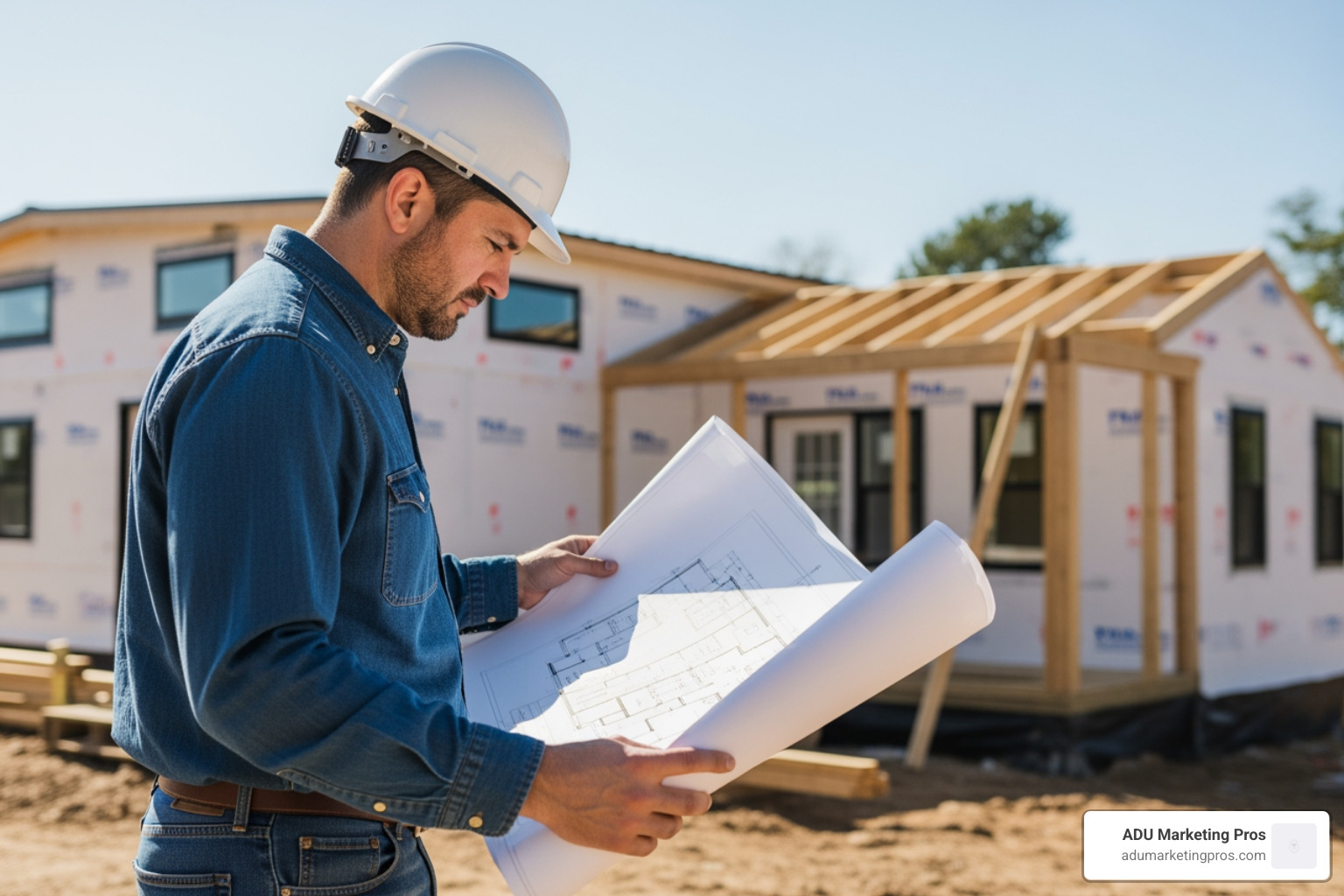
Legal building in North Carolina centers on Appendix AQ of the 2024 State Building Code. This appendix addresses the specific architectural challenges—like lofts and steep stairs—that simply do not fit within standard residential rules. At ADU Marketing Pros, we frequently compare these to ADU laws in San Jose and Palo Alto. While California focuses heavily on Accessory Dwelling Units as a solution to urban density, North Carolina has paved the way for detached tiny homes to function as primary residences on private lots.
The Scope and Purpose of Appendix AQ
The code applies specifically to tiny houses used as single-family permanent dwellings. To qualify for the relaxations provided in Appendix AQ, the home must be 400 square feet or less, excluding the area of any lofts. If a home reaches 401 square feet, it must follow the standard NC Residential Code in its entirety, which requires larger staircases, higher ceilings, and more traditional room dimensions. Staying under the 400-square-foot threshold allows builders to utilize specialized provisions for lofts and ladders that make tiny living functional.
By following APPENDIX AQ TINY HOUSES – 2024 NORTH CAROLINA STATE BUILDING CODE, builders gain the flexibility needed to innovate. The code acknowledges that a 250-square-foot home cannot reasonably accommodate a 36-inch wide staircase without losing a massive percentage of its usable floor area. It allows for creative solutions to maximize vertical space, which is vital in high-density areas or mountain regions where land is expensive and the footprint must remain small.
Defining the Tiny House under NC Law
Under NC State Regulations, a tiny house is defined as a detached single-family dwelling of 400 square feet or less. It is intended for permanent occupancy, which distinguishes it from a recreational vehicle (RV) or a park model. A tiny house built to the nc building code for tiny houses pdf is considered a real estate asset—a permanent structure that can appreciate in value and be sold with the land it sits on.
These structures must meet rigorous life safety requirements, including egress, sanitation, and heating. They must also meet energy efficiency and structural load standards. For example, homes built in the Blue Ridge Mountains must be engineered to handle significant snow loads, while those on the Outer Banks must be designed to withstand hurricane-force winds. This level of engineering ensures that “tiny” does not mean “temporary.”
Navigating the Nuances of Lofts
Lofts are a staple of tiny living, providing sleeping or storage space without expanding the home’s footprint. However, they require strict safety standards to be considered “habitable.” In North Carolina, a habitable loft must have at least 35 square feet of floor area and be at least 5 feet in any horizontal dimension. This ensures that the space is actually functional for a human being and not just a crawl space.
According to amendments UpCodes note, loft portions with sloped ceilings under 3 feet (or 16 inches under gable roofs) do not count toward the minimum area requirements. For firms in Mountain View or Sunnyvale consulting on North Carolina projects, these precise calculations are essential for accurate planning and client expectations. Understanding how to calculate “habitable area” versus “total area” is the difference between a permit approval and a redesign.
Minimum Size and Dimension Requirements for NC Tiny Homes
North Carolina mandates a baseline for habitability that ensures every resident has a safe and healthy environment. The nc building code for tiny houses pdf provides specific measurements that ensure safety and comfort. These standards mirror the rigorous requirements found in the San Francisco Bay Area, where every inch of a dwelling must be accounted for to pass municipal inspections and meet the high expectations of modern homeowners.
The 70-Square-Foot Rule and Habitable Space
Every tiny house must have at least one habitable room. Under regulations for tiny homes, habitable rooms must have at least 70 square feet of floor area and a 7-foot minimum horizontal dimension. This prevents the creation of “tunnel-like” rooms that pose significant safety risks during emergencies, such as fires, where occupants and emergency responders need room to move quickly.
| Room Type | Min. Square Footage | Min. Dimension | Min. Ceiling Height |
|---|---|---|---|
| Habitable Room | 70 sq ft | 7 ft | 7 ft |
| Loft (Habitable) | 35 sq ft | 5 ft | N/A |
| Kitchen | N/A | N/A | 6 ft 4 in |
| Bathroom | N/A | N/A | 6 ft 4 in |
These dimensions provide a framework for eco-friendly small homes. By optimizing these minimums, builders can create spaces that feel much larger than they are through the use of natural light, high-quality materials, and strategic storage solutions. The goal is to maximize the “living” feel of the home while staying within the legal boundaries of the code.
Ceiling Height and Loft Standards
While standard homes typically require 7-foot ceilings throughout, the nc building code for tiny houses pdf offers much-needed relief for small-scale builders. In tiny homes, bathrooms and kitchens only need a 6-foot 4-inch ceiling height. This allows for the placement of lofts above these service areas without making the ground floor feel cramped or claustrophobic.
Lofts themselves can have ceiling heights under 6 feet 8 inches, enabling the classic “sleeping loft” design that defines the tiny house aesthetic. However, there is a catch: if the loft is intended to be the primary sleeping area, it must meet specific egress requirements. This includes having windows of a certain size and height to ensure that an occupant can escape in the event of a fire. Safety is never sacrificed for the sake of a cozy design.
Room Area Calculations and Professional Planning
It is important to remember that “habitable space” excludes bathrooms, closets, and utility areas. The current code focuses on the 70-square-foot minimum for habitable rooms, making it significantly easier to design compact, efficient homes. For firms in Menlo Park or San Jose, providing detailed square footage breakdowns is key to demonstrating expertise to both clients and building officials. Accurate calculations ensure that projects pass the permitting phase without the need for expensive and time-consuming revisions. In the world of tiny houses, precision is the most valuable tool in a builder’s belt.
Construction Standards: Foundations, Egress, and Utilities
In North Carolina, a tiny house must be a permanent structure to be recognized as a legal dwelling. The state does not recognize a tiny house on wheels (THOW) as a permanent residence unless it is properly affixed to a foundation that meets the nc building code for tiny houses pdf. This distinction is vital because it ensures the home is treated as real property, which is necessary for traditional financing, insurance, and long-term stability.
Foundation and Anchorage Requirements
Appendix Q Tiny Houses provides several foundation options for builders. Tiny houses can utilize wood foundations if they are properly anchored to resist a wind load of at least 20 pounds per square foot (psf). This is a critical requirement in coastal North Carolina, where high winds are a frequent threat. Proper anchoring also requires a thorough soil analysis to ensure the ground can support the concentrated loads of a small structure. For more on the technical differences between foundations and wheels, see our comprehensive guide on ADU vs tiny house.
Safety and Egress: The Lifeline of Tiny Homes
Appendix AQ allows for specialized loft access methods that would not be legal in standard residential homes. These provisions are designed to save space while maintaining a high level of safety:
- Stairways: Must be at least 20 inches wide. Treads can be 12 inches deep with a 12-inch maximum riser, allowing for a much steeper incline than traditional stairs.
- Ladders: Permitted for loft access, provided they have a 300 lb capacity and rungs spaced between 10 and 14 inches apart.
- Ship’s Ladders: These are allowed as a space-saving middle ground between traditional ladders and full staircases, offering more stability than a vertical ladder.
- Landing Platforms: Required for safe transitions from stairs or ladders into lofts with low ceilings, preventing falls during the transition.
Every tiny house must also have emergency escape and rescue openings (EERO) in all living areas and lofts. Loft windows must provide a 5.7 square foot net clear opening to ensure that a firefighter in full gear can enter the space or an occupant can exit safely.
Plumbing, Heating, and Utilities
To be considered a legal dwelling, a tiny home must be “self-contained” with permanent climate control and sanitation systems. According to NC Guidelines, holding tanks (like those found in RVs) are strictly prohibited for permanent residences. All plumbing must connect to a public sewer system or an approved on-site septic system.
Required utilities include:
- Heating: The system must be capable of maintaining a temperature of 68 degrees Fahrenheit in all habitable rooms.
- Sanitation: The home must include a toilet, a sink, and a shower or bathtub, all connected to a permanent water source.
- Kitchen: A dedicated kitchen area with a sink (hot and cold water) and space for cooking appliances is mandatory.
These standards ensure that tiny homes provide the same basic health and safety levels as any other residence in North Carolina, whether it’s a mountain cabin in Asheville or a beach cottage in Wilmington. By adhering to these rules, builders ensure their structures are durable, safe, and legally sound.
Zoning and Local Regulations Across North Carolina Counties
Even with a perfect understanding of the nc building code for tiny houses pdf, you must still navigate the complex world of local zoning. While the building code tells you how to build, zoning dictates where you can place your house. At ADU Marketing Pros, we help clients in Los Angeles and San Jose navigate similar hurdles by researching local Unified Development Ordinances (UDO) to find the best path forward.
Classifying Your Small Structure
North Carolina generally distinguishes between three types of small structures, each with its own set of rules:
- Site-Built or Modular: These are built to the NC Residential Code and are allowed in most residential zones, provided they meet lot size and setback requirements.
- Manufactured Homes: Built to federal HUD standards (minimum 320 sq ft), these are often restricted to specific manufactured home parks or rural zones.
- Park Models and RVs: Built to RVIA standards, these are rarely allowed as permanent residences on private lots and are usually restricted to campgrounds or RV parks.
If you are looking to purchase a pre-built unit, it is essential to browse small houses for sale that are specifically certified to meet the NC Residential Code and Appendix AQ.
Permissive Counties and Tiny-Friendly Communities
Several areas in North Carolina have updated their zoning laws to actively encourage tiny living as a solution to housing shortages:
- Henderson County: This area is home to “The Village,” a well-known Tiny Home Community that utilizes specific provisions for clustered housing.
- Buncombe County: Known for being very friendly toward tiny homes, Buncombe County has seen the rise of communities like Acony Bell, which address the high demand for affordable housing near Asheville.
- Alamance County: This county allows tiny homes between 200 and 800 square feet on approved lots, provided they meet all health and safety codes.
- Raleigh: The city’s Tiny Home Regulations Raleigh allow tiny houses to be built as ADUs in backyards, mirroring the ADU boom seen in California cities like San Jose and Mountain View.
Common Zoning Challenges and Due Diligence
Despite the state’s progress, some jurisdictions still have minimum square footage requirements that can override the building code’s flexibility. For example, while the code allows for a 400-square-foot home, a local zoning law might require a minimum of 800 square feet for a primary dwelling.
- Camden County: Currently maintains a 600-square-foot minimum for dwellings in many of its residential zones.
- New Hanover County: Rules in their UDO can make placement tricky, especially in coastal areas with strict environmental protections.
Always call the local planning department before purchasing land or starting a build. Ask specifically about minimum dwelling sizes, foundational requirements, and whether tiny houses are permitted as primary residences or only as ADUs. This due diligence is what separates successful projects from expensive mistakes.
Frequently Asked Questions about NC Tiny House Regulations
What is the official definition of a tiny house in North Carolina?
Under Appendix AQ of the state building code, a tiny house is defined as a detached single-family dwelling with a total floor area of 400 square feet or less, excluding the area of any lofts. To be considered a legal residence, it must follow the specific guidelines laid out in the nc building code for tiny houses pdf.
Do tiny houses in North Carolina need to be on a permanent foundation?
Yes. To be classified as a legal, permanent dwelling in North Carolina, the house must be attached to a permanent foundation system (such as masonry, a concrete slab, or an anchored wood foundation). This ensures the home can withstand local weather conditions and allows the property to be financed and insured as real estate rather than a vehicle.
When did Appendix AQ become effective in North Carolina?
The current provisions of Appendix AQ became effective on January 1, 2023. This update replaced the older 2018 standards and provided much-needed clarification on loft dimensions, egress requirements, and the use of ladders and ship’s ladders, making compliance significantly easier for modern builders.
Can I build a tiny house as an Accessory Dwelling Unit (ADU) in North Carolina?
In many cities, including Raleigh, Durham, and Charlotte, the answer is yes. However, you must follow both the nc building code for tiny houses pdf and local zoning ordinances regarding setbacks, maximum height, and utility connections. Always check with your local planning department before beginning construction on an ADU.
Are composting toilets legal in North Carolina tiny houses?
Generally, the answer is no for permanent residences. North Carolina building codes require all dwellings to be connected to an approved sanitary sewer system or a permitted on-site septic system. Standard requirements include a flush toilet connected to a permanent waste disposal system to ensure public health and safety.
How do I get a copy of the NC Building Code for Tiny Houses PDF?
The code is available through the North Carolina Department of Insurance (NCDOI) and the Office of the State Fire Marshal (OSFM). You can also access it through the International Code Council (ICC) website, which hosts the digital version of the North Carolina State Building Codes.
Can I build my own tiny house in NC, or do I need a licensed contractor?
In North Carolina, homeowners can often act as their own general contractor for their primary residence under certain conditions. However, all electrical, plumbing, and HVAC work must typically be performed by licensed professionals, and the entire structure must pass all required inspections to receive a Certificate of Occupancy.
Conclusion
Building a tiny home in North Carolina is a rewarding path to financial freedom and a simplified lifestyle, but navigating the nc building code for tiny houses pdf is an essential part of the journey. From understanding loft minimums to ensuring your foundation can withstand 20 psf winds, the details are what make a project successful. Following Appendix AQ ensures that your home is not only safe and legal but also a lasting investment that adds value to your property.
For builders and developers in our core service areas—San Jose, Sunnyvale, Palo Alto, Mountain View, Menlo Park, Los Angeles, and San Diego—this detailed code breakdown serves as a powerful marketing asset. Modern homeowners are looking for experts who can navigate the complexities of local and state regulations with ease. By publishing clear, compliance-focused content, you prove your expertise and attract high-intent leads who are ready to build.
At ADU Marketing Pros, we specialize in providing cutting-edge digital marketing services for ADU and small-home construction firms nationwide. We help you turn your technical knowledge into a significant competitive advantage, allowing you to stand out in a crowded market based on your expertise rather than just your price point. Learn more info about our services and discover how we can help your firm become the leading authority in small-scale residential construction in your region. Whether you are building in the heart of Silicon Valley or the mountains of North Carolina, we are here to help you grow your business.