
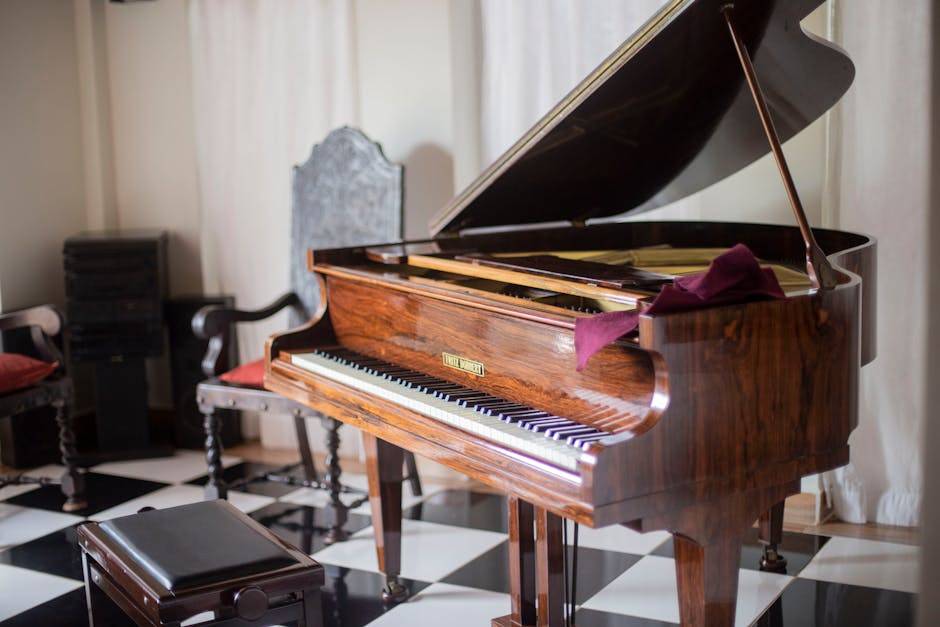
Can You Really Fit a Grand Piano in a Tiny Home Studio?
Tiny home studio living is one of the fastest-growing trends in creative housing across California, from the tech hubs of San Jose to the artistic enclaves of the San Francisco Bay Area. For musicians, artists, and digital creators, the traditional home office is no longer sufficient. They require a dedicated, professional-grade environment that doesn’t compromise on their primary tools—even if those tools are as massive as a Steinway Model B. This shift is driven by the “California Creative Economy,” where thousands of professionals are moving away from expensive commercial leases in favor of backyard sanctuaries that offer both tax advantages and creative autonomy.
Here’s the quick answer for anyone who wants it upfront:
Yes, you can fit a grand piano (or any large instrument/equipment) in a tiny home studio — but it takes smart planning, structural reinforcement, and a deep understanding of spatial geometry. It is not merely about fitting the object through the door; it is about ensuring the floor doesn’t sag, the acoustics don’t muddy the sound, and the humidity doesn’t ruin the wood.
Critical Success Factors for Large Instrument Integration
Key factors that make this possible include:
- Floor plan layout — Utilizing open-concept designs with zero wasted hallways to maximize every square inch of usable floor space. In a studio-first build, the piano often dictates the placement of every other wall.
- Reinforced flooring — Grand pianos can weigh between 500 and 1,000 lbs, creating significant point loads that require specialized joist spacing (often 12 inches on-center) and thickened subflooring.
- Acoustic treatment — Implementing advanced soundproofing in walls, ceilings, and floors to manage sound pressure levels in a small volume. This includes decoupling the inner walls from the outer shell.
- Vertical space — Leveraging lofted sleeping areas or high-clearance ceilings to free up the main floor for your primary instrument. A 10-foot interior height can make a 200-square-foot room feel like a cathedral.
- Multi-functional furniture — Integrating pull-out beds, hidden storage, and transformable desks to create a room that works as hard as you do.
The Studio-First Philosophy
Tiny home studios typically range from compact 248 sq. ft. models to larger shed conversions or ADUs around 400 to 600 sq. ft. They differ fundamentally from standard tiny homes because the creative workspace comes first. In these builds, the living areas—the kitchen, the bathroom, and the sleeping quarters—are designed around the studio, not the other way around. This “studio-first” philosophy is what allows a professional musician to live and work in a space that others might find impossibly small. This approach is particularly popular in high-density areas like Palo Alto and Santa Monica, where land is at a premium but the need for professional creative space is high.
Real-world examples prove this isn’t just a theoretical exercise. In Texas, a reggae musician successfully converted a portable shed shell into a fully soundproofed music studio and home for approximately $40,000. Meanwhile, in the UK, a multi-disciplinary artist constructed a backyard garden annex featuring a professional recording suite for roughly $132,000. These projects demonstrate that with the right architectural approach, a tiny home can serve as a world-class creative sanctuary. The challenge isn’t whether it’s possible to fit a grand piano into a tiny home; the challenge is knowing how to design the infrastructure to support it without sacrificing livability. This requires a blend of structural engineering, acoustic physics, and interior design ingenuity.
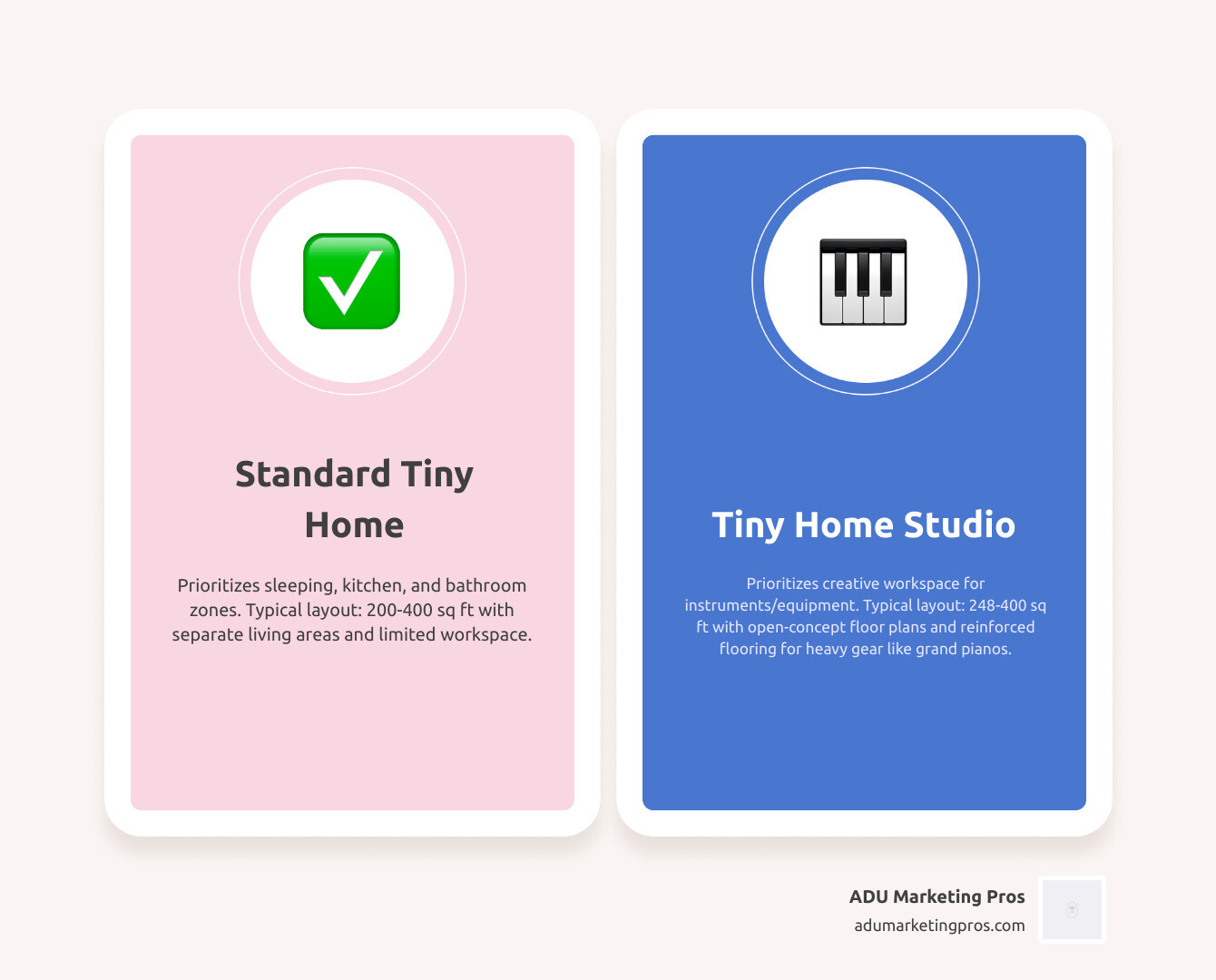
Important tiny home studio terms to understand before you build
Authoritative resources for codes, accessibility, and energy rules
If you’re building in California as an ADU, you’ll also want to cross-check requirements for accessibility, residential energy standards, and local enforcement interpretations. These resources are critical for ensuring your studio is legal and insurable:
- California Department of Housing and Community Development (HCD) ADU information: https://www.hcd.ca.gov/policy-and-research/accessory-dwelling-units
- California Energy Commission (Title 24 energy standards): https://www.energy.ca.gov/programs-and-topics/programs/building-energy-efficiency-standards
Defining the Tiny Home Studio: More Than Just a Small House
When we discuss a tiny home studio, we are moving beyond the concept of a cramped apartment or a simple backyard shed. We are talking about a highly intentional, professional-grade workspace that happens to include essential living amenities. While Small Houses generally focus on residential comfort and traditional domestic layouts, a studio-first build prioritizes the “maker” aspect of the inhabitant’s life. It is a rejection of the “spare bedroom studio” in favor of a dedicated environment where the art is the center of the home.
Take, for example, the Urban Park Studio model, a popular choice for creators in Northern California. This design offers approximately 248 sq. ft. of living space, typically with dimensions around 18 feet by 11 feet. Unlike a standard tiny home that might prioritize a large kitchen or a secondary bedroom, these studios are designed as a “creative sanctuary” optimized for workflow, lighting, and equipment placement. The psychology of the creative sanctuary is rooted in the idea that physical boundaries foster mental focus. By removing the distractions of a traditional home, the artist can enter a “flow state” more rapidly.
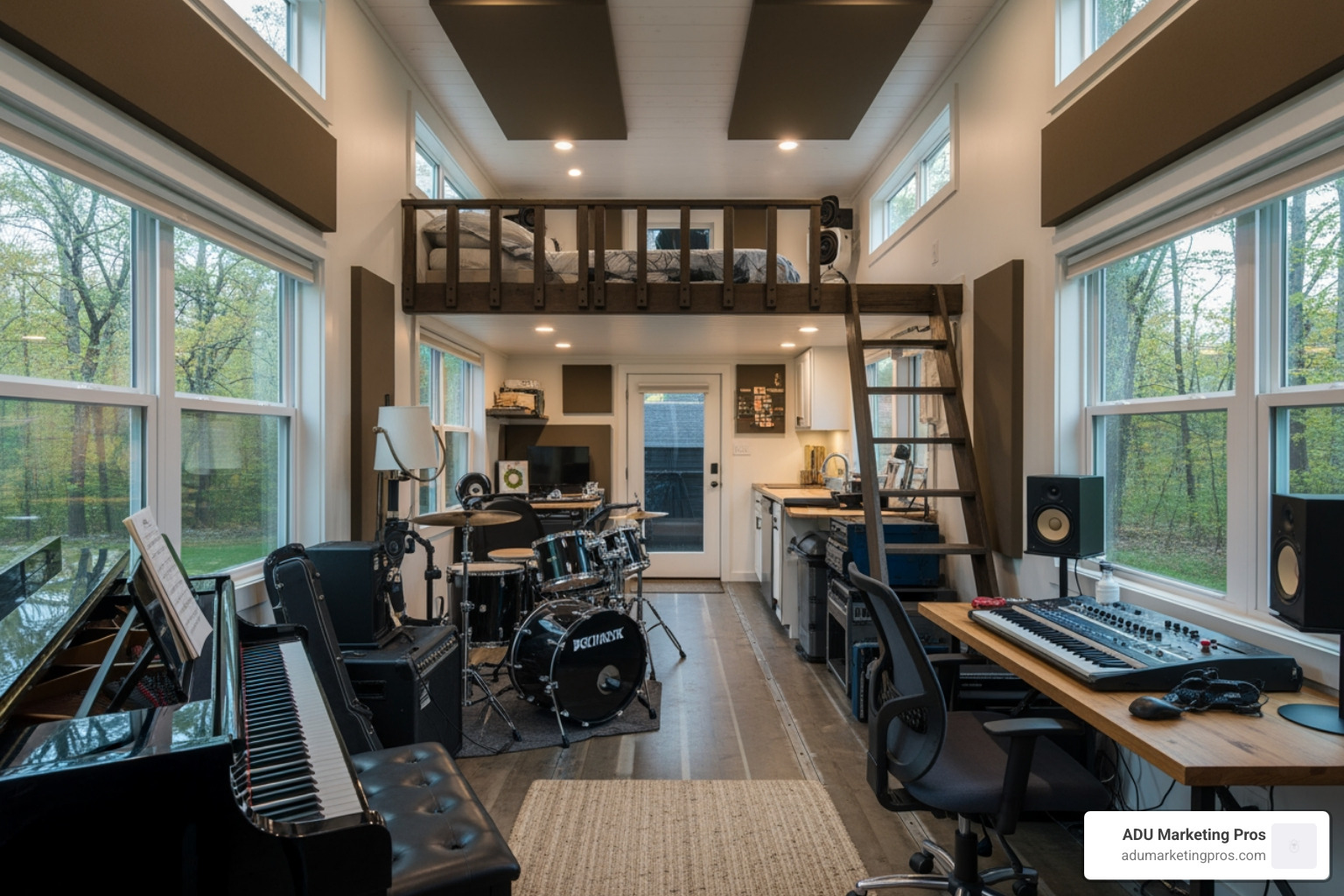
Distinguishing Features of a Tiny Home Studio
The primary difference between a standard ADU and a tiny home studio lies in the underlying infrastructure and the prioritization of space:
- Workspace Priority: The largest central area is dedicated entirely to the craft—whether that’s music production, fine art, or industrial design. The kitchen and bathroom are tucked into the periphery to maximize uninterrupted floor area. In many cases, the “living room” is simply the studio space with a comfortable chair.
- Infrastructure and Load Bearing: You’ll often find Studio ADU Floor Plans that include reinforced flooring systems designed to handle heavy equipment like grand pianos, printing presses, or kilns. High ceilings (sometimes up to 9’11” interior height) allow for better acoustics and overhead lighting rigs, which are essential for film and photography studios.
- Zoning and Compliance: These structures are frequently built as Accessory Dwelling Units (ADUs), which means they must comply with specific professional use and safety codes. In cities like San Jose or San Francisco, this includes meeting strict seismic standards and fire safety regulations, especially if the studio involves hazardous materials like oil paints or high-voltage kilns.
The Benefits of a Creative Tiny Home Studio
Choosing a Versatile 1-Bedroom Tiny Home with Studio Space offers more than just a place to sleep; it provides a lifestyle of radical intentionality. By opting for Eco-Friendly Small Homes, creators can reduce their overhead costs significantly. Lower utility bills, reduced property taxes compared to commercial spaces, and the elimination of a separate commercial studio rent mean more financial resources can be funneled back into the art itself. Furthermore, the proximity of the studio to the living space promotes a unique creative flow. Your commute is exactly ten steps across your backyard, yet the physical separation from the main house provides the psychological boundary needed to focus and maintain a healthy work-life balance.
Designing for Sound: Acoustics and Soundproofing
If you are planning to put a grand piano, a drum kit, or a high-end monitoring system in your tiny home studio, sound management is your biggest technical hurdle. In a small volume of space—say, 600 to 1,000 cubic feet—sound waves behave aggressively. They bounce off parallel walls rapidly, creating standing waves and resonances that can ruin a recording or make practicing unpleasant. This is known as the “small room problem,” where low frequencies become bloated and high frequencies become harsh.
Acoustic Engineering for Your Tiny Home Studio
To get professional results in a small footprint, we recommend looking at real-world examples like the Musician’s Shed Conversion Tiny Home with Music Studio. Successful builds often utilize a “room-within-a-room” construction technique, which involves:
- Double-Frame Steel or Wood Studs: Creating a physical air gap between the outer shell and the inner studio wall. This “decouples” the structures, preventing sound vibrations from traveling through the studs. This is the only way to achieve high STC (Sound Transmission Class) ratings.
- Floating Slab or Subfloors: Minimizing vibration transmission through the ground. For a grand piano, this is crucial, as the instrument’s legs send low-frequency energy directly into the foundation. A floating floor uses rubber U-boats or specialized pads to isolate the studio floor from the main structure.
- Ceiling Clouds and Corner Traps: Using rigid fiberglass panels or specialized foam to absorb mid and high frequencies. Corner traps are particularly vital in tiny homes to handle low-end resonances that naturally gather in 90-degree angles.
As seen in the Inside My Tiny House Studio – Liz Kohler Brown guide, even visual artists benefit from these treatments to create a quiet, focused environment free from the noise of the main house or neighborhood traffic.
Essential Materials for Sound Isolation
When building your studio, avoid standard fiberglass batts, which are designed for thermal insulation rather than sound dampening. Instead, opt for 4-inch Rockwool (mineral wool) panels, which are significantly denser and provide superior sound absorption plus excellent fire resistance. In California, Tiny House Builders California often emphasize using formaldehyde-free and low-VOC materials to ensure high air quality in these tightly sealed environments. Other essential materials include:
- Mass-Loaded Vinyl (MLV): A heavy, flexible material draped inside wall cavities to add mass without significant thickness. It acts as a limp mass barrier that stops sound waves in their tracks.
- Double Sliding Doors or Sound-Rated Entries: Installed with an air gap between two sets of glass or using specialized acoustic seals. Standard sliding doors are often the “weak link” in a soundproof build.
- Flexible Ducting and Z-Ducts: To ensure the HVAC system doesn’t carry noise from the studio to the outdoors. This is critical for maintaining neighbor relations when recording late at night.
Layout Strategies for Large Instruments and Equipment
Fitting a grand piano into a 400-square-foot space sounds like a Tetris nightmare, but it is entirely achievable through strategic floor plan optimization. We often look at 400 Square Foot ADU Plans that utilize “zones” rather than traditional rooms. By eliminating interior walls, you create a larger acoustic volume and more flexible furniture arrangements.
Fitting a Grand Piano and Heavy Gear
A grand piano isn’t just a large object; it’s a massive structural load. Standard residential flooring is typically designed for a live load of 40 lbs per square foot, which might sag or fail under the concentrated weight of piano casters. When browsing Small Houses for Sale, it is imperative to ask about joist spacing and subfloor thickness. For a professional studio, we recommend 12-inch on-center joists and a double layer of 3/4-inch plywood subflooring.
| Foundation Type | Typical Load Capacity | Suitability for Grand Piano |
|---|---|---|
| Standard Trailer | 40-50 lbs/sq ft | Requires localized steel reinforcement under legs |
| Concrete Slab | 100+ lbs/sq ft | Excellent; no extra reinforcement needed |
| Wood Framed (ADU) | 50-70 lbs/sq ft | Recommended 12″ on-center joists with 3/4″ subfloor |
| Steel Frame | 60-80 lbs/sq ft | Very good; provides high strength-to-weight ratio |
Beyond physical weight, climate control is vital for instrument longevity. Pianos, violins, and even high-end guitars are constructed from organic materials highly sensitive to humidity swings. A ductless mini-split system is a non-negotiable requirement for any tiny home studio, providing precise temperature and humidity control while operating at decibel levels low enough for professional recording. In California’s varied climate, maintaining a steady 45-55% humidity level is essential to prevent wood cracking or tuning instability.
Multi-Functional Furniture and Hidden Storage
To make room for a piano or a large art table, every other element must disappear when not in use. This is the secret to living in a studio without feeling cluttered:
- Raised Platforms: A kitchen or lounge area built on a raised platform allows a full-sized bed to slide out from underneath at night and disappear during the day. This keeps the main floor clear for creative work.
- Movable Stair Ladders: These provide access to a storage loft or sleeping area but can be tucked flush against the wall to clear floor space for a photography backdrop or a large canvas.
- Shaker-Style Cabinetry: Floor-to-ceiling cabinetry utilizes vertical space for storing cables, sheet music, art supplies, and folding chairs. Using the full height of the walls is the only way to manage the gear requirements of a professional creator.
Even a Tiny Studio On Wheels can accommodate heavy, industrial gear like a potter’s wheel and kiln. The key is installing separate 240V circuits and using heavy-duty vinyl plank flooring that can withstand the weight and the inevitable spills of a working studio.
The Financials and Legalities of Building Your Studio
Building a professional-grade studio in high-demand areas like the San Francisco Bay Area or Los Angeles requires a clear understanding of the full costs—specifically permits, site preparation, and utility connections. While the sticker price of a shell might look attractive, the “soft costs” of architecture, engineering, and city fees can add 20-30% to your total budget.
Budgeting for Your Tiny Home Studio
Here is a breakdown based on current 2024–2026 market data for California. Note that prices in San Jose and San Francisco are often at the higher end of these ranges due to labor costs:
- Base Building Kits: Typically cost between $100 and $140 per square foot for the shell. For a 200 sq. ft. studio, expect to start at $20,000 to $28,000 for materials alone. This does not include the foundation or interior finish.
- Shed Conversions: A high-quality, insulated 400 sq. ft. shell might cost $20,000. Adding professional soundproofing, electrical, and plumbing as a DIY project can add another $20,000, bringing the total to approximately $40,000. This is the most cost-effective route for those with construction skills.
- Turnkey Luxury ADUs: Move-in-ready spaces with premium materials, professional acoustic engineering, and high-end finishes can range from $100,000 to $150,000 or more. These units are often built off-site and craned into position, minimizing disruption to your property.
Companies like Studio Shed offer free consultations to examine your build site and explore your project options, which can be a helpful starting point for budgeting. They can help you navigate the complexities of site-specific requirements like soil stability and utility trenching.
Navigating Zoning and Permitting in California
In cities like San Jose, Palo Alto, and Sunnyvale, ADU laws have become significantly more favorable due to state-wide mandates. However, you still need a formal building permit for any structure over 120 square feet or any building that includes permanent electricity, plumbing, or HVAC systems. Tiny House San Francisco projects must often undergo rigorous soil testing and utility assessments to ensure they don’t interfere with existing infrastructure.
When looking for Tiny House Builders in Southern California, ensure they provide a full “permit plan set” including architectural drawings, structural calculations, and Title 24 energy compliance documentation. You can find more information on Places in Southern California That Allow Tiny Houses to help narrow down your search. In the north, San Francisco Tiny House Builders are particularly well-versed in the specific seismic requirements and fire-safe construction methods necessary for the Bay Area’s unique geography.
Real-World Case Studies: From Pottery to Music Production
Seeing how other creators have navigated the constraints of small-space living provides both inspiration and practical blueprints for your own build. These case studies highlight that the most successful studios are those that solve a specific technical problem through design.
Maximizing Creativity in a Tiny Home Studio
Consider the Tiny Studio On Wheels used for professional pottery production. This creator fit a Skutt kiln, a heavy-duty potter’s wheel, and a custom DIY filtration system into a mobile trailer. The primary challenge was the 240V power requirement for the kiln and a layout that strictly separated “wet” zones from “dry” zones within a very small footprint. Vertical shelving for drying racks maintained a clear floor path for safety, while a specialized clay trap in the sink prevented plumbing disasters. This build proves that even industrial processes can be scaled down without losing professional capability.
In another instance, a Garden Studio on His Parent’s Property in the UK showcased a minimalist white interior that served a functional neurological purpose. The owner had synesthesia and required a neutral, stark white environment to prevent visual interference with his music composition and film editing. The lighting system was fully programmable, allowing him to change the color temperature of the room to match the “key” of the music he was writing. This proves that the aesthetic of a tiny home studio is often a functional requirement of the artist’s process, not just a stylistic choice.
Professional Music Production in 600 Cubic Feet
One of the most impressive examples of spatial efficiency is a music studio built within a 600-cubic-foot volume. Despite extreme size limitations, the owner integrated professional-grade tools through a “quality over quantity” philosophy:
- Motorized Faders and Tactile Controllers: Mounted on a custom-built desk that fits the room’s exact width, eliminating the need for a massive mixing console.
- 55-inch Ultra-Wide Monitor: Mounted at the perfect ergonomic height to replace multiple smaller screens, reducing visual clutter and neck strain.
- Acoustic Clouds: Suspended from a slanted ceiling to kill standing waves and provide a controlled listening environment.
By choosing to own five incredible pieces of equipment rather than fifty mediocre ones, the creator achieved a professional environment without the overhead of a traditional studio lease. This approach is the cornerstone of successful tiny home studio living, where every object must earn its place.
Frequently Asked Questions about Tiny Home Studios
How much does it cost to build a tiny home studio?
Starting prices vary based on your level of involvement and the complexity of the build. A basic DIY shed conversion can be completed for around $40,000. However, professional prefab kits generally start at $100–$140 per square foot for the shell alone. High-end, fully finished garden annexes with specialized acoustic treatments, professional electrical work, and premium finishes can cost upwards of $132,000 to $150,000. Remember to factor in site prep and utility hookups, which can add $10,000 to $25,000.
Do I need a permit for a backyard studio?
Yes. In almost all California jurisdictions (including San Jose, Sunnyvale, and Los Angeles), any structure over 120 square feet or any building that includes permanent plumbing, heating, or electrical wiring requires a building permit. This ensures the structure meets safety codes, seismic standards, and local ADU zoning laws. Building without a permit can lead to significant fines, forced demolition, and issues when selling your property.
Can a tiny home studio be mobile?
Absolutely. Many creators choose to build on a specialized trailer to create a “Tiny House on Wheels” (THOW). This offers flexibility if you are currently renting or if you want the option to move your studio to a new property in the future. However, be aware that mobile units are often subject to different “parking” and residency regulations than permanent ADUs. In many California cities, THOWs are now recognized as legal ADUs if they meet specific safety standards.
Will a tiny home studio increase my property value?
Generally, yes. A permitted ADU or high-quality studio space is considered a significant asset. In the California market, where space is at a premium, having a dedicated, soundproofed office or creative suite can make a property much more attractive to potential buyers. Real estate experts suggest that a well-built ADU can provide a high return on investment (ROI), often increasing property value by 20-30%.
How do I handle insurance for expensive gear in a tiny home?
Standard homeowners’ insurance may not cover professional equipment used for business purposes in a separate structure. It is highly recommended to obtain a specialized “in-home business” rider or a separate commercial policy to ensure your grand piano, recording gear, or art collection is fully protected against theft, fire, or accidental damage. Make sure the policy specifically covers the ADU as a separate structure.
What is the best way to heat and cool a soundproof studio?
A ductless mini-split system is the industry standard. These systems are incredibly quiet, which is essential for recording, and they allow for precise temperature control. Because soundproof studios are heavily insulated and airtight, they require very little energy to maintain a comfortable temperature, but they do require proper ventilation (like an ERV system) to ensure fresh air circulation.
Conclusion: Your Creative Future in a Tiny Footprint
At ADU Marketing Pros, we see the tiny home studio as more than just a real estate trend—it is a gateway to creative and financial freedom. Whether you are fitting a grand piano into a 400-square-foot sanctuary in San Jose or setting up a high-tech pottery kiln in a backyard annex in Los Angeles, the key to success lies in specialized architectural expertise and intentional design. The future of the creative economy is decentralized, and the backyard studio is the new headquarters for the modern maker.
Building a space that can support the weight of a grand piano while maintaining perfect acoustics requires a level of precision that standard residential construction often overlooks. By focusing on sustainable growth, smart engineering, and the specific needs of your craft, you can build a space that not only enhances your art but also adds significant value to your life and property. This investment represents a commitment to your professional development, providing a permanent, high-quality environment that evolves with your career. As the California housing landscape continues to shift, the ability to integrate professional-grade workspaces into residential lots will become a defining feature of successful urban planning.
Partnering with ADU Marketing Pros for Your Creative Build
If you are a builder, architect, or developer specializing in these complex, high-end creative spaces, standing out in the competitive California market is essential. Our adu-marketing-solutions are specifically designed to help firms showcase their technical expertise and connect with the growing number of homeowners looking for more than just a “small house.” The future of living is small, smart, and undeniably creative, and we are here to help the experts who build that future reach their full potential. By embracing the studio-first philosophy, we can create a world where art and life coexist in perfect, compact harmony, ensuring that the next generation of creators has the space they need to thrive without the burden of traditional commercial overhead.