
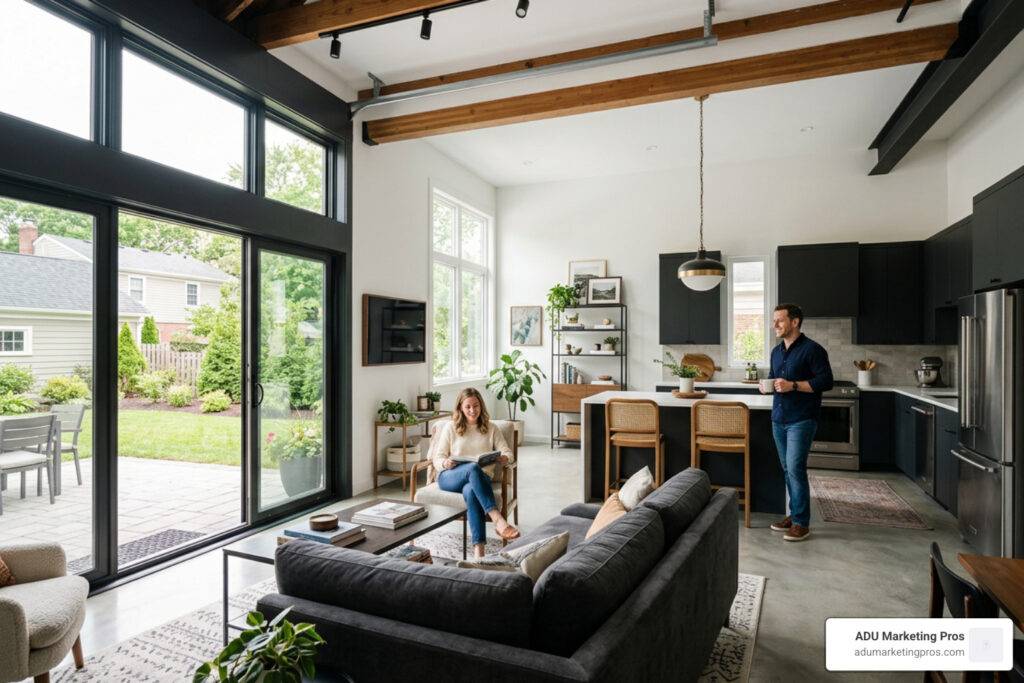
Why More Homeowners Are Turning Their Double Garage Into a Full Apartment
A 2 car garage converted into apartment space is one of the smartest ways to add livable square footage, generate rental income, and boost your property value — without building from scratch. For decades, the American garage was seen as a place for storage, oil changes, and forgotten fitness equipment. However, as urban density increases and housing costs skyrocket, homeowners are looking at their driveways through a new lens. The “missing middle” housing crisis has turned these underutilized structures into the most valuable real estate on the lot.
Converting a garage isn’t just about putting up drywall; it’s about reclaiming space that is already connected to the main house’s infrastructure. Because the foundation, walls, and roof are already in place, you are essentially skipping the most difficult 40% of a traditional home addition. This efficiency is why the trend has exploded across major metropolitan areas.
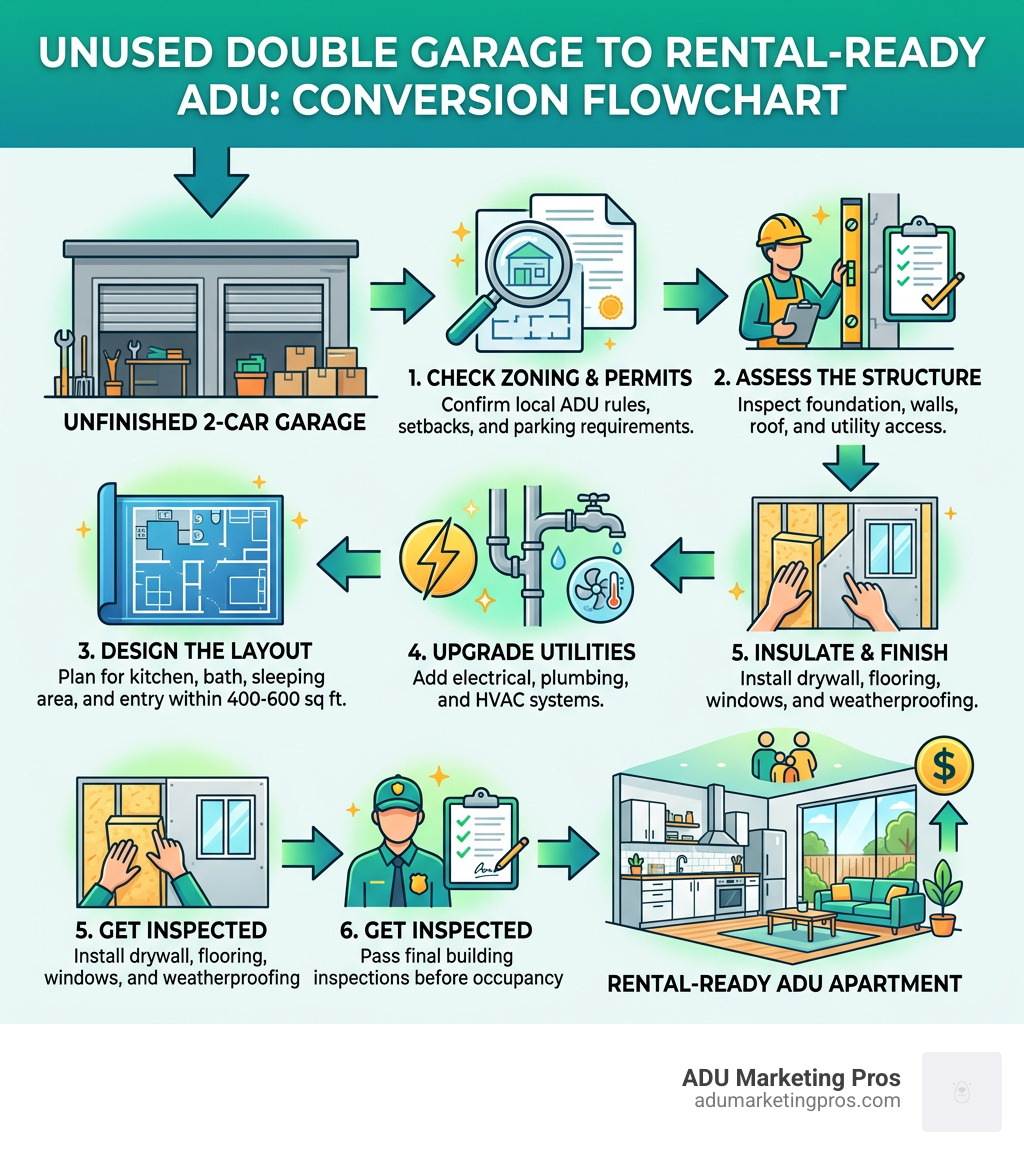
Here’s a quick overview of what’s involved in a professional conversion:
| Step | What It Means | Detailed Action |
|---|---|---|
| Check zoning & permits | Confirm local ADU rules, setbacks, and parking requirements | Review local ordinances to ensure your specific lot allows for a secondary dwelling unit. |
| Assess the structure | Inspect foundation, walls, roof, and utility access | Hire a structural engineer to ensure the existing slab can support the weight of residential walls. |
| Design the layout | Plan for kitchen, bath, sleeping area, and entry within 400-600 sq ft | Optimize the floor plan to ensure natural light reaches every corner of the unit. |
| Upgrade utilities | Add electrical, plumbing, and HVAC systems | Trench for sewer lines and upgrade the electrical panel to handle modern appliances. |
| Insulate & finish | Install drywall, flooring, windows, and weatherproofing | Apply high-R-value insulation to keep the unit comfortable year-round. |
| Get inspected | Pass final building inspections before occupancy | Ensure all work meets the California Building Code for safety and habitability. |
A standard two-car garage gives you roughly 400 to 600 square feet — enough for a comfortable studio or a compact one-bedroom apartment. That’s real, rentable living space sitting idle in most driveways right now. In many cases, this footprint is larger than many luxury apartments in downtown cores, providing a unique opportunity for “micro-living” without the cramped feel of a high-rise.
The economics are hard to ignore. A well-executed conversion can deliver up to 80% return on investment, and a finished unit in a desirable area can rent for $1,000 to $2,500 per month. Meanwhile, building a new addition from the ground up typically costs two to three times more than converting what you already have. This financial arbitrage is why savvy investors and homeowners alike are prioritizing these projects.
California’s housing crunch has made this option even more attractive. State laws have streamlined ADU approvals, and in many Los Angeles neighborhoods, you don’t even need to replace the parking space you’re converting. This removal of the “replacement parking” requirement was the single biggest hurdle for years, and its elimination has opened the floodgates for creative housing solutions.
The catch? Doing it right takes more than a fresh coat of paint. Permits, structural upgrades, utility connections, and smart design all matter — a lot. This guide walks you through every step of the journey from a dusty storage room to a deluxe suite.
Simple guide to 2 car garage converted into apartment terms:
The Benefits of a 2 Car Garage Converted Into Apartment Living
When we look at a cluttered double garage, we don’t just see a place for old lawnmowers and cardboard boxes. We see a “quiet little goldmine.” In cities like San Francisco, San Jose, and Los Angeles, space is the ultimate luxury. By choosing a garage to ADU conversion, you are essentially “finding” a small house that was already there. This is the ultimate form of recycling: taking an existing structure and giving it a higher and better use.
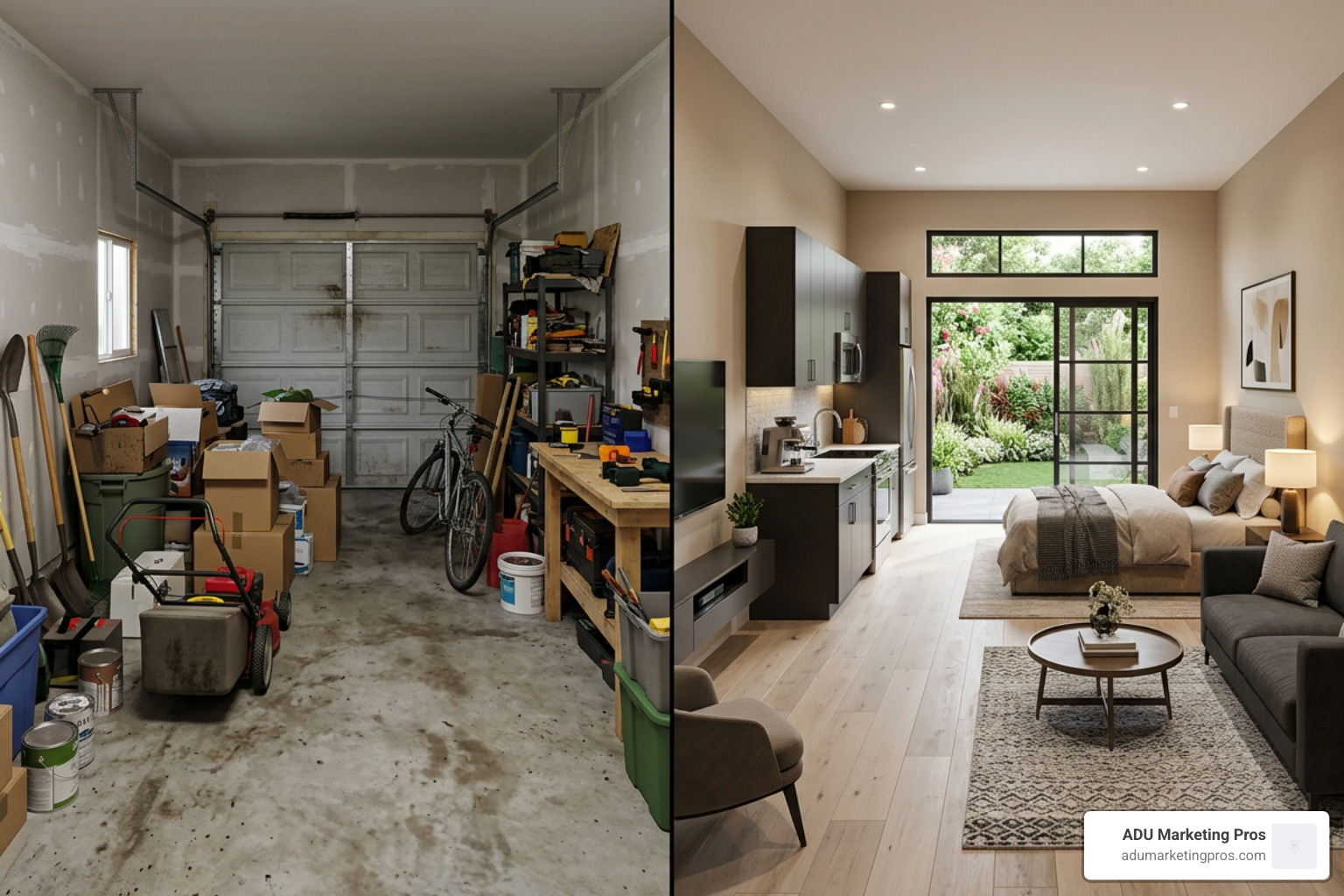
The primary benefit is the staggering Return on Investment (ROI). Research suggests a well-done conversion offers up to an 80% ROI. Beyond the immediate equity, you’re looking at a property value increase of 10% to 20%. For a home valued at $800,000 in the Bay Area, that could mean an extra $160,000 in value just by finishing a space you already own. This equity is often realized the moment the final inspection is signed off, making it one of the most reliable ways to build wealth through real estate.
| Feature | Standard Garage | Converted Apartment |
|---|---|---|
| Value Added | Minimal (Storage only) | 10-20% Property Increase |
| Utility | Parking/Boxes | Living/Working/Hosting |
| Income Potential | $0 | $1,200 – $2,500/month |
| Tax Benefits | None | Potential Depreciation/Expenses |
| Community Impact | Low | High (Adds to housing stock) |
Whether you are looking for adu garage conversion california insights for a guest suite or a full-time rental, the flexibility is unmatched. It can serve as a “granny flat” for aging parents, providing them with independence while keeping them close to family. Alternatively, it can be a starter home for adult children who are struggling to enter the expensive California housing market. For many, it becomes a high-end Airbnb, providing a hospitality-grade experience that generates significant cash flow.
Maximizing Small Spaces with Functional Versatility
A typical 2-car garage measures between 400 and 600 square feet. While that sounds small, it is actually the “sweet spot” for a luxury studio or a sleek one-bedroom unit. Historically, these were often called carriage houses, providing living quarters above or adjacent to where horses (and later cars) were kept. Today, we use that same footprint to create “micro-luxury” environments. By removing the heavy garage doors and replacing them with floor-to-ceiling glass or French doors, the space feels double its actual size. The key is to focus on verticality; high ceilings and strategic lighting can make a 500-square-foot unit feel more spacious than a traditional 800-square-foot apartment.
Financial Advantages and Passive Income
One of the most compelling reasons for a garage conversion ADU is the secondary income stream. In high-demand markets like Palo Alto or Mountain View, a 500-square-foot apartment is a hot commodity. The demand for “detached” living is much higher than for traditional apartment complexes, as tenants value the privacy and the lack of shared walls with neighbors.
If you rent the unit for $2,000 a month, you are generating $24,000 a year in passive income. This can significantly offset a mortgage or bolster a retirement fund. Even if you don’t rent it out, the “lifestyle flexibility” of having a private office or a separate guest wing adds intangible value that makes your home much easier to sell in the future. In a competitive market, a home with a legal, permitted ADU will almost always sell faster and for a higher price than a home without one.
Navigating Permits, Zoning, and Building Codes
Before you pick up a sledgehammer, you need to pick up a permit. We cannot stress this enough: an unpermitted 2 car garage converted into apartment is a legal and financial liability. It can prevent you from selling your home, complicate insurance claims, or even force you to tear out the work later at your own expense. In the eyes of the law, an unpermitted conversion doesn’t exist, meaning you cannot legally collect rent or include the square footage in your home’s valuation.
Fortunately, California has become the most ADU-friendly state in the country. Laws like SB 9 and AB 68 have stripped away many of the hurdles that used to stop homeowners. These state mandates override local “NIMBY” (Not In My Backyard) rules, ensuring that if you have an existing garage, you generally have a right to convert it. However, you still need to follow specific garage conversion Los Angeles or Bay Area local guidelines regarding setbacks (the distance from the property line) and fire safety.
Legal Requirements for a 2 Car Garage Converted Into Apartment
To be considered a legal residence, your conversion must meet several “habitability” standards that ensure the safety of the occupants. These are non-negotiable and will be checked by city inspectors:
- Egress: You must have a safe way to exit in case of fire. This usually means at least one door leading directly outside and specific-sized windows in sleeping areas that a person can climb through.
- Ceiling Height: Most codes require at least 7 feet of finished ceiling height for at least 50% of the required floor area. If your garage has a low roof, you may need to excavate the floor or raise the roofline.
- Title 24: This is California’s energy efficiency standard. You’ll need specific levels of insulation in the walls and ceiling, energy-efficient lighting, and high-performance windows to reduce the carbon footprint of the unit.
- Parking: In many areas near public transit (usually within a half-mile), you are no longer required to replace the parking spots you lose when you convert the garage. This has been a game-changer for small lots.
For detailed technical standards, we always recommend consulting the Plumbing and Safety Codes provided by your local building and safety department. These documents outline the exact pipe diameters and electrical loads required for a legal dwelling.
HOA and Historic District Considerations
If you live in a Historic Preservation Overlay Zone (HPOZ) or an area with a Homeowners Association (HOA), you have an extra layer of rules. For example, in the Jefferson Park HPOZ in Los Angeles, any change to a “contributing” garage must be historically appropriate. This might mean you can’t use modern vinyl siding or that you must keep the “look” of a garage door on the front to maintain the neighborhood’s aesthetic. While state law prevents HOAs from outright banning ADUs, they can still impose “reasonable” design restrictions. Always get written approval from your HOA before starting ADU garage conversions to avoid costly fines and legal disputes.
Structural Steps: Transforming the Shell into a Habitable Suite
A garage is built to house a car, not a person. Cars don’t care about cold concrete floors, drafty walls, or high humidity; people do. The transformation starts with the “bones” of the building. You are taking a utilitarian shell and turning it into a climate-controlled environment. This requires a systematic approach to structural integrity and moisture management.
Most garage floors are pitched (sloped) toward the door to let water drain from a wet car. To make it a living space, we often need to pour a self-leveling compound or build a sleeper subfloor to make it perfectly flat. We also install a high-grade moisture barrier (vapor barrier) to prevent the “damp garage smell” from ever entering your new apartment. From there, we move to framing the interior walls to create the bathroom and sleeping nook. This is also the time for a garage to ADU conversion specialist to inspect the roof and ensure it can handle the new weight of ceiling drywall, insulation, and potentially a HVAC unit.
Essential Utilities for a 2 Car Garage Converted Into Apartment
This is often the most expensive and technically demanding part of the project. You are essentially bringing a “mini-house” online, which requires its own dedicated infrastructure.
- Plumbing: You’ll need to trench the concrete floor to install sewer lines for the toilet and shower. If your garage is far from the main house’s sewer line, this can be a significant task involving heavy machinery. In some cases, an ejector pump might be used if the grade doesn’t allow for gravity-fed drainage.
- Electrical: A standard garage usually has one or two outlets and a single light bulb. A garage conversion to ADU requires a dedicated sub-panel (often 100 amps) to handle a kitchen, bathroom, and HVAC system. This ensures that running a microwave in the apartment doesn’t trip the breaker in your main house.
- HVAC: Most homeowners opt for a “Mini-Split” system. These are ductless, wall-mounted units that provide both heating and cooling very efficiently. They are incredibly quiet and allow the tenant to control their own climate without affecting the main house.
Insulation, Soundproofing, and Energy Efficiency
Garages are notoriously loud and poorly insulated. To make the space comfortable, we recommend mineral wool insulation. It provides excellent thermal protection and acts as a superior sound barrier. If the garage is attached to the house, we use resilient channels—special metal strips that “decouple” the drywall from the studs—to prevent sound from traveling through the walls. This ensures that the person in the apartment doesn’t hear your TV, and you don’t hear their morning coffee maker. Additionally, sealing all air gaps with spray foam is crucial for meeting Title 24 requirements and keeping utility bills low for your future tenant.
Design Strategies to Maximize 400-600 Square Feet
In a small footprint, every inch must earn its keep. The goal is to make the 2 car garage converted into apartment feel like a “Deluxe Suite” rather than a “converted room.” This requires a shift in thinking from traditional home design to “yacht-style” efficiency, where every cabinet and corner has a specific purpose. The most successful designs prioritize flow and light over sheer room count.
The most successful designs use an open-concept layout. By keeping the kitchen, dining, and living areas in one “great room,” the space feels airy and unconfined. If your garage has high rafters, don’t hide them! Vaulting the ceiling can make a 400-square-foot studio feel like a palace. Using clerestory windows (small windows high up on the wall) allows for privacy from neighbors while flooding the unit with natural light. This is a hallmark of a high-end garage conversion ADU. By placing windows above eye level, you get the sun without the “fishbowl” feeling of being watched by passersby.
Interior Finishes and Natural Lighting
Light colors are your best friend in small spaces. We often suggest Luxury Vinyl Plank (LVP) flooring in a light oak or maple finish. It’s waterproof, durable, and reflects light upward, making the whole room feel brighter. For lighting, skip the bulky floor lamps and go with recessed “can” lights that don’t take up any visual space. To truly elevate the space, use our garage conversion cost calculator to budget for a large skylight or a “Solar Tube,” which can transform a dark corner into a bright reading nook. Natural light is the most effective way to make a small space feel premium.
Smart Furniture and Storage Solutions
In a 2-car garage apartment, furniture needs to be “smart” and multi-functional. You cannot afford to have pieces that only serve one purpose.
- Murphy Beds: These fold into the wall during the day, turning the bedroom into a spacious living room or office. Modern Murphy beds often include a built-in desk or sofa on the underside.
- Pocket Doors: Standard swinging doors “steal” about 9 square feet of floor space for their swing radius. Pocket doors slide into the wall, saving that space for furniture or walking paths.
- Mezzanine Storage: If you have the height, build a small loft area above the bathroom. It’s the perfect place for suitcases, holiday decor, or a cozy sleeping loft for guests. Even a 3-foot deep loft can provide massive storage relief for a small unit.
- Built-in Cabinetry: Instead of buying a dresser, build wardrobes into the walls. This creates a seamless look and maximizes every square inch of the wall’s vertical surface.
Budgeting and Financing Your Conversion Project
How much should you expect to spend? While some DIY enthusiasts claim to do it for $20,000, a professional, code-compliant 2 car garage converted into apartment in California typically ranges from $75,000 to $120,000. This price range covers everything from the initial architectural plans to the final coat of paint. While it may seem like a large upfront cost, it is important to view it as a capital investment that pays for itself through rental income and increased property equity.
The cost per square foot usually lands between $150 and $300. This might seem high, but remember: you are building a kitchen and a bathroom in a very small space. These are the two most expensive rooms in any home due to the plumbing, tiling, and appliance costs. When you concentrate them into 500 square feet, the “per foot” cost goes up, even though the “total” cost is much lower than a new house. You are essentially building a high-density luxury unit.
Factors Influencing the Overall Budget
Several variables can swing your budget by tens of thousands of dollars. Being aware of these early can help you avoid “sticker shock” mid-project:
- Utility Distance: The further your garage is from the main water and sewer lines, the more you will pay in trenching and pipe installation. If the garage is 50 feet away, the plumbing costs can double.
- Structural Integrity: If your garage was built in the 1950s and the foundation is cracking or lacks steel reinforcement, you’ll need to spend money on structural repairs before the “pretty” stuff begins.
- Finishes: Choosing marble countertops and custom cabinetry will obviously drive the price higher than using “big box” store modular options. However, high-end finishes often allow for higher rental rates.
- Permit Fees: Depending on your city, permits and “impact fees” can range from $2,000 to $8,000. Some cities waive these fees for ADUs under 750 square feet, so check your local rules.
Financing Options for Homeowners
Most of our clients don’t have $100,000 sitting in a shoebox. Popular ways to fund ADU garage conversions include:
- Home Equity Line of Credit (HELOC): Borrowing against the value you’ve already built in your home. This is often the most flexible option with the lowest interest rates.
- RenoFi Loans: These are unique because they allow you to borrow based on the future value of your home (after the conversion is done). This often allows you to borrow 11 times more than a traditional loan, making it perfect for homeowners with low current equity.
- Cash-Out Refinance: Replacing your current mortgage with a new, larger one and taking the difference in cash. This is a good option if current interest rates are lower than your original rate.
You can use our garage conversion cost calculator to get a better sense of how your specific needs will impact your monthly loan payments and your potential return on investment.
Frequently Asked Questions about Double Garage Conversions
How much does it cost to convert a 2-car garage into an apartment?
As mentioned, the professional range is typically $75,000 to $120,000. A “shell only” conversion (where you do the interior finishing yourself) can be lower, but for a turnkey rental-ready unit with a kitchen and bath, $90,000 is a safe average starting point in the San Jose or Los Angeles markets. This includes all permits, labor, and mid-range materials.
Does a garage conversion count as an ADU in California?
Yes. In California, a garage conversion is almost always classified as an Accessory Dwelling Unit (ADU) or a Junior ADU (JADU). A JADU is specifically a conversion of space inside the existing walls of the house (like an attached garage) and is usually limited to 500 square feet. Both allow for legal residency and rental income, but JADUs have slightly different requirements regarding bathrooms and kitchens.
Will I lose property value by removing my garage?
This is a common fear, but the data says otherwise. While you lose a place to park your car, you gain 500 square feet of “habitable living space.” In almost every California market, 500 square feet of living space is worth significantly more than a 500-square-foot storage shed or carport. Most appraisals see a 10-20% boost in total property value. In urban areas where street parking is available, the trade-off is almost always in favor of the living space.
How long does the conversion process take?
A typical conversion takes between 4 to 6 months. The first 2 months are usually spent in the design and permitting phase. Once the permits are issued, the actual construction takes about 3 months. This includes the “rough-in” phase (plumbing/electrical), the “close-in” phase (insulation/drywall), and the “finish” phase (flooring/cabinets).
Can I do the work myself to save money?
While you can certainly do some of the finishing work like painting or installing laminate flooring, we strongly recommend hiring professionals for the structural, plumbing, and electrical work. These systems must meet strict building codes to pass inspection. An error in the plumbing or electrical can lead to expensive repairs or even safety hazards like fires or floods.
Conclusion
Converting your double garage is more than just a home improvement project; it’s a strategic investment in your financial future and a contribution to your community. Whether you’re looking to house a family member, create a high-yield rental, or simply add a versatile guest suite, a 2 car garage converted into apartment space solves the problem of underutilized square footage while addressing the California housing crisis one unit at a time.
The journey from a cluttered storage space to a modern, light-filled apartment requires careful planning, a realistic budget, and an eye for design. However, the rewards—both financial and lifestyle-based—are immense. You are taking a piece of your property that was once a liability and turning it into a high-performing asset that will serve you for decades to come.
At ADU Marketing Pros, we specialize in helping firms and homeowners navigate this booming market. We believe in focusing on expertise and quality over just finding the “cheapest” price. By following the steps in this guide—prioritizing permits, investing in quality utilities, and using smart design—you can turn that dusty old garage into a deluxe suite that delivers value for decades. The era of the “forgotten garage” is over; the era of the backyard apartment has begun.
Ready to see what’s possible for your property? Explore more about ADU garage conversions and start your journey toward a more flexible, valuable home today. Your future tenant (or your future self) will thank you.