
Why Modern Tiny House Designs Are Reshaping the Way We Live
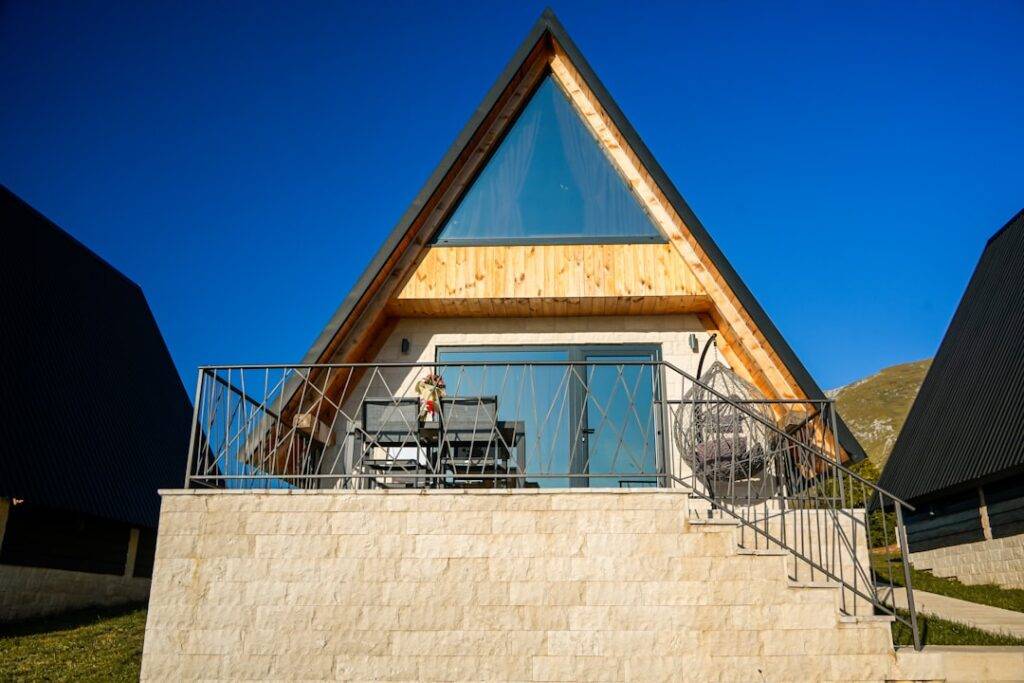
Modern tiny house designs are compact homes — typically under 1,000 square feet — built around clean lines, smart layouts, and high-quality materials that make small spaces feel surprisingly livable. The movement, which gained significant momentum following the 2008 housing crisis, has evolved from a niche lifestyle choice into a sophisticated architectural category. Today, these designs represent a convergence of minimalism, environmental stewardship, and financial liberation. In an era where the average American home has ballooned in size while household sizes have shrunk, the tiny house movement offers a corrective path toward efficiency and intentionality.
The Cultural Shift Toward Minimalism
The rise of modern tiny house designs isn’t just a response to economic pressure; it’s a cultural pivot. For decades, the “American Dream” was synonymous with sprawling suburban estates. However, the maintenance, utility costs, and environmental impact of these large structures have led many to seek a simpler alternative. Modern tiny homes allow individuals to prioritize experiences over possessions. By reducing the physical footprint of their lives, homeowners find they have more time and capital to invest in travel, hobbies, and community engagement. This shift is particularly visible among millennials and retirees, two demographics looking to shed the burden of traditional mortgages and high-maintenance properties.
A Quick Look at the Tiny House Landscape
| Feature | Details |
|---|---|
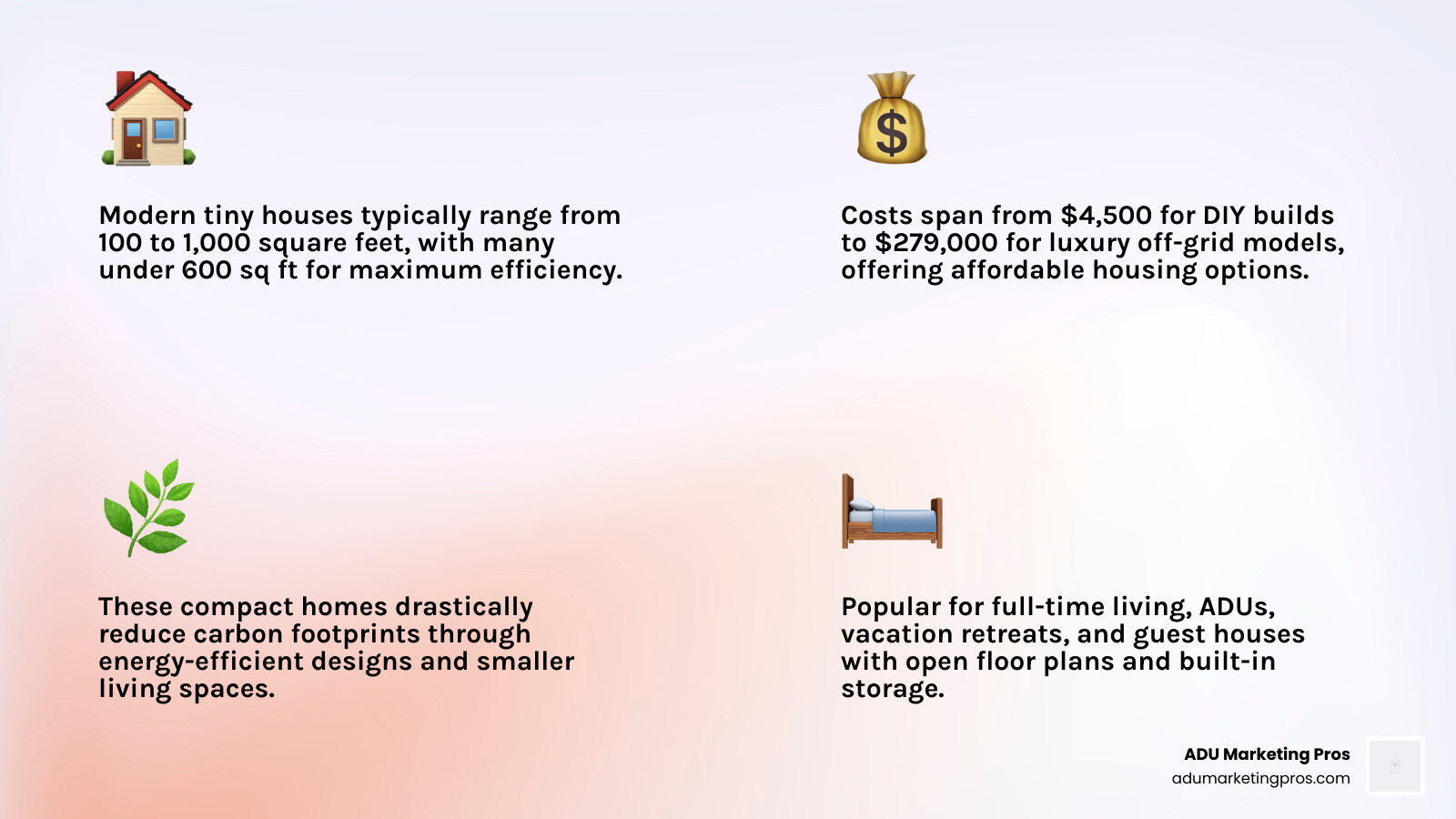
| Typical size | 100–1,000 sq ft (many under 600 sq ft) |
| Common styles | Scandinavian, mid-century modern, craftsman, farmhouse |
| Price range | ~$4,500 (DIY) to $279,000 (luxury off-grid) |
| Key benefits | Lower costs, smaller carbon footprint, flexibility |
| Best uses | Full-time living, ADUs, vacation retreats, guest houses |
| Top features | Open floor plans, built-in storage, energy-efficient systems |
The appeal isn’t just about going small. It’s about going intentional. In an era where housing costs are climbing, urban lots are shrinking, and the environmental impact of construction is under scrutiny, more people are questioning the “bigger is better” mindset that drove home building for decades. Modern tiny homes offer a practical answer — without sacrificing style or comfort. Architects and builders have responded with designs that punch well above their weight. A 224 sq ft Scandinavian-inspired home with panoramic windows can feel more expansive than a traditional apartment. A 300 sq ft layout with a full kitchen, private bedroom, and king-sized bed challenges our perceptions of what is necessary for a high quality of life. Even 600 sq ft craftsman cottages that sleep four are becoming viable primary residences for small families.
These aren’t compromises; they’re choices. Whether you’re exploring tiny homes as an ADU for a client’s backyard or looking for the right floor plan to pitch to a homeowner, the market has never had more well-designed, buildable options than it does right now. The evolution of the movement has seen a transition from “shacks on wheels” to architecturally significant structures that utilize advanced engineering and premium finishes.
Defining the Modern Tiny House Aesthetic
What exactly makes a tiny house “modern”? It isn’t just about the date it was built; it’s a specific architectural philosophy that prioritizes function, light, and a rejection of clutter. In the bustling markets of San Francisco and Los Angeles, we see these designs moving away from the “rustic cabin” look and toward sophisticated, high-end architecture that mirrors the luxury condos of downtown hubs. The modern aesthetic is characterized by a “less is more” approach, where every line serves a purpose and every material is chosen for its durability and visual impact.
The Role of Open Floor Plans and Natural Light
The hallmark of modern tiny house designs is the use of open floor plans. By removing unnecessary interior walls, a 400-square-foot space can feel twice its size. Natural light plays a massive role here—large windows and even glass garage doors are common features that blur the line between indoors and outdoors. This connection to the exterior environment is essential for preventing the “claustrophobia” that can sometimes plague small-scale living. When the eye can travel past the physical walls of the home and into the landscape beyond, the brain perceives the space as much larger than its actual dimensions.
Key Architectural Characteristics
- Vaulted Ceilings: Adding vertical height prevents the “closed-in” feeling often associated with small spaces. It also allows for the inclusion of clerestory windows that bring in light while maintaining privacy. High ceilings also provide opportunities for creative storage solutions that don’t encroach on the living area.
- Minimalist Materials: Think standing-seam metal roofs, cedar cladding, and smooth drywall finishes rather than heavy ornamentation. The focus is on the quality of the material itself rather than decorative flourishes. In modern designs, the texture of the wood or the sheen of the metal provides the visual interest.
- Industrial and Scandi Accents: Exposed steel beams or light-toned birch plywood interiors are popular choices that provide a clean, contemporary feel. These materials are often left in their natural state to emphasize the honesty of the construction.
- Biophilic Design: Integrating plants, natural textures, and organic shapes to improve mental well-being within a smaller footprint. This might include living walls, large planters integrated into the deck, or the use of natural stone in the bathroom.
Many of these structures fall under the category of small houses, which are increasingly popular as Accessory Dwelling Units (ADUs) in the San Francisco Bay Area. Before diving into construction, it is vital to Learn everything you need to know before building a tiny home on NewHomeSource, as tiny homes can sometimes cost more per square foot than traditional houses due to the density of mechanical systems (kitchens and baths) in a small area. Understanding the balance between high-end finishes and the functional requirements of a small space is the first step toward a successful build. Modern design isn’t just about looking good; it’s about working perfectly within the constraints of the site and the needs of the inhabitant.
The Most Popular Modern Tiny House Designs for 2025
As we move through 2025, the trend is shifting toward “turnkey” modular solutions. Homeowners in San Jose and Sunnyvale are looking for high-quality builds that can be delivered and hooked up to utilities with minimal site disruption. The focus has shifted from “how small can we go?” to “how well can we live?” This evolution has led to the development of standardized models that offer the reliability of factory construction with the soul of custom architecture.
Whether you are looking for a DIY project or a luxury off-grid model, the variety of plans available is staggering. For those in California, working with specialized tiny house builders california is often the best way to ensure your design meets strict Title 24 energy standards and local building codes. These professionals understand the nuances of California’s unique regulatory environment, from seismic requirements to wildfire safety protocols.
Comparing Popular Tiny House Tiers
| Model Type | Typical Size | Price Range | Best For |
|---|---|---|---|
| DIY Camper/Shell | 100-200 sq ft | $4,500 – $20,000 | Budget travelers, weekenders, and hobbyists |
| Standard Prefab | 200-500 sq ft | $40,000 – $100,000 | Backyard ADUs, guest houses, and rental units |
| Luxury Off-Grid | 400-1,000 sq ft | $150,000 – $279,000 | Full-time living, high-end rentals, and remote retreats |
Scandi-Inspired Modern Tiny House Designs
Scandinavian design—often referred to as “Scandi”—is a perfect match for tiny living. It emphasizes “hygge” (coziness) and functionality. A standout example is the Scandi – Tiny House 8.5m/28ft. At roughly 224 square feet, this design manages to include a downstairs master bedroom, which is a major win for accessibility. Many tiny homes rely on lofts that require climbing a ladder, but modern Scandi designs often prioritize one-level living to accommodate aging-in-place or those with mobility concerns. These plans often feature neutral color palettes, panoramic windows, and kitchen islands that double as dining tables, ensuring that every piece of furniture serves multiple purposes. The use of light woods like ash or pine helps keep the interior bright even on overcast days.
Mid-Century Modern Tiny House Designs
For those who love the “Mad Men” aesthetic, mid-century modern (MCM) tiny homes offer timeless appeal. The Cedrus — small HOUSE CATALOG is a prime example of how MCM translates to a smaller footprint. At 1,024 square feet, it sits on the larger end of the tiny/small house spectrum. It features two bedrooms and 1.5 bathrooms, making it a viable option for small families in Menlo Park or Palo Alto. The design utilizes post-and-beam aesthetics and a Japanese-inspired Engawa deck to create a seamless indoor-outdoor flow. Flat rooflines and clerestory windows allow for privacy while still flooding the home with light, capturing the essence of 1950s optimism in a 21st-century context. This style is particularly effective for those who want a home that feels like a piece of art.
Ultra-Compact 300 Series Modern Tiny House Designs
If you really want to test the limits of efficiency, the 300 Series designs are where innovation truly shines. The Cocoon 1 Bedroom Tiny Home | 300 Series Floor Plans proves you can live large in just 300 square feet. These designs are popular for high-density urban living in San Francisco where lot space is at a premium. They often feature hallway kitchens that maximize every inch by placing full-size appliances and laundry units along a primary thoroughfare, leaving the living area open. Additionally, 6×6 endcap windows provide a massive visual connection to the outdoors, which makes the interior feel significantly larger than its physical dimensions. Unlike many studio-style tiny homes, these offer a walled-off sleeping area for better privacy and a “real home” feel, which is essential for long-term mental comfort and relationship harmony.
Maximizing Space and Functionality
In modern tiny house designs, every square inch must earn its keep. This is where the “personality” of the house comes from—the clever hacks that make a small space feel like a Swiss Army knife. The goal is to eliminate “dead space” like hallways or oversized entryways and replace them with multi-functional zones. In a tiny home, a hallway isn’t just a path; it’s a gallery, a closet, and a laundry room all in one. This level of efficiency requires meticulous planning during the design phase, often involving custom cabinetry that is built to the millimeter.
One of the most debated topics in this industry is adu vs tiny house. While they share many design principles, tiny houses often use more “nautical” storage solutions, borrowing techniques from yacht design where space is the ultimate luxury. On a boat, every void is a locker, and every surface has a secondary function. Modern tiny homes apply this same logic to land-based living.
Innovative Storage Solutions
- Smart Storage: Think drawers built into staircase treads and “toe-kick” heaters that tuck under kitchen cabinets to save wall space. Custom cabinetry that reaches all the way to the ceiling is also a staple of modern designs. By utilizing the full vertical height of the room, homeowners can store seasonal items out of sight while keeping daily essentials within reach.
- Furniture with a Secret: Murphy beds that transform into desks or sofas are standard in modern layouts. Some designs even feature dining tables that fold out from the wall or expand from a small console. This allows a single room to function as a bedroom by night and a home office or dining room by day.
- Vertical Utilization: When you can’t go out, go up. Vaulted ceilings allow for storage “attics” or sleeping lofts that keep the main floor clear for living. This verticality is key to making a 200-square-foot home feel breathable. Even a small loft can provide a sense of separation that is vital for mental health when living in close quarters.
- Recessed Lighting: Using strip lighting or recessed cans keeps the ceiling line clean and prevents the space from feeling cluttered with hanging fixtures. Smart lighting systems can also be programmed to change the “mood” of the room, helping to define different zones in a single-room layout. For example, warm, dimmable lights in the sleeping area can signal the end of the day, even if that area is only feet away from the kitchen.
The Psychology of Small Space Living
Living in a tiny house requires a psychological shift. Designers now focus on “visual weight” — using glass, light colors, and thin-profile furniture to make the space feel airy. By reducing visual clutter, the mind perceives the space as larger and more relaxing. This is why many modern designs favor hidden storage; if you can’t see the “stuff,” the room feels infinitely more spacious. Furthermore, the intentionality of tiny living often leads to a more disciplined lifestyle. When you only have space for what you truly need, you become more selective about what you bring into your home, leading to a more curated and peaceful environment.
Sustainable Features and Smart Technology
Modern tiny homes are leaders in the green building movement. Their smaller size naturally requires less energy to heat and cool, but many builders go further to create eco-friendly small homes that are almost entirely self-sufficient. This sustainability isn’t just good for the planet; it’s a major selling point for homeowners looking to reduce their monthly utility bills to near zero. In many cases, the monthly savings on utilities can offset a significant portion of the loan payment for the home itself.
Energy Efficiency and Off-Grid Tech
- Off-Grid Capabilities: Solar arrays combined with battery storage allow homes to operate independently of the grid. This is particularly popular for rural retreats or areas prone to power outages. Modern lithium-ion battery systems have become compact enough to fit into a small exterior utility closet, providing days of backup power.
- Water Management: High-end models like those from Cosmic Buildings incorporate water recycling and greywater systems, allowing for the reuse of sink and shower water for irrigation or toilet flushing. Composting toilets have also evolved significantly, with modern versions being odorless and easy to maintain, making them a viable option for those without access to a traditional sewer line.
- Energy-Efficient HVAC: Mini-split systems are the gold standard for tiny homes, providing whisper-quiet heating and cooling with minimal energy draw. Because the volume of air is so small, these systems can reach the desired temperature in minutes. Many of these units are now Wi-Fi enabled, allowing owners to pre-heat or cool their home before they arrive.
Advanced Building Science
- Advanced Ventilation: Because tiny homes are built so tightly for efficiency, HRV (Heat Recovery Ventilator) or ERV (Energy Recovery Ventilator) systems are essential for maintaining indoor air quality without losing heat or cool air. These systems ensure a constant supply of fresh, filtered air, which is critical in a small space where CO2 levels can rise quickly.
- Smart Home Integration: From Wi-Fi-controlled thermostats to smart locks and leak detectors, technology helps homeowners manage their small footprint with ease. Many modern designs now include integrated hubs that monitor energy production and consumption in real-time, giving residents total control over their environmental impact. Smart sensors can even detect if a window has been left open while the AC is running, sending an alert to the owner’s phone to prevent energy waste.
Cost, Zoning, and Legal Considerations
The “tiny life” sounds idyllic, but the legal landscape can be tricky, especially in California. Whether you are building in San Diego or Mountain View, you must navigate a maze of building permits, zoning laws, and fire safety regulations. The complexity of these laws is often the biggest hurdle for new tiny home enthusiasts. However, recent legislative changes in California have made it significantly easier to add these units to existing residential lots as ADUs.
Detailed Cost Breakdowns
- DIY: $4,500 – $30,000 (primarily material costs). This path requires significant sweat equity and a high level of construction skill. Many DIYers start with a pre-built “shell” to ensure the structure is weather-tight before finishing the interior themselves.
- Mid-Range Prefab: $60,000 – $120,000 (includes professional labor and standard finishes). These units are typically built in a factory and delivered to the site. This price often includes basic appliances and cabinetry but may not include site prep.
- Luxury/Custom: $150,000 – $279,000+ (includes high-end materials, off-grid tech, and custom architectural design). At this level, you are paying for premium finishes like quartz countertops, custom hardwood floors, and state-of-the-art energy systems.
Zoning and Legal Facts
- Foundation vs. Wheels: A tiny house on wheels (THOW) is often classified as an RV. To be a permanent residence in many California cities, it usually needs to be on a fixed foundation and meet the California Building Standards Code (Title 24). This distinction is critical for insurance and financing.
- RVIA Standards: Many mobile tiny homes are built to RVIA standards to ensure they are safe for road travel and can be parked in designated RV parks or tiny home communities. This certification is often required by lenders and insurance companies.
- Local Ordinances: Cities like San Jose and Los Angeles have been pioneers in allowing “Moveable Tiny Homes” as ADUs. However, you must always check local lot coverage and setback requirements to ensure your unit is legal. Some cities also have minimum square footage requirements for the primary dwelling.
- Privacy and Terms: When browsing for plans online, be aware of Notice at collection regarding Pinterest’s terms and other site policies to protect your data and intellectual property. Many designers offer digital downloads of plans, but these are often for single-use only.
Financing and Insurance for Tiny Homes
Securing a traditional mortgage for a tiny home can be difficult because many lenders have minimum square footage requirements (often 600-800 sq ft). However, as the market matures, new options are emerging. Personal loans, RV loans (for THOWs), and specialized ADU financing are becoming more common. Insurance is also a critical factor; you will need a policy that specifically covers tiny homes, as standard homeowners’ insurance may not apply to structures on wheels or those under a certain size. Companies like Foremost and American Modern are among the few that offer specialized tiny home policies.
Frequently Asked Questions about Tiny Living
What is the average cost of a modern tiny house?
While you can find DIY shells for under $20,000, most move-in-ready modern tiny house designs range from $60,000 to $150,000. High-end models with off-grid tech can exceed $250,000. It is important to remember that site preparation (foundation, utility hookups, and permits) can add $15,000 to $50,000 to the total project cost, depending on your location and the complexity of the terrain. In urban areas like San Francisco, permit fees alone can be a significant portion of the budget.
Can I live in a tiny house full-time in California?
Yes, but it depends on the local jurisdiction. Many cities in the San Francisco Bay Area and Southern California have updated their zoning to allow tiny houses as ADUs. However, living in a tiny house on wheels in a backyard is still restricted in some municipalities. Always consult with local planners or specialized architects who understand the specific codes of your county. The state’s “Housing First” approach is slowly forcing more conservative cities to adopt more flexible tiny home rules.
How do tiny houses handle extreme weather?
Modern tiny homes are built to high standards. For example, some models are specifically designed to withstand Norwegian winters or Canadian freezes using super-insulated slabs and 2×6 framing. In California, the focus is often on fire resistance and seismic safety, using materials like metal roofing, fiber-cement siding, and reinforced framing to meet earthquake standards. Proper insulation is also key for keeping the home cool during California’s increasingly hot summers without overworking the AC.
What is the resale value of a tiny house?
Unlike traditional real estate, the resale value of a tiny house on wheels can behave more like a vehicle, depreciating over time. However, a tiny house on a permanent foundation (an ADU) typically adds significant value to the primary property. As the demand for affordable housing grows, the market for well-maintained, high-quality tiny homes remains strong. Many owners find that the “lifestyle value” and the ability to live debt-free far outweigh any potential depreciation.
Can a family live in a tiny house?
Absolutely. Many modern designs include two-bedroom layouts or “flex rooms” that can serve as a nursery or home office. While it requires a commitment to minimalism and organization, many families find that the reduced financial stress and increased time spent together are well worth the smaller footprint. It often leads to children spending more time outdoors and families engaging in more shared activities rather than retreating to separate rooms.
How do you handle waste and water in a tiny home?
If the home is on a permanent foundation, it is typically hooked up to the main house’s sewer and water lines. For mobile or off-grid units, owners often use composting toilets and greywater systems. Fresh water can be supplied via a standard RV hose hookup or an onboard tank. Modern filtration systems can even allow for rainwater harvesting in areas where it is legal, further reducing the home’s reliance on municipal infrastructure.
Conclusion
The shift toward modern tiny house designs is more than just a passing fad; it is a response to a changing world. By prioritizing quality over quantity, these homes allow people to live in high-demand areas like San Jose and San Francisco without the crushing debt of a traditional mortgage. They offer a path to homeownership that is sustainable, stylish, and deeply personal. As we look toward the future, the integration of 3D printing and advanced modular construction will likely drive costs down even further while increasing the level of customization available to the average buyer.
At ADU Marketing Pros, we see how the market for these innovative structures is exploding. For builders and architects, standing out in this competitive space requires more than just good design—it requires a digital presence that reflects the same level of sophistication as the homes they build. As the industry moves toward more standardized regulations and better financing options, the potential for growth in the tiny home sector is virtually limitless. The tiny house isn’t just a place to live; it’s a tool for a better, more intentional life.
If you are a builder or architect looking to grow your brand in the ADU and tiny home sector, we are here to help. Explore our marketing solutions for ADU firms to see how we can help you attract high-quality leads and showcase your big-personality designs to the world. The future of housing is small, smart, and modern. Join us in building a more sustainable and accessible world, one tiny house at a time.