
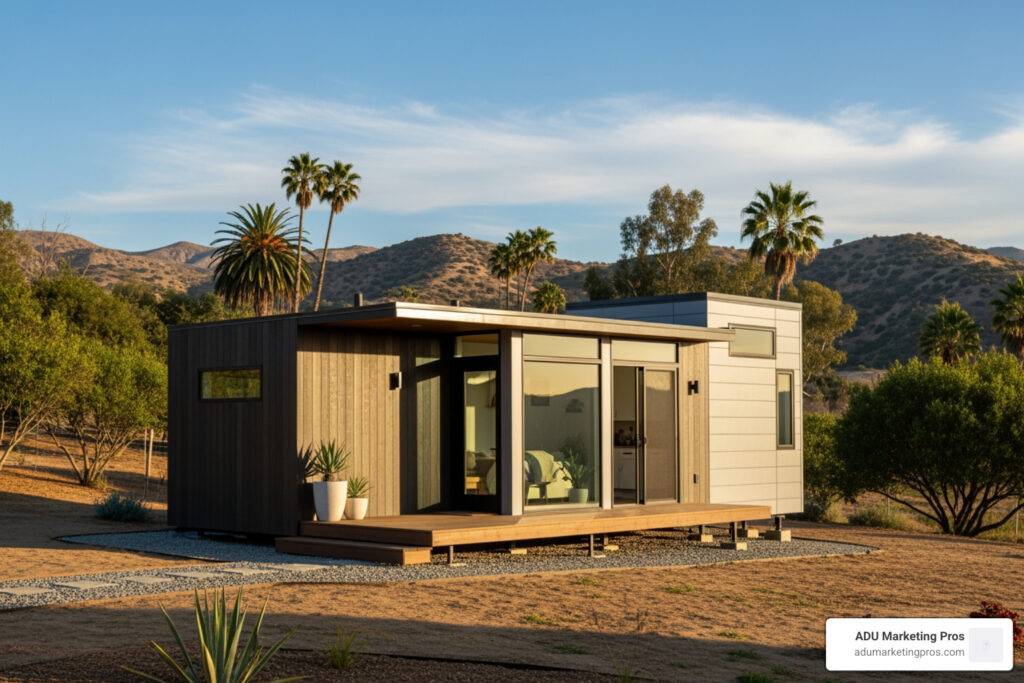
Why Prefab Tiny Homes Are Revolutionizing California Living
Prefab tiny homes California offer a fast, affordable, and sustainable housing solution in one of the nation’s most challenging real estate markets. As the state grapples with a severe housing deficit and median home prices soaring past $800,000 in many urban areas, these innovative structures provide a tangible path to homeownership and housing flexibility.
Quick Answer: Prefab Tiny Homes California Overview
- Starting Cost: $150,000-$305,000+ installed
- Timeline: Move-in ready in 6-9 months
- Types Available: ADUs, studios, park model RVs, and JADUs
- Key Benefits: Factory-built quality, code compliance, energy efficiency, speed
- Top Builders: California Tiny House, BOSS, Samara, Tumbleweed, Homeplex
- Certification: HCD-certified modular or HUD-certified manufactured homes
- Key Challenges: Site prep complexity, utility connection costs, local permit variations
California’s housing crisis has pushed the dream of homeownership out of reach for millions. Prefab tiny homes—precision-engineered, factory-built structures that arrive on-site ready for installation—are emerging as a powerful alternative. Unlike mobile homes of the past, these modern homes are built to meet or exceed the rigorous International and California Building Codes. When placed on a permanent foundation, they qualify as real property, can be financed with traditional mortgages, and often surpass traditional stick-built homes in quality, durability, and energy efficiency.
The factory-controlled process is the key to their success. Building indoors eliminates weather delays, a common source of budget overruns and timeline extensions in on-site construction. This controlled environment ensures consistent quality through automated processes and dedicated inspection stations, minimizing waste by up to 50% and saving an average of 5-6 months compared to a stick-built project. Many models are designed to achieve Zero-Energy Ready status, incorporating advanced insulation, high-efficiency systems, and solar readiness. Whether you’re looking to add a high-yield rental unit to your backyard, downsize into a more manageable space, or create a private home for aging parents or adult children, prefab homes offer unparalleled flexibility. Thanks to California’s streamlined ADU laws, the path from concept to occupancy is clearer and faster than ever before.
The California Dream, Downsized: Why Choose a Prefab Tiny Home?
Choosing a prefab tiny home in California is about more than downsizing square footage—it’s about upsizing your life. In a state where the median home price consistently hovers near the million-dollar mark in coastal cities, these factory-built homes offer a practical, high-quality path to ownership without the crushing financial burden or protracted timeline of traditional construction.
Affordability is a primary driver. With fully installed costs for an Accessory Dwelling Unit (ADU) often landing between $150,000 and $305,000, prefab homes are a fraction of the price of a conventional home. This financial accessibility unlocks powerful opportunities. Many homeowners leverage this by building an ADU to generate rental income, which can range from $2,000 to over $3,500 per month in high-demand areas like Los Angeles or the Bay Area. This income can offset or even cover the mortgage on the unit, turning an underutilized backyard into a significant revenue-generating asset.
Sustainability is another core benefit. Modern prefab homes are at the forefront of green building. Many models are constructed as Zero-Energy Ready Homes, meaning they are so efficient that a small renewable energy system can offset all or most of their annual energy consumption. They achieve this with superior insulation like Structural Insulated Panels (SIPs), high-efficiency electric heat pumps for heating and cooling, and integrated solar options that can slash or eliminate utility bills. This focus on green building helps homeowners easily meet and exceed California’s strict green building standards code, CALGreen.
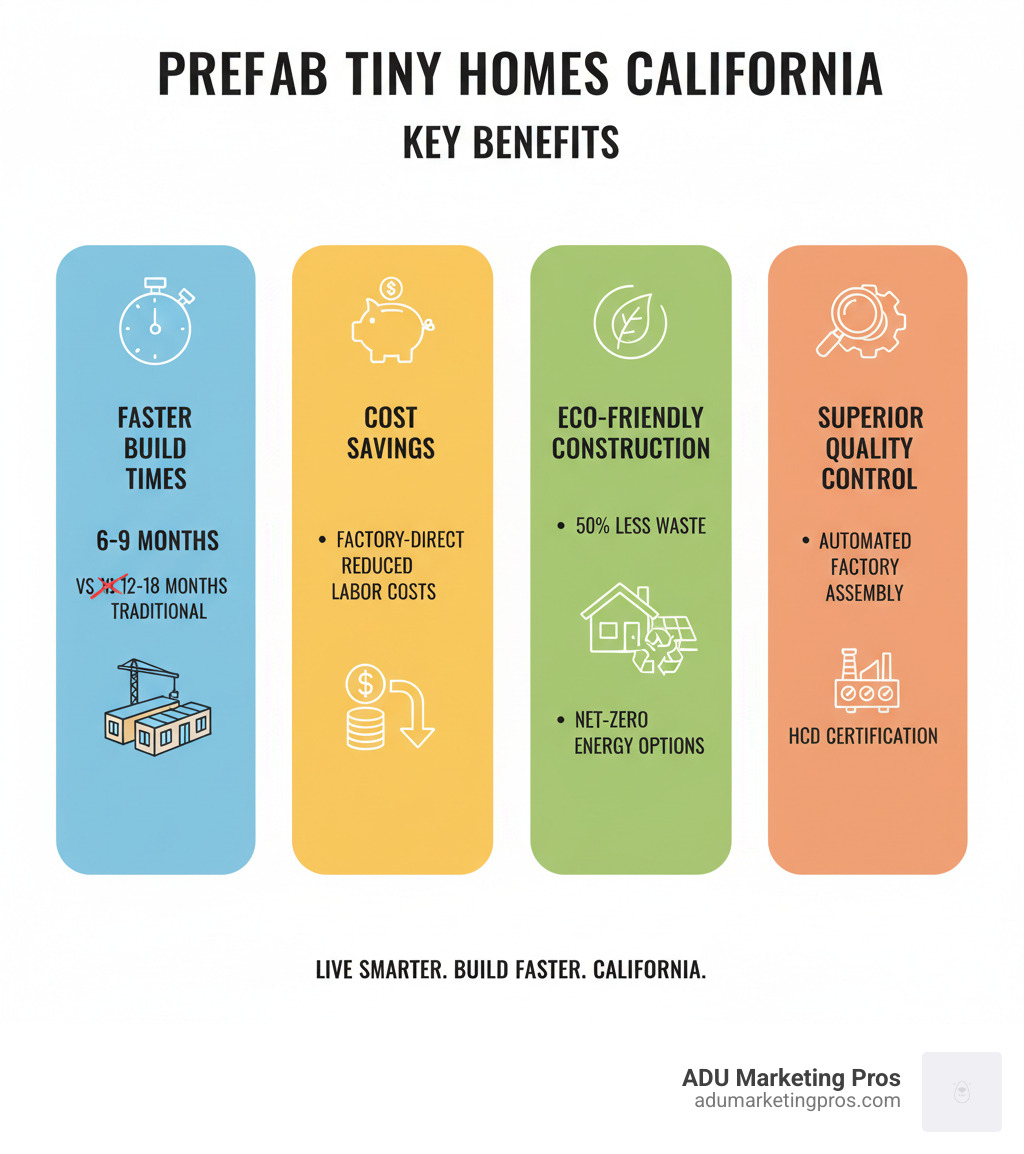
The speed of prefab construction is a game-changer. While a traditional stick-built ADU can take 12 to 18 months (or longer) from design to completion, a prefab home can be move-in ready in just 6 to 9 months. This accelerated timeline is possible because site preparation (grading, foundation, utility trenching) occurs simultaneously while your home is being built to precision standards in a climate-controlled factory. This eliminates months of potential delays from weather, subcontractor scheduling conflicts, and material supply chain issues.
Finally, factory construction ensures superior quality control. Each home is built on an assembly line by specialized craftspeople in a controlled environment, undergoing dozens of quality checks and third-party inspections at every stage. All prefab tiny homes California intended for permanent foundations must comply with state and national building codes. Modular units receive HCD (California Department of Housing and Community Development) certification, verifying they meet the same codes as on-site builds, while manufactured homes receive a HUD certification for compliance with federal standards.
Prefab vs. Stick-Built: A Clear Winner for California
When comparing prefab to traditional stick-built homes, the advantages for California homeowners become clear, especially in the context of building an ADU.
| Factor | Prefab Tiny Homes | Stick-Built Tiny Homes |
|---|---|---|
| Timeline | 6-9 months | 12-18+ months |
| Cost Predictability | High (fixed factory pricing) | Variable (material/labor fluctuations) |
| Quality Control | High (controlled environment, automated systems) | Variable (weather, crew skill, site conditions) |
| Weather Delays | Minimal (factory-built indoors) | Significant risk |
| Waste Reduction | Up to 50% less waste | Standard construction waste levels |
| Disruption to Property | Minimal (weeks of on-site work) | Extensive (months of on-site noise/traffic) |
The time savings of 5-6 months can mean earning rental income sooner or avoiding the prolonged stress of a construction zone in your backyard. Cost predictability is another major benefit; factory-direct pricing avoids the common budget overruns and surprise costs that plague on-site construction projects.
Contributing to a Greener Golden State
Prefab tiny homes California directly align with the state’s ambitious environmental goals. The factory building process is inherently less wasteful, reducing construction debris by up to 50% through precise material cutting, inventory management, and robust recycling programs for scrap materials like drywall, wood, and metal. According to the U.S. Department of Energy, Zero Energy Ready Homes can reduce energy consumption by 40-50% compared to typical new homes, a significant step toward a lower carbon footprint.
Energy efficiency is designed in, not added on as an afterthought. Features like high-performance SIPs, continuous exterior insulation, advanced air sealing, heat pump water heaters, and low-E windows create a tight thermal envelope that dramatically reduces the energy needed for heating and cooling. Prefab builders are experts at meeting California’s strict Title 24 energy compliance requirements, often with all-electric designs and integrated solar arrays that make achieving net-zero energy a realistic goal.
A Tour of Tiny Possibilities: Popular Styles and Types in California
The beauty of prefab tiny homes California lies in their incredible variety and adaptability. Far from a one-size-fits-all solution, the market offers everything from sleek, modern studios perfect for a home office to multi-bedroom backyard cottages designed for family living. There’s a prefab solution for nearly every lifestyle, property, and aesthetic preference.
Understanding the Types of Prefab Tiny Homes
Before browsing designs, it’s crucial to understand the main legal and structural categories recognized in California, as this determines zoning, permitting, and financing.
- Accessory Dwelling Units (ADUs): These are complete, standalone homes built on a permanent foundation on the same lot as a primary residence. They must have a full kitchen, bathroom, and living/sleeping space. Prefab ADUs are the most popular option for adding rental income or housing family members, as they are treated as real property and appreciate in value.
- Studio Units: Often classified as a type of ADU, these are typically smaller (under 500 sq. ft.), open-concept spaces. They are ideal for a dedicated home office, an art or music studio, a deluxe guest suite, or a short-term rental in a tourist-friendly area.
- Park Model RVs & Tiny Homes on Wheels (THOWs): These are legally considered recreational vehicles, not real estate. They are built to ANSI A119.5 standards, not the California Building Code. This means they are movable and face different zoning rules, often restricted to designated RV parks or tiny home communities. They offer mobility but are more difficult to finance and do not add to the property’s assessed value.
- Junior ADUs (JADUs): A JADU is created by converting existing space within the primary home’s footprint, such as a garage or master bedroom. They are capped at 500 square feet, must have an exterior entrance, and can share a bathroom with the main house but require an efficiency kitchen (sink, cooking appliance, storage). Prefab components can sometimes be used to expedite JADU conversions.
Popular Design Styles and Features
Once you’ve chosen a type, you can select a style that complements your main home and personal taste.
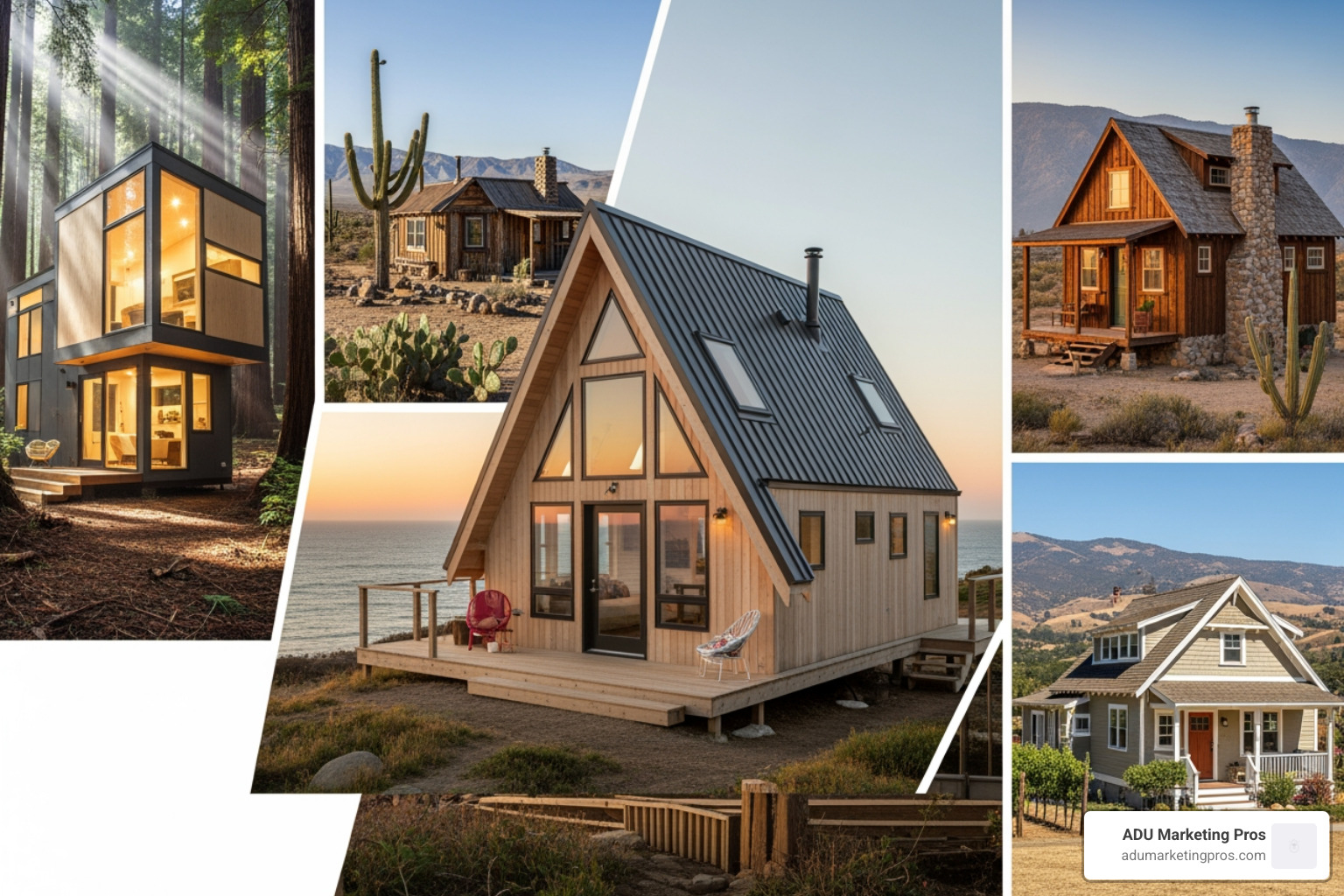
- Modern and Futuristic: This is a dominant style in the California prefab market. It features clean, geometric lines, flat or shed roofs, large floor-to-ceiling windows, and materials like metal siding, stucco, and glass. Smart home integration for lighting, climate, and security is a common feature, maximizing convenience and efficiency.
- Scandinavian-Inspired: Emphasizing minimalism and natural light, this style uses light-colored wood (like birch or pine), airy, open interiors, and a neutral color palette. The focus is on functionality and coziness (hygge), with clever, integrated storage solutions to maintain a clutter-free feel.
- California Coastal and Ranch: These styles focus on seamless indoor-outdoor living. They often feature board-and-batten or shiplap siding, large sliding or folding glass doors that open onto expansive decks or patios, and natural materials. Ranch styles have a low-slung, horizontal profile, while coastal designs incorporate light, breezy colors and durable materials suited for the marine environment.
Innovative Features for Maximizing Small Spaces
Regardless of style, the best prefab tiny homes utilize clever design to feel spacious and highly functional. Look for key features that maximize every square inch:
- Transformational Furniture: Murphy beds that fold into a wall to reveal a desk or sofa are a classic, but modern designs also include convertible dining tables, nesting ottomans, and modular seating.
- Vertical Space: High or vaulted ceilings with clerestory windows not only make a space feel larger but also bring in natural light without sacrificing privacy. Lofted sleeping or storage areas are also common.
- Smart Storage: Every nook is utilized. Look for toe-kick drawers under kitchen cabinets, built-in shelving that doubles as a room divider, under-stair storage, and full-height pantry cabinets.
- Layout Efficiency: Pocket doors and barn doors save the floor space required for a traditional swinging door. Open-concept kitchen and living areas create a sense of flow, while well-placed windows can make a room feel expansive.
Budgeting for Your Backyard Oasis: Costs and Financing
Understanding the full, all-in cost of your prefab tiny home in California is the most critical step for successful planning and budgeting. The advertised base price of the unit itself is just one component of the total project cost. A thorough evaluation of site-specific expenses is necessary to create an accurate financial plan.
What is the Typical All-In Cost?
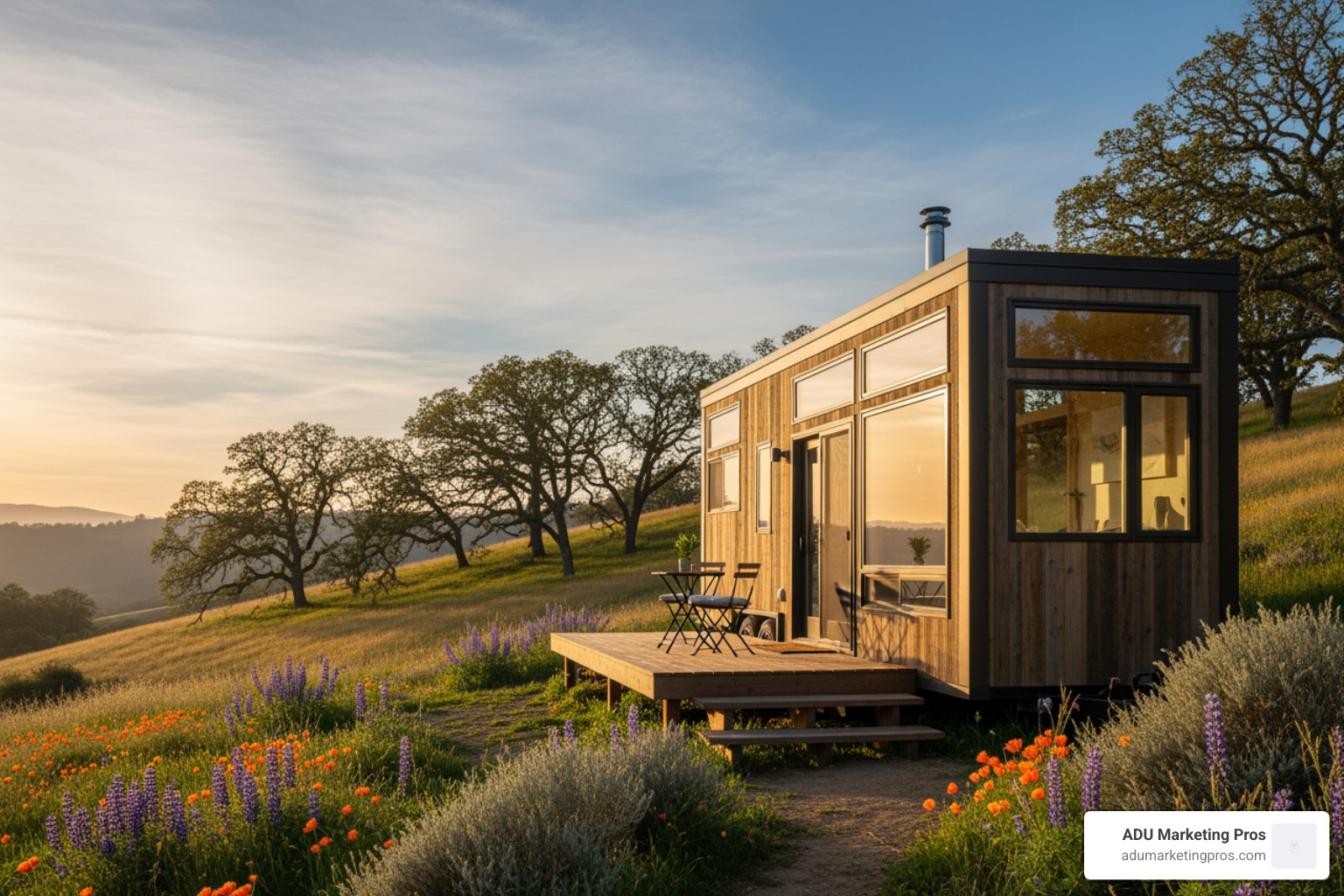
A fully installed prefab tiny home or ADU in California typically costs between $150,000 and $305,000+, with many projects landing in the $200,000 to $250,000 range for a one-bedroom unit. While base model prices provide a useful comparison—a compact studio (~221 sq. ft.) might start around $159,750, a one-bedroom (~385 sq. ft.) near $209,750, and a two-bedroom (~504 sq. ft.) around $229,750—the final price is heavily influenced by site conditions and local requirements.
Here is a more detailed breakdown of potential costs:
| Cost Category | Description | Estimated Cost Range |
|---|---|---|
| Unit Base Price | The cost of the factory-built home itself, with standard finishes. | $90,000 – $200,000+ |
| Hard Costs | Foundation, delivery, crane rental (if needed), installation/setting of the unit, utility hookups (sewer, water, electric). | $40,000 – $80,000+ |
| Soft Costs | Architectural plans, structural engineering, site survey, soil reports, permit fees from the city/county. | $10,000 – $25,000 |
| Site-Specific Costs | Demolition of existing structures, significant grading or retaining walls for sloped lots, trenching over long distances, required fire sprinklers. | $5,000 – $50,000+ |
| Finishing Costs | Landscaping, decking/patios, fencing, pathways, driveways, optional upgrades (e.g., solar panels, premium appliances). | $5,000 – $30,000+ |
Always get a comprehensive site evaluation and a detailed, line-item quote from a reputable builder to understand your true total project cost before signing a contract.
Securing Funds: Financing Options
Financing a prefab ADU is more accessible than ever, as lenders have become familiar with these projects. Several paths are available:
- Construction & Renovation Loans: These are designed to finance the construction of a new structure on your property. The Fannie Mae HomeStyle Renovation loan is a popular choice, as it allows you to finance the ADU based on the home’s future appraised value after the project is complete. The loan can be rolled into a single, permanent mortgage.
- Home Equity: If you have significant equity in your primary residence, a cash-out refinance or a Home Equity Line of Credit (HELOC) can be an excellent option. A cash-out refinance gives you a lump sum at a fixed interest rate, while a HELOC provides a flexible line of credit with a variable rate.
- Personal Loans: For smaller projects or to cover a funding gap, an unsecured personal loan can be an option. However, these typically come with higher interest rates and shorter repayment terms than mortgage-based products.
- Builder-Partner Financing: Many established prefab companies have partnerships with lenders who specialize in financing factory-built housing. These lenders understand the unique draw schedules and processes, which can significantly streamline the loan process.
- Grants and Incentives: California is actively promoting ADU construction. The state’s CalHFA ADU Grant Program provides up to $40,000 to reimburse pre-development and non-recurring closing costs for lower-income homeowners. Additionally, many cities and counties offer their own local grants, fee waivers, or low-interest loan programs. Always check with your local planning department for available incentives.
From Concept to Completion: The A-Z Process
Bringing a prefab tiny home to a California property is a structured, multi-step journey. While it may seem complex at first glance, the process is far more predictable and streamlined than traditional construction, thanks to the efficiencies of factory building and progressive state laws.
Step 1: Navigating California’s Zoning and Legal Landscape
Before you fall in love with a design, the first step is to understand what’s legally allowed on your property. California has some of the most progressive ADU laws in the nation, thanks to a series of state bills (like AB 68, AB 881, and SB 9) designed to remove barriers to construction. These state laws set a generous baseline that all local jurisdictions must follow:
- Setbacks: Minimum setbacks are typically just four feet from the side and rear property lines, allowing ADUs to fit in tight spaces.
- Height Limits: Localities must allow an ADU height of at least 16 feet, with taller limits possible under certain conditions.
- Size: You can generally build an ADU of at least 850 sq. ft. for a one-bedroom or 1,000 sq. ft. for a two-bedroom unit, regardless of your lot size or existing home size.
- Parking: No additional parking is required for ADUs located within a half-mile of public transit, in historic districts, or if it’s part of a JADU conversion.
- Eligibility: Most single-family lots are eligible for at least one detached ADU and one JADU. Owner-occupancy requirements have also been eliminated by the state until at least 2025.
While state law is powerful, you must always confirm specific rules with your local city or county planning department.
Step 2: The Permitting Process Made Simple
California law mandates that ADU permit applications be processed with “ministerial approval.” This means if your project meets the objective, black-and-white standards laid out in the local ordinance, the city must approve it. This eliminates subjective decisions and political opposition. Furthermore, jurisdictions are required to approve or deny a completed application within 60 days. Many full-service prefab builders act as a “one-stop-shop,” handling the entire permitting process on your behalf, including architectural plans, engineering, and submission.
Prefab homes offer a huge advantage here. Modular homes arrive with HCD (California Department of Housing and Community Development) certification, and manufactured homes with HUD certification. This pre-certifies that the structure itself complies with all relevant state or federal building codes, which greatly simplifies the job of the local building inspector.
Step 3: Site Preparation and Foundation
This phase happens concurrently while your home is being built in the factory, which is the key to the accelerated timeline.
- Site Feasibility Assessment: The builder conducts a detailed evaluation of your property to check for access, slopes, soil conditions, and the location of underground utilities.
- Clearing and Grading: The build site is cleared of any obstacles and graded to create a level pad.
- Utility Trenching: Trenches are dug to run water, sewer/septic, and electrical lines from the main house or street to the ADU site.
- Foundation Installation: A permanent foundation is poured or installed. Common types include a concrete slab-on-grade or a raised perimeter foundation with a crawl space. This step is crucial for classifying the home as real property.
Step 4: Delivery and Installation
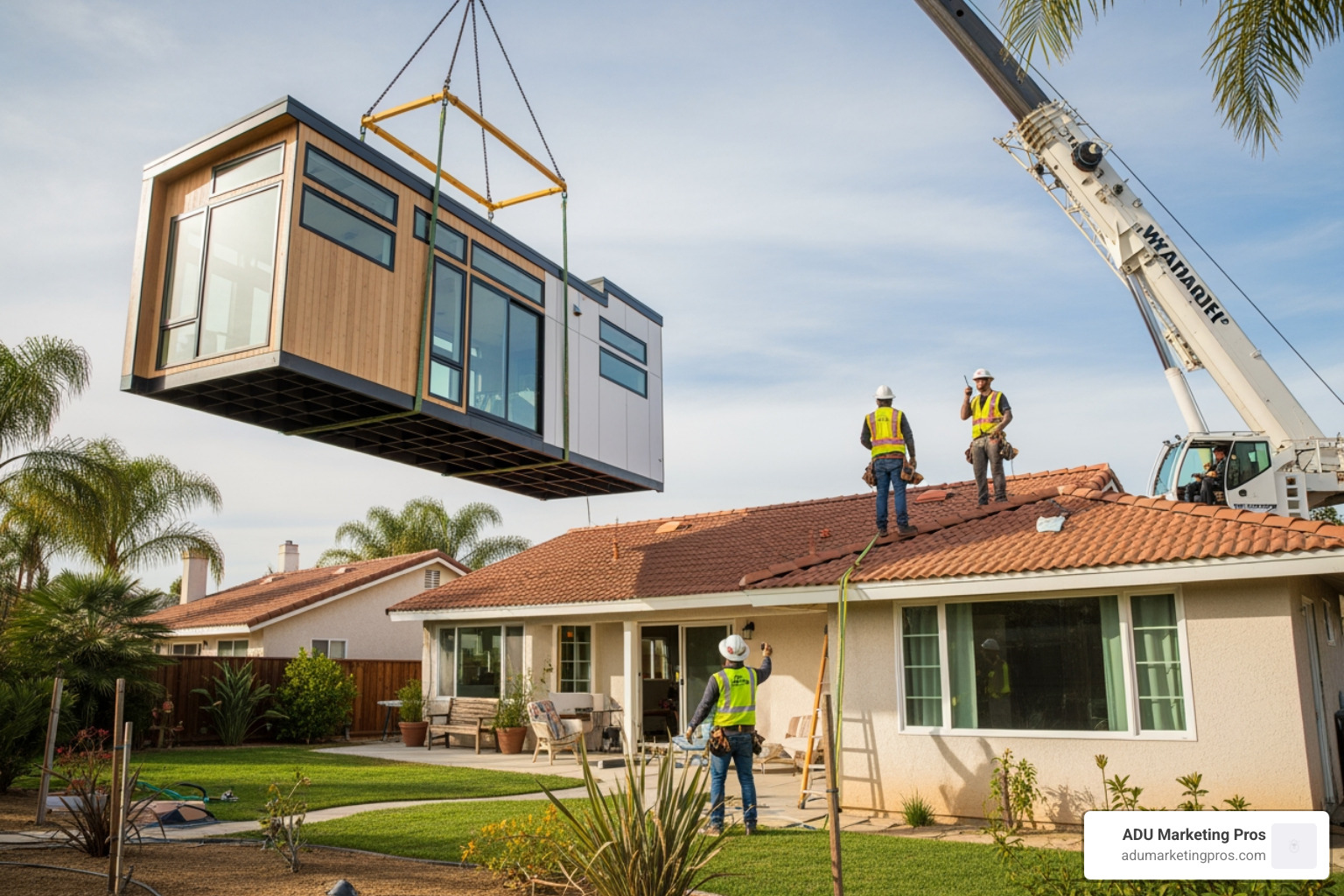
This is the most exciting phase. The completed home module(s) are transported by truck to your property. Depending on backyard access, the unit is either rolled into place or lifted by a crane over the primary residence and precisely set onto the foundation. The installation team then secures the home and completes the final utility hookups. Local inspectors conduct final checks of the foundation connection and utility connections.
Step 5: Move-In and Beyond
Once the final inspection is passed, the city issues a Certificate of Occupancy, and your prefab tiny home California is officially ready for you, your family, or your new tenants to move in. Reputable builders provide a comprehensive warranty, typically a one-year “fit and finish” warranty covering cosmetic items and a longer 10-year structural warranty. This provides peace of mind and protects your investment long after the keys are handed over.
Frequently Asked Questions
We hear many questions from homeowners considering prefab tiny homes California. Here are detailed answers to the most common inquiries to help you navigate the process.
How long does it really take to get a prefab tiny home in California?
For most projects, a prefab tiny home in California is move-in ready in 6-9 months from the start of the design and permitting phase. This is a significant acceleration compared to the 12-18+ months typical for a traditional, on-site build. This timeline breaks down as follows:
- Design & Permitting: 2-4 months. This involves finalizing your design, preparing engineering plans, and navigating the local permit approval process. While the city has a 60-day review window, initial submissions or revisions can extend this phase.
- Factory Construction: 2-3 months. Your home is built indoors on an efficient assembly line.
- Site Preparation: 1-2 months. This runs concurrently with factory construction, saving a tremendous amount of time.
- Installation & Final Inspection: 1-2 weeks. The home is delivered, set on the foundation, hooked up to utilities, and receives final sign-off from the city inspector.
Will a prefab ADU increase my property taxes?
Yes, but it’s not as drastic as you might fear. California’s Proposition 13 protects your primary home from being reassessed at current market value. When you add an ADU, the county assessor uses a “blended assessment.” Only the value of the new construction (the ADU) is added to your property’s existing assessed value. For example: if your home’s current assessed value is $400,000 and you build an ADU with a construction cost of $200,000, your new assessed value would be approximately $600,000. At a typical 1.25% tax rate, your annual property tax would increase by roughly $2,500 ($200,000 x 1.25%). This modest increase is almost always far outweighed by the rental income generated or the significant boost in overall property value.
Can I customize my prefab tiny home?
Customization levels vary widely by builder. Some companies offer a high degree of customization, allowing you to modify floor plans, move walls, and select unique finishes, but this often comes at a higher cost and a longer timeline. Other builders focus on a curated selection of high-quality, fixed floor plans. This approach streamlines production, ensures predictable pricing, and speeds up the entire process. Even with fixed plans, you can almost always choose from a range of pre-selected palettes for interior and exterior finishes, flooring, countertops, cabinets, and appliance packages. It’s important to discuss your desire for customization with potential builders upfront to find one that aligns with your vision and budget.
Do prefab tiny homes appreciate in value?
Absolutely. When a prefab modular home is installed on a permanent foundation, it is legally classified as real property, just like a traditional stick-built house. It is appraised along with the primary home and the land, and it appreciates in value over time. An ADU is one of the best home improvement investments you can make, often adding significantly more to your property value than its cost to build.
What are the insurance implications of adding a prefab ADU?
Once your ADU is complete, you must contact your insurance provider. You will need to increase the coverage on your homeowner’s policy to include the new structure. If you plan to rent out the ADU, you will need to add landlord coverage (sometimes called a “dwelling fire” policy). This protects the structure itself and provides liability coverage. You should also require your tenants to carry their own renter’s insurance policy to cover their personal belongings.
Conclusion: Your Path to a Simpler, Smarter California Lifestyle
Prefab tiny homes California are more than just a housing trend; they represent a fundamental shift in how we approach building and living in the Golden State. They are a direct and practical solution to the state’s pervasive housing challenges, delivering an unparalleled combination of affordability, speed, sustainability, and quality that often surpasses traditional construction methods.
In as little as 6-9 months, you can have a beautiful, energy-efficient, and code-compliant home in your backyard for a fraction of the cost of a conventional property. This isn’t just about saving money; it’s about unlocking new possibilities. Whether you’re generating substantial rental income to achieve financial freedom, creating a safe and private space for family, or designing the perfect home office or creative studio, the flexibility is immense.
With streamlined state-level permitting, a growing number of financing options, and a competitive market of innovative builders, the path to owning a prefab home is clearer and more accessible than ever before. Choosing to build a prefab tiny home is an investment in a flexible, appreciating asset that enhances your property, improves your quality of life, and contributes to a more sustainable and accessible housing future for California. It’s about building smarter, not just smaller, and reclaiming a piece of the California dream for yourself.