
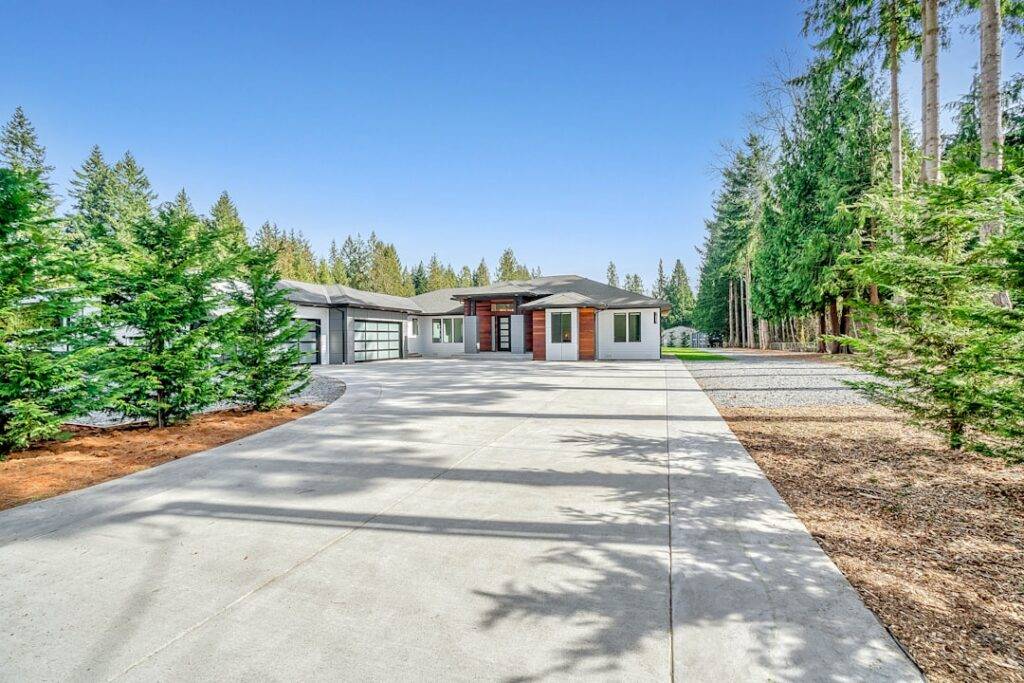
Small Custom Built Homes: Finding the Right Builder for Your Dream
Small custom built homes are one of the fastest-growing segments in residential construction. Buyers are moving away from oversized houses and toward homes that are intentional, efficient, and easier to maintain. This shift is driven by a combination of economic necessity, a desire for environmental sustainability, and the “Missing Middle” housing movement, which seeks to provide diverse housing options between single-family homes and large apartment complexes.
Here are the top builders to know right now:
| Builder | Size Range | Price Range | Service Area |
|---|---|---|---|
| Small House Solutions | Varies (ADUs to full homes) | $119,000-$450,000 | Austin, San Antonio, Houston, TX |
| Adair Homes (Cottonwood) | 1,094 sq ft | Varies by location | WA, OR, ID and more |
| Tilson Homes | Under 1,000-3,000+ sq ft | Varies | Rural Texas statewide |
| Deer Valley Tiny Homes | 602-648 sq ft | Contact retailer | Nationwide via dealers |
| Tumbleweed Tiny Homes | Mini, Tiny, Park Model RV | Varies | All 50 states |
| Mighty Small Homes | Multiple kit styles | Contact builder | US and beyond |
The appeal is simple: lower costs, less upkeep, more flexibility, and a home designed around how you actually live. Remote work and ADU-friendly zoning have also made smaller homes more practical in both suburban and rural settings. By focusing on high-quality materials and smart layouts, these homes prove that luxury is not defined by square footage, but by the quality of the living experience.
A key distinction is that custom small homes are built for your lot and lifestyle. They are typically placed on permanent foundations, built to local code, and can be styled in almost any architectural direction. Unlike many tiny homes on wheels, they can qualify for traditional financing and tend to hold long-term property value better. They are also a strong fit for accessory dwelling units (ADUs), whether you want a backyard rental, guest house, or space for family.
Whether you’re downsizing, building on rural land, or adding an income-producing unit, the builder you choose matters. In a smaller footprint, every square foot has to work hard. To help you navigate this process, we have compiled resources on the ADU building permit process, the logistics of Building an ADU, and a guide to the best tiny home builders in the industry today.
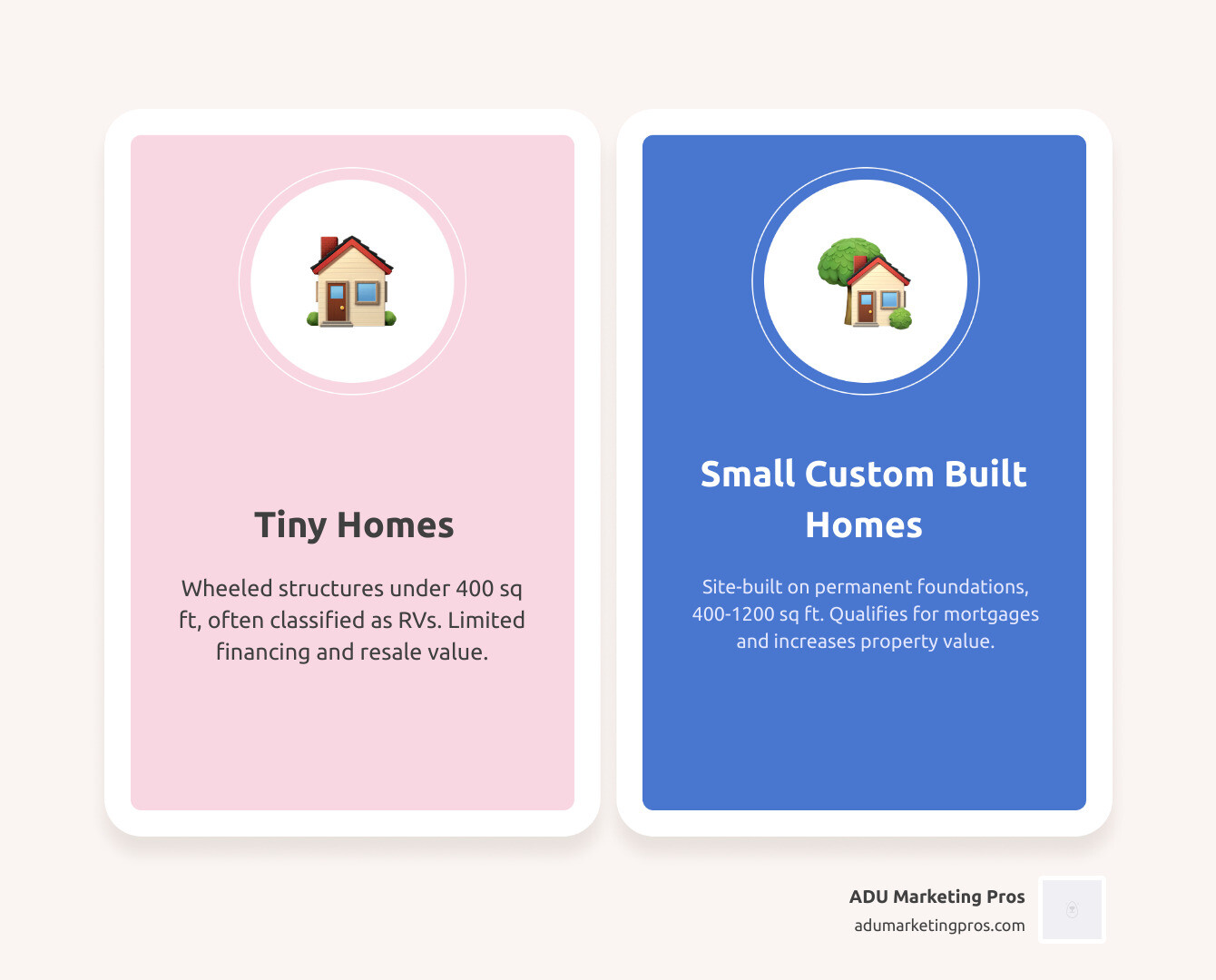
Defining Small Custom Built Homes: More Than Just a Tiny House
When we talk about Small Houses, many people picture a tiny house on a trailer. While those have appeal, small custom built homes are a more permanent option. These structures are built to the International Residential Code (IRC), which helps ensure legal occupancy, safety, and access to traditional financing in many areas.
The main difference is the foundation. Instead of sitting on wheels, these homes are placed on permanent foundations such as slabs, crawl spaces, or basements. That makes them real property rather than a vehicle-like asset. They are often used as Custom ADU San Francisco projects or primary residences for owners who want a smaller home without giving up permanence.
A good example is the Partridge Hill – Cushman Design Group project. At 1,600 square feet, it reflects the “just big enough” idea by focusing on quality materials, natural light, and thoughtful proportions instead of excess square footage.
Why Choose Small Custom Built Homes Over Prefab Kits?
Prefab and kit homes can work in some cases, but custom builds offer important advantages:
- Design Flexibility: You can shape the floor plan around your routines, priorities, and storage needs.
- Site-Specific Engineering: The structure can be designed for your actual lot conditions, including slopes, soil, weather, and local codes.
- Long-Term Property Value: Site-built custom homes are generally viewed more favorably by lenders and appraisers than temporary or kit-based alternatives.
- Material Quality and Sustainability: You can select insulation, finishes, and systems that improve comfort, energy performance, and indoor air quality.
Top Builders and Models for Your Small Project
Choosing the right partner is the most critical step in your journey. We have analyzed builders across the country, focusing on those who provide high-quality, small custom built homes that stand the test of time. The best builders in this space understand that “small” does not mean “cheap.” It means precision, efficiency, and a focus on the details that matter most. They approach a 1,000-square-foot home with the same level of architectural rigor as a 10,000-square-foot one.
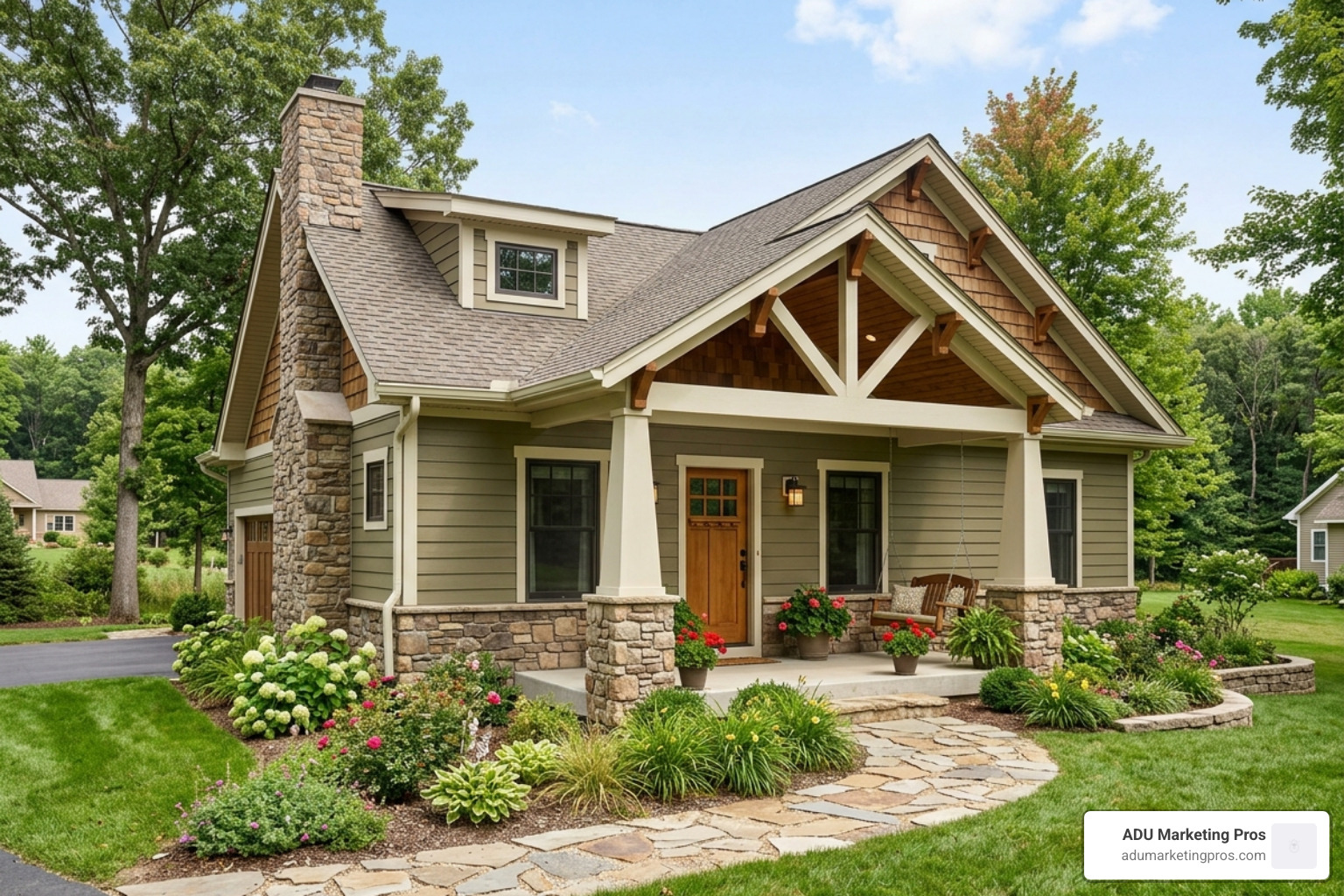
One standout model is The Cottonwood by Adair Homes. At 1,094 square feet, it perfectly bridges the gap between a tiny house and a traditional family home. It features two bedrooms, two bathrooms, and an open-concept main level. The versatility of this plan is what makes it a top choice; it looks just as at home in a rural setting as it does in a charming downtown community. Adair’s approach allows for significant interior customization, letting homeowners choose finishes that reflect their personal style while maintaining a cost-effective footprint. Their “sweat equity” program also allows homeowners to manage some of the sub-contractors themselves to save on costs.
For those looking for something even more compact, you can browse various Small Houses for Sale to see how builders are maximizing every square inch. Many of these models utilize “flex spaces”—rooms that can serve as a guest bedroom, a home office, or a hobby room depending on the time of day. Built-in storage, such as under-stair drawers and floor-to-ceiling cabinetry, is a hallmark of these high-performance designs.
Leading Small Custom Built Homes in Texas and the South
While our primary focus is the California market, we can learn a lot from the innovations happening in Texas. Builders like Small House Solutions have mastered the “one-stop-shop” approach. They handle everything from feasibility studies to final utility connections, with project costs typically ranging from $119,000 to $450,000. Their expertise in navigating the unique zoning laws of Austin and Houston makes them an invaluable resource for Southern builders. They specialize in “casitas” and ADUs that feel like full-sized homes through the use of vaulted ceilings and large sliding glass doors.
Tilson Homes is another heavy hitter, specializing in building on your land. Their “EasyBuy” financing program is a game-changer for many, offering no interest and no fees during the construction phase. This kind of financial support is vital when you’re managing the complexities of a new build, as it reduces the upfront capital required to get a project off the ground. Tilson’s models often feature traditional Southern architecture, such as wide porches and gabled roofs, which provide excellent natural cooling and aesthetic appeal. Their “San Jacinto” model is a favorite for those seeking a classic look in a smaller footprint.
If you are looking for a manufactured approach that doesn’t feel “cheap,” Deer Valley Tiny Homes offers models like The Stanley (648 sq. ft.) and The Jones (602 sq. ft.). These are built with heavy-duty materials usually reserved for larger homes, such as 2×6 exterior walls and high-grade insulation, ensuring they can handle both rural homesteading and urban infill. Their focus on structural integrity makes them a favorite for those building in areas prone to extreme weather, such as the Gulf Coast or the tornado-prone plains.
Premium West Coast Builders for Small Custom Built Homes
For our neighbors in California, the demand for Tiny House Builders California has skyrocketed due to new ADU laws. In the San Francisco Bay Area, expertise is everything. The regulatory environment is complex, and the cost of land is high, making every square foot of a custom build incredibly valuable. Builders here must be experts in Title 24 energy compliance and local fire codes.
Silicon Valley Builders and Supple Homes Inc. are leaders in the Palo Alto and Menlo Park regions. They understand the specific aesthetic and regulatory requirements of these high-end neighborhoods. Whether you are looking for a Tiny House San Francisco style that maximizes a narrow lot or a luxury villa in Sunnyvale, these builders provide a level of craftsmanship that kit homes simply cannot match. They specialize in “invisible luxury”—high-end systems like radiant floor heating and integrated smart home technology that don’t take up physical space but significantly enhance the living experience. Their projects often feature custom millwork and high-end European appliances that make a small kitchen feel like a chef’s dream.
In Southern California, builders like Tiny Topanga and Zen Tiny Homes cater to the Los Angeles and San Diego markets, offering creative solutions for those who want a custom feel with a smaller footprint. These builders often incorporate indoor-outdoor living elements, such as folding glass walls and expansive decks, to make a small custom home feel twice its actual size. By blurring the lines between the interior and the exterior, they create homes that feel airy and connected to the California landscape.
The Financials: Costs, Financing, and Investment Potential
Let’s talk numbers. We know that budget is usually the first question on everyone’s mind. For small custom built homes, you should expect a price range between $119,000 and $450,000, depending on the complexity and location. While the price per square foot may be higher than a larger home—due to the fact that expensive components like kitchens and bathrooms are not scaled down proportionally—the total project cost is significantly lower, leading to lower monthly mortgage payments and reduced property taxes. According to the National Association of Home Builders (NAHB), smaller homes also offer significant savings in long-term maintenance and utility costs.
Many top-tier Custom ADU Builders use “Hard-Cost Contracts.” This means you get a transparent breakdown of costs, including allowances for materials. If you choose a more expensive tile for your bathroom, you simply pay the difference—no hidden fees or surprise markups. This transparency is crucial for staying on budget during a custom build, where “scope creep” can often lead to financial stress. It also allows you to prioritize your spending, perhaps opting for high-end windows while choosing more modest flooring.
The investment potential here is significant. A well-built small home can serve as a primary residence, but it can also generate substantial rental income. For instance, Zook Cabins highlights that their park models and modular cabins are increasingly popular as short-term vacation rentals. In California, adding an ADU to your property can increase your property value by as much as 30% in some markets, providing an immediate boost to your net worth. This “house hacking” strategy allows homeowners to offset their own mortgage with the rental income from their small custom build.
If you’re still looking for the perfect spot to build, you might want to explore Land for Sale in Southern California for Tiny Houses to find a lot that fits your vision and budget. Finding land with existing utility hookups can save you tens of thousands of dollars in development costs. It is also important to consider the “appraisal gap”—ensure your builder provides detailed specs to the appraiser so the high quality of your small build is reflected in the final valuation.
Navigating Financing and Permitting for Small Builds
Financing a small home can sometimes be trickier than a traditional mortgage, but options are expanding. Some builders offer in-house lending, while others build homes that are eligible for “MH Advantage” financing, which offers down payments as low as 3%. Construction-to-permanent loans are also a popular option, allowing you to finance the land purchase and the construction costs into a single mortgage that converts to a traditional 15- or 30-year fixed rate once the home is complete.
Permitting is often the biggest hurdle in the construction process. A professional builder will conduct a feasibility study before a single nail is driven. This report covers:
- Zoning Laws: Ensuring your project is allowed in your specific neighborhood and meets all setback and height requirements. This includes checking for any local “minimum square footage” requirements that might still be on the books.
- Utility Connections: Mapping out how to get water, sewer, and power to the site. In rural areas, this may include septic design and well drilling. In urban areas, it involves calculating “impact fees” charged by the city.
- Environmental Impact: Especially important in Places in Southern California That Allow Tiny Houses, where fire zones, drought regulations, and protected species habitats come into play. A professional builder handles these complexities, ensuring your project doesn’t get stalled by red tape. They will also manage the “Title 24” energy calculations required in California to prove the home meets state efficiency standards.
Sustainable Features and High-Performance Design
We believe that a small home should be a smart home. Because you are building with a smaller footprint, you can afford to invest in higher-quality, Eco-Friendly Small Homes features that pay for themselves over time through reduced utility bills and increased comfort. High-performance design isn’t just about the environment; it’s about creating a superior living experience with better air quality and more consistent temperatures. This approach, often referred to as “building science,” focuses on the home as a complete system.
Many modern builders utilize Structural Insulated Panels (SIPs). These panels provide superior insulation and structural strength compared to traditional stick framing. They are manufactured in a controlled environment, which reduces waste and ensures a perfect fit on-site. When combined with a tight thermal envelope and a Heat Recovery Ventilator (HRV) or Energy Recovery Ventilator (ERV) system, your home stays at a comfortable temperature year-round with minimal energy use, even in extreme climates. This “Passive House” approach can reduce heating and cooling needs by up to 90%.
Other high-performance features include:
- Net-Metered Solar PV: Generate your own electricity and sell the excess back to the grid. In many parts of California, new homes are now required to include solar, making this a standard part of the custom build process. Adding a battery backup system like the Tesla Powerwall can provide energy independence during grid outages.
- Low-VOC Paints and Finishes: Ensuring your indoor air quality is healthy and free of harmful chemicals. This is especially important in smaller spaces where air volume is lower and pollutants can concentrate more quickly.
- Drought-Tolerant Landscaping: A must-have for our California clients to reduce water waste. Using native plants and smart irrigation systems can reduce outdoor water use by up to 70%. Greywater recycling systems can also be integrated to reuse water from sinks and showers for irrigation.
- Certified Green Tiny Homes: Builders like Tumbleweed offer “Certified Green” models that meet strict environmental standards for material sourcing and energy performance. These certifications can also help with resale value as more buyers prioritize sustainability.
- Smart Home Integration: Modern small homes often feature integrated systems for lighting, climate control, and security. These systems can be managed from a smartphone, allowing you to optimize energy use even when you aren’t home. Smart leak detectors, automated window shades, and high-efficiency mini-split HVAC systems further protect the home and improve efficiency while saving valuable interior space.
The Step-by-Step Custom Design and Building Process
Building small custom built homes is a journey, not a transaction. It requires a collaborative relationship between the homeowner, the architect, and the builder. Unlike buying an existing home, you are creating something from nothing, which requires patience and clear communication. Here is what you can expect when working with a professional team to bring your vision to life:
- Initial Consultation: This usually starts with a discovery call. We talk about your vision, your budget, and your land. We’ll discuss your “must-haves” versus your “nice-to-haves” to ensure the project is feasible from the start. We also look at your timeline to manage expectations regarding permitting and construction.
- Architectural Design: You’ll work with Architects in Southern California Who Design Tiny Houses to create your floor plan. This phase involves multiple iterations to ensure every square inch is utilized efficiently. We focus on sightlines, natural light, and storage solutions. We also consider the “flow” of the home to ensure it doesn’t feel congested.
- 3D Modeling and Virtual Walkthroughs: Before construction begins, we use 3D rendering so you can virtually walk through your home. This allows you to make adjustments to the layout, window placement, or finishes before they are finalized, saving time and money during construction. You can see exactly how the morning sun will hit your kitchen counter or how much space is left around the bed.
- Engineering and Technical Planning: This is the “invisible” part of the build—Geo-Tech, Structural, and Septic engineering ensure the home is built to last. We also plan the mechanical, electrical, and plumbing (MEP) systems to ensure they are integrated seamlessly into the small footprint. This phase is critical for ensuring the home can withstand local environmental stressors like earthquakes or high winds.
- Permitting and Approvals: Your builder handles the city and county paperwork, taking the stress off your shoulders. This includes submitting plans for review, attending planning commission meetings if necessary, and securing all required permits. This phase can take anywhere from a few weeks to several months depending on the local jurisdiction.
- Construction and Project Management: Timelines vary, but most custom small homes take between 6 to 12 months from start to finish. During this time, your project manager will provide regular updates and photos of the progress. You will have scheduled site visits to see the framing, rough-ins, and final finishes.
Throughout this process, material selection is key. You’ll have consultations to choose everything from the cabinetry to the flooring, ensuring the finished product is a true reflection of your personality. By the time you receive the keys, every detail will have been curated to fit your specific lifestyle, from the height of the counters to the placement of the outlets.
Frequently Asked Questions about Small Custom Homes
How do small custom homes differ from tiny homes on wheels?
The biggest difference is the legal classification and the foundation. Small custom built homes are permanent structures built to IRC codes and are considered real property. Tiny homes on wheels are often classified as RVs. This means custom homes have higher resale value, better financing options, and are much easier to permit as permanent residences. They also offer better insulation and durability than most trailer-based models.
What is the average cost per square foot for a small custom build?
While costs vary by region, you can expect to pay more per square foot for a small home than a large one. This is because the most expensive parts of a house—the kitchen, the bathroom, and the utility connections—are present regardless of the home’s size. However, the total cost remains significantly lower than a traditional build, and the long-term savings on taxes and utilities are substantial.
Can I build a small custom home as an ADU on my existing property?
Absolutely! In fact, this is the most common use case for our clients. Working with Tiny House Builders in Southern California allows you to navigate backyard home regulations, including setback requirements and utility sharing, to turn your backyard into a source of income or a home for a family member. Recent California laws have made it much easier to bypass restrictive local zoning for ADUs.
Are small custom homes harder to insure?
No, because they are built to the same IRC standards as traditional homes, they are generally easy to insure through standard homeowners’ insurance providers. This is a major advantage over tiny homes on wheels, which often require specialized (and sometimes expensive) RV or insurance policies.
Do small custom homes hold their resale value?
Yes. Because they are permanent structures on real property, they appreciate along with the local real estate market. In high-demand areas like California, well-designed small homes are often highly sought after by first-time buyers and retirees, ensuring strong resale potential. Their efficiency and modern design make them attractive assets in a market increasingly focused on sustainability.
Conclusion
Building a small custom built home is about more than just saving money—it’s about intentionally designing a life that focuses on what matters most. By choosing a custom build over a generic kit, you ensure that your home is a high-performance, sustainable, and valuable asset that will serve you for decades. The transition to a smaller footprint allows for a higher quality of life, with less time spent on chores and more time spent on experiences. It is a rejection of the “bigger is better” mentality in favor of “better is better.”
Whether you are looking for Tiny House Builders California to create a backyard retreat in San Jose or a primary residence in the hills of Los Angeles, the right builder will make the process seamless and rewarding. The expertise of a professional team ensures that your home is not only beautiful but also safe, legal, and energy-efficient. From the initial architectural sketches to the final walkthrough, every decision is an opportunity to tailor your environment to your unique needs.
At ADU Marketing Pros, we specialize in connecting homeowners with the expertise they need to make these dreams a reality. From San Francisco to San Diego, we are here to help you navigate the booming world of small custom living. Ready to start your journey? Your dream home—no matter how small—is waiting. Embrace the freedom of living small and the luxury of a home built just for you. The future of housing is smaller, smarter, and more sustainable, and your project can be at the forefront of this exciting movement.