
What Are Single Story Garage with Living Quarters Plans?
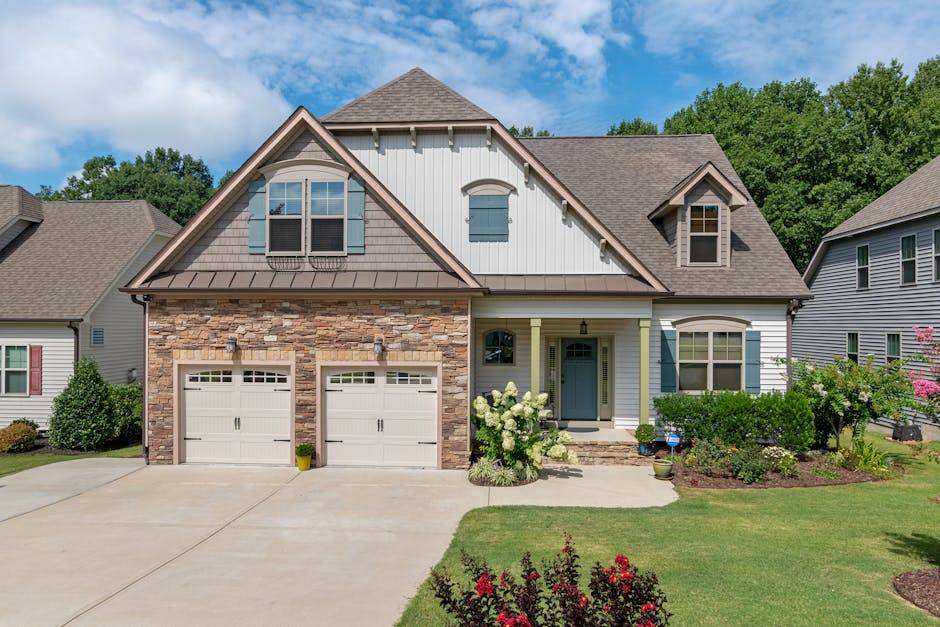
Single story garage with living quarters plans are comprehensive building blueprints that combine a functional garage and a complete living space — all on one level. This architectural approach eliminates the need for stairs and second-story construction, offering a smart, compact layout that works perfectly for guests, long-term renters, aging parents, or a dedicated home office. In the modern real estate landscape, these designs have evolved from simple storage sheds into sophisticated, multi-functional residences that maximize property utility without the vertical footprint of a traditional carriage house.
Historically, garage apartments were almost exclusively built above the vehicle bays to save on ground space. However, as the “aging in place” movement has gained momentum and accessibility has become a priority for homeowners, the single-story model has surged in popularity. These plans are particularly favored in regions with expansive lots or in urban areas where height restrictions make two-story structures difficult to permit. By placing the living quarters adjacent to the garage rather than above it, builders can utilize shared foundations and rooflines while providing a seamless, step-free transition between the driveway and the front door.
Here’s a quick overview of what these plans typically include:
| Feature | Typical Range |
|---|---|
| Total square footage | 400 – 2,048 sq ft |
| Bedrooms | Studio (0) to 2 bedrooms |
| Bathrooms | 1 – 2.5 baths |
| Garage capacity | 1 – 7 cars (some RV-ready) |
| Starting plan cost | ~$267 – $1,062 |
| Build cost estimate | $50,000 – $250,000 |
| Common uses | Guest house, rental ADU, home office, in-law suite |
These plans go by several names — garage apartments, ADUs (Accessory Dwelling Units), carriage houses, and even barndominiums. What makes single-story versions stand out is that the living quarters sit beside the garage on the same level, rather than above it. This distinction matters more than you’d think for both construction logistics and long-term lifestyle flexibility.
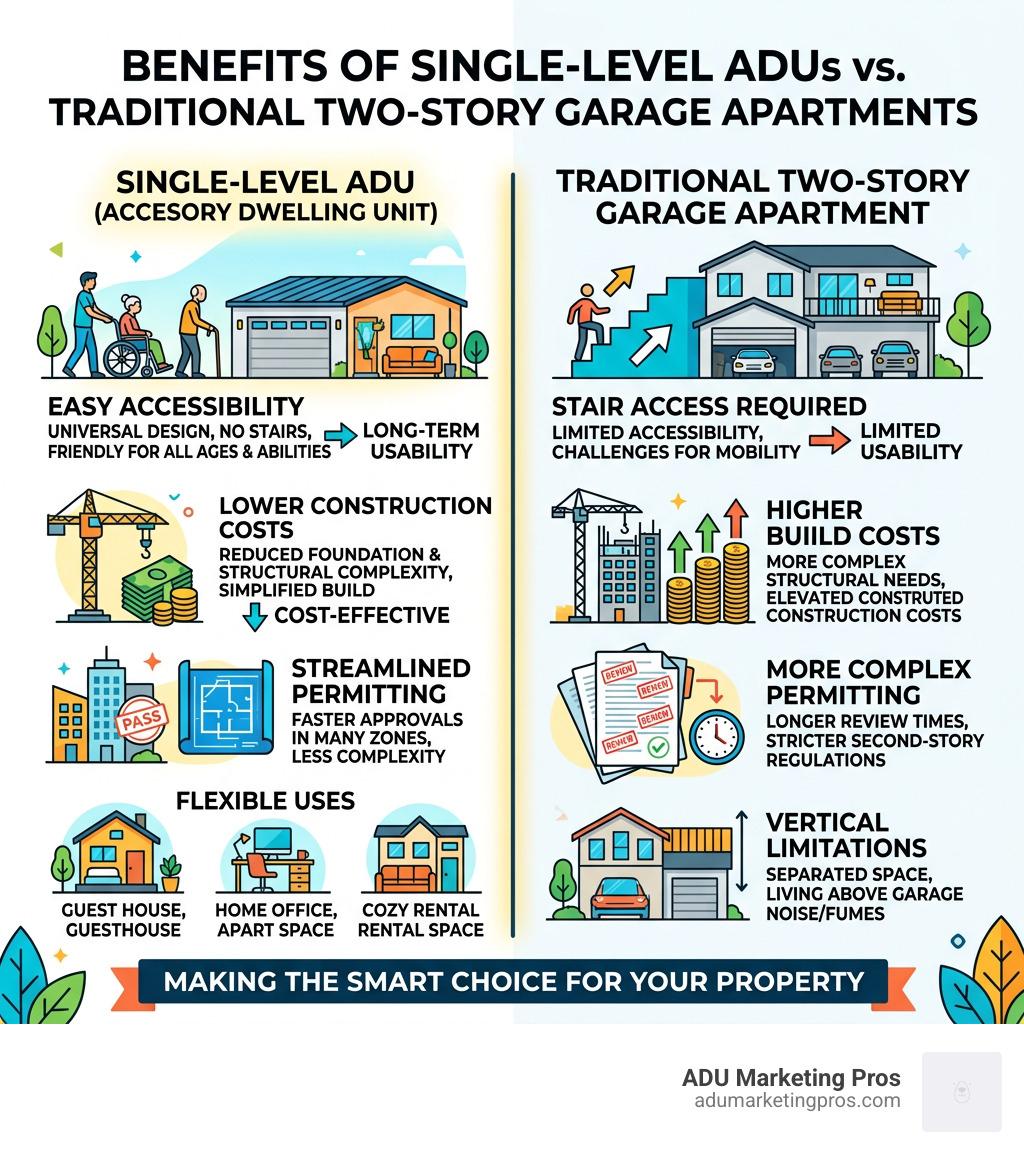
Two-story garage apartments are popular, but they come with significant trade-offs: the necessity of stairs, higher structural engineering costs to support the weight of a second floor, and limited accessibility for those with mobility issues. A single-level design solves all three of these challenges simultaneously. That’s why demand for these plans is growing fast — especially in California, where ADU-friendly zoning laws have opened the door for more homeowners to add livable space to their property to combat the housing crisis or generate passive income.
With over 1,264 garage house plans available on the market and 694 dedicated garage apartment plans, there’s no shortage of options. The challenge for the modern homeowner is knowing what to look for in terms of flow, privacy, and technical requirements. This guide breaks it all down — from floor plan layouts and architectural styles to build costs, permits, and design tips that maximize both function and curb appeal.
Essential Features of Single Story Garage with Living Quarters Plans
When we talk about single story garage with living quarters plans, we are looking at a unique architectural beast. Unlike the traditional “apartment over the garage” model, these designs place the living area and the vehicle storage on the same horizontal plane. This layout is a game-changer for several reasons, primarily centered around long-term usability, structural simplicity, and aesthetic integration.
Accessibility and Aging-in-Place
One of the most significant advantages of a single-level design is accessibility. For homeowners in cities like San Jose or Los Angeles who are looking to house aging parents (the classic “granny flat” scenario), stairs are a dealbreaker. By keeping everything on the ground floor, you eliminate fall risks and make the space naturally ADA-compliant. This “universal design” approach ensures the unit remains functional for residents of all ages and mobility levels. Furthermore, a single-story layout allows for wider hallways and doorways without the structural constraints of supporting a second floor, making it much easier to navigate with wheelchairs or walkers.
Open Floor Plans and Natural Light
Because there isn’t a second story pressing down, these plans often feature vaulted ceilings and oversized windows that wouldn’t be possible in a stacked configuration. Many Garage Apartment Plans – ADUs utilize the extra vertical space to create a sense of volume that makes a 500-square-foot unit feel like 800 square feet. You can even see this in action through Video 360°Video tours, which highlight how natural light can transform a compact garage-adjacent living area into a bright, airy sanctuary. Clerestory windows and skylights are common additions to these plans, pulling light deep into the floor plan while maintaining privacy from the main house.
Optimizing Layouts for Single Story Garage with Living Quarters Plans
The key to a successful single-story layout is the “buffer zone.” You don’t necessarily want your headboard against the wall where the car engine starts or where the garage door opener vibrates. Smart plans use closets, bathrooms, or laundry rooms as acoustic barriers between the garage bays and the living quarters. This strategic placement ensures that the living area remains quiet and peaceful, even if someone is working in the garage or arriving home late at night.
- Studio Layouts: Perfect for home offices or short-term guests. These often feature a “great room” concept where the kitchenette, sleeping area, and living space flow together. This maximizes the perception of space in a small footprint.
- One-Bedroom Suites: Ideal for long-term renters or family members. These typically include a full kitchen with an island and a separate bedroom with a walk-in closet, providing a true sense of “home” rather than just a temporary stay.
- Laundry Integration: We often see adu-plans-with-garage that tuck a stackable washer/dryer into a hallway closet or even the bathroom to save precious square footage. Some plans even place the laundry in the garage area to keep the living space purely for relaxation.
Customizing Single Story Garage with Living Quarters Plans for ADU Use
In California, particularly in high-demand areas like San Francisco or San Diego, these structures are frequently used as legal Accessory Dwelling Units (ADUs). Whether you are doing a garage-to-adu-conversion of an existing structure or building fresh from a plan, the goal is often the same: flexibility.
A well-designed single-story plan allows the unit to pivot as your life changes. Today it’s a high-end rental unit bringing in monthly income to help pay the mortgage; tomorrow, it’s a quiet home office for your remote work; ten years from now, it’s a comfortable retirement cottage for a family member. This versatility is what makes the single-story garage with living quarters one of the most sound investments a homeowner can make in today’s volatile real estate market.
Popular Architectural Styles and Configurations
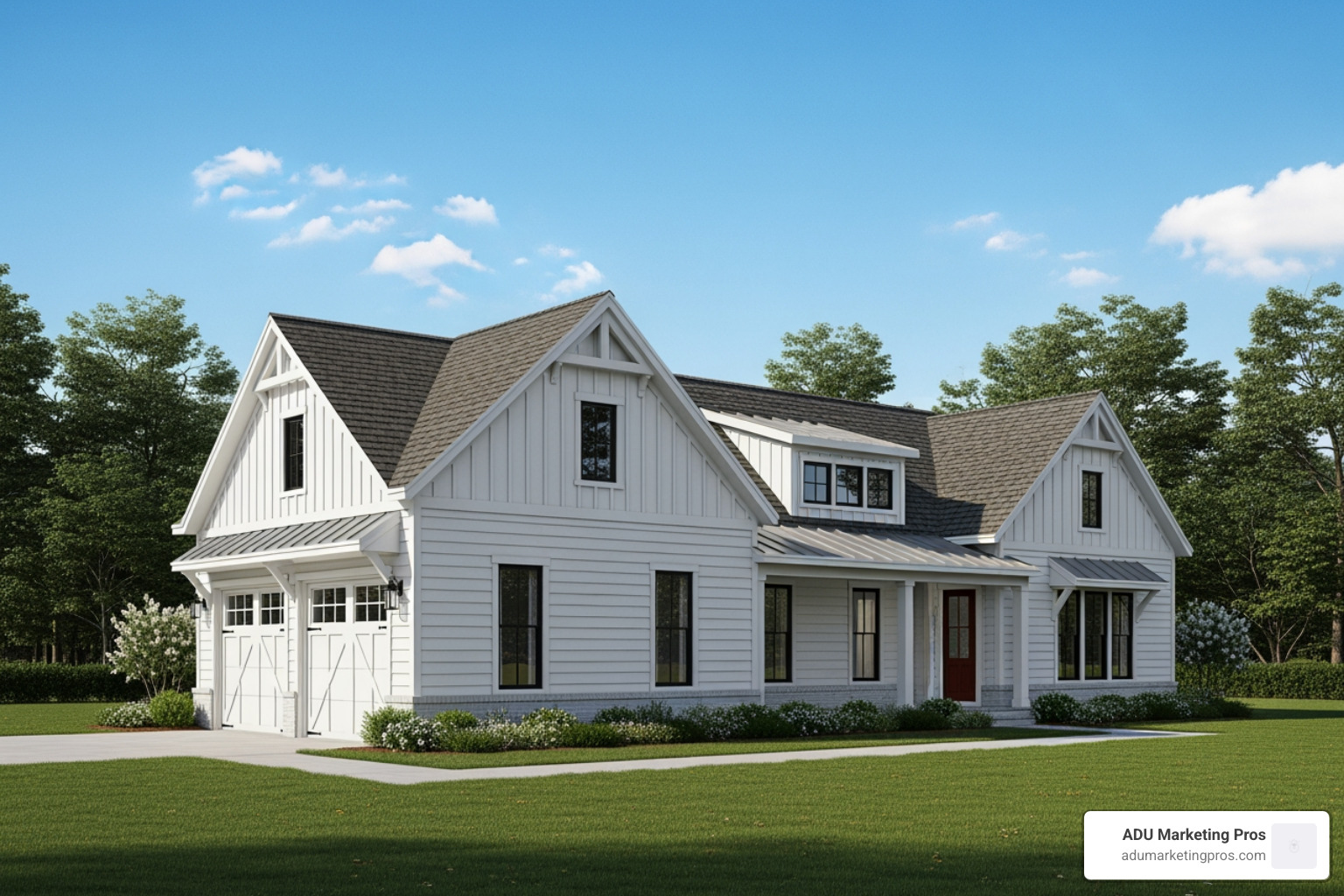
Choosing the right style for your single-story garage with living quarters is about more than just aesthetics; it’s about how the building integrates with your existing home and the neighborhood. A well-matched design can significantly boost your property’s curb appeal and overall market value, while a mismatched one can look like an awkward afterthought.
The Rise of the Barndominium and Modern Styles
The “Barndominium” style has exploded in popularity across the United States. These plans often feature gable roofs, board-and-batten siding, and massive open-concept interiors. They are particularly well-suited for single-story garage plans because they naturally accommodate large workshop spaces alongside cozy living quarters. The industrial-chic look of a barndominium allows for high ceilings and exposed beams, which can make the living area feel incredibly spacious and modern.
On the other end of the spectrum, the Garage-Living Plan 51479 offers a contemporary look that appeals to urban dwellers. Modern designs often use flat or low-slope roofs, mixed material siding (like wood and metal), and large glass garage doors that can be opened to create a seamless indoor-outdoor living experience. This is particularly popular in California, where the climate allows for year-round outdoor enjoyment.
| Style | Key Features | Best For |
|---|---|---|
| Craftsman | Tapered columns, decorative brackets, earthy tones | Historic neighborhoods (like HPOZs in LA) |
| Farmhouse | White siding, black trim, wrap-around porches | Rural or suburban lots with extra width |
| Modern | Clean lines, metal accents, “glass-box” feel | Urban infill and contemporary primary homes |
| Traditional | Brick or stone accents, classic roof pitches | Blending in with standard suburban builds |
Multi-Car and Specialized Storage Options
For many of our clients, the “garage” part of the plan is just as important as the “living” part. We see a wide variety of storage configurations that go far beyond the standard two-car setup:
- 2-Car Bays: The standard, often featuring 10’x10’ doors to accommodate modern SUVs and trucks.
- Boat and RV Storage: Plans like the Garage Apartment Plans | 1-Story Garage Apartment Plan with 2-Car Garage # 051G-0079 at www.TheGaragePlanShop.com offer extra-deep bays (sometimes up to 80 feet) to accommodate trailers or watercraft. These plans often require higher rooflines, which can be used to create stunning vaulted ceilings in the adjacent living area.
- Tandem Garages: These allow you to park two cars end-to-end, which is a lifesaver for narrow lots in cities like Sunnyvale or Mountain View where horizontal space is at a premium.
- Workshops: Many plans include a dedicated workshop area with a “cleanup bath” (a half-bath accessible from the garage) so you don’t track grease or sawdust into the living room. This is a favorite for hobbyists and DIY enthusiasts.
Small-Footprint and Studio Designs
If you have a smaller lot in Menlo Park or Palo Alto, you might look toward minimalist designs that prioritize efficiency over square footage. A Daisy Workshop 1 Bedroom Farmhouse Garage House Plan 9484 shows how you can pack a lot of punch into a limited footprint. Some “tiny home” style garage plans are as small as 400 square feet, providing a highly efficient kitchen and a Murphy bed setup to maximize the utility of every square inch. These smaller units are often the easiest to permit and the most cost-effective to build, making them an excellent entry point for homeowners looking to add an ADU.
Investment and Construction Considerations
Building a single story garage with living quarters plans is a significant investment, but it’s one that consistently adds value to California properties. Because you are essentially building a small house and a garage simultaneously, the costs are higher than a simple storage shed but lower than a full-sized home. Understanding the financial and regulatory landscape is crucial before breaking ground.
Build Costs and Budgeting
Nationally, the average cost to build a garage with an apartment ranges from $100 to $200 per square foot. In the California market (San Francisco, San Jose, Los Angeles), these numbers can skew significantly higher due to labor shortages, material costs, and stringent building codes.
- Basic Garage (No Living Space): ~ $26,000 – $45,000
- Total Project (with Living Quarters): $50,000 – $250,000+
- National Average: $125 per square foot
When budgeting, remember that the “living” portion of the building requires plumbing, HVAC, insulation, and interior finishes that a standard garage does not. You also need to account for “soft costs” like architectural fees, permit fees, and utility connection fees. We often recommend checking out adu-garage-conversion-california resources to understand how to balance your “must-haves” with your budget. Investing in high-quality insulation and energy-efficient windows now can save thousands in utility bills over the life of the structure.
Permitting and Zoning Regulations
This is where things get technical and where many projects hit roadblocks. In California, ADU laws have been streamlined significantly over the last few years (notably through SB 9 and SB 10), but you still need to navigate local codes which can vary by city.
- Setbacks: Most jurisdictions require at least 4-foot side and rear setbacks for detached ADUs. However, some cities allow for 0-foot setbacks if you are converting an existing garage.
- Utility Connections: You’ll need to decide if the unit will share a meter with the main house or have its own. Separate meters are better for rentals but more expensive to install.
- HPOZ Guidelines: If you live in a Historic Preservation Overlay Zone (like Jefferson Park in LA), your plan must respect the historic integrity of the neighborhood. This might mean matching the roof pitch, siding material, and window style of the original 1920s home.
- ADU Floor Plans: It is always wise to consult the Latest research on ADU Floor Plans to see pre-approved designs in your specific city. Using a pre-approved plan can significantly speed up the permitting process, sometimes by several months.
Enhancing Curb Appeal and Property Integration
A garage shouldn’t look like an afterthought or a “box” dropped into your backyard. To maintain your property’s value, the new structure should complement the primary residence in both scale and style.
- Attached vs. Detached: Detached units offer more privacy and a true “rental” feel, while attached units can be more cost-effective for utility hookups and can sometimes be classified as a junior ADU (JADU).
- Entry Placement: Side-loading or rear-entry garages help hide the “automotive” look from the street, keeping the focus on the architecture and the living space entrance.
- Landscaping: Use walkways, planters, and lighting to create a clear, inviting path to the living quarters’ entrance. This path should be separate from the garage doors to give the resident a sense of privacy and a distinct “front door” experience.
As noted in the Single Story Garage Living Quarters design philosophy, small touches like a covered front porch, a trellis over the garage door, or high-quality carriage-style doors can make the building feel like a high-end cottage rather than just a place to park the car. These details are what separate a basic utility building from a valuable piece of real estate.
Frequently Asked Questions about Single Story Garage Living
How much does it cost to build a single story garage with living quarters?
While a basic garage might cost around $26,000, adding living quarters brings the total to between $50,000 and $250,000. The complexity of the kitchen and bathroom, along with local labor rates in areas like the San Francisco Bay Area, are the biggest variables. On average, expect to pay around $125 per square foot for the finished space, though high-end finishes can push this closer to $300 per square foot in premium markets.
Can a single story garage apartment function as a legal ADU?
Absolutely. In California, these are one of the most common types of ADUs. To be legal, they must have permanent provisions for living, sleeping, eating, cooking, and sanitation. They also must have a separate entrance from the garage and the main house. Recent state laws have made it much easier to permit these units, even in single-family zoned neighborhoods.
What are the advantages of a single-story plan over a two-story garage apartment?
The biggest advantage is accessibility. Not having to climb stairs makes the unit suitable for everyone from toddlers to seniors, which is vital for multi-generational living. Additionally, single-story builds are often less complex to engineer (no floor joists to support a second level) and are less likely to block the views or sunlight of your neighbors, which can make the permitting process smoother and reduce friction with the community.
Do I need a separate foundation for the living quarters?
Typically, a single-story garage with living quarters is built on a single, continuous slab-on-grade foundation. This is one of the most cost-effective ways to build. However, the living area will require additional insulation and moisture barriers that the garage portion may not need. Your blueprints will specify the exact structural requirements based on your local soil conditions and climate.
How do I handle heating and cooling in a garage apartment?
Most modern garage apartments use a ductless mini-split system. These are highly efficient, provide both heating and cooling, and don’t require the bulky ductwork of a traditional HVAC system. This is ideal for maintaining the high ceilings often found in single-story plans. It also allows the resident to control their own temperature independently from the main house.
Will adding a garage apartment increase my property taxes?
Yes, adding a livable structure will generally increase your property’s assessed value, which in turn increases your property taxes. However, in California, the increase is usually based only on the value of the new construction, not a full reassessment of the entire property. The rental income or added property value usually far outweighs the increase in taxes.
Conclusion
Investing in single story garage with living quarters plans is about more than just adding square footage; it’s about adding flexibility to your life and long-term value to your property. Whether you are looking to generate consistent rental income, provide a safe and comfortable home for a loved one, or create the ultimate “work from home” sanctuary away from the distractions of the main house, these plans offer a practical, accessible, and stylish solution.
The shift toward single-story living reflects a broader trend in architecture that prioritizes longevity and ease of use. From the rustic charm of a barndominium to the sleek, minimalist lines of a modern studio, the right plan is out there waiting for your specific lot and lifestyle needs. By focusing on smart layouts that provide acoustic buffers, choosing high-quality materials that match your primary home, and navigating the permitting process with professional guidance, you can ensure your new garage apartment remains a valuable asset for decades to come.
As the California housing market continues to evolve, the ability to maximize every square foot of your land is becoming a necessity rather than a luxury. A well-executed garage with living quarters is a rare win-win: it provides much-needed housing while simultaneously building equity for the homeowner.
If you are a builder or architect looking to reach homeowners interested in these types of projects, we can help you stand out in a crowded market. For More info about ADU marketing services, reach out to us at ADU Marketing Pros. We specialize in helping firms in the California ADU sector grow their revenue by connecting them with high-quality leads who are ready to build their dream accessory dwelling unit today.