
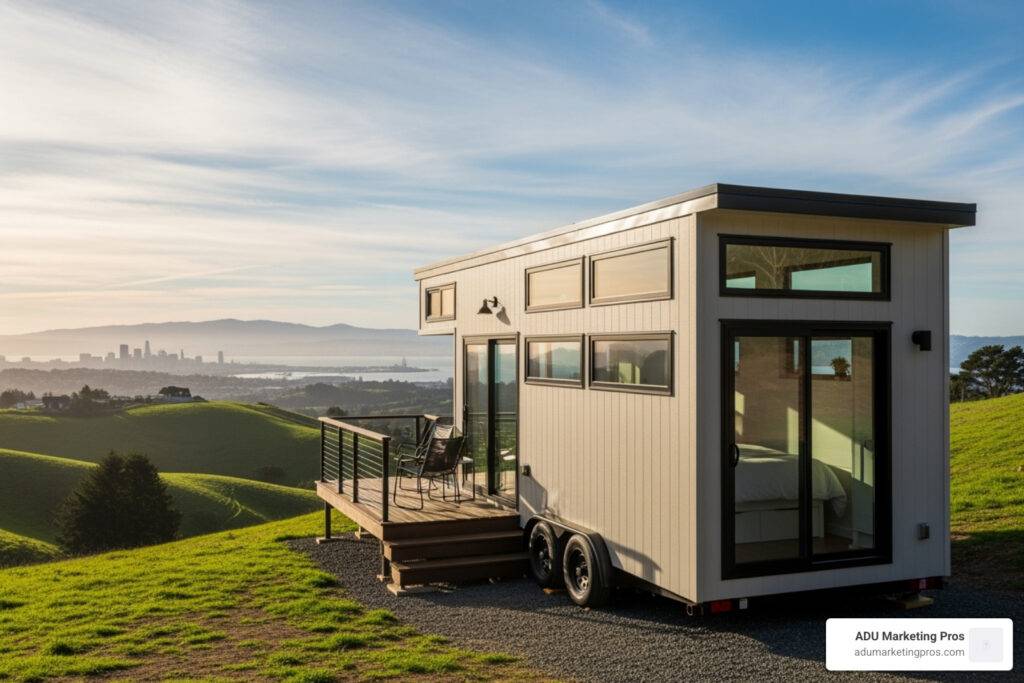
Why Tiny Living is Taking Off in the Bay Area
In a region where the median home price consistently hovers in the seven figures, the dream of homeownership can feel out of reach. This stark economic reality, combined with a cultural shift towards minimalism and sustainability, has created a powerful movement. Tiny home builders bay area are at the forefront, witnessing a surge in demand as residents seek creative, affordable housing solutions. Whether you’re considering a permanent backyard cottage, known as an Accessory Dwelling Unit (ADU), or a mobile Tiny Home on Wheels (THOW), choosing the right builder is the most critical decision you’ll make.
Top Bay Area Tiny Home & ADU Builders:
- Villa – California’s #1 prefab ADU builder with 20+ floor plans (450-1,200 sq ft)
- Pacifica Tiny Homes – Affordable THOWs starting at $47,900, built over 300 homes
- Progress Builders – 20 years local experience, quotes from $295/sq ft
- Alameda Tiny Homes – Custom ADU designs with full-service packages
- RiseCon North America – 25+ years experience in Bay Area ADU construction
- Bay Modular – Container-based ADUs with streamlined HCD permitting
- Forever Tiny Homes – RVIA-certified THOWs with detailed craftsmanship
These compact dwellings, typically ranging from 150 to 1,200 square feet, offer a viable path to financial freedom and a simplified lifestyle. They are incredibly versatile, serving as primary residences, high-yield rental units, dedicated home offices for the remote work era, or comfortable homes for multi-generational families. However, building in the Bay Area is uniquely challenging. A labyrinth of complex zoning laws, strict seismic codes, Wildland-Urban Interface (WUI) fire regulations, and varying municipal rules means not all builders are equipped for the job. The wrong choice can lead to crippling permit delays, massive budget overruns, and serious legal trouble. This guide is your comprehensive resource to navigate the process, helping you find a qualified, reliable tiny home builder by demystifying local rules, exploring design options, breaking down costs, and defining the key traits of the best builders in the region.
Why Go Tiny in the Bay Area? The Big Benefits of Small Living
In a housing market where modest homes command million-dollar price tags, thousands of Bay Area residents are embracing tiny homes and ADUs. The benefits go far beyond just a smaller footprint, offering a powerful combination of financial relief, flexibility, and a more intentional way of life.
Financial Relief: The most significant advantage is affordability. The median home price in the Bay Area can require a mortgage payment of over $8,000 per month. In contrast, you can own a smaller space outright for a fraction of the cost or generate substantial ADU Rental Income—often $2,000 to $4,000 per month—to offset your own housing costs or even cover your entire mortgage. This financial relief is compounded by lower property taxes and reduced utility costs. A smaller home requires far less energy to heat, cool, and light. Many tiny home builders bay area specialize in Eco-Friendly Small Homes with features like high-efficiency mini-split systems, tankless water heaters, and mandatory solar panel installations under California’s Title 24, saving you hundreds of dollars every month.
Unmatched Versatility: A backyard ADU is a flexible asset that evolves with your life. In today’s remote-work landscape, it can be a quiet, dedicated home office, free from household distractions. It can serve as an art studio, a private gym, or a guest suite for visiting family. As a housing solution, it’s perfect for creating a Multi-Generational ADU for aging parents who wish to be close by, or for adult children saving up to buy their own home. This flexibility not only adds immense personal value but also significantly increases your property’s market value.
A Simpler, More Intentional Lifestyle: Downsizing isn’t just about decluttering your home; it’s about decluttering your life. It’s a conscious choice to reclaim your time, energy, and freedom from the burdens of a large, expensive property. Less maintenance, lower expenses, and fewer financial worries mean more resources to enjoy the Bay Area’s unique lifestyle, from hiking in Marin and wine tasting in Napa to exploring San Francisco’s vibrant culture. This shift towards intentional living reduces stress, lowers your environmental impact, and proves that bigger isn’t always better, especially when smaller comes with so many powerful advantages.
Navigating the Maze: Bay Area Zoning, Permits, and Regulations
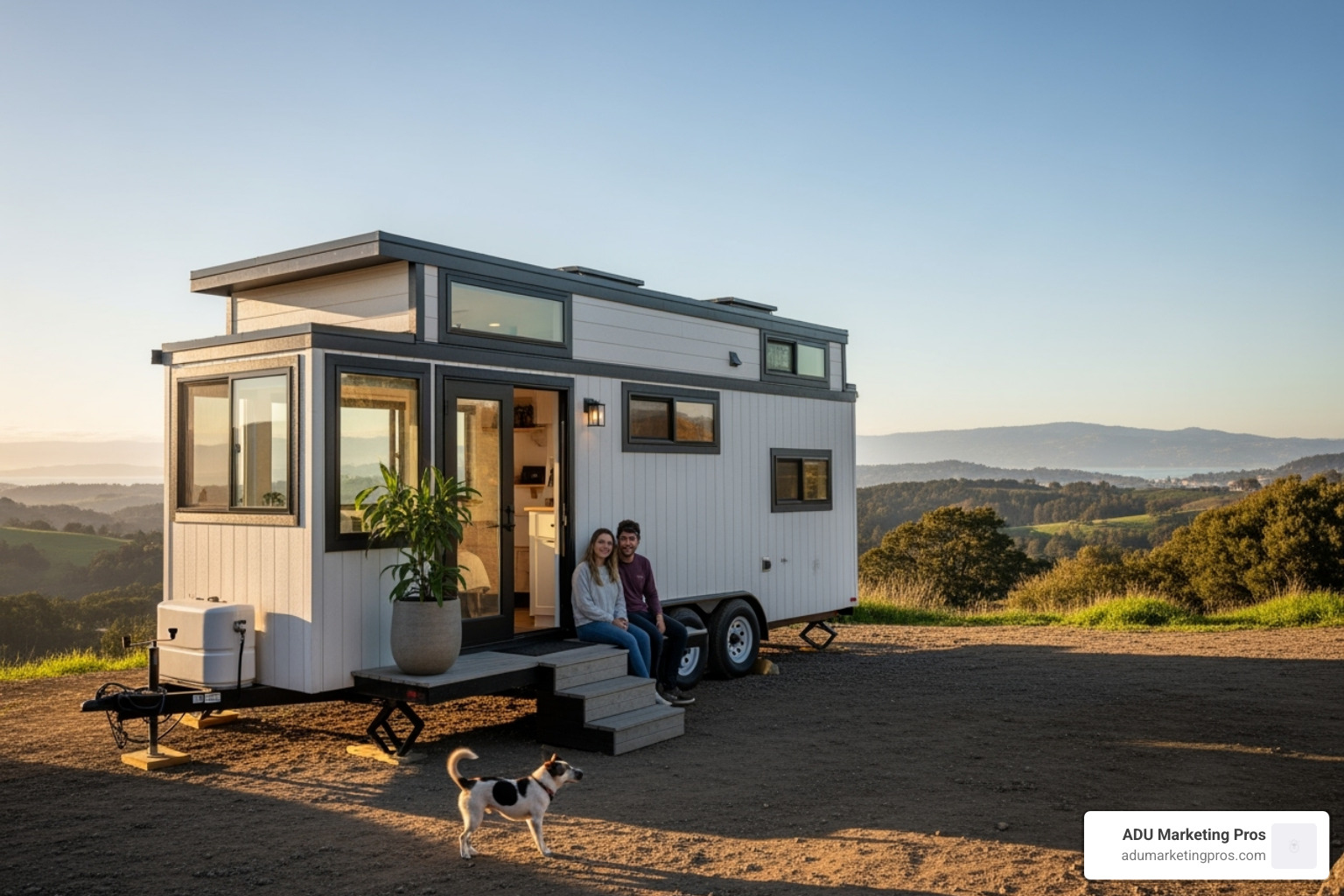
Building a tiny home or ADU in the Bay Area requires navigating a complex web of zoning laws, building codes, and permit requirements that vary from city to city. Understanding these rules and partnering with the right tiny home builders bay area is the key to turning this maze into a manageable path.
The first critical distinction is the legal difference between an ADU vs Tiny House. Tiny Homes on Wheels (THOWs) are legally classified as Recreational Vehicles (RVs). They are built to RV safety standards (like RVIA certification), are assigned a Vehicle Identification Number (VIN), and are generally exempt from property taxes and local building codes. While this sounds appealing, their mobility is their biggest legal hurdle. Most Bay Area cities have strict ordinances prohibiting long-term occupation of RVs in residential zones, making legal placement a significant challenge outside of designated RV parks.
Foundation-based tiny homes, officially known as Accessory Dwelling Units (ADUs), are treated as permanent residential structures. They must be built on a permanent foundation and comply with all state and local building codes. Fortunately, a series of progressive California ADU Regulations have been passed to streamline the approval process statewide, making it easier than ever to add a second unit to your property.
However, state laws only set the minimum standards. Each city has its own layer of rules. Local ordinances in San Jose, San Francisco, and Oakland add specific requirements for setbacks (how far the unit must be from property lines), ADU Size Restrictions, height limits, and design review processes. For example, while state law allows ADUs up to 1,200 sq. ft., a city may impose stricter limits on lots of a certain size or require architectural styles that match the primary home. The ADU Permit Process itself involves submitting detailed plans for review, multiple on-site inspections, and can take anywhere from a few months to over a year. Furthermore, laws like California’s SB9, which allows for lot splits and duplexes, can sometimes be combined with ADU rules, creating powerful but complex development opportunities.
This is why you shouldn’t go it alone. Experienced tiny home builders bay area have dedicated teams that understand the nuances of local rules, like the San Jose ADU Program, and have established relationships with local planning departments. Their expertise is crucial for designing a compliant project from day one and navigating the regulatory maze to avoid costly delays and rejections.
Your Blueprint for Success: Popular Tiny Home Styles and Costs
Once you understand the regulations, you can focus on the exciting part: designing your tiny home. The Bay Area market offers a diverse range of building styles, each with distinct timelines, costs, and benefits.
Popular Building Styles:
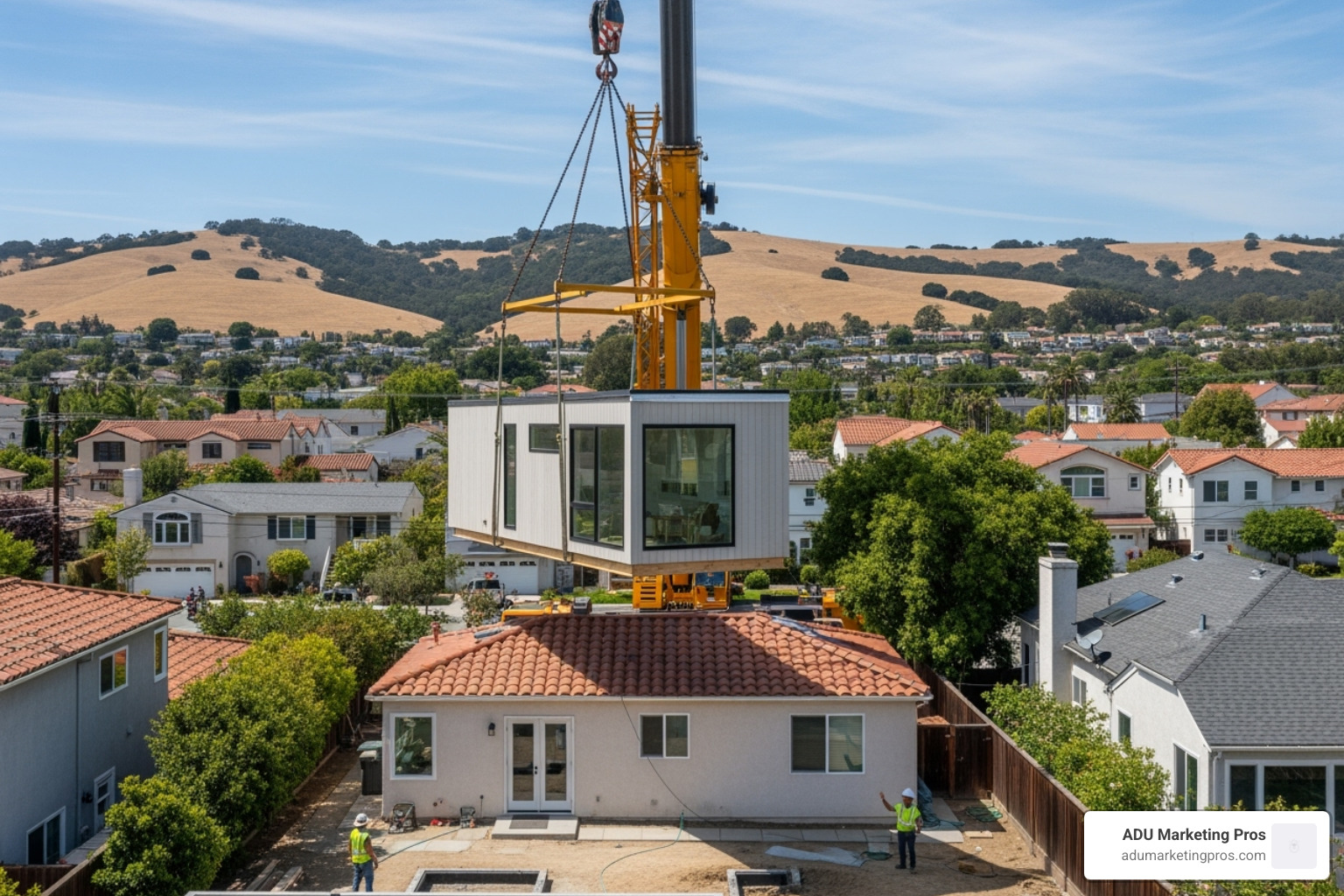
- Prefabricated/Modular Homes: Built almost entirely off-site in a climate-controlled factory, these homes offer superior quality control, predictable timelines, and significantly faster on-site construction. Companies like Villa deliver highly configurable, state-approved ADUs that are craned into place and installed in a fraction of the time of a traditional build. Bay Modular offers another innovative approach, using repurposed shipping containers to create durable, sustainable, and modern ADUs.
- Stick-Built Custom Homes: For those who want ultimate creative control, a traditional stick-built ADU is constructed entirely on your property. Builders like RiseCon North America and Progress Builders specialize in these bespoke projects, allowing for complete customization of the layout, architecture, and finishes to perfectly match your vision. This method offers maximum flexibility but typically has a longer construction timeline.
- Panelized Kit Homes: Occupying a middle ground, panelized homes involve pre-fabricating the structural components (walls, floors, roof) off-site. These panels are then delivered to your property and assembled by a general contractor. This can be a cost-effective method that speeds up the framing process compared to a full stick-build.
- Tiny Homes on Wheels (THOWs): Built to RV standards on a trailer chassis, these mobile dwellings from companies like Pacifica Tiny Homes and Forever Tiny Homes offer the ultimate flexibility and are ideal for those who may want to relocate or are navigating areas with fewer restrictions on mobile living.
You can explore various layouts with these ADU Floor Plans California.
What Will It Cost?
Expect to pay $250 to $500+ per square foot for a turnkey ADU in the Bay Area, with total project costs typically ranging from $150,000 to over $400,000. THOWs are more accessible, with some models starting around $47,900, but this price usually excludes delivery, site prep, and utility connections. It’s crucial to understand that the total cost includes more than just the structure. A complete budget consists of:
- Soft Costs: Design and architectural fees, structural engineering, soil reports, permit and planning fees, and school or park impact fees.
- Hard Costs: Site preparation (grading, excavation), foundation, utility trenching and hookups (sewer, water, electric), the physical structure or unit, installation, and landscaping.
Many tiny home builders bay area incorporate Sustainable ADU Designs. California’s Title 24 energy code often requires features like solar panel integration, cool roofs, and high-performance windows, which may increase upfront costs but lead to significant long-term savings on utility bills.
Understanding your ADU Financing Options is crucial. Options include construction loans, home equity lines of credit (HELOCs), and cash-out refinancing. For THOWs, specialized RV loans are available from lenders like 21st Mortgage. Many builders have partnerships with lenders to streamline this process.
Vetting Your Visionary: How to Find the Best Tiny Home Builders Bay Area

Choosing the right builder is the most critical step in your tiny home or ADU journey. You’re not just hiring a contractor; you’re entrusting a professional to manage a six-figure investment, navigate complex regulations, and bring your vision to life. In the Bay Area, a great builder means the difference between a dream project and a costly nightmare. Here are the non-negotiable traits to look for.
Key Trait #1: Deep Local and Technical Expertise
The Bay Area is a patchwork of over 100 municipalities, each with its own unique zoning codes, permit processes, and design requirements. What works in San Jose might be rejected in Berkeley. Deep local expertise is essential. A top-tier tiny home builders bay area will have an intimate, proven understanding of these nuances, from the San Jose ADU Guidelines to Palo Alto’s stringent setback requirements. They won’t waste your time or money on designs that local planners will never approve.
This expertise must extend to the region’s physical challenges. Experienced local builders understand how to build on the Bay Area’s expansive clay soils, which require specialized foundations. They are experts in California’s strict seismic codes and know the specific material and design requirements for building in High Fire Hazard Severity Zones (HFHSZ). Builders with decades of local experience, like Progress Builders and RiseCon North America, have a verifiable track record across the Bay Area, demonstrating their ability to succeed in our unique landscape.
Key Trait #2: A Transparent and Turnkey Process
Building an ADU involves dozens of steps: design, engineering, permitting, site prep, foundation, construction, inspections, and utility connections. The best builders simplify this complexity with a transparent and turnkey process. They offer full-service packages that cover everything from the initial feasibility study to handing you the keys, providing a single point of contact to manage the entire ADU Building Process.
Equally important is upfront, detailed pricing. A reputable builder provides a clear, itemized estimate that breaks down all anticipated costs, minimizing surprises. Look for a detailed contract that specifies the full scope of work, a payment schedule tied to construction milestones (not arbitrary dates), a clear process for handling change orders in writing, and comprehensive warranty information. A streamlined system, like the one offered by prefab companies like Villa, eliminates coordination headaches and helps prevent the common delays that plague construction projects.
Key Trait #3: Verifiable Quality Craftsmanship and Customization
An ADU is a long-term investment in your property and your quality of life. It must be built to last. A reputable builder will have an impressive portfolio showcasing high-quality finishes and thoughtful, functional layouts. Look for durable, proven materials like fiber cement siding, standing seam metal roofs, dual-pane windows, and proper waterproofing systems. The ability to provide Custom ADU Blueprints or at least highly configurable floor plans is key to tailoring the space for your specific needs, whether it’s a rental unit, a home office, or an accessible, age-in-place residence.
Positive customer testimonials and verifiable references are your best insight into a builder’s real-world performance. Always ask for a list of past clients and take the time to call them. Finally, look for solid warranties on both the structure and the workmanship. For THOWs, RVIA certification is a critical mark of quality, guaranteeing adherence to national safety and construction standards.
How to find qualified tiny home builders bay area
Ready to start your search? Follow these essential steps:
- Verify Licenses: Never work with an unlicensed contractor. Check that the builder’s license is active and in good standing on the California State License Board (CSLB) website. Their license number should be on their website and all contracts.
- Use Online Resources: Compile an initial list of builders from online searches, then dive deep into their websites, portfolios, and reviews on platforms like Yelp, Houzz, and Google.
- Check References: Ask for and contact at least three recent clients. Inquire about their experience with communication, budget adherence, timeline management, and overall satisfaction.
- Visit Projects: If possible, arrange to see a builder’s completed work in person. There is no substitute for seeing the quality of craftsmanship firsthand.
- Interview Multiple Builders: Get quotes from at least three different builders. This is not just about price; it’s about assessing their professionalism, communication style, and expertise. Trust your instincts—a good partnership is as important as technical skill.
Frequently Asked Questions About Building a Tiny Home in the Bay Area
We know you have questions. Here are clear, honest answers to the most common queries about building tiny in the Bay Area.
What is the average cost to build a tiny home in the Bay Area?
While building a tiny home or ADU is more affordable than buying a traditional house, it’s a significant investment. In the Bay Area, you can realistically expect all-in costs to range from $295 to $500+ per square foot.
A complete ADU project typically lands between $150,000 and $400,000+. In contrast, Tiny Homes on Wheels (THOWs) are more accessible, with builders like Pacifica Tiny Homes offering models starting at $47,900. However, this price is for the unit only and does not include site prep, delivery, or utility hookups. Several factors drive the total cost:
- Soft Costs: These are pre-construction expenses and can include architectural design, structural engineering, soils reports, surveying, and city/county permit and impact fees, often totaling $20,000-$40,000.
- Hard Costs: These are the construction expenses. This includes site preparation (grading, trenching), the foundation, the unit itself (materials and labor), utility connections, and finishes like appliances and landscaping.
- Site Conditions: A flat, accessible lot with existing utilities nearby is far less expensive to develop than a steep hillside requiring extensive grading, a complex foundation, and long utility runs.
For a detailed local breakdown, see our guide on ADU Cost Bay Area. Always get comprehensive, itemized quotes from multiple qualified tiny home builders bay area to avoid surprises.
How long does the tiny home building process take?
Patience is key when building in the Bay Area. A typical ADU project timeline, from initial design to final move-in, is 7 to 15 months, though this can vary.
The process breaks down into two main phases:
- Pre-Construction (3-6 months): This phase includes design, engineering, and submitting your plans to the local planning department for review and approval. This permitting stage is often the most unpredictable, but an experienced builder with local relationships can help streamline it.
- Construction (4-9 months): This is the active building phase. For a traditional stick-built ADU, this can take many months. However, prefabricated construction can significantly shorten this. A prefab builder like Villa can often complete the entire turnkey process, including on-site work, in just 3-4 months after permits are secured. Keep in mind that global supply chain issues can sometimes impact material availability and timelines for all build types.
THOWs can often be built and delivered much faster, sometimes in just a few months, as they bypass the local building permit process.
Can I legally park a Tiny Home on Wheels (THOW) in my backyard?
This is a critical and often misunderstood question. The answer is complex: it depends entirely on your specific city’s ordinances. While some California cities like Fresno, San Luis Obispo, and San Jose have created progressive ordinances allowing THOWs as accessory dwellings, many Bay Area municipalities have not yet followed suit. In most jurisdictions, a THOW is still legally classified as an RV. This means long-term habitation in a residential backyard is often prohibited by zoning codes that restrict RV parking and use. You cannot simply buy a THOW and assume you can live in it on your property. You must thoroughly research the specific ordinances for your city and county. An experienced THOW builder can often provide guidance on which areas are more friendly to mobile living, but the ultimate responsibility for legal placement falls on the owner.
What are the best financing options for tiny home builders bay area?
Financing your tiny home is more accessible than ever. The right option depends on your project type (ADU vs. THOW) and your financial situation.
For foundation-based ADUs, common options include:
- Construction Loans for ADU: These short-term loans cover building costs and release funds in stages as work progresses. They are often converted into a traditional mortgage upon completion.
- Home Equity Line of Credit (HELOC): A flexible credit line based on your primary home’s equity, allowing you to draw funds as needed.
- Cash-Out Refinance: Replaces your current mortgage with a new, larger one, giving you the difference in cash to fund your ADU project.
For Tiny Homes on Wheels (THOWs), you’ll typically use an RV loan. Specialized lenders like 21st Mortgage understand this niche market.
A pro tip is to ask about builder-partnered lenders. Many tiny home builders bay area, including Villa and Pacifica Tiny Homes, have established relationships with financial institutions that specialize in ADU and tiny home loans, which can lead to a smoother, faster approval process. For more strategies, explore our detailed guide on ADU Financing Options.
Conclusion
Building a tiny home or ADU in the Bay Area is a smart, forward-thinking lifestyle choice that embraces affordability, sustainability, and flexibility. The journey requires navigating complex zoning laws, understanding the full scope of costs, and making thoughtful design choices. However, the rewards—from generating significant ADU Rental Income to creating a loving home for family members—are well worth the effort.
As we’ve shown, your choice of builder is the single most important factor in your project’s success. You need a partner with deep local expertise to navigate not just city-specific permits but also geographical challenges like seismic zones and fire codes. They must offer a transparent, turnkey process with a detailed contract to protect your investment. And above all, they must have a proven track record of quality craftsmanship that ensures your new home is safe, durable, and built to last.
The future of Bay Area housing is shifting toward these creative, compact solutions. For ADU construction and architecture firms, this growing demand represents a massive opportunity. Standing out in this competitive market requires more than just building great homes—it requires specialized marketing that connects you with the right homeowners.
That’s where ADU Marketing Pros comes in. We provide targeted digital marketing solutions for ADU firms, helping you attract high-quality leads and grow your revenue. We help you stand out by showcasing your expertise, ensuring you connect with clients who value quality, transparency, and deep local knowledge.
Whether you’re a homeowner ready to build or a tiny home builders bay area firm looking to grow, the path forward is clear. With the right team and strategy, you can be a part of the solution to the Bay Area’s housing challenge.
Ready to start your project? Connect with top ADU builders in the Bay Area today!