
Why Tiny Home Communities Are Thriving in the Golden State
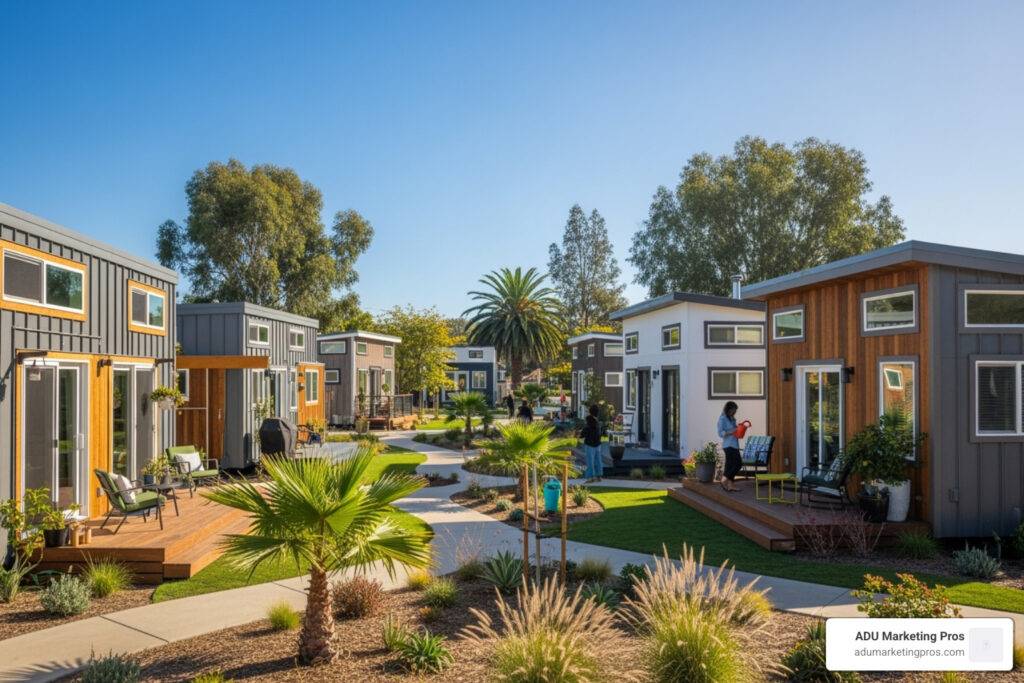
Tiny home communities in california are rapidly emerging as a vital and vibrant housing alternative, offering an affordable, sustainable, and community-centric lifestyle in one of the nation’s most challenging real estate markets. As the median price for a single-family home consistently hovers near $900,000, many Californians are being priced out of the dream of homeownership. In response, these intentional neighborhoods, which blend minimalist living with shared resources and social bonds, provide a creative and practical solution to the state’s well-documented “crazy real estate market“.
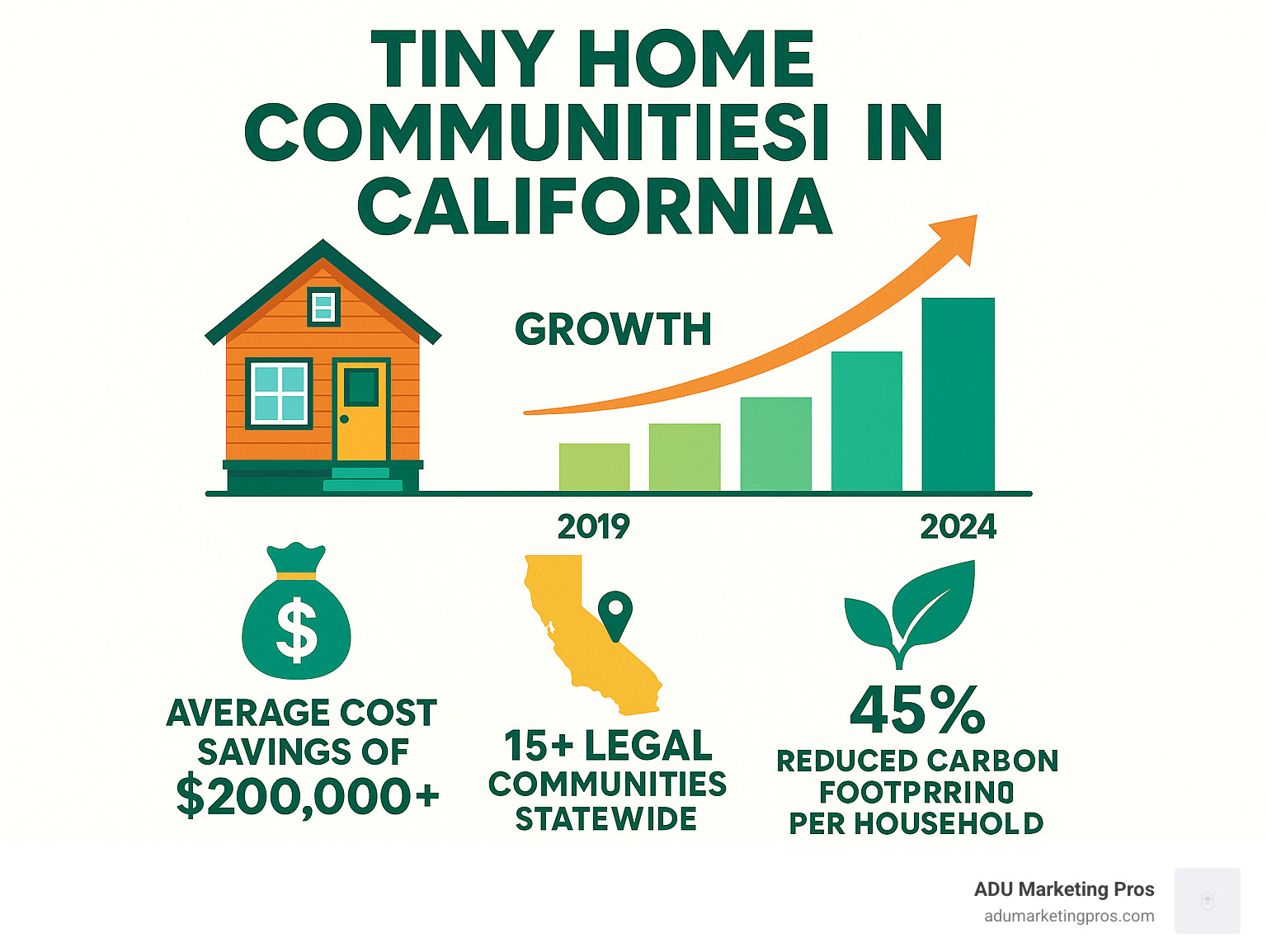
California is not just participating in the tiny home movement; it’s actively leading it. The economic argument is compelling: while a single government-funded affordable housing unit in Los Angeles can cost taxpayers upwards of $700,000, a comfortable and stylish tiny home can be built for as little as $30,000 to $80,000. This stark contrast highlights the efficiency and potential of small-scale living. The legal landscape is also undergoing a crucial transformation. Cities like Fresno and Los Angeles are pioneering regulations that legalize tiny homes on wheels (THOWs) and permit them as backyard accessory dwelling units (ADUs), creating new pathways for legal, permanent placement.
However, the appeal of these communities extends far beyond cost savings. They are built on the principle of shared living, providing shared amenities like swimming pools, clubhouses, and community gardens that foster a deep sense of connection among residents. This model is flourishing across the state’s diverse geography, offering a perfect fit for nearly any lifestyle. From the redwood forests of Northern California to the sun-drenched deserts of Southern California, there are options for everyone:
- Northern California: Park Delta Bay (Waterfront), Oak Creek (55+)
- Southern California: Tiny House Block (Mountain Retreat), Palm Canyon Mobile Club (Luxury)
- Central California: Lemon Cove Village (Family-Friendly)
Whether you are a first-time homebuyer, a retiree looking to downsize, or a professional seeking luxury in a smaller footprint, California’s tiny home communities deliver a compelling vision for the future of housing.
Why Live in a Tiny Home Community in California?
Choosing to live in a tiny home community in california is a profound lifestyle shift that prioritizes financial freedom, genuine community, and environmental sustainability over sheer square footage. In a state where traditional housing costs are prohibitive for many, these communities offer a practical and enriching alternative. They solve the primary challenge for tiny dwellers—legal parking—while providing instant social connections and a significantly smaller environmental footprint.
Beyond the benefits to individual residents, these communities are part of a larger solution to California’s housing crisis. They represent an innovative model for creating affordable, high-quality housing stock and dignified transitional housing for those in need. This lifestyle aligns perfectly with the principles of sustainable development and eco-friendly small homes, making it an intelligent and conscious choice for the modern consumer.
The Financial Perks
In California, the financial relief offered by tiny home communities is arguably their most significant draw. The contrast with traditional homeownership is staggering. Instead of a crippling mortgage, residents typically pay a monthly lot fee ranging from $400 to $1,200. This fee often bundles utilities like water, sewer, and trash removal, simplifying monthly bills. Property taxes are also a fraction of what they would be for a conventional home, and for THOWs, owners may only pay an annual registration fee to the DMV.
This dramatic reduction in housing expenses frees up substantial income, empowering residents to pay off debt, build savings, invest in experiences, or pursue passions. Consider this comparison:
| Expense Category | Traditional CA Home (Median) | Tiny Home in Community |
|---|---|---|
| Monthly Mortgage/Rent | $4,500+ | $600 – $1,200 (Lot Rent) |
| Property Taxes (Annual) | $9,000+ | $500 – $1,500 (or DMV fee) |
| Utilities (Monthly) | $300 – $500 | Often included in lot rent |
| Maintenance (Annual) | $5,000 – $10,000+ | $500 – $1,000 |
This financial liberation provides a direct and attainable path to a more secure and flexible future.
The Social & Lifestyle Benefits
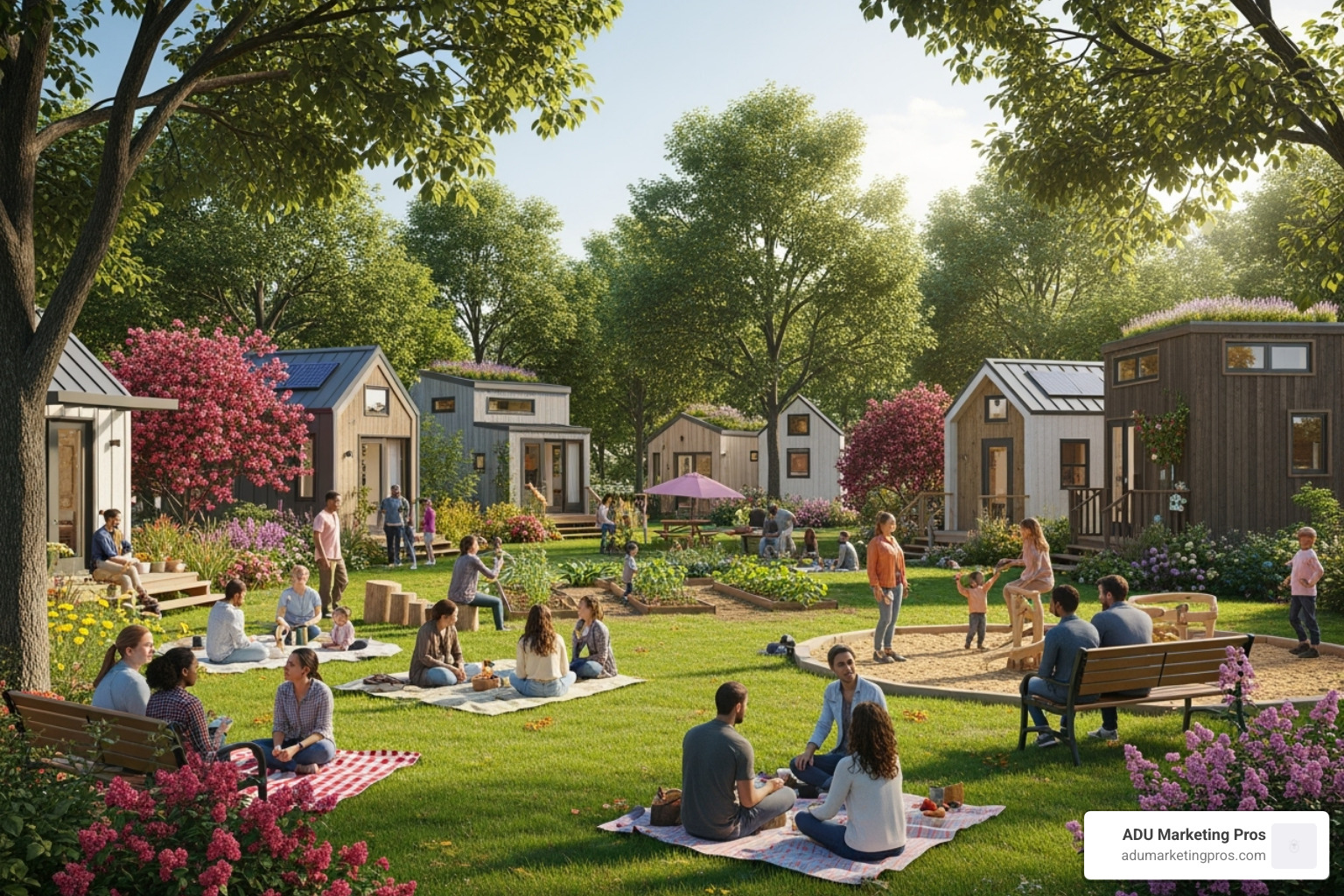
Tiny home communities are masterfully designed to foster genuine human connection. They attract individuals who share core values like sustainability, minimalism, and prioritizing experiences over material possessions. This shared ethos creates a powerful built-in community where neighbors are not just acquaintances but friends. This close-knit environment naturally enhances safety and creates a supportive network where people look out for one another, share resources, and collaborate on projects.
The lifestyle is further enriched by shared amenities that would be a luxury for most individual homeowners. Access to professionally maintained swimming pools, modern clubhouses, fully equipped fitness centers, and lush community gardens provides a resort-like feel without the exorbitant cost or personal upkeep. These shared spaces become a natural extension of one’s home, providing ample room for socializing, hosting events, pursuing hobbies, and simply relaxing.
A Sustainable Choice
Choosing to live tiny is a powerful environmental statement. A smaller home inherently means a smaller carbon footprint. Studies show that tiny homes can use up to 45% less energy for heating and cooling than their traditional counterparts. The construction process itself is far more sustainable, consuming fewer raw materials and generating significantly less waste. Many builders prioritize reclaimed wood, recycled steel, and other eco-friendly materials.
Tiny home communities in california amplify these benefits by promoting sustainable habits on a community-wide scale. Limited storage space encourages mindful consumption and discourages the accumulation of disposable goods, reducing household waste. Furthermore, many communities are designed with the environment at their core, featuring shared gardens that promote local food production, community-wide composting programs, and renewable energy infrastructure like solar panel arrays. This lifestyle fosters a deeper connection to the outdoors and empowers residents to live well while treading lightly on the planet.
Navigating the Golden State: NorCal vs. SoCal Communities
California’s immense geographical and cultural diversity is reflected in its tiny home communities. The experience of living in a community in Northern California is distinctly different from one in the south. Your choice between the misty, redwood-lined coasts of NorCal and the sun-drenched, vibrant deserts of SoCal will fundamentally shape your daily life, social scene, and connection to the natural world.
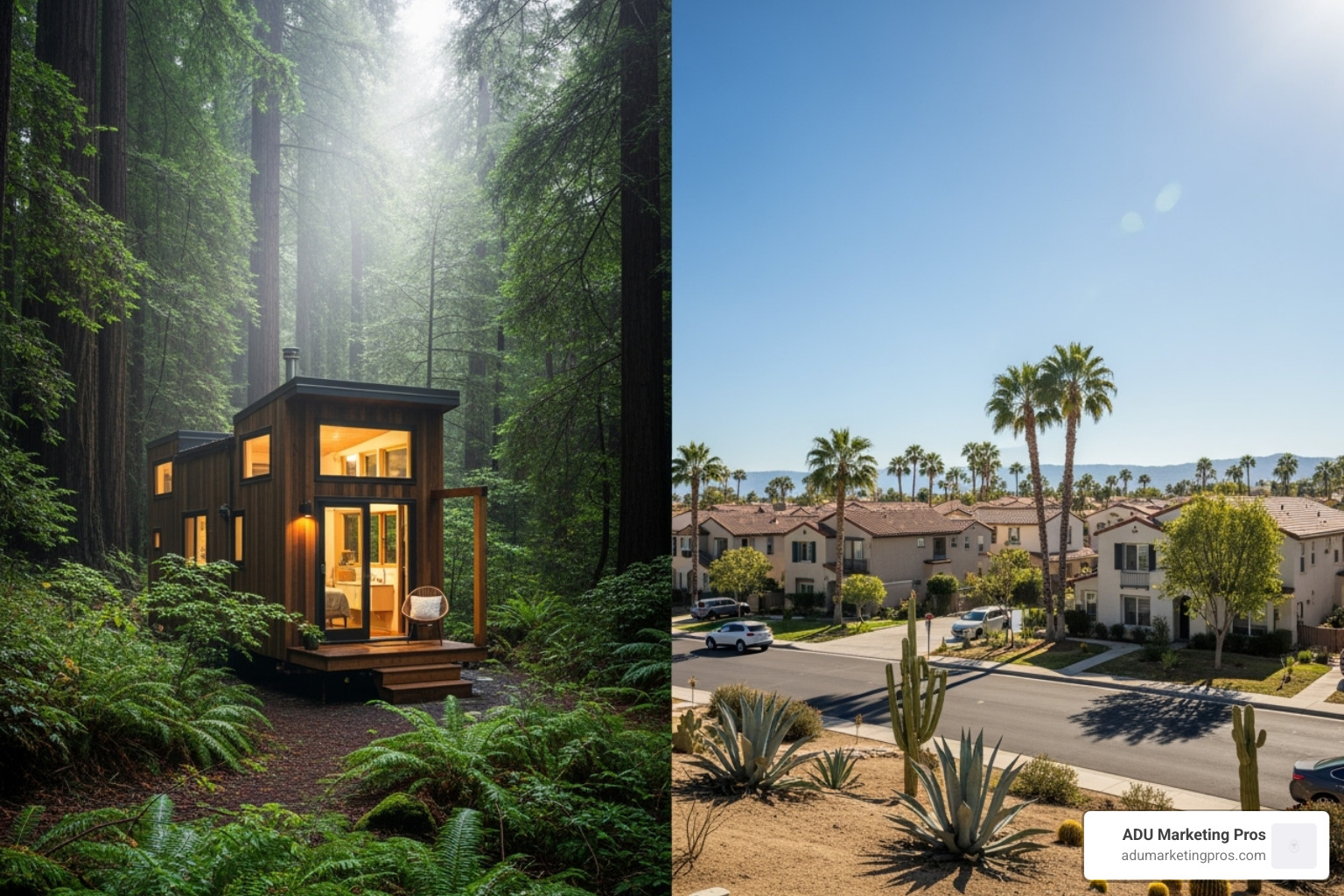
Northern California communities often embrace a rustic, nature-first ethos, where the landscape itself is the primary amenity. In contrast, Southern California communities tend to lean into resort-style amenities and a culture of year-round outdoor entertainment. Understanding these crucial regional distinctions is the first step to finding a community that aligns perfectly with your personal vision of the tiny life.
Northern California: Rustic & Rural
Northern California’s tiny home communities offer a tranquil, slower pace of life, deeply intertwined with the region’s dramatic natural beauty. Nestled among towering redwood forests, rolling vineyards, and pristine rivers, the focus here is less on flashy, man-made amenities and more on a profound connection to the environment. The lifestyle is geared toward outdoor activities like hiking, kayaking, fishing, and simply soaking in the serene surroundings. The community culture is often down-to-earth, attracting artists, nature lovers, and those seeking refuge from the hustle of city life.
Key communities exemplify this ethos. Park Delta Bay, located on the San Joaquin River, offers a rare opportunity for legal, waterfront tiny living. It’s a peaceful, rural haven where residents can enjoy boating from the community’s docks, bird watching, and the cool delta breeze. Further inland, Oak Creek in Coarsegold, situated near the Sierra Nevada mountains and the gates of Yosemite National Park, is a paradise for wilderness enthusiasts who want adventure right outside their door.
Southern California: Desert & Coastal
Southern California communities embrace the region’s iconic sunshine, offering a more extroverted and social lifestyle centered on desert landscapes and resort-style living. These communities are often characterized by their meticulously designed outdoor spaces, perfect for social gatherings and soaking up the nearly 300 days of sun per year. Proximity to major urban centers like Los Angeles and San Diego allows residents to seamlessly blend the simplicity of small-space living with access to world-class culture, dining, and career opportunities.
Tiny House Block, for example, is a legal community nestled in the mountains near San Diego, offering a unique blend of retreat and accessibility with direct access to stunning hiking trails. For a more upscale experience, the Palm Canyon Mobile Club in Palm Springs has redefined tiny living as a luxury experience. It boasts a sophisticated mid-century modern aesthetic, a vibrant social calendar, and high-end amenities, all within a short drive of the city’s famed design district and nightlife. These communities cater to those who want to live tiny without sacrificing style or social engagement.
Top Tiny Home Communities in California: A Curated List
As a pioneer in the tiny living movement, California boasts a diverse and growing number of tiny home communities in california. Each community has its own unique personality, catering to different lifestyles, budgets, and demographics. From family-oriented villages to active adult enclaves and luxurious resort-style retreats, there is a perfect spot for anyone looking to downsize their home but upgrade their life. Here’s a detailed look at some of the top options across the state.
Family-Friendly & All-Ages Communities
For families and individuals seeking a multigenerational environment, all-ages communities provide a welcoming and vibrant atmosphere. These neighborhoods are designed to foster connections between residents of all ages, with amenities and a location that appeal to both children and adults.
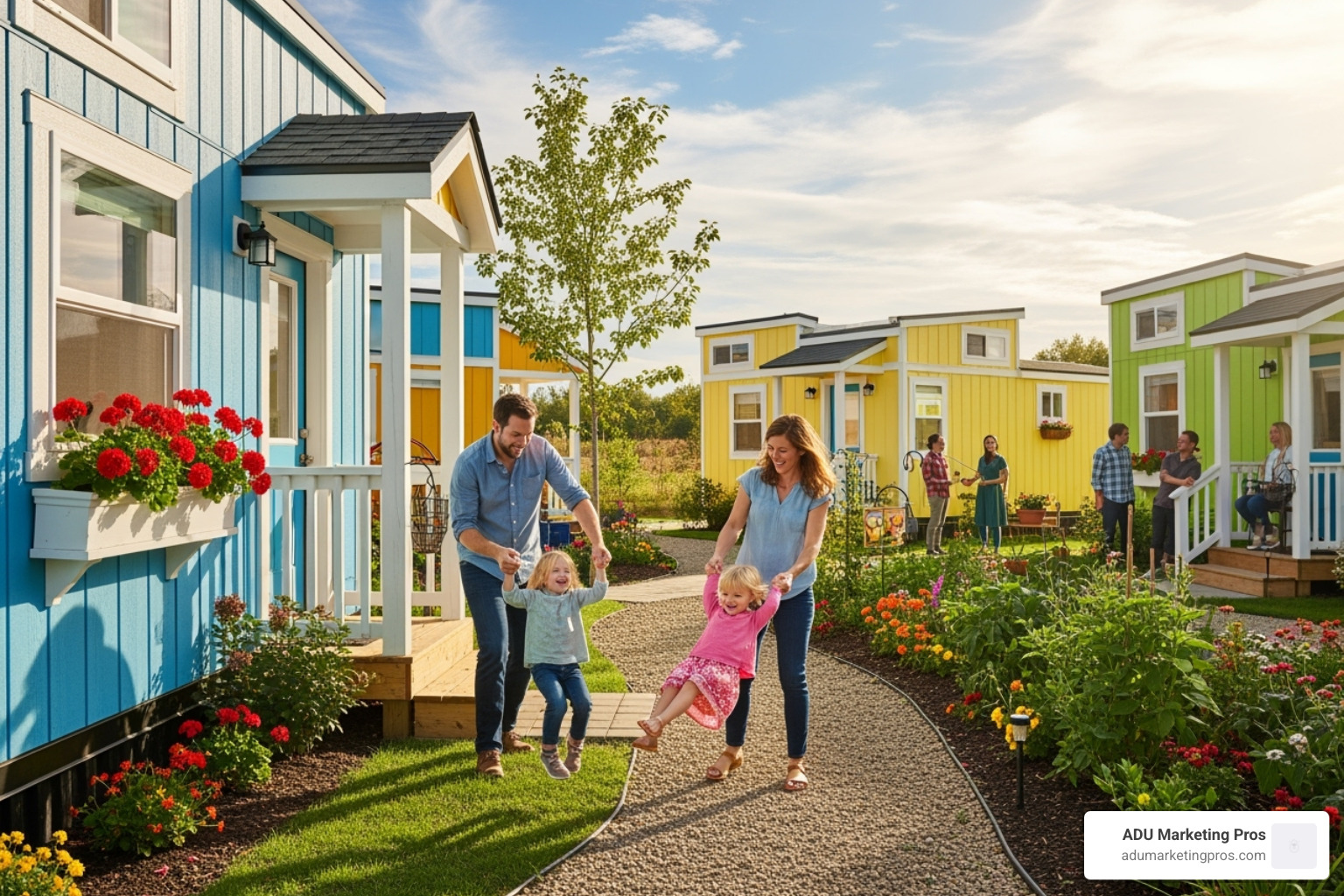
Lemon Cove Village, located in the foothills near Sequoia National Park, is a prime example. It offers some of the most affordable lot rents in the state, starting around $450/month, and explicitly welcomes THOWs (Tiny Homes on Wheels), provided they are RVIA certified. The community’s main draw is its unparalleled access to outdoor adventure, making it ideal for active families. The atmosphere is relaxed and village-like, with potlucks and community events that foster a strong sense of belonging among its diverse residents.
Premier 55+ Retirement Havens
Modern 55+ tiny home communities have shed the old stereotypes, offering an active, socially rich, and resort-style retirement. These communities provide maintenance-free living, fantastic amenities, and a built-in network of peers in stunning California locations.

Oak Creek in Coarsegold is a top-tier choice, nestled in the Sierra Nevada foothills near Yosemite. It promotes a vibrant, active lifestyle with a packed social calendar featuring everything from crafting clubs to fitness classes. Amenities include a swimming pool, spa, clubhouse, and game room. Another excellent option is Friendly Village of Modesto, which lives up to its name with a famously welcoming atmosphere. It boasts high-quality facilities, including a large clubhouse, billiard room, and library, all at an affordable price point. These communities prove that downsizing in retirement can lead to a richer, more connected life.
Luxury & Resort-Style Living
For those who believe downsizing shouldn’t mean downgrading, California’s luxury tiny home communities offer the best of both worlds. These high-end enclaves provide sophisticated design, premium finishes, and resort-style amenities that rival those of a five-star hotel.

Palm Canyon Mobile Club, located just outside the iconic Palm Springs, is the undisputed leader in this category. The community has been completely revitalized with a stunning mid-century modern aesthetic. The homes, designed by architects like Marmol Radziner, feature high-end finishes, clerestory windows, and seamless indoor-outdoor living spaces. The community’s social hub is its resort-style pool and renovated clubhouse. It offers a sophisticated, design-forward lifestyle that is both luxurious and significantly more attainable than traditional Palm Springs real estate.
Unique Nature-Focused Retreats
For the true outdoor enthusiast, some communities prioritize an immersive nature experience above all else. These retreats offer a chance to unplug from the daily grind and reconnect with the wild, with the landscape serving as the primary amenity.
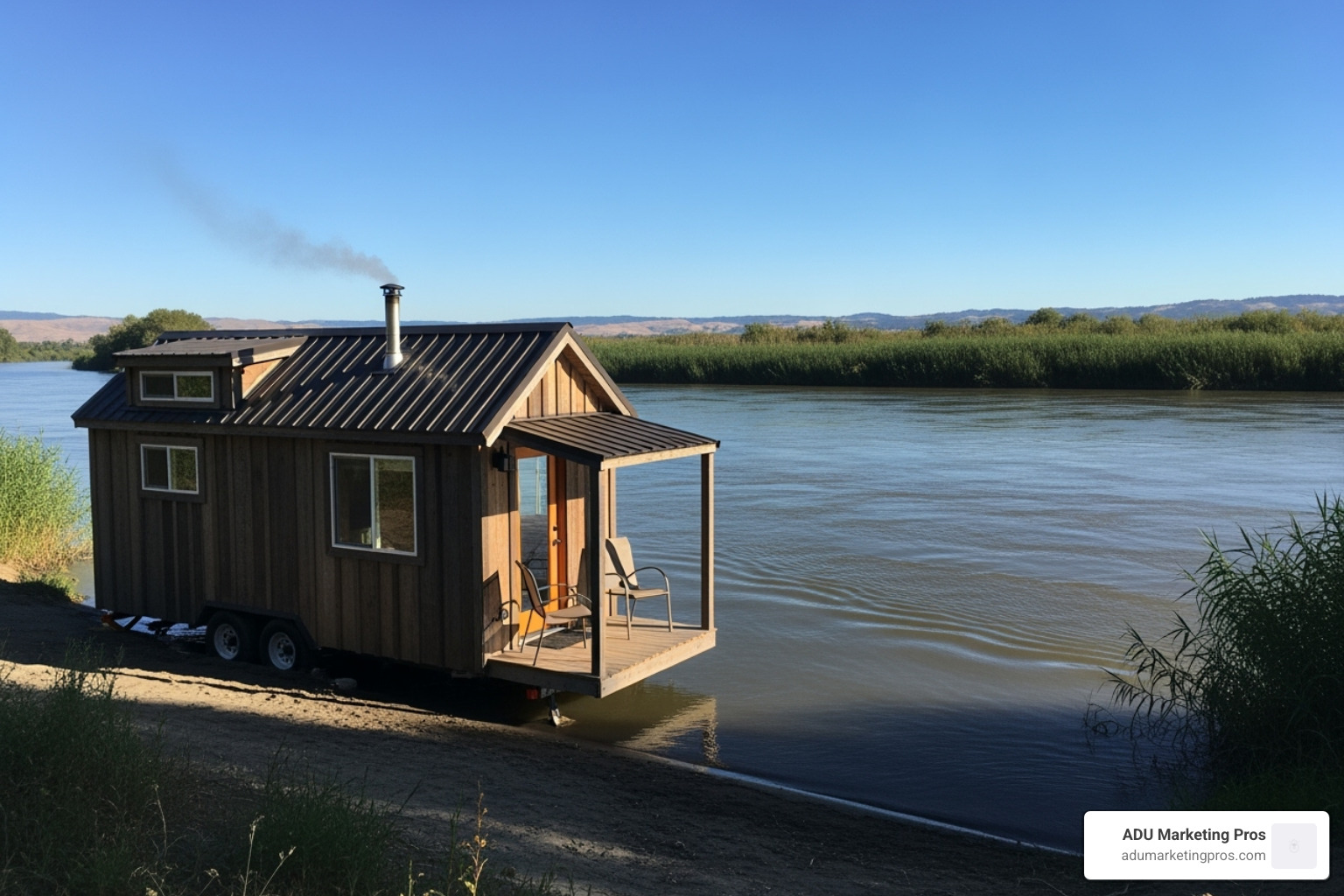
In Northern California, Park Delta Bay offers a unique and coveted opportunity for legal, full-time tiny house living right on the water. Situated on the San Joaquin River Delta, this peaceful community is a paradise for boaters, anglers, and kayakers, with its own boat launch and docks. The lots are spacious, and the vibe is tranquil and rural. In Southern California, Tiny House Block provides a different kind of natural escape. Set on a hillside in the mountains east of San Diego, it is surrounded by the Cleveland National Forest, with direct access to miles of hiking trails. Offering both short-term and long-term rentals, it’s a perfect place to test out tiny living or settle into a simpler, more nature-centric life. These communities demonstrate that tiny home communities in california can be a gateway to a life lived outdoors.
The Nitty-Gritty: Costs, Rules, and Regulations
While the dream of living in a picturesque tiny home community is alluring, making it a reality requires a firm grasp of the practical details. Successfully navigating the world of tiny home communities in california means understanding the complex legal requirements, accurately budgeting for all associated costs, and being prepared for the unique challenges of this rewarding lifestyle.
Understanding the Legal Landscape for tiny home communities in california
California’s legal framework for tiny homes is a patchwork of state, county, and city regulations that is constantly evolving—thankfully, in a positive direction. A crucial first step is understanding the distinction between a Tiny Home on Wheels (THOW) and a foundation-built tiny home. THOWs are legally considered recreational vehicles (RVs), and to be placed in a community, they almost always require RVIA (Recreational Vehicle Industry Association) certification. This seal ensures the home meets over 500 safety standards for electrical, plumbing, and structural systems. Foundation-built homes, conversely, are typically permitted as Accessory Dwelling Units (ADUs) and must comply with local building codes, often guided by Appendix Q of the International Residential Code.
Progressive cities are leading the way. Fresno was the first U.S. city to explicitly zone for tiny homes, and Los Angeles now allows THOWs as backyard ADUs. However, rules vary dramatically. It is essential to research the specific ordinances in your target county, such as the detailed Placer County tiny home ordinance. Understanding the nuances between an ADU vs. Tiny House is also critical for navigating zoning and permitting.
Budgeting for Your Tiny Life: What to Expect
While tiny living is more affordable, it is not free. A comprehensive budget is essential to avoid surprises. Costs can be broken down into one-time investments and recurring expenses.
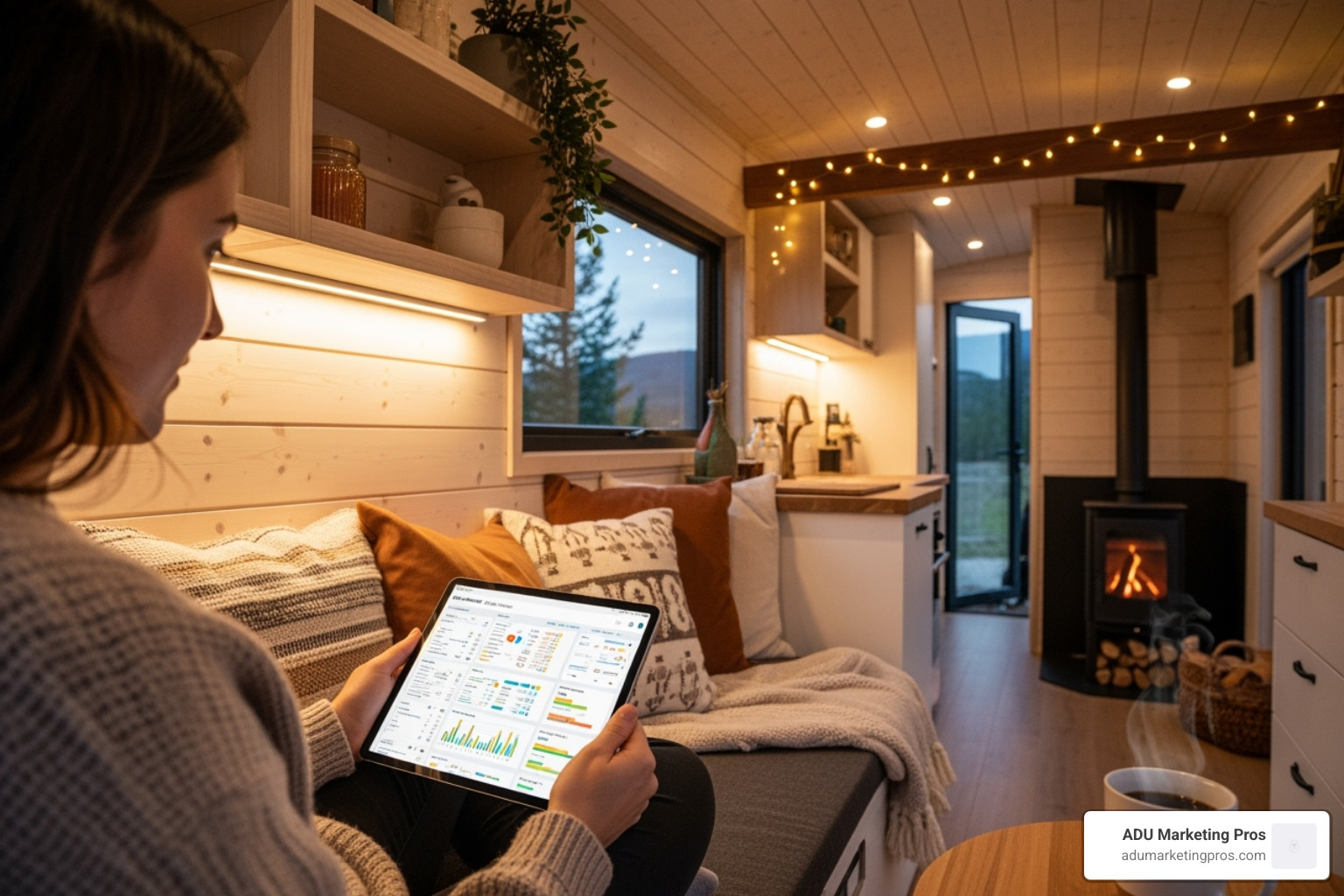
- Home Purchase: This is the largest upfront cost. A DIY build can range from $10,000 to $40,000, but requires immense skill and time. A professionally built home from a reputable builder typically costs between $50,000 and $150,000, with high-end custom models exceeding $200,000.
- Monthly Lot Fees: This is your largest recurring expense, acting as your ‘rent’ for the land and access to amenities. Expect to pay between $500 and $1,200+ per month in California, with luxury or prime-location communities at the higher end. This fee often includes water, sewer, and trash.
- Other Costs: Don’t forget to factor in transportation of the home to the community ($1-$4 per mile), setup and utility hookup fees, specialized THOW insurance, and property taxes (which are significantly lower than for traditional homes) or annual DMV registration fees for THOWs.
Key Challenges and Considerations for tiny home communities in california
Tiny living, for all its benefits, comes with a unique set of hurdles. Finding legal, long-term parking remains the single biggest challenge for THOW owners. Demand for spots in established, legal communities far outstrips supply, often resulting in long waiting lists. It is crucial to secure your spot in a community before you purchase or build a home.
Financing can also be tricky. Traditional mortgages are generally not available for THOWs. Buyers typically rely on personal loans from lenders like LightStream, RV loans (if the unit is RVIA certified), or cash. Working with a builder who has established financing partnerships can be a significant advantage.
Every community has its own rules and regulations. These can govern everything from the maximum and minimum home size, exterior aesthetics (colors, materials), occupancy limits, and, very importantly, pet policies. Review the community’s covenant, conditions, and restrictions (CC&Rs) thoroughly before committing.
Finally, the downsizing process itself is a major emotional and practical undertaking. It requires a deep commitment to minimalism and a willingness to let go of possessions. This is not just spring cleaning; it’s a fundamental shift in your relationship with material things. Start the process early and be ruthless in your decluttering.
Frequently Asked Questions about Tiny Home Living in California
As you explore the possibility of joining a tiny home community in california, many questions will naturally arise. Here are answers to some of the most common inquiries to help guide your research.
What’s the difference between a tiny home community and an RV park?
While they may appear similar on the surface, their purpose and culture are fundamentally different. RV parks are primarily designed for short-term, transient travelers. They function like hotels for vehicles, offering basic hookups and catering to a crowd that comes and goes. The focus is on temporary accommodation, not building a neighborhood.
In stark contrast, tiny home communities are built for long-term residents who are seeking to put down roots and build a life. They are intentionally designed to foster a neighborhood feel with stricter design standards for homes, extensive shared amenities (like gardens, clubhouses, and fitness centers), and a culture built on shared values like sustainability and community engagement. While they often accept RVIA-certified THOWs, the core difference is the emphasis on permanency, stability, and creating a genuine community.
Can I build my own tiny house and move it into a community?
Yes, many communities are open to welcoming DIY or custom-built homes, but this comes with important conditions. Your home must meet rigorous safety and structural standards. This almost universally means obtaining RVIA certification or a similar third-party inspection and approval. This is non-negotiable for most communities, as it protects them and your future neighbors.
Aesthetic standards are also common and strictly enforced. Communities cultivate a specific look and feel, and your home must complement it. This can include rules on siding materials, roof pitch, color palettes, and overall design. It is absolutely crucial to contact your desired community’s management before you begin designing or building. Get their requirements in writing and secure pre-approval to ensure your dream home will be welcomed with open arms.
Are tiny home communities a solution for California’s housing crisis?
Tiny home communities are a significant and innovative piece of the housing solution, though they are not a single silver bullet. Their primary contribution is offering a truly cost-effective alternative. As mentioned, a tiny home can be built for as little as $30,000, a fraction of the nearly $700,000 it can cost to build a single traditional affordable housing unit in Los Angeles. This makes them a powerful tool for creating new housing stock quickly and affordably.
They are particularly effective as transitional housing, providing dignified, stable, and supportive shelter for individuals and families experiencing homelessness. Programs from organizations like Finally Family Homes demonstrate this model’s success. However, scalability remains a challenge due to restrictive zoning laws, the need for new infrastructure, and public perception. As the legal landscape improves with cities like Fresno and Los Angeles embracing tiny homes, their potential impact will grow. They are best viewed as one vital component of a diverse, multi-faceted strategy to address California’s housing needs.
Are tiny home communities pet-friendly?
This is a very common and important question, and the answer is: it depends entirely on the community. Many tiny home communities are pet-friendly, recognizing that pets are part of the family. However, they almost always have specific rules. These typically include restrictions on the number of pets (often one or two), breed restrictions (unfortunately, rules against certain dog breeds are common), and size or weight limits. You will also be expected to follow strict rules regarding leashes, waste cleanup, and noise. If you have a pet, this should be one of the first questions you ask a community manager. Be sure to get their pet policy in writing before making any commitments.
Conclusion
The rise of tiny home communities in california is far more than a fleeting trend; it’s a rational and inspiring movement toward a more intentional way of living. It’s a direct response to the economic pressures of the state’s housing market, but it has evolved into a proactive choice that prioritizes financial freedom, genuine human connection, and a sustainable relationship with our planet. These communities offer a powerful, scalable solution to the housing crisis while proving that a smaller physical footprint can lead to a richer, more expansive life.
From the family-friendly villages of Central California to the luxurious retirement havens in the Sierra foothills and the chic desert retreats in the south, the Golden State offers a remarkable diversity of options. The legal and political will is shifting, with pioneering cities like Fresno and Los Angeles creating a blueprint for others to follow. While significant challenges related to zoning, financing, and parking availability certainly exist, the growing demand and proven success of this lifestyle ensure it is here to stay.
At ADU Marketing Pros, we recognize the powerful parallels between the tiny home movement and the ADU boom. Both are innovative, flexible, and human-scale solutions to California’s most pressing housing needs. Our deep expertise in marketing for the construction and architecture sectors gives us a unique and informed perspective on this evolving market. Success in tiny living, like any major life decision, begins with thorough research, careful planning, and a clear-eyed commitment to the lifestyle. For those exploring options in the Bay Area, the Tiny House San Francisco scene offers its own unique opportunities and challenges.
The tiny home movement is ultimately about living smarter, not just smaller. It’s about redesigning our lives around what truly matters, and it represents an innovative, characteristically Californian approach to the fundamental human need for a place to call home and a community to belong to.