
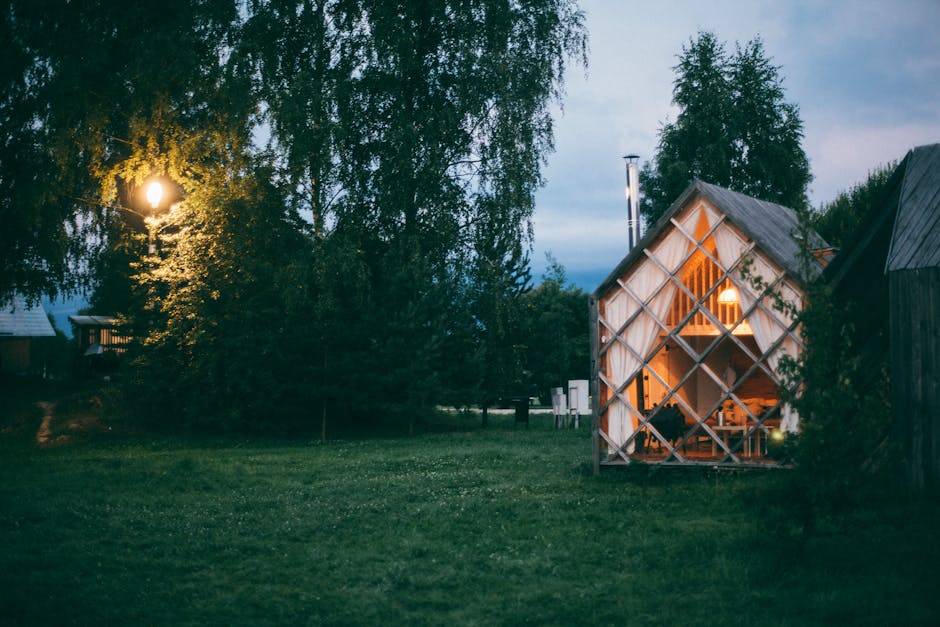
The Path to Tiny Home Ownership Starts Here
Tiny home kits offer a streamlined and accessible path to building your own small dwelling. These comprehensive packages provide pre-cut structural components, professionally engineered plans, and all the necessary hardware, ready for assembly on your site. By simplifying the most complex parts of construction, kits make homeownership more attainable, with basic shell packages starting around $25,600. A fully finished home can cost between about $63,000 for a dedicated DIYer and well over $100,000 when you hire professional contractors for most of the work.
The tiny living movement is about more than just small spaces; it’s a conscious choice to upsize your freedom, financial flexibility, and environmental responsibility. For many who feel priced out of the traditional housing market, especially in high-cost states like California, tiny home kits offer a tangible path to ownership without the burden of a 30-year mortgage. This philosophy of intentional living prioritizes experiences over possessions and financial independence over sprawling square footage. By minimizing their footprint, both physically and financially, tiny home dwellers often find they have more resources and time to pursue travel, hobbies, and early retirement.
Quick Overview: What You Need to Know About Tiny Home Kits
- Size Range: Approximately 192 sq. ft. to 1,279+ sq. ft., with options for single-story layouts, lofts, and even multi-bedroom designs.
- Starting Cost: Base shell kits commonly begin around $25,600, but this price only covers the structural frame and exterior.
- Total Estimated Cost: A DIY-finished home typically ranges from $60,000 to $90,000, while a contractor-built home can easily exceed $120,000, depending on finishes and location.
- What’s Included: Pre-cut and numbered lumber or Structural Insulated Panels (SIPs), roof panels, house wrap, fasteners, and professionally stamped architectural plans.
- What’s NOT Included: Land, foundation, plumbing and electrical systems, HVAC, interior finishes (drywall, flooring, paint), cabinets, appliances, windows, and doors.
- Assembly Time: A weather-tight shell can often be completed in a matter of days to a few weeks, depending on the kit’s complexity, size, and the builder’s experience.
- Energy Savings: High-performance kits, particularly those using SIPs, can reduce heating and cooling costs by 50–60% compared to many traditionally built homes.
Kits simplify the construction process by providing a coordinated package of numbered components and stamped plans, which minimizes guesswork and the stress of managing endless material orders. This makes them an excellent option for aspiring homeowners and ADU builders in California. For builders, offering kit-based ADUs can be a powerful market differentiator, allowing them to provide clients with faster, more predictable, and often more affordable solutions in a competitive market. This guide covers everything you need to know about tiny home kits—from costs and contents to choosing a supplier and turning a stack of materials into your new home.
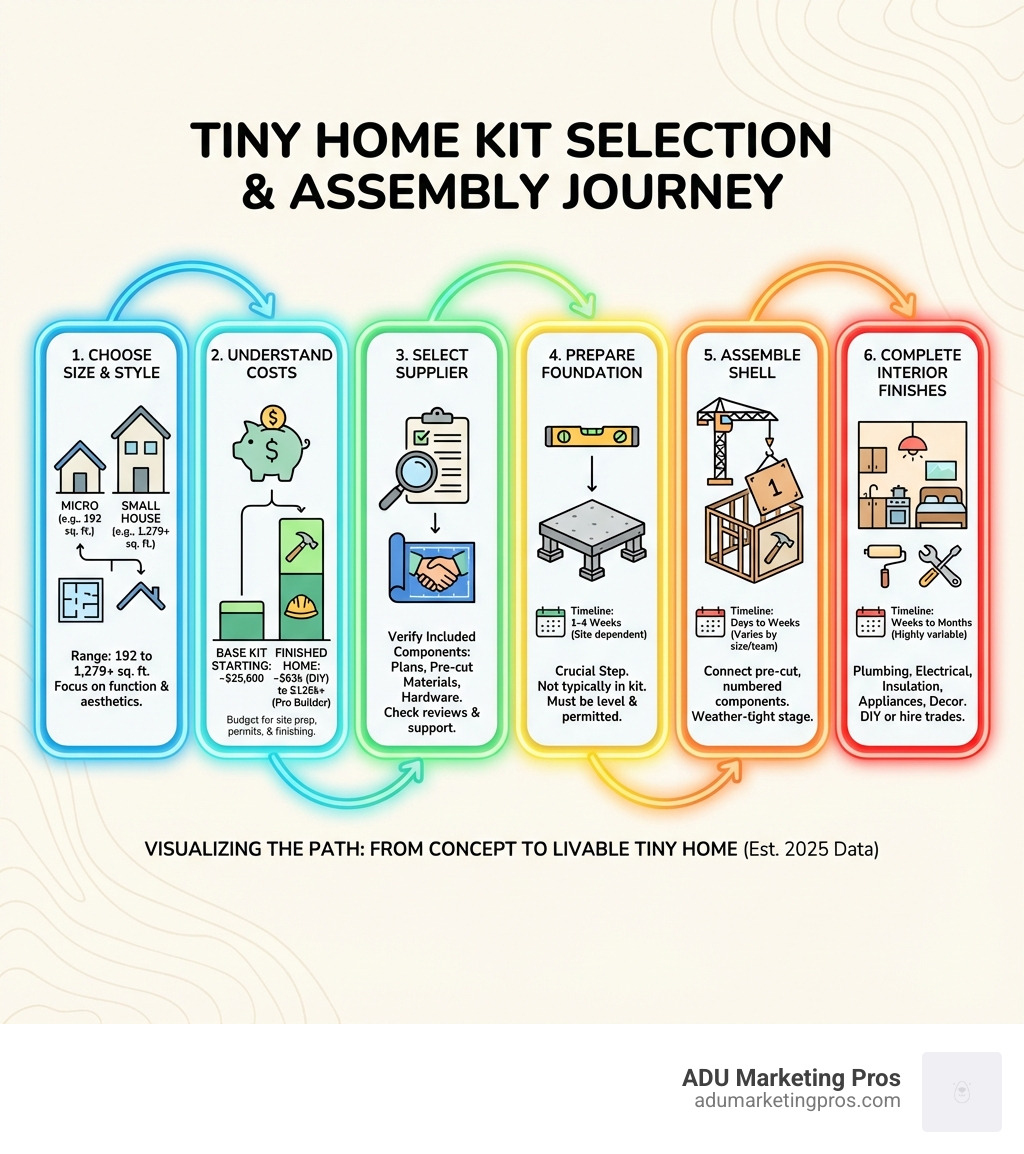
Tiny home kits vocab explained:
For broader background on tiny living trends and housing data, you can explore the U.S. Department of Housing and Urban Development and the U.S. Energy Information Administration. These sources offer useful context about housing affordability and residential energy use that tiny home owners often care about.
The Tiny Home Kit Advantage: Why Kits Make Sense
Choosing a tiny home kit is a compelling alternative to traditional construction, especially in California’s expensive housing market. The primary benefits are significant cost and time savings. By providing pre-engineered and pre-cut components, kits dramatically reduce on-site labor hours, minimize costly material waste, and shorten construction timelines from months to weeks. This efficiency doesn’t just save money; it makes homeownership fundamentally more accessible for a wider range of budgets.
Beyond the financial aspect, kits offer a profound sense of DIY empowerment. They provide a structured, manageable approach to homebuilding, allowing individuals with moderate skills to participate directly in the creation of their own living space. The streamlined process, from a single delivery to a clear assembly plan, reduces the overwhelming stress often associated with ground-up construction projects. This clear roadmap from foundation to front door is particularly beneficial for those building an Accessory Dwelling Unit (ADU) in cities like San Jose or San Diego, where project timelines and budgets are critical.
For a deeper dive into how tiny homes compare to ADUs, explore More info about ADU vs Tiny House.
What’s the Real Cost? A Breakdown of Expenses
Understanding the true cost of a tiny home kit requires looking far beyond the initial sticker price. While a base kit for a sub‑200 sq. ft. model can start as low as roughly $25,000, this price typically only covers the structural shell. The final, all-in cost will be significantly higher.
The total project cost depends heavily on your level of involvement and finishing choices. A full DIY approach on a smaller kit might land in the ~$60,000 to $85,000 range. However, if you hire a general contractor for a turnkey finish, the final cost can easily climb into the low-to-mid six figures ($120,000 – $180,000+), depending on the home’s size, the complexity of the design, the quality of interior finishes, and local labor rates. These figures highlight the substantial savings—often 40% or more—that are possible with sweat equity.
Here is a sample budget for a 400 sq. ft. tiny home to illustrate potential costs:
| Expense Category | DIY Cost Range | Contractor Cost Range | Notes |
|---|---|---|---|
| Tiny Home Kit (Shell) | $30,000 – $45,000 | $30,000 – $45,000 | Varies by supplier and materials (e.g., SIPs vs. stick-frame). |
| Foundation | $5,000 – $10,000 | $8,000 – $15,000 | Concrete slab is often the most cost-effective. |
| Permits & Fees | $3,000 – $8,000 | $4,000 – $10,000 | Highly variable by city and county. |
| Utility Hookups | $4,000 – $12,000 | $7,000 – $20,000 | Connecting to water, sewer, and electrical grids. |
| Labor (Assembly/Finishing) | $0 (Sweat Equity) | $30,000 – $70,000+ | The single biggest variable in total cost. |
| Windows & Doors | $4,000 – $8,000 | $5,000 – $10,000 | Often not included in base kits. |
| Interior Finishes | $10,000 – $20,000 | $15,000 – $35,000 | Includes drywall, flooring, paint, cabinets, countertops. |
| Plumbing & Electrical | $7,000 – $15,000 | $12,000 – $25,000 | Licensed professionals are required for this work. |
| HVAC System | $2,000 – $5,000 | $3,000 – $7,000 | Mini-split systems are a popular, efficient choice. |
| Appliances | $3,000 – $7,000 | $3,000 – $8,000 | Compact, energy-efficient models are ideal. |
| Delivery Fees | $2,000 – $6,000 | $2,000 – $6,000 | Based on distance from the manufacturer. |
| Total Estimated Cost | $70,000 – $136,000 | $119,000 – $251,000 |
Several factors influence the final cost:
- Size & Materials: Larger kits cost more. The type and quality of materials, such as standard lumber versus high-performance Structural Insulated Panels (SIPs), also play a major role in both upfront cost and long-term energy savings.
- Location: Construction costs, labor rates, and permit fees vary dramatically across California. Building in a high-cost area like San Francisco or Los Angeles will be significantly more expensive than in the Central Valley or other rural regions.
- Finishes: Your choice of flooring (e.g., vinyl vs. hardwood), cabinets (IKEA vs. custom), fixtures, and appliances will significantly impact the budget. This is where personalization meets practicality.
- Delivery: Freight charges are almost never included in the base kit price and can add thousands of dollars depending on the kit’s size, weight, and shipping distance.
For more on prefab costs and financing, check out More info about Prefab ADU California Cost and More info about ADU Financing Options.
What’s in the Box? Unpacking Your Tiny Home Kit
When your tiny home kit arrives, you’re getting the core components to build a weather-tight exterior shell. Think of it as the strong, well-designed skeleton of your home, ready for you to bring to life.
What’s typically included:
- Structural Components: Pre-cut, numbered lumber or Structural Insulated Panels (SIPs) for walls and roof.
- Roof System: Framing members, sheathing, and house wrap to protect the structure from the elements.
- Hardware: A comprehensive set of nails, screws, bolts, and fasteners required for shell assembly.
- Plans: Multiple sets of professionally engineered, stamped drawings to guide construction and submit for building permits.
What’s typically NOT included:
- Foundation: You are responsible for preparing a concrete slab, crawl space, or other approved foundation before the kit is delivered.
- Utilities: All plumbing pipes, electrical wiring, outlets, switches, and fixtures must be purchased and installed separately by licensed tradespeople.
- Interior Finishes: This includes drywall, insulation (if not a SIP kit), flooring, paint, trim, cabinets, and countertops.
- Windows & Doors: Most kit companies leave these out to allow for customer choice in style, quality, and energy efficiency. The kit will include the framed openings.
- Labor: The cost of assembling the kit and finishing the home is either your own sweat equity or hired out to contractors.
For more guidance on planning your build, refer to More info about ADU Building Plans.
Decoding the World of Tiny Home Kits
The world of tiny home kits is diverse, offering a spectrum of options to suit different budgets, styles, skill levels, and local building requirements. From a rustic off-grid retreat to a sleek, modern ADU for a San Jose backyard, the key is finding a kit that aligns with your vision and capabilities.
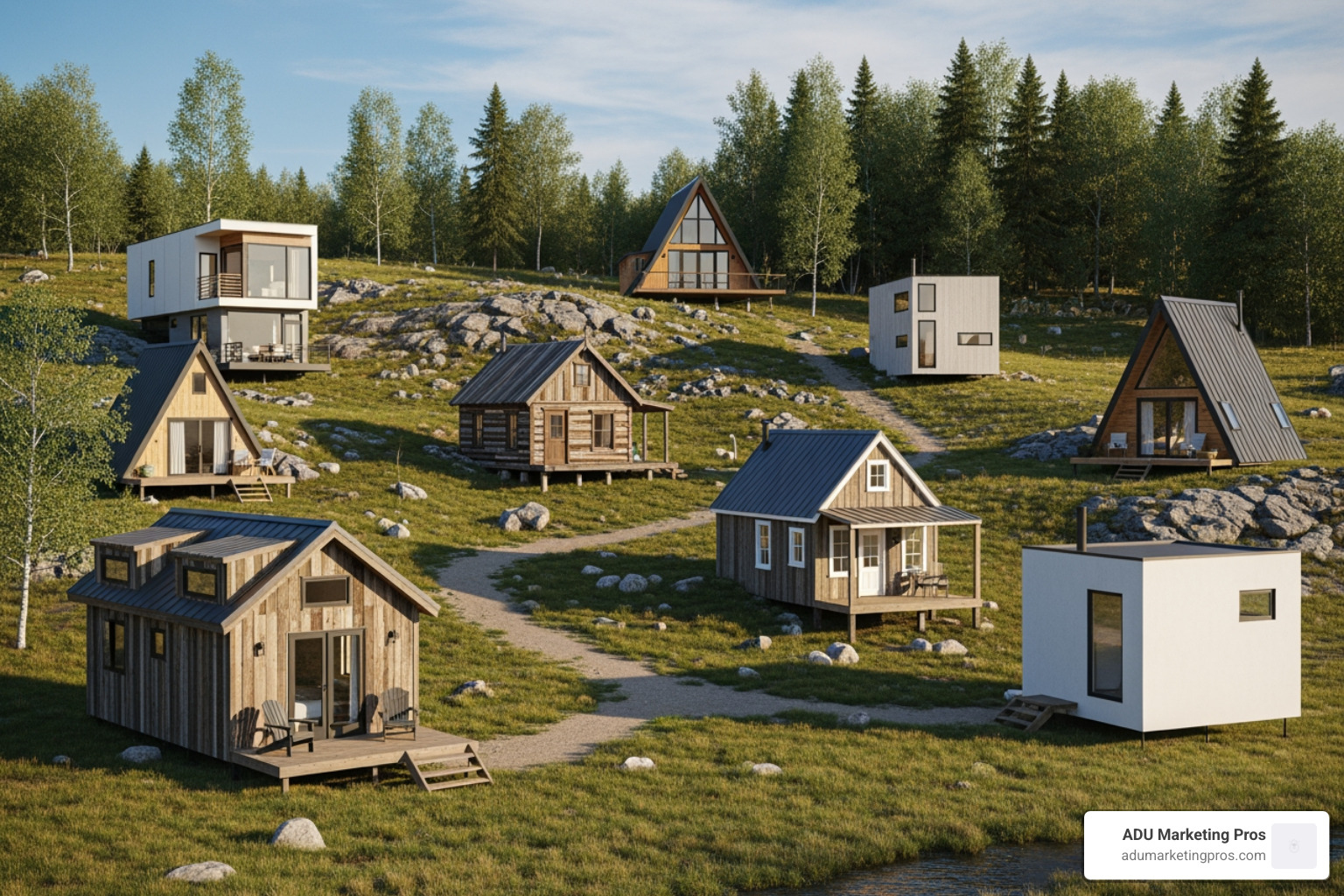
Exploring the Different Types of Tiny Home Kits
Tiny home kits generally fall into three main categories based on their level of completeness, each with distinct advantages and challenges:
- Shell-Only Kits: These are the most basic and popular option, providing just the exterior structure—walls, roof, and sometimes a subfloor system. They are designed to get you weather-tight quickly, protecting your project from the elements while you complete the interior work, plumbing, and electrical systems at your own pace.
- Pros: Most affordable entry point, maximum flexibility for interior layout and finishes, allows for a phased construction process as budget allows.
- Cons: Requires the most DIY skill and time to finish, all interior materials must be sourced and purchased separately.
- Best for: Budget-conscious DIYers with construction experience who want full control over the final product.
- Panelized Kits: This popular category includes kits where walls and roof sections are delivered as large, pre-fabricated panels. Structural Insulated Panels (SIPs) are a prime example. These panels, consisting of an insulating foam core sandwiched between structural boards, are often numbered and fit together precisely, significantly speeding up assembly time.
- Pros: Extremely fast shell assembly (often just a few days), superior insulation and airtightness leading to high energy efficiency, structurally very strong.
- Cons: Higher upfront cost than frame-only kits, less flexibility for on-the-fly changes to window or door placements.
- Best for: Builders who prioritize energy efficiency and want to accelerate the construction timeline.
- Frame-Only Kits: As the name suggests, these kits provide only the structural skeleton of the home, typically made from pre-cut lumber or light-gauge steel. You are then responsible for adding sheathing, insulation, house wrap, siding, and roofing materials.
- Pros: Offers a head start over building entirely from scratch, more affordable than a full shell kit, allows for choice in insulation and exterior materials.
- Cons: Requires significant construction knowledge to complete the exterior, not a weather-tight solution out of the box.
- Best for: Experienced builders or those working with a contractor who want the structural design handled but wish to control all other material choices.
For those interested in the broader category of small dwellings, you might find more information here: More info about Small Houses.
Sizing Up Your Options: From Micro to Mansion-ette
Tiny home kits come in a wide range of sizes to fit various needs, from a simple backyard office to a primary residence for a small family. Local regulations, particularly for ADUs, will often dictate the maximum and minimum allowable size.
- Micro Homes (Under 200 sq. ft.): These are the quintessential tiny homes, designed for ultimate efficiency and minimalism. Models like the 192 sq. ft. kits from Mighty Small Homes or Shelter Kit are perfect for single occupants, guest suites, or as compact ADUs in dense urban areas like Los Angeles where space is at a premium. They typically feature a combined living/sleeping area, a small kitchenette, and a wet bath.
- Small Homes (200-500 sq. ft.): This popular range offers more breathing room and a greater sense of a traditional home. It often allows for a separate sleeping area (either in a loft or a small ground-floor bedroom), a more functional galley kitchen, and dedicated living space. Kits like Shelter Kit’s Parker (345+ sq. ft.) fall into this category, providing a comfortable and highly functional living experience.
- Larger Small Homes (500+ sq. ft.): Blurring the line between tiny and traditional housing, these kits can feature multiple bedrooms and bathrooms. Models can range from 490 sq. ft. up to nearly 1,300 sq. ft., serving as primary residences for small families or as substantial, multi-room ADUs that can generate significant rental income. These larger models often feature full-size kitchens, laundry facilities, and ample storage.
When building an ADU, always check local size restrictions in your city, whether it’s San Diego, Oakland, or Sunnyvale. For layout inspiration, see More info about Studio ADU Floor Plans.
Making It Your Own: Customization and Personalization
One of the most rewarding aspects of building with a tiny home kit is the ability to personalize it to reflect your style and needs. While you start with a pre-engineered structure, most suppliers offer a surprising degree of flexibility.
- Floor Plan Modifications: Many companies allow you to tweak interior layouts. This could mean moving non-load-bearing walls, reconfiguring the kitchen and bathroom spaces, adding or removing a loft, or changing the location of interior doors to better suit your lifestyle.
- Material and Finish Selection: You have complete control over the interior aesthetic. This is your chance to choose your own flooring, paint colors, cabinet styles, countertops, tile, and light fixtures, creating a space that is uniquely yours.
- Windows and Doors: You can often upgrade to larger windows for more natural light, select different door styles (like French doors or a Dutch door), or invest in higher-performance, triple-pane windows for maximum energy efficiency.
- Exterior Siding and Roofing: While the kit provides the structure, you typically choose the final look. You can select from a variety of siding materials like wood, metal, or fiber cement, and different roofing options to match your desired architectural style.
- Accessibility: Some forward-thinking suppliers, like Mighty Small Homes, offer accessibility options such as wider door cutouts and plans for single-level, barrier-free living at no extra cost, making tiny living adaptable for everyone.
For those considering a fully custom design from the ground up, explore More info about Custom ADU Blueprints.
From Kit to Home: The Construction Journey
Turning a tiny home kit into a finished, habitable home is an exciting and rewarding process that requires careful planning and execution long before the kit itself arrives. Securing your land, obtaining the necessary permits, and preparing the foundation are critical preliminary steps. Getting this groundwork right is essential to avoiding costly delays and legal issues, especially in highly regulated areas across California.

The Assembly Process: What Level of DIY Skill is Required?
Many tiny home kits are specifically designed for DIY assembly with standard hand and power tools, making construction accessible even for those with moderate carpentry skills. The process is logical and follows a clear, step-by-step sequence provided by the manufacturer.
- Foundation Prep: Your chosen foundation (e.g., concrete slab, crawl space) must be fully completed, cured, and inspected before the kit is scheduled for delivery.
- Receiving and Inventory: When the kit arrives, you’ll need to unload it and take a detailed inventory of all components against the packing list to ensure everything is present and undamaged.
- Floor System Assembly: If your kit includes a floor system, this is the first structural step, creating the platform for your walls.
- Wall Erection: Using the detailed, numbered instructions, you’ll erect the wall panels or frame the walls. With a panelized system, this stage can be completed in as little as a day with a small crew.
- Roof Assembly: Once the walls are up and braced, you’ll install the roof trusses or panels, followed by sheathing and house wrap to create a weather-tight shell.
- Exterior Finishing: With the shell complete, you’ll install windows, doors, siding, and roofing materials to fully seal the exterior.
- Interior Rough-In and Finishing: This is the final, and often longest, phase. It involves framing interior walls, running plumbing and electrical (by licensed professionals), insulating, hanging drywall, and finally, installing all your chosen finishes, fixtures, and appliances.
A basic understanding of reading blueprints and construction safety is highly beneficial. However, it’s crucial to know when to call a professional. While you may be able to assemble the shell, electrical and plumbing systems must be installed by licensed professionals to ensure safety, code compliance, and the insurability of your home.
The Critical Groundwork: Foundations, Utilities, and Permits
Before you can even think about building, you must address three critical logistical and legal areas:
- Foundation Options: The foundation anchors your home and must be appropriate for your soil type and local codes. Common choices for tiny homes include a concrete slab-on-grade (durable, stable, and cost-effective), a crawl space (elevates the home and allows for under-floor access to utilities), or a full basement (adds significant living/storage space but is the most expensive option).
- Utility Connections: You’ll need a solid plan for connecting to essential services. This involves coordinating with local utility companies for water, sewer (or planning for a septic system), and electricity. These connections can be complex and costly, often requiring trenching and professional installation.
- Permits and Building Codes: This is often the most challenging and time-consuming part of the process. In California, building permits are mandatory for virtually all new construction, including tiny homes built from kits. Attempting to build without a permit can lead to severe consequences, including hefty fines, a stop-work order, forced demolition, and an inability to insure or ever sell the property. Local zoning laws in cities like Los Angeles, San Diego, or San Jose dictate minimum and maximum square footage, property line setbacks, height restrictions, and specific fire safety standards (especially in Wildland-Urban Interface zones). Always consult your local planning and building department early in the process to fully understand the requirements for your specific property.
To ensure your project meets all legal safety standards, it’s wise to familiarize yourself with resources from the International Code Council, which develops the codes that most municipalities adopt. For specific ADU rules in California, see our detailed guide on More info about California ADU Regulations.
Smart, Sustainable, and Sourced Right
Building with a tiny home kit is an opportunity to create a home that is not only economically sensible but also environmentally responsible. These kits often stand at the intersection of the small-living and green-building movements, offering inherent sustainability advantages that can be enhanced with thoughtful choices.
Energy Efficiency and Green Building
Many tiny home kits are engineered for superior energy efficiency, a major long-term benefit in California where energy costs are among the highest in the nation. A key technology driving this efficiency is Structural Insulated Panels (SIPs), used by innovative companies like Mighty Small Homes. SIPs consist of a rigid insulating foam core laminated between two structural panels, creating a building envelope with several key advantages over traditional stick-framing:
- Superior Insulation: SIPs create a continuous, airtight thermal barrier that minimizes heat loss in the winter and heat gain in the summer, leading to a more comfortable indoor environment with less reliance on heating and cooling.
- Significant Energy Savings: Homes built with SIPs can achieve estimated energy savings of 50-60% for heating and cooling compared to standard construction, resulting in substantially lower monthly utility bills.
Beyond SIPs, tiny homes are inherently sustainable. They require fewer raw materials to build and less energy to operate, resulting in a smaller carbon footprint over the home’s lifetime. The pre-cut, engineered nature of kits also dramatically reduces on-site construction waste, which can account for tons of landfill debris in a traditional build.
You can further enhance your home’s green credentials by incorporating features like:
- Solar Panels: A small roof is perfect for a solar array that can offset most or all of your electricity usage.
- Rainwater Harvesting: Collecting roof runoff in cisterns can provide water for landscaping or, with proper filtration, for household use.
- High-Efficiency Windows: Investing in double- or triple-pane, low-E coated windows minimizes energy transfer.
- Sustainable Materials: Opt for reclaimed wood, bamboo flooring, low-VOC paints, and recycled-content insulation and countertops.
For more on high-performance building standards, Learn about ENERGY STAR certified homes. You can also find tips for a greener project at More info about Eco-Friendly ADU.
How to Choose Reputable Tiny Home Kit Suppliers
Selecting the right supplier is as crucial as choosing the kit itself. A reputable partner ensures a quality product, accurate plans, and a smoother build. Here’s a checklist for vetting potential companies:
- Track Record and Reviews: Research companies that specialize in kits, like Shelter Kit and Mighty Small Homes. Look for a long history of operation and search for independent customer reviews, testimonials, and project galleries to gauge their reputation for quality and service.
- Material Quality: Ask for detailed specifications on the materials used. Is the lumber high-grade? What is the R-value of the SIPs? Are the materials sustainably sourced and compliant with California building codes? A transparent supplier will readily provide this information.
- Customer Support: What level of support do they offer during the build? A good kit provider offers ongoing technical support to you or your builder, from answering initial questions to troubleshooting issues during assembly.
- Engineering and Plans: Confirm that their plans are engineered and can be stamped for your specific state or region. This is non-negotiable for obtaining a building permit.
- Pricing Transparency: The company must provide a clear, itemized list of what’s included in the base price and what components (like windows, doors, or delivery) are extra. Insist on a detailed quote with no hidden costs.
- Delivery Process: Understand their logistics. How is the kit packaged and delivered? What equipment is needed to unload it at your site? Get a firm quote for freight costs, as this can be a significant expense.
While some companies are primarily builders, not kit suppliers, their expertise can be a valuable resource if you decide you need professional help with assembly. For builder recommendations, consult resources like More info about Tiny House Builders in Southern California.
Conclusion: Building Your Big Dream in a Small Space
Tiny home kits represent a powerful and practical entry point into a lifestyle defined by affordability, simplicity, and sustainability. They demystify the construction process, empower DIY builders with a clear and manageable framework, and provide a tangible path to owning a home without a lifetime of debt. Throughout this guide, we’ve covered the essential knowledge you need to get started: from creating a realistic budget and understanding what’s in the box, to choosing the right type and size of kit for your needs, and navigating the critical construction process from foundation to finish.
The journey from a stack of panels to a finished home is made significantly easier with a kit, but success ultimately hinges on diligent planning and preparation. This is especially true in California, where navigating local permits and utility connections requires patience and foresight. However, the rewards are immense. By choosing a reputable supplier, embracing energy-efficient options like SIPs, and infusing the space with your personal style, you can build a home that is small in size but massive in value—for your finances, your freedom, and the planet.
Whether you are an aspiring homeowner ready to take control of your future or a seasoned builder looking to innovate, the tiny home movement offers a world of opportunity. The right kit can be the key that unlocks your big dream in a small, thoughtfully designed space.
For architects and builders specializing in the tiny home and ADU market, standing out in a crowded field is crucial. ADU Marketing Pros provides specialized digital marketing strategies tailored to the construction industry. We help your firm connect with clients who are actively searching for building solutions, attracting high-quality leads and driving revenue growth in this competitive landscape.
If you’re looking for professionals to help realize your vision, start by exploring our curated list of top Tiny House Builders in California.