

Understanding the Tiny House Movement

Tiny homes represent a significant and growing architectural and social movement that is fundamentally reshaping how Americans think about living spaces. While the concept of small-scale living is not new, the modern tiny house movement gained significant momentum in the wake of the 2008 financial crisis. As many people faced foreclosure and economic uncertainty, the idea of a smaller, more affordable, and less mortgage-dependent home became incredibly appealing. Over the past decade, this initial reaction to economic hardship has evolved into a deliberate lifestyle choice that prioritizes intentional living, financial freedom, and a reduced environmental footprint over sheer square footage.
This movement is not just a fleeting trend; it’s a legitimate housing solution acceptd by a surprisingly diverse demographic. It attracts young professionals seeking to avoid decades of mortgage debt, retirees looking to downsize and simplify their lives, and environmentally conscious individuals aiming to live more sustainably. The philosophy is simple: live with less, but live more fully. By shedding the burdens of a large home—high costs, constant maintenance, and the pressure to fill it with possessions—proponents find they have more time, money, and mental energy for what truly matters to them, whether it’s travel, hobbies, or community engagement.
What are tiny homes?
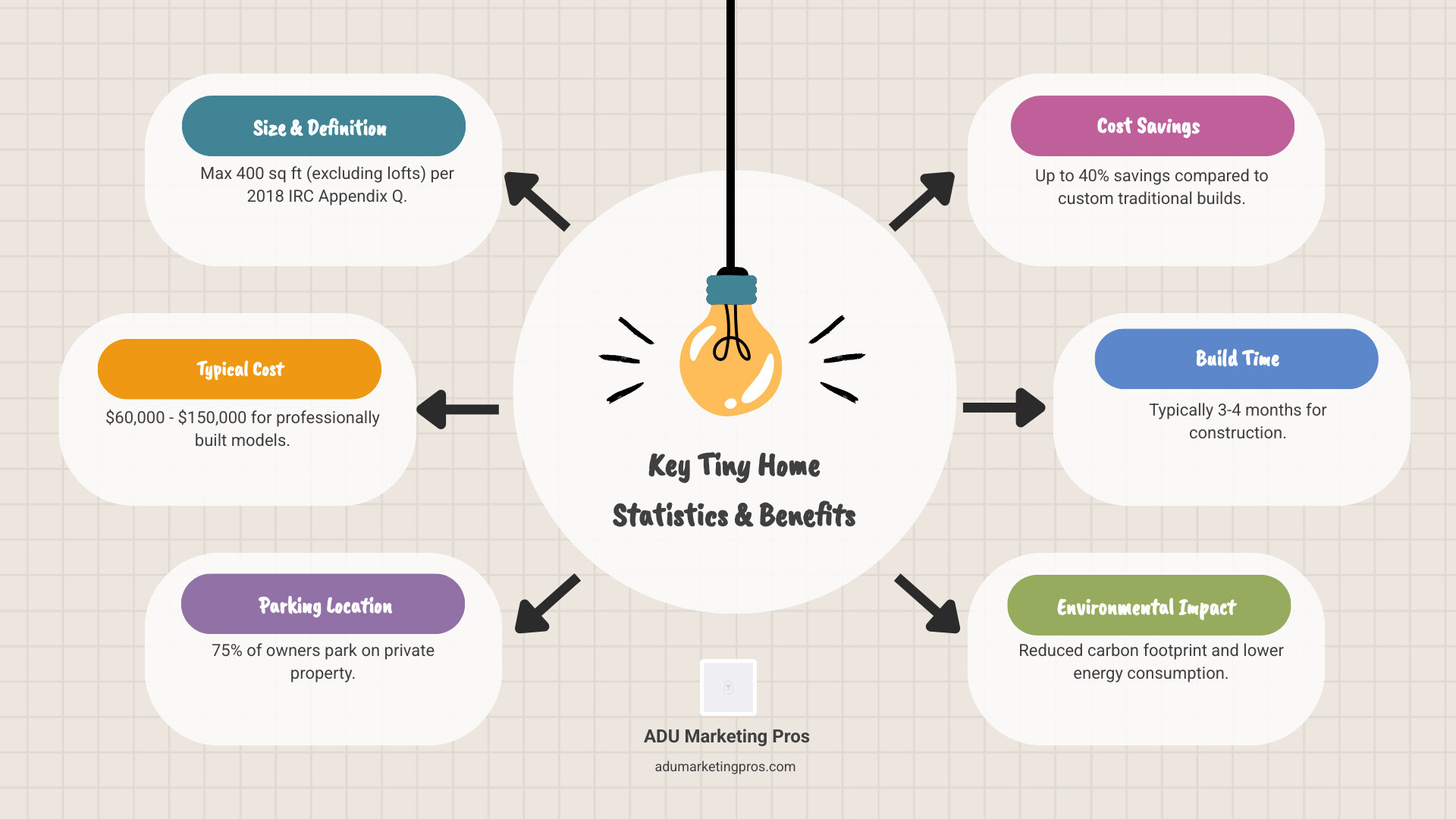
While the term is used broadly, there is a formal definition that helps standardize construction and regulation. According to the 2018 International Residential Code (IRC), a tiny house is a dwelling unit with a maximum of 400 square feet of floor area, excluding lofts. This definition is crucial for homes built on a permanent foundation. Key characteristics include:
- Size: Typically between 100 and 400 square feet.
- Mobility: Can be mobile (built on a trailer chassis, often called a THOW) or permanently placed on a foundation.
- Design: A strong focus on hyper-efficient design, multi-functional spaces, and clever storage solutions.
- Cost: Professionally built models generally range from $60,000 to $150,000, though DIY builds can be much cheaper.
Key benefits include:
The appeal of tiny living is rooted in a powerful set of advantages that address many modern-day anxieties.
- Financial Freedom: With significantly lower construction costs and the potential to live mortgage-free, owners can achieve financial stability far more quickly than with a traditional home. Reduced utility bills, property taxes, and maintenance costs further improve savings.
- Environmental Sustainability: A smaller home has a dramatically smaller carbon footprint. It requires fewer materials to build and less energy to heat and cool, leading to a more eco-friendly existence.
- Simplified Living: A smaller space necessitates a minimalist approach. With fewer possessions to manage and less area to clean, homeowners report lower stress levels and more free time for personal pursuits.
- Flexibility and Mobility: For those with Tiny Homes on Wheels (THOWs), the ability to relocate for a new job, be closer to family, or simply explore the country offers an unparalleled sense of freedom that traditional housing cannot match.
Today, with hundreds of professional builders and established manufacturers across the country, the tiny house movement is a mature and viable housing market. For ADU construction firms and architects, understanding the nuances of tiny homes is crucial. They represent a critical bridge between traditional accessory dwelling units (ADUs) and mobile living, offering clients innovative and affordable alternatives to expensive home additions or conventional construction.
Basic tiny homes vocab:
- architects in southern california who design tiny houses
- land for sale in southern california for tiny houses
- places in southern california that allow tiny houses
The Spectrum of Tiny Living: Types, Features, and Benefits
The immense appeal of tiny homes extends far beyond their compact size, touching on the core promises of financial freedom, a smaller environmental footprint, and a simpler, more intentional lifestyle. This powerful combination has fueled the growth of several distinct types of tiny dwellings, each engineered with unique features and advantages to suit different needs, locations, and legal frameworks.
Different types of tiny homes available
The tiny home movement is remarkably diverse, offering a spectrum of housing options that cater to various preferences for mobility, permanence, and style.
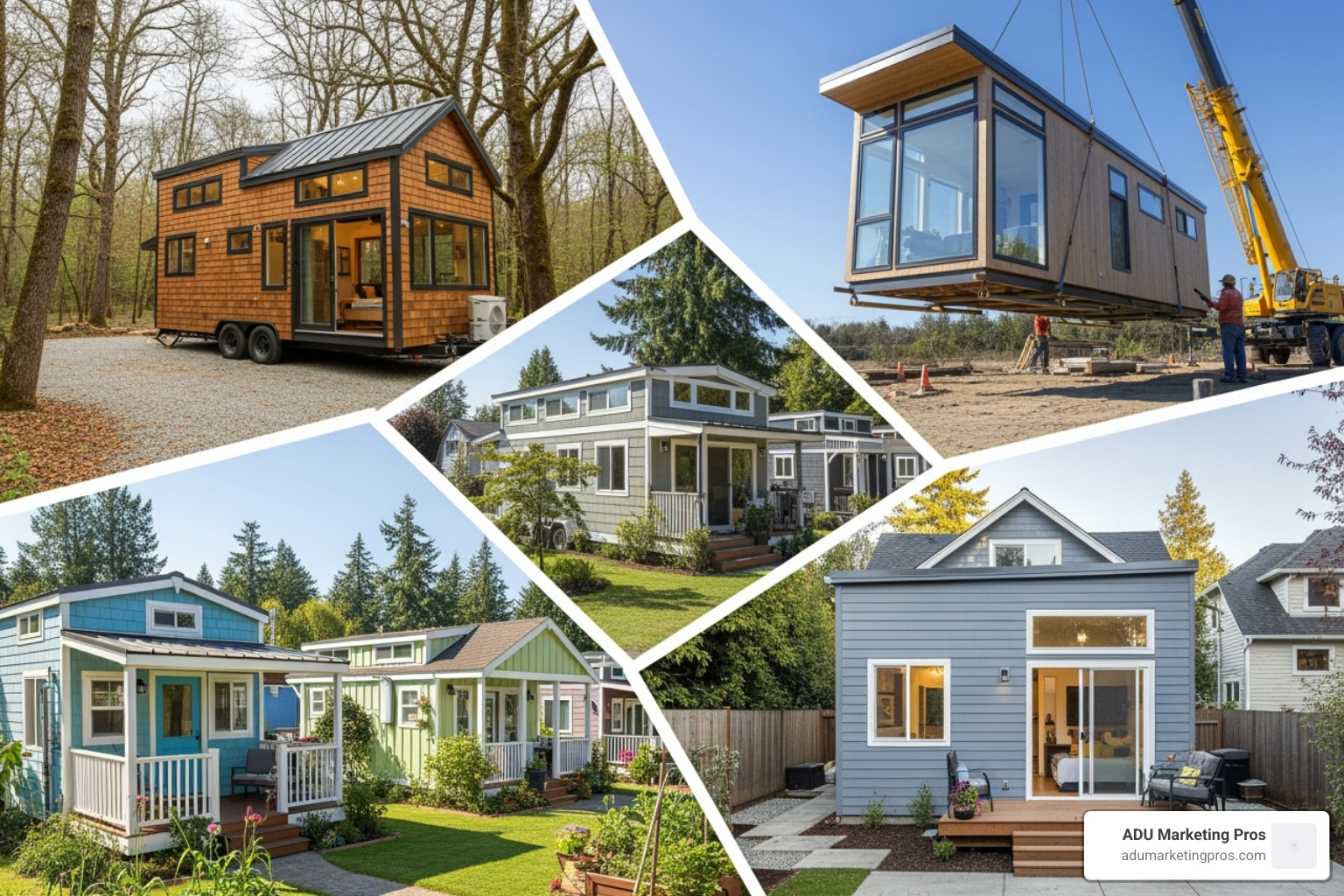
- Tiny Homes on Wheels (THOWs): The most iconic image of the movement, THOWs are built on a trailer chassis for maximum mobility. This flexibility is their greatest asset, but it also brings considerations like towing capacity, weight distribution, and road legality. They are often certified as RVs to simplify placement in campgrounds and RV parks, making them ideal for those who value a nomadic lifestyle.
- Modular Homes: These homes are constructed in sections (modules) within a controlled factory environment and then transported to the site for assembly on a permanent foundation. This process allows for precision engineering, high-quality construction, and reduced material waste. Modular tiny homes are often indistinguishable from site-built homes and are a popular choice for permanent residences or ADUs.
- Park Models: Legally classified as recreational vehicles (RVs), park models are designed for long-term or permanent placement in RV parks or dedicated tiny home communities. They are typically wider than THOWs (up to 12 feet), offering more spacious, residential-style interiors with full-sized appliances and amenities, but they are not designed for frequent travel.
- Container Homes: A striking example of upcycled and sustainable architecture, these homes are built from repurposed steel shipping containers. Known for their durability and distinct industrial aesthetic, they require significant modification, including cutting openings for windows and doors, adding robust insulation, and ensuring structural integrity. They can be used as standalone homes or combined to create larger, more complex structures.
- Accessory Dwelling Units (ADUs): In states like California, ADUs have become a cornerstone of the tiny living landscape. These are legal, secondary homes built on the same lot as a primary residence. Ranging from detached backyard cottages to converted garages, ADUs provide a stable, permanent housing solution that can generate rental income, increase property value, and provide space for family members.
Key features and benefits
Tiny homes are masterpieces of engineering designed to maximize function, comfort, and style within a minimal footprint.
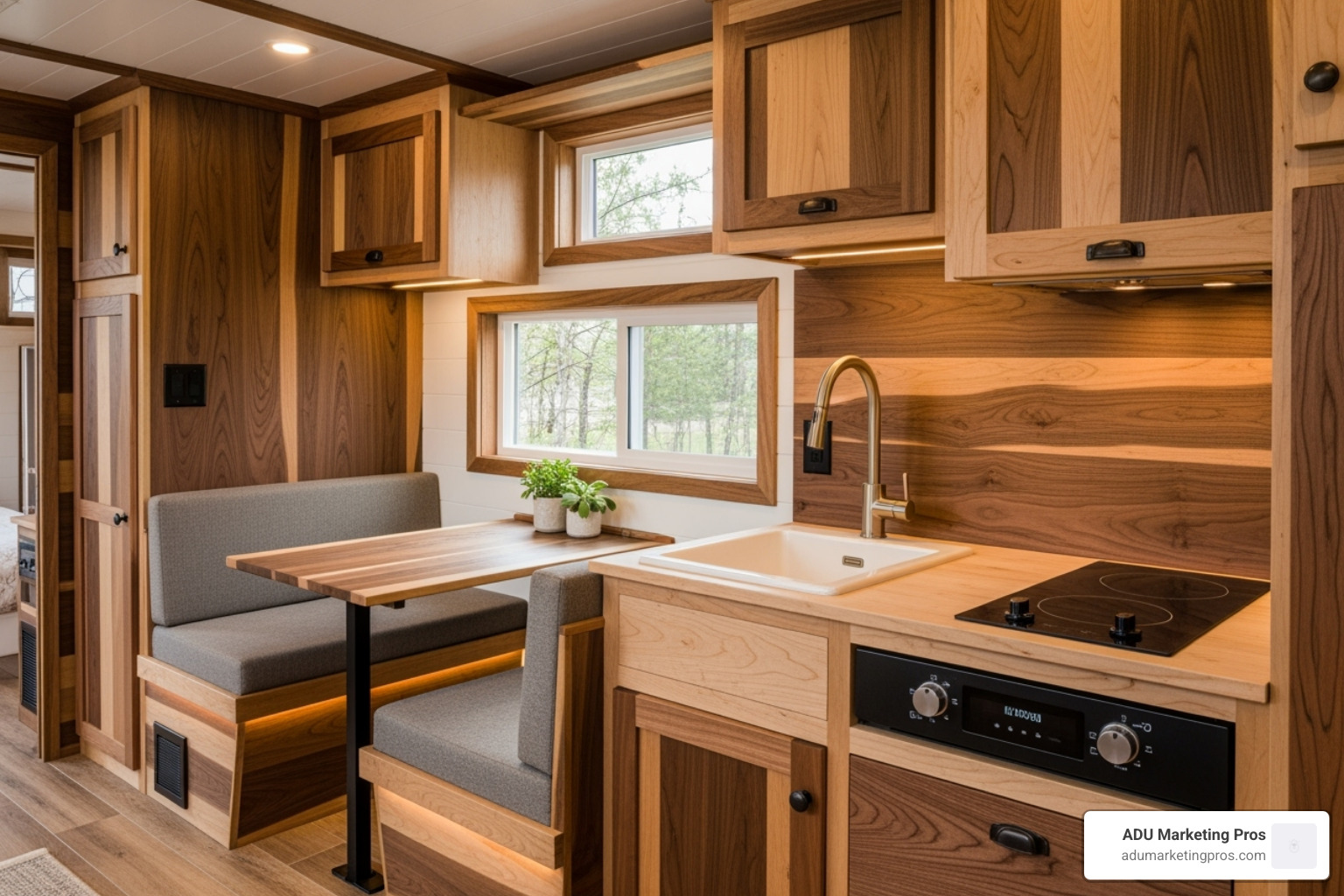
- Ingenious Design: Every square inch is carefully planned. This includes leveraging vertical space with sleeping lofts and tall storage, and integrating multi-functional furniture like Murphy beds, drop-down tables, and staircases with built-in drawers.
- Superior Construction Quality: To withstand travel (for THOWs) and create a lasting dwelling, many builders use high-quality materials and craftsmanship that often exceed those found in traditional RVs. This includes robust framing, high-performance insulation, and durable finishes.
- Modern Amenities: Downsizing on space does not mean sacrificing modern comforts. It’s common to find tiny homes equipped with full-size kitchens featuring quartz countertops, high-end appliances, luxury bathrooms with tiled showers, and integrated smart home technology.
- Drastically Reduced Expenses: The financial benefits are profound. A smaller home translates to significantly lower utility bills, property taxes, insurance premiums, and maintenance costs, freeing up substantial income for other life goals.
- Less Maintenance, More Life: With less space to clean and fewer systems to maintain, homeowners reclaim valuable time and energy. This newfound freedom allows for more focus on hobbies, travel, relaxation, and personal relationships.
Interior design and space optimization
Designing a tiny home interior is a creative exercise in maximizing both real and perceived space to create a functional, comfortable, and inviting atmosphere.
Key strategies include vertical space utilization, with lofts for sleeping and floor-to-ceiling shelving for storage. Hidden storage is paramount, cleverly integrated into stairs, benches, and under-floor compartments to eliminate clutter. Aesthetically, using large windows, skylights, and a light color palette creates an illusion of spaciousness and connects the interior with the outdoors. Multi-functional furniture is non-negotiable. For a wealth of ideas and visual examples, resources like The Best Tiny Home Designs, Pictures, and inspiration that’ll have you swooning. are invaluable.
Here are some top space-saving furniture ideas:
- Murphy Beds: The ultimate space-saver, folding into the wall to transform a bedroom into a living area in seconds.
- Modular Sofas/Seating: Can be reconfigured to suit different needs and often include hidden storage compartments within.
- Nesting Tables: A set of tables that tuck neatly into one another, providing multiple surfaces without occupying a large footprint.
- Fold-Down Desks/Tables: Wall-mounted surfaces that collapse flat when not in use, perfect for creating a workspace or dining area on demand.
- Storage Ottomans: These versatile pieces serve as seating, a footrest, or a coffee table while providing a convenient place to hide blankets, magazines, and other clutter.
Building Your Dream: Cost, Construction, and Customization
Starting on a tiny home journey requires a clear understanding of the practicalities of cost, construction, and customization. Making informed decisions in these areas is the key to changing your dream of a small, efficient home into a successful reality. Let’s break down the essential financial and building considerations.
Typical cost and financing options
The price of a tiny home exists on a wide spectrum, influenced by size, materials, and labor. A dedicated DIY build can cost as little as $10,000 to $25,000, provided you have the skills and can source affordable or reclaimed materials. At the other end, professionally built tiny homes from reputable companies typically range from $60,000 to $150,000 or more for high-end, custom models. For instance, a builder like Clever Tiny Homes offers models starting around $64,995, while a well-known brand like Tumbleweed Tiny Homes advertises financing from approximately $809/month for a $92,959 model, illustrating the typical market price.
Financing a tiny home presents a unique challenge because traditional mortgages are rarely an option. Mortgages are secured by real estate (land and a permanent structure), but many tiny homes, especially those on wheels, are legally considered personal property (or chattel), similar to an RV or a vehicle. However, a growing ecosystem of financing solutions is available:
- RV Loans: This is the most common route for Tiny Homes on Wheels (THOWs) that have been certified by the RVIA (Recreational Vehicle Industry Association). Lenders are familiar with this asset class.
- Personal Loans: Unsecured personal loans from banks or credit unions can be used to finance a tiny home, though they often come with higher interest rates and shorter repayment terms than secured loans.
- Specialized Lenders: A number of financial institutions now specialize in the alternative housing market. Companies like 21st Mortgage Corporation have programs specifically for manufactured and tiny homes.
- Builder Financing: Many tiny home builders offer in-house financing or have partnerships with lenders who understand their products, streamlining the purchasing process for buyers.
Pre-built vs. custom-built tiny homes
This fundamental choice depends on your priorities regarding budget, timeline, and the level of personalization you desire.
Pre-built (or model) tiny homes are a faster and often more affordable option. Builders can achieve significant cost savings through standardized designs, efficient assembly-line processes, and bulk purchasing of materials. This allows them to deliver a finished home within weeks. The trade-off is limited customization, which is usually restricted to choosing from a pre-selected menu of finishes, colors, and appliances.
Custom-built tiny homes offer complete creative freedom, allowing you to design a home that is perfectly custom to your specific lifestyle, aesthetic preferences, and functional needs. This route is ideal for those with unique requirements, such as dedicated space for a home office, specific hobby storage, or accessibility features. Naturally, this level of personalization costs more and takes longer, with a typical build time of 3-4 months.
| Feature | Pre-Built / Model Home | Custom-Built Home |
|---|---|---|
| Cost | Lower (due to standardized production) | Higher (due to unique design, materials, and labor) |
| Timeline | Fast (often 1-4 weeks from inventory) | Slower (typically 3-4 months from design to completion) |
| Customization | Limited to finishes, fixtures, & minor layout changes | Complete control over layout, materials, and all features |
| Best For | Budget-conscious buyers needing a quick move-in | Buyers with a specific vision or unique functional needs |
Construction quality and builder differences
The quality and philosophy behind tiny home construction can vary dramatically. Some builders are handcrafted artisans who focus on bespoke details and high-end materials, treating each home as a unique piece of craftsmanship. Others are assembly-line manufacturers who prioritize efficiency, affordability, and scalability. Neither approach is inherently better; the right choice depends on your personal priorities and budget.
When vetting a builder, look for evidence of quality materials, such as solid wood cabinetry (not particleboard), durable siding like cedar or metal, and high-R-value insulation. Most importantly, look for certifications. These are a key indicator of quality, safety, and compliance.
- RVIA Certification: Essential for THOWs. It ensures the home meets over 500 safety standards for electrical, plumbing, and structural systems, which is crucial for getting loans, insurance, and legal parking in RV parks.
- NOAH Certification: (National Organization of Alternative Housing) This provides another layer of safety and construction standards based on nationally recognized codes, offering a detailed inspection report for homeowners.
- IRC Appendix Q Compliance: For tiny homes on a permanent foundation, compliance with these building codes is vital for obtaining local building permits. You can learn more about the development of building standards at the American National Standards Institute.
Always conduct thorough due diligence on your builder. If possible, visit their facility, tour a model home, speak to past customers, and carefully review their warranty and contract.
Navigating the Maze: Legal, Zoning, and Utility Problems
While the dream of a simple, affordable tiny home is compelling, the practicalities of legal placement and utility connections can be a complex puzzle. Navigating this maze of regulations is often the single greatest challenge for aspiring tiny homeowners. Success requires diligent research, careful planning, and a clear understanding of the rules in your specific location.
Legal and zoning regulations
Where you can legally place a tiny home is a question with no single answer, as rules vary dramatically between states, counties, and even individual municipalities. The legal status of your home often depends on how it’s built and certified.
- International Residential Code (IRC) Appendix Q: Adopted in 2018, this was a landmark development for the movement. It provides a formal definition and a national set of building standards for tiny houses (under 400 sq. ft.) built on a permanent foundation. This gives local building departments a clear model code to adopt, creating a legal pathway for permanent tiny homes. However, not all municipalities have adopted it.
- RV Certification (RVIA): Many Tiny Homes on Wheels (THOWs) are certified as Recreational Vehicles. This is a strategic choice, as it allows them to be placed in the thousands of RV parks across the country and makes them subject to DMV regulations rather than local building codes. The downside is that many zones prohibit living in an RV full-time outside of a designated park.
- Local Zoning Ordinances: These are the city or county rules that dictate land use, including minimum square footage requirements for dwellings, which can effectively outlaw tiny homes. However, a growing number of progressive towns and cities are amending their zoning codes to be more tiny-friendly. Some have created specific zoning for tiny home communities, while others explicitly allow them as Accessory Dwelling Units (ADUs). Advocacy groups like the Tiny Home Industry Association are working tirelessly to promote the adoption of favorable regulations.
In California, statewide ADU laws have been a game-changer, creating a clear legal pathway for small, permanent homes on most residential lots. For more information on how federal and local governments are addressing this, the U.S. Department of Housing and Urban Development provides resources on ADUs. The bottom line is unequivocal: always start by speaking with your local planning and zoning department before you buy a home or a piece of land.
Finding a location and connecting utilities
Once you’ve steerd the legal problems, the next step is securing a location and establishing essential services.
Location Options:
- Private Property: The most common scenario, with about 75% of tiny home owners parking on land they own or lease from family or friends. This is only viable where local zoning permits it.
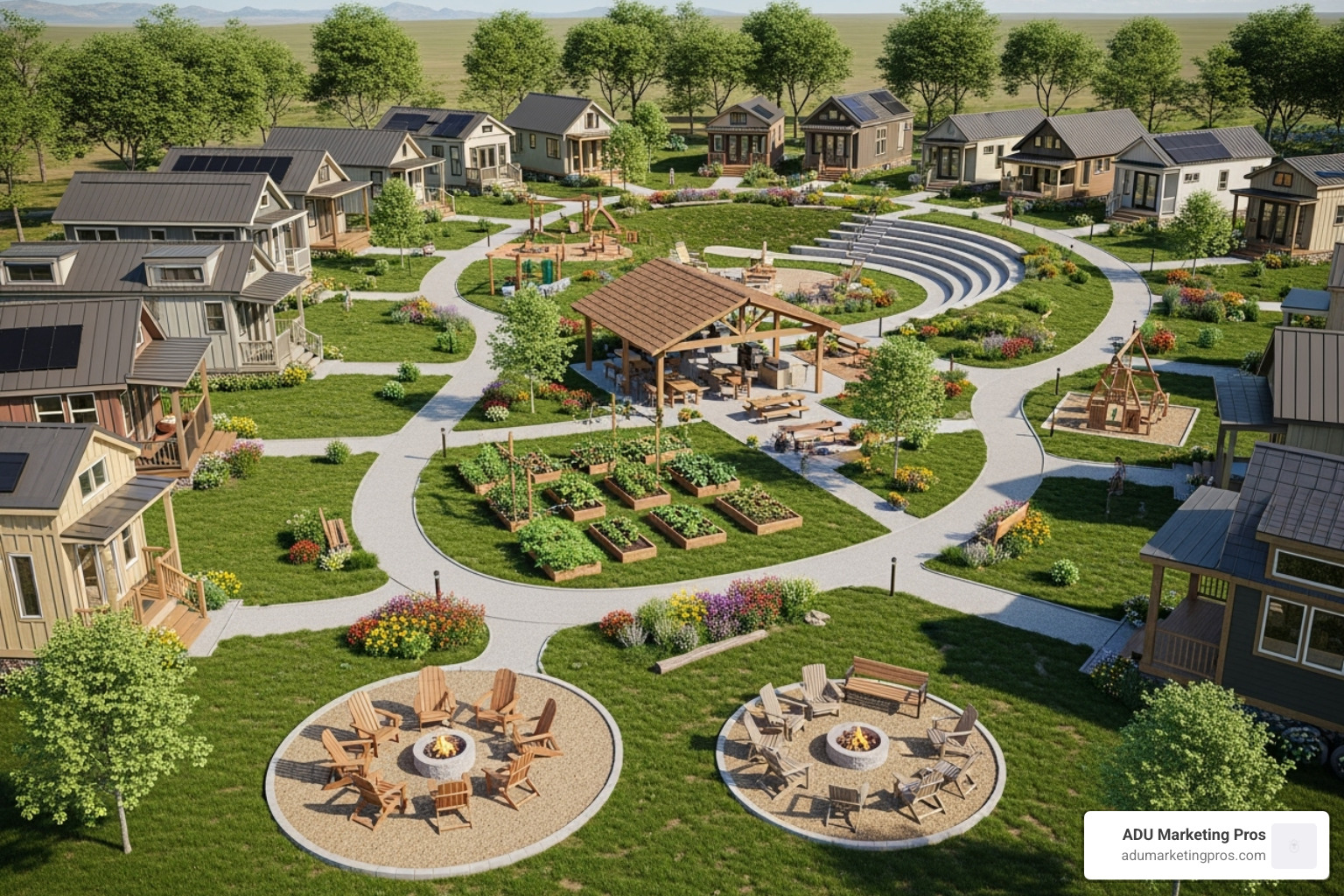
- Tiny Home Communities: A rapidly growing option, these planned communities offer pre-approved lots with utility hookups, shared amenities (like laundry and gardens), and a built-in sense of camaraderie with like-minded neighbors.
- RV Parks: An excellent and readily available option for RVIA-certified THOWs. Many parks offer long-term stays with full hookups, providing a simple, turnkey solution.
Utility Connections: Most tiny homes are designed for simple, flexible utility connections, often using standard RV-style hookups.
- Water: Typically connects via a heated, potable-water-safe garden hose to a city water supply or a private well.
- Sewer/Septic: A standard 3-inch RV sewer hose connects the home’s plumbing to a municipal sewer cleanout or a septic tank. Mobile units that travel frequently rely on built-in black and grey water holding tanks that must be emptied periodically at a dump station.
- Electrical: Most tiny homes are designed for a 30-amp or 50-amp electrical hookup, similar to large RVs, which connects to a professionally installed power pedestal.
- Off-Grid Options: Tiny homes are exceptionally well-suited for off-grid living. This independence can be achieved with a combination of solar panels and battery banks for electricity, rainwater harvesting and filtration systems for water, and composting toilets to manage waste without a sewer or septic system.
The Tiny Lifestyle: Sustainability, Minimalism, and Future Trends
Choosing a tiny home is rarely just a housing decision; it’s an intentional choice to accept a lifestyle that values experiences over possessions, sustainability over consumption, and simplicity over complexity. This movement is deeply intertwined with the philosophy of minimalism and is in a constant state of evolution, driven by technological innovation and a growing desire for a more meaningful way of life.
Aligning with minimalism and intentional living
Living in a space under 400 square feet forces a minimalist mindset by necessity. You cannot own superfluous things; you must curate your possessions, keeping only what is truly useful, beautiful, or deeply loved. This deliberate paring down often leads to profound psychological shifts:
- Prioritizing Experiences: With significantly less money spent on housing, maintenance, and material goods, financial resources are liberated. This allows people to redirect their funds toward travel, education, hobbies, and other life-enriching experiences.
- Conscious Consumption: Limited space fosters mindful purchasing habits. Every potential acquisition is carefully considered, which naturally reduces impulse buying, minimizes waste, and lessens one’s overall environmental impact.
- Mental Clarity and Reduced Stress: A decluttered physical environment often leads to a decluttered mind. With fewer items to manage, clean, and organize, mental energy is freed up. This can reduce decision fatigue and anxiety, allowing for greater focus on personal well-being and relationships.
While some critics on platforms like Quora question the long-term viability of such a constrained lifestyle, the movement’s continued and robust growth demonstrates that for many, it offers a deeply fulfilling and sustainable path to a happier life.
Environmental and sustainability aspects
Tiny homes are inherently eco-friendly, offering a powerful solution for those looking to reduce their environmental footprint.
- Energy Efficiency: The most significant impact comes from reduced energy consumption. A smaller interior volume requires substantially less energy to heat and cool. This is often amplified by the use of high-R-value insulation, energy-efficient windows, and ENERGY STAR appliances.
- Water Conservation: Smaller living spaces naturally encourage lower water usage. This is often supplemented by design choices like low-flow faucets and showers, and in some cases, sophisticated rainwater collection and greywater recycling systems.
- Sustainable and Reclaimed Materials: The tiny home ethos champions the use of sustainable materials. This includes using reclaimed wood, recycled metal roofing, bamboo flooring, and other eco-friendly products that reduce construction waste and the demand for virgin resources.
- Renewable Energy Integration: The small energy needs of a tiny home make it an ideal candidate for renewable energy. Many homes are designed from the ground up to be equipped with solar panels and battery storage systems. The use of composting toilets further reduces environmental impact by eliminating the need for water-intensive septic or sewer systems and turning waste into a valuable resource.
Future trends and innovations
The tiny home movement is dynamic, constantly adapting and incorporating new technologies and ideas. Key trends shaping its future include:
- 3D-Printed Homes: Companies like ICON are pioneering the use of 3D printing to create home structures. This technology promises to make construction dramatically faster, more affordable, and with less waste, potentially revolutionizing access to housing.
- Expandable and Changing Designs: To combat the feeling of being constrained, innovative models are emerging that are compact for travel but can expand or reconfigure when parked. This includes slide-outs, pop-up roofs, and modular furniture systems that transform the living space.
- Smart Home Integration: The integration of smart technology is making tiny living more efficient and convenient than ever. Automated lighting, climate control, security systems, and energy monitoring can all be controlled from a smartphone, optimizing comfort and resource use.
- Community-Oriented Development: The future of tiny living is increasingly communal. The number of dedicated tiny home communities is growing, solving the critical issue of legal placement while fostering a supportive social environment with shared resources and amenities.
Frequently Asked Questions about Tiny Homes
As the tiny home movement continues to challenge traditional housing norms, it naturally raises many questions for those who are curious or considering making the switch. Here are detailed answers to some of the most common inquiries we receive from prospective owners, builders, and investors.
What is the official definition of a tiny home?
Officially, the 2018 International Residential Code (IRC) Appendix Q provides the most widely accepted definition: a dwelling unit of 400 square feet or less in floor area, excluding lofts. This definition is specifically for homes built on a permanent foundation and provides clear standards for things like ceiling heights, emergency exits, and stair/ladder safety. However, in popular usage, the term “tiny home” is used more broadly to describe any small, efficiently designed living space, whether it’s mobile or stationary, that champions smart design and intentional living over excessive square footage.
Where can I legally park or place a tiny home?
This is the most critical and complex question, as the answer depends entirely on local zoning laws and how the home is classified and certified. There is no single national rule.
- RVIA-certified homes on wheels (THOWs) can generally be placed in RV parks, which is often the simplest legal option for full-time living.
- IRC Appendix Q-compliant homes on foundations may be allowed as primary residences or, more commonly, as Accessory Dwelling Units (ADUs) in municipalities that have adopted the code or have pro-ADU ordinances.
Common placement options include RV parks, dedicated tiny home communities (the best option for legality and community), and private land where local zoning permits it. Our strongest advice remains the same: always start your journey by contacting your local city or county planning and zoning department to understand their specific rules before you invest in a home or land.
How much does a tiny home cost?
The cost of a tiny home varies dramatically based on several factors. A DIY project, where you provide all the labor, can be completed for as little as $10,000 to $25,000 if you are resourceful with materials. However, most people opt for professionally built models, which typically fall in the $60,000 to $100,000 range. Luxury, custom-built models with high-end finishes and off-grid systems can easily exceed $150,000. The final price is determined by the size, quality of materials, level of customization, appliances, and the reputation of the builder you choose.
How do you insure a tiny home?
Insuring a tiny home depends on its certification. For an RVIA-certified THOW, you can typically get RV insurance, which is widely available and covers liability and property damage. For a tiny home on a permanent foundation, you would seek a standard homeowner’s insurance policy, though you may need to work with an agent to ensure the policy accurately reflects the home’s unique size and value. For self-built or uncertified homes, obtaining insurance can be more challenging, often requiring a specialized policy for “inland marine” or custom-built homes.
What is the resale value of a tiny home?
The resale market for tiny homes is still maturing. For THOWs, the value can depreciate similarly to high-end RVs, but well-maintained, quality-built homes from reputable builders tend to hold their value better. For tiny homes on a permanent foundation, especially those permitted as ADUs, the resale value is tied to the overall property. A legal, well-built ADU almost always increases the property’s total market value and appeal, making it a solid investment.
Can a family live comfortably in a tiny home?
Yes, but it requires careful planning and a commitment to the lifestyle. Many families successfully live in tiny homes, but it necessitates exceptionally smart design. This often includes separate sleeping lofts for children, multi-functional common areas, and a strong emphasis on outdoor living space. It works best for families who value togetherness and experiences over personal space and privacy, and who are adept at organization and minimizing clutter.
Conclusion
The tiny home movement is far more than a passing architectural trend; it represents a significant and enduring shift toward financial freedom, environmental sustainability, and a more intentional way of living. With a diverse spectrum of options available, from mobile THOWs offering a nomadic lifestyle to permanent ADUs that add value and density to existing properties, these homes powerfully demonstrate that smart, efficient design can create comfortable, functional, and even luxurious dwellings within a remarkably small footprint.
While navigating the complex web of legal, zoning, and financing challenges requires diligence and research, the growing acceptance in municipalities, coupled with constant innovation in construction and technology, signals a bright and expanding future for this lifestyle. The core principles of the movement—maximizing space, prioritizing quality over quantity, and reducing waste—are not just niche ideas; they are becoming central to the future of housing. The demand for smaller, smarter, and more sustainable living spaces is undeniably on the rise.
For ADU construction and architecture firms, embracing and understanding this market is no longer optional—it is essential for growth and relevance. Here at ADU Marketing Pros, we specialize in connecting forward-thinking firms that excel in compact, efficient design with a growing clientele ready to accept a modern, more sensible approach to housing.
To learn more about how small spaces can lead to big opportunities, explore our resources.