
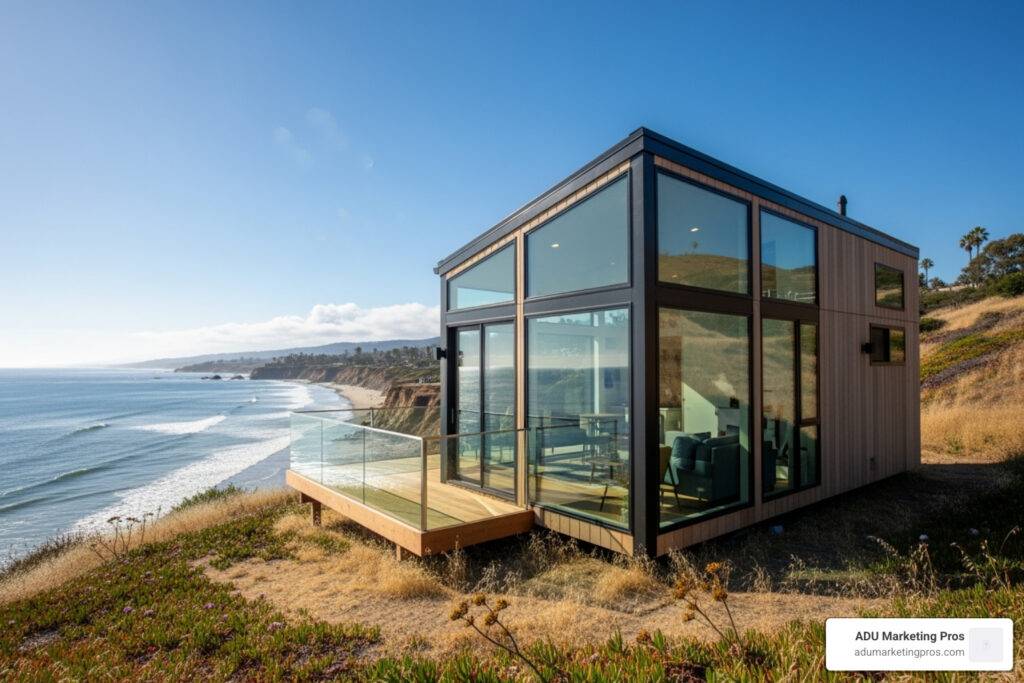
Why Tiny House Living is Changing Southern California’s Housing Landscape
Tiny house living in southern california has rapidly evolved from a niche, counter-cultural trend into a legitimate and increasingly popular solution to the region’s severe housing affordability crisis. As the median home price in counties like Los Angeles, Orange, and San Diego continues to climb into unattainable territory for many, the tiny house movement presents a compelling alternative rooted in financial freedom, sustainability, and intentional living. This shift is not just about smaller structures; it’s about a fundamental re-evaluation of the Southern California dream.
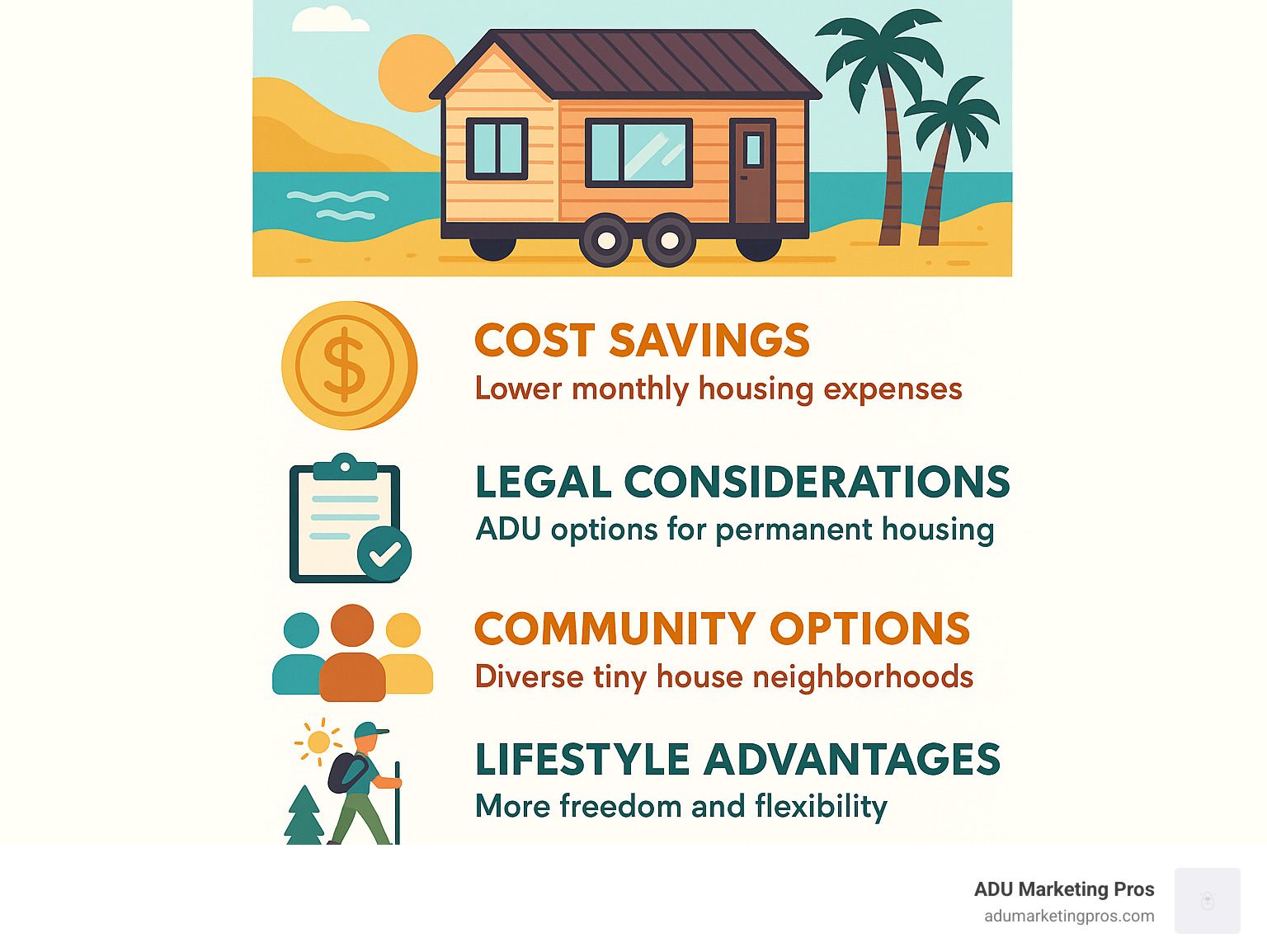
The core appeal is multifaceted. First and foremost is the potential for drastic cost reduction. By sidestepping conventional mortgages that can exceed $5,000 per month, residents can redirect their finances toward savings, travel, or entrepreneurial ventures. Secondly, the state’s progressive stance on Accessory Dwelling Units (ADUs) has created clear legal pathways for permanent, foundation-based tiny homes, lending the movement unprecedented legitimacy. Furthermore, these homes boast a significantly smaller environmental footprint, consuming less energy and generating less waste, which resonates deeply with California’s eco-conscious values. This combination of economic relief, legal viability, and sustainable principles is creating a powerful momentum.
However, the path is not without its obstacles. Aspiring tiny dwellers must steer a complex web of zoning laws that vary dramatically from one municipality to another. NIMBYism (“Not In My Backyard”) remains a significant hurdle, particularly in established suburban communities where fears about property values and neighborhood character persist. Despite these challenges, vibrant tiny home communities are taking root across the region, from rustic mountain retreats near Sequoia National Park to chic, resort-style villages in Palm Springs. For ADU construction firms, architects, and real estate professionals, this burgeoning market represents a substantial opportunity. The demand for expert guidance in navigating regulations, designing innovative small-space solutions, and building high-quality homes is surging as the tiny house movement becomes a permanent fixture in Southern California’s housing conversation.
Related content about tiny house living in southern california:
- places in southern california that allow tiny houses
- land for sale in southern california for tiny houses
- tiny house builders in southern california
The Legal Landscape: Navigating Tiny Home Rules in Southern California
If you’re dreaming of tiny house living in southern california, your first and most critical task is to understand the complex and often confusing legal landscape. Tiny homes frequently occupy a regulatory gray area, as most municipal zoning codes were written long before the concept of a 400-square-foot primary residence was considered viable. Rules can differ dramatically between neighboring cities and counties, making due diligence an absolute necessity.
Understanding Local Zoning and Placement
Across Southern California, local ordinances have historically presented major barriers. Many cities enforce minimum square footage requirements for new residential construction, often between 800 and 1,200 square feet, which automatically disqualifies most tiny homes. Orange County, for example, has a reputation for being particularly challenging due to its restrictive zoning and vocal NIMBY sentiment, where residents often oppose higher-density or alternative housing solutions. These problems are not just bureaucratic; they can result in fines or even eviction notices for non-compliant homeowners.
For Tiny Homes on Wheels (THOWs), the challenges are even more pronounced. Most jurisdictions classify THOWs as Recreational Vehicles (RVs), which severely limits where they can be legally parked and occupied full-time. This typically restricts them to designated RV parks, which may have their own rules regarding the age and appearance of the unit, as well as limits on the duration of stay. Placing a THOW on private residential land for long-term living is illegal in most Southern California cities, creating a frustrating legal limbo for owners seeking stability. Before purchasing a THOW or a plot of land, it is essential to visit your local city planning department and have a direct conversation about their specific regulations.
The Rise of ADUs as a Legal Tiny Home Alternative
Fortunately, a powerful legal pathway has emerged thanks to California’s pro-housing legislation regarding Accessory Dwelling Units (ADUs). State laws, significantly updated in recent years, have streamlined the approval process for ADUs and, crucially, override many restrictive local ordinances that previously blocked their construction. This has been a game-changer for tiny house living in southern california.
Unlike a THOW, an ADU is a permanent structure built on a foundation. It must be connected to utilities and comply with state and local building codes, just like a traditional home. This process, while more involved than simply parking a THOW, grants the tiny home full legal status as a habitable dwelling. This recognition is key: it allows the property to be properly insured, financed with more traditional loan products, and officially contributes to the property’s assessed value. Building an ADU can be a savvy financial investment, providing a source of stable rental income or multi-generational housing. For anyone serious about establishing a permanent, legal tiny home in Southern California, the ADU route offers the most secure and legitimate option available today. Exploring ADU Building Plans can be a great starting point to find designs that merge the tiny home aesthetic with full legal compliance.
Decoding the Costs of Tiny House Living in Southern California
While tiny house living in southern california is synonymous with affordability, the financial reality is more nuanced than simply buying a small structure. The total cost depends heavily on your choices: building it yourself versus hiring a professional, the type of home (on wheels vs. foundation), and, most importantly, the cost of land or lot rental in this high-priced region. A detailed financial breakdown is essential for realistic planning.
| Expense Category | Traditional SoCal Home (Avg. Monthly) | Tiny Home (Avg. Monthly, Community Living) |
|---|---|---|
| Mortgage/Rent | $3,250+ (2-bedroom apartment) | $450 – $1,200 (Lot Fee) |
| Utilities | $200 – $400 | $50 – $150 (Often included in lot fee) |
| Property Tax | $300 – $600 | N/A (if renting lot) or minimal (if owned) |
| Insurance | $100 – $200 | $50 – $100 |
| Total Estimated Monthly | $3,850 – $4,450+ | $550 – $1,450 |
The Price of a Tiny Home: What to Expect
The upfront cost of the home itself varies dramatically. A dedicated DIY builder with the right skills and access to affordable materials might complete a project for as little as $30,000 to $50,000. However, this requires a massive investment of time and labor. For those who prefer a turnkey solution, professional builders in California offer models ranging from $60,000 for a basic unit to over $150,000 for a high-end, custom-designed home with luxury finishes. The second-hand market, including platforms like Tiny House Listings, offers pre-loved homes, converted school buses (“skoolies”), and vans, which can be more affordable but require rigorous inspection. Financing is another key consideration. Since THOWs are often classified as RVs, buyers typically need to secure RV loans or personal loans, which can carry higher interest rates and shorter terms than traditional mortgages. For foundation-based ADUs, financing options are expanding, with some lenders offering renovation loans or home equity lines of credit.
Securing Your Spot: Land and Lot Fees
This is often the biggest financial hurdle in Southern California. Finding and affording a legal place for your tiny home is a major challenge. For those wishing to own land, the costs are steep. A small, buildable parcel in a desirable area can easily cost several hundred thousand dollars. Our analysis shows the average listing price for tiny homes sold with land is $313,810, with the land itself accounting for the vast majority of that cost. For more insight, see our guide on Land for Sale in Southern California for Tiny Houses.
A more common and affordable route is renting a spot in a tiny home community or an RV park. Monthly lot fees can range from around $450 at a basic park in a rural area like Lemon Cove Village to over $1,200 for a spot in a premium, resort-style community in a location like Palm Springs or San Diego. These fees often include essential utilities like water, sewer, and trash removal. Finally, placing a tiny home as a permanent ADU in a backyard eliminates monthly lot fees but involves significant upfront costs for permits, site preparation, foundation work, and utility connections, which can add $20,000 to $50,000+ to the project total.
Exploring Southern California’s Top Tiny Home Communities
One of the most exciting aspects of tiny house living in southern california is the growth of dedicated communities that provide legal placement and a built-in social network. These neighborhoods are thoughtfully designed to cater to a range of lifestyles, from rustic and nature-focused to luxurious and resort-inspired. They solve the primary problem of where to legally place a tiny home while fostering a strong sense of community.
For the Nature Lover: Tiny House Block (Mount Laguna)
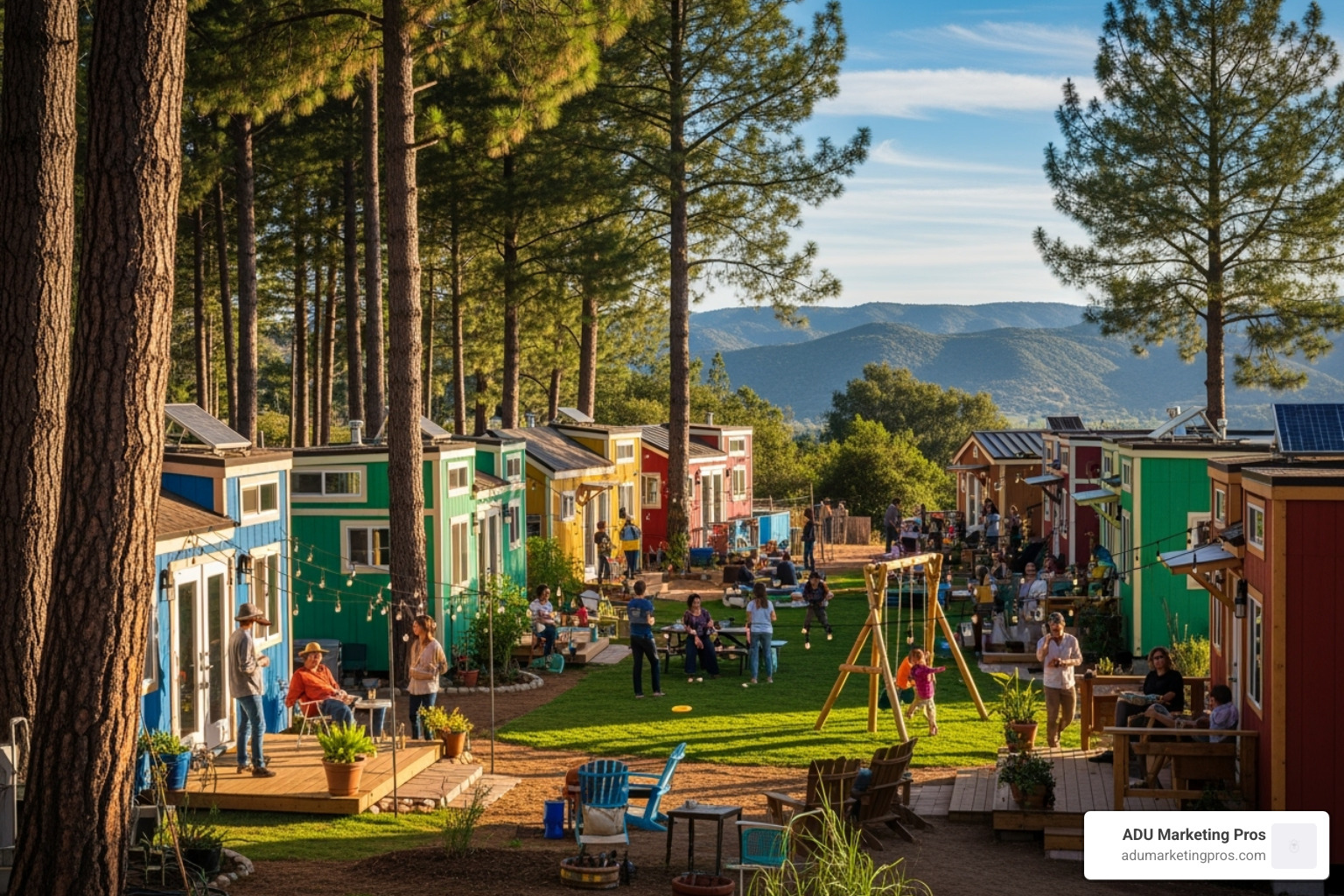
Perched in the Cleveland National Forest east of San Diego, Tiny House Block is a pioneering community that has successfully established a legal, long-term village for tiny homes on wheels. It’s a haven for outdoor enthusiasts who crave immediate access to hiking trails, fresh mountain air, and starry nights. The community is built on principles of sustainability and connection, featuring shared gardens, outdoor gathering spaces, and an on-site cafe. It offers a unique blend of off-grid-style wilderness living with the convenience of a structured community. You can Learn more about this unique community on their official website.
For the Luxury Seeker: Palm Canyon Mobile Club (Palm Springs)
This is not your average mobile home park. The Palm Canyon Mobile Club has redefined tiny living by infusing it with the iconic mid-century modern aesthetic of Palm Springs. This curated community functions more like a boutique resort, featuring a beautifully restored clubhouse, a large swimming pool, a fitness center, and carefully landscaped grounds. Residents can purchase stylish, pre-designed tiny homes (often referred to as ‘park models’) that fit the neighborhood’s design ethos. Its prime location provides easy access to the vibrant dining, shopping, and cultural scene of downtown Palm Springs, making it ideal for those who want a simplified lifestyle without sacrificing luxury and social amenities. This community is a leading example of the upscale tiny village trend, which also includes nearby destinations like the Find Paradise RV Park.
For the 55+ Crowd: A Look at Retirement Communities
Tiny living has become exceptionally popular among retirees and active seniors looking to downsize their homes and responsibilities while upgrading their lifestyle. Southern California offers numerous 55+ communities that are increasingly welcoming to modern park models and smaller manufactured homes. Places like Royal Palms in Cathedral City and various communities in the Temecula Valley are designed around social connection. They feature a packed calendar of organized activities, clubs, and events, from pickleball tournaments to craft fairs. These communities provide a low-maintenance, secure environment where residents can enjoy their retirement years, proving that the tiny living ethos of ‘less house, more life’ is a perfect fit for every stage of life.
Other Notable Spots and Finding Your Place
Other communities are scattered throughout the region, each with a unique character. Lemon Cove Village, near Sequoia National Park, offers a more rustic and affordable option for nature lovers. In the north Los Angeles County area, communities in Acton and the Antelope Valley provide space and a quieter, more rural setting. Finding the right community requires research. It’s wise to visit in person, talk to current residents, and thoroughly review the community rules, regulations, and fee structures before making a commitment.
The Pros and Cons of the Tiny Lifestyle in SoCal
Embracing tiny house living in southern california is a profound lifestyle change that extends far beyond the dimensions of your home. It’s a conscious decision to redefine your relationship with possessions, money, and time in a region known for its high costs and demanding pace. While the benefits are significant, it’s crucial to weigh them against the practical and psychological challenges.
The Benefits: Why People Choose Tiny House Living in Southern California
- Financial Freedom: This is the most powerful motivator. By drastically reducing or eliminating mortgage debt, homeowners free up a significant portion of their income. This newfound capital can be used to pay off other debts, build a robust savings account, invest, travel the world, or start a business. It’s a shift from being ‘house poor’ to being life rich.
- Environmental Impact: A smaller home inherently means a smaller carbon footprint. Tiny homes require fewer materials to build, consume significantly less energy for heating and cooling, and encourage a more sustainable lifestyle by limiting consumption. Many owners incorporate green technologies like solar panels and composting toilets, further reducing their environmental impact. These Eco-Friendly Small Homes are a direct answer to California’s sustainability goals.
- Minimalism and Intentional Living: The process of downsizing is often described as liberating. Paring down possessions to only the essential and meaningful forces a re-evaluation of personal values. This minimalist mindset often extends beyond physical objects, leading to a more intentional life focused on experiences, relationships, and personal growth rather than material accumulation. One inspiring journey is detailed in A 550-Square-Foot Tiny Home Cottage by the Sea.
- Mobility and Flexibility (for THOWs): For owners of Tiny Homes on Wheels, the ability to move their entire home to a new location offers unparalleled freedom. This is ideal for travel nurses, remote workers, or anyone who wants to explore different parts of the country without leaving home behind.
The Challenges: The Reality of Living Small
- Space Limitations and Downsizing: The reality of living in under 500 square feet requires discipline, creativity, and constant organization. Every item must have a purpose and a place. This can be challenging for couples, families with children, or those with hobbies that require significant space or equipment. The emotional process of letting go of sentimental possessions can also be surprisingly difficult.
- Zoning and Legal Instability: This remains the single biggest obstacle, especially for THOWs. The fear of being asked to move by a code enforcement officer can be a persistent source of stress and uncertainty. Navigating the patchwork of local regulations requires ongoing vigilance and advocacy.
- Practical and Utility Problems: Securing legal parking and reliable utility hookups (water, sewer, electricity) can be complex and costly. Off-grid solutions are an option but come with their own set of challenges related to maintenance, cost, and reliability.
- Social and Relationship Adjustments: Living in extremely close quarters can test even the strongest relationships, requiring excellent communication and a shared commitment to the lifestyle. Entertaining guests can be difficult, and you may find yourself constantly explaining your unconventional housing choice to curious or skeptical friends and family.
Your Path to Tiny Living: Resources and Next Steps
Starting on your journey toward tiny house living in southern california can feel daunting, but a wealth of resources and a supportive community are available to guide you through every step, from initial design to final placement.

Finding and Designing Your Perfect Tiny Home
Your first major decision is how to acquire your home. Southern California has a growing number of professionals ready to help.
- Professional Builders: Working with an established company is the most straightforward path. They handle the design, construction, and compliance with building standards. You can find a comprehensive list of vetted companies in our guide to Tiny House Builders in Southern California. These builders offer everything from pre-designed models to fully custom builds.
- Architects and Designers: For a truly unique home custom to your specific needs and property, consider hiring a specialist. Our list of Architects in Southern California Who Design Tiny Houses features professionals who excel at maximizing functionality and style in small footprints while ensuring compliance with ADU regulations.
- The DIY Route: For those with construction skills and ample time, building your own tiny home offers the ultimate customization and cost savings. This path requires extensive research. Websites like The Tiny Life offer workshops, plans, and guides. YouTube is an invaluable resource, with channels dedicated to every aspect of the build process, from framing to off-grid plumbing.
When designing, you’ll need to choose a style that fits your legal situation and lifestyle. THOWs provide mobility but face placement restrictions. Foundation-based ADUs offer permanent, legal stability and add equity to a property. Modular and container homes provide alternative aesthetics and construction methods that can speed up the building process.
Connecting with the Community and Finding Information
Connecting with people who are already living the lifestyle is one of the most valuable things you can do. The tiny house community is known for being open and supportive.
- Online Forums and Social Media: Facebook groups like “California Tiny House Community” and “Tiny House People” have tens of thousands of members who share advice, post listings for parking spots, and answer questions. The /r/tinyhouses subreddit is another active forum for discussion.
- Blogs and Personal Stories: Following the journey of others provides real-world insight. Blogs like Living Tiny in LA document a family’s experience integrating tiny living with urban farming in Los Angeles, offering practical tips and inspiration.
- Local Government Resources: Don’t underestimate the importance of direct research. Your local county’s Department of Building and Safety or Planning Department website is the authoritative source for ADU regulations, permit applications, and zoning information. Many, like the Los Angeles Department of Building and Safety, have dedicated ADU resource pages.
The Future of Tiny House Living in Southern California
The tiny house living in southern california movement has firmly transitioned from a fringe curiosity to an integral component of the region’s housing strategy. It is actively reshaping conversations among city planners, developers, and residents about what constitutes a home, a neighborhood, and a sustainable future in one of the nation’s most dynamic and challenging real estate markets.
How the Tiny Living Movement Aligns with California’s Goals
The rise of tiny homes directly addresses several of California’s most pressing statewide objectives. First, it offers a tangible, market-driven solution to the affordable housing crisis, providing a lower-cost entry point to homeownership. Second, the widespread adoption of ADUs supports goals for increased housing density in a gentle way, adding homes to existing residential lots without the need for large, disruptive apartment complexes that often face community opposition. Third, the movement is a powerful engine for environmental stewardship. The smaller physical and carbon footprint of tiny homes aligns perfectly with California’s ambitious climate goals, promoting energy efficiency and resource conservation on a per-capita basis.
What’s Next for Tiny House Living in Southern California?
The future of tiny living in Southern California is ready for significant growth and innovation. We anticipate several key trends will shape the landscape in the coming years:
- Evolving Legislation: Advocacy groups are actively working with state and local governments to create more explicit and favorable zoning for tiny homes, particularly for THOWs in ‘movable tiny house communities.’ We expect to see more cities adopting ordinances that legitimize this form of housing beyond traditional RV parks.
- Growth in Planned Communities: The success of pioneers like Tiny House Block and Palm Canyon Mobile Club will inspire a new wave of development. Expect to see more diverse community models, including agrihoods (communities centered around a farm), co-living arrangements with shared amenities, and communities custom to specific demographics like artists or remote workers.
- Innovation in Construction and Technology: Advances in prefabrication and modular construction will continue to make tiny homes faster to build and more affordable. The integration of smart home technology—from energy management systems to robotic, space-saving furniture—will make tiny living more efficient and comfortable than ever before.
- Mainstream Financial Acceptance: As tiny homes, especially ADUs, become more common, financial institutions will develop more custom loan products. We anticipate the emergence of better financing options for THOWs and more streamlined mortgage products for permanent tiny homes, making them accessible to a broader audience.
For firms in the construction, architecture, and real estate sectors, these trends signal a durable and expanding market. The demand for sustainable, innovative, and affordable housing solutions is not a fleeting trend. Partnering with marketing specialists who understand this unique niche, like ADU Marketing Pros, can provide a critical advantage in connecting with this growing client base.
Frequently Asked Questions about Tiny Homes in Southern California
Navigating tiny house living in southern california can bring up many questions. Here are concise answers to some of the most common inquiries we receive.
Is it legal to live in a tiny house in Southern California?
Yes, but the legality depends on the type of tiny home. Tiny homes built on a permanent foundation that are permitted as Accessory Dwelling Units (ADUs) are legal to live in full-time in most residential zones across the state. However, Tiny Homes on Wheels (THOWs) are generally classified as RVs. This means their full-time occupancy is typically restricted to designated RV parks or legally zoned tiny home communities. Placing a THOW in a residential backyard for permanent living is illegal in almost all Southern California cities.
How much does a tiny home in Southern California cost?
Costs are highly variable. A DIY build can be achieved for under $50,000 in materials, but this requires immense skill and time. Professionally built THOWs typically range from $60,000 to $150,000+. A permanent ADU-style tiny home often costs more, from $100,000 to $300,000+, once you factor in site prep, foundation, utility connections, and permits. If you need to purchase land, the total cost can easily exceed $400,000 due to Southern California’s high land values. Monthly lot rent in a community generally falls between $450 and $1,200.
Can I place a tiny house in my backyard in Southern California?
This is a critical distinction. You generally cannot legally live in a Tiny Home on Wheels (THOW) in your backyard. However, you absolutely can build a permanent tiny house on a foundation in your backyard if it is permitted as an Accessory Dwelling Unit (ADU). California state law strongly supports the development of ADUs, making this the most secure and value-adding way to create a small, secondary home on your property.
What are the insurance requirements for a tiny home?
Insurance also depends on the type. For THOWs, you’ll typically need RV insurance, which covers liability and the structure itself, especially during transport. Some specialized insurers offer more comprehensive ‘tiny home’ policies. For permanent ADUs, the structure is usually added to your existing homeowner’s insurance policy as a detached structure, which is a more straightforward and robust form of coverage.
How do property taxes work for a tiny home?
For a THOW parked in a community, you do not pay property tax; it’s registered with the DMV like a vehicle. For a permanent ADU, the value of the new unit will be assessed by the county, and your property tax bill will increase accordingly. However, this is often a modest increase and is offset by the significant value the legal dwelling unit adds to your property.
Conclusion: Is the Tiny Life in SoCal Right for You?
The decision to pursue tiny house living in southern california is more than a housing choice; it’s a deliberate move to reclaim your time, finances, and focus. It’s about prioritizing life experiences over square footage and seeking financial freedom in a region where traditional homeownership is increasingly out of reach. While the journey is not without its complexities—from navigating a patchwork of regulations to the personal challenge of radical downsizing—the pathways to a legal and fulfilling tiny life are more accessible than ever before.
The rise of Accessory Dwelling Units (ADUs) has provided a stable, legal foundation for the movement, while the emergence of dedicated tiny home communities offers solutions for those who prefer the mobility of a THOW. These developments are not happening in a vacuum; they directly align with California’s broader goals for creating more affordable, dense, and sustainable housing for its residents. This alignment ensures that the tiny house movement is not a passing fad but a key component of the state’s future.
For those contemplating this path, success lies in diligent research, realistic budgeting, and connecting with the vibrant community of builders, architects, and fellow homeowners. For professionals in the building industry, this growing market presents a clear and compelling opportunity. Partnering with experts like ADU Marketing Pros is essential to effectively reach and serve this expanding demographic. The tiny house movement offers a smaller, more intentional, yet incredibly powerful version of the California dream.
Ready to take the next step? Explore our deep dive into eco-friendly small homes and the future of housing in California to see how this sustainable lifestyle is reshaping our state.