
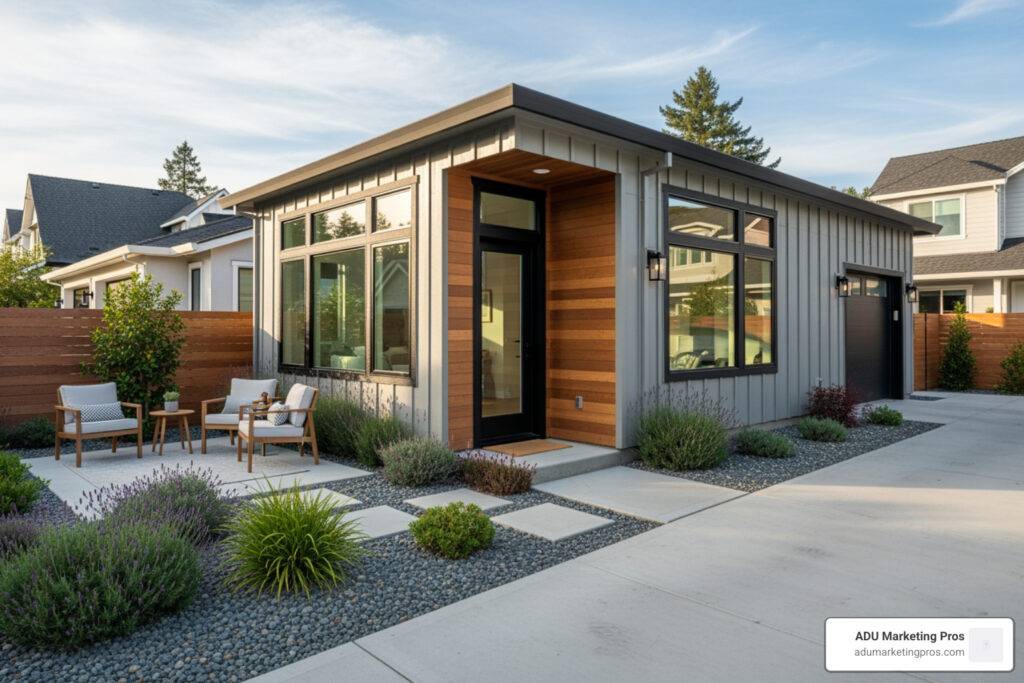
Why Garage ADU Plans Are Changing California Properties
Garage ADU plans offer homeowners a practical blueprint for converting underused garage space into fully functional living units. These plans typically range from 400 to 1,200 square feet and include detailed architectural drawings for studios or one-bedroom layouts, complete with kitchen, bathroom, and living areas.
Quick Answer: What You Need to Know About Garage ADU Plans
- Typical Size: 400-1,200 sq ft (average two-car garage is ~400 sq ft)
- Common Configurations: Studio, 1BR/1BA, or 2BR/1BA layouts
- Cost Range: $75,000-$150,000 for complete conversion
- Timeline: 3-6 months from permit to completion
- Property Value Add: $75,000-$150,000
- Rental Income Potential: $1,500-$3,500/month
- Plan Types: Pre-designed, semi-custom, or fully custom architectural plans
Your garage sits there every day, probably storing boxes you haven’t opened in years or tools you rarely use. But that space could be doing so much more.
Across California, homeowners are finding that their garages hold untapped potential. Converting a garage into an ADU is one of the smartest housing solutions available today. It’s faster than building from scratch, more affordable than adding a full addition, and it maximizes space you already own.
The benefits extend far beyond just having extra room. A well-planned garage ADU increases your property value by tens of thousands of dollars. It can generate steady rental income that helps pay your mortgage. It provides independent living space for aging parents or adult children. And it addresses California’s housing shortage in a meaningful way.
This guide walks you through everything you need to know about garage ADU plans. We’ll cover why garage conversions make financial sense, how to steer the maze of available plans, what the construction process actually looks like, and how to overcome common challenges. Whether you’re a homeowner exploring options or a professional helping clients through the process, you’ll find the practical information you need to move forward with confidence.
Basic Garage ADU plans vocab:
Why a Garage Conversion is Your Smartest ADU Move
Converting your existing garage into an Accessory Dwelling Unit (ADU) is more than just a home improvement project; it’s a strategic investment with significant benefits. We’ve seen how homeowners in areas like Los Angeles, San Diego, and the San Francisco Bay Area are changing their properties and their lives through these conversions.
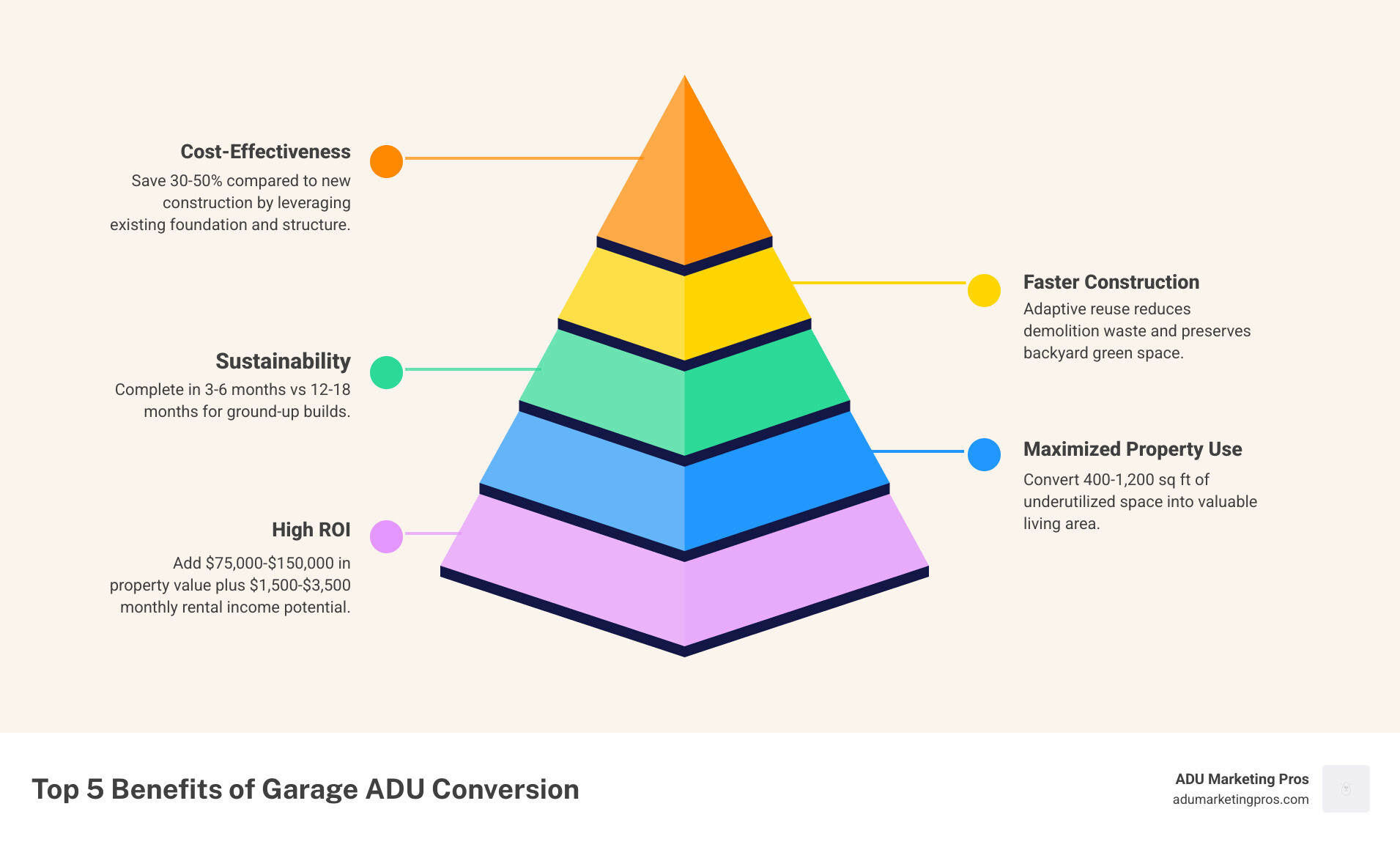
One of the primary advantages of a garage ADU is its cost-effectiveness compared to building a new structure from the ground up. By leveraging the existing foundation, walls, and roof of your garage, you can significantly reduce material and labor costs. This adaptive reuse approach also contributes to sustainability, minimizing demolition waste and preserving valuable backyard space. The Los Angeles County Building and Safety Division actively promotes the conversion of existing garages into ADUs as a sustainable solution to the housing crisis, highlighting the environmental benefits of repurposing existing buildings.
Beyond the initial savings, garage conversions boast faster construction timelines. While a brand-new ADU might take a year or more, most garage conversions can be completed in just 3-6 months from permit application to final touches. This includes an estimated 2-8 weeks for permits and 8-12 weeks for the actual construction. This quicker turnaround means you can start realizing the benefits—whether it’s housing family or generating income—much sooner.
Speaking of income, a well-executed garage ADU can significantly boost your financial standing. They are excellent for generating ADU Rental Income. We’ve seen potential rental income ranging from $1,500 to $3,500 per month, depending on location, size, and amenities. This consistent cash flow can help offset mortgage payments, fund future home improvements, or provide a steady stream of passive income.
Furthermore, these conversions lead to a significant property value increase. Well-executed ADU conversions typically add $75,000-$150,000 in property value. This makes a garage ADU a powerful asset, enhancing your home’s market appeal and long-term equity. The ADU Return on Investment is often impressive, making it one of the smartest investments you can make in your property.
Finally, garage conversions excel at maximizing existing footprint. They transform underused storage space into a highly functional living area, without encroaching on your yard or requiring extensive new construction. This makes them ideal for property owners who want to add value and utility without sacrificing precious outdoor space.
Navigating the World of Garage ADU Plans
Choosing the right Garage ADU plans is the critical first step in changing your garage. This decision impacts everything from the final cost and timeline to the functionality and aesthetic appeal of your new living space. Homeowners have a range of options, from readily available pre-designed plans to fully customized architectural solutions.
For many, starting with ADU Building Plans from an online catalog can be a great way to visualize possibilities and accelerate the design process. These plans often come with detailed blueprints, material lists, and even AutoCAD files, as highlighted by customer testimonials for various ADU plan providers. However, these are often general designs and may require modifications to comply with local regulations in cities like San Jose, Palo Alto, or San Francisco. Custom architectural designs, while potentially more expensive upfront, offer the flexibility to perfectly tailor the ADU to your specific needs, property layout, and local zoning requirements.
Understanding Common Layouts and Sizes
The beauty of garage conversions lies in their adaptability. An average two-car garage, typically around 400 square feet (20ft x 20ft), offers a fantastic canvas for a studio or a small one-bedroom ADU. This is a common starting point for many homeowners.
- Studio layouts are perfect for maximizing open space within a compact footprint. They often feature an open-plan living area that integrates sleeping, living, and a kitchenette, making them ideal for solo occupants, guest suites, or even a dedicated home office. Our Studio ADU Floor Plans are designed with efficiency in mind.
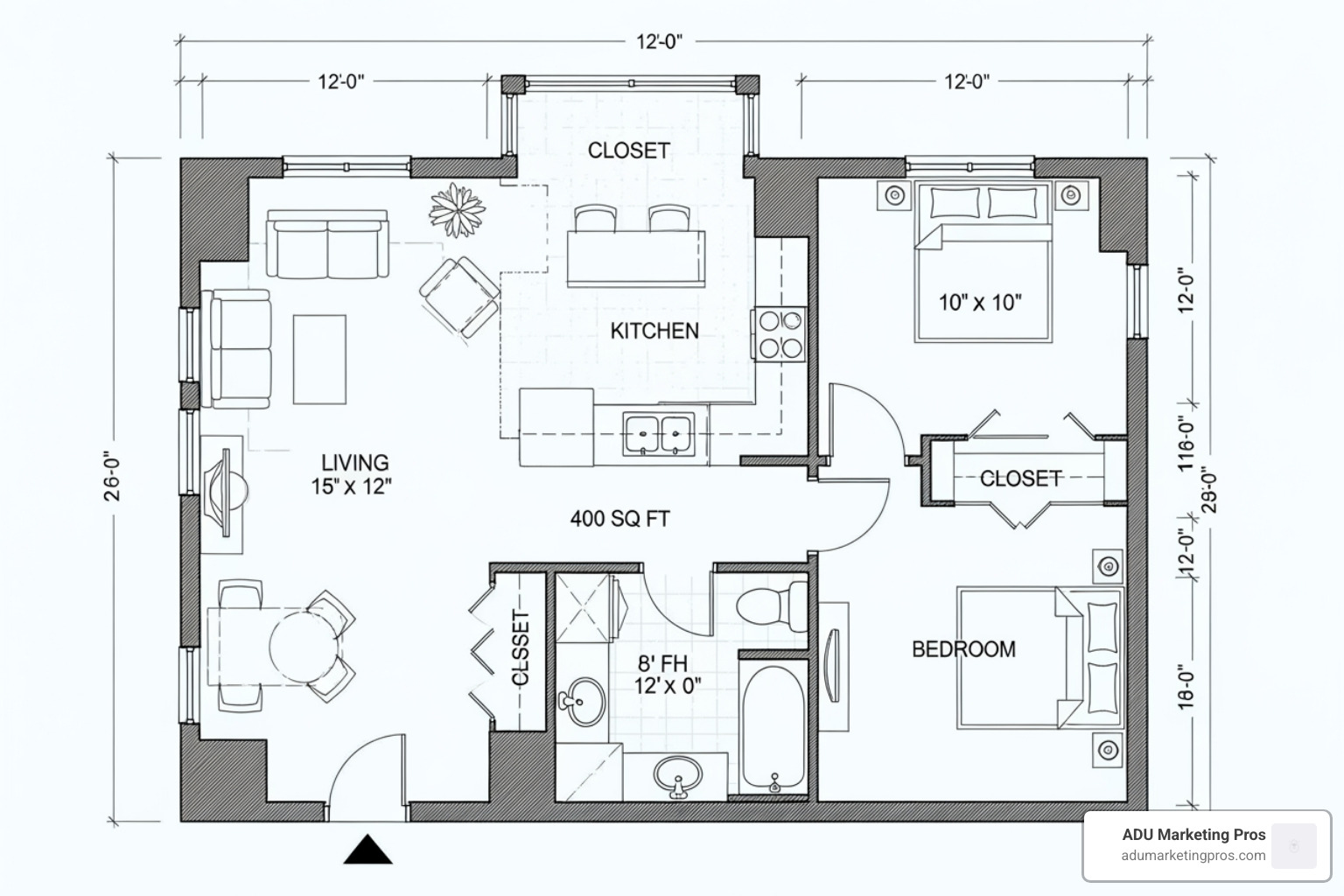
- One-bedroom designs can comfortably fit within a 400-500 square foot garage, offering a separate sleeping area for added privacy. These often include a compact kitchen, a living space, and a full bathroom. For example, a thoughtfully designed 20’x20′ garage ADU renovation can offer a 1 bedroom, 1 bath, and a modern open-plan kitchen and living layout. You can explore various 400 Square Foot ADU Plans to see what’s possible.
- For larger garages or those considering building an ADU above an existing garage, larger one-bedroom or even two-bedroom configurations are possible. We’ve seen plans ranging from 400 sq ft to 690 sq ft for one-bedroom units, providing ample space for comfortable living. The key is maximizing small spaces through clever design, such as built-in storage, multi-functional furniture, and open-plan concepts that create a sense of spaciousness.
Key Design Considerations for Your Garage ADU Plans
Beyond just the layout, several design elements are crucial for creating a comfortable, functional, and appealing garage ADU:
- Natural Light and Ventilation: Garages often lack sufficient natural light. Incorporating new windows, skylights, and even glass doors can dramatically improve the interior ambiance and reduce the need for artificial lighting.
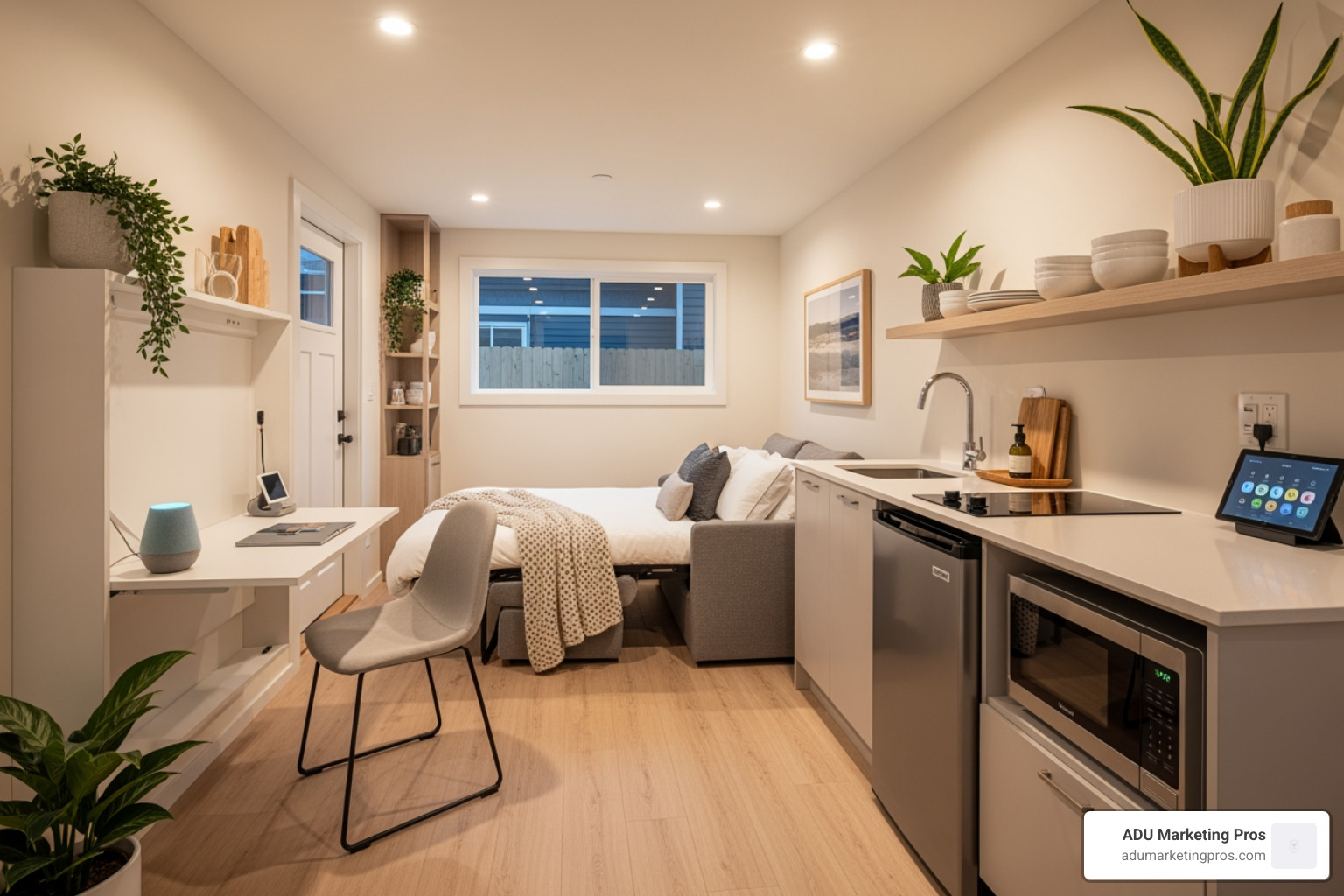
- Space-Saving Solutions: Every square foot counts in an ADU. Consider built-in shelving, Murphy beds, compact appliances, and multi-functional furniture to make the most of the available area.
- Efficient Kitchen and Bathroom Layouts: ADU Kitchen Ideas often revolve around compact, yet highly functional designs. Similarly, bathroom layout efficiency is key, utilizing corner sinks or wet-room concepts where appropriate.
- Separate Entrance and Privacy: For rental income or multi-generational living, a dedicated, private entrance is essential. Strategically placed windows and landscaping can also improve privacy from the main house. Our ADU Interior Design Ideas emphasize both aesthetics and functionality, ensuring your ADU feels like a true home.
How to Choose the Best Garage ADU Plans and Professionals
Finding the right plans and the right team is paramount.
- Online Plan Catalogs: Websites like Zonda Home offer a searchable database of pre-designed ADU plans, including garage apartments. You can filter by bedrooms, bathrooms, square footage, and even the number of garages. Platforms like Etsy also host affordable digital plans from independent designers.
- Architects vs. Designers: For a truly unique vision or complex site, hiring an architect provides bespoke solutions. For more straightforward conversions, a qualified designer specializing in ADUs can offer excellent value.
- City Pre-Approved Plan Programs: Many California cities, including San Jose and San Diego, offer pre-approved ADU plans. These can significantly streamline the permitting process, as they already meet local building codes and zoning requirements. This is a fantastic option if one of these plans suits your needs.
- Vetting Contractors and Builders: Always look for Custom ADU Builders with specific experience in ADU conversions. Check their licenses, insurance, and portfolios of previous work. Ask for references and visit completed projects if possible. For example, in San Diego, you’d want to find ADU contractors with a strong local reputation.
The A-to-Z Garage Conversion Process: From Blueprint to Reality
Changing your garage into an ADU is an exciting journey, but it requires a clear roadmap. The process typically involves several key stages, from initial planning to the final move-in. Understanding these steps will help you manage expectations and ensure a smooth project.
The entire ADU Building Process can be summarized into a few critical phases: a thorough feasibility study to assess your property’s potential, the detailed design phase where your plans come to life, navigating the permitting labyrinth, the actual construction stages, and finally, the crucial final inspection before occupancy.
Step 1: Planning and Budgeting
Before any hammer swings, careful planning and budgeting are essential. We recommend starting with a thorough assessment of your existing garage’s condition, including its foundation, walls, and roof. This helps in defining realistic project goals and identifying potential structural challenges early on.
Next, it’s crucial to estimate the total costs involved. Garage conversions typically cost between $75,000 and $150,000, but this can vary significantly based on size, location, and the quality of finishes you choose. This estimate should include everything from architectural fees and permits to construction materials and labor. Our Garage Conversion Cost Calculator can give you a preliminary estimate. Once you have a clear budget, you can explore various ADU Financing Options to secure the necessary funds.
Step 2: Permits and Regulations
Navigating the permit process is often considered the most challenging part of an ADU conversion. However, understanding the requirements upfront can save you considerable time and stress.
California has progressive statewide ADU laws that have streamlined the process, but local zoning laws and building codes still apply and can vary significantly from city to city. You’ll need to familiarize yourself with California ADU Regulations as well as specific guidelines for your municipality, whether that’s Los Angeles, San Francisco, San Jose, or other cities in the Bay Area.
The ADU Permit Process typically involves submitting detailed architectural plans to your local planning and building departments. In Los Angeles County, for instance, the Department of Public Works offers a Garage Conversion to ADU Program and a comprehensive Homeowner Guide to Garage Conversion that outlines the architectural plan requirements and eligibility criteria for streamlined permits. Similarly, San Francisco provides ADU Garage Conversion Guidelines to help homeowners with sensitive planning and design integration.
A common question homeowners have is about parking requirements. Thanks to recent ADU laws, many California cities now allow garage conversions without requiring you to replace the parking space. However, this varies, so it’s crucial to check with your specific city’s planning department.
Permit acquisition can take 2-8 weeks, but with well-prepared plans and a clear understanding of local requirements, this phase can be managed efficiently.
Step 3: Construction and Finishing
Once your permits are in hand, the construction phase begins. This is where your Garage ADU plans truly come to life.
Key steps include:
- Foundation Repair and Reinforcement: Garages are built for vehicles, not living. The foundation may need reinforcement or repairs to meet residential code.
- Framing and Structural Changes: This involves framing out interior walls, adding new window and door openings, and potentially reinforcing the roof structure.
- Utility Connections: This is a major undertaking. You’ll need to extend plumbing for the kitchen and bathroom, run new electrical lines, and install an HVAC system for climate control. Proper insulation is also critical to meet energy efficiency standards.
- Insulation and Drywall: Once utilities are roughed in, insulation is added, followed by drywall to create the interior walls.
- Interior Finishes: This is where your design choices shine, including flooring, cabinetry, countertops, fixtures, and paint. Our ADU Exterior Design guide can help you ensure the outside is as appealing as the inside.
- Exterior Upgrades: This might involve new siding, windows, or landscaping to integrate the ADU seamlessly with your main home.
The construction phase itself typically takes 8-12 weeks. Combined with the permitting process, the entire project from permit application to completion often falls within the 3-6 month timeframe.
Overcoming Challenges and Ensuring Success
While the benefits of garage ADU conversions are compelling, the project isn’t without its potential problems. Being aware of these challenges upfront and having a plan to address them is the key to a successful build that stays on time and on budget.
Addressing Common Structural and Permitting Pitfalls
One of the most significant hurdles in a garage conversion involves the existing structure itself. Garages are built to a different standard than living spaces, which can lead to unforeseen complications and costs.
- Structural Integrity Assessment: Before you even finalize your Garage ADU plans, a thorough structural assessment by a qualified engineer is critical. They will inspect the foundation for cracks or instability—garage slabs are often thinner and may need reinforcement or a new, thicker slab poured over the top to support a living space. They’ll also check the wall framing for rot or termite damage and ensure the roof structure can support the added weight of insulation, drywall, and potentially new roofing materials.
- Seismic Retrofitting: In earthquake-prone California, seismic retrofitting is a non-negotiable aspect of many conversions. This may involve anchoring the walls to the foundation with bolts, reinforcing cripple walls, and adding shear walls (plywood sheathing) to prevent collapse during an earthquake. These requirements are strict and add to the project’s complexity and cost.
- Dealing with Unpermitted Structures: Many older garages have had modifications or additions done over the years without proper permits. If a city inspector discovers unpermitted work, they will issue a stop-work order until the entire structure is brought up to current code. This can involve a lengthy and expensive process of “as-built” drawings, engineering reports, and potentially tearing out and redoing the unpermitted work. It’s crucial to investigate your property’s permit history with the local building department early on.
- Utility Tie-in Complexities: Connecting new utilities is more than just running a few pipes and wires. Sewer lines must have the correct slope to drain properly, which can be challenging if the garage is far from the main sewer line, sometimes requiring a new sewer lateral or a sewage ejector pump. Electrical upgrades often necessitate a new, larger main service panel for the entire property to handle the increased load. Water and gas lines must be trenched and properly connected, all of which requires skilled, licensed professionals.
Effective budget management is crucial to navigate these issues. We always recommend building in a contingency fund of at least 15-20% of the total project cost to cover these common but unexpected expenses. Our ADU Conversion Tips offer more insights on avoiding these pitfalls.
Sustainability and Energy Efficiency
In California, building codes place a strong emphasis on energy efficiency and sustainability. When planning your garage ADU, integrating these elements from the outset is not only environmentally responsible but also legally required.
- Title 24 Compliance: This is California’s energy efficiency standard for buildings. Your ADU will need to meet these rigorous requirements, which often involves high-performance insulation (in walls and ceiling), efficient windows, and proper ventilation to ensure good air quality.
- Cool Roofs: Many areas require or encourage cool roofs, which are designed to reflect more sunlight and absorb less heat, significantly reducing cooling costs during hot California summers.
- High-Efficiency Windows and Doors: Investing in quality, dual-pane, low-E windows and well-sealed doors will help maintain indoor temperatures and reduce your energy bills.
- Solar Panel Readiness: Even if you don’t install solar panels immediately, designing your ADU to be “solar-ready” by including the necessary conduit and structural support can save money and hassle down the line.
- Smart Home Technology: Integrating smart thermostats, LED lighting, and Energy Star-rated appliances can further improve energy savings and convenience for you or your tenants.
- Water-Saving Fixtures: Low-flow toilets, showerheads, and faucets are essential for water conservation, a critical consideration in drought-prone regions of California.
Navigating City-Specific Requirements
While California’s statewide ADU laws have provided a framework, the specifics of your garage conversion will still be heavily influenced by your local municipality. Each city and county has its own nuances in terms of setbacks, size restrictions, parking requirements, and design guidelines.
For example, cities like San Jose and San Diego have adopted pre-approved ADU plans, which can significantly speed up the permitting process by offering compliant designs that have already been reviewed by the city. These programs are designed to make it easier and more affordable for homeowners to build ADUs.
In Los Angeles, you’ll need to consult the ADU Guidelines Los Angeles to understand specific requirements for your area. The LA County’s Homeowner Guide to Garage Conversion provides an in-depth look at their streamlined permitting process and architectural plan requirements. Similarly, San Jose has its own set of San Jose ADU Guidelines, and San Diego operates under specific San Diego ADU Laws.
It’s crucial to understand these local variations in setbacks and size to ensure your Garage ADU plans are compliant. For instance, some cities might have specific requirements for emergency access, fire-rated walls (especially if the ADU is close to the property line or main house), or architectural consistency with the main dwelling. Always check with your local planning department or a knowledgeable ADU professional in your area (like those serving Sunnyvale, Palo Alto, Mountain View, or Menlo Park) to get the most accurate and up-to-date information for your specific property.
Frequently Asked Questions about Garage ADU Conversions
We get a lot of questions about garage ADU conversions, and for good reason! It’s a significant project with many moving parts. Here are some of the most common inquiries we receive:
How much does a garage to ADU conversion cost?
The typical cost for a garage to ADU conversion in California ranges from $75,000 to $150,000. However, this is a broad estimate. The final cost will depend on several factors, including:
- Size: Larger ADUs generally cost more.
- Location: Construction costs can vary by city within California.
- Finish Quality: High-end materials and custom features will increase the price.
- Existing Condition of the Garage: Significant structural repairs or utility upgrades can add to the budget.
To get a more personalized estimate for your project, we highly recommend using a Garage Conversion Cost Calculator. This can provide a preliminary estimate custom to your specific needs.
How long does a garage conversion take?
From start to finish, most garage conversions take an average of 3-6 months. This timeline can be broken down into two main phases:
- Permitting: The permit application and approval process typically takes 2-8 weeks. This can sometimes be longer if your plans require extensive revisions or if your local planning department has a backlog.
- Construction: Once permits are secured, the actual construction work usually takes 8-12 weeks. This includes everything from foundation work and framing to utility installations and interior finishes.
While these are general averages, delays can occur due to unforeseen structural issues, material shortages, or weather. Having realistic expectations and a good project manager can help keep things on track.
Do I need to replace the parking space I’m converting?
This is fantastic news for many homeowners: in many California cities, you are generally not required to replace the parking space you’re converting into an ADU. Recent statewide ADU laws have largely eliminated this requirement, recognizing the need for more housing density.
However, it’s crucial to verify the specific regulations in your local jurisdiction. While the state law provides broad allowances, local ordinances can still have some variations. Always check with your city’s planning department (e.g., in Los Angeles, San Diego, San Francisco, San Jose, Sunnyvale, Palo Alto, Mountain View, or Menlo Park) to confirm the exact ADU Parking Requirements applicable to your property. This ensures you avoid any surprises during the permitting process.
Conclusion: Your New ADU Awaits
Converting your garage into an Accessory Dwelling Unit is a powerful way to open up hidden potential on your property. We’ve explored how well-crafted Garage ADU plans can transform an underused space into a valuable asset, offering significant financial and lifestyle advantages. From boosting your property value by $75,000-$150,000 and generating $1,500-$3,500 in monthly rental income, to providing flexible living solutions for family or guests, the benefits are clear. The process, while involving careful planning and adherence to local regulations, is a manageable 3-6 month journey from blueprint to reality.
As we’ve seen, success hinges on understanding the design considerations, navigating permits in specific California cities like Los Angeles, San Diego, and San Jose, and addressing potential construction challenges. By choosing the right plans and partnering with experienced professionals, your dream ADU can become a tangible reality.
For builders and architects specializing in these transformative projects, effective marketing is key to connecting with homeowners eager to start on this journey. This is where ADU Marketing Pros steps in, helping firms like yours stand out in a competitive market by focusing on your expertise.
Ready to take the next step and explore the full potential of your garage? Explore our comprehensive guide to ADU Garage Conversions to dig deeper into each aspect of this exciting home improvement. Your new ADU awaits!