

What Are Tiny Home Resorts (and Which Ones Are Worth Booking)?

Tiny home resorts are vacation destinations where guests stay in fully furnished dwellings typically under 500 square feet — think clever lofted beds, compact kitchenettes, and cozy decks, all nestled in scenic natural settings. These resorts represent the intersection of the “slow travel” movement and the architectural ingenuity of the tiny house revolution. Instead of a sterile hotel room, you are booking a self-contained ecosystem designed to maximize every square inch of living space while minimizing your environmental footprint.
In the modern travel landscape, travelers are increasingly seeking “experiential” stays. They want more than just a place to sleep; they want a story to tell. Tiny home resorts provide exactly that. Whether it is the novelty of climbing a ladder to a cozy sleeping loft or the satisfaction of seeing how a full kitchen can fit into a space the size of a walk-in closet, these resorts offer a sensory experience that traditional hospitality simply cannot match. The smell of cedar wood, the sound of rain on a metal roof, and the intimacy of a space designed for connection rather than consumption are all part of the draw.
Here are some of the top tiny home resorts worth booking right now:
- Mt. Hood Tiny House Village – Sandy, Oregon (near Mt. Hood National Forest)
- WeeCasa – Lyons, Colorado (gateway to Rocky Mountain National Park)
- Fireside Resort – Wilson, Wyoming (luxury cabins for 4-6 guests)
- A Tiny House Resort – South Cairo, New York (great for groups up to 30)
- Orlando Lakefront – Orlando, Florida (lake access, 2-5 guests)
- Tiny Home Resorts – Denison, Texas (28 units near Lake Texoma, 4.8 stars)
- Rocky Valley Resort – Texada Island, BC (forest spa, cedar sauna, e-bikes)
Unlike a standard hotel or campground, tiny home resorts give you something different: a real taste of tiny living without the commitment of buying or building your own home. They serve as a bridge between the ruggedness of camping and the comfort of a boutique hotel. You get the proximity to nature that you would find at a campsite, but with the climate control, high-end linens, and private plumbing of a luxury suite.
They’re ideal for anyone curious about the tiny home lifestyle — or anyone who simply wants a more intimate, nature-focused getaway. The tiny home movement has grown steadily, with over 10,000 tiny homes now in the U.S. and nearly two in five tiny homeowners over the age of 50. Resorts have followed that wave, popping up from the Oregon forest to the Gulf Islands of British Columbia. This demographic shift proves that tiny living isn’t just for young nomads; it is a viable lifestyle choice for retirees looking to downsize and simplify their lives.
Whether you want a forest spa retreat, a lakeside fishing base, or a quirky weekend escape, there’s a tiny home resort for you. These destinations are often located in “gateway” towns—places that sit on the edge of national parks or scenic wilderness areas—making them the perfect basecamp for outdoor enthusiasts who don’t want to sacrifice comfort.
Quick Tiny home resorts terms:
The Rise of the Tiny Home Movement
The tiny home movement didn’t just happen overnight. While humans have lived in small spaces for centuries—from nomadic yurts to urban studio apartments—the modern iteration of “tiny living” as a social and architectural movement traces its roots back to Portland, Oregon, in 1997. It was during this time that changes in Accessory Dwelling Unit (ADU) regulations allowed for more creative Small Houses to take shape. Pioneers like Jay Shafer began popularized the idea of a “house on wheels,” which bypassed many of the traditional building codes that mandated minimum square footage.
However, the movement truly exploded into the mainstream during the 2007-2008 financial crisis. As traditional housing became less attainable and the “McMansion” era faced a cultural backlash, many people began looking for Small Houses for Sale as a way to achieve financial freedom and a simpler lifestyle. The movement became synonymous with the “debt-free” lifestyle, allowing individuals to own their homes outright without a 30-year mortgage.
Today, there are more than 10,000 tiny homes across the United States. While the media often portrays tiny living as a trend for millennials seeking Instagrammable aesthetics, statistics show a significant demographic shift: approximately 40% of tiny homeowners are actually over the age of 50. This group is often looking to downsize for retirement, seeking the psychological benefits of downsizing such as reduced stress, less maintenance, and a closer connection to nature. For many seniors, the tiny home represents a way to age in place while remaining close to family or living in a vibrant, supportive community.
The Philosophy of Minimalism and Intentional Living
At its core, the tiny home movement is about intentionality. It is about asking the question: “How much space do I actually need to be happy?” By stripping away the excess, tiny home dwellers find they have more time and resources to spend on experiences rather than possessions. This philosophy is what makes tiny home resorts so popular. They allow guests to step into this mindset for a few days, experiencing the liberation that comes from having everything you need within arm’s reach.
This shift toward minimalism is also reflected in the design of the homes themselves. Architects focus on “biophilic design,” which seeks to connect occupants more closely to nature. This is achieved through large windows that frame the landscape, the use of natural materials like wood and stone, and outdoor living spaces that blur the line between inside and out.
Why Tiny Home Resorts are the Ultimate “Try Before You Buy” Experience
If you have ever scrolled through Instagram and wondered if you could actually live in 200 square feet, tiny home resorts offer the perfect low-commitment trial. It is one thing to look at photos of Tiny House Builders California projects, but it is another thing entirely to try and cook a meal or sleep in a lofted bed. You might discover that you love the cozy feel of a loft, or you might realize that your knees prefer a ground-floor bedroom.
These resorts function as a living laboratory for lifestyle testing. You can experience the nuances of the ADU vs Tiny House debate firsthand. While an ADU is a permanent structure on a foundation, many tiny homes in resorts are built on trailers (THOWs), offering a unique architectural inspiration for how to maximize space efficiency. Staying at a resort allows you to see how creative storage, such as stairs that double as drawers or tables that fold into the wall, can make a small footprint feel like a mansion. It also gives you a chance to test out different “off-grid” technologies, such as composting toilets or solar power systems, in a controlled environment.
Top Tiny Home Resorts for Your Next Getaway
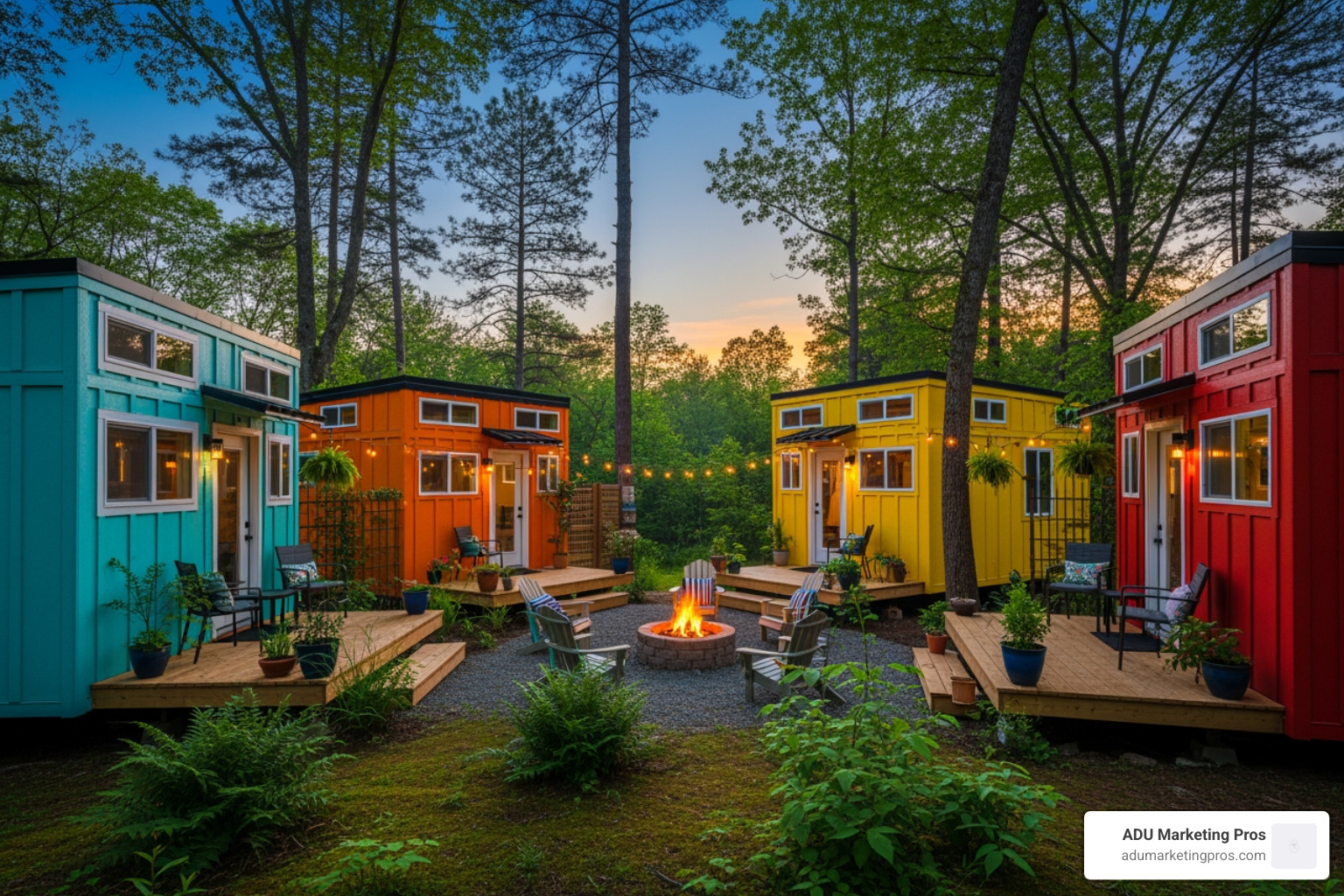
When we look for the best tiny home resorts, we look for variety in destination and experience. From the rugged Pacific Northwest to the sunny shores of Florida, these locations offer more than just a bed; they offer an immersion into a different way of life. Each resort has its own personality, often reflecting the local culture and geography.
- Mt. Hood Tiny House Village: Located just an hour outside of Portland, this village is the perfect starting point given Oregon’s history with the movement. Nestled near the Mt. Hood National Forest, these homes accommodate 3 to 7 guests using clever lofted bedrooms. Each house has a name and a theme, such as “Atticus” or “Lincoln,” providing a personalized touch to your stay. It is an ideal spot for hikers in the summer and skiers in the winter.
- WeeCasa: Located in Lyons, Colorado, this is currently the largest tiny home resort in the world. It was born out of a community effort to recover from major flooding, showing the resilience of the tiny home model. The resort features a wide variety of architectural styles, from modern industrial to whimsical fairytale cottages. Its location near the St. Vrain River makes it a prime spot for fly fishing and tubing.
- Fireside Resort: If you are looking for luxury in Wyoming, these 25 cabins near Jackson Hole offer high-end amenities for up to 6 guests. These units are “Wedge” models, known for their iconic sloped roofs and massive glass walls. They offer a sophisticated take on the rustic cabin, featuring Tempur-Pedic mattresses and private fire pits.
- A Tiny House Resort: Located in the Catskill Mountains of New York, this resort is a favorite for groups, offering 15 homes and activities like goat yoga. The resort is situated on 28 acres of woods and cliffs, with a waterfall and a creek running through the property. It is a masterclass in how to create a community atmosphere, with shared gardens where guests can pick their own vegetables.
- Orlando Lakefront: This resort is a reimagined RV park in Florida that offers 14 tiny home options and even allows you to bring your own tiny home on wheels to rent a slip. It is located on the shores of Lake Fairview, offering a peaceful escape just minutes away from the chaos of the major theme parks. Guests can rent kayaks or paddleboards to explore the lake.
Luxury and Nature at Rocky Valley Resort
For those of us willing to travel a bit further north, Rocky Valley Resort on Texada Island, BC, offers a “Forest Spa” experience that is truly unique. To get there, you’ll take a ferry from Powell River or even arrive by seaplane. Once on the island—the largest of BC’s Gulf Islands—you are surrounded by lush forests and clifftop views. This is “off-the-beaten-path” travel at its finest.
The accommodations here include the “Pine Perch,” a treehouse-style unit for two (starting around $400 CAD/night), and “Shady Pine,” which sleeps six ($275 CAD/night). The resort features a clifftop 12-person cedar sauna, hot tubs, and cold plunges. The focus here is on wellness and reconnection. When you aren’t relaxing, you can take advantage of e-bike rentals, paddle boarding, or side-by-side tours to explore the island’s raw nature, including hidden quarries and secluded beaches.
Community Living at Hope Valley Resort
In Turner, Oregon, Hope Valley Resort focuses heavily on the community aspect of tiny living. While they offer short-term stays, they are also a primary destination for those looking to purchase a park model home and join a permanent community. This resort is designed for those who want to see what it is like to live in a tiny home neighborhood long-term. We recommend following their Instagram and Facebook to see resident testimonials and get a feel for the day-to-day life.
If you are considering a move to a community like this, taking one of their community tours is essential. It allows you to speak with people who have already made the leap and see the quality of work from Tiny House Builders in Southern California and beyond who supply these parks. You’ll learn about the logistics of land leasing, utility hookups, and the social dynamics of living in close proximity to your neighbors.
What to Expect: Accommodations and Amenities
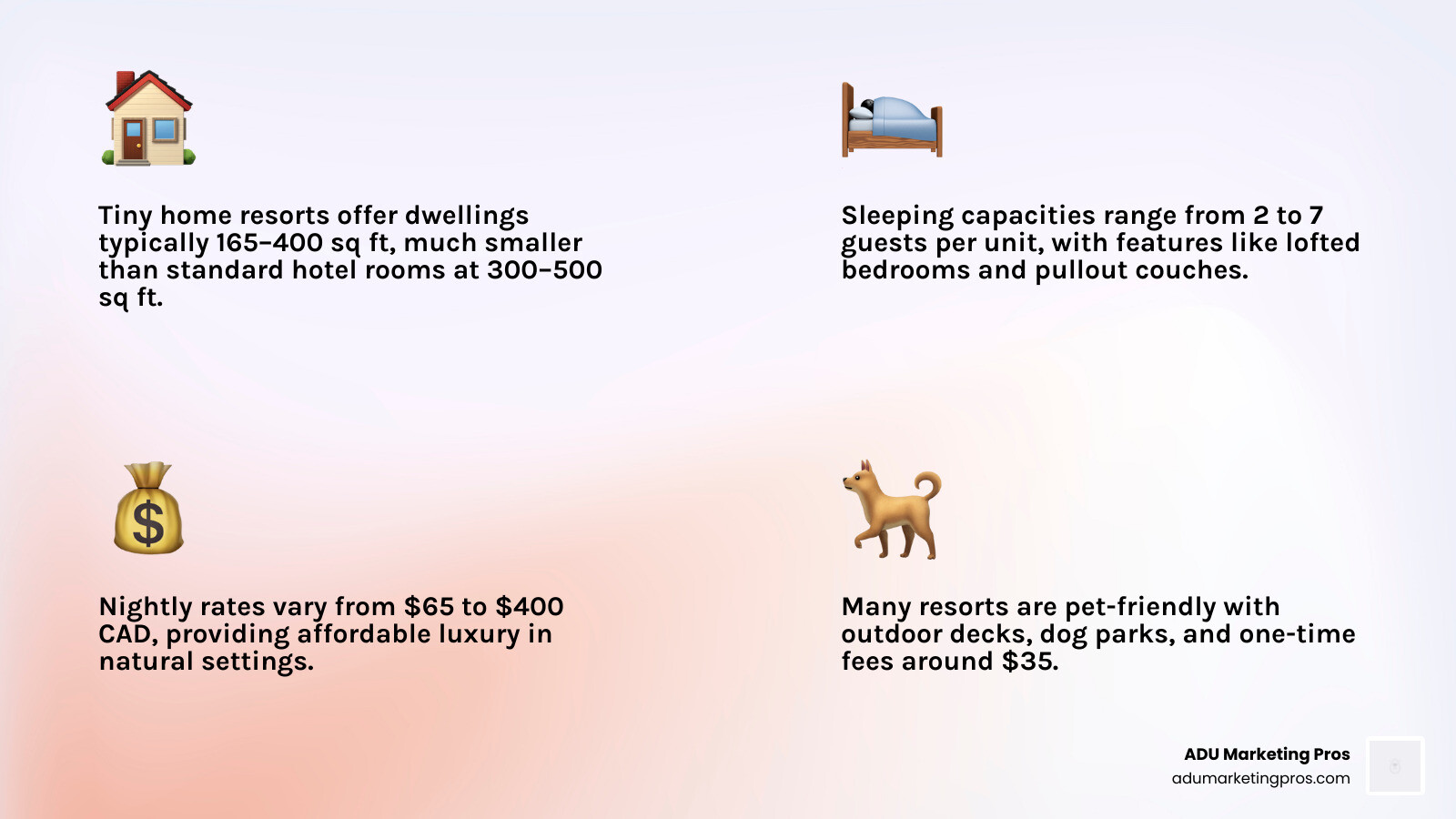
Don’t let the “tiny” label fool you. Modern tiny homes are masterpieces of engineering and interior design. Most units in tiny home resorts range from 165 to 400 square feet. Despite the small footprint, they often feel spacious thanks to high ceilings, strategic lighting, and large windows that draw the eye outward. The goal of tiny home design is to eliminate “dead space,” ensuring that every corner of the home serves a purpose.
Sleeping capacities are surprisingly high; many homes can comfortably sleep 4 to 6 people by utilizing lofted bedrooms, pullout couches, and even Murphy beds that disappear into the wall during the day. For those looking at a Tiny House San Francisco style of living, you’ll find that these units often include full bathrooms with standard-sized showers, upscale finishes like granite or quartz countertops, and creative storage solutions that tuck away your belongings without cluttering the living space.
Signature Amenities at Tiny Home Resorts
Staying at a tiny home resort isn’t just about the house; it’s about the shared spaces and the lifestyle amenities that come with the property. Many resorts, such as the one in Denison, TX, feature:
- Clubhouses and Mercantiles: Central hubs for socializing, grabbing a craft beer, or buying local artisanal goods.
- Active Recreation: Pickleball courts, human foosball, swimming pools, and hiking trails that start right at your doorstep.
- Pet Perks: Dedicated dog parks, wash stations, and even “yappy hours” so your furry friends can burn off energy and socialize.
- Unique Experiences: From goat yoga and honey harvesting in the Catskills to waterfront access for world-class fishing and boating at Lake Texoma.
If you’re staying at a resort like Fireside, you might even find yourself just minutes away from local favorites like the Calico Bar & Restaurant for a high-end meal after a day of hiking. This combination of rugged outdoor activity and refined dining is a hallmark of the tiny home resort experience.
Sustainable Living at Tiny Home Resorts
One of the biggest draws of tiny living is the reduced environmental impact. Eco-Friendly Small Homes use significantly fewer utilities—think lower electricity for heating and cooling and less water consumption. Many Tiny House Builders California use sustainable or reclaimed materials in their construction, such as beetle-kill pine or recycled metal roofing.
Furthermore, these resorts promote land conservation. By clustering homes together in a “village” format, they leave more of the surrounding acreage untouched, preserving wildlife habitats and natural drainage patterns. If you are looking for Land for Sale in Southern California for Tiny Houses, visiting a resort can show you how to maximize a small plot of land while preserving the natural beauty of the area. You’ll see how shared infrastructure can reduce the overall footprint of a development.
Planning Your Stay: Policies and Pricing
Planning a trip to a tiny home resort requires a bit more foresight than booking a standard hotel. Because these units are unique and often in high demand, they tend to book up months in advance, especially for holiday weekends. Many locations have a two-night minimum stay, and some may require a three-night minimum during peak summer months or festival seasons.
| Resort Name | Typical Nightly Rate | Guest Capacity | Pet Friendly? |
|---|---|---|---|
| Mt. Hood Village | $150 – $250 | 3 – 7 | Yes (Select units) |
| WeeCasa | $160 – $250 | 2 – 6 | Yes |
| Fireside Resort | $300 – $500 | 4 – 6 | Yes |
| Orlando Lakefront | $65 – $150 | 2 – 5 | Yes |
| Rocky Valley | $275 – $400 CAD | 2 – 6 | Yes |
Before booking, we always suggest checking the FAQ – Tiny Home Resorts page for your chosen destination. This will give you insights into specific kitchen equipment provided (some have full ovens, others only hot plates) and what you need to bring yourself. You should also look for a property map HERE to ensure your unit is close to the amenities you want to use, such as the pool or the waterfront.
Essential Guest Policies and Logistics
Most tiny home resorts operate with a “contactless” check-in system to enhance the feeling of privacy and independence. You will typically receive a text or email with a digital code for your unit around 3pm on the day of arrival. Checkout is usually at 11am to allow cleaning crews enough time to prep the intricate spaces for the next guest. Resorts like Open Air | Premium RV Resort & Tiny Home Living Destinations emphasize security and privacy, often operating as gated communities where only registered guests are allowed on-site.
Pet policies are generally welcoming but strict. Expect a one-time pet fee (usually around $35 to $75 per pet) and a requirement that animals remain leashed at all times in common areas. Cancellation policies can be more rigid than hotels; many require a non-refundable deposit of the first night’s stay or have a 14-day cancellation window. Also, be mindful of quiet hours, typically from 10pm to 7am. Because tiny homes are often clustered together, sound travels easily, and maintaining a peaceful atmosphere is a top priority for resorts like Delta Bay Tiny Houses.
What to Pack for a Tiny Stay
When packing for a tiny home resort, think “minimalist.” Space for luggage is often limited to under-bed storage or small closets. We recommend soft-sided duffel bags rather than hard-shell suitcases, as they are easier to tuck away. If your resort has a kitchen, check if they provide basic spices and oils; many do, but some require you to bring everything. Don’t forget outdoor essentials like headlamps for walking to the fire pit at night and slip-on shoes for easy transitions between your deck and your living room.
Frequently Asked Questions about Tiny Home Resorts
Can I host a private event or group booking at a tiny home resort?
Absolutely! Resorts like A Tiny House Resort in New York are specifically designed for this. They can accommodate groups of up to 30 people by arranging multi-house rentals. This makes them ideal for family reunions, corporate retreats, or “tiny” weddings. Many resorts offer event pavilions, community kitchens, and large fire pit areas that can be rented for private gatherings. It is a great way to have a group experience while still giving everyone their own private sanctuary at the end of the night.
Are tiny home resorts pet-friendly?
Most are, but it is important to check the specific unit description. While the resort itself may be pet-friendly, certain individual homes might be designated as “pet-free” for guests with allergies. Look for resorts that offer specific amenities for pets, such as the dog parks found at the Tiny Home Resorts in Texas. Always disclose that you are bringing a pet at the time of booking to avoid unexpected fees or being turned away.
How do I transition from a resort stay to permanent tiny living?
If you fall in love with the lifestyle during your stay, many resorts offer a path to ownership. Some sell their older “park models” at a discount, while others have partnerships with San Francisco Tiny House Builders to help you design and build your own custom home. You can also consult with Architects in Southern California Who Design Tiny Houses to create a custom plan that fits your specific needs and local zoning laws. The resort stay is the perfect time to take measurements and notes on what features you would want in your own home.
Are tiny homes at resorts accessible for people with mobility issues?
This varies significantly by resort. Many tiny homes utilize lofts accessible only by ladders or steep stairs, which may not be suitable for everyone. However, an increasing number of resorts are adding “single-level” models or ADA-compliant units that feature ground-floor bedrooms and wider doorways. Always call the resort directly to discuss your specific needs before booking.
What is the Wi-Fi and cell service like at these resorts?
Since many tiny home resorts are located in rural or mountainous areas, cell service can be spotty. Most resorts provide complimentary Wi-Fi, but the bandwidth may be limited compared to what you are used to in the city. If you are a digital nomad planning to work during your stay, it is worth checking recent reviews or asking the management about their internet speeds. Some resorts, like those in the Catskills, encourage a “digital detox” and may have limited connectivity by design.
Conclusion
The world of experiential tourism is shifting toward the meaningful and the minimal. Tiny home resorts offer a unique window into a future where we own less but experience more. They challenge our perceptions of what a “home” should be and remind us that luxury isn’t defined by square footage, but by the quality of our surroundings and the memories we create within them. Whether you are looking for a weekend escape from the city, a unique family vacation, or a serious trial run before building your own ADU, these resorts provide the perfect setting to test the waters of the tiny life.
As the movement continues to evolve, we expect to see even more innovation in these spaces—from 3D-printed tiny homes to fully off-grid eco-villages. The tiny home resort isn’t just a place to stay; it is a glimpse into a more sustainable and intentional way of living. By choosing these accommodations, you are supporting a movement that values land conservation, architectural creativity, and the simple joy of a cozy space.
At ADU Marketing Pros, we are passionate about helping the builders and architects who create these incredible spaces reach the right audience. We believe that everyone should have the opportunity to experience the magic of a well-designed small space. If you are ready to explore where you can legally place your own small dwelling or start your own tiny project, check out our guide on Places in Southern California That Allow Tiny Houses to start your journey today. Your tiny adventure is just beginning.