
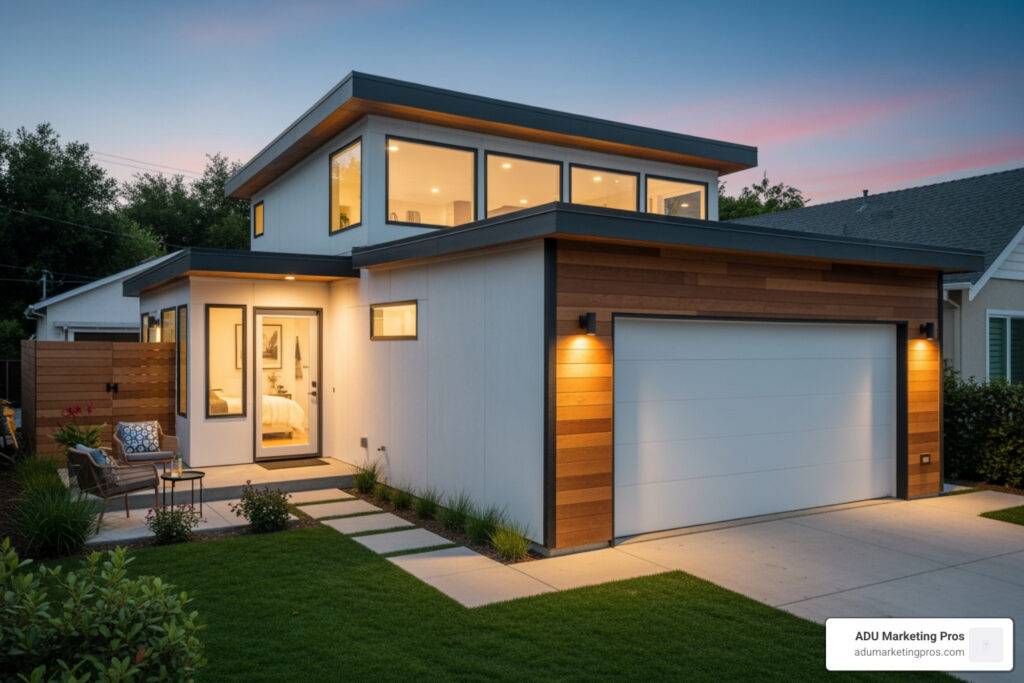
Why Garage ADU Conversions Are Transforming California Properties
Garage ADU conversions offer homeowners one of the most cost-effective ways to add livable space to their property. In a state where the housing crisis has reached a fever pitch, these conversions represent a vital tool for urban infill and sustainable development. If you’re looking to unlock your garage’s potential, here’s what you need to know:
Key Facts About Garage ADU Conversions:
- Cost Range: $80,000–$150,000 on average (30-50% less than new construction)
- Timeline: 8-12 months total (design, permitting, construction)
- Property Value Increase: 20-30% in most markets, up to 60-90% in high-demand urban areas
- Rental Income Potential: $1,200–$3,000 per month for one-bedroom units
- Payback Period: 6-7 years on average, sometimes as quick as 3-5 years
- Permitting: California mandates 60-day maximum review timeline
- Parking Requirements: None—state law exempts garage conversions from replacement parking
California’s housing crisis has made every square foot count. That dark, musty garage sitting on your property? It’s actually one of your most valuable untapped resources. With 66% of California homeowners now considering or planning for an ADU, garage conversions have become a smart strategy for creating additional housing while maximizing existing structures. This trend is driven by the “Missing Middle” housing movement, which seeks to provide diverse housing options between single-family homes and large apartment complexes.
The concept draws on adaptive reuse—a sustainable development approach from the 1970s that repurposes existing buildings instead of building from scratch. This means less demolition waste, lower construction costs, and faster completion times compared to ground-up construction. By utilizing the existing shell, you are essentially recycling the carbon footprint of the original build, making this one of the greenest ways to expand your living space.
Unlike building a new detached ADU, garage conversions work within an existing footprint. This typically means simpler permitting, reduced setback requirements, and existing utility connections you can tap into. Many older garages do need upgrades to meet residential building codes, but the foundation is already there. Whether you’re looking to house aging parents, generate rental income, or create a home office, a garage conversion offers flexibility without expanding your property’s footprint. The key is understanding what’s involved—from structural requirements to local regulations—before you begin.
Terms related to Garage ADU conversions:
What is a Garage ADU Conversion?
At its core, a Garage ADU conversion is the process of transforming an existing attached or detached garage into a legal, habitable secondary dwelling unit. In California, these are formally known as Accessory Dwelling Units (ADUs). They must provide independent living facilities, which includes permanent provisions for living, sleeping, eating, cooking, and sanitation. This means the unit must have its own entrance, a functional kitchen, and a full bathroom, separate from the primary residence.
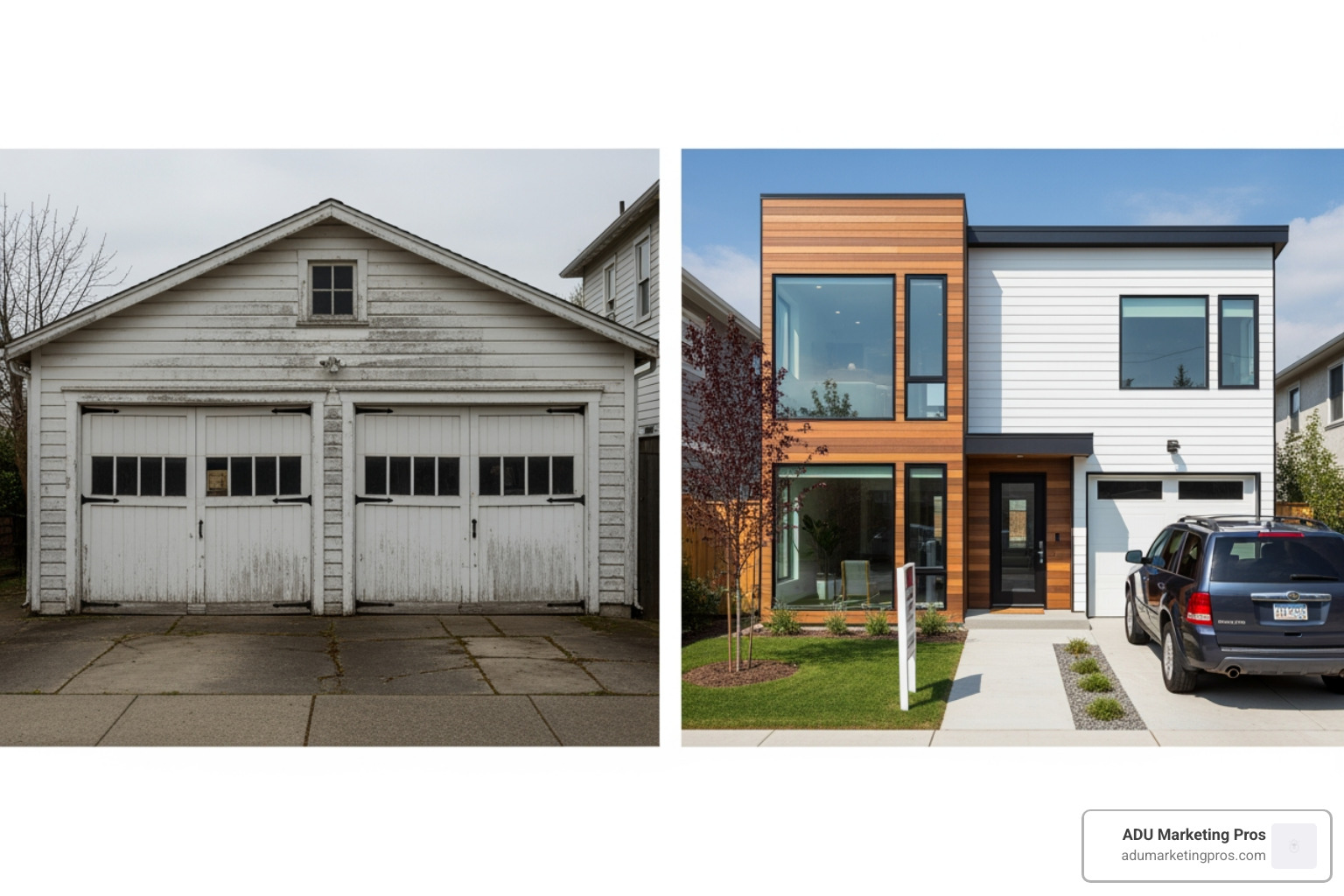
When we talk about Garage ADU conversions, we are looking at “urban infill.” This is a strategic way of adding housing density to existing neighborhoods without changing the character of the street or requiring massive new infrastructure. Since the structure already exists, you aren’t “taking away” backyard space in the same way a new ground-up build might. This preservation of open space is a major selling point for homeowners who want to maintain their garden or patio area while still adding value.
For more technical details, you can explore More info about garage conversion ADU or consult the official Guidelines for Garage Conversion ADUs provided by the California Department of Housing and Community Development.
The Financial Benefits of Garage ADU Conversions
We often tell our clients in San Jose and Los Angeles that a garage is essentially “pre-built equity.” Because you already have a foundation, four walls, and a roof, you are bypassing some of the most expensive and labor-intensive phases of construction. This “head start” translates directly into a higher return on investment (ROI) compared to almost any other home improvement project.
Research shows that Garage ADU conversions typically cost 30-50% less than building a new detached ADU. While a new build might start at $200,000, a high-quality garage conversion can often be achieved for $80,000 to $150,000. This lower entry point makes ADUs accessible to a much wider range of homeowners.
Breaking Down the Costs
When budgeting for your conversion, it’s helpful to distinguish between “hard costs” and “soft costs.” Hard costs include the physical construction—lumber, plumbing fixtures, electrical wiring, and labor. Soft costs include architectural fees, permit fees, and impact fees (though many ADUs under 750 square feet are exempt from impact fees in California). By converting a garage, you significantly reduce hard costs because the structural shell is already in place.
Financial Advantages Include:
- Lower Hard Costs: You save significantly on framing, roofing, and foundation work, which can account for 40% of a new build’s budget.
- Utility Proximity: Being closer to the main house usually means shorter trenching runs for sewer and water, saving thousands in excavation costs.
- Tax Benefits: While your property tax will increase, it is only based on the value of the new improvement, not a reassessment of your entire property. This is a critical protection under California’s property tax laws.
- Faster ROI: With lower upfront costs and high rental demand in the Bay Area and San Diego, the “payback period” is significantly shorter.
| Feature | Garage ADU Conversion | New Detached ADU |
|---|---|---|
| Average Cost | $80,000 – $150,000 | $175,000 – $300,000+ |
| Cost per Sq Ft | $275 – $450 | $400 – $600+ |
| Construction Time | 2–4 Months | 4–7 Months |
| Permit Complexity | Lower (Existing Footprint) | Higher (New Structure) |
To get a better idea of your specific numbers, you can Calculate your project budget using our specialized tools.
Maximizing ROI with Garage ADU Conversions
In the competitive California real estate market, adding a legal dwelling unit is one of the best ways to increase equity. A well-executed conversion can increase your property value by 20-30%. In high-demand urban areas like San Francisco or Los Angeles, homeowners often see a value increase that represents 60-90% of the construction cost immediately upon completion. This means that if you spend $120,000 on a conversion, your home’s market value could jump by $100,000 or more the day the final inspection is signed.
Rental Income Potential for Garage ADU Conversions
The rental market in California is notoriously tight. A converted garage—even a modest 400-square-foot studio—can command impressive monthly rents. In Los Angeles or the Bay Area, these units typically rent for $1,500 to $2,500, while premium units in areas like Palo Alto or Santa Monica can go even higher.
According to Los Angeles City Ordinance No. 186481, ADUs are recognized as independent residential units, allowing you to lease them long-term and create a reliable stream of passive income. With an average rental income of $1,800, a $130,000 investment can be recouped in just 6-7 years, after which the income is pure profit.
Navigating the Conversion Timeline and Process
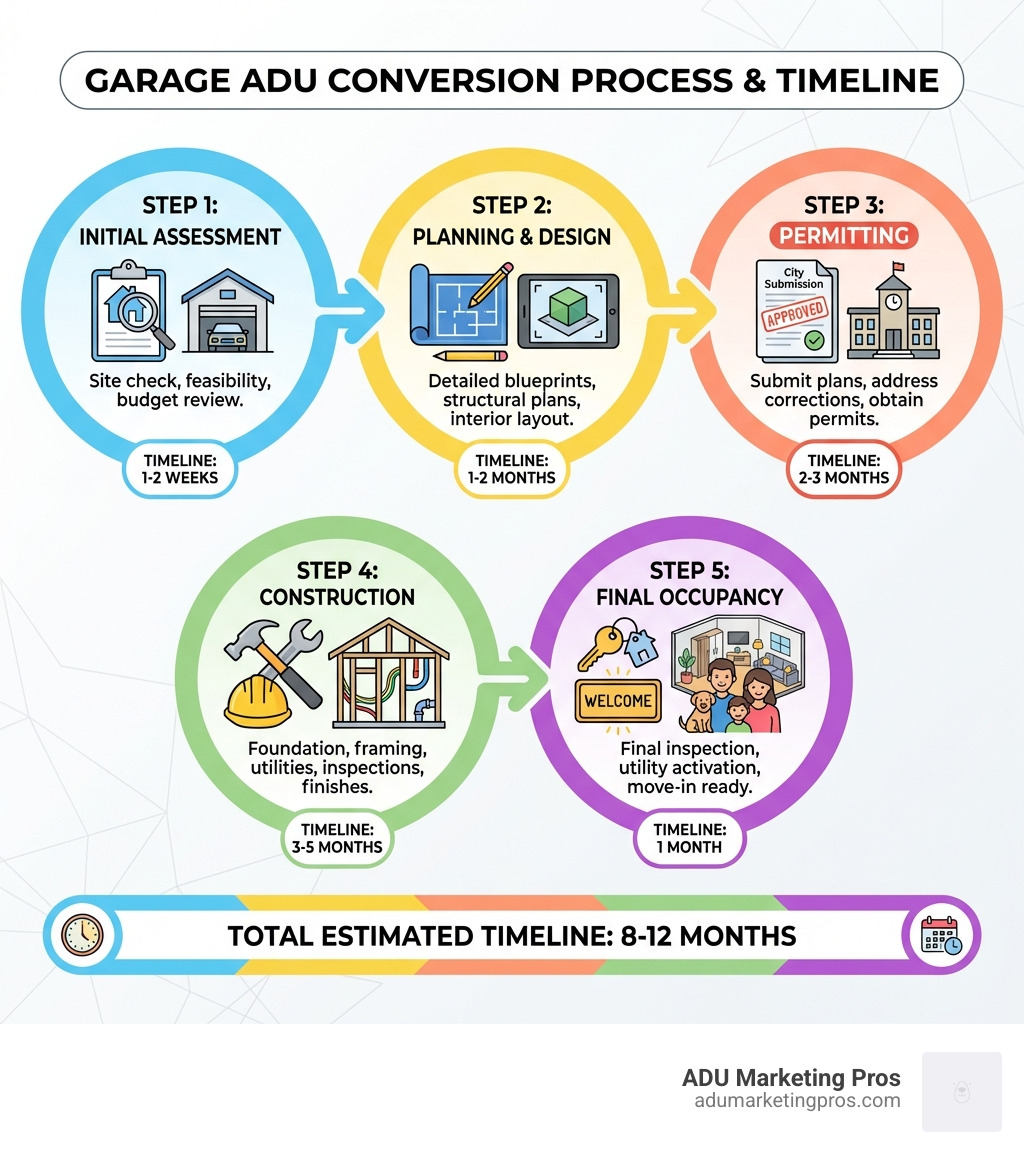
One of the biggest misconceptions we encounter is that a Garage ADU conversion happens overnight. While faster than new construction, it still requires a disciplined approach and adherence to local building codes. Understanding the phases of development can help you manage expectations and avoid common delays.
The typical 8-12 month journey looks like this:
- Feasibility & Design (6-10 Weeks): We assess the structure. Is the slab cracked? Are the walls plumb? Architects then create plans that maximize the small footprint. This phase also includes selecting finishes and appliances that fit the compact space.
- Permitting (4-12 Weeks): California law is on your side here. State law mandates a 60-day maximum review timeline for ADU applications. However, if the city requests corrections, the clock may pause, so having professional, accurate plans is essential.
- Construction (8-16 Weeks): This involves “breaking” the garage. We cut the concrete for plumbing, frame the interior walls, and upgrade the electrical. This is the most disruptive phase, but since it’s usually detached, the impact on your daily life in the main house is minimal.
- Inspections & Occupancy: The city signs off on your Title 24 energy compliance and safety standards. Once the final “Certificate of Occupancy” is issued, you can legally move a tenant or family member into the space.
To dive deeper into the specifics of the state-wide regulations, you can Learn about the California conversion process.
Critical Structural and Utility Considerations
Converting a space designed for a car into a space designed for a human requires some heavy lifting. You can’t just throw a rug over the oil stains and call it a bedroom. Residential building codes are much stricter than those for storage structures, particularly regarding safety and energy efficiency.
Foundation and Framing
Essential Structural Upgrades:
- Foundation Integrity: Many older garages lack proper footings. We often see projects where footing repairs add $10,000–$12,000 to the budget to ensure the structure can handle the weight of new interior walls, appliances, and the required insulation. If the slab is significantly unlevel, a new self-leveling pour may be required.
- Ceiling Height: To be “habitable,” California code generally requires a minimum ceiling height of 7’6″. If your garage is too low, you may need to excavate the floor or raise the roof, which can significantly impact the budget.
- Moisture Barriers: Garages are notorious for dampness. Installing a high-quality vapor barrier under the new flooring is non-negotiable to prevent mold and protect your investment.
Utilities and Energy Efficiency
- Utility Upgrades: Expect to spend $15,000–$40,000 on utilities alone. This includes connecting to the main sewer line (downstream from the house) and potentially upgrading your electrical panel to 200 amps to handle the new load.
- Title 24 Compliance: California’s Building Energy Efficiency Standards (Title 24) require specific insulation R-values, high-efficiency windows, and LED lighting. This ensures the unit is comfortable and cheap to operate.
- HVAC: Most conversions utilize ductless mini-split systems. They are energy-efficient, provide both heat and AC, and don’t require bulky ductwork that would eat into your precious ceiling height.
- Fire Safety: If the garage is within 5 feet of the property line or the main house, you will likely need one-hour fire-rated drywall on the interior and potentially fire-rated eaves.
California Building Codes and Zoning Regulations
California has become the most ADU-friendly state in the nation thanks to aggressive legislation like AB 68, SB 13, and more recently, AB 1033. These laws essentially stripped local cities of their power to say “no” to Garage ADU conversions, creating a “by-right” approval process.
Key Regulatory Wins for Homeowners:
- Setback Exemptions: If you are converting an existing garage, you are generally exempt from new setback requirements. You can keep the structure exactly where it is, even if it sits right on the property line. This is a massive advantage, as new builds usually require 4-foot side and rear setbacks.
- Parking Waivers: This is the big one. Under state law, you do not have to provide replacement parking for the main house when you convert your garage, especially if you are within a half-mile of public transit. This removed the single biggest barrier to garage conversions in California.
- HOA Limitations: Your Homeowners Association cannot block you from building an ADU, though they can still request reasonable design consistency to ensure the unit matches the neighborhood aesthetic.
- Size Limits: While local jurisdictions can set some limits, the state mandates that they must allow at least an 800 sq. ft. ADU with 4-foot setbacks and a 16-foot height limit, regardless of lot coverage.
For a comprehensive look at how these laws interact, check out More info about garage to ADU conversion.
Choosing Between an ADU and a JADU
When planning your Garage ADU conversion, you’ll need to decide if you want a standard ADU or a Junior ADU (JADU). The choice often depends on your budget and how you plan to use the property in the future.
The Junior ADU (JADU) Difference:
- Size: Limited to 500 square feet.
- Location: Must be contained within the existing walls of a single-family home (attached garages qualify, but detached garages do not).
- Kitchen: Only requires an “efficiency kitchen” (a sink, a plug-in appliance, and a small counter), which can save thousands on plumbing and gas lines.
- Sanitation: Can actually share a bathroom with the main house to save on costs, though most owners choose to install a private one for better rental value.
- Owner Occupancy: This is the catch—JADUs usually require the owner to live in either the main house or the JADU. Standard ADUs currently do not have this requirement in most cases.
Standard ADUs are more flexible, can be larger (up to 1,200 sq. ft. in some jurisdictions), and are generally easier to finance through traditional construction loans. You can Explore ADU vs JADU options to see which fits your long-term goals.
Design Strategies for Maximizing Small Spaces
A 400-square-foot garage can feel like a palace or a shoebox depending on the design. Since you are working with a fixed footprint, every inch matters. The goal is to create a sense of “volume” and “flow” that makes the occupant forget they are in a converted garage.
Pro Design Tips:
- Vaulted Ceilings: If your garage has a pitched roof, leave the rafters exposed or create a cathedral ceiling. The vertical volume makes a small room feel twice as large and provides a high-end, architectural feel.
- Skylights: Natural light from above is private and powerful. It transforms a “garage feel” into a “studio feel” instantly without sacrificing wall space for windows.
- French Doors: Replacing the old garage door with large glass French doors or a slider creates a seamless indoor-outdoor flow, making the backyard feel like an extension of the living room.
- Built-in Storage: Use “dead space” between wall studs for recessed shelving or medicine cabinets. Murphy beds and lofted sleeping areas are also popular for studio-sized conversions.
- Soundproofing: If it’s an attached garage, invest in “quiet rock” or staggered-stud framing. This ensures the ADU occupant doesn’t hear your kitchen blender at 6 AM, and you don’t hear their television at midnight.
If you’re in Southern California, you might want to Discover Los Angeles specific designs that capitalize on the local climate and aesthetic.
Common Mistakes to Avoid During Conversion
We’ve seen it all—from DIY disasters to permitting nightmares. Avoiding these common pitfalls will save you thousands of dollars and months of frustration. A garage conversion might seem simple, but it is a complex engineering project.
- Skipping Permits: This is the most expensive mistake you can make. An unpermitted ADU cannot be counted in your home’s appraisal, and the city can force you to tear it out or pay massive fines. It also creates massive liability if a fire or flood occurs, as insurance companies may deny claims for unpermitted structures.
- Underestimating Costs: Always include a 15% contingency. Once you open up those old garage walls, you might find termite damage, dry rot, or outdated wiring that needs immediate attention. These “hidden” issues are common in structures that weren’t originally built for habitation.
- Poor Insulation: Garages are usually thin-walled and uninsulated. Without high-quality spray foam or batt insulation and Title 24 compliant windows, the unit will be an icebox in the winter and an oven in the summer, leading to high utility bills and unhappy tenants.
- Inadequate Drainage: Garage floors often slope toward the old door to allow water to run out. If you don’t level the floor properly or address exterior drainage, you’ll face water intrusion issues that can ruin your new flooring and lead to mold growth.
For a full checklist of what to watch out for, Check out the garage conversion to ADU guide.
Frequently Asked Questions about Garage Conversions
How much does a garage ADU conversion typically cost in California?
While prices vary by region, most Garage ADU conversions in the SF Bay Area, San Jose, and Los Angeles range between $80,000 and $150,000. If you are doing a high-end “luxury” conversion with premium finishes, custom cabinetry, and structural roof changes, you could see costs hit $170,000+. Conversely, a very simple JADU might be possible for under $100,000 if the existing structure is in excellent condition.
Will I lose property value by removing my parking space?
This is a common fear, but the data suggests otherwise. In housing-constrained markets like Sunnyvale, Menlo Park, or Santa Monica, the value of an additional bedroom or a rental unit far outweighs the value of a covered parking spot. Most homeowners see a 60-90% recovery of their construction costs in immediate equity. Plus, with the rise of remote work and ridesharing, dedicated garage parking is becoming less of a priority for many modern buyers.
Do I need to provide replacement parking for the main house?
No. Thanks to California’s state-wide ADU mandates (specifically AB 68), if you convert your garage into an ADU, you are not required to replace those parking spots. This is a massive win for homeowners with small lots who wouldn’t have room to pave a new driveway or add a carport.
Can I convert my garage if it’s on the property line?
Yes. California law allows for the conversion of an existing structure even if it doesn’t meet current setback requirements. As long as the garage was legally built, you can convert it within its existing footprint. However, you may need to add fire-rated materials to the walls facing the property line to meet safety codes.
Does a garage ADU need separate solar panels?
Under current California code, new detached ADUs are required to have solar panels. However, for garage conversions, solar is often not required unless you are significantly expanding the footprint or the city has specific local requirements. It is always best to check the latest Title 24 updates for your specific zip code.
Conclusion
Garage ADU conversions represent a unique opportunity to turn an underutilized asset into a powerhouse of property value and functionality. Whether you are looking to support multi-generational living, provide a home for a returning college graduate, or secure your financial future through steady rental income, the path is clearer than ever before.
At ADU Marketing Pros, we specialize in helping construction and architecture firms navigate this booming market. We understand the nuances of California law and the technical challenges of small-space design. If you are a homeowner looking to start this journey, the first step is always a professional assessment to determine the feasibility of your specific structure.
Ready to take the next step? schedule an ADU consultation with our partners or Schedule an ADU consultation to explore how you can maximize your property’s potential today. Your garage is waiting to become something much more than just a place to store old boxes.