
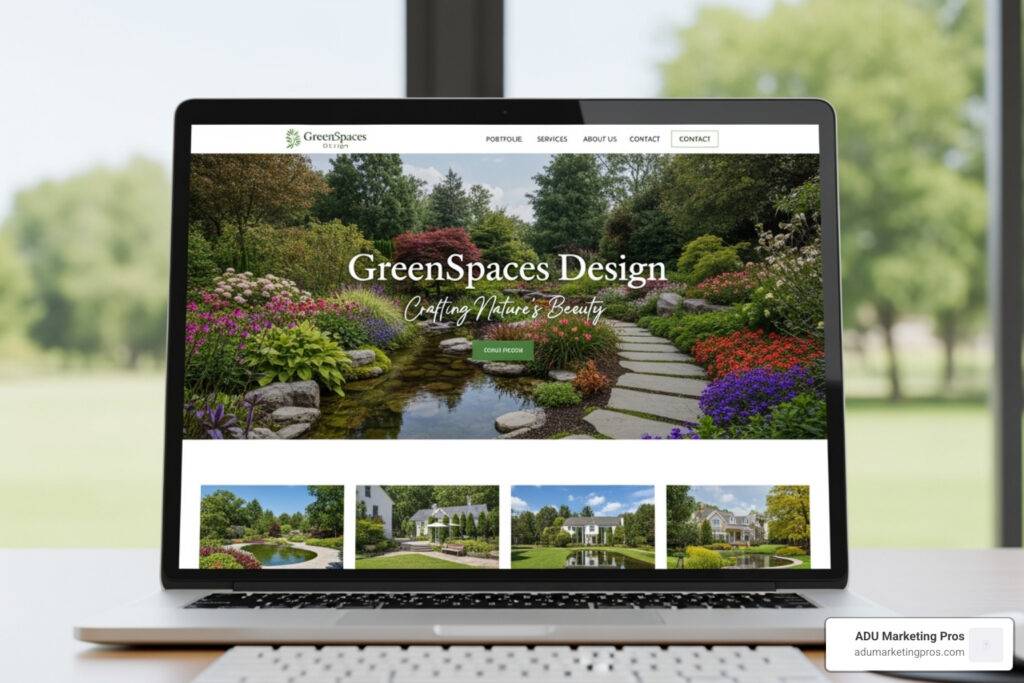
Why Professional Web Design is Essential for Landscape Architects
Web design for landscape architects is about creating a digital experience that mirrors the harmony you bring to outdoor spaces. Your website must balance stunning visuals with seamless functionality to attract and convert high-value clients. It serves as your firm’s digital storefront, operating 24/7 to showcase your expertise and generate qualified leads.
Essential elements for an effective landscape architect website include:
- A Stunning Visual Portfolio: High-resolution project galleries with before/after comparisons.
- Mobile-First Design: Responsive layouts that work perfectly on all devices, where most clients begin their search.
- Local SEO: Optimized content to attract clients in your specific service areas.
- Trust Signals: Client testimonials, certifications, and team credentials to build credibility.
- Clear Calls-to-Action (CTAs): Strategic buttons like “Request Consultation” to guide visitors.
- Detailed Service Pages: Clear descriptions of your offerings, from master planning to hardscaping.
A professional website answers a potential client’s key questions: Do you offer the services I need? Do you work in my area? Can I trust your work? By addressing these upfront, you position your firm as a trusted expert and make it effortless for visitors to hire you.
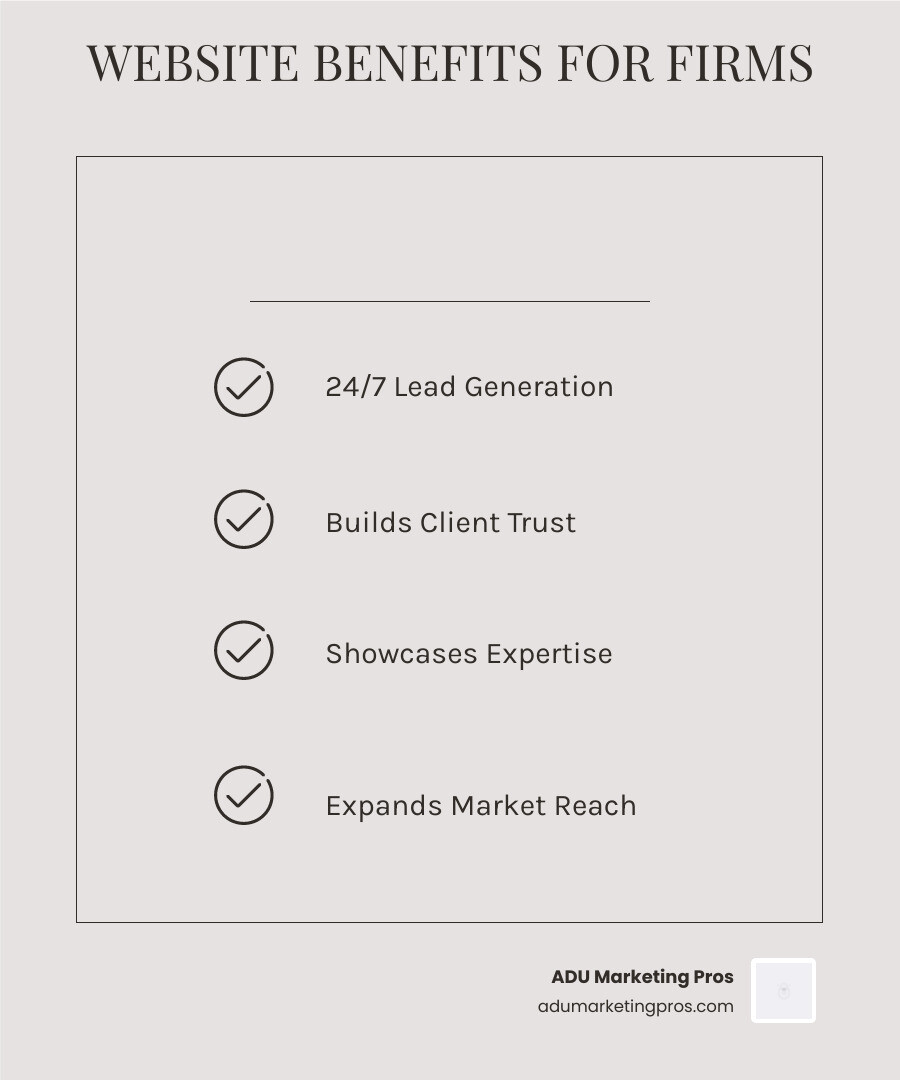
Know your web design for landscape architects terms:
Why a Professional Website is Your Firm’s Digital Bedrock
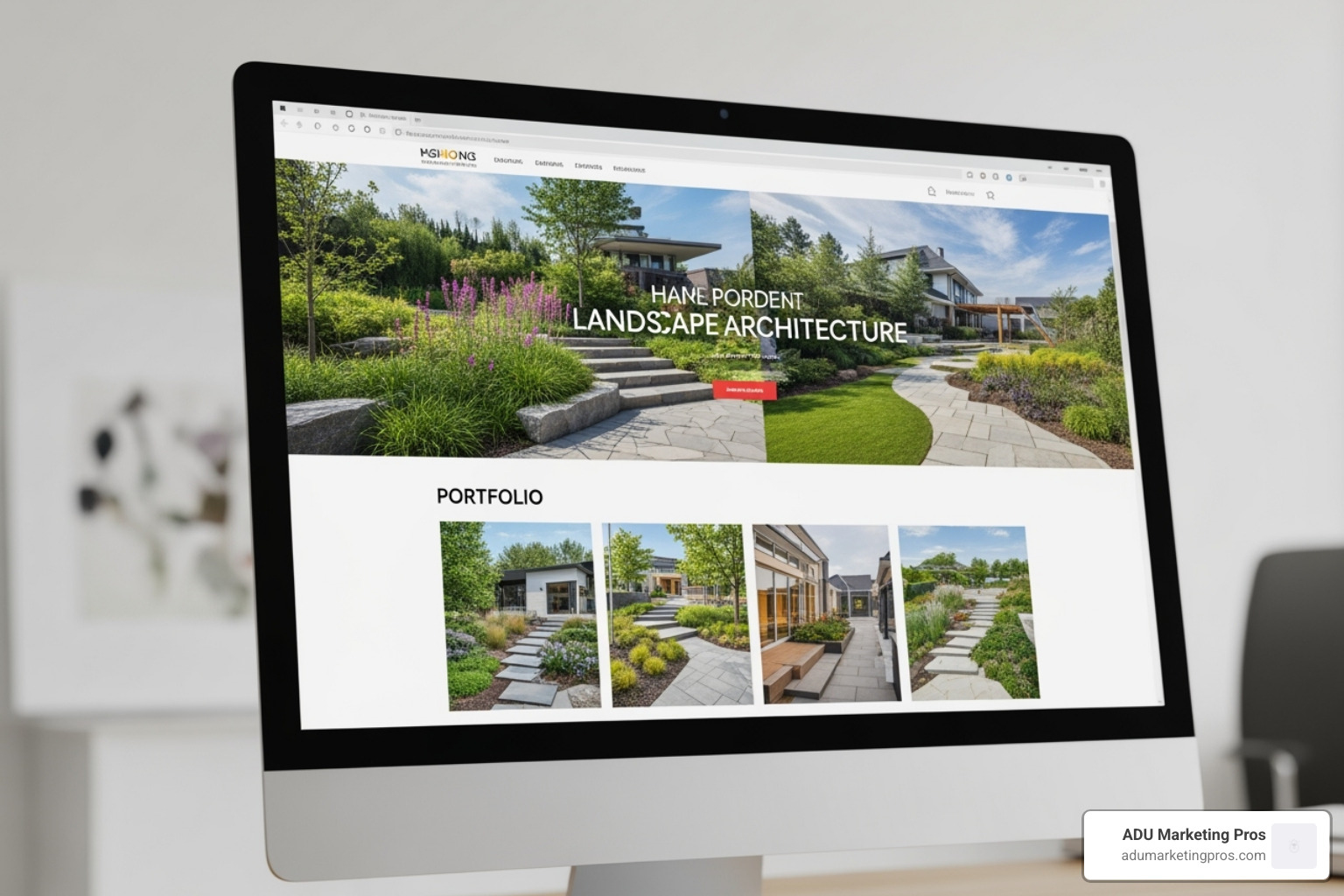
Think of your website as the digital equivalent of a stunning garden entrance—it sets expectations and draws people in. For landscape architects, a professional website is a powerful business tool that establishes credibility, tells your firm’s story, and serves as the central hub for all your Online Marketing for Architects efforts. It’s the one online property you truly own, acting as the anchor for your social media profiles, email newsletters, and paid advertising campaigns. It works around the clock, showcasing your expertise and generating leads while you’re busy changing physical spaces.
Answering Key Client Questions Instantly
A well-structured site immediately answers the questions every potential client has:
- Service Availability: Clearly communicate what you offer, from master planning and horticultural design to hardscaping and specialty installations.
- Geographic Coverage: State your service area upfront to qualify visitors. A local phone number and mentions of specific neighborhoods or cities (e.g., San Francisco Bay Area, Southern California) reinforce your local presence.
- Quality of Work: Show, don’t just tell. Use high-resolution project photos, videos, and detailed case studies to prove your skill and the transformative impact of your designs.
- Trustworthiness: Build confidence with client testimonials, professional certifications (like ASLA membership), awards, and authentic team photos.
- How to Engage: Make contact information and consultation request buttons prominent and easy to find on every page, removing any friction for a potential client to take the next step.
Differentiating Your Firm in a Crowded Market
Your website is the perfect platform to showcase what makes your firm unique, shifting conversations from price to value. Use it to articulate your:
- Unique Design Philosophy: Do you focus on sustainable practices, modern aesthetics, xeriscaping, or naturalistic designs? Your website’s look and feel should reflect this.
- Specializations: Highlight expertise in high-demand areas like drought-tolerant landscapes, outdoor entertainment spaces, or rooftop gardens.
- Project Approach: Explain your process. Is it highly collaborative and client-focused? Do you use advanced 3D modeling? Detail the client journey from initial consultation to final walkthrough.
This strategic positioning helps you attract clients who appreciate your specific vision and expertise. Learn more about Branding for Architecture Firms to see how a strong brand identity can lift your market position and attract premium projects.
10 Must-Have Features for High-Performing Web Design for Landscape Architects
Building an effective website for your landscape architecture firm is like designing a garden—it requires careful planning, attention to detail, and a clear vision. A beautiful site that fails to convert visitors is merely a digital sculpture. To create a true business asset, you must integrate specific features that work together to attract, engage, and convert your ideal clients. Here are 10 essential features that are crucial for a high-performing website that will help your firm thrive.
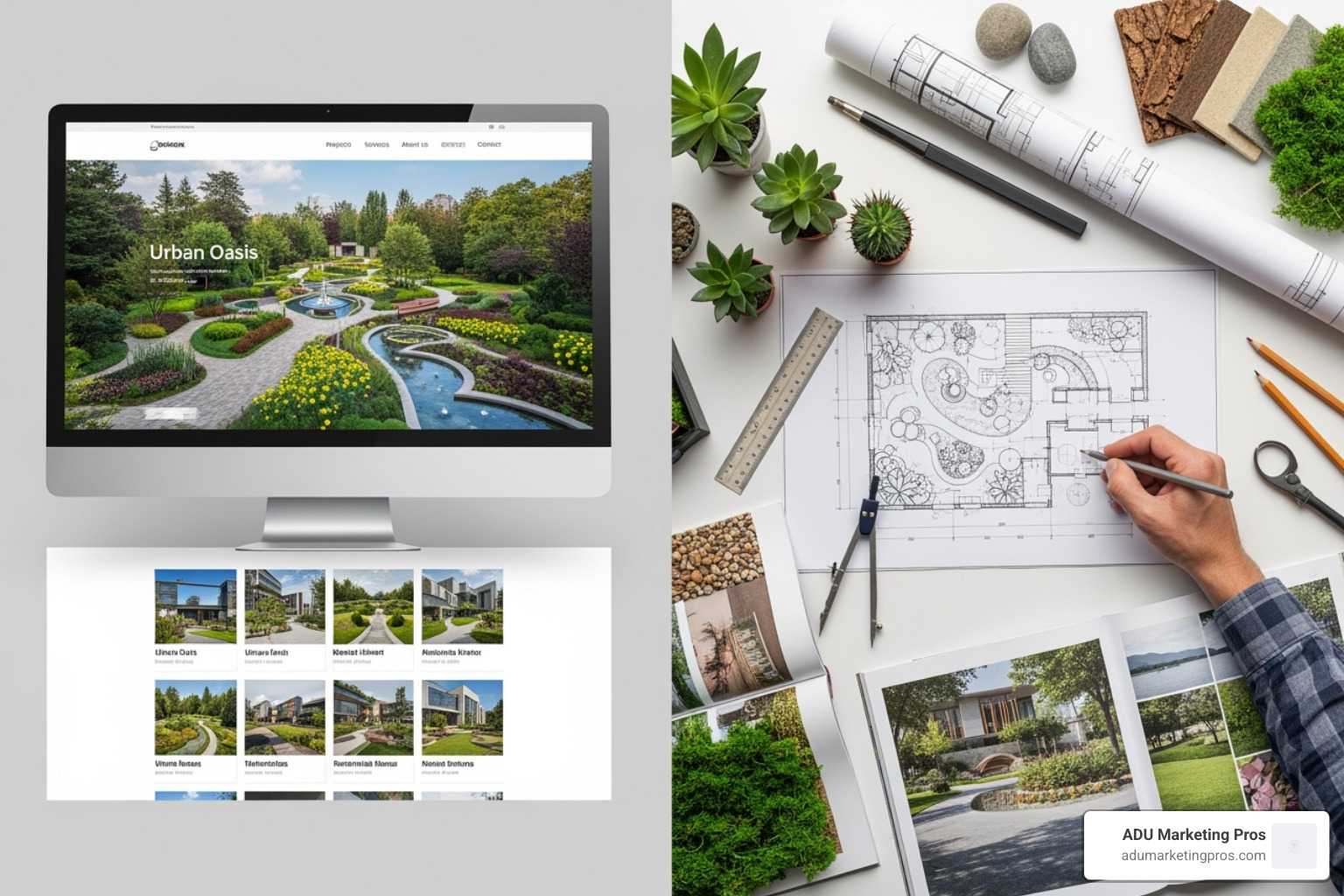
1. A Breathtaking Visual Portfolio
Your portfolio is the crown jewel of your website. Since landscape architecture is inherently visual, potential clients need to see what you can create. Your portfolio must be more than a collection of photos; it should tell a compelling story of change.
- High-Resolution Imagery: Invest in professional photography. Use crisp, vibrant images that capture the texture, light, and intricate details of your work. Photos should be large enough for visitors to imagine themselves in the space you’ve created.
- Before-and-After Sliders: These interactive elements are digital magic. They provide a powerful and immediate demonstration of the transformative value of your work, justifying a client’s investment better than any description could.
- Video Walkthroughs: Video captures the sensory details that still images miss—the sound of a water feature, the movement of plants in the breeze, the way light changes throughout the day. As video content becomes dominant online, drone footage and walkthroughs can set your firm apart.
- Detailed Case Studies: Go beyond pretty pictures. For each project, create a dedicated page that outlines the client’s initial vision, the challenges of the site, your innovative solutions, and the key materials you chose. This demonstrates your problem-solving skills and strategic thinking.
2. Intuitive User Experience (UX) and Mobile-First Design
Your website’s user experience is like the pathways in a garden—it should guide visitors effortlessly and logically toward their goal. A confusing, slow, or frustrating experience will send high-value potential clients to a competitor in seconds.
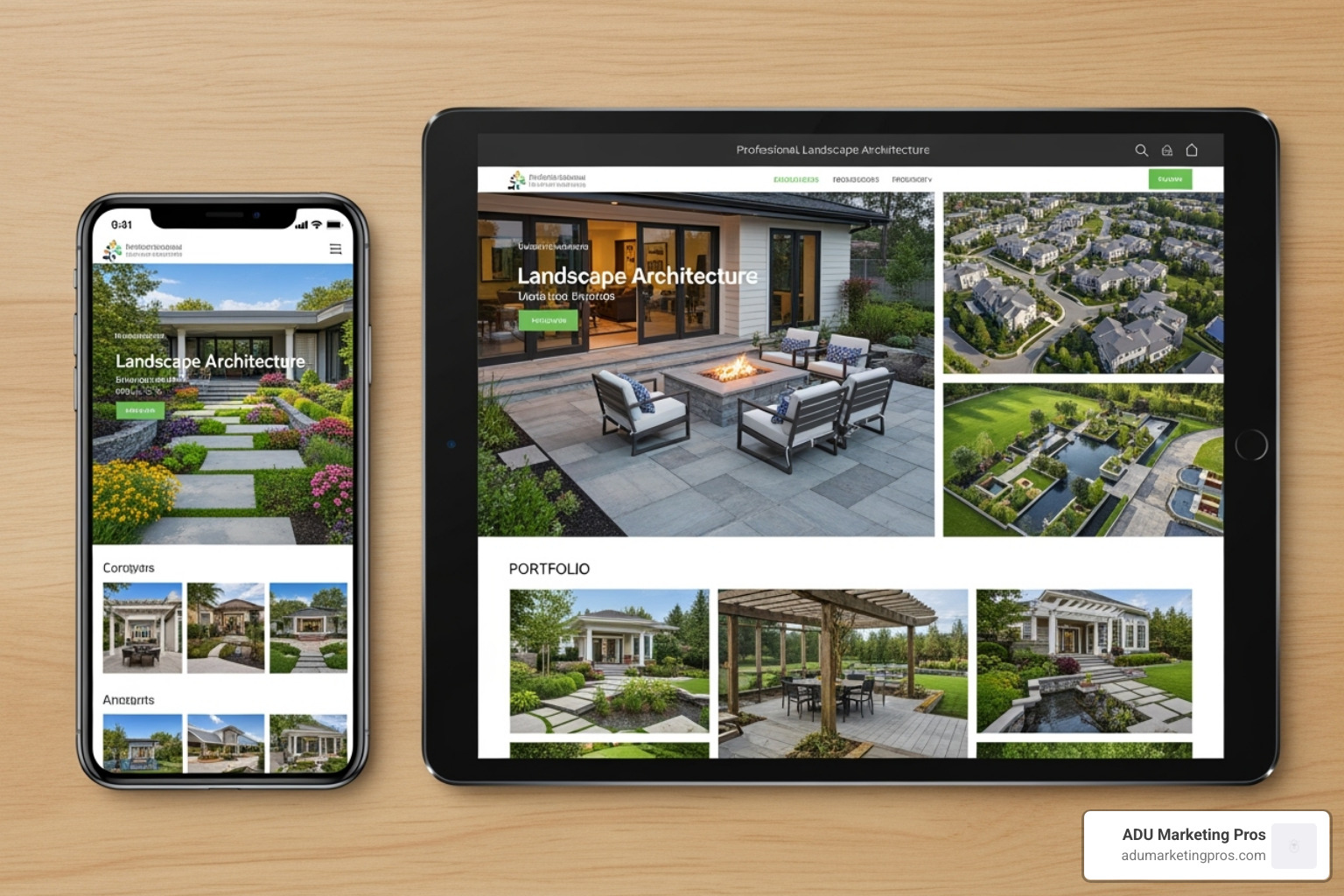
- Mobile-First Design: This is non-negotiable. With the majority of users, especially affluent homeowners, beginning their search on smartphones, your site must look and function perfectly on a small screen. According to Pew Research Center, mobile device usage is nearly ubiquitous, making a mobile-first approach essential for capturing leads.
- Fast Load Times: Slow-loading images will kill engagement. Your beautiful portfolio must appear quickly to create an immediate “wow factor.” This involves optimizing image sizes, using modern image formats, and choosing a high-performance web host.
- Simple, Logical Navigation: A clean, predictable menu (e.g., “Our Work,” “Services,” “About,” “Contact”) prevents user frustration. Ample white space creates a sense of calm and sophistication, mirroring the peaceful, well-designed spaces you create.
3. Strategic Search Engine Optimization (SEO)
SEO is like planting seeds in the digital world—it’s the ongoing process that helps your firm appear at the top of Google search results when high-intent clients are actively looking for your services. Without a solid SEO strategy, even the most beautiful website remains a hidden gem.
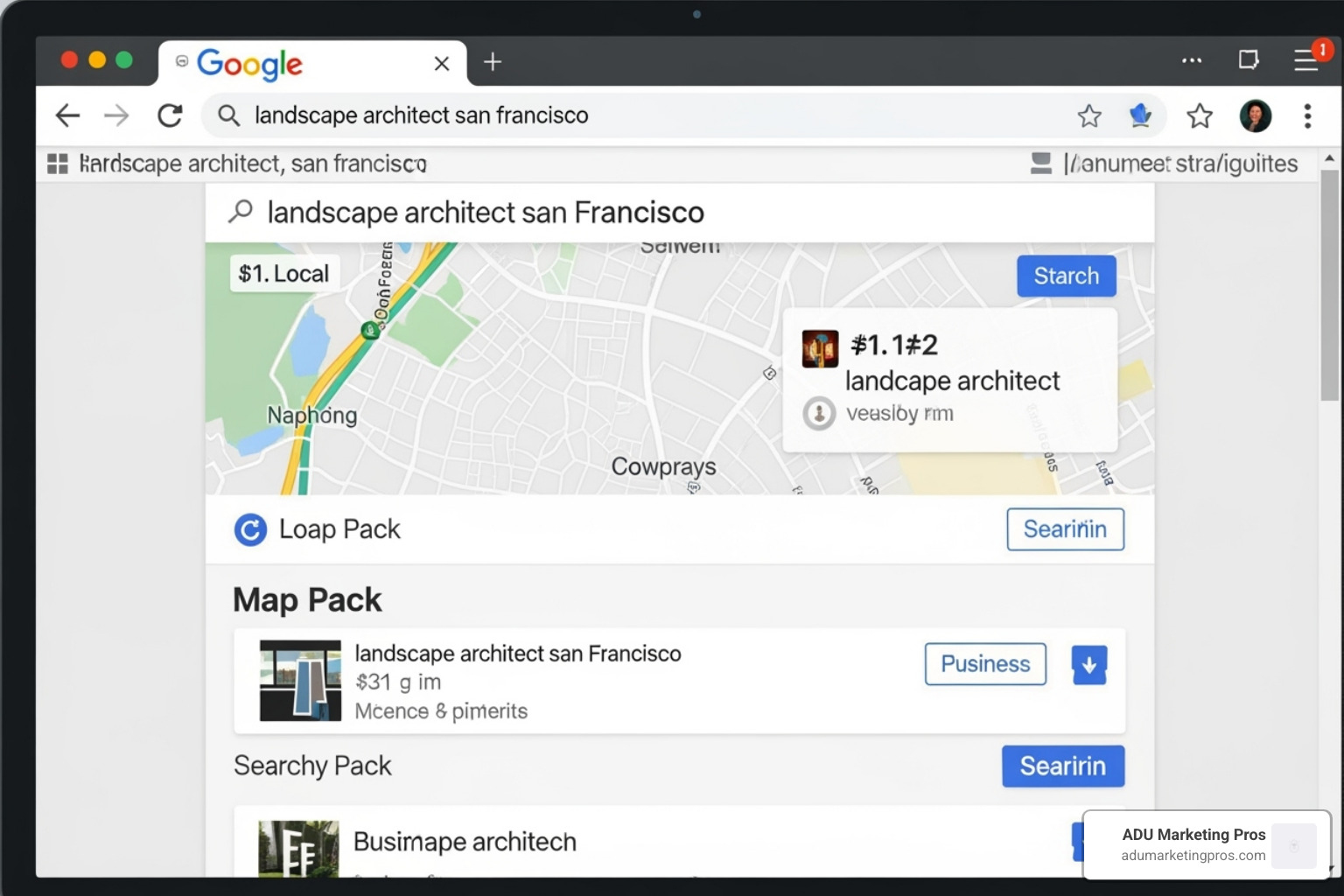
- Hyper-Local SEO Focus: This is crucial. Clients search for local services with terms like “landscape architect near me” or “garden design Palo Alto.” Your website content, from service pages to project descriptions, must be optimized for your specific service areas, whether it’s San Jose, Los Angeles, or other California cities.
- Google Business Profile Optimization: Your GBP is your digital storefront sign. A well-managed profile with excellent reviews, frequent posts, and accurate service information helps you dominate the local map pack at the top of search results.
- Keyword-Optimized Service Pages: Create dedicated pages for each core service (e.g., hardscape design, outdoor kitchens, planting plans). This helps you rank for specific, high-intent searches and better informs visitors about the breadth of your expertise.
- Project Location Tags: Tagging portfolio projects with their city or neighborhood (e.g., “Healdsburg vineyard landscape design”) creates more pathways for local clients to find your relevant work.
A strong SEO for Construction Companies strategy ensures a steady, sustainable flow of qualified leads over the long term.
4. Trust-Building Elements
When visitors land on your site, they are subconsciously asking, “Can I trust this firm with my significant investment?” Your design must answer with a resounding “yes” by strategically placing clear trust signals throughout the site.
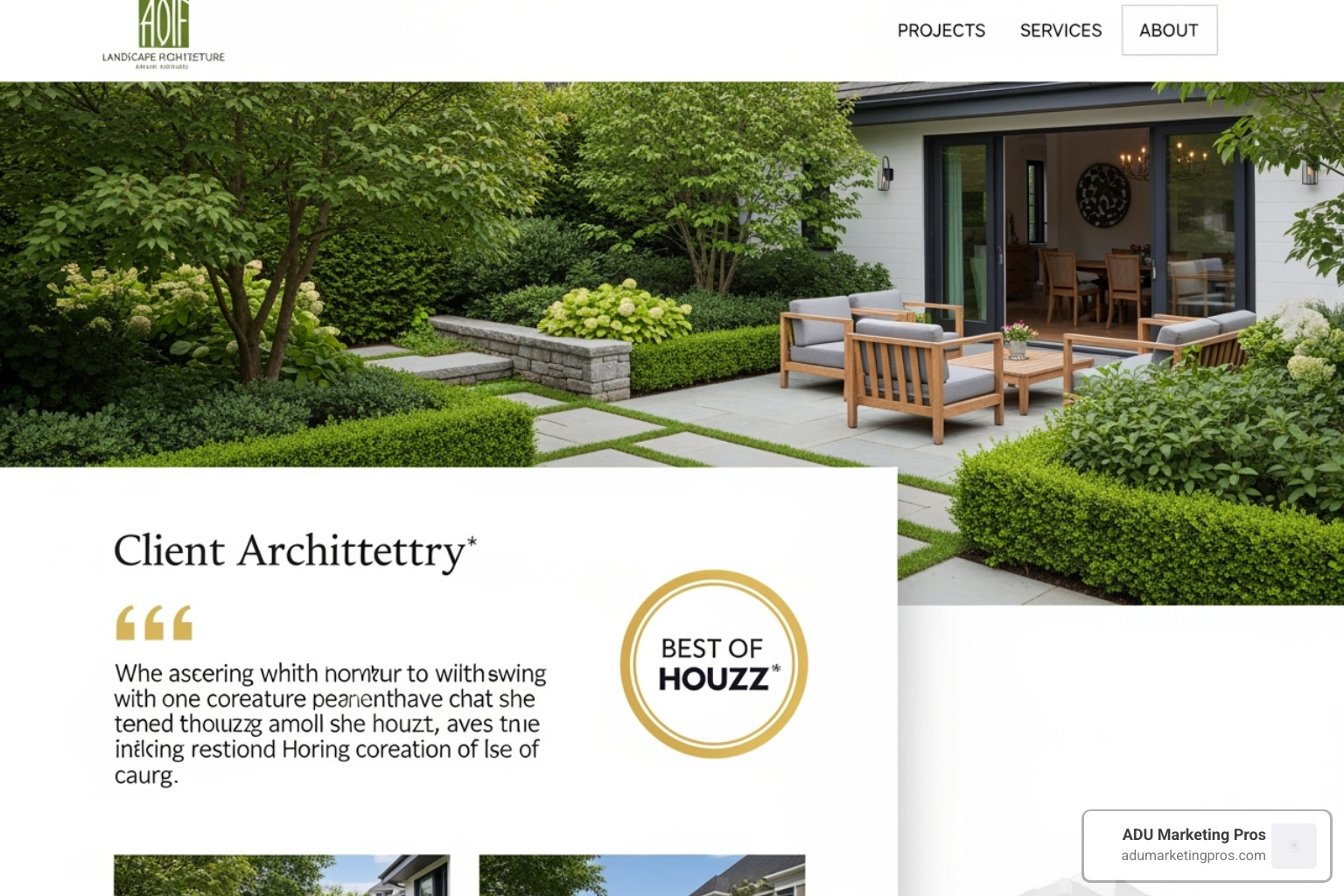
- Client Testimonials and Reviews: Authentic reviews from satisfied customers are your most powerful marketing tool. Feature them prominently on your homepage and service pages. Use full names and locations where possible, and use video testimonials for maximum impact.
- Awards and Certifications: Display industry recognitions like “Best of Houzz,” ASLA awards, or other professional memberships. These act as instant credibility boosters and third-party endorsements.
- An Authentic “About Us” Page: Go beyond a dry list of qualifications. Share your firm’s founding story, your design philosophy, and professional, friendly photos of your principal architects and team. This human element builds connection and trust.
- Detailed Case Studies: As mentioned before, showcasing your problem-solving skills is highly persuasive. Research consistently shows that case studies are a top content format for increasing conversions by demonstrating expertise in action.
5. Clear Calls-to-Action (CTAs)
Calls-to-action are the friendly nudges that guide visitors from browsing to becoming clients. They must be clear, compelling, and strategically placed to capture interest at its peak.
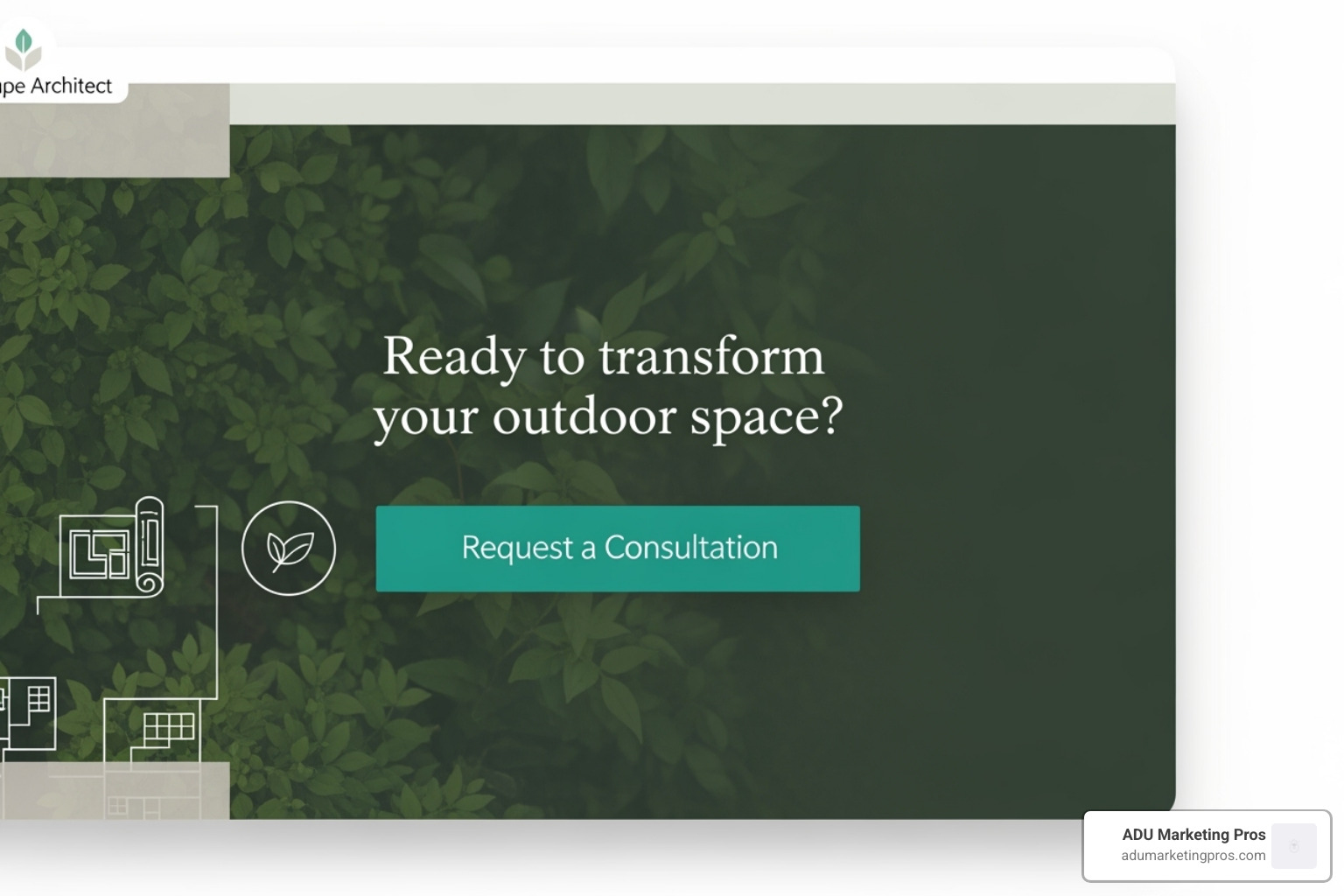
- Primary CTAs: Your most important buttons, like “Request a Consultation” or “Schedule a Findy Call,” should stand out with contrasting colors and be placed prominently “above the fold” on your homepage and at the end of every service and project page.
- Secondary CTAs: Buttons like “View Our Portfolio” or “Learn About Our Process” are perfect for visitors who aren’t ready to commit but want to explore more. Pair them with compelling project teasers to encourage deeper engagement.
- Integrated Contact Forms: Don’t make users hunt for a contact page. Place simple, easy-to-fill forms directly on service pages or within case studies to capture leads the moment a visitor is inspired by your work.
Effective CTAs are essential for turning traffic into leads and are a cornerstone of successful Lead Generation for Architects. They should feel like helpful suggestions, not aggressive sales pressure.
6. Detailed Service Pages
Go beyond a simple bulleted list of what you do. Each service you offer deserves its own dedicated page that explains the process, the benefits, and your unique approach. This strategy is far more effective for both users and search engines.
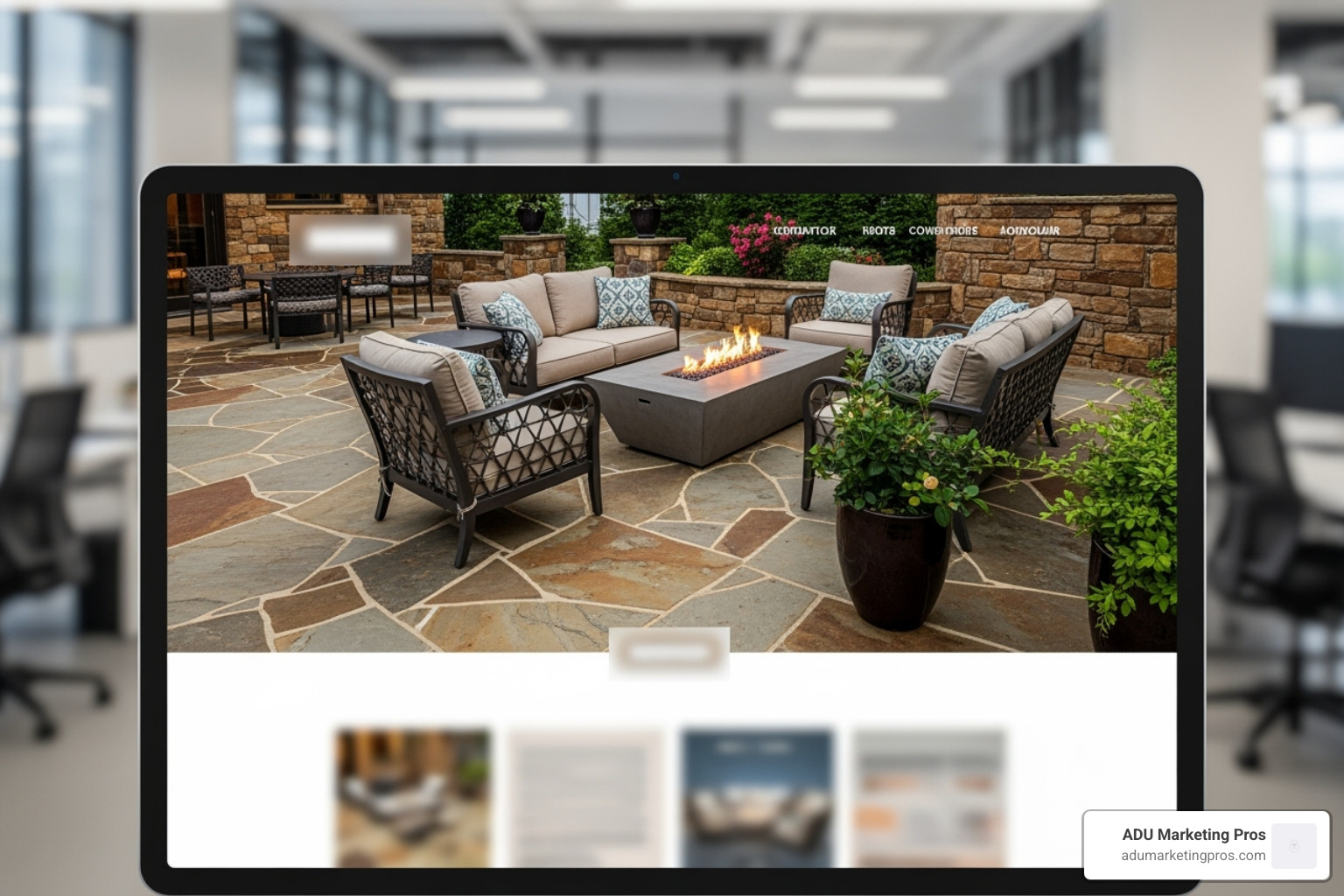
Instead of one generic page, create specific, in-depth pages for your core offerings. For example:
- Landscape Master Plans: Explain your design process from site analysis and concept development to final construction drawings. Include examples of plan renderings.
- Planting Plans and Garden Designs: Highlight your horticultural expertise, your philosophy on native and climate-appropriate plants, and how you create gardens that thrive in local conditions.
- Hardscaping Services: Detail your technical approach to patios, walkways, retaining walls, and other structural elements. Showcase different materials you work with.
- Outdoor Living Spaces: Showcase your ability to create functional extensions of the home, like outdoor kitchens, fire pit areas, and pool surrounds.
Each page should be treated as a mini-sales page, featuring relevant project photos, client testimonials, and a clear call-to-action inviting visitors to discuss their specific needs.
7. Cohesive and Appropriate Design Principles
Your website’s design is a digital extension of your landscape philosophy. It must authentically reflect the aesthetic that defines your firm’s work, whether it’s modern and minimalist, lush and naturalistic, or timeless and classic.
- Minimalist Layouts: A clean, uncluttered design allows your stunning project photography to be the hero. It mirrors the principle of negative space in garden design, where strategic emptiness improves the impact of key features.
- Natural Color Palettes: Draw inspiration from the world you work in. Earthy tones like rich greens, warm browns, and stone grays feel authentic and create a sense of visual harmony and sophistication.
- Thoughtful Typography: Clean, highly readable fonts are essential for professionalism. The right typeface can subtly reinforce your brand—a crisp sans-serif for a modern firm, or an neat serif for one with a more traditional focus.
- Ample White Space: This isn’t empty space—it’s breathing room. It creates visual calm, improves readability, and guides the visitor’s eye through your content, signaling a sophisticated and professional approach.
8. An Informative Blog or Resources Section
While your portfolio shows what you do, a blog shows how and why you do it. A blog is a powerful tool for establishing your firm as a trusted authority, building rapport with potential clients, and significantly boosting your search engine visibility.
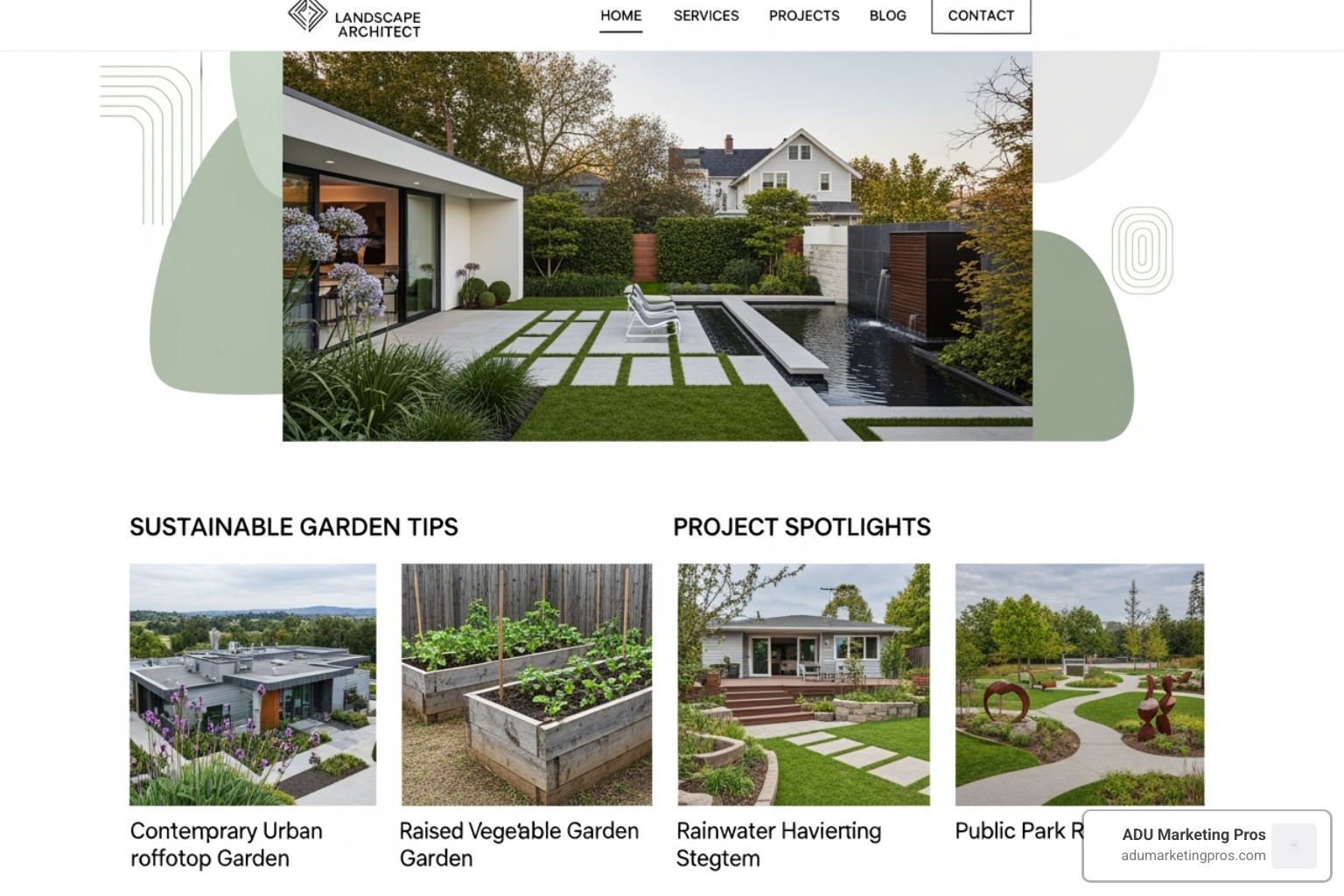
Regularly publishing valuable content signals to Google that your site is active and authoritative. More importantly, it builds genuine connections with potential clients by answering their questions before they even ask.
Effective blog topics include:
- Project Spotlights: Go behind the scenes of a challenging project to detail the problems and your creative solutions.
- Seasonal Advice & Plant Care Tips: Position yourself as a knowledgeable partner by sharing expertise on topics like “Preparing Your Garden for California’s Dry Season” or “Best Plants for Year-Round Color.”
- Design Trend Analysis: Discuss the rise of sustainable landscaping, smart irrigation technology, or outdoor wellness spaces to showcase your industry knowledge.
- Answering FAQs: Turn common client questions into informative posts that can rank well in search results and save you time.
Consistency and quality are key. Even one thoughtful, in-depth post per month can make a significant impact. See examples on Our Blog for inspiration.
9. Integrated Contact Information and Forms
Your contact information is the garden gate—it must be inviting, obvious, and easy to open. Don’t lose a six-figure lead because a potential client gets frustrated trying to reach you.
- Click-to-Call Phone Numbers: Place your phone number prominently in the website’s header and footer, visible on every single page. Ensure it’s clickable on mobile devices.
- Simple, Accessible Contact Forms: Keep forms short and to the point. Ask only for the essentials: name, email, phone, and a brief message about their project. A long, complicated form is a major conversion killer.
- Embedded Google Map: A map showing your office location or primary service area builds local trust and helps with local SEO. It visually confirms that you understand the regional climate, soil, and regulations.
- Visible Business Hours & Email: Be transparent about your availability to manage client expectations from the very first interaction.
10. Technical Performance and Security
Your website’s technical foundation is like the soil and irrigation system beneath a garden—invisible when done right, but absolutely essential for healthy growth. A technically sound site is trusted by both users and search engines, leading to better rankings and more leads.
- High-Speed Hosting: A reliable web host is non-negotiable. Your site must load in under three seconds. Visitors will abandon a slow site, and that lost opportunity could be your next great project.
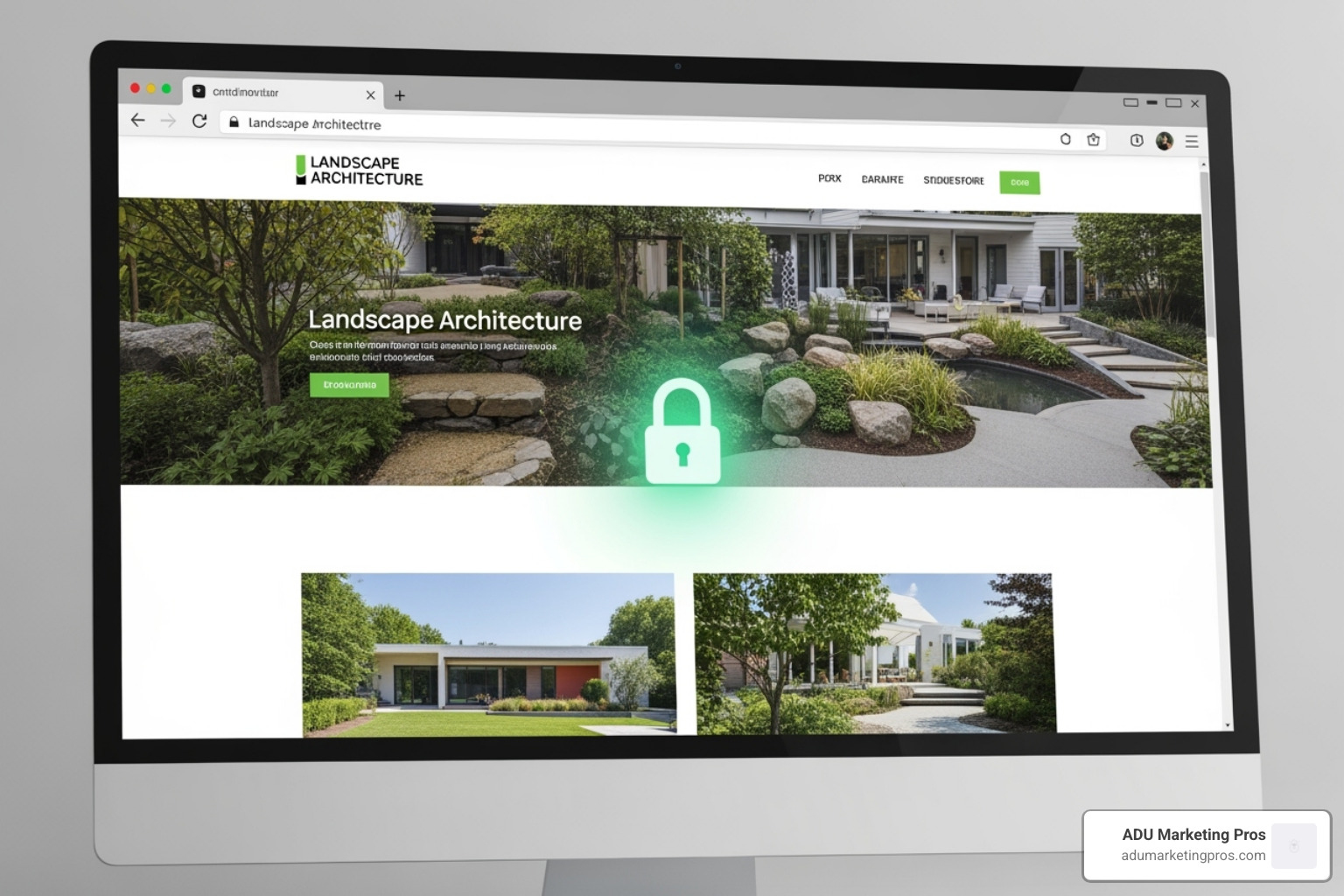
- SSL Certificate (HTTPS): This security feature encrypts data between your site and the user, building trust. Visitors see a reassuring lock icon in their browser, and Google gives a significant ranking preference to secure sites.
- Clean, Modern Code: Well-structured code isn’t just for developers. It contributes directly to faster load times, fewer bugs, and better SEO, ensuring your site functions smoothly across all browsers and devices.
- Regular Backups and Maintenance: Protect your digital investment. A reliable, automated backup system ensures your site can be quickly restored if anything unexpected happens, and regular software updates prevent security vulnerabilities.
1. A Breathtaking Visual Portfolio
Your portfolio is the crown jewel of your website. Since landscape architecture is inherently visual, potential clients need to see what you can create. Your portfolio must be more than a collection of photos; it should tell a story.
- High-Resolution Imagery: Use professional photos that capture the texture, light, and detail of your work. Images should be crisp enough for visitors to imagine themselves in the space.
- Before-and-After Sliders: These interactive elements are magic. They demonstrate the transformative power of your work better than any description could.
- Video Walkthroughs: Video captures the sensory details that still images miss, like the sound of a water feature or the movement of plants in the breeze. Video content is crucial for engaging visitors.
- Detailed Case Studies: Go beyond pretty pictures. Explain the project’s challenges, your solutions, and the materials you chose. This demonstrates your problem-solving skills and justifies your value.
2. Intuitive User Experience (UX) and Mobile-First Design
Your website’s user experience is like the pathways in a garden—it should guide visitors effortlessly. A poor experience will send potential clients to a competitor in seconds.
- Mobile-First Design: This is non-negotiable. The majority of users browse on smartphones, according to research from Pew Research Center. Your site must look and function perfectly on a small screen.
- Fast Load Times: Slow-loading images will kill engagement. Your beautiful portfolio must appear quickly to create an immediate “wow factor.”
- Simple Navigation: A clean, logical menu (e.g., “Our Work,” “Services,” “About,” “Contact”) prevents frustration. Ample white space creates a sense of calm and sophistication, mirroring the peaceful spaces you design.
A seamless user experience directly reflects your professionalism. If your website is polished and thoughtful, clients will assume your landscape projects are too.
3. Strategic Search Engine Optimization (SEO)
SEO is like planting seeds in the digital world—it helps your firm appear at the top of search results when clients are looking for your services. Without it, even the most beautiful website remains hidden.
- Local SEO Focus: This is crucial. Clients search for local services with terms like “landscape architect near me” or “garden design San Francisco.” Your content must be optimized for your service areas, whether it’s San Jose, Los Angeles, or other California cities.
- Google Business Profile: A well-optimized profile helps you appear in the local map pack at the top of search results, acting as a digital storefront sign.
- Keyword-Optimized Service Pages: Create dedicated pages for each service (e.g., hardscape design, outdoor kitchens). This helps you rank for specific searches and better informs visitors.
- Project Location Tags: Tagging portfolio projects with their locations (e.g., “Palo Alto landscape design”) creates more pathways for local clients to find you.
A strong SEO for Construction Companies strategy ensures a steady flow of qualified leads over the long term.
4. Trust-Building Elements
When visitors land on your site, they’re asking, “Can I trust this firm?” Your design must answer with a resounding “yes” using clear trust signals.
- Client Testimonials: Authentic reviews from satisfied customers are your most powerful tool. Feature them prominently, and use video testimonials if possible.
- Awards and Certifications: Display industry recognitions like “Best of Houzz” or professional memberships. These act as instant credibility boosters.
- An Authentic “About Us” Page: Go beyond qualifications. Share your firm’s story, your design philosophy, and photos of your team. This human element builds connection and trust.
- Detailed Case Studies: Showcasing your problem-solving skills is highly persuasive. Research shows that case studies increase conversions by demonstrating expertise in action.
- Google Ratings and Trust Badges: A visible five-star rating or professional association logo provides immediate social proof.
5. Clear Calls-to-Action (CTAs)
Calls-to-action (CTAs) are the friendly nudges that guide visitors from browsing to becoming clients. They should be clear, inviting, and strategically placed.
- Primary CTAs: Your most important buttons, like “Request a Consultation” or “Get a Quote,” should stand out with contrasting colors and be placed prominently on your homepage and service pages.
- Secondary CTAs: Buttons like “View Our Work” are perfect for visitors who aren’t ready to commit but want to see more. Pair them with compelling project teasers.
- Integrated Contact Forms: Don’t bury your contact form. Place simple, easy-to-fill forms directly on service pages or at the end of case studies to capture interest at its peak.
Effective CTAs are essential for turning traffic into leads and are a cornerstone of successful Lead Generation for Architects. They should feel like helpful suggestions, not sales pressure.
6. Detailed Service Pages
Go beyond a simple list of what you do. Each service deserves its own dedicated page that explains the process, the benefits, and your unique approach. This strategy is better for both users and search engines.
Instead of one generic page, create specific pages for your core offerings. For example:
- Landscape Master Plans: Explain your design process from site analysis to final drawings.
- Planting Plans and Garden Designs: Highlight your horticultural expertise and how you select plants for local conditions.
- Hardscaping Services: Detail your technical approach to walkways, retaining walls, and other structural elements.
- Outdoor Living Spaces: Showcase your ability to create functional extensions of the home, like kitchens and patios.
Each page should feature relevant project photos and end with a clear call-to-action, inviting visitors to discuss their specific needs. This targeted approach helps you rank for specific search queries and demonstrates the depth of your expertise.
7. Cohesive and Appropriate Design Principles
Your website’s design is a digital extension of your landscape philosophy. It should authentically reflect the aesthetic that defines your firm’s work, whether it’s modern, naturalistic, or classic.
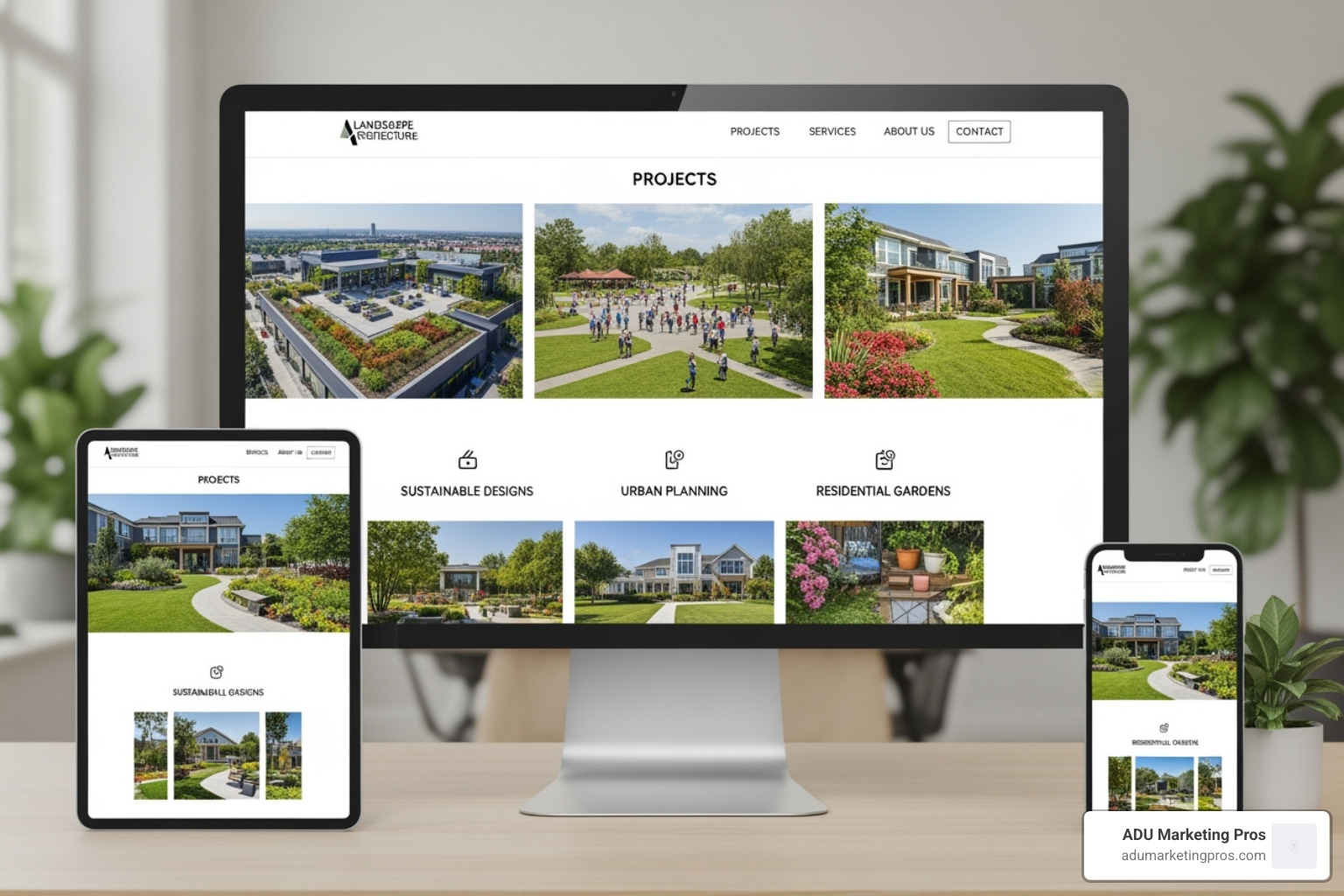
- Minimalist Layouts: A clean, uncluttered design allows your stunning project photography to be the hero. It mirrors the principle of negative space in garden design, where strategic emptiness improves key features.
- Natural Color Palettes: Draw inspiration from the world you work in. Rich greens, warm browns, and stone grays feel authentic and create visual harmony.
- Thoughtful Typography: Clean, readable fonts are essential. The right typeface can subtly reinforce your brand, whether it’s a crisp sans-serif for a modern firm or a classic serif for a traditional one.
- Ample White Space: This isn’t empty space—it’s breathing room. It creates visual calm and guides visitors through your content, signaling a sophisticated and professional approach.
8. An Informative Blog or Resources Section
While your portfolio shows what you do, a blog shows how and why you do it. A blog is a powerful tool for establishing your firm as a trusted authority and significantly boosting your search engine visibility.
Regularly publishing valuable content signals to Google that your site is active and authoritative. More importantly, it builds genuine connections with potential clients by answering their questions.
Effective blog topics include:
- Project Spotlights: Go behind the scenes of a project to detail the challenges and your creative solutions.
- Seasonal Advice & Plant Care Tips: Position yourself as a knowledgeable partner by sharing expertise on topics like “Preparing Your Garden for California’s Dry Season.”
- Design Trend Analysis: Discuss the rise of sustainable landscaping or smart irrigation to showcase your industry knowledge.
- Answering FAQs: Turn common client questions into informative posts that rank well in search results.
Consistency and quality are key. Even one thoughtful post per month can make a significant impact. See examples on Our Blog for inspiration.
9. Integrated Contact Information and Forms
Your contact information is the garden gate—it must be inviting and easy to find. Don’t lose leads because a potential client struggles to reach you.
- Click-to-Call Phone Numbers: Place your number prominently in the header, visible on every page. Most users browse on mobile and want to call directly.
- Simple Contact Forms: Keep forms short and simple. Ask for the essentials: name, email, phone, and a brief project description. A long form is a major deterrent.
- Embedded Maps: A map showing your location builds local trust and helps with local SEO. It shows you understand the regional climate and regulations.
- Visible Business Hours & Email: Be transparent about your availability to manage client expectations.
The goal is to remove every barrier between a visitor admiring your work and becoming your next client.
10. Technical Performance and Security
Your website’s technical foundation is like the soil beneath a garden—invisible but essential for growth. A technically sound site is trusted by both users and search engines.
- Fast Hosting: A reliable web host ensures your site loads quickly. Visitors will abandon a site that takes more than a few seconds to load, which is a lost opportunity.
- SSL Certificate (HTTPS): This security feature encrypts data and builds trust. Visitors see a lock icon in their browser, and Google gives preference to secure sites in search rankings.
- Clean Code: Well-structured code contributes to faster load times and better SEO, ensuring your site functions smoothly across all browsers and devices.
- Regular Backups: Protect your digital investment. A reliable backup system ensures your site can be quickly restored if anything unexpected happens.
These elements work together to ensure your website is a reliable, high-performing asset that supports your firm’s growth.
Choosing the Right Approach: Building Your Website with ADU Marketing Pros
While DIY website builders seem appealing, they often result in generic sites that fail to capture the artistry of your work or attract high-value clients. Your website is your digital showroom and 24/7 salesperson—it’s too important to leave to chance.
At ADU Marketing Pros, we understand that every landscape architecture firm has a unique design philosophy. Cookie-cutter templates simply can’t showcase what makes your firm special.
Why Work with a Professional Agency?
Partnering with a specialized agency is like having a master gardener tend to your digital presence. We bring the expertise, tools, and ongoing care to help your firm flourish online.
- Custom Design: We create a digital experience that is custom to your brand and feels authentically you.
- Advanced SEO: We implement sophisticated local SEO to help clients in your service area find you.
- Ongoing Support: We ensure your site remains secure, fast, and effective at converting visitors into clients.
- Industry Expertise: We have a deep understanding of the architecture and construction industry, allowing us to create sites that speak directly to your ideal clients.

Content Management Made Easy
Your time is best spent designing, not wrestling with code. We build websites on user-friendly platforms that make it simple to add new projects to your portfolio, publish blog posts, and update your service pages, ensuring your site grows with your business.
Future-Proofing Your Digital Garden: Maintenance and Growth
A website is a living asset that requires ongoing care to remain effective, just like the gardens you design. Launching the site is just the beginning. Regular updates, fresh content, and performance monitoring are what separate thriving websites from those that wither and get buried in search rankings.
Keeping Your Portfolio and Content Fresh
Your website should feel as vibrant and current as your latest project. A stale site signals a stale business.
- Add New Projects Regularly: Each completed project is a new story to tell and a new opportunity to rank in search. High-quality photos and detailed case studies show your firm is active, in demand, and constantly evolving.
- Update Company News: Sharing new team members, awards, press mentions, or community involvement builds trust and shows you’re a thriving, engaged business.
- Publish Blog Content Consistently: Fresh, helpful content signals to Google that your site is a valuable resource, which boosts your SEO authority and gives you valuable material to share on social media and in email newsletters.
Considering Advanced Features for Growth
As your firm grows, your website can evolve with you. Consider investing in advanced features to improve the client experience and create a significant competitive advantage:
- Interactive & Filterable Galleries: Allow visitors to filter your portfolio by project type (e.g., pools, patios), style (modern, traditional), or specific features (outdoor kitchen, water feature). This helps them quickly find work relevant to their vision.
- Secure Client Portals: Offer a password-protected area for active clients to view project progress photos, approve plans, share feedback, and access important documents. This streamlines communication and provides a premium, professional experience.
- VR and AR Capabilities: Allow clients to virtually experience their future outdoor space before a single stone is laid. Using a VR headset or their own smartphone, they can understand the scale and feel of the design in a way 2D drawings can’t convey. The adoption of these technologies is growing, according to research on virtual reality, and can be a powerful tool to close high-end deals.
ADU Marketing Pros can help you plan and implement these improvements as your needs evolve. Learn more about How Do Architects Advertise? using advanced digital tools.
Frequently Asked Questions about Web Design for Landscape Architects
Here are the questions we hear most often from landscape architects looking to invest in a high-performance website that drives business growth.
How much does a website for a landscape architect cost?
The cost is similar to a landscape project—it depends entirely on the scope, complexity, and level of customization. A basic template site from a DIY builder might have a low upfront cost, but it’s unlikely to stand out, attract high-value clients, or generate leads effectively. A custom website from a specialized agency is a strategic investment designed to deliver a significant return. At ADU Marketing Pros, our approach is rooted in our deep experience with Digital Marketing for Construction Companies. We focus on creating a business asset that consistently brings in qualified leads and pays for itself many times over by attracting the right kind of projects.
How important is a blog for a landscape architecture website?
A blog is absolutely essential for modern SEO and for establishing your firm as a thought leader. It allows you to target specific, long-tail keywords that your ideal clients are searching for (e.g., “low-maintenance backyard design for Northern California homes” or “cost of installing a modern fire pit”). This content answers their questions, builds trust, and captures traffic that your main service pages might miss. More importantly, fresh, relevant content signals to search engines that your site is a valuable resource, which is a critical factor for ranking highly on Google and staying ahead of your competition.
Can I build the website myself?
You can, but the real question is whether you should. Your time is incredibly valuable and is best spent on design, client relations, and managing projects. While DIY platforms seem user-friendly, they have a steep learning curve when it comes to creating a truly effective, lead-generating site. Professional web design involves conversion-focused layout, advanced local SEO implementation, mobile-first coding, page speed optimization, and security protocols—skills that go far beyond choosing a template and uploading photos. Partnering with an agency lets you focus on what you do best—creating beautiful outdoor spaces—while we ensure a steady stream of qualified clients can find you online.
Conclusion
Your website is more than a digital portfolio; it’s a living extension of your firm’s artistry. When you combine stunning visuals with a seamless user experience and strategic SEO, you create a powerful marketing asset that builds trust, cultivates client relationships, and sets you apart from the competition.
A well-designed website works for your business 24/7. It answers client questions, demonstrates your expertise, and connects you with customers who value and are willing to invest in high-quality design. In a competitive industry, your digital presence can be the key differentiator that moves the conversation beyond price and toward the unique value you provide.
Ready to Grow Your Firm?
Building a website that looks beautiful while driving measurable growth requires strategic thinking and industry expertise. At ADU Marketing Pros, we specialize in creating high-performance websites and marketing solutions for architecture and construction professionals. We know how to translate the sensory richness of your landscape designs into compelling online experiences that convert visitors into clients.
Ready to cultivate a digital presence that works as hard as you do? Explore our Architect Website Design services and learn how we can help your landscape architecture firm flourish. Your future clients are searching—let’s make sure they find you.