
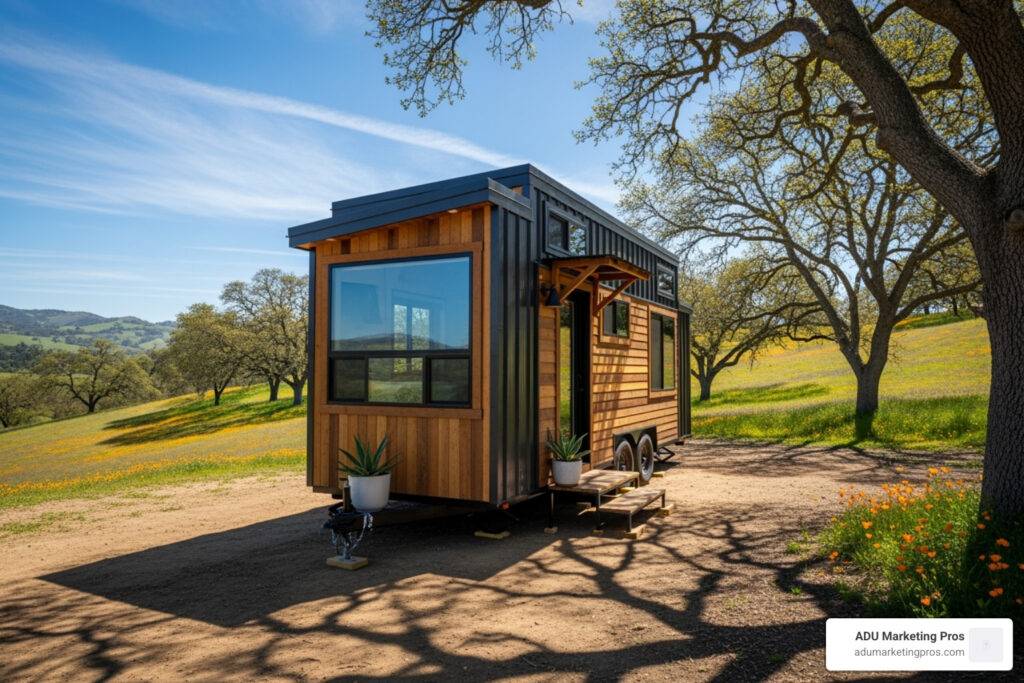
Finding Your Tiny House Parking Spot in Southern California
Wondering where can I park my tiny house in Southern California? Finding a legal and suitable spot is a common challenge for tiny home enthusiasts. While the minimalist lifestyle and financial freedom are appealing, parking is often the biggest hurdle.
Here’s a quick look at your main options:
- RV Parks: Many Southern California RV parks accept tiny homes on wheels (THOWs), treating them as RVs. Be aware of rates and maximum stay limits.
- Dedicated Tiny Home Communities: Designed specifically for tiny homes, places like Tiny House Block in Mount Laguna offer long-term spots and a community atmosphere.
- Private Land: Parking on private land is possible if local zoning allows it, which often involves navigating Accessory Dwelling Unit (ADU) laws. This can be complex in dense urban areas.
- Cities with Friendly Ordinances: Some cities and counties are becoming more accommodating. Understanding specific local regulations is key, as they vary greatly.
Southern California offers a beautiful but complex landscape for tiny home living, with high demand for space and tricky regulations. This guide will help you steer your options and understand the legalities.
Where can i park my tiny house in southern california terms to remember:
- land for sale in southern california for tiny houses
- tiny house builders in southern california
- architects in southern california who design tiny houses
Understanding the Legal Maze: THOWs vs. ADUs in SoCal
Figuring out where can I park my tiny house in Southern California legally can be confusing. The legal landscape is a patchwork of local regulations that change from one city to the next. The core of the issue is how tiny homes are classified. Since California law has no specific “tiny house” category, they often fall into legal gray areas, treated as either recreational vehicles or accessory structures.
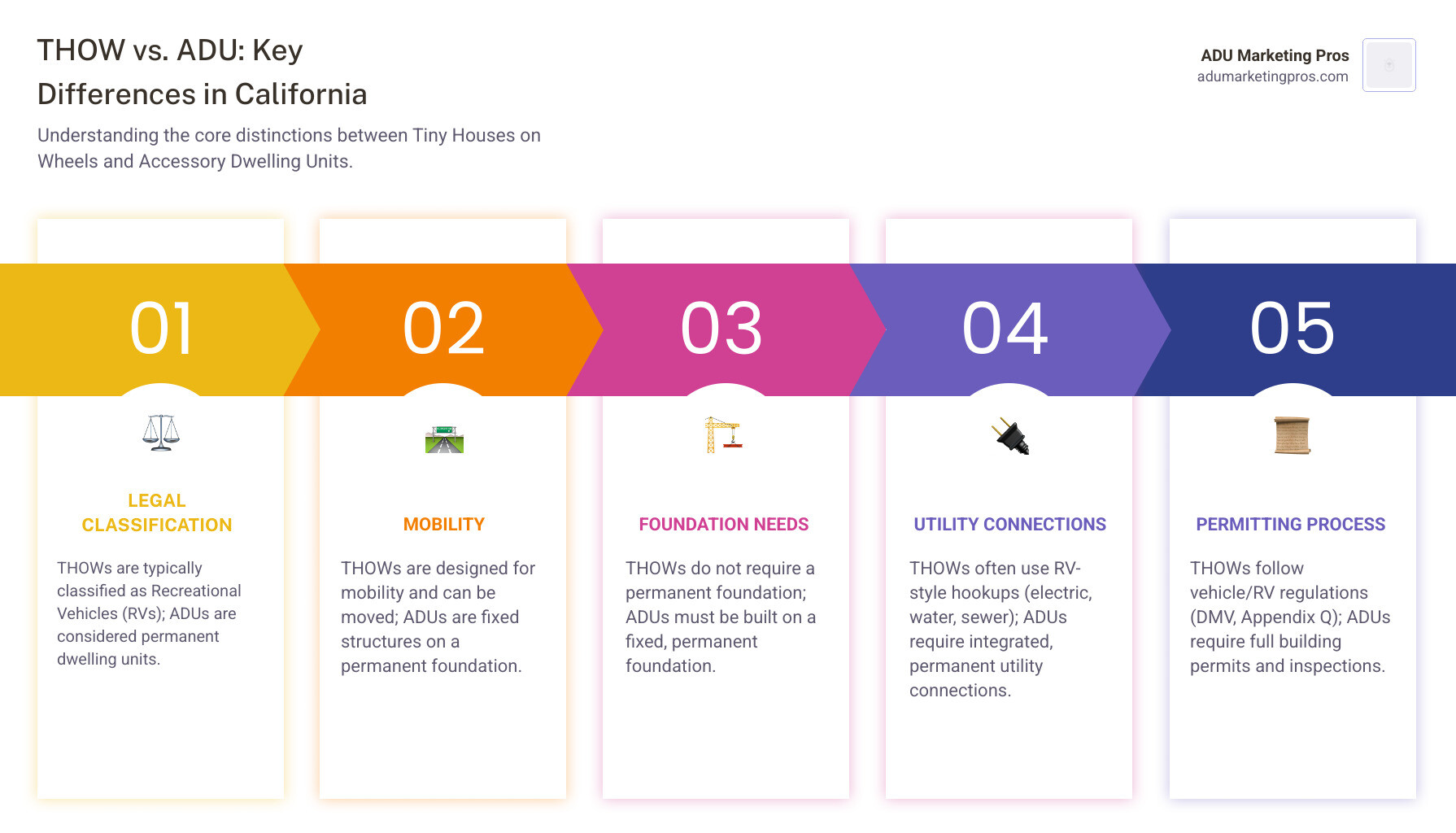
The key distinction is whether your tiny home is on wheels or a foundation. This determines how the law views your home. Tiny Homes on Wheels (THOWs) and foundation-built Accessory Dwelling Units (ADUs) exist in different legal worlds.
THOWs are generally seen as temporary, movable structures, while ADUs are permanent additions to a property. This difference affects where you can park, for how long, and what rules you must follow. Understanding this distinction is the first step to finding a legal spot.
More info about architects who design tiny houses
Tiny House on Wheels (THOW) Legal Status
Most THOWs fall under the Recreational Vehicle (RV) classification in California, lumping them in with travel trailers and motorhomes for regulatory purposes.
This means you’ll need to register your THOW with the California DMV, navigating the Movable Tiny Home definition process, which can result in classifications like “Recreational Trailer” or “Coach Trailer.”
Larger tiny homes may be classified as Park Model RVs, which are built to standards in Appendix Q of the building code. California has adopted this to provide a framework for tiny home construction. The International Code Council works to standardize these regulations, but local implementation varies.
Crucially, local ordinance variations mean what’s legal in San Diego might be prohibited in Los Angeles County. Some cities accept tiny homes, while others heavily regulate them.
Key Differences: THOW Parking vs. ADU Placement
The differences between parking a THOW and placing an ADU determine if you can legally live in your tiny home.
- Foundation & Mobility: ADUs require permanent foundations and are built to traditional home standards. THOWs are mobile and have no permanent foundation, offering flexibility but limiting long-term parking options.
- Utility Connections: ADUs have permanent utility hookups integrated with the property. THOWs typically use temporary RV-style hookups, though off-grid systems are also an option.
- Permit Process: ADUs require full building permits and inspections. THOWs may need special use permits or fall under RV parking rules, which can be simpler or more complex depending on the location.
- Primary Dwelling Rule: In many areas, including Los Angeles, you cannot place an ADU or park a THOW on an empty lot. There must be a primary residence on the property first.
- Long-term Residency: While ADUs are for permanent living, many jurisdictions prohibit full-time residency in RVs—the classification for most THOWs. This can prevent you from legally living in your THOW full-time in certain locations.
Learn about land for tiny houses
Where Can I Park My Tiny House in Southern California: Official Communities and Parks
When asking where can I park my tiny house in Southern California, established communities and RV parks offer legal, communal solutions. While private land is an option, it often involves scarce availability and complex legalities. Dedicated communities and THOW-friendly RV parks provide a smoother path with predictable lot rent and utility access.
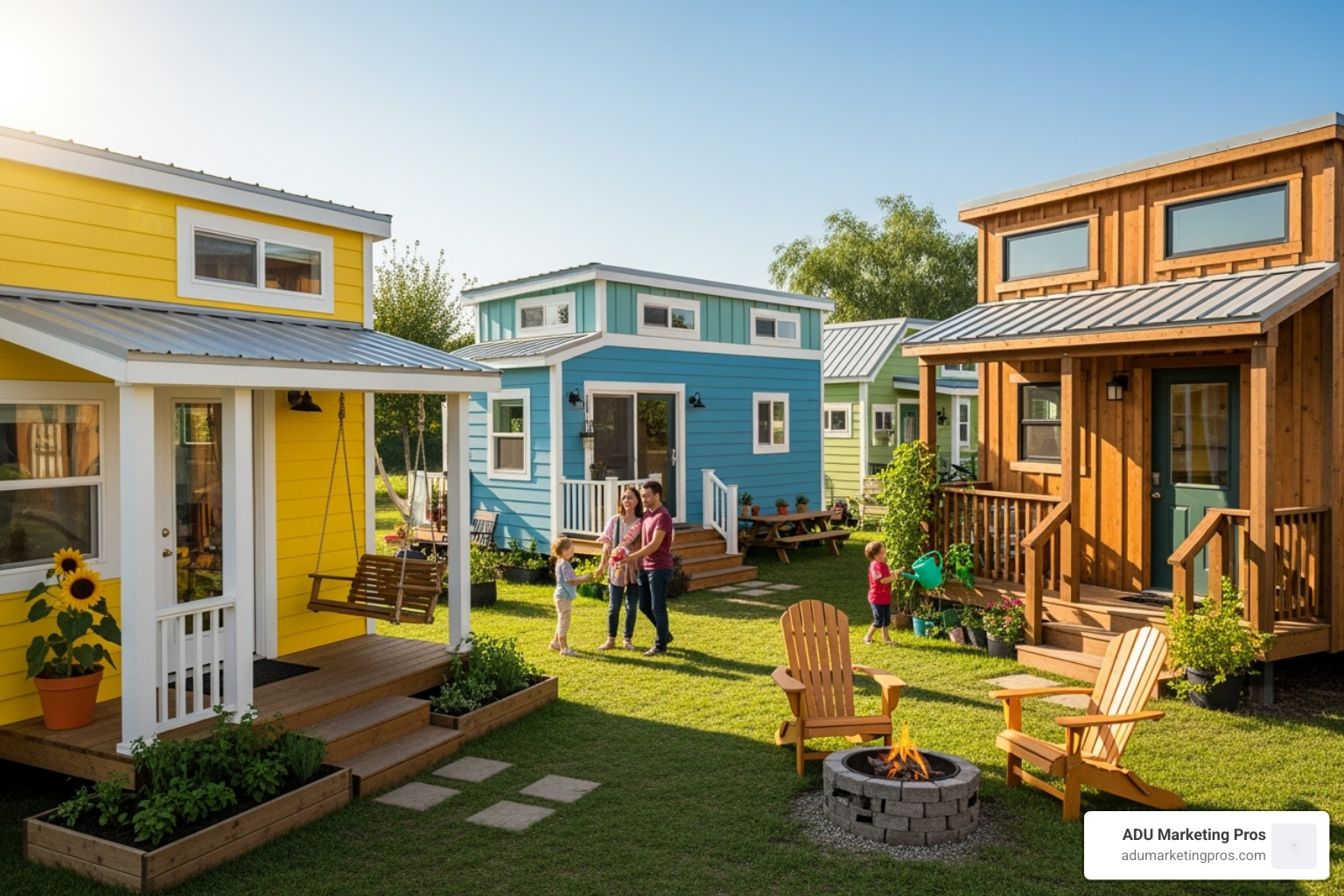
More info on places that allow tiny houses
Designated Tiny Home Communities
These communities are ideal for owners seeking permanence and belonging. They are designed for tiny living, offering utilities, amenities, and a social network.
- Tiny House Block: Located in Mount Laguna (San Diego County), this is one of the only legal tiny home communities in Southern California. It offers long-term parking in the mountains, with costs averaging $875 to $975 per month plus electricity. The community fosters a nature-centric lifestyle and accepts various tiny home types up to 32 feet long. Visit the Tiny House Block website
- Paradise Tiny Home Community: Situated in Desert Hot Springs (Coachella Valley), this is another legal, community-focused option. Contact them directly for current rates and availability.
These communities are excellent because they have already steerd complex zoning and legal issues, providing a stress-free path for residents.
THOW-Friendly RV Parks
RV parks are often the most accessible starting point, as they typically treat THOWs like other RVs and provide essential hookups. However, rules on long-term stays and full-time residency vary, so always call ahead to confirm their specific policies for tiny homes.
Here are some prominent THOW-friendly RV parks in Southern California:
- Dockweiler RV Park (Los Angeles): Offers a rare oceanside experience with a 21-night maximum stay. Daily rates are around $55 to $75.
- Golden Shore RV Resort (Long Beach): A waterfront option with daily rates around $60 and weekly rates from $340.
- Fairplex KOA (Pomona): A large campground on the east side of LA; check directly for rates.
- Orangeland RV Park (Orange): A family-owned park in an orange grove setting near Disneyland, with daily rates from $85.
- Anaheim RV Park (Anaheim): Located within walking distance of Disneyland, with a shuttle service. Daily rates start at $66, and weekly rates are around $380.
While convenient, RV park costs can add up, sometimes rivaling apartment rents and reducing the financial benefits of tiny living. Finding a permanent spot, especially in Los Angeles, can be particularly challenging.
Navigating Local Zoning and Regulations
Understanding local zoning is crucial when figuring out where can I park my tiny house in Southern California. Each city and county has its own ordinances for tiny homes, ADUs, and RVs. What’s legal in one area might be prohibited in the next.

This research involves checking city and county websites, reviewing permit applications, and understanding inspection requirements. Be aware that regulations are constantly evolving as more communities accept tiny living.
How to Find Legal Parking in Southern California
Finding a legal spot requires thorough detective work. Here’s how to approach it:
- Check Official Government Websites: Your most reliable source is the planning or building department website for the city and county you’re interested in. Search for information on ADUs, RV parking, and “movable tiny homes.”
- Understand Jurisdictional Nuances: City rules often supersede county rules. Just because a county allows tiny homes doesn’t mean every city within it does.
- Research Specific Area Rules:
- Los Angeles County: While friendly to ADUs, THOWs generally cannot be the primary residence. Finding private land to park is very challenging.
- San Diego County: Is becoming more open to movable tiny homes, influenced by evolving ADU laws, which has enabled communities like Tiny House Block.
- Fresno: A trailblazer in California, Fresno was the first major city to allow THOWs as full-time dwellings on residential property.
- San Luis Obispo: Allows one tiny home (100-400 sq. ft.) per property, requiring permit renewal with inspections every 3-5 years.
- Humboldt County: Mandates that THOWs have 120-400 square feet of interior living space.
- Contact Planning Departments Directly: When in doubt, call or visit the local planning department with specific questions about your home type and living intentions. This can prevent significant confusion and legal trouble.
Resources from the American Tiny House Association
Potential Challenges and Legal Gray Areas
Even with research, you may face challenges:
- Full-Time Living Restrictions: In many parts of California, it’s illegal to live in an RV full-time, even in RV parks. This is a major hurdle for THOW owners.
- “Stealth” Parking Risks: Living “under the radar” on private land is risky and can lead to neighbor complaints, code enforcement action, and eviction.
- Neighbor Relations: Being a good neighbor is essential. Maintain your property and follow community guidelines to prevent issues.
- Code Enforcement: Enforcement varies by jurisdiction. Some are complaint-driven, while others are proactive.
Fortunately, legislation is evolving in favor of tiny homes. Advocacy groups are pushing for updated regulations. Prioritizing legal compliance provides peace of mind and helps legitimize the tiny house movement.
The Nitty-Gritty: Registration, Certifications, and Costs
Once you’ve steerd the legal maze, it’s time for the practicalities of registration, certification, and budgeting. Getting your paperwork and finances in order is a critical step.
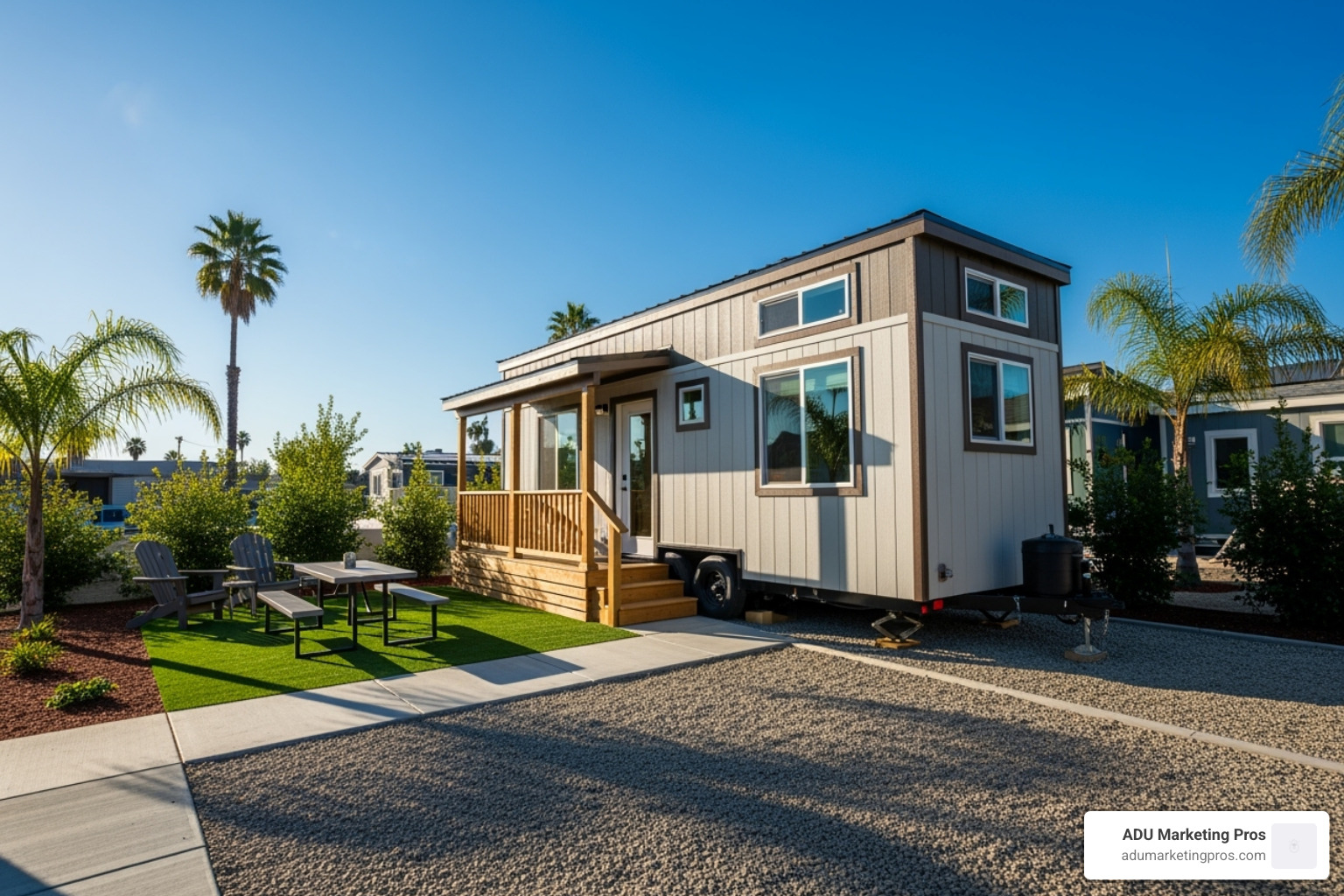
Proper documentation proves your tiny home is safe, roadworthy, and ready for its parking spot.
Registering Your THOW and Required Certifications
To be legal on the road and accepted in most parking areas, your THOW needs proper registration with the California DMV. This process legitimizes your home as a vehicle for habitation and gets you license plates.
Certain certifications are also crucial when determining where can I park my tiny house in Southern California:
- RVIA Certification: This seal from the Recreational Vehicle Industry Association is a key credential for professionally built tiny homes. It can lead to easier acceptance into RV parks, smoother financing, and simpler insurance. Why RVIA certification matters
- ANSI/NFPA Standards: Compliance with standards like ANSI 119.5 (for park models) and NFPA 1192 (for recreational vehicles) is often required. These standards cover essential safety features like plumbing, electrical systems, and fire protection, giving you and parking providers peace of mind.
Budgeting for Parking in Southern California
The cost of parking in Southern California varies widely, so careful budgeting is essential to maintain the financial benefits of tiny living.
- RV Park Costs: Expect to pay daily or weekly rates, ranging from $55 to $85+ per day or $340 to $380+ per week. These costs can add up quickly, especially in high-demand areas.
- Tiny Home Community Costs: For long-term stability, dedicated communities offer monthly lot rent. For example, a space at Tiny House Block averages $875 to $975 per month, which typically includes water, sewage, and trash, but not electricity.
- Other Costs: Remember to budget for additional expenses like utility hookup fees, permit costs (which can range from hundreds to thousands of dollars), security deposits, and insurance. Some locations may require specific liability coverage.
Finding Your Spot: Resources and Community Support
You don’t have to search for where can I park my tiny house in Southern California alone. The tiny home community offers a wealth of resources and support, from online tools to in-person events. Tapping into this community knowledge can help you uncover private land opportunities and connect with friendly landowners.
More info on tiny house builders
Online Marketplaces and Listing Sites
The internet is a great place to start your search. When using these platforms, be prepared with details about your tiny house (dimensions, certifications) and your desired timeline.
- Try It Tiny: Lists parking spots for rent, from private land to communities.
- Search Tiny House Villages: Helps you find established tiny house communities nationwide.
- Tiny House Hosting Facebook Group: A lively group for finding leads and connecting with property owners.
- Craigslist: Can be a source for private rentals, but always be cautious and verify legitimacy.
- Tiny House Map: An interactive map for exploring potential parking locations. Find parking on Tiny House Map
Southern California Networking and Advocacy Groups
Connecting with local groups is one of the most effective ways to find unlisted opportunities and gain valuable insights.
- Los Angeles Tiny House Enthusiasts: This active Facebook group is a hub for asking questions, sharing experiences, and finding parking leads. Connect with the LA Tiny House Enthusiasts group
- Tiny Home Festivals: Attending events like TinyFest California is an excellent way to network face-to-face with builders, owners, and community representatives.
- Meetup Groups: Look for local tiny house Meetups for valuable connections and word-of-mouth opportunities.
- Advocacy Organizations: Groups like the LATCH Collective (Los Angeles Tiny Community Homes) are actively working to legalize tiny homes and create more parking options. Following them can provide insight into where new opportunities may arise.
Networking is powerful; many successful parking solutions come from personal connections, not just online listings.
Conclusion
Finding where can I park my tiny house in Southern California is a journey that balances the dream of simple living with the reality of complex local rules. This guide has covered the key distinctions between THOWs and ADUs, explored options from dedicated communities like Tiny House Block to RV parks, and detailed the importance of navigating local zoning laws.
Success requires understanding the legal landscape, which varies dramatically from Los Angeles to San Diego. It’s essential to research local ordinances, obtain proper certifications like RVIA, and budget carefully for all associated costs.
Proactive research and community engagement are your best tools. Connecting with groups like the Los Angeles Tiny House Enthusiasts and attending events like TinyFest can open up opportunities not found in public listings.
At ADU Marketing Pros, we specialize in marketing for ADU construction and architecture firms. We see the parallels between the regulatory challenges of ADUs and tiny homes, as both are part of the movement toward innovative, affordable housing in California. The challenges of finding legal parking mirror the regulatory problems our clients steer when developing accessory dwelling units.
The future for tiny living in Southern California is promising. As advocacy groups push for clearer regulations and more communities accept diverse housing, finding a spot should become easier. Your search is more than just for parking; it’s about joining a supportive community. With thorough research and patience, you can find your perfect tiny home haven.