
California’s Tiny Home Communities: A Quick Guide to Your Options
California is currently at the epicenter of a housing revolution. As the median home price in the Golden State continues to hover at levels that are unattainable for many, the search for alternative living arrangements has led thousands to explore tiny home communities in CA. These communities span a wide range of styles, from luxury desert retreats with high-end amenities to transitional villages designed to help unhoused residents regain their independence and stability.
The rise of these communities is not just a trend; it is a response to a complex set of economic and social factors. Sky-high housing costs, a deeply ingrained culture of sustainability, and a growing push from local governments to create faster, cheaper housing solutions have all converged to make California one of the most active states for tiny home living in the country. However, navigating this landscape requires a clear understanding of the different types of communities available, as the rules, costs, and lifestyles vary significantly between them.
Here are the main types and some top examples to know:
| Community Type | Example | Location | Best For |
|---|---|---|---|
| Nature/Luxury Resort | Tiny Tranquility Redwoods | Hiouchi, NorCal | Minimalists, nature lovers |
| Desert Lifestyle | Paradise Tiny Home Community | Desert Hot Springs | Retirees, snowbirds |
| RV-Zoned Permanent | Park Delta Bay | Isleton (Delta region) | Full-time THOW residents |
| Affordable/Transitional | Hope the Mission Villages | Los Angeles County | Unhoused individuals |
| Permanent Affordable | Woodland Opportunity Village | Woodland, NorCal | Low-income households |
| Nature + Budget-Friendly | Lemon Cove Village | Near Sequoia NP | Tiny home on wheels owners |
But not all tiny home communities are the same. Some are resort-style parks with pools, spas, and organized social calendars. Others are grassroots villages built on repurposed asphalt lots to provide immediate shelter for those in crisis. And some are permanent, code-compliant housing developments funded by federal vouchers and built on concrete foundations. Understanding the difference matters—especially if you’re trying to find the right fit for your lifestyle, budget, or specific housing situation. Whether you are a digital nomad looking for a scenic place to park your wheels or a local advocate looking for solutions to the homelessness crisis, the diversity of California’s tiny home landscape offers something for everyone.
Exploring the Diverse Landscape of Tiny Home Communities in CA
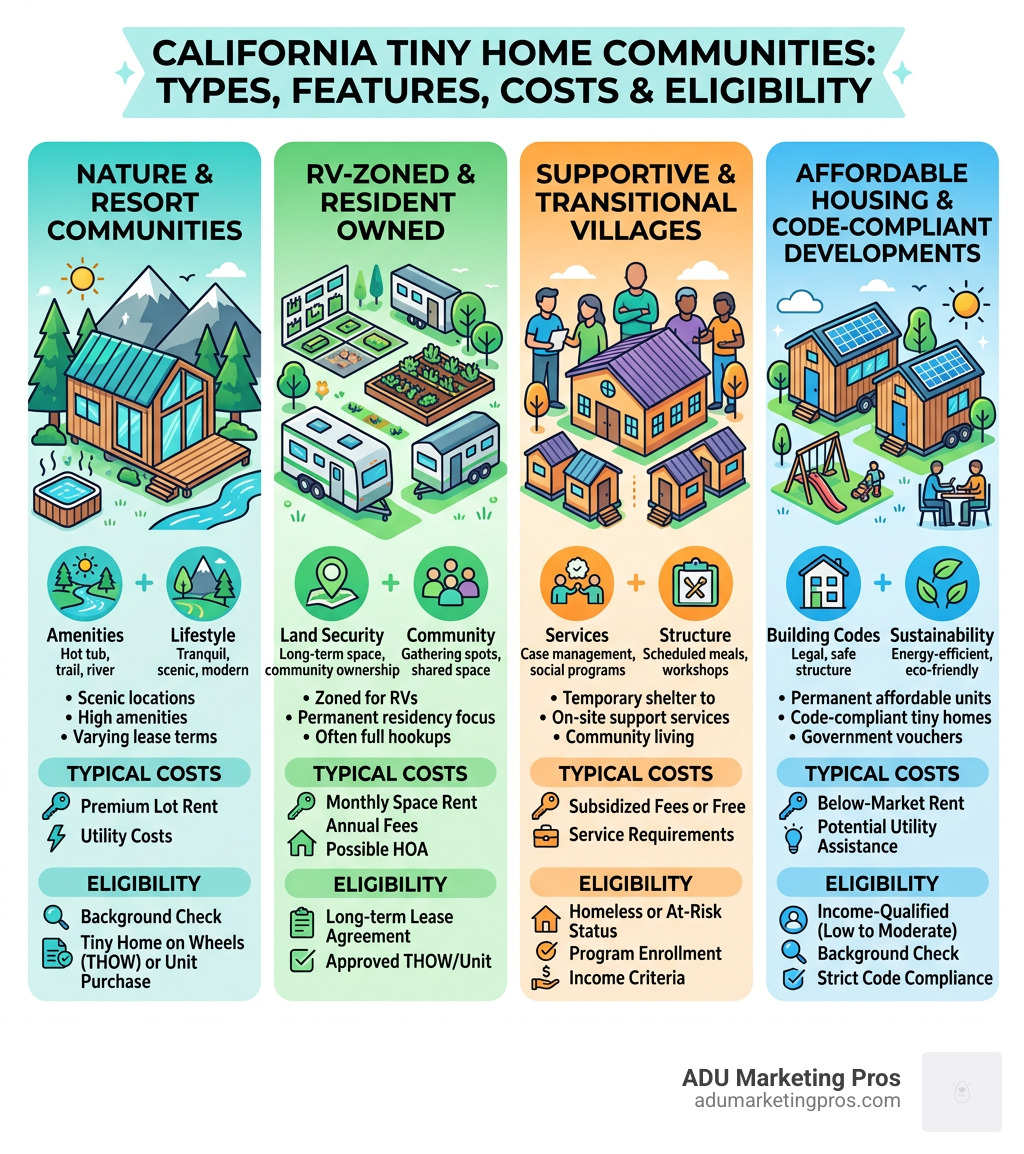
When we talk about tiny home communities in CA, we aren’t just talking about one thing. California’s landscape is as diverse as its housing needs, and the way tiny homes are integrated into that landscape reflects this variety. For some of us, “going tiny” means a luxury loft on wheels parked by a river, enjoying the freedom of a minimalist lifestyle without sacrificing comfort. For others, it’s a vital path to permanent housing in a supportive environment that offers more dignity than a traditional shelter.
The state generally categorizes these communities into four main buckets, each serving a different demographic and operating under different legal frameworks:
1. Luxury Resorts and Lifestyle Communities
These are often located in high-demand vacation spots like Palm Springs, the Coachella Valley, or the majestic Redwoods of Northern California. They offer high-end amenities that rival traditional luxury RV resorts, including heated pools, spas, pickleball courts, and designer clubhouses. These communities are popular with retirees, “snowbirds” escaping colder climates, and professionals who work remotely and want to live in a beautiful setting.
2. RV-Zoned Parks and Tiny House Villages
These are traditional RV parks that have updated their rules and infrastructure to allow Tiny Homes on Wheels (THOWs). They provide a legal, long-term place to park, usually offering full hookups including water, sewer, and 50-amp power. These parks are the backbone of the tiny house movement for those who own their homes and need a stable place to live year-round. They often foster a strong sense of community among residents who share a similar philosophy of living with less.
3. Transitional Housing Villages
These are rapid-response communities, like those operated by Hope the Mission in Los Angeles. They use smaller, modular units (often around 64 square feet) to provide interim shelter and essential services for people experiencing homelessness. These villages are designed to be temporary, providing a safe and private space while residents work with case managers to find permanent housing solutions. They are a critical component of the state’s strategy to address the homelessness crisis.
4. Permanent Affordable Villages
These are foundation-based developments, such as Woodland Opportunity Village. They look more like traditional neighborhoods but with significantly smaller footprints (around 380 square feet) and are designed for long-term, low-income residency. These projects often utilize government subsidies and are built to strict building codes, ensuring they remain a permanent part of the city’s affordable housing stock.
One of the biggest questions we hear is the difference between a tiny home and an Accessory Dwelling Unit (ADU). While they look similar and both promote small-scale living, the legalities differ significantly. For a deeper dive, check out this guide on adu vs tiny house. Generally, ADUs are permanent structures built on a property that already has a primary residence, while many tiny homes in communities are movable and classified differently under the law.
Top-Rated Communities for Permanent and Luxury Living
For those of us looking to make tiny living a permanent lifestyle, California offers several “gold standard” communities. These spots focus on community engagement, long-term stability, and high-quality amenities that make small-space living feel expansive and fulfilling.
Park Delta Bay: A Pioneer in Legal Tiny Living
One of the most famous spots is Park Delta Bay, located in Isleton within the beautiful California Delta region. It’s a bit of a pioneer, often cited as one of the first legal tiny house communities in Northern California. The community has worked closely with local officials to create a space where tiny home owners can live legally and comfortably.
What makes it special? It’s zoned as an RV park, which allows residents to live there year-round in their THOWs. Currently, the community houses about 80 full-time residents across 13 tiny homes and 60 RV spaces. The atmosphere is one of mutual respect and shared values, where neighbors know each other and participate in community events.
- Amenities: Residents enjoy fishing docks, a community room, tennis courts, a pool, and lush lawns. The Delta location offers incredible access to boating and water sports.
- Requirements: To keep things legal and safe, homes must be on wheels, DMV-registered, and have RVIA certification (or an equivalent). This ensures that all homes meet basic safety and construction standards.
- Vibe: It’s a grassroots community where people share a “live tiny, be big” philosophy. It’s not just about the house; it’s about the lifestyle and the connection to the land and neighbors.
If you want to read more about the daily life there, Delta Bay Tiny House Village offers a great look at how they’ve made legal tiny living a reality in a state known for its strict regulations.
Luxury and Nature-Focused Escapes
If your dream involves more trees or more sun, you have two incredible options at opposite ends of the state that cater to different tastes but share a commitment to quality.
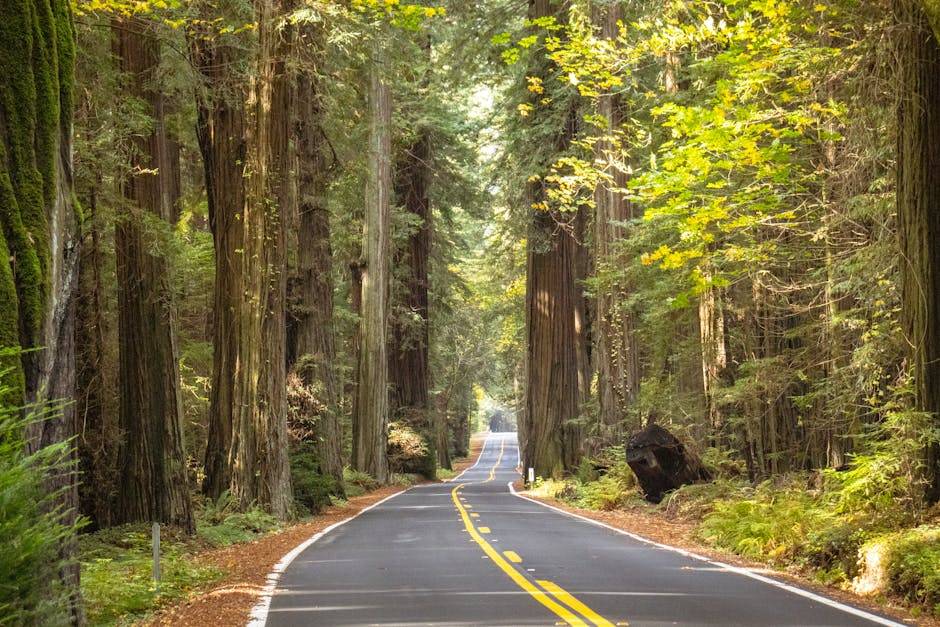
Tiny Tranquility Redwoods (Hiouchi, CA) Located near the Jedediah Smith State Park, this 27-acre park is a nature lover’s paradise. It’s about 15–30 minutes from Crescent City and offers 120 full hookup sites. The park is designed to integrate seamlessly with the surrounding forest, providing a serene environment for residents.
- Lot Sizes: These aren’t cramped spots; sites range from 2,000 to 3,500 square feet, providing plenty of outdoor space for gardening or relaxing.
- Features: The park includes pickleball courts, a dog park, a lily pond with a gazebo, and plans for a community commons building by 2026. The focus here is on wellness and connection to nature.
- Location Perks: You’re walking distance to the Hiouchi Hamlet market and minutes away from the Smith River and stunning redwood groves. It’s an ideal spot for those who want to live off the beaten path without being completely isolated.
Paradise Tiny Home Community (Desert Hot Springs, CA) For those who prefer the Coachella Valley sun and a more resort-like atmosphere, Paradise offers a high-end escape near Palm Springs. This community is tailored for those who want a low-maintenance lifestyle with all the perks of a luxury development.
- Pricing: New tiny home models are priced starting in the low $100,000s, offering a relatively affordable entry point into the Southern California real estate market.
- Rules: Homes must be 399 square feet or smaller and match the community’s upscale aesthetic. This ensures a cohesive look and feel throughout the park.
- Amenities: Think luxury—a pool, spa, gym, fire pits, and BBQ areas. It’s designed for retirees and minimalists who want a high-style life in a beautiful desert setting. The community often hosts social events, making it easy to meet neighbors and build a social network.
Lemon Cove Village (Near Sequoia National Park) Another noteworthy mention is Lemon Cove Village. Located at the base of the Sierra Nevada mountains, it serves as a gateway to Sequoia National Park. This community is particularly popular with outdoor enthusiasts who use their tiny homes as a base camp for hiking, climbing, and exploring the national parks. It offers a more budget-friendly option compared to the luxury resorts while still providing essential amenities and a stunning natural backdrop.
Addressing the Crisis: Transitional and Affordable Villages
Tiny homes aren’t just for luxury living or minimalist enthusiasts; they are a critical tool in solving California’s persistent housing crisis. In cities like Los Angeles, San Jose, and Oakland, tiny home villages provide a dignified and efficient alternative to traditional congregate shelters, which many unhoused individuals find restrictive or unsafe.
Hope the Mission and the Los Angeles Model
In Los Angeles County, Hope the Mission operates several villages that serve as a vital bridge from the street to permanent housing. These villages are designed to provide more than just a roof; they provide a sense of ownership and privacy that is often missing in the shelter system.
- Arroyo Seco Tiny Home Village: This is currently the largest tiny home village in the country, featuring 117 units and 224 beds. Its scale allows for a wide range of on-site services.
- Chandler Blvd Tiny Home Village: The first of its kind in LA, it opened in early 2021 with 40 homes and served as a proof-of-concept for the city’s tiny home strategy.
- The Units: These are often “Pallet” shelters—64-square-foot units that include two beds, heat, air conditioning, and a locking door. While small, they provide the security and climate control necessary for stability.
- Services: These aren’t just places to sleep. They provide three meals a day, laundry facilities, showers, case management, mental health services, and job training. The holistic approach is designed to address the root causes of homelessness.
The goal for these residents is usually a 3-to-6-month stay while they work toward permanent placement. The privacy of a tiny home allows residents to decompress from the trauma of living on the street, making them more successful in their transition. For those entering the housing market after their stay, HUD-certified homebuyer education can be a vital resource for long-term success and financial stability.
Permanent Affordable Solutions in Northern California
Further north, we see models that focus on long-term, permanent residency rather than transitional shelter. These projects, like Woodland Opportunity Village and Goodness Village in Livermore, are creating new neighborhoods for low-income residents.
- Freeman Garden Court (Woodland): This project features 12 duplexed tiny homes (380 sq ft each) built on permanent slab foundations. Unlike THOWs, these are fully compliant with the California Building Code and are considered permanent real estate. They are funded through HUD Project Based Vouchers, ensuring they remain affordable for decades and providing residents with a permanent place to call home.
- Goodness Village (Livermore): Located on leased property in partnership with local organizations, this community is non-religious and open to all. It focuses on creating a supportive environment for those transitioning out of homelessness, emphasizing community gardening, shared meals, and mutual support. It demonstrates how tiny homes can be used to build social capital and community resilience.
These affordable villages often face significant hurdles, including “NIMBY” (Not In My Backyard) opposition and complex funding requirements. However, their success in providing stable, high-quality housing at a fraction of the cost of traditional apartment buildings is making them an increasingly popular choice for city planners across the state.
Navigating Legalities, Zoning, and Building Codes
Living in a tiny home in California sounds like a dream, but the paperwork and legal requirements can be a bit of a nightmare if you aren’t prepared. The legality of your home depends largely on whether it has wheels or a foundation, as these two types of structures are governed by entirely different sets of laws.
Tiny Homes on Wheels (THOWs) vs. Foundation-Based Homes
Tiny Homes on Wheels (THOWs): In most tiny home communities in CA, these are legally classified as Recreational Vehicles (RVs). This classification allows them to be moved easily but also subjects them to RV-specific regulations. To park legally in places like Park Delta Bay, your home usually needs:
- RVIA Certification: This is the most critical requirement. It proves the home was built to national safety standards (NFPA 1192) for plumbing, heating, and electrical systems. Without this, most parks will not accept your home due to insurance liabilities.
- DMV Registration: Since the home is built on a trailer, it is considered a vehicle and needs a valid license plate and registration.
- Wheels Attached: Most RV-zoned parks require that the wheels remain attached and the home remains mobile. Removing the wheels can change the legal status of the home and may violate park rules.
Foundation-Based Tiny Homes: These are essentially very small houses. They must meet the California Building Code (specifically Appendix Q, which was adopted to provide standards for tiny houses). These codes are much stricter than RV standards and cover things like ceiling height, loft safety, and emergency escape routes. These are more common in urban infill lots or dedicated affordable housing developments where the home is intended to be permanent.
For more information on specific regions and their local rules, you might want to look into places in southern california that allow tiny houses.
Navigating Zoning Laws for Tiny Home Communities in CA
Zoning is often described as the “final boss” of tiny living. Even if your home is perfectly built, you can’t just park it anywhere. Many cities are currently updating their ordinances to allow “Movable Tiny Homes” as ADUs in residential backyards, which has been a huge win for the movement. However, if you are looking for a community setting, you are usually looking for land zoned as an RV park or a “Mobile Home Park.”
Some forward-thinking counties, like San Luis Obispo and Humboldt, have been leaders in creating zoning that specifically accommodates tiny homes. In contrast, other areas remain more restrictive, often due to concerns about property values or infrastructure capacity. If you are planning to build your own, working with experienced tiny house builders california is essential. They understand the local quirks of CA law and can ensure your home is built to the necessary standards for the specific community or lot you choose.
Eligibility and Application Processes
Joining a community isn’t always as simple as showing up with a trailer. Most professional parks have a screening process similar to a high-end apartment complex to ensure a safe and harmonious environment for all residents.
- Financials: Expect a rental application fee (usually around $40) and a credit/background check. You will likely need to show proof of income that is 2-3 times the monthly lot rent.
- Occupancy Limits: Many communities, like Park Delta Bay, limit occupancy to two persons and two pets per site to prevent overcrowding and strain on utilities.
- Age Restrictions: Some luxury or quiet parks are 55+ communities, catering specifically to retirees who want a peaceful environment.
- Sweat Equity: In some affordable housing models, like those run by Habitat for Humanity or certain non-profit villages, you may be required to contribute “sweat equity” hours (anywhere from 125 to 500 hours) toward the construction of your home or the maintenance of the community. This helps keep costs low and builds a sense of investment in the neighborhood.
Frequently Asked Questions
What is the average cost of a lot in a California tiny home park?
Costs vary wildly based on location, amenities, and the level of demand in the area. In more rural or nature-focused spots like Lemon Cove Village near Sequoia National Park, monthly parking rates can start as low as $450 to $600. In more developed or high-demand areas like the California Delta or the Coachella Valley near Palm Springs, you might see lot fees ranging from $800 to $1,500 per month. These fees usually include basic utilities like water, sewer, and trash, but electricity is almost always billed separately based on your actual usage. Some luxury parks may also include high-speed internet or cable TV in the base price.
Do I need RVIA certification to live in these communities?
In the vast majority of cases (about 90%), yes. Most tiny home communities in CA are legally zoned as RV parks. Their insurance policies and local operating permits require that every unit on the property meets RVIA (Recreational Vehicle Industry Association) standards. This certification ensures that the home’s electrical and plumbing systems are safe. If you built your home yourself, you may need to hire a third-party inspector (such as NOAH or Pacific West Tiny Homes) to certify that your build meets these safety standards before a park will allow you to sign a lease.
Can I build my own tiny home on-site in these villages?
Generally, no. Due to insurance restrictions, noise ordinances, and safety regulations, most communities require that your home arrives fully completed and ready for hookup. Construction on-site creates noise, debris, and potential liability issues that most park owners want to avoid. If you’re a DIYer, you’ll need to build your home at a dedicated build site or in your own driveway and then have it professionally towed to the community. Some builders offer “shells” that are finished on the outside but unfinished on the inside; some parks may allow you to finish the interior work as long as it doesn’t create a nuisance for neighbors.
Are tiny homes in California earthquake-safe?
Tiny homes on wheels are actually quite resilient during earthquakes because they are not attached to a rigid foundation. The tires and suspension system act as natural shock absorbers. However, it is crucial to ensure that heavy furniture and appliances are properly secured inside the home. For foundation-based tiny homes, they must meet the same seismic building codes as traditional houses, which are among the strictest in the world.
Can I get a mortgage for a tiny home in a community?
Traditional mortgages are usually not available for tiny homes on wheels because they are classified as personal property (like a car or boat) rather than real estate. Instead, most buyers use RV loans, personal loans, or specialized tiny house financing from lenders like 21st Mortgage or Liberty Bank. If the tiny home is on a permanent foundation and you own the land, you may be able to qualify for a traditional construction or mortgage loan, but these are more complex to secure for very small footprints.
Conclusion
The future of tiny living in California is exceptionally bright. As the state continues to grapple with housing shortages and environmental concerns, the tiny home movement offers a scalable, sustainable, and dignified solution. Whether you are looking for a luxury retreat in the Coachella Valley, an eco-friendly spot nestled in the Redwoods, or a supportive community that helps people transition out of homelessness, there is a community out there that fits your needs.
We are seeing more cities embrace these smaller footprints as a way to combat the housing crisis and provide sustainable options for a new generation of homeowners. From the “Movable Tiny House” ordinances in Los Angeles and San Diego to the innovative affordable housing projects in Northern California, the legal landscape is slowly but surely catching up to the reality of how people want to live.
At ADU Marketing Pros, we are passionate about the evolution of California housing. We specialize in helping ADU construction and architecture firms reach the people who are looking for these innovative housing solutions. By focusing on expertise and data-driven insights, we help builders stand out in this competitive, rapidly changing market. We believe that by supporting the builders and designers of these homes, we are helping to create a more flexible and affordable future for all Californians.
If you’re still in the “dreaming” phase and looking for a place to put your future home, exploring land for sale in southern california for tiny houses is a great next step. California is a massive state with diverse opportunities, and the tiny house movement is proving that sometimes, the best things really do come in small packages. By choosing to live tiny, you aren’t just downsizing your space; you’re upsizing your freedom, your connection to community, and your impact on the planet.