
Why So Many LA Homeowners Are Turning to Tiny Home Builders Los Angeles
Tiny home builders los angeles are in higher demand than ever — and it’s easy to see why. The city is currently facing one of the most significant housing shortages in its history, with median home prices often exceeding the reach of even middle-income families. This economic pressure has catalyzed a movement toward smaller, more efficient living spaces that don’t sacrifice quality for square footage.
Here are some of the most trusted builders serving the LA area right now:
| Builder | Type | Starting Price |
|---|---|---|
| BOSS Tiny House | ADUs, Studios, Backyard Spaces | $8,595 |
| California Backyard Homes | Tiny homes on wheels + modular | $44,500 |
| USModular | Prefab ADUs | $78,000 |
| Clever Tiny Homes | Park models + studios | $64,995 |
| Tiny Topanga | Custom tiny homes + vans | Contact for quote |
| Fast and Easy ADU | Tiny homes + ADUs | Contact for quote |
The Practical Answer to the Housing Crisis
Los Angeles has a housing problem that has reached a boiling point. Home prices are sky-high, rental inventory is tight, and more families are looking for creative solutions to stay in the city they love. Tiny homes and ADUs (accessory dwelling units) have moved from a niche lifestyle choice featured on reality television to a practical answer to one of the city’s biggest challenges. By utilizing existing land, homeowners can create multi-generational living arrangements or generate much-needed passive income.
Legislative Support for Small Living
California’s updated ADU laws — especially the major 2020 changes — made it significantly easier and cheaper to add a small dwelling to your property. Setbacks dropped to just 4 feet, allowing for better utilization of narrow lots. Parking requirements were waived for units near transit, which is a game-changer in dense LA neighborhoods. Fees were eliminated for units under 750 sq ft, removing a massive financial barrier. Suddenly, that unused backyard became a real opportunity for financial stability and housing security.
The Rise of Prefabricated Excellence
At the same time, prefab and modular construction has matured fast. Some builders now complete 3+ homes per week, deliver in as little as 90 days, and offer savings of up to 40% compared to custom builds. This efficiency is vital in a market where labor costs are rising and traditional construction timelines can stretch into years. Whether you’re a homeowner looking to house an aging parent, generate rental income, or simply live smaller — the LA tiny home market has more options than ever before.
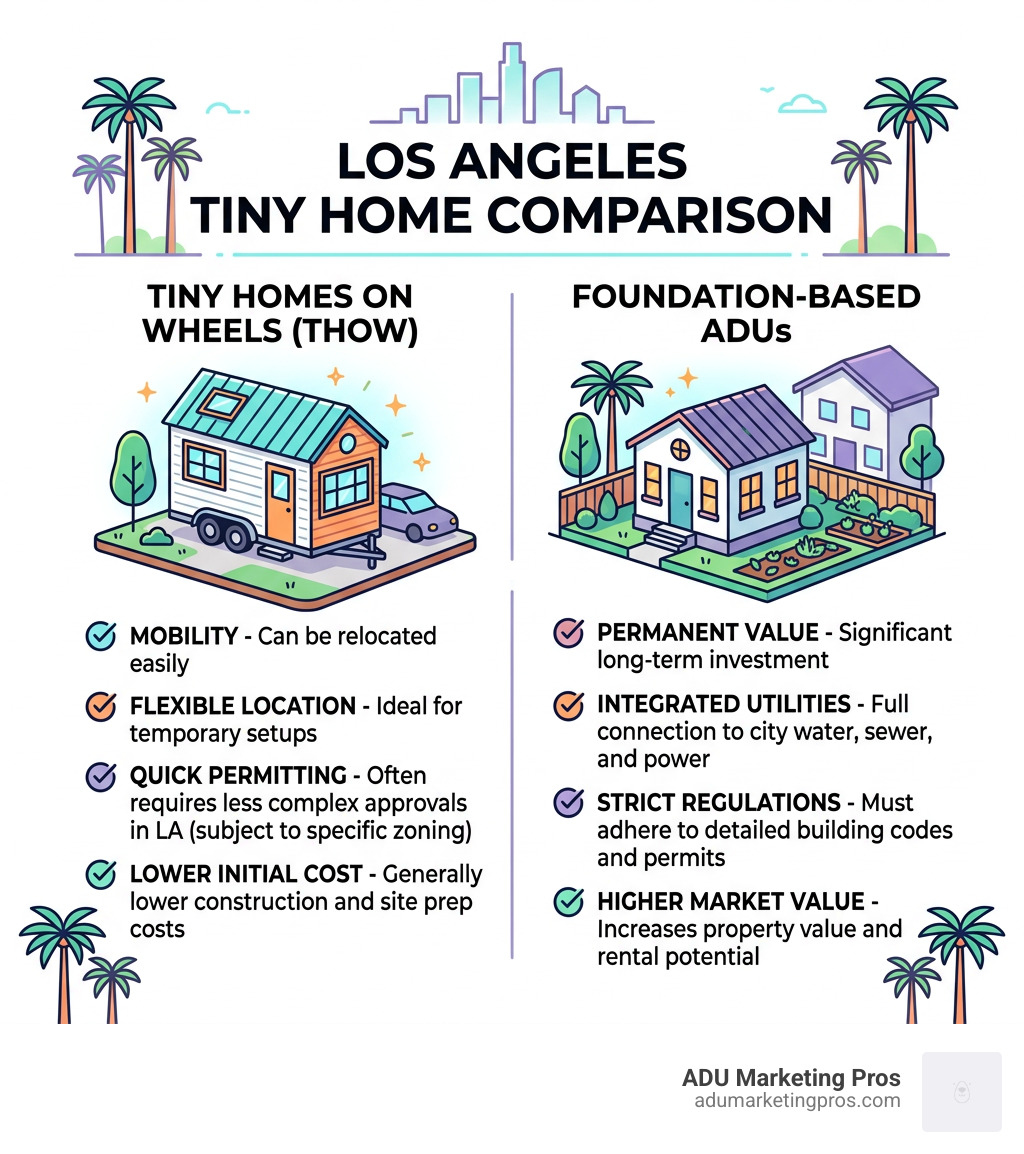
Tiny home builders los angeles terms to know:
Top Tiny Home Builders Los Angeles Homeowners Trust
When we look at the landscape of tiny house builders in Southern California, the variety is staggering. From road-ready trailers to permanent backyard cottages, Los Angeles residents have access to some of the most innovative craftsmen in the country. These builders are not just constructing boxes; they are designing lifestyles that prioritize sustainability, mobility, and financial freedom.

Leading Builders in the Region
- Pacifica Tiny Homes: Based in Pacifica but serving the broader region, they build an average of 10 tiny homes per month. They focus on affordability and accessibility, ensuring more people can experience the freedom of tiny living. Their models often feature clever storage solutions and durable materials suited for the California climate.
- Zen Tiny Homes: A leader in the movement, Zen Tiny Homes has been featured on major networks like HGTV and CBS. They are known for their single-level luxury plans that cater to those who want to avoid lofts and stairs, making them a favorite for seniors looking to downsize.
- Tiny Topanga: This family-owned crew builds with “intention and integrity.” They treat every project as if it were their own, specializing in custom tiny homes and van conversions that feel like a true way of life rather than just a structure. Their attention to detail in woodwork and layout is unparalleled.
- Artistree Home: If you want something truly unique, Artistree blends sustainable practices with world-class design. They are globally recognized for their meticulously crafted treehouses and eco-conscious dwellings that blur the line between indoor and outdoor living.
- California Tiny House: A family-owned business since 2014, California Tiny House has been at the forefront of legal advocacy for the movement. They are innovators and educators as much as they are builders, helping to shape the very laws that make tiny living possible in LA.
- Forever Tiny Homes: Operating out of a massive 24,000-square-foot facility, they offer highly customizable options and RVIA certification, which is crucial for financing and insurance. Their industrial-scale production allows for consistent quality control.
- KJE Tiny Homes: Known for bespoke designs, KJE creates homes that are distinct expressions of the owner’s vision. Their team includes experienced residential inspectors, ensuring every “tiny” detail meets high standards for safety and longevity.
- Central Coast Tiny Homes: They boast a patented “pop-out” function that can expand interior widths to 14 or 17 feet, solving the “narrow” feeling some tiny homes have while remaining transportable on standard roads.
- JT Collective: Based in the Sierra Nevadas but serving the LA area, they bring experience from managing AirBNBs into their designs, creating spaces that are perfect for short-term rentals with high-end finishes and photogenic interiors.
- Living Vehicle: For those seeking the pinnacle of mobile luxury, Living Vehicle sets a new standard for sustainable, off-grid mobile living with high-end finishes, solar power systems, and cutting-edge technology for the modern nomad.
Custom Tiny Home Builders Los Angeles Design Features
What makes a tiny home feel like a “home” rather than a closet? It’s all in the floor plans. When exploring ADU floor plans, we see a focus on maximizing every inch of vertical and horizontal space. Designers use light, height, and multi-functional furniture to create an expansive feel.
Many tiny home builders los angeles residents hire prioritize features like:
- Sleeping Lofts and Play Areas: Utilizing “lofty” ceilings to create separate zones for sleeping or kids’ play areas, effectively doubling the usable floor space.
- Family-Specific Layouts: Models like Tiny Topanga’s “Family Style” include bunk beds for three children and indoor-outdoor dining for six or more people, proving that tiny living isn’t just for singles.
- Massive Windows: High-volume builders like Clever Tiny Homes emphasize big windows and mirrors to flood the space with natural light, making 300 square feet feel like 600 by connecting the interior to the outdoors.
- Premium Finishes: Don’t let the size fool you; quartz countertops, soft-close cabinetry, and full-sized bathtubs or showers are common in modern models, offering a luxury experience in a small footprint.
- Certifications: Looking for RVIA or Pacific West Tiny Homes certification is essential. This ensures the home is built to fire, life, and safety codes, which makes it easier to secure insurance and traditional financing.
Turnkey Services from Tiny Home Builders Los Angeles
One of the biggest hurdles for LA homeowners is the “how-to” of installation. This is where ADU builders in Los Angeles provide immense value through turnkey services. Navigating the bureaucracy of a major city requires expertise and patience.
A true turnkey builder handles more than just the construction; they manage the entire “site-to-keys” process:
- Site Preparation: Clearing the area, grading the land, and preparing the foundation to ensure a level and stable base for the new home.
- Utility Connections: Coordinating with certified contractors for water, electricity, and sewer lines, often requiring upgrades to the main house’s electrical panel.
- Permitting Assistance: Navigating the complex Los Angeles Department of Building and Safety (LADBS) requirements, which can be a full-time job in itself.
- Logistics: Managing the delivery, which sometimes involves cranes for tight backyard fits or navigating narrow canyon roads common in the Hollywood Hills.
Builders like BOSS Tiny House even offer a live showroom in Montebello, CA, where you can walk through the models and see the quality of the automated assembly line firsthand, giving you confidence in the final product.
Navigating California ADU Laws and Zoning in Los Angeles
Understanding the legal landscape is the first step toward building. Since the 2020 updates, Los Angeles ADU regulations have become much more homeowner-friendly, but they still require careful navigation to avoid costly mistakes.
Key Regulatory Highlights
Key highlights of the current ADU guidelines include:
- Size Limits: Detached ADUs can generally be up to 1,200 sq ft, providing ample space for a two-bedroom, two-bathroom home.
- Reduced Setbacks: Rear and side setbacks have been reduced to just 4 feet, allowing you to maximize your yard and place the unit in corners that were previously off-limits.
- Parking Waivers: If you are within half a mile of public transit (which covers much of LA), you likely don’t need to add additional parking, saving space and thousands in construction costs.
- Faster Reviews: Cities are mandated to act on ADU applications within 60 days, preventing projects from languishing in bureaucratic limbo for months.
- Fee Waivers: Impact fees are often waived for units smaller than 750 sq ft, saving homeowners between $5,000 and $15,000 depending on the neighborhood.
Understanding the Permitting Process
Even with friendlier laws, the paperwork can be daunting. Many homeowners look for pre-approved ADU plans to speed up the process. These plans have already been vetted by the city for safety and code compliance, significantly reducing the time spent in the review phase.
When starting your project, consider these steps in your guide to LA ADU regulations:
- Feasibility Study: Does your lot have the space and utility access required? This involves checking for easements, power lines, and sewer depth.
- Conceptual Budget: This should include the unit cost plus 5-15% for local fees and site-specific factors (like upgrading an electrical panel or adding a retaining wall).
- Zoning Compliance: Ensuring your “tiny home” meets the specific definition of an ADU or a “Movable Tiny House” (MTH) as recognized by the City of Los Angeles. The MTH ordinance is particularly progressive, allowing for homes on wheels to be used as permanent residences if they meet certain skirting and utility connection standards.
The Cost of Going Small: Pricing and Financing in LA
How much does it actually cost to hire tiny home builders los angeles? The price varies based on whether you want a “shell” to finish yourself or a luxury, move-in-ready unit. In a high-cost market like LA, understanding the full financial picture is essential for a successful project.
| Product Type | Typical Size Range | Starting Price (Approx.) |
|---|---|---|
| Backyard Spaces / Sheds | 100 – 128 sq ft | $8,595+ |
| Studio Tiny Homes | 150 – 260 sq ft | $20,995 – $44,500 |
| 1-Bedroom ADUs | 300 – 600 sq ft | $78,000 – $119,995 |
| Luxury / Large Models | 600 – 1,200 sq ft | $150,000+ |
Return on Investment (ROI)
Investing in an ADU is often a “no-brainer” for those looking at Los Angeles ADU costs. For example, a 398 sq ft 1-bedroom unit starting at $78,000 can generate significant rental income in the LA market, where similar units rent for $2,000 to $3,000 per month. This means the unit can often pay for itself in just a few years. When you compare this to the ADU architect costs of a fully custom, site-built project, prefab options often save owners 40% or more while providing a faster path to revenue.
Financing Options and Affordable Housing Programs
Not everyone has $80,000 in cash sitting around. Fortunately, financing for tiny homes has evolved to meet the growing demand. Lenders are becoming more comfortable with these structures as they see the long-term value they add to properties.
- Traditional Financing: Some builders offer loan terms up to 23 years with low interest rates, similar to a standard mortgage or RV loan depending on the unit type.
- Habitat for Humanity LA: Since 1990, Habitat LA has built or repaired over 1,500 houses. They offer a Homeownership Program for those within 50-80% of the Area Median Income (AMI). This requires “sweat equity” (125-500 hours of labor) and attending a HUD-certified pre-purchase homebuyer education workshop.
- Rental Income Potential: Many lenders will now consider the future rental income of an ADU when qualifying you for a construction loan, making it easier for homeowners to afford the upfront costs.
- HELOCs and Refinancing: Many LA homeowners use a Home Equity Line of Credit (HELOC) to fund their tiny home project, leveraging the high equity in their primary residence.
Why Prefab and Modular Tiny Homes Win in the LA Market
In a city where construction can take years due to labor shortages and weather-related delays, speed is the ultimate luxury. Prefabricated and modular homes are built in climate-controlled factories, which avoids weather delays, material theft, and neighborhood complaints about noise and dust.
The Factory Advantage
Why prefab ADUs in Los Angeles are winning:
- Speed: A home can be built in 3-4 months and installed on your site in a single day. This minimizes the time your backyard is a construction zone.
- Precision: Automated assembly lines ensure walls are perfectly square and joints are tight, improving energy efficiency and reducing long-term maintenance costs.
- Minimal Disruption: Instead of having a construction crew in your backyard for six months, the “messy” work happens at the factory. Your neighbors will thank you.
- Durability: Many modern tiny homes are built with commercial-grade materials, such as light-gauge steel frames, that are fire-resistant and meet strict California building codes, which is essential in fire-prone areas of LA.
Addressing the Housing Crisis with Small Spaces
Tiny homes are more than just a trend; they are a tool for social change. Builders like Fast and Easy ADU focus on diverse housing solutions, including student housing, worker housing, and even homeless housing initiatives. By providing high-quality, low-cost dwellings, these builders are helping to create a more inclusive city.
By utilizing garage conversions and backyard space, Los Angeles can increase its housing density without destroying the character of its neighborhoods. Whether it’s a “granny flat” for senior care or an architect-designed tiny house for a young professional, these small spaces provide a path to stability in an expensive city. They represent the “missing middle” of housing that LA desperately needs to thrive in the 21st century.
Frequently Asked Questions about Tiny Home Builders in Los Angeles
How long does it take to build and install a tiny home in LA?
Typically, the construction of a tiny home takes 3 to 4 months in a factory setting. However, the total project timeline — including permitting, site prep, and utility hookups — is usually 5 to 8 months. Some builders offer “in-stock” models that can be delivered in as little as 90 days if your site is already prepared.
Can I legally live in a tiny home on wheels in Los Angeles?
Yes, Los Angeles is one of the leading cities in California that recognizes “Movable Tiny Houses” (MTH) as valid ADUs. These must be registered with the DMV, stay on wheels (but be skirted to look permanent), and be connected to water, power, and sewer. It’s always best to check places that allow tiny houses for specific local ordinances as they can vary by specific neighborhood or unincorporated area.
What is the difference between a tiny home and an ADU?
“Tiny home” is a broad term that often refers to homes on wheels (THOW) or very small structures. An ADU (Accessory Dwelling Unit) is a legal term for a secondary suite on a residential lot. While many tiny homes are ADUs, an ADU can also be a large 1,200 sq ft cottage or a converted garage. The primary difference often lies in the foundation: ADUs are typically permanent, while some tiny homes are built on trailers (RVIA certified) for mobility.
Do tiny homes in LA require solar panels?
Under the current California Building Code (Title 24), most new permanent dwellings, including ADUs, are required to have solar panels. However, there are exceptions for smaller units or sites with significant shading. Movable Tiny Houses (MTH) may have different requirements depending on their classification. Your builder will help you navigate these energy standards.
Will adding a tiny home increase my property taxes?
Adding an ADU or tiny home will generally trigger a “blended assessment.” Your primary home’s value will not be reassessed, but the value of the new improvement (the tiny home) will be added to your property’s total assessed value. In most cases, the increase in property tax is far outweighed by the rental income or added property value the unit provides.
Conclusion
The “tiny” movement is making a big impact in Los Angeles. By choosing the right tiny home builders los angeles residents can bypass the traditional headaches of custom construction and move into a high-quality, sustainable home in a fraction of the time. These structures offer a unique blend of flexibility, affordability, and modern design that fits perfectly into the diverse landscape of Southern California.
At ADU Marketing Pros, we are proud to support the builders and architects who are solving the housing crisis one backyard at a time. We specialize in helping these firms grow their revenue and reach the homeowners who need them most. If you’re ready to explore small-scale living, there has never been a better time to get started with your tiny home today!