
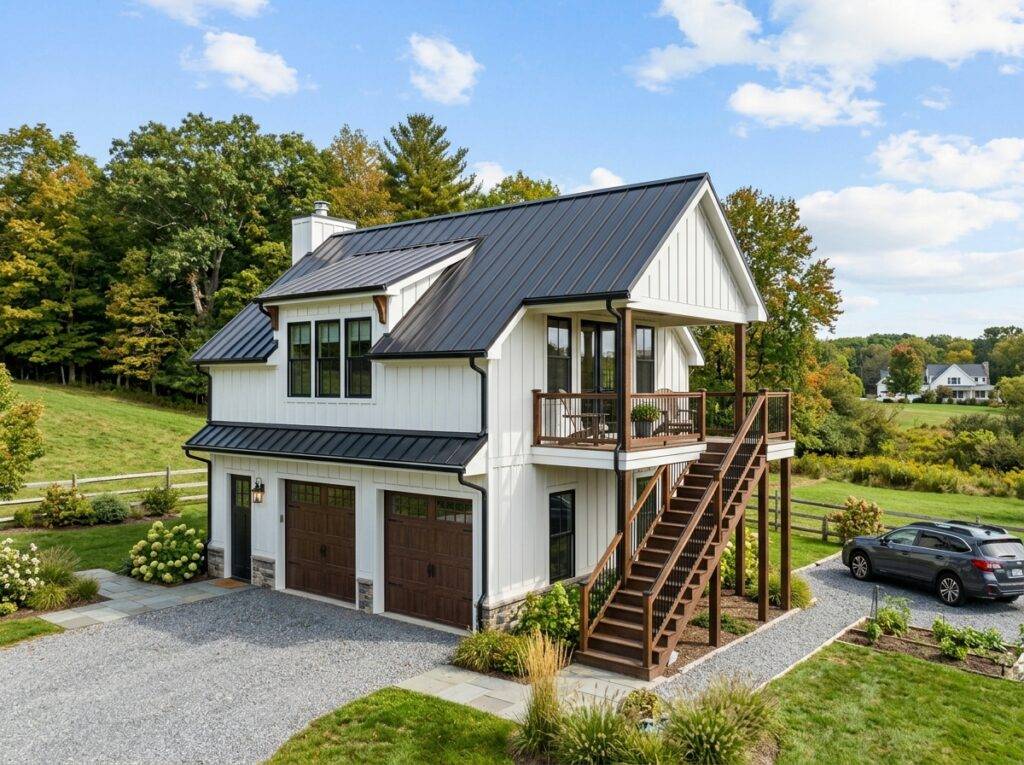
Your Car Can Sleep Outside — Here’s What a Detached Garage Apartment Can Do for Your Property
A detached garage apartment is a self-contained living unit built above or beside a freestanding garage on your property. It functions as a fully independent home — with its own entrance, kitchen, bathroom, and sleeping area — separate from your main house.
Quick answer for homeowners exploring this option:
| Feature | Typical Details |
|---|---|
| What it is | A private living unit attached to or above a detached garage |
| Common size | 440–1,200 sq ft |
| Average cost | $150,000–$200,000 for conversion |
| Timeline | 3–6 months total |
| Property value boost | Up to 35% increase |
| Common uses | Rental income, in-law suite, guest house, home office |
| Permit required? | Yes, always |
Think of it as the modern version of the old carriage house — updated for today’s housing needs.
These structures go by many names: granny flat, ADU, garage apartment, coach house, backyard cottage. But the idea is the same. You have a detached garage. Above it (or beside it) sits a complete, private living space.
The numbers make a compelling case. One homeowner in Portland converted a garage into a 440 sq ft apartment for around $73,000 — and was able to generate over $1,200/month in rental income within a few years. That same space became home to a family member who provided childcare in exchange for reduced rent. Privacy. Proximity. Practical value. All from a structure that used to just hold a car.
Whether you’re thinking about housing an aging parent, creating a rental income stream, or simply making better use of your backyard, a detached garage apartment is one of the most flexible, high-ROI additions you can make to a residential property.
This guide covers everything: costs, timelines, zoning rules, design ideas, and what it actually takes to get one built.
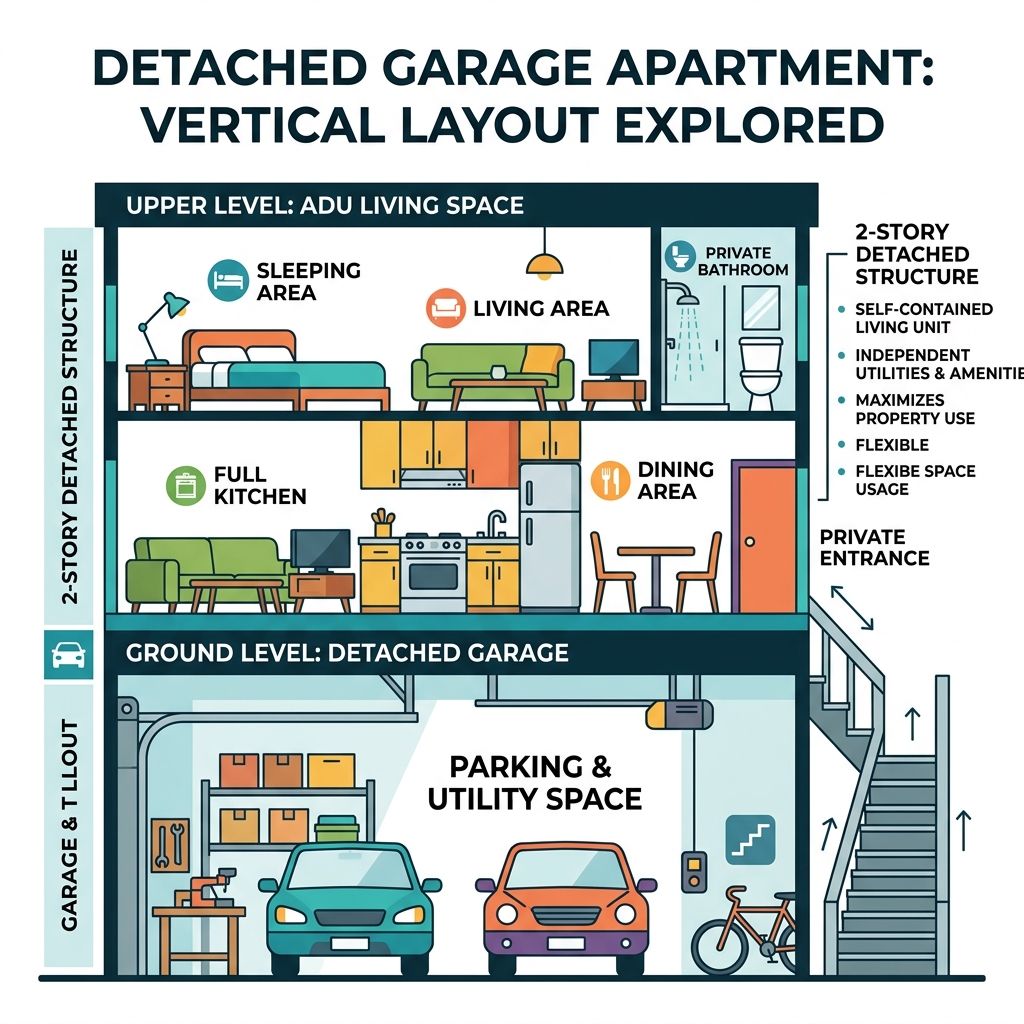
Discover more about Detached garage apartment:
What is a Detached Garage Apartment?
At its core, a detached garage apartment is a secondary dwelling unit located on the same lot as a primary residence but physically separated from it. In urban planning and real estate, we officially call these Detached Accessory Dwelling Units (DADUs). They are the ultimate “multitaskers” of the backyard, providing a secure place for your vehicles on the ground floor while offering a high-quality residential space directly above or adjacent to it.
For homeowners in the San Francisco Bay Area or San Diego, these structures are becoming a vital solution to urban density. Instead of sprawling outward, we are building upward and utilizing existing footprints. Whether you are starting from scratch with a new build or looking into a garage conversion to ADU, the goal is to create a space that feels like a “real” home, not just a finished shed.

Common Names and Terminology
If you’ve been doing your homework, you’ve likely run into a “alphabet soup” of terms. Depending on where you live—be it Los Angeles or Palo Alto—people might refer to a detached garage apartment as:
- Carriage House or Coach House: A nod to the historical buildings used to house horse-drawn carriages and their drivers.
- Granny Flat: Often used when the space is intended for an aging family member.
- Laneway House: A term popular in cities with developed alleyway systems.
- Backyard Cottage: Emphasizes the detached, cozy nature of the unit.
- DADU: Detached Accessory Dwelling Unit (the legal term you’ll see on your permit applications).
Understanding these terms is helpful when browsing detached ADU plans or researching local regulations for a detached ADU in San Francisco. While the names vary, the legal requirement remains the same: the unit must have permanent provisions for living, sleeping, eating, cooking, and sanitation.
Typical Layouts and Square Footage
The size of your detached garage apartment usually depends on two things: the size of the garage footprint below and local zoning caps. In California, many cities allow detached ADUs up to 1,200 square feet, though some municipalities might cap them at 800 or 1,000 square feet.
- The Studio/Compact Model: Often around 440 to 477 square feet. This usually fits a cozy kitchen, a full bathroom, and an open-concept living/sleeping area above a 2-car garage.
- The One-Bedroom Suite: Plans like the “Hinshaw” offer around 665 square feet of living space above a 3-bay garage. This allows for a private bedroom with a walk-in closet, providing a much more “apartment-like” feel.
- The Family-Sized ADU: Larger plans, such as the “Meadow Lane,” can reach 1,453 square feet with two bedrooms and multiple bathrooms, essentially serving as a full-sized second home on your lot.
For more inspiration on layouts, you can view this charming detached garage plan with loft living.
The Benefits and Uses of a Detached Garage Apartment
Why are we seeing so many of these pop up in neighborhoods from Sunnyvale to Mountain View? Because they solve multiple problems at once. A detached garage apartment isn’t just a place to sleep; it’s a versatile asset that evolves with your family’s needs.
Multigenerational Living and Family Proximity
One of the most beautiful uses of a garage conversion ADU is keeping family close while maintaining healthy boundaries. We often see homeowners use these spaces for:
- Aging-in-Place: Allowing elderly parents to live nearby for safety and social connection without the stress of a shared kitchen or living room.
- Adult Children: Providing a “launchpad” for college grads who need their own space but can’t quite afford the skyrocketing rents in San Jose or Palo Alto.
- Childcare Sharing: Many families find that housing a relative or a nanny in the garage apartment is a perfect trade for help with the kids.
The “paradoxical” benefit here is that the physical separation of a detached unit actually makes families closer. You don’t hear the mother-in-law’s TV blasting at 11 PM, and she doesn’t see your messy kitchen—everyone has their own sanctuary.
Financial ROI and Property Value
From a purely financial standpoint, a detached garage apartment is a powerhouse. Research indicates that adding a detached ADU can increase your property value by up to 35%.
If you choose to use the space as a rental, the income can be significant. In high-demand areas like San Diego or Los Angeles, a well-designed garage apartment can easily fetch $1,200 to $2,500 per month depending on the size and finishes. This income often covers the monthly payment of the garage to ADU conversion loan, effectively letting the unit pay for itself while building equity.
Cost, Timeline, and Project Planning
We won’t sugarcoat it: building a detached garage apartment is a major construction project. It’s essentially building a small house on top of a functional utility building.
Estimated Project Costs
While a simple internal garage conversion might cost less, a full detached ADU or a “top-off” (adding a second story to a garage) typically falls into the $150,000 to $200,000 range. This is often about half the cost of building a brand-new, ground-up detached house because you may be able to leverage the existing foundation and structure.
Typical Cost Breakdown:
- Permit & Impact Fees: ~$5,000 (though many California cities waive impact fees for units under 750 sq ft).
- Design & Architecture: $8,000 – $15,000.
- Utility Hookups: $15,000 – $30,000 (routing plumbing and electrical from the main house).
- Construction & Finishes: $100,000+.
To get a more precise estimate for your specific project, check out our garage conversion cost calculator.
Estimated Project Timelines
Patience is key. A typical project takes 3 to 6 months from the moment you break ground, but the preparation takes longer.
- Permitting Phase (6-12 weeks): Your plans must be reviewed by the city to ensure they meet fire, safety, and zoning codes.
- Construction Duration (8-12+ weeks): This includes structural reinforcement, utility routing, framing, and interior finishing.
Factors like weather delays or specialized inspections (especially for seismic retrofitting in the Bay Area) can extend this timeline.
Essential Utility Upgrades
You can’t just plug a kitchen into a standard garage outlet. A functional detached garage apartment requires:
- Electrical: Most projects require a new sub-panel to handle the load of a kitchen, HVAC, and laundry.
- Plumbing: You’ll need to extend sewer laterals and water lines from the main house.
- HVAC: California’s Title 24 energy standards usually require an independent, high-efficiency heating and cooling system (like a mini-split).
- Insulation: To make the space habitable and soundproof, R-30 insulation in the ceiling and high-grade wall insulation are standard.
For those in Southern California, navigating these requirements is easier with a specialist; you can find more localized advice on garage conversion in Los Angeles.
Navigating Permits, Zoning, and Regulations
The legal landscape for a detached garage apartment has shifted dramatically in favor of homeowners, especially in California. However, you still have to play by the rules.
Design Considerations and State Rules
Recent California laws have streamlined the process, but key regulations remain:
- Setbacks: Most new detached ADUs require 4-foot side and rear yard setbacks. However, if you are converting an existing legal garage, you may be able to maintain the current setbacks.
- Height Limits: Detached ADUs are typically limited to 18 feet in height, though if you are building above a garage, some cities allow up to 25 feet.
- Parking: In most cases, if you are within a half-mile of public transit, you are not required to provide a replacement parking spot for the one you “lost” in the garage. This is a huge win for homeowners in dense areas. Learn more about ADU parking requirements.
For a deep dive into the technical requirements, the City of Minneapolis guide provides a great example of the level of detail required for fire separation and egress, which is mirrored in many California jurisdictions.
California ADU Laws and Solar Requirements
One unique aspect of building a detached garage apartment in California is Title 24 compliance. This includes the requirement for solar panels. The good news? You can often install the panels on either the ADU or the main house to satisfy the requirement. Additionally, if your unit is under 750 square feet, you are likely exempt from paying “impact fees,” which can save you thousands of dollars.
If you’re looking for designs that already incorporate these requirements, browse our ADU plans with garage.
Structural Feasibility and Conversions
Can your 1950s garage actually support a second-story apartment? This is the $150,000 question.
Building Above an Existing Garage
Converting an existing structure into a detached garage apartment requires a “structural physical.” Most standard garages were built to hold the weight of a roof, not a living room full of furniture and people.
- Foundation Integrity: An engineer must verify if your foundation has “frost footings” or the necessary depth to handle the new load.
- Seismic Retrofitting: In the San Francisco Bay Area, you will likely need to bolt the sill plates and add shear walls to ensure the building can withstand an earthquake.
- Fire Separation: You must have a one-hour fire-rated assembly (usually specific layers of Type X drywall) between the garage area and the living space above.
For more on the legality of your current structure, see these FAQs on converting an existing garage and our guide on ADU garage conversion in California.
Maximizing Functionality
Because you are often working with a footprint of 400 to 800 square feet, every inch counts. We recommend:
- Cathedral Ceilings: These make a small footprint feel twice as large.
- Skylights: Natural light from above reduces the need for windows on “private” sides of the building.
- Built-in Storage: Use the “knee walls” in loft designs for drawers and closets.
- Separate Entrances: Ensure the tenant or guest doesn’t have to walk through your garage to get to their front door.
For a great example of a functional layout, look at Plan 940005JNK, which balances workshop space with a high-end living area.
Frequently Asked Questions about Detached Garage Apartments
Can I build a detached garage apartment on my lot?
Generally, yes. In California, if you have a residential lot with an existing or proposed home, you are entitled to at least one ADU. The main constraints will be your lot coverage limits and the 4-foot setback rules.
How much does it cost to convert a garage into an apartment?
The average cost for a high-quality garage-conversions project in our service areas (like San Jose or San Diego) ranges from $150,000 to $200,000. This includes all permits, utilities, and mid-range finishes.
Does a garage apartment increase property taxes?
Yes, but not as much as you might fear. Your primary home won’t be reassessed at current market value. Instead, you will receive a “supplemental assessment” based only on the value of the new construction.
Conclusion
A detached garage apartment is more than just a renovation; it’s a strategic move to future-proof your home. Whether you’re looking to generate passive income, provide a sanctuary for a family member, or create a world-class home office, the DADU is the gold standard of property upgrades.
At ADU Marketing Pros, we understand the complexity of these projects. Based in San Jose, we specialize in helping ADU construction and architecture firms showcase their expertise and connect with homeowners ready to transform their backyards. If you’re a builder looking to dominate the California ADU market, we’re here to help you stand out.
Ready to explore the possibilities? Start by looking at the latest ADU garage conversions and see how you can turn your underutilized garage into your property’s most valuable asset.