

Why Your Firm Needs to Be Found Online
Architects SEO is the practice of optimizing your architecture firm’s website to rank higher in search engine results when potential clients search for your services. The way clients find architects has fundamentally shifted. Gone are the days of relying solely on print advertisements in niche magazines or waiting for referrals. Today’s clients no longer flip through the Yellow Pages; they open Google and expect to find immediate, relevant, and trustworthy options.
The numbers are stark and paint a clear picture of this new reality. The top three positions in Google’s search results capture over 50% of all organic clicks. If your firm isn’t visible in those top spots, you’re essentially invisible to the majority of potential clients actively searching for your services. Falling to the second page means you’re competing for less than 5% of the total clicks. For a business built on visibility and reputation, this is a critical blind spot.
This is especially true for local businesses. Nearly half of all Google searches are for local businesses, and an astounding 76% of people who search for nearby services on their phone visit a business within 24 hours. When someone in your city searches “ADU architect in Los Angeles” or “sustainable residential architect San Francisco,” they are not just browsing—they are high-intent prospects ready to hire. They have a project in mind and are actively vetting firms to bring their vision to life.
Yet, many architecture firms have beautiful, visually stunning websites that simply don’t get found. Your portfolio might be world-class, filled with award-winning designs, but if it’s buried on page three of Google, it might as well not exist. This guide provides actionable, in-depth strategies for architecture firms to improve search rankings, attract a steady stream of qualified leads, and measure real, tangible ROI from their digital marketing efforts.
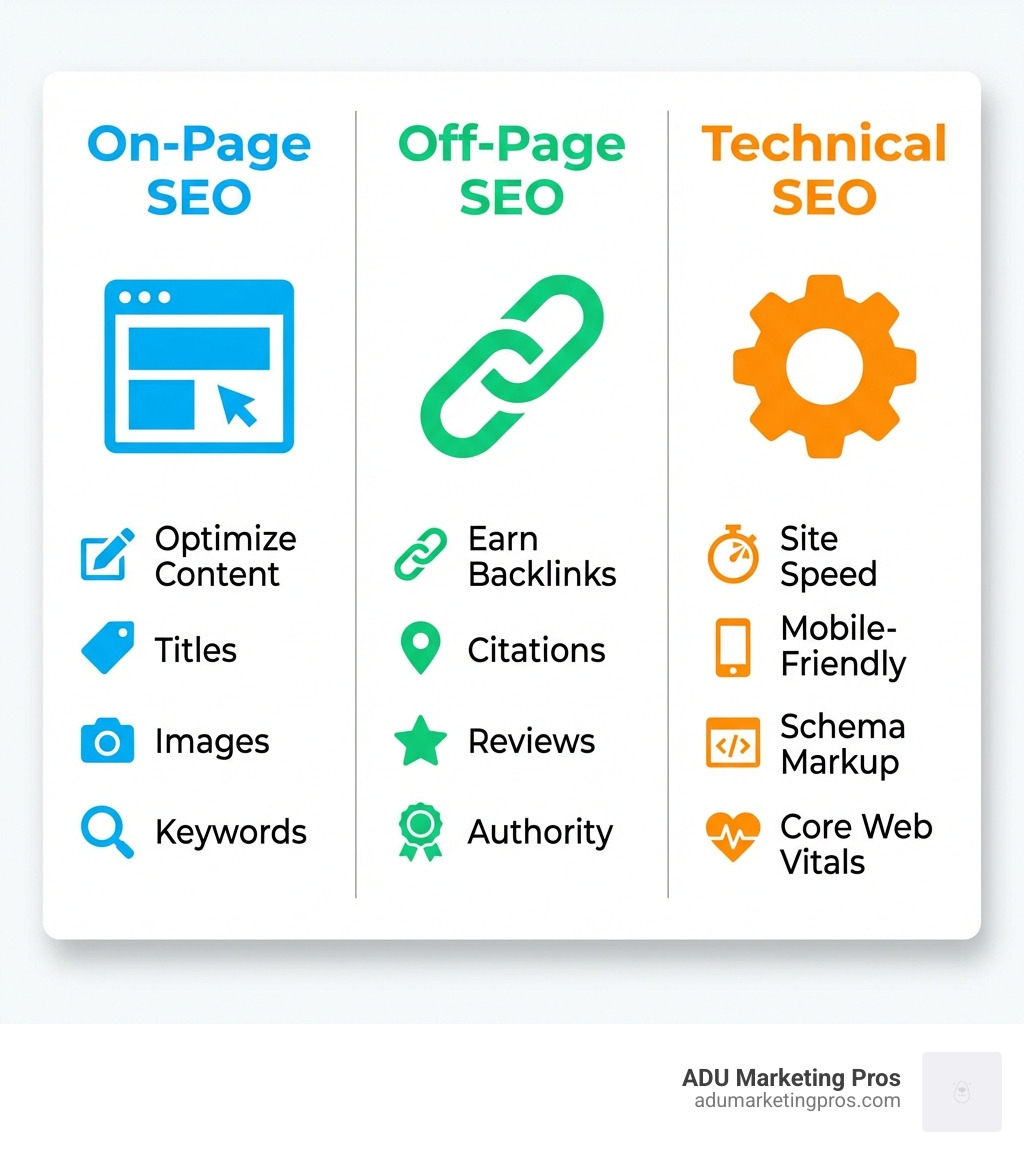
Key Components of Architects SEO:
- Local SEO: This involves optimizing for location-based searches like “architect near me” to dominate your immediate service area and appear in the coveted Google Map Pack.
- Keyword Research: This is the foundation, requiring you to identify the precise terms and phrases your ideal clients use when they are looking for architectural services.
- Content Optimization: This means creating compelling portfolio pages, detailed case studies, and informative blog posts that not only showcase your work but also rank high in search and convert visitors into clients.
- Technical SEO: This ensures your site is fast, secure, mobile-friendly, and structured in a way that search engines can easily crawl and understand, providing a great user experience.
- Link Building: This is the process of earning authoritative links from reputable directories, industry publications, and local partners to build your site’s credibility and trust.
Related content about architects seo:
The Foundation: Keyword Research and Content Strategy
Keyword research is the cornerstone of any successful SEO strategy. It’s about understanding the language of your potential clients and bridging the gap between the services you offer and the terms they use to find them. For architects in competitive markets like San Jose or the San Francisco Bay Area, this process is about connecting your unique expertise—be it sustainable design, historic preservation, or ADU construction—with specific, high-intent client needs.
How to Find the Keywords Your Clients Are Using
The goal is to identify a diverse portfolio of words and phrases clients type into search engines. It’s crucial to focus on long-tail keywords—more specific, multi-word phrases like “modern ADU plans for narrow lot Los Angeles.” These have lower search volume than broad terms like “architect” but attract highly qualified leads with clear transactional intent. Someone searching that phrase knows exactly what they want.
Understanding user intent is key. A search for “how to build an ADU” is informational; the user is in the research phase. A search for “best ADU architects in California” is commercial; they are comparing options. A search for “hire ADU architect Los Angeles” is transactional and signals a user ready to make contact. Your content must be tailored to address these different intents at each stage of the client journey.
For architecture firms, location-based keywords are non-negotiable. Phrases like “ADU architect San Jose,” “residential architect Palo Alto,” or “commercial architect Bay Area” ensure you’re found by clients in your specific service area. While search volume for these terms may seem low, they connect you with the right people in the right place.
Essential keyword research tools include:
- Google Keyword Planner: A free tool to discover new keywords and get estimates on search volume and competition.
- Answer The Public: Visualizes search questions, prepositions, and comparisons related to your seed keyword, perfect for brainstorming long-tail keyword and blog post ideas.
- Google Search Console: Shows you the exact queries that are already bringing users to your site, offering invaluable insight into your current performance.
- SEMrush and Ahrefs: Comprehensive paid suites for deep keyword analysis, competitor research (to see what keywords your rivals rank for), and tracking your ranking progress over time.
Optimizing Your Portfolio and Visual Content for Search
Architecture is an inherently visual field, but search engines primarily read text. Properly optimized images, videos, and other visual media bridge this gap, making your stunning designs discoverable in Google Search and Image Search.
Best practices for image optimization include:
- Descriptive File Names: Use “modern-hillside-home-design-san-jose.jpg” instead of a generic name like “IMG_1234.jpg.” This gives search engines immediate context.
- Descriptive Alt Text: Write a clear, concise description of the image for accessibility and search engines. Include relevant keywords naturally (e.g.,
alt="Modern ADU design with sustainable bamboo flooring and large windows in San Jose"). - Image Compression: Use tools like TinyPNG to reduce file sizes without sacrificing visual quality. This is critical for ensuring your site loads quickly, a key ranking factor.
- WebP Format: Serve images in modern, lightweight formats like WebP for superior compression and faster load times, which directly impacts Core Web Vitals.
- Geotagging: Add location data (latitude and longitude) to your project photos’ EXIF data. This can provide an extra local SEO signal, reinforcing your connection to a specific area.
- Schema Markup: Apply
ImageObjectschema to give search engines even more context about your images, including creator, copyright, and licensing information.
Don’t forget video SEO. Project walkthroughs, drone footage of completed builds, and 3D renderings hosted on YouTube and embedded on your site can significantly boost engagement. Optimize your YouTube video titles, descriptions, and tags with relevant keywords to increase their visibility both on YouTube and in Google’s video search results.
Creating Content That Attracts and Converts Clients
Content is how you demonstrate your expertise, answer client questions, and build trust long before the first consultation. A strong content strategy for architects should be built on several pillars:
- Project Case Studies: Go beyond a simple photo gallery. Create a detailed narrative for each project. Structure it with sections like “The Client’s Vision,” “Design Challenges” (e.g., difficult terrain, zoning restrictions), “Our Innovative Solution,” and “The Final Outcome.” Include high-quality photos, floor plans, and a client testimonial to add credibility and emotional impact.
- Informative Blog Posts: Become a resource by addressing common client questions. Write definitive guides on topics like “The Complete Guide to ADU Regulations in [Your City],” “Navigating the Permitting Process in [Your County],” or “Sustainable vs. Green Design: What’s the Difference?” This positions you as an expert and attracts informational search traffic.
- Cornerstone Content: Develop comprehensive, evergreen pages on your most important service areas, such as “The Ultimate Guide to Custom Home Design in California.” These long-form pages act as central hubs of authority on your site. All your related blog posts and case studies should link back to them, signaling their importance to Google.
Consistent, high-quality content signals to Google that your site is a valuable, up-to-date resource worth ranking. For more on content strategy, the Semrush Blog offers excellent foundational knowledge.
Dominating Your Local Market with Architects SEO
For the vast majority of architecture firms, local clients are the lifeblood of the business. Local SEO is the set of practices designed to capture the attention of people in your specific service areas, whether it’s a neighborhood in San Jose, the greater Los Angeles metro, or the entire San Francisco Bay Area. It’s about being the top result when it matters most.
Why Local SEO is a Pillar of Your Architects SEO Strategy
When someone in Palo Alto searches for “residential architect near me,” they need a local expert who understands the regional style, climate, and building codes. With 46% of all Google searches having local intent, being visible in these results is not just an advantage—it’s a necessity. This trend is amplified by mobile behavior: 76% of people who conduct a local search on their phone visit a related business within 24 hours. If you’re not visible in the Google Local Pack (the map and three listings at the top of the results), you’re missing out on immediate, high-intent leads who are ready to take action.
Furthermore, the rise of voice search (“Hey Google, find a modern architect in my city”) makes local optimization even more critical, as these queries almost always have local intent. A key part of this is building local citations—mentions of your firm’s name, address, and phone number (NAP) across the web. According to extensive research from Moz, citation signals are a significant local ranking factor, helping search engines verify your business’s existence, location, and legitimacy.
Mastering Your Google Business Profile
Your Google Business Profile (GBP) is your digital storefront on Google Search and Google Maps. It’s often the first interaction a potential client has with your firm. Optimizing it is one of the highest-impact, lowest-cost activities in local SEO.
Here’s how to master your GBP:
- Claim and Verify: Ensure your profile is claimed and that all information is 100% accurate and consistent with your website. This includes your exact business name, address, phone number (NAP), and website URL.
- Complete Every Section: Go beyond the basics. Choose all relevant categories (“Architect,” “Architectural Designer,” “ADU Designer”). Fill out service areas, hours, and add attributes like “Woman-led” or “Online appointments.” Upload a steady stream of high-quality photos of your projects (exterior and interior), your team, and your office.
- Encourage and Manage Reviews: Reviews are a massive trust signal. Actively ask satisfied clients for reviews (you can create a direct link to make it easy). Respond professionally to all feedback, both positive and negative. A thoughtful response to a negative review can often win over more potential clients than a dozen positive ones.
- Use Google Posts: Regularly share updates, new projects, blog content, and special offers using the Posts feature. This keeps your profile active and engaging, signaling to Google that your business is current and operational.
- Utilize the Q&A Feature: Proactively populate the Questions & Answers section by asking and answering common questions yourself. This allows you to control the narrative and provide valuable information upfront (e.g., “What is your design process?” or “Do you specialize in sustainable projects?”).
Beyond Google, ensure a consistent presence on Bing Places and Apple Maps to maximize your visibility across different platforms and devices.
Building Authority with Local Citations and Directories
Consistency is the golden rule of local citations. Your NAP (Name, Address, Phone Number) must be identical across every single online listing to avoid confusing search engines and diluting your local authority.
Focus on building citations in high-quality, relevant directories:
- Industry-Specific: It is crucial to be present on platforms where clients are actively looking for architects. Create and fully optimize profiles on Houzz, Architizer, and professional organizations like the AIA.
- General and Local: Don’t neglect major data aggregators and directories like Yelp, Yellow Pages, and your local Chamber of Commerce. These sites are trusted by search engines.
- Data Aggregators: For broader distribution, consider submitting your information to services like Data Axle or BrightLocal. These services ensure your business details are pushed out consistently across a wide network of smaller directories, apps, and mapping services.
The Technical Blueprint: Website Performance and User Experience
A beautiful website is useless if it’s slow, hard to navigate, or invisible to search engines. Technical SEO and user experience (UX) form the structural foundation of your online presence. Just as a building needs solid footings and a sound frame, your website needs a robust technical backbone to support your marketing efforts and deliver a seamless experience for your visitors.
Key On-Page and Technical SEO Elements
On-page SEO involves optimizing individual page elements to help search engines understand your content’s relevance and hierarchy. Key optimizations include:
- Title Tags, Meta Descriptions, and Headers: Each page needs a unique, keyword-focused title tag (under 60 characters) that acts as its headline in search results. Meta descriptions (under 160 characters) should be compelling ad copy that entices users to click. Header tags (H1, H2, H3) must be used to structure content logically for both readers and search engine crawlers.
- Clean URLs: Use short, descriptive URLs that include your primary keyword. For example,
yourfirm.com/services/adu-design-san-diegois far better thanyourfirm.com/index.php?p=123. - Internal Linking: Strategically link between related pages on your site. This helps users and search engines navigate your content, distributes page authority to your most important pages (like cornerstone content), and increases time on site.
- Schema Markup (Structured Data): Implement structured data using schema.org vocabulary to give search engines explicit context about your content. For architects,
ArchitecturalFirm,Project,LocalBusiness, andReviewschema are highly relevant. This can help you earn rich results (like star ratings or project carousels) in the search results, significantly improving click-through rates. - XML Sitemap: An XML sitemap is a roadmap of your website for search engines. It helps them find and index all your important pages efficiently. This file should be generated and submitted to Google Search Console.
- HTTPS Security: Your website must be secured with an SSL certificate (HTTPS). Google uses this as a positive ranking signal, and modern browsers will warn users if a site is not secure, destroying trust.
Regular technical audits using tools like Semrush’s Site Audit or Ahrefs are essential to catch and fix issues like broken links, crawl errors, or duplicate content that can harm your rankings.
The Need for Speed: Website Performance and Mobile-Friendliness
Website speed is not just a convenience; it’s a critical ranking factor and a cornerstone of good user experience. Slow sites frustrate users and are penalized by Google.
- Core Web Vitals: Google uses these three metrics to measure real-world user experience: Largest Contentful Paint (LCP) for loading speed, First Input Delay (FID) for interactivity, and Cumulative Layout Shift (CLS) for visual stability. A good user experience is a fast, stable one.
- Mobile-First Indexing: Google primarily uses the mobile version of your site for indexing and ranking. A responsive, mobile-friendly design is absolutely mandatory. Your portfolio, with its high-resolution images and detailed plans, must be flawless and easy to navigate on a smartphone.
- Improving Speed: Use tools like Google PageSpeed Insights and GTMetrix to diagnose performance bottlenecks. Common fixes include compressing images and using WebP format, enabling browser caching, minifying CSS and JavaScript files, using a Content Delivery Network (CDN) to serve assets faster globally, and investing in high-quality web hosting.
Designing for Success: User Experience (UX) as a Ranking Factor
Good UX keeps visitors on your site longer, encourages them to explore more pages, and guides them toward conversion. These positive engagement signals (low bounce rate, high time on page, high pages per session) tell Google that your content is valuable and authoritative.
- Intuitive Navigation: Users must be able to easily find your portfolio, services, firm profile, and contact information. A logical menu structure, clear calls-to-action (CTAs) like “View Our Projects” or “Request a Consultation,” and a well-organized portfolio (e.g., filterable by project type, style, or location) are essential.
- Readability and Accessibility: Use clean, legible fonts, strong color contrast, and ample white space. Structure content with short paragraphs and descriptive headings. An accessible site that can be used by people with disabilities not only serves all users but is also favored by search engines.
- Mobile Experience: Think beyond just responsive design. How does a user interact with a detailed floor plan on a 5-inch screen? Consider implementing features like tap-to-zoom galleries, swipeable carousels, and easily tappable buttons to enhance the mobile experience for your visual content.
Building Authority and Measuring ROI
With a solid technical, content, and local SEO foundation in place, the next frontier is to build your firm’s authority across the web. This involves earning trust signals that tell search engines and potential clients that you are a leader in your field. Simultaneously, you must track your performance to prove that these efforts are delivering a tangible return on investment.
Strategies for Earning High-Quality Backlinks
Backlinks (links from other websites to yours) are one of the most powerful ranking factors. They act as endorsements or votes of confidence from other sites. For architects, quality is far more important than quantity. A single link from a respected design publication is worth more than hundreds of low-quality directory links.
- Create Linkable Assets: Develop high-value content that people in your industry naturally want to share and link to. This could be a comprehensive data-driven report on local building costs, an infographic on the principles of sustainable design, a free guide to the ADU permitting process in San Diego, or a stunning case study of a noteworthy project.
- Digital PR and Media Outreach: Actively submit your best projects, firm news, and expert commentary to influential design publications and blogs. Build relationships with journalists and editors at outlets like Dezeen, ArchDaily, and the design section of local news outlets. Always ensure any feature includes a direct, followable link back to your website.
- Industry and Local Partnerships: Collaborate with non-competing businesses in your professional ecosystem. This could involve guest blogging for a high-end real estate agent, co-hosting a webinar with a landscape designer, or getting featured on a contractor’s list of recommended architects. These partnerships create valuable, contextually relevant backlinks.
- Broken Link Building: Use tools like Ahrefs to find broken links on authoritative websites (like university architecture departments or industry blogs). If you have a piece of content that would be a suitable replacement for the dead link, reach out to the site owner and suggest they update it with a link to your resource.
Using Social Media to Amplify Your SEO Efforts
While social media activity is not a direct ranking factor, it plays a vital supporting role in a holistic SEO strategy. A strong social presence amplifies your content, builds brand awareness, and drives traffic that can lead to natural link acquisition.
- Platform-Specific Strategy: Use each platform to its strengths. Instagram and Pinterest are perfect for showcasing your visual portfolio and design aesthetic. LinkedIn is ideal for B2B networking, sharing thought leadership articles, and establishing professional authority. Facebook can be used for community engagement and sharing project updates with a local audience.
- Amplify and Engage: Share your blog posts, case studies, and new projects across all relevant channels. This increases their visibility and puts them in front of people who might link to them. An active social presence also builds brand awareness, which can lead to more branded searches (e.g., “[Your Firm Name] architects”)—a strong positive signal to Google.
Tracking Your Success: Essential Metrics for Architects SEO
SEO is an ongoing process, and tracking performance is essential to refine your strategy, demonstrate value, and justify the investment. You can’t improve what you don’t measure.
- Essential Tools: Google Analytics and Google Search Console are non-negotiable and free. Analytics tracks website traffic and user behavior, while Search Console monitors your site’s performance in Google Search, including clicks, impressions, and keyword rankings.
- Key Metrics to Track:
- Organic Traffic: The number of visitors arriving from non-paid search results. Is it growing month-over-month?
- Keyword Rankings: Your position in search results for your most important target keywords (e.g., “ADU architect Sunnyvale”). Are you moving up for high-intent terms?
- Leads Generated: The actual number of contact form submissions, phone calls, and email clicks originating from organic traffic. This is the most important metric.
- Conversion Rate: The percentage of organic visitors who complete a goal (i.e., become a lead). This tells you how effective your website is at converting traffic.
- Google Business Profile Insights: Track how many people find you via Google Maps, how many request directions, and how many call you directly from your profile.
- Calculating ROI: By setting up goal tracking in Google Analytics for form submissions and using call tracking software, you can attribute new business directly to your SEO efforts. A simple ROI calculation is:
((Value of New Projects from SEO - SEO Investment) / SEO Investment) * 100 = ROI %. This transforms SEO from an expense into a measurable growth driver.
Frequently Asked Questions about SEO for Architects
Here are detailed answers to some of the most common questions we receive from architecture firms about search engine optimization.
What are the most common SEO mistakes architects make?
Many firms invest heavily in stunning website aesthetics but overlook the foundational technical and content elements that actually drive traffic. The most common and costly pitfalls include:
- Neglecting Local SEO: This is the biggest mistake. Failing to claim and fully optimize a Google Business Profile or build consistent local citations means you are invisible to the highest-intent local clients in your immediate area.
- Poor Image Optimization: Uploading huge, uncompressed image files with generic names like “photo_01.jpg” and no alt text. This cripples site speed, frustrates users on mobile, and makes your beautiful portfolio invisible to Google Image Search.
- Keyword Stuffing vs. Strategic Placement: Unnaturally forcing keywords into content where they don’t belong. Modern SEO is about creating high-quality, user-focused content that naturally incorporates relevant themes and phrases, not about hitting a keyword density quota.
- Ignoring Site Speed and Mobile UX: Having a beautiful but slow-loading website that is difficult to navigate on a phone. With Google’s mobile-first index, a poor mobile experience is a primary reason for poor rankings.
- Inconsistent Content Creation: Blogging sporadically or letting the portfolio and project descriptions become outdated. This signals to Google that the site is not actively maintained and is less likely to be a valuable, current resource.
- Focusing Only on Aesthetics: Choosing a website design or platform based solely on looks without considering its SEO capabilities, navigation structure, or page speed performance.
How long does it take to see results from SEO?
SEO is a long-term investment in building a valuable asset, not a quick fix like paid ads. It builds compounding value over time, and the timeline for results depends on factors like your market’s competitiveness, your budget, and your website’s current state.
- Initial Traction (3-6 Months): Within the first several months of a consistent, well-executed strategy, you can expect to see initial improvements in keyword rankings for long-tail terms, an increase in organic traffic, and better visibility in local search.
- Significant Impact (6-12 Months): Reaching the first page for more competitive, higher-volume terms and seeing a steady, predictable flow of qualified leads typically takes six months to a year of dedicated effort. This is when the ROI becomes clearly visible.
- Long-Term Authority (12+ Months): After a year, the goal is to have established authority, ranking for a wide range of valuable keywords and defending your position against competitors. The efforts you invest in SEO today will continue to generate leads and build your firm’s authority for years to come.
Can I do SEO myself, or should I hire a professional?
This depends on your time, resources, and technical aptitude. While you can certainly learn the basics, effective SEO requires a significant and ongoing time commitment.
- DIY SEO: As a firm principal, you can and should manage parts of your online presence. This includes updating your Google Business Profile with new projects, asking clients for reviews, and writing blog posts about your design philosophy and recent work. Resources like the Semrush Blog provide a great starting point for learning.
- Hiring a Professional: For advanced strategies like technical SEO audits, competitive keyword research, strategic link building, and local citation management, professional expertise is invaluable. An agency or consultant specializing in your niche understands the architectural market, has access to powerful and expensive tools, and can implement complex strategies far more efficiently. Working with a specialized agency allows you to focus on what you do best—designing incredible buildings—while a dedicated team ensures your work gets seen by the right clients.
What’s more important: a beautiful website or an SEO-friendly one?
This is a false choice. The two are not mutually exclusive; they are both essential and must work together. A beautiful, award-worthy website that no one can find is a wasted investment. Conversely, a technically perfect, SEO-friendly site that looks unprofessional or is hard to use will fail to convert the traffic it receives. The goal of modern web design is to integrate SEO principles from the very beginning. A great user experience—which includes aesthetics, intuitive navigation, and fast load times—is itself a critical component of good SEO.
How is SEO for architects different from other industries?
SEO for architects has several unique characteristics. It is hyper-visual, hyper-local, and built on trust and authority for high-value, long-term projects. This differs significantly from e-commerce or other service industries. Key differences include the immense importance of portfolio optimization (images and case studies), the critical nature of local SEO for attracting clients in specific service areas, and the need to build content that establishes expertise and trust over a long sales cycle. The goal isn’t a quick online sale; it’s to initiate a conversation that leads to a significant, long-term professional relationship.
Conclusion: Build a Lasting Digital Legacy
Mastering architects SEO is about more than just clicks and traffic; it’s about building a sustainable, resilient digital foundation for your firm’s long-term growth. As an architect, you build structures designed to stand the test of time. Your online presence should be built with the same foresight and commitment to quality. By implementing a holistic strategy that combines targeted keyword research, beautifully optimized visual content, complete local market dominance, and technical excellence, you can transform your website from a passive online portfolio into your most powerful lead-generation engine.
SEO is not a one-time task but a continuous process of refinement, adaptation, and improvement. The digital landscape, like architectural trends, is always evolving. By committing to a consistent SEO practice, your firm can move from being a hidden gem to a recognized authority in your market, whether your specialty is ADU construction in San Jose, historic renovations in San Francisco, or sustainable commercial design in Los Angeles.
The ultimate goal is to attract the right clients—those who value your unique expertise, appreciate your design philosophy, and are ready to invest in your vision. By making your firm highly findable and authoritative online, you build trust before the first handshake, stand out decisively from the competition, and create a predictable pipeline of ideal projects that will grow your business for years to come. You are building a digital legacy that reflects the quality and permanence of your physical work.
Ready to ensure your architectural brilliance is seen by those who need it most? Take the next step.
Learn more about our specialized local SEO services for architects in California.