
Why Professional Web Design is Critical for Landscape Architecture Success
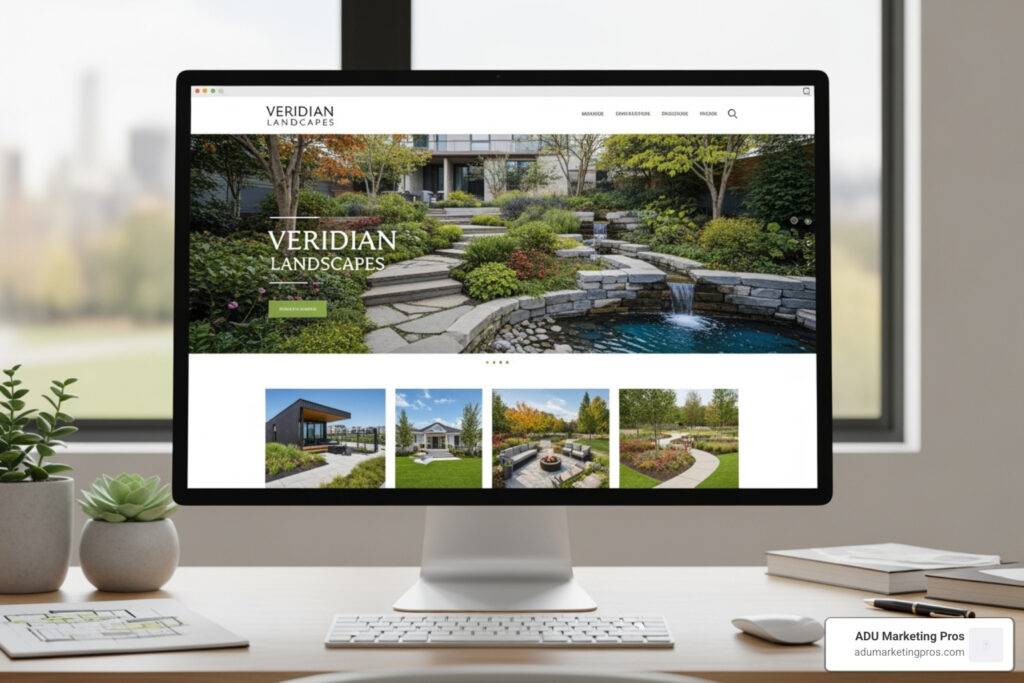
In today’s digital-first world, landscape architect web design is not just a marketing asset; it is the cornerstone of a thriving, modern practice. Before a potential client ever calls your office or requests a consultation, they visit your website. This digital introduction is your single greatest opportunity to make a powerful first impression. Your website serves as your 24/7 portfolio, lead generation engine, and brand ambassador, all consolidated into one powerful platform. It must instantly and neatly answer a visitor’s most pressing questions: Do you offer the specific services I need? Is my project located in your service area? Does your past work demonstrate the quality and style I envision? Are you a trustworthy and credible firm? And, most importantly, how do I take the next step to hire you?
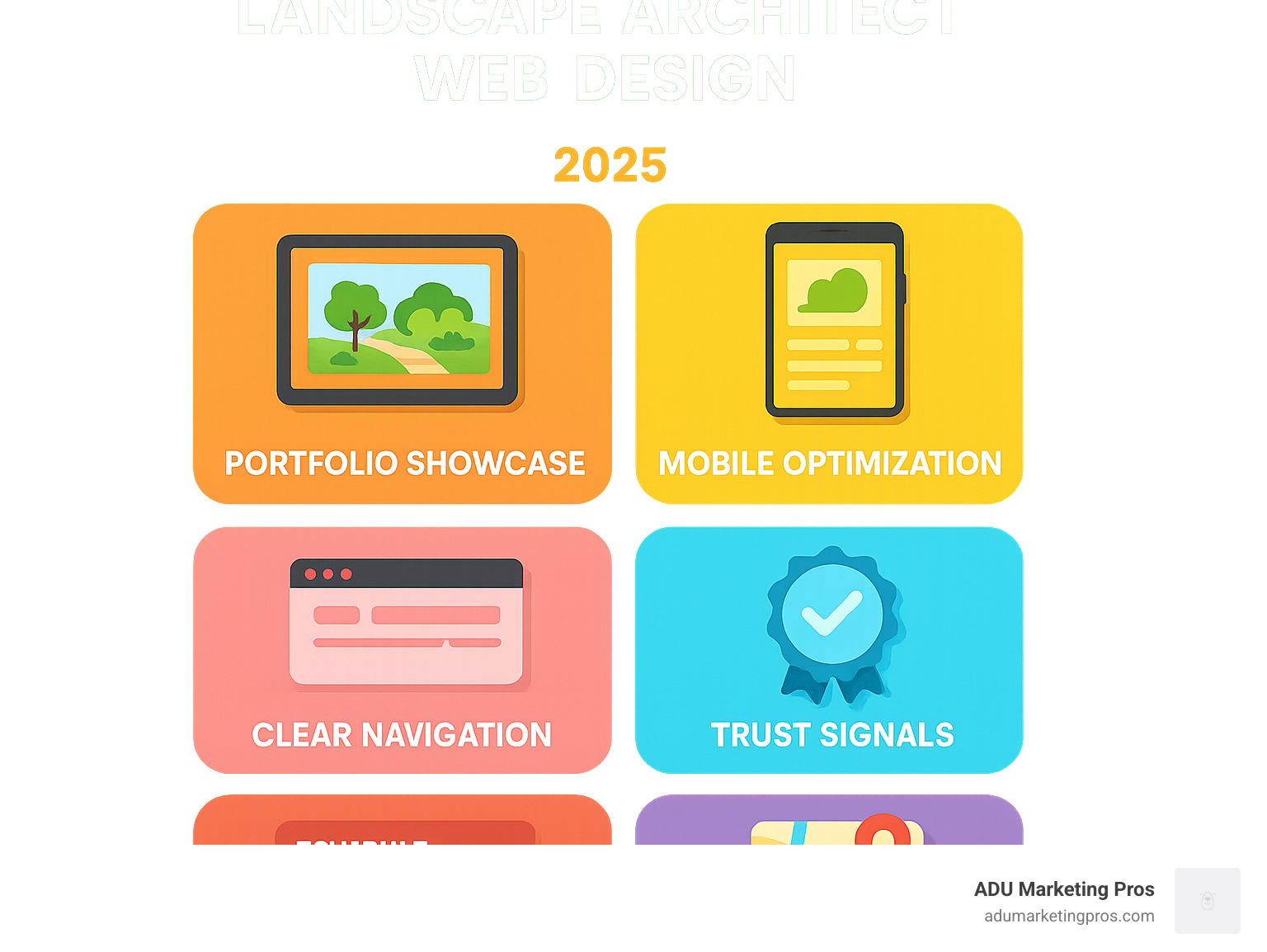
An effective landscape architect website is a carefully orchestrated blend of art and science, designed to guide visitors on a journey from curiosity to conversion. It must include several key elements working in harmony:
- A Visually Arresting Portfolio: This is the heart of your site. It requires more than just photos; it needs high-resolution project galleries, compelling before-and-after sequences, and perhaps even video tours that bring the spaces to life.
- Flawless Mobile-Responsive Design: With the majority of clients browsing on their phones, a seamless experience across all devices is non-negotiable. Your designs must look as stunning on a 6-inch screen as they do on a 27-inch monitor.
- Clear and Intuitive Navigation: Visitors should be able to find what they’re looking for—your services, portfolio, and contact information—within seconds. A confusing menu is a guaranteed way to lose a potential lead.
- Prominent Trust Signals: Build immediate credibility with client testimonials, video reviews, professional credentials (like ASLA membership), and industry awards or press mentions.
- Strategic Calls-to-Action (CTAs): Don’t make visitors guess what to do next. Prominent, action-oriented buttons like “Schedule a Consultation” or “View Our Portfolio” are essential for guiding them through the sales funnel.
- Targeted Local SEO: Your design prowess is only valuable if local clients can find you. Your website must be optimized for searches like “landscape architect [your city]” or “sustainable garden design [your county]”.
In a fiercely competitive industry, particularly in design-savvy markets like California, your website is your primary differentiator. It’s the tool that lifts your firm above the competition, showcasing your unique expertise, building unshakable credibility, and making it effortless for high-value prospects to engage with your brand.
Learn more about landscape architect web design:
The Blueprint: Core Elements of a Winning Website
Think of your landscape architect web design as the master plan for a breathtaking estate garden. Just as you wouldn’t start excavating without precise grading and soil analysis, you cannot build a powerful online presence without mastering the technical fundamentals. A successful website must perform flawlessly on every device, load with lightning speed, and guide visitors on an intuitive path to your most impressive work. It’s the invisible structure that supports your beautiful designs.
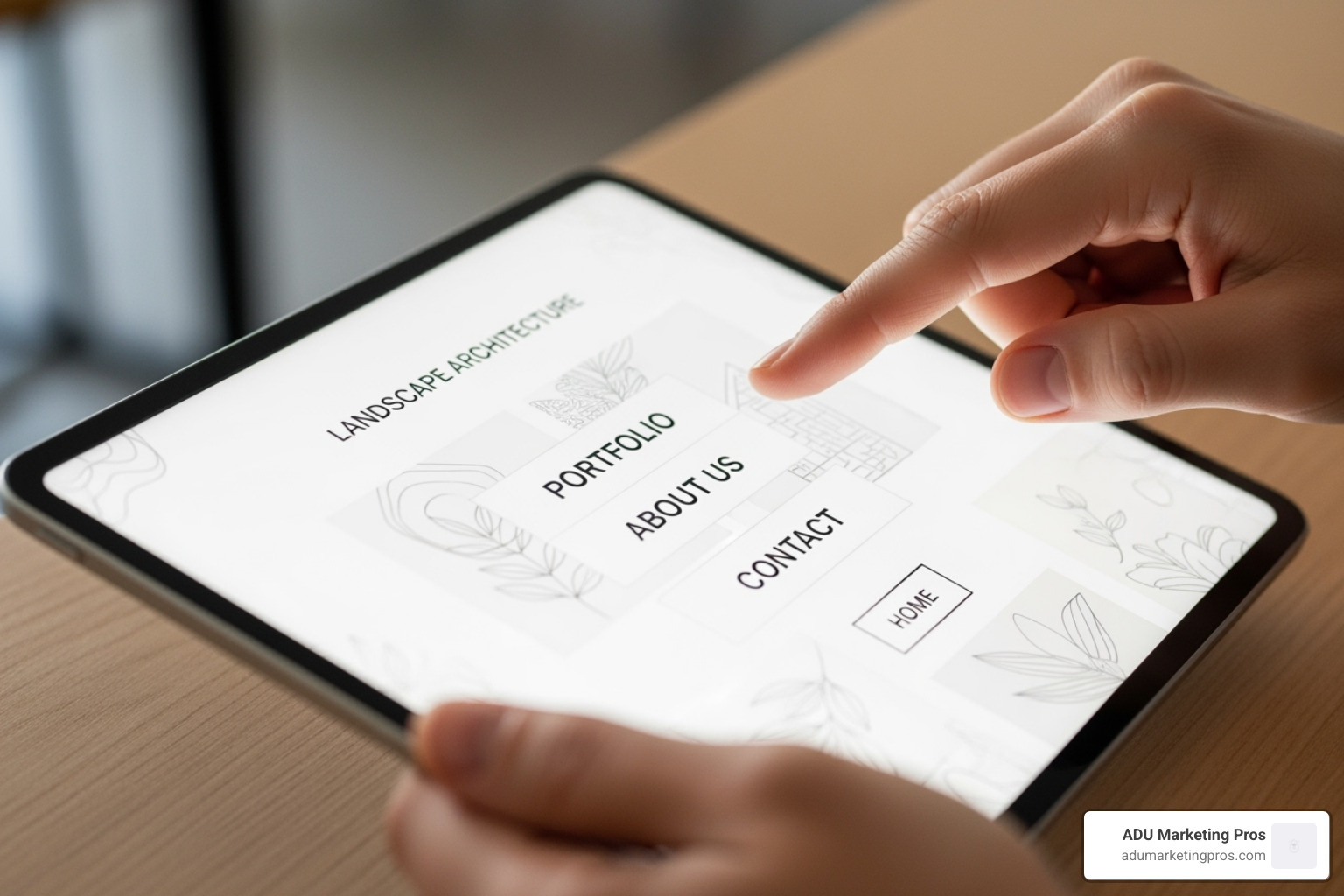
Mastering these fundamentals isn’t about becoming a coder; it’s about making strategic choices that prioritize the user’s experience. When you nail these basics, your portfolio shines brighter, your marketing efforts are more effective, and generating qualified leads becomes a systematic process. Aligning these technical elements with your professional identity is key, a concept further explored in branding for architecture firms.
Intuitive Navigation and User Experience (UX)
If a high-value client lands on your site and can’t find your portfolio within five seconds, they are gone—likely to a competitor’s website. Clear, logical navigation is the digital equivalent of a welcoming garden path. Your main menu must anticipate and answer a visitor’s primary questions immediately: Who are you? What services do you offer? Can I see your work? How do I contact you? Use simple, client-focused language like “Residential Gardens” or “Commercial Spaces” instead of opaque industry jargon. A well-structured site map and logical information architecture are the bedrock of good UX, ensuring that every piece of content is easy to find. Fast loading times are also paramount; extensive research from Google and others confirms that even a one-second delay in page load time can decrease conversions by up to 20%. This means optimizing every image, leveraging browser caching, and investing in high-quality web hosting. Finally, use generous white space to create a sophisticated, uncluttered aesthetic that allows your projects to be the hero. Ensure your contact information, especially your phone number and a link to your contact page, is prominently displayed in the header and footer of every single page.
Mobile-First, Responsive Design
Over half of your potential clients will first encounter your brand on their smartphone, often while searching for “landscape architect near me.” If your website fails to provide a perfect experience on that small screen, you are actively losing business. A clunky, hard-to-steer mobile site is a signal of unprofessionalism. Mobile-first design is the modern standard; it means designing the experience for the smallest screen first and then scaling up to tablets and desktops. This ensures that your project photos look spectacular, your text is readable without pinching and zooming, and your contact forms are easy to complete with a thumb. Touch-friendly elements are a critical detail. Buttons must be large enough to be tapped accurately, and links need sufficient spacing to avoid frustrating mis-clicks. Google now uses mobile-first indexing, meaning it primarily uses the mobile version of your site for ranking and indexing. A poor mobile experience won’t just frustrate users; it will actively harm your search engine visibility.
Choosing the Right Platform (CMS)
Selecting the right Content Management System (CMS) is a foundational decision that impacts your site’s flexibility, scalability, and ease of use. For most landscape architecture firms, WordPress is the undisputed leader, powering over 43% of all websites. Its strength lies in its immense flexibility. With thousands of themes (many designed specifically for architects) and plugins, you can create a highly custom site with advanced portfolio galleries, SEO tools, and contact forms. While there is a slight learning curve, the vast community support makes it manageable. For those seeking ultimate simplicity, platforms like Squarespace and Wix offer intuitive drag-and-drop interfaces that are great for beginners. However, this ease of use comes at the cost of customization and scalability; you may find their rigid structures limiting as your firm grows. Custom development from scratch is rarely necessary or cost-effective for a landscape architecture firm. A professionally designed and developed WordPress site offers the best balance of custom branding, powerful features, and long-term control. When choosing, think about scalability. Your website should be able to grow with you, effortlessly handling hundreds of new project photos and blog posts without compromising performance. The best CMS is the one you will consistently use to keep your portfolio and content fresh and engaging.
Cultivating Your Digital Portfolio: Showcasing Vision and Expertise
Your website is your firm’s primary gallery—a carefully curated, 24/7 showroom where your landscape architecture vision is brought to life for a global audience. This is where you do more than just display finished projects; you craft compelling visual narratives that transform your work from mere concepts into aspirational stories, ultimately converting discerning visitors into devoted clients.
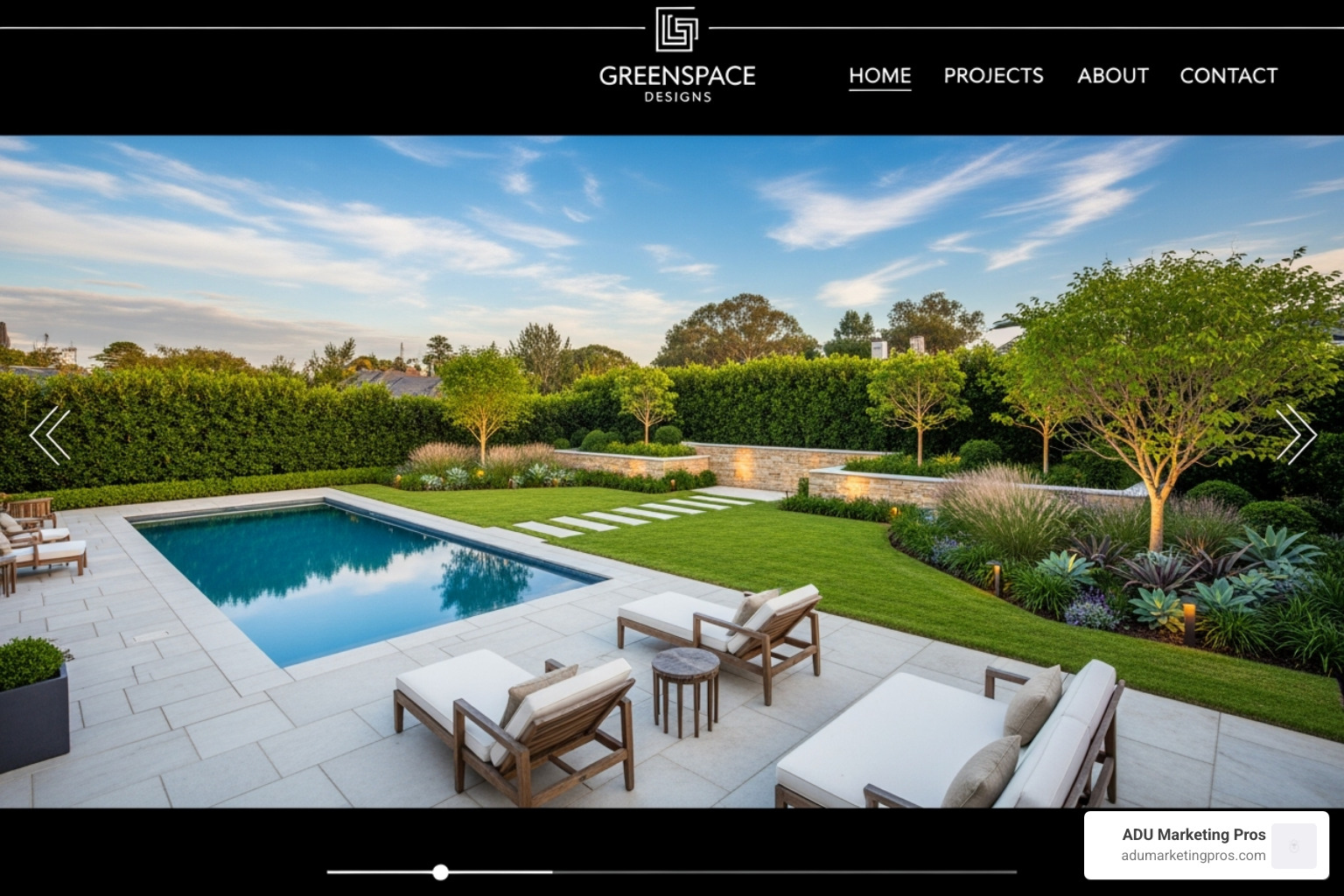
An elite portfolio is built upon three foundational pillars: powerful visual storytelling through high-impact, professional imagery; in-depth project case studies that reveal your strategic process and problem-solving skills; and crystal-clear communication of your unique design philosophy. When these elements converge, your website transcends being a simple brochure and becomes your most powerful client acquisition tool. Potential clients are not just buying a design; they are investing in a vision, a process, and a partnership. Your portfolio must convey this profound depth. For a wellspring of ideas, explore this collection of Architecture Web Design Inspiration.
The Power of High-Impact Visuals
In the visually driven field of landscape architecture, your images do the heavy lifting. Professional photography is a non-negotiable investment and the absolute backbone of your digital presence. It instantly communicates the quality of your work, your attention to detail, and your artistic vision. All imagery must be captured in high resolution to showcase texture and detail, but it must also be carefully optimized for the web to ensure your pages load quickly. A slow-loading gallery is a frustrating experience that will drive visitors away. Lift your visual content by incorporating:
- Dramatic before-and-after shots: These are storytelling gold, providing tangible proof of your transformative impact and problem-solving abilities.
- Aerial and drone footage: This reveals the full scope, scale, and context of your designs, demonstrating how a project harmonizes with its surrounding environment.
- Detailed close-ups: Highlight material choices, intricate stonework, or unique planting combinations to showcase your craftsmanship.
- 3D renderings and video tours: For proposed designs, these tools help clients visualize the future and offer immersive experiences that convey the feeling of being in the space you’ve designed.
Crafting Compelling Project Case Studies
While stunning visuals capture attention, it’s the detailed project case studies that provide the substance and build the trust necessary for conversion. Each case study is an opportunity to walk a potential client through your strategic thinking and collaborative process. Go beyond the final photos and tell the story of the project. A robust case study should follow a clear narrative structure:
- The Client & The Challenge: Start with a clear project title, location, and a summary of the client’s initial goals, desires, and the site’s inherent challenges (e.g., poor drainage, steep slope, privacy concerns).
- The Design Process & Your Solution: Detail your approach. Explain how you translated the client’s vision into a tangible plan, balancing aesthetics with critical practicalities like climate, soil type, and local regulations. This demonstrates your expertise and thought leadership.
- The Change: This is where your visual gallery shines. Present a curated selection of high-quality photos and videos that showcase the completed project from various angles and at different times of day.
- The Proof: Conclude with a powerful client testimonial. A glowing review placed directly within the context of the project it describes is incredibly persuasive. This structure mirrors the collaborative journey central to the Architect and Client relationship.
Communicating Your Design Philosophy and Sustainability
Your ‘About Us’ page, service descriptions, and case study narratives are where you articulate what makes your firm unique. This is your chance to move beyond what you do and explain why you do it, communicating your core values and commitment to environmental stewardship. Your design philosophy should be a clear, consistent thread woven throughout your site. Do you specialize in creating biodiverse habitats with native plants? Are you a master of minimalist, low-maintenance modern designs? Make your unique value proposition impossible to miss. Sustainability credentials are no longer a bonus; they are an expectation for many clients. If you hold LEED accreditation or adhere to the principles of organizations like the American Society of Landscape Architects (ASLA), feature this prominently. Go beyond buzzwords by showcasing tangible examples of your commitment: detail your use of permeable paving, rainwater harvesting systems, drought-tolerant xeriscaping, and locally sourced, eco-friendly materials. These concrete examples make your environmental commitment real, relatable, and highly desirable to today’s eco-conscious clientele.
The Growth Plan: Your Guide to Landscape Architect Web Design for Client Acquisition
A visually stunning website is merely a digital sculpture; a strategic website is a lead-generation machine. This section focuses on the critical next step: changing your beautiful online portfolio into a powerful engine for client acquisition. To succeed, you must ensure your expertly crafted designs reach your ideal target audience. Our approach integrates sophisticated SEO to attract qualified traffic, builds deep credibility through social proof, and employs clear, compelling calls-to-action to systematically capture and convert leads.
Truly effective Online Marketing for Architects transcends aesthetics; it is a deliberate, data-driven system designed for strategic visibility and measurable conversion.
SEO Fundamentals for Landscape Architects
Search Engine Optimization (SEO) is the practice of making your website visible to search engines like Google for the terms your ideal clients are using. For a service-based, local business like a landscape architecture firm, local SEO is paramount. When a high-net-worth homeowner in San Jose searches for “luxury landscape architect San Jose,” your firm must appear at the top of the results. This requires a multi-faceted approach:
- Keyword Research: Identify the specific phrases your target audience uses, from broad terms like “garden design” to specific, high-intent queries like “backyard pool and patio designer Bay Area.”
- On-Page SEO: Strategically weave these keywords into your website’s title tags, meta descriptions, headings, and body copy. Crucially, optimize your image alt text (e.g., “
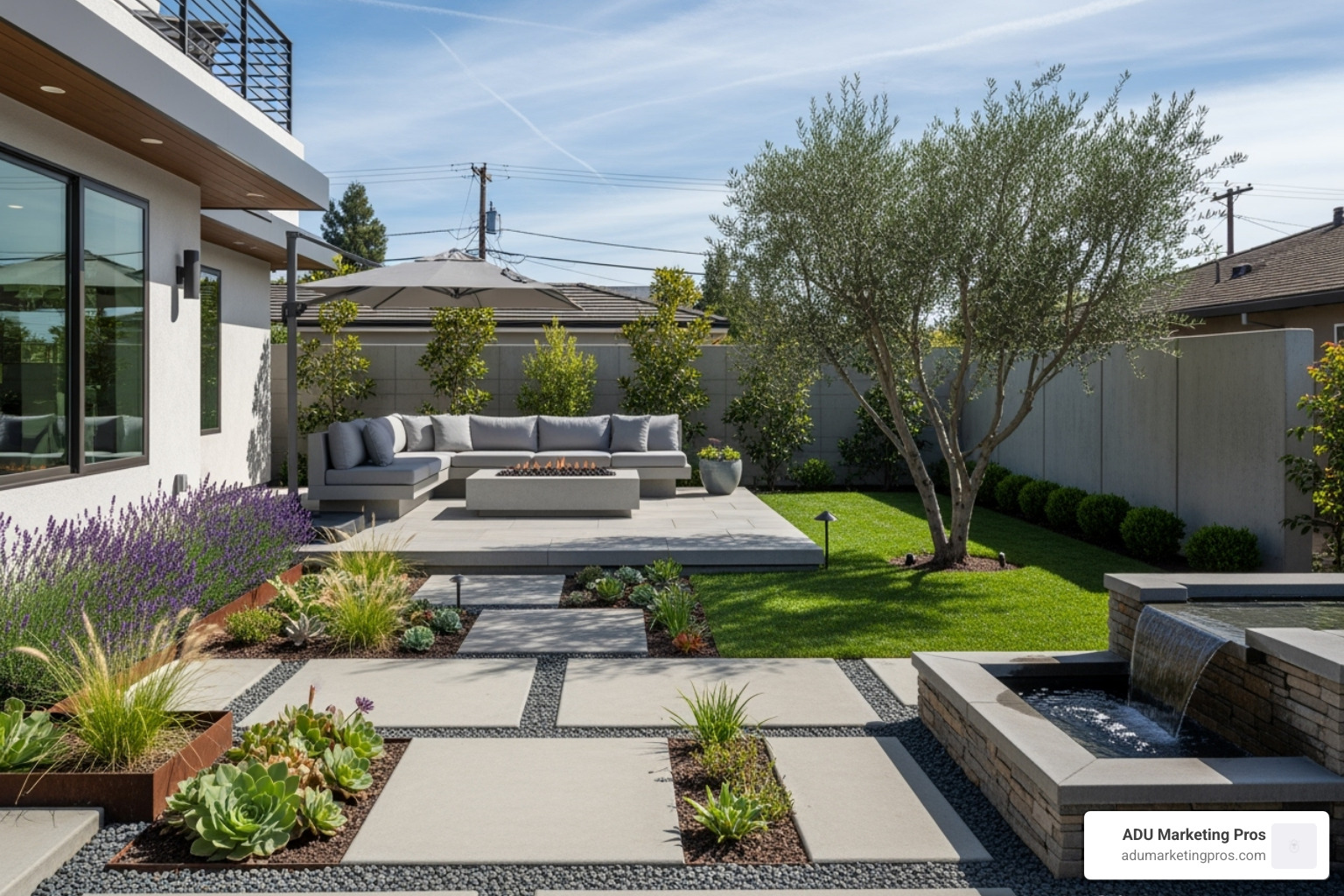 “) to help Google understand your visuals.
 - Local SEO Signals: Create and fully optimize a Google Business Profile. Build consistent citations (mentions of your name, address, and phone number) across relevant online directories. Encourage and respond to client reviews.
- Content Marketing: Establish your authority by publishing helpful blog posts on topics like “Choosing the Right Native Plants for a California Garden” or “Sustainable Water Features.” This targeted approach is a cornerstone of any successful Architecture Firm Marketing strategy.
Building Trust with Testimonials and Social Proof
In a high-stakes service industry, trust is the currency of conversion. Before a client entrusts you with their property and a significant budget, they need to believe in your ability to deliver. Your website is the ideal platform to build this trust proactively. Prominently feature client testimonials throughout your site, especially on service and portfolio pages. Video testimonials are particularly powerful, as they add a layer of authenticity and emotion. Integrate your website with review platforms like Houzz or Google to dynamically display your positive ratings and recent feedback. Showcase “Best Of” badges, industry awards (from ASLA, for example), and logos of publications where your work has been featured. Finally, humanize your brand. Your ‘About Us’ page should feature professional photos and thoughtful bios of your key team members. Helping prospective clients connect with the people behind the designs makes your firm more approachable and reinforces that you are a trustworthy partner for their important project. This is a key element in understanding How Do Architects Advertise?.
The Art of the Call-to-Action (CTA)
A great website educates, inspires, and, most importantly, guides visitors toward a specific action. This is the role of the Call-to-Action (CTA). Without clear and compelling CTAs, even the most interested visitor may leave your site without taking the next step. Effective CTAs are essential for converting passive browsers into active leads. Design your CTAs to be direct, benefit-driven, and action-oriented. Use strong verbs like “Schedule,” “Download,” or “View.” Examples include “Schedule a Design Consultation” or “Explore Our Portfolio.” These buttons should be visually prominent, using a contrasting color from your brand palette to stand out. Place them strategically where motivation is highest: in your website’s header, at the end of a compelling case study, and within your service descriptions. Your lead capture forms should be equally strategic—keep them simple and ask only for essential information (name, email, phone) to reduce friction and maximize submissions. By optimizing your CTAs, you create clear, easy-to-follow pathways for potential clients to engage, directly fueling your Lead Generation for Architects pipeline.
Frequently Asked Questions about Landscape Architect Web Design
Starting on a new website project is a significant investment of time and resources. Over the years, we’ve found that landscape architects often have similar questions and concerns. This FAQ section is designed to address the most common queries we encounter, providing clear, straightforward answers to help you make informed decisions about your landscape architect web design.
How much does a professional website for a landscape architect cost?
This is often the first question, and the answer is: it depends on the scope and level of customization. The cost can be broken down into three general tiers:
- DIY/Template-Based (Under $5,000): Using platforms like Squarespace or a premium WordPress theme, this is the most budget-friendly option. It’s suitable for new firms or those with very simple needs. However, you’ll be limited by the template’s structure, and your site may look similar to others. The annual cost for hosting and platform fees typically ranges from a few hundred to a couple of thousand dollars.
- Semi-Custom/Agency Template ($5,000 – $15,000): This popular middle ground often involves a web design agency customizing a high-quality theme or pre-built framework. You get a more unique look that’s custom to your brand, along with professional guidance on structure and content. This is a great value for established firms.
- Fully Custom Design ($15,000 – $30,000+): For firms seeking a truly unique, brand-defining digital experience, a fully custom website is the ultimate solution. The process involves in-depth strategy, user experience (UX) research, custom design mockups, and bespoke development. The final price depends on the complexity of the portfolio, custom features (like interactive maps or client portals), and the level of content creation involved.
Remember to budget for ongoing costs like hosting, security maintenance, and potential SEO or content marketing retainers. A well-designed website is an investment that pays for itself. A single high-value project secured through your site can often provide a full return on your investment.
How can my website differentiate my firm in a competitive market like California?
In saturated and sophisticated markets like San Jose, Los Angeles, or the Bay Area, a generic website will be invisible. Your website must be your sharpest competitive tool. Here’s how to stand out:
- Declare a Niche Specialization: Don’t try to be everything to everyone. Are you the foremost expert in drought-resistant xeriscaping, historic garden restoration, or creating luxurious outdoor entertainment areas? Make your specialty the undeniable focus of your homepage and portfolio.
- Articulate a Unique Design Philosophy: Go beyond pretty pictures. Use your ‘About’ page and project descriptions to tell the story behind your design ethos. Your passion for sustainability, minimalism, or native ecology should be palpable in your site’s copy and visual language.
- Curate a Killer Portfolio: Quality trumps quantity. A massive gallery of mediocre projects is far less effective than a tightly curated portfolio of 8-10 of your absolute best projects, each presented as a detailed, compelling case study.
- Leverage Authentic Client Testimonials: Credibility is built on social proof. Feature high-quality photos of your clients in their new spaces alongside their glowing reviews. Video testimonials are even more powerful for building an emotional connection.
- Emphasize Hyper-Local Expertise: Showcase your deep understanding of California’s unique challenges and opportunities, such as water restrictions, fire-resistant landscaping, native plant palettes, and regional architectural styles. This is a key component of a targeted Architecture Firms Digital Strategy.
What are the biggest mistakes to avoid in landscape architect web design?
Avoiding these common pitfalls is just as important as implementing best practices. A single one of these mistakes can undermine your entire investment and drive potential clients away.
- Poor Quality Imagery: Your work is visual. Grainy, poorly lit, low-resolution photos taken on a phone will make even the most stunning garden look amateurish. This is the number one mistake; professional photography is mandatory.
- Confusing Navigation: If a user can’t find your portfolio or contact information in two clicks, they will leave. Keep your main menu simple, logical, and free of jargon.
- Painfully Slow Loading Speeds: In the mobile era, patience is thin. Every page should load in under three seconds. Large, unoptimized image files are the most common culprit.
- Neglecting the Mobile Experience: Test your site on your own phone. Is it easy to read? Are the buttons easy to tap? A frustrating mobile experience is an instant deal-breaker for the majority of your visitors.
- Vague or Non-Existent CTAs: You must tell visitors what you want them to do next. A beautiful site with no clear “Schedule a Consultation” button is a missed opportunity.
- Outdated Information: An old portfolio, broken links, or incorrect contact details instantly destroy credibility. A website is a living document that requires regular maintenance and updates.
Conclusion: Your Digital Master Plan
Your journey through the principles of landscape architect web design reveals a powerful truth: your website is far more than a digital brochure; it is the foundational master plan for your firm’s future growth. It is the central hub where your design vision, technical expertise, and brand story converge to attract, engage, and convert your ideal clients.
We’ve explored the essential layers of a successful online presence: a rock-solid technical foundation that ensures a flawless user experience, a visually stunning portfolio that tells compelling stories, and a strategic marketing plan that drives qualified traffic to your digital doorstep. The true power of professional web design lies in its relentless efficiency. It works for you around the clock, 365 days a year. While you are on-site creating breathtaking outdoor spaces, your website is in the digital world, attracting new leads, building trust with prospects, and clearly communicating your unique value proposition.
Investing in professional landscape architect web design is a direct investment in your firm’s reputation, profitability, and long-term viability. It is the strategic choice that separates firms that are found by high-value clients who appreciate their expertise from those left competing on price alone. It allows you to control your brand narrative and proactively shape your clients’ first impression.
At ADU Marketing Pros, we have witnessed how a sophisticated digital strategy can transform architecture and design firms, particularly in hyper-competitive markets like California. We specialize in creating digital experiences that allow you to stand out by showcasing your unique authority and design philosophy, not just your price list.
Your digital landscape is too important to be left to chance. It’s time to cultivate an online presence that truly reflects the quality and excellence of your work. Transform your online presence with expert architect website design and build a digital foundation that will drive the growth your firm deserves for years to come.