
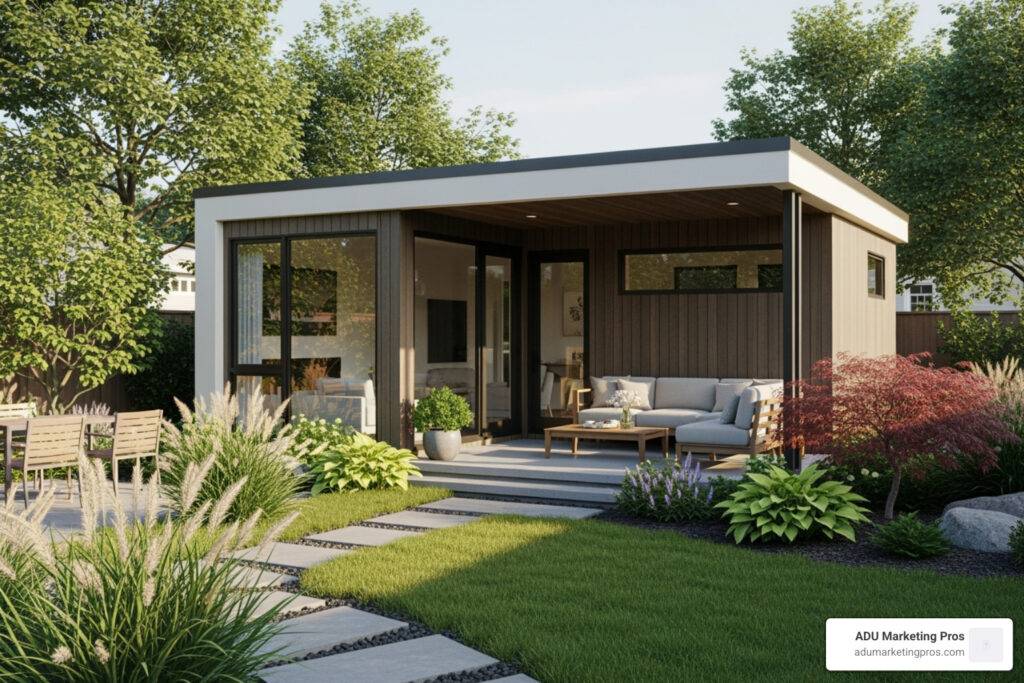
Why Small Backyard Homes Are Changing Properties Nationwide
Small backyard homes—also known as Accessory Dwelling Units (ADUs)—are rapidly becoming one of the smartest investments a homeowner can make. These compact, self-contained living spaces offer flexible solutions for rental income, multi-generational living, home offices, or guest accommodations, all while increasing your property’s overall value.
Quick answer for homebuyers:
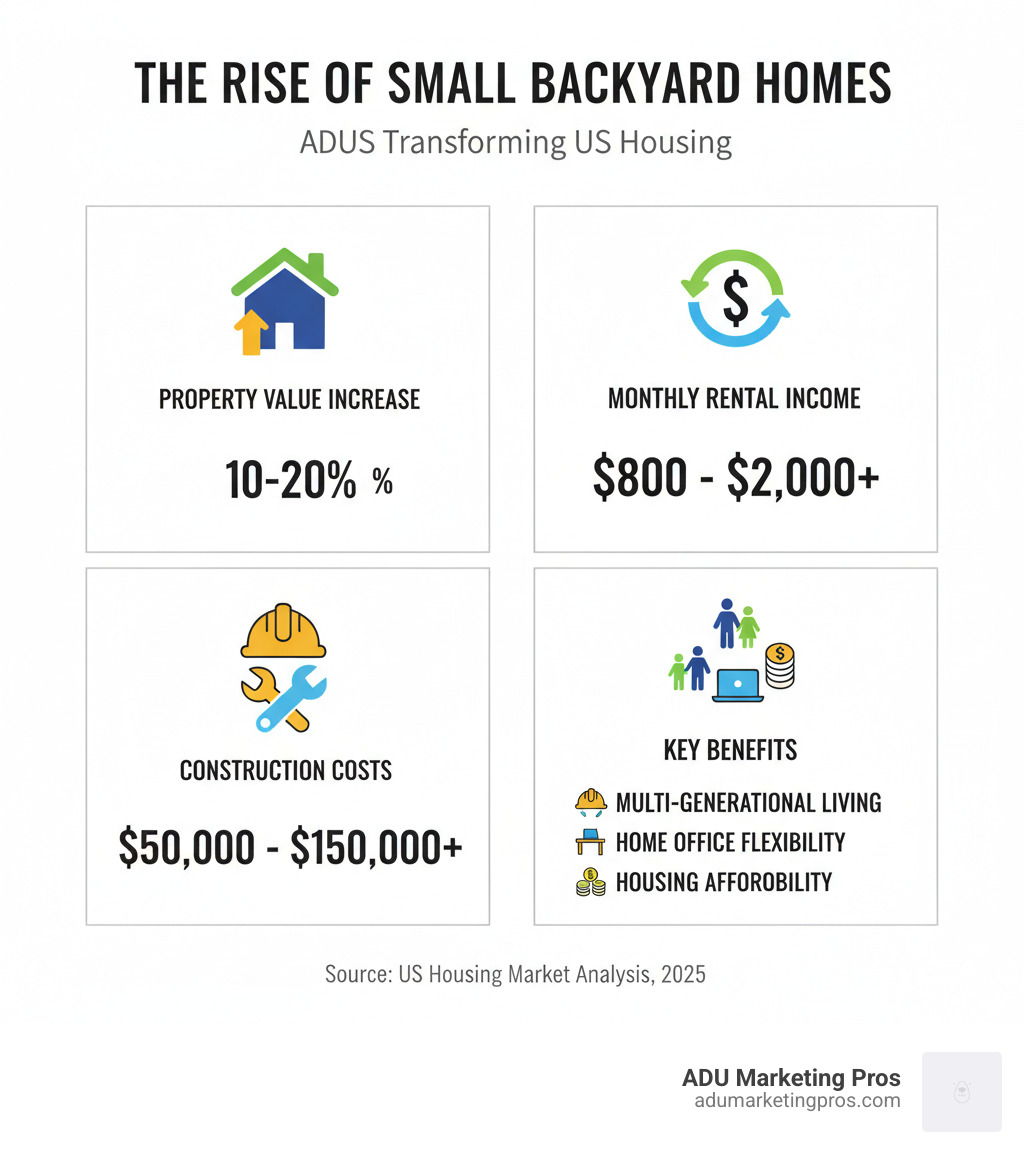
- Property Value Boost: ADUs can increase property value by 10-20% on average.
- Rental Income Potential: Earn $800-$2,000+ per month depending on location and size.
- Cost Range: Prefabricated options start around $50,000, while custom builds can range from $100,000-$150,000+.
- Popular Uses: Guest houses, rental units, home offices, multi-generational living suites.
The housing affordability crisis has sparked unprecedented demand for creative living solutions. In regions like Washington DC, where housing costs continue to climb, homeowners are finding that the underused space in their backyards represents untapped potential. Instead of moving or undertaking expensive renovations, adding a small backyard home offers a cost-effective way to maximize your existing lot. With projected annual growth rates of 15-20% in key regions, ADUs have moved from a niche concept to a mainstream housing solution.
The Transformative Benefits of Building an ADU
Building one of these versatile small backyard homes is about more than adding a structure; it’s about open uping financial opportunities and lifestyle possibilities. The numbers are compelling: property values typically jump by 10-20% when you add an ADU. This isn’t just theoretical appreciation—it’s real equity you can borrow against or cash in when you sell.
Then there’s the rental income potential. Depending on where you live and what you build, you could generate anywhere from $800 to $2,000 or more each month in passive income. That revenue can cover a mortgage, fund college tuition, or accelerate retirement savings.
Beyond the finances, the lifestyle benefits are often even more significant:
- Multigenerational Living: An ADU allows aging parents to live independently with dignity, while you get peace of mind knowing they’re just steps away. It’s a solution that works for everyone.
- Private Guest Suite: A dedicated guest suite in the backyard means visitors have their own private retreat—complete with a bathroom and kitchenette. Everyone is happier with their own space.
- Dedicated Home Office: With the rise of remote work, a separate, quiet workspace is invaluable. Imagine a short walk to a bright office where household distractions don’t exist, allowing for deep focus and productivity.
- Affordable Starter Home: An ADU can serve as an affordable first home for a recent graduate, helping them build financial independence on the family property.
These structures also contribute to solving the broader affordable housing crisis by adding density to existing neighborhoods without changing their character. The beauty of an ADU is its flexibility; it adapts to your needs today and in the future, making it an investment that keeps giving back.
A Roundup of Popular Small Backyard Home Options
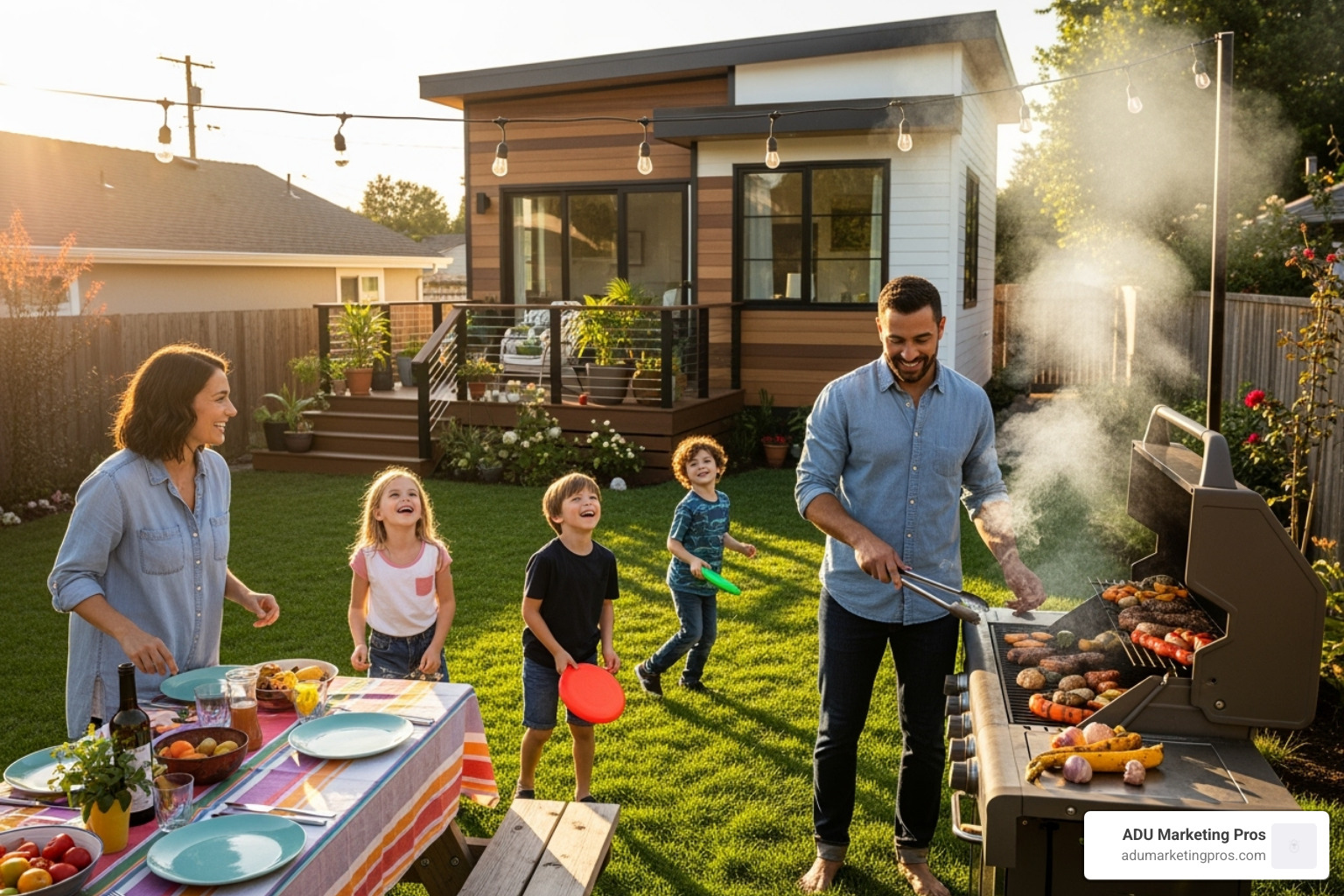
The beauty of small backyard homes lies in their incredible adaptability. Whether you’re dreaming of extra income, a private workspace, or a home for family, there’s an ADU solution that fits. Let’s explore how homeowners are using these versatile structures.
The Guest House Retreat
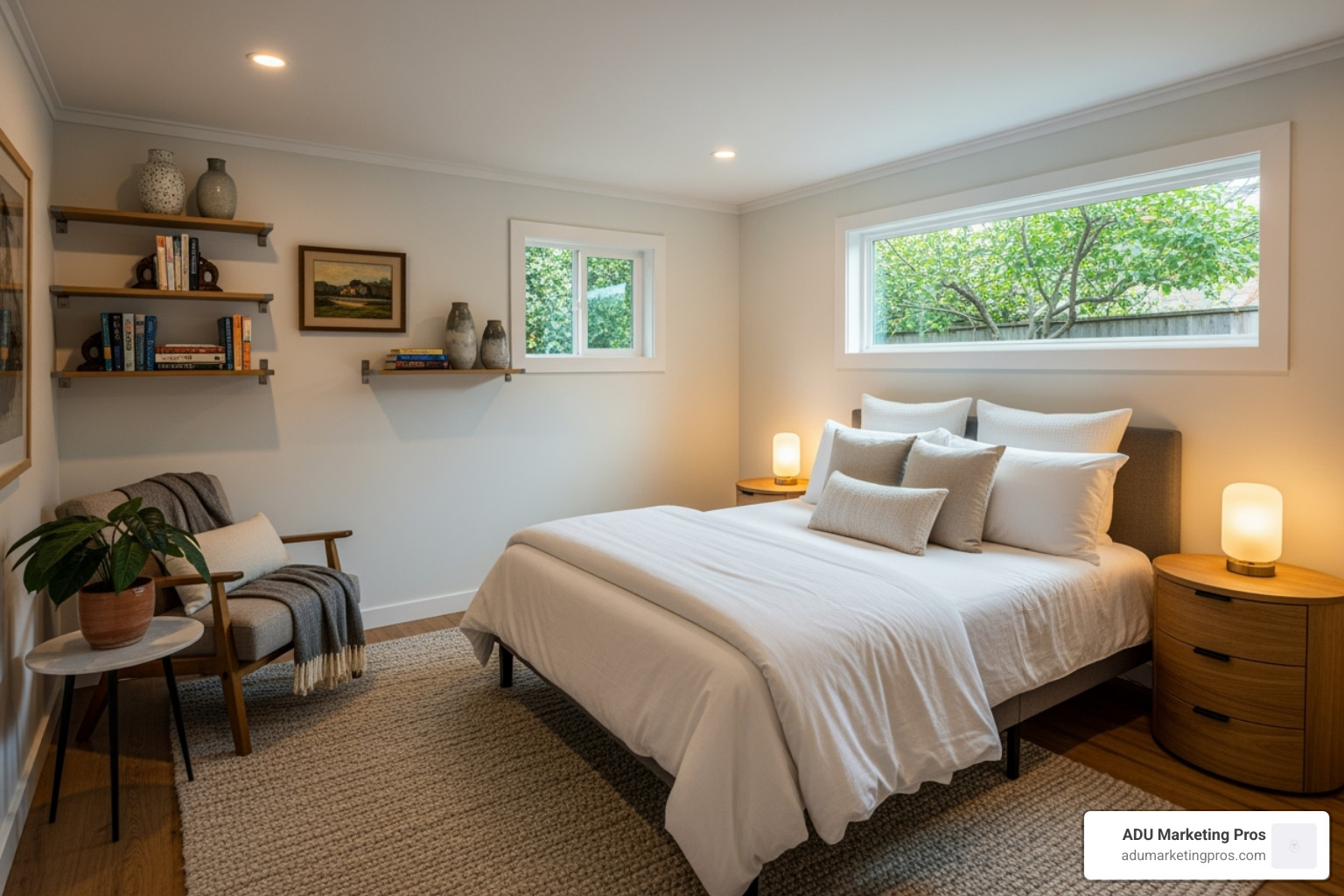
Offering visiting friends and family their own private retreat takes hospitality to a new level. A well-designed guest house typically includes a cozy sleeping area, a functional kitchenette for light meals, and a full bathroom. A separate entrance is key, giving visitors the freedom to come and go on their own schedule. It’s perfect for extended family visits, making time together more enjoyable for everyone.
The Income-Generating Rental Unit
For many homeowners, the most compelling reason to build a small backyard home is the potential for steady rental income, which can range from $800 to $2,000+ per month. To maximize your return on investment, focus on strategic design. Durable, low-maintenance finishes are essential for handling tenant turnover. Smart-home features like programmable thermostats and keyless entry are increasingly popular. A private outdoor space, in-unit laundry, and separate utility meters can also set your rental apart, helping you command top-dollar rent and attract quality tenants.
The Modern Home Office or Studio
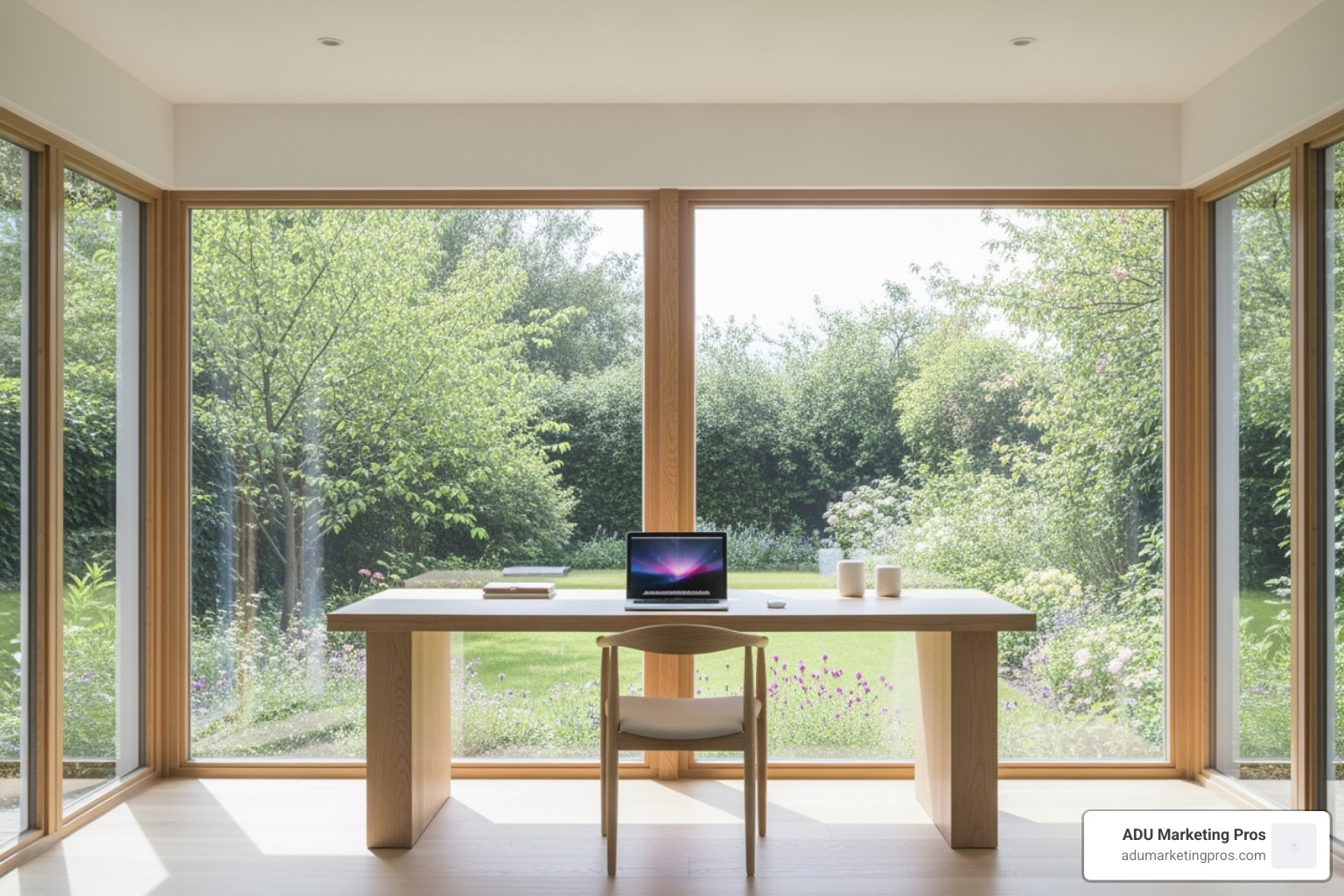
A backyard ADU offers the perfect dedicated workspace, separate from your home’s daily chaos but without a commute. When designing a workspace, prioritize natural light with large windows to boost productivity. Soundproofing is another critical consideration for video calls and deep focus. High-speed internet connectivity is non-negotiable, and custom built-ins can maximize space efficiency. For professionals who meet with clients, a separate entrance adds a professional touch while maintaining privacy.
The Multi-Generational Independent Living Suite
For families looking to keep loved ones close, a multi-generational living suite is a practical and compassionate solution. These ADUs require thoughtful design with accessibility at the forefront. Features like no-step entries, wider doorways, and a single-level design eliminate hazards and accommodate walkers or wheelchairs. Bathroom safety is also essential, with grab bars, walk-in showers, and non-slip flooring providing peace of mind. This arrangement allows aging parents to age in place with dignity, surrounded by family.
Prefab vs. Custom: Choosing Your Build Approach
When it comes to building your small backyard home, you’ll face an important decision: should you go with a prefabricated unit or opt for a custom-designed build? Both approaches will get you a finished ADU, but they take different routes.
Prefabricated ADUs are built in a controlled factory environment and then transported to your property for assembly. The appeal is straightforward. Cost-effectiveness is a major draw, with most prefab ADUs ranging from $50,000 to $150,000 or more. The factory setting allows for economies of scale, translating to savings. If you’re eager to use your new space, prefab shines—construction happens in weeks to a few months.
Quality control is another benefit of factory construction. Building indoors eliminates weather delays and ensures precision. Many prefab companies also offer pre-designed models that are streamlined for local permitting processes.
Custom-designed ADUs, on the other hand, are for those who want something truly one-of-a-kind. If your lot has a tricky slope or you want to perfectly match your home’s architecture, a custom build delivers. You have unlimited control over the floor plan, window placement, and finishes. This personalization comes with a higher cost, often ranging from $100,000 to $250,000 or higher, and a longer timeline of 9 to 18 months.
Here’s how the two approaches stack up:
| Feature | Prefabricated ADU | Custom-Designed ADU |
|---|---|---|
| Average Cost | $50,000 – $150,000+ | $100,000 – $250,000+ |
| Construction Speed | Weeks to a few months | 9-18 months |
| Customization Level | Pre-designed models with finish options | Unlimited personalization |
| Design Process | Select and customize existing plans | Architectural design from scratch |
So which path is right for you? If you’re working with a tighter budget and want to start generating rental income quickly, prefab makes tremendous sense. But if you have a challenging site or a specific aesthetic vision, the extra time and investment for a custom design will give you a space that’s perfectly suited to your property.
Bringing Your Small Backyard Home to Life: The Build Process
Building a small backyard home can feel overwhelming, but with the right team and a clear roadmap, it’s an exciting adventure. Understanding each stage helps you make confident decisions. A non-negotiable first step is hiring licensed and insured contractors. This isn’t just a formality; it ensures your project meets safety codes, stays current with regulations, and protects you from liability. It’s the foundation of a successful project.
Step 1: Design, Feasibility, and Financing
Every project begins with a vision. This phase starts with an initial consultation and site assessment. A builder or architect will walk your property to evaluate access, utility connections, and potential challenges like slopes or trees. This visit determines what is realistically possible.
Next is the critical step of reviewing local zoning regulations. These laws, which vary dramatically by location, dictate maximum square footage, height restrictions, and setback requirements (how far the ADU must be from property lines). An experienced builder will be well-versed in your local rules.
With a feasible plan, your builder provides budgeting and cost estimates. A detached ADU typically ranges from $50,000 to $150,000+, with prefab options on the lower end and custom builds on the higher end. To pay for it, several financing options exist. Homeowners often use home equity loans, construction loans, or a cash-out refinance. Some lenders even offer ADU-specific loan products. Freddie Mac provides helpful information about financing options for ADUs worth exploring.
Step 2: Permitting & Utilities for Small Backyard Homes
This phase tests patience but is crucial for ensuring your ADU is safe, legal, and built to last. The permit application process involves submitting comprehensive architectural and engineering plans to your local building department for review. The review confirms compliance with all codes and ordinances. Approval timelines vary widely, from weeks to months, and an experienced local contractor can help steer the bureaucracy efficiently.
Simultaneously, you’ll address utility connections. Your small backyard home needs water, electricity, and sewer service. This requires coordination with local providers, separate permits, and inspections. The complexity depends on your property’s existing infrastructure and the ADU’s location.
Step 3: Construction and Finishing Touches
With permits approved, the build begins. The process starts with site preparation and foundation work, where the crew clears and grades the site and pours the foundation. The construction phase varies by build type. With on-site construction, your ADU is built from the ground up in your backyard over several months. For prefabricated ADUs, modules are built in a factory and then assembled on-site in a matter of weeks, reducing disruption and delays.
The interior finishes phase is where you personalize the space with flooring, paint, cabinets, and fixtures. Finally, thoughtful landscaping integrates the ADU into your yard. Consider pathways, privacy screening, and an outdoor living space. A permanent hardtop gazebo and comfortable patio rattan furniture can create an inviting outdoor oasis.
Frequently Asked Questions about Small Backyard Homes
We know that planning a small backyard home can feel overwhelming. Let’s address some of the most common questions to help you move forward with confidence.
What are the typical size restrictions for a backyard home?
There’s no universal answer, as every city and county has its own regulations. Your first step should be to contact your local planning department. That said, most jurisdictions base restrictions on a few key factors. Maximum square footage is often limited to between 800 and 1,200 square feet, though some areas allow more. Setback requirements dictate how far your ADU must sit from property lines, and height restrictions ensure your structure doesn’t tower over neighboring properties. An experienced local builder can help you quickly understand what’s realistic for your specific property.
How long does it take to build a small backyard home?
The timeline depends largely on your chosen build path. Prefabricated ADUs are the fastest option, as most construction happens in a factory. On-site work can be completed in weeks to a few months. Custom-built ADUs require more patience, with a typical timeline of 9 to 18 months. This includes time for architectural design, permitting, and on-site construction. The biggest wild card for both build types is permitting delays. Some jurisdictions approve permits in weeks, while others take months. Finally, contractor availability in busy markets can also affect your schedule.
How are the costs of small backyard homes determined?
The total cost of your ADU is the sum of many parts. The overall investment for a detached ADU typically ranges from $50,000 to $150,000 or more, with prefab options often being more affordable. Key cost drivers include:
- Design and Permit Fees: Costs for architectural plans, engineering, and municipal fees to review and approve your project.
- Site Preparation: This includes clearing, grading, excavation, and pouring the foundation. Costs can increase significantly on sloped or difficult-to-access lots.
- Construction Labor and Materials: This is your biggest line item, covering everything from the structure itself to windows, insulation, and interior finishes.
- Utility Hookup Fees: Your ADU needs water, electricity, and sewer connections. This involves trenching, connection fees, and potentially upgrading your main electrical panel.
- Landscaping and Finishing Touches: This transforms the structure into an integrated part of your property with pathways, fencing, and outdoor living spaces.
Conclusion: Open up Your Property’s Full Potential
We’ve explored small backyard homes, and it’s clear they are far more than a passing trend. They represent a fundamental shift in how we maximize our properties. Whether you’re drawn to the financial benefits—like a 10-20% boost in property value or earning $800 to $2,000+ in monthly rental income—or seeking lifestyle solutions like multi-generational living or a dedicated home office, ADUs deliver.
What makes small backyard homes such a smart investment is their flexibility. An ADU can adapt as your life evolves, making it one of the most resilient investments you can make in your property. These structures are solutions to real challenges, helping families stay connected, creating new income streams, and providing dedicated spaces to thrive.
For ADU construction and architecture firms serving the California market—especially in thriving areas like Los Angeles, San Diego, and the San Francisco Bay Area—this is a critical moment. In a competitive market, homeowners are looking for partners with proven expertise.
That’s where we come in. At ADU Marketing Pros, we help construction and architecture firms connect with qualified homeowners ready to invest. Our approach focuses on showcasing your expertise and quality, setting you apart from competitors focused only on price. If you’re ready to grow your ADU business, we’re here to help.
Learn how to attract high-quality ADU leads with ADU Marketing Pros. Let’s work together to connect your expertise with homeowners ready to open up their property’s full potential.