
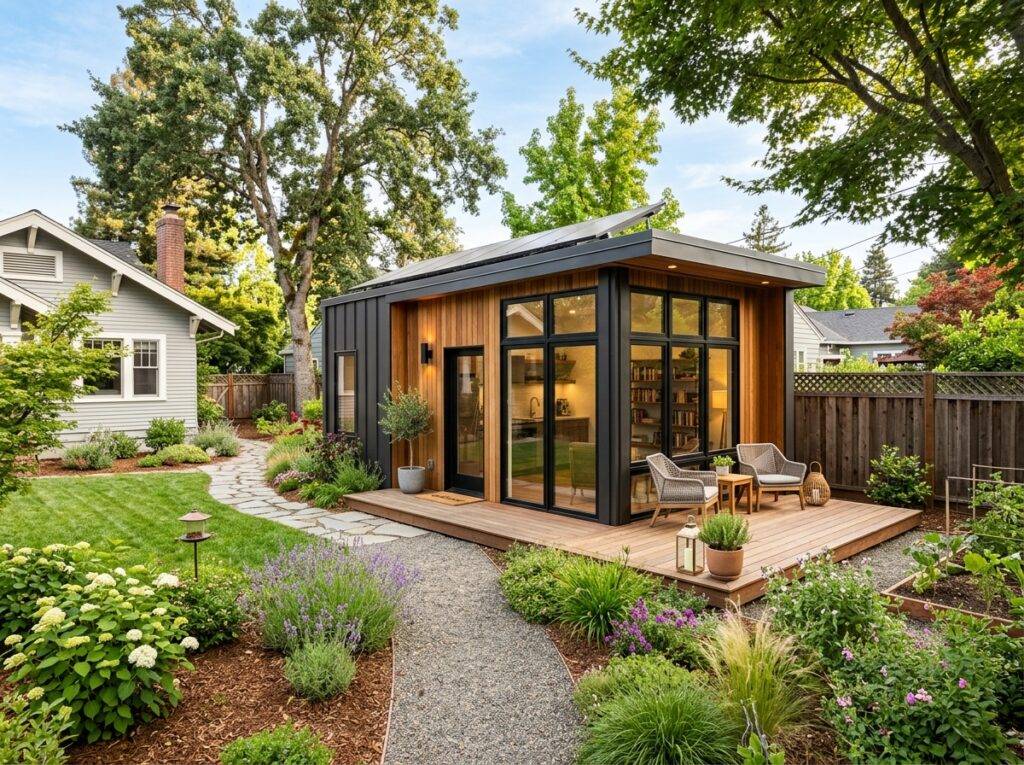
Your Backyard Could Be Worth a Lot More Than You Think
A granny flat architect is a licensed design professional who specializes in planning, designing, and permitting accessory dwelling units (ADUs) — the small secondary homes built on existing residential properties. If you’re exploring your options, here’s a quick breakdown:
What a granny flat architect does for you:
- Assesses your property for ADU feasibility and zoning compliance
- Creates custom or pre-designed plans tailored to your lot’s unique topography
- Handles complex permit applications and navigates local building codes
- Coordinates with structural engineers, contractors, and city planning officials
- Helps you maximize space, natural light, and long-term property value
The Hidden Potential of the California Backyard
Backyards across California are quietly becoming some of the most valuable real estate in the country. What used to be a patch of grass, a neglected swimming pool, or an underused garage can now be transformed into a fully permitted, rent-generating home. This shift is driven by a desperate need for “missing middle” housing and a series of legislative breakthroughs that have made it easier than ever for homeowners to build.
But here’s the thing: not all granny flats are created equal.
The difference between a cramped, uninspired unit and a genuinely livable, high-value space often comes down to one decision — whether you worked with a real architect or tried to cut corners with generic plans. A professional architect doesn’t just draw walls; they design an experience. They consider how the sun moves across your yard, how to maintain privacy for both the main house and the tenant, and how to ensure the new structure adds aesthetic value to your neighborhood.
The Financial Stakes of Professional Design
With construction costs in Southern California running $250–$300 per square foot, and average San Diego rents reaching up to $1,887 per month, the stakes are too high to leave design and permitting to chance. A misstep in the planning phase doesn’t just cost time — it can cost tens of thousands of dollars in redesigns, failed inspections, or missed fee waivers. For instance, failing to understand the 750-square-foot threshold for impact fees can result in a surprise $15,000 bill from the city.
This guide breaks down exactly what a granny flat architect does, why it matters, and how the right professional can turn your backyard into a smart, long-term investment. Whether you are looking for 1 bedroom granny flats wa price list or exploring 2 bedroom granny flats prices, understanding the architectural process is the first step toward success. You can also browse the best granny flat designs to see what is possible on a standard residential lot.

The Essential Role of a Professional Granny Flat Architect

When we talk about building a secondary unit, it’s easy to get caught up in the “flat pack” or “prefab” hype. However, a granny flat architect brings a level of precision that a factory-built box simply cannot match. They don’t just draw lines on paper; they solve the complex puzzle of your specific lot. Unlike a general contractor who might focus solely on the build, an architect focuses on the harmony between the structure, the land, and the inhabitants.
Site Analysis: The Foundation of Good Design
Every backyard has its own set of challenges—sloping terrain, existing utility lines, privacy concerns with neighbors, and the “shadow” cast by the main house. An architect performs a rigorous site analysis to ensure the new building fits perfectly. This includes checking for easements, identifying the location of the sewer lateral, and determining the optimal orientation for solar gain. By utilizing 3D visualization software, they allow you to walk through your new space before a single shovel hits the dirt. This level of Architect and Client collaboration is vital for avoiding the “I wish we had moved that window” regret later on.
Furthermore, specialized ADU Architects in Los Angeles understand that these units are often built in tight quarters. They excel at space optimization, ensuring that a 600-square-foot unit feels like 1,000 square feet through clever use of ceiling heights, built-in storage, and strategic window placement. They understand that in a small home, every inch must serve a purpose.
Why Professional Design Trumps “Off-the-Shelf” Plans
It’s tempting to buy a set of plans online for $500 and call it a day. But those plans weren’t designed for your sun exposure or your city’s specific setback requirements. A custom architectural ADU is tailored to your site’s orientation, maximizing natural light and airflow, which significantly reduces energy costs over time. Generic plans often fail to account for the specific drainage needs of a lot, which can lead to disastrous flooding issues during California’s rainy season.
For firms focused on Lead Generation for Architects, the selling point is clear: custom design protects long-term property value. A generic unit might look dated in five years, but a well-designed architectural piece maintains its “cool factor” and rental premium. Architectural integrity ensures the new unit complements the main house rather than looking like a detached shed that accidentally grew a kitchen. This cohesion is what appraisers look for when determining the added value to your property.
Comprehensive Services Provided by a Granny Flat Architect
A granny flat architect is more than just a designer; they are your project’s quarterback. Their services typically include:
- Drafting and Engineering: Creating the technical blueprints that contractors use to build, including structural calculations that ensure the building can withstand seismic activity.
- Permit Processing: Navigating the “red tape” of city planning departments, which can be a full-time job in cities like San Francisco or Los Angeles.
- Land Use Consulting: Determining if your lot has special restrictions, such as being in a coastal zone, a historic district, or a high-fire-hazard severity zone.
- Interior Design: Selecting finishes, lighting, and materials that maximize the small footprint while maintaining a high-end feel.
- Project Management: Some firms offer ADU services with over 100 satisfied clients and decades of experience, providing an integrated design-build approach that handles everything from the first sketch to the final inspection. This minimizes the friction between the design intent and the actual construction.
Navigating California’s Complex ADU Regulations and Laws
California has become the most ADU-friendly state in the country, but the rules change fast. Since 2017, a series of state laws (like AB 881, SB 13, and AB 68) have stripped away the power of local cities to say “no” to granny flats. These laws were designed to combat the housing shortage by empowering homeowners to become small-scale developers.
Today, most ADU applications are subject to a ministerial review, meaning if you meet the basic building codes, the city must approve your project. This has reduced the permit window to just 60 days in many cases. Even better, most ADUs are now CEQA-exempt, meaning you don’t need a massive environmental impact study to build in your own backyard. This exemption alone has saved homeowners thousands of dollars and months of waiting.
The End of HOA Restrictions
One of the biggest wins for homeowners was Assembly Bill 670, which prevents Homeowners Associations (HOAs) from prohibiting ADUs. If you live in a planned community in San Diego or San Jose, your HOA can no longer stop you from building a secondary unit, provided it meets basic design standards. While they can still require certain aesthetic matches (like roof tile color or siding material), they cannot outright ban the construction of a granny flat. This opened up millions of lots that were previously restricted by private contracts.
How a Granny Flat Architect Streamlines the Permitting Process
Even with favorable laws, the paperwork can be a nightmare. A professional architect often employs or partners with permit specialists who know exactly what the city of San Diego or Los Angeles is looking for. They speak the language of the planning department, which can prevent the “back-and-forth” that often delays projects for months.
They handle complex requirements such as:
- Coastal Development Permits: Essential if you’re building near the beach, where extra layers of environmental protection apply.
- Fire Sprinkler Mandates: In many cases, if the main house doesn’t have sprinklers, the ADU won’t need them either—saving you thousands in plumbing and tank costs.
- Solar Mandates: California requires solar panels on all new detached ADUs. An architect will integrate these into the design so they don’t look like an afterthought, often using them to power the unit’s high-efficiency heat pumps.
Local Incentives: The San Diego Advantage
San Diego has been a leader in ADU adoption, often going above and beyond state requirements to encourage density. The city and county have voted to waive several hefty fees, resulting in savings between $8,000 and $30,000 per unit. This makes San Diego one of the most profitable places in the US to build a granny flat.
Key San Diego stats to know:
- Maximum Size: Up to 1,200 square feet for a detached ADU, which is large enough for a comfortable three-bedroom home.
- JADU (Junior ADU): Up to 500 square feet, usually created within the existing walls of the house, such as a converted master suite or an attached garage.
- Impact Fees: No impact fees (parks, schools, transportation) are charged for units under 750 square feet.
- Parking: If you are within a half-mile of public transit (Transit Priority Area), you generally don’t have to provide new parking spaces, even if you convert your garage.
These incentives make the Design + Build process in San Diego incredibly lucrative, especially given the high demand for long-term rentals and the rise of remote work.
Design Considerations for the Modern Backyard Suite
Modern granny flats are a far cry from the “glorified caravans” of the past. Today’s best designs focus on “indoor-outdoor flow,” using sliding glass walls to make a small patio feel like an extension of the living room. This is particularly effective in California’s Mediterranean climate, where the outdoor space can be used year-round.
Vaulted ceilings and clerestory windows (high windows near the roofline) are favorite tools of the granny flat architect. They pull in natural light while maintaining privacy from neighbors. As one Palo Alto architect noted, a granny flat can absolutely be “cool” by embracing minimalist aesthetics and high-quality materials. The goal is to create a space that feels like a sanctuary, not a shed.
Innovative Styles Recommended by a Granny Flat Architect
We see a wide range of styles gaining popularity across our service areas in Silicon Valley and Southern California. The choice of style often depends on the architecture of the main house and the personal taste of the homeowner:
- Scandinavian Minimalism: Light woods, white walls, and functional simplicity. This style is perfect for making small spaces feel airy and uncluttered.
- Industrial Loft: Exposed beams, metal accents, and open floor plans—perfect for Architecture Web Design Inspiration and modern portfolios. This style often appeals to younger renters or those using the space as a creative studio.
- Tropical Retreat: Utilizing large decks, folding glass doors, and lush landscaping to create a vacation vibe. This is ideal for properties in coastal areas like Encinitas or Santa Monica.
- The “Not Your Granny’s” Style: High-design units featuring “V” shaped columns, steel moment frames, and oculus roof cutouts that track the sun. These are statement pieces that significantly boost property value.
Types of ADUs and Their Spatial Implications
There isn’t a one-size-fits-all approach to these units. Your choice depends on your budget, your lot size, and how much backyard space you’re willing to trade for living area:
- Detached ADUs: A standalone building. Offers the most privacy and design flexibility but is the most expensive due to new foundation and utility requirements.
- Attached ADUs: An addition to the side or back of your main house. These can be more cost-effective as they share at least one wall with the existing structure.
- Garage Conversions: The most popular and cost-effective option. Since the “shell” already exists, you can save significantly on construction. However, they require careful architectural planning to ensure they don’t feel like a “lived-in garage.”
- Junior ADUs (JADUs): Contained entirely within an existing house (like a converted bedroom). These must have a small efficiency kitchen and internal access to the main house, though they can also have a separate exterior entrance.
- Modular Builds: Factory-constructed units that are craned into your backyard. While fast, they offer less customization for San Jose lots and can be difficult to install on properties with limited overhead clearance or narrow side yards.
Budgeting and Timelines: Investing in Your Property
Building an ADU is a major financial commitment, often comparable to buying a small house in other parts of the country. In the current market, you should budget for both hard costs (labor and materials) and soft costs (design, engineering, and permits). Understanding the difference is key to avoiding budget overruns.
| Feature | Pre-Designed ADU | Custom Architectural ADU |
|---|---|---|
| Design Fee | ~$10,000 | $20,000+ |
| Construction Cost | $250 – $300 / sq ft | $350+ / sq ft |
| Permit Timeline | 3 – 4 Months | 4 – 6 Months |
| Design Savings | Up to $20,000 | $0 (High Customization) |
While ADU Architects in Los Angeles may charge a higher upfront fee for custom work, the “pre-designed” option is a great middle ground for those looking to save time and money without sacrificing professional quality. Many architects now offer a library of “pre-approved” plans that have already been vetted by the city, which can shave months off the permitting process.
Financial Incentives and Return on Investment
The ROI on a granny flat is often better than the stock market or traditional real estate flipping. With San Diego rents averaging nearly $1,900, a well-placed ADU can pay for its own mortgage and then some. Many homeowners use a Home Equity Line of Credit (HELOC) to fund the build, allowing the rental income to cover the interest and principal payments.
Beyond the monthly check, the property value increase is substantial. In high-demand areas like Sunnyvale, Menlo Park, and Palo Alto, adding a legal living unit can increase your home’s resale value by hundreds of thousands of dollars. We often help firms understand How Architects Advertise these financial benefits to homeowners who may be sitting on a goldmine of untapped equity. An ADU is one of the few home improvements that actually pays for itself.
The Construction Roadmap: From Concept to Keys
What does the timeline look like? Generally, you’re looking at a 12-to-18-month journey from the first meeting to the final walkthrough:
- Design Phase (2-4 months): Dreaming, sketching, and final blueprints. This is where you decide on the layout, finishes, and appliance packages.
- Permitting (3-4 months): The city review process. This involves structural, electrical, and plumbing reviews. Using pre-approved plans can shave months off this stage.
- Construction (8-10 months): From foundation to finishes. This stage is where Architecture Lead Generation pays off, as an architect can help you bid the project out to reliable contractors and perform “site visits” to ensure the builder is following the plans correctly.
Frequently Asked Questions about Granny Flat Architects
How much does it cost to hire an architect for a granny flat?
For a fully custom design, architects typically charge a minimum of $20,000 for the design and engineering package. This usually includes the site survey, structural engineering, and Title 24 energy calculations. However, many firms offer “pre-designed” plans starting around $10,000, which can save you significant time and money while still providing a high-quality, permitted product.
Can I convert my existing garage into a legal ADU?
Yes! Garage conversions are one of the most efficient ways to add a granny flat. Under current California law, you often don’t have to provide replacement parking for the garage you lost, and you can usually build right to the existing footprint without new setback requirements. This makes it an ideal choice for smaller lots where space is at a premium.
What is the maximum size allowed for a granny flat in California?
State law allows for ADUs up to 1,200 square feet. However, local jurisdictions can set their own limits, though they must allow at least 850 square feet for a one-bedroom unit and 1,000 square feet for two or more bedrooms. Most cities in California have now aligned their local codes with the 1,200-square-foot state maximum to encourage larger, family-sized units.
Does an ADU increase my property taxes?
Building an ADU will trigger a “blended assessment.” Your main house will keep its original tax basis (thanks to Prop 13), but the new ADU will be assessed at its current market value. This usually results in a modest increase in property taxes, but the rental income typically far outweighs the additional tax burden.
Can I use an ADU as a short-term rental (Airbnb)?
This depends entirely on your local city ordinances. Many cities, including Los Angeles and San Diego, have restricted the use of new ADUs as short-term rentals to ensure they contribute to the long-term housing supply. Always check with your granny flat architect or local planning department before planning for an Airbnb.
Conclusion
The California housing market is evolving, and the backyard is the new frontier. Whether you are looking to house an aging parent in a safe and comfortable environment, provide a home for a returning college grad, or simply secure a steady stream of rental income to fund your retirement, a granny flat architect is your most valuable partner. They bridge the gap between a vague idea and a physical reality that adds value to your life and your community.
At ADU Marketing Pros, we specialize in helping architecture and construction firms establish themselves as the go-to authorities in this booming sector. Based in San Jose, we understand the unique regulatory landscape of the Bay Area and Southern California. We help experts showcase their specialized marketing solutions so they can focus on what they do best: building the future of California housing, one backyard at a time.
If you’re a firm looking to grow your revenue and stand out in a crowded market, it’s time to leverage the power of specialized SEO and targeted lead generation. Your expertise deserves to be seen by the thousands of homeowners currently searching for a way to unlock the potential of their property. Let’s build something great together.